
Place
Jerusalem
Also known as Yerushalayim · Al-Quds · Salem · Jebus · City of David · Zion
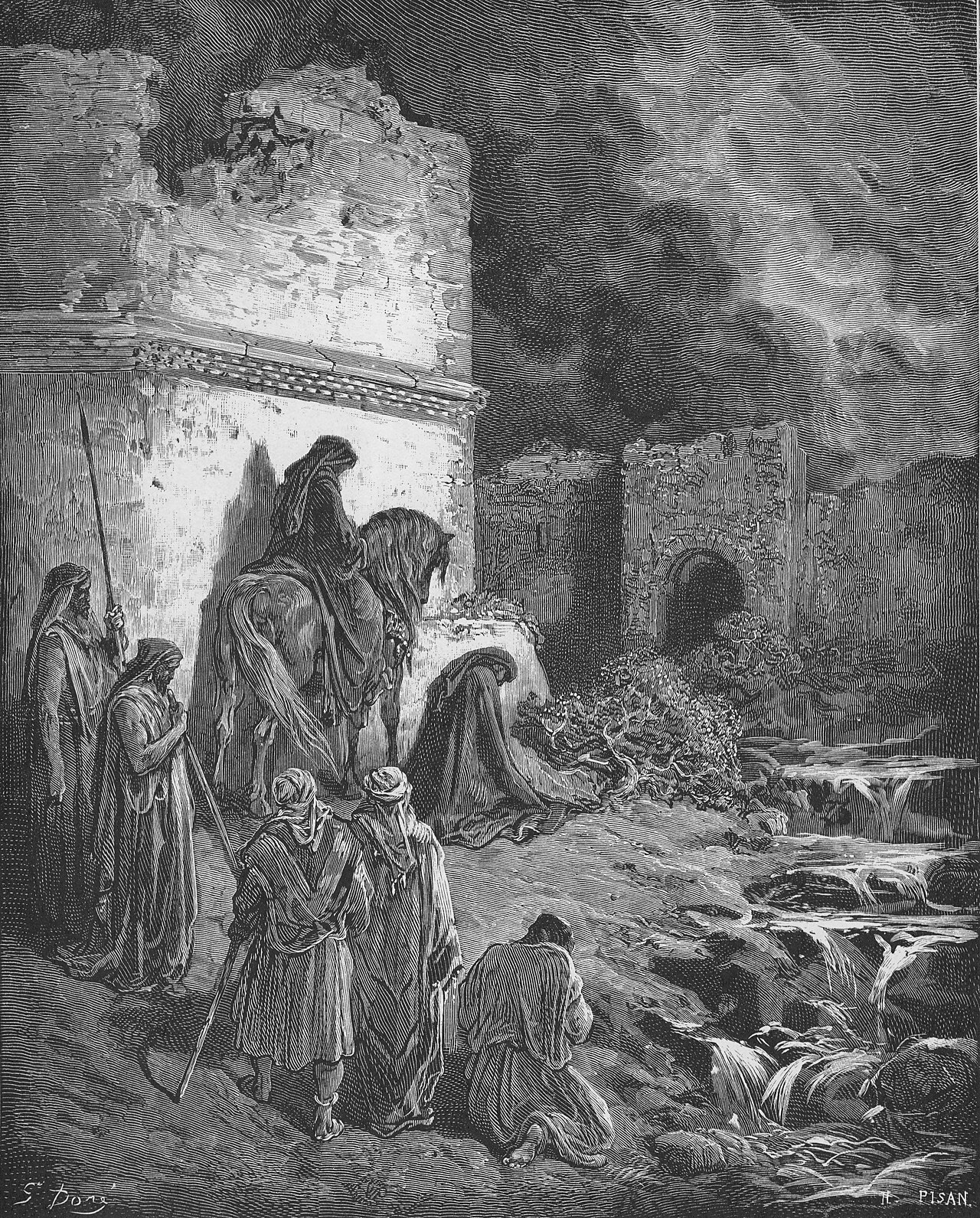
Gustave Doré, La Sainte Bible (Tours: Alfred Mame et fils, 1866). Public domain.
Summary
The city David took from the Jebusites and made his capital, where Solomon built the temple, where Christ was crucified and rose, and which Scripture names last as the city coming down from God.
- Jerusalem enters Scripture as Salem, where a priest-king named Melchizedek blessed Abram with bread and wine.
- David took the Jebusite fortress and brought the ark up to it, and Solomon built the temple on the threshing floor David had bought.
- Babylon burned the city in 586 BC, and Nehemiah's returning generation put a wall back around it in fifty-two days.
- Jesus wept over this city, was crucified outside its gate, was raised here, and sent the Spirit here at Pentecost.
- Scripture ends with a city bearing this one's name coming down out of heaven, with no temple in it.
On this page
In Scripture
- Verses
- 772
- Books
- 37
Near Jerusalem
- Zion2.1 km · 1.3 mi E
- Moriah2.3 km · 1.4 mi NE
- Mount of Olives3.3 km · 2.1 mi E
- Nob3.9 km · 2.4 mi NE
- Bethany4.6 km · 2.9 mi E
- Gibeah6.4 km · 4.0 mi N
Straight-line distances, computed from the gazetteer coordinates.
Where it is
the country around it
- Country
- Israel / Palestinian Territories
- Coordinates
- 31.7683° N, 35.2137° Efind it on the Atlas →
- Region
- Judean Hill Country
- Kind of place
- City
- Era
- Ancient and modern
3 places the record names with Jerusalem, the farthest 6.4 km away
- 1Abraham sent to the land of MoriahGenesis 22:2 · 2.3 km“Take your son,” God said, “your only son Isaac, whom you love, and go to the land of Moriah. Offer him there as a burnt offering on one of the mountains, which I will show you.”
- 2Jebus, that is Jerusalem, allotted to BenjaminJoshua 18:28 · 6.4 kmZelah, Haeleph, Jebus (that is, Jerusalem), Gibeah, and Kiriath-jearim—fourteen cities, along with their villages. This was the inheritance of the clans of the tribe of Benjamin.
- 3David captures the fortress of Zion2 Samuel 5:7 · 2.1 kmNevertheless, David captured the fortress of Zion (that is, the City of David).
- Located: the gazetteer fixes one site
- ? Proposed: one candidate among several
- A dashed line ends at a place the gazetteer does not fix
Not located: The Temple, Assyria, Golgotha. The gazetteer records no location for them, so they are not marked.
Why Jerusalem matters
What has been found
the evidence, and where it is disputed
Nehemiah rebuilds the wall, outlined
Nehemiah 1 to 6, in the order it happens
Read Nehemiah 1 to 6, in the order it happens
- The report that reaches SusaNehemiah 1:3And they told me, “The remnant who survived the exile are there in the province, in great trouble and disgrace. The wall of Jerusalem is broken down, and its gates are burned with fire.”
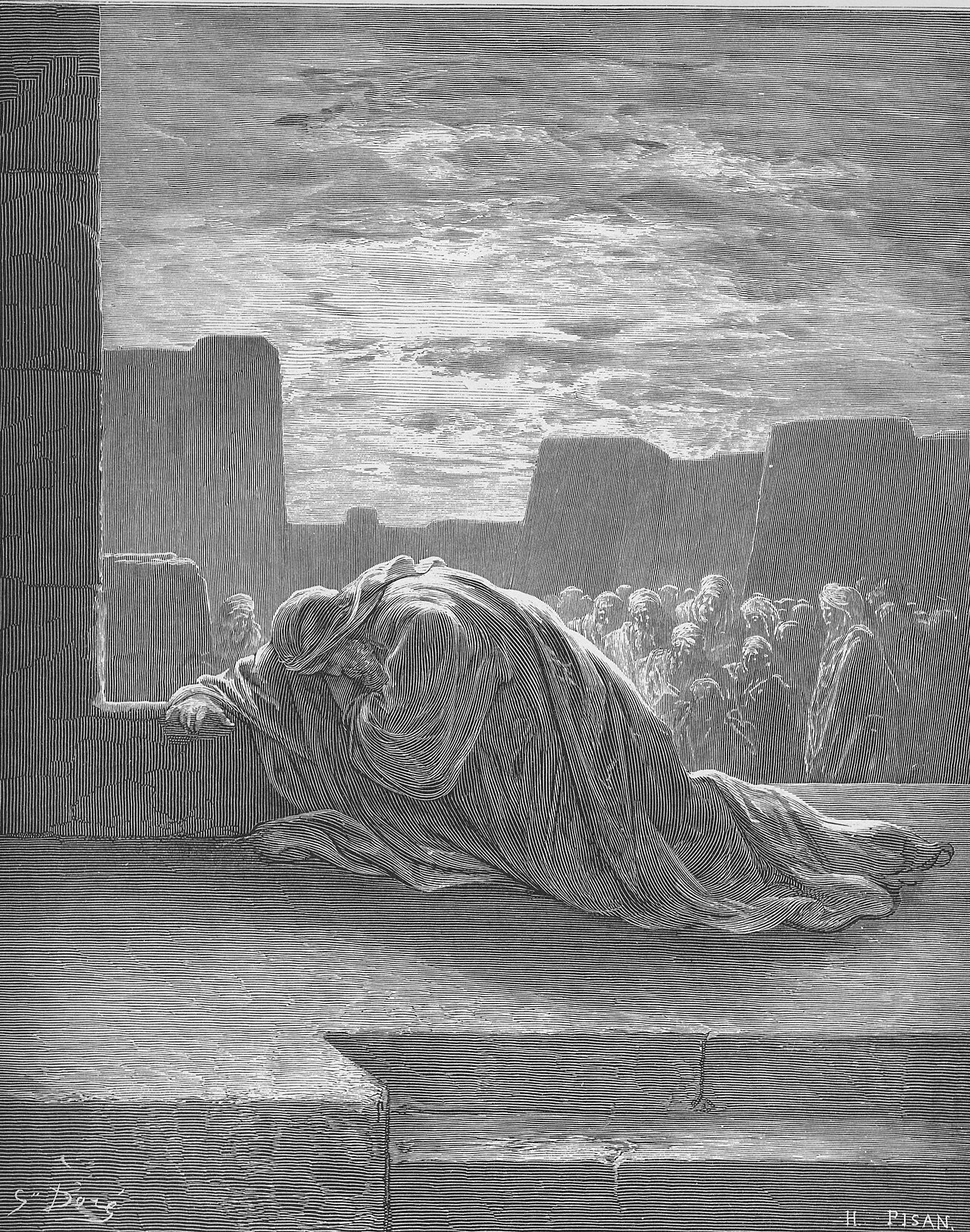
- Nehemiah sits down and weepsNehemiah 1:4When I heard these words, I sat down and wept. I mourned for days, fasting and praying before the God of heaven.
- The request to ArtaxerxesNehemiah 2:5and answered the king, “If it pleases the king, and if your servant has found favor in your sight, I ask that you send me to Judah, to the city where my fathers are buried, so that I may rebuild it.”
- The night ride around the ruinsNehemiah 2:13So I went out at night through the Valley Gate toward the Well of the Serpent and the Dung Gate, and I inspected the walls of Jerusalem that had been broken down and the gates that had been destroyed by fire.
- He tells them what he came forNehemiah 2:17Then I said to them, “You see the trouble we are in. Jerusalem lies in ruins, and its gates have been burned down. Come, let us rebuild the wall of Jerusalem, so that we will no longer be a disgrace.”
- The people answerNehemiah 2:18I also told them about the gracious hand of my God upon me, and what the king had said to me. “Let us start rebuilding,” they replied, and they set their hands to this good work.
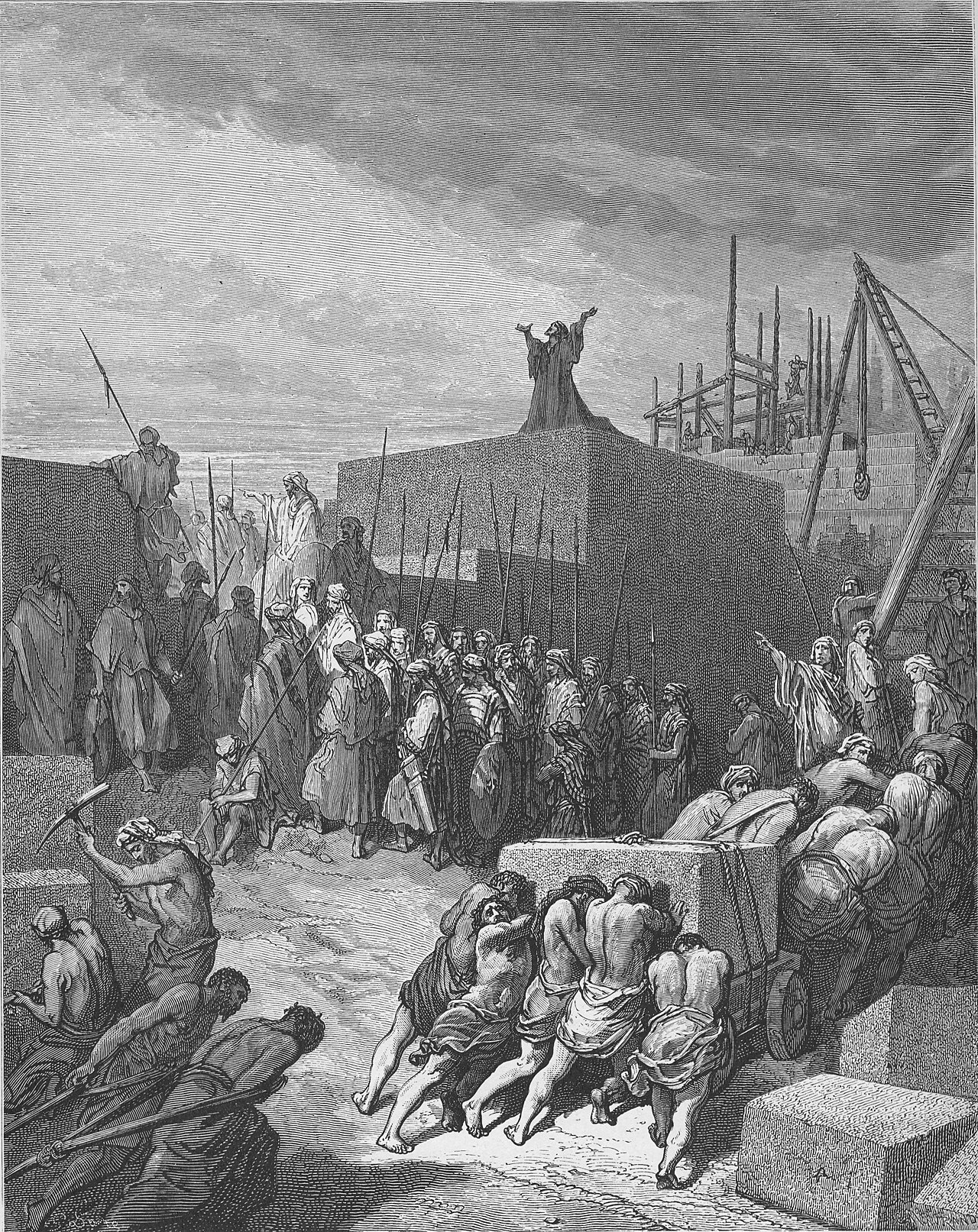
- The wall joined to half its heightNehemiah 4:6So we rebuilt the wall until all of it was joined together up to half its height, for the people had a mind to work.
- One hand on the load, one on a weaponNehemiah 4:17who were rebuilding the wall. The laborers who carried materials worked with one hand and held a weapon with the other.
- Fifty-two daysNehemiah 6:15So the wall was completed in fifty-two days, on the twenty-fifth of Elul.
- The nations see whose work it wasNehemiah 6:16When all our enemies heard about this, all the surrounding nations were afraid and disheartened, for they realized that this task had been accomplished by our God.
Josephus reports the repairs taking two years and four months, and Nehemiah 6:15 says fifty-two days. Albert Barnes points out that the walls already stood and only needed repair, and that the work was split among at least 37 parties building at the same time with material to hand.
Nehemiah, the study guideWhat happened here, in order
in the order the canon tells it
- Melchizedek, king of Salem and priest of God Most HighGenesis 14:18Then Melchizedek king of Salem brought out bread and wine—since he was priest of God Most High—
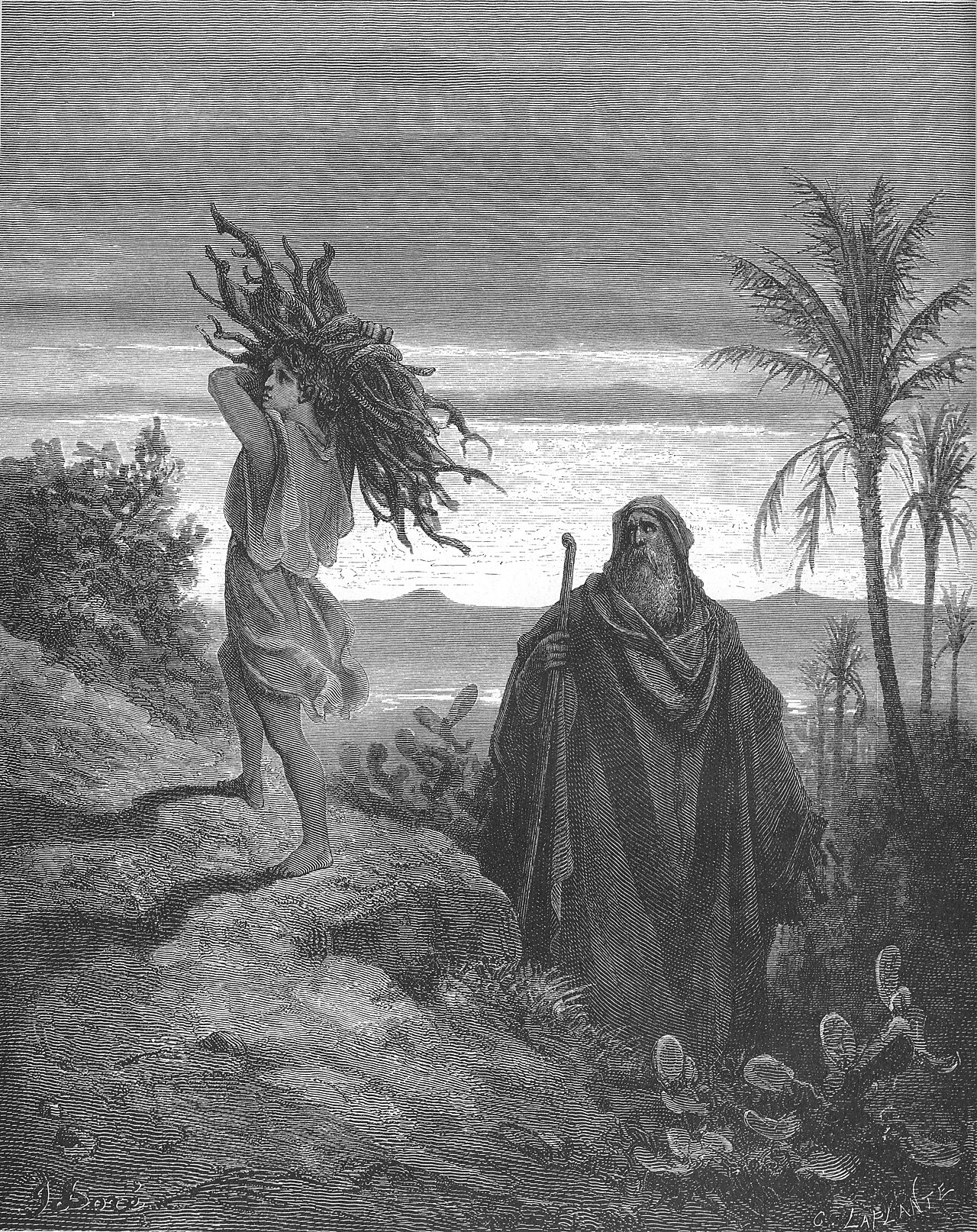
- Abraham sent to the land of MoriahGenesis 22:2“Take your son,” God said, “your only son Isaac, whom you love, and go to the land of Moriah. Offer him there as a burnt offering on one of the mountains, which I will show you.”
- Jebus, that is Jerusalem, allotted to BenjaminJoshua 18:28Zelah, Haeleph, Jebus (that is, Jerusalem), Gibeah, and Kiriath-jearim—fourteen cities, along with their villages. This was the inheritance of the clans of the tribe of Benjamin.
- David captures the fortress of Zion2 Samuel 5:7Nevertheless, David captured the fortress of Zion (that is, the City of David).
- The ark brought up with shouting and the horn2 Samuel 6:15while he and all the house of Israel brought up the ark of the LORD with shouting and the sounding of the ram’s horn.
- The altar on the threshing floor of Araunah2 Samuel 24:18And that day Gad came to David and said to him, “Go up and build an altar to the LORD on the threshing floor of Araunah the Jebusite.”
- Solomon builds the temple on Mount Moriah2 Chronicles 3:1Then Solomon began to build the house of the LORD in Jerusalem on Mount Moriah, where the LORD had appeared to his father David. This was the place that David had prepared on the threshing floor of Ornan the Jebusite.
- The glory fills the house at the dedication1 Kings 8:11so that the priests could not stand there to minister because of the cloud; for the glory of the LORD filled the house of the LORD.
- The pilgrim song of the going upPsalms 122:1I was glad when they said to me, “Let us go to the house of the LORD.”
- The word of the LORD goes out from JerusalemIsaiah 2:3And many peoples will come and say: “Come, let us go up to the mountain of the LORD, to the house of the God of Jacob. He will teach us His ways so that we may walk in His paths.” For the law will go forth from Zion, and the word of the LORD from Jerusalem.
- The city defended when Assyria came2 Kings 19:34‘I will defend this city and save it for My own sake and for the sake of My servant David.’”
- Babylon burns the house of the LORD2 Kings 25:9He burned down the house of the LORD, the royal palace, and all the houses of Jerusalem—every significant building.
- Cyrus orders the house at Jerusalem rebuiltEzra 1:2“This is what Cyrus king of Persia says: ‘The LORD, the God of heaven, who has given me all the kingdoms of the earth, has appointed me to build a house for Him at Jerusalem in Judah.
- The wall finished in fifty-two daysNehemiah 6:15So the wall was completed in fifty-two days, on the twenty-fifth of Elul.
- The King comes to the city and weeps over itLuke 19:41As Jesus approached Jerusalem and saw the city, He wept over it
- Not one stone left on anotherMatthew 24:2“Do you see all these things?” He replied. “Truly I tell you, not one stone here will be left on another; every one will be thrown down.”
- Golgotha, outside the cityJohn 19:17Carrying His own cross, He went out to The Place of the Skull, which in Hebrew is called Golgotha.
- The tomb found empty on the first day of the weekLuke 24:6He is not here; He has risen! Remember how He told you while He was still in Galilee:
- The Spirit given at Pentecost in JerusalemActs 2:4And they were all filled with the Holy Spirit and began to speak in other tongues as the Spirit enabled them.
- The holy city coming down out of heavenRevelation 21:2I saw the holy city, the new Jerusalem, coming down out of heaven from God, prepared as a bride adorned for her husband.
Where it points
The voices
each quoted from the work named
Melchizedek--This victory conferred a public benefit on that part of the country; and Abram, on his return, was treated with high respect and consideration, particularly by the king of Sodom and Melchizedek, who seems to have been one of the few native princes, if not the only one, who knew and worshipped, "the most high God," whom Abram served.
The only access to the citadel was where the water had worn a channel (some understand a subterranean channel), and where there was, in consequence, some vegetation in the rock.
But the glory of God appeared in a cloud, a dark cloud, to signify, (1.) The darkness of that dispensation in comparison with the light of the gospel, by which, with open face, we behold, as in a glass, the glory of the Lord. (2.) The darkness of our present state in comparison with the vision of God, which will be the happiness of heaven, where the divine glory is unveiled.
4 more teachers on these versesCharles Spurgeon · Albert Barnes · J.C. Ryle · Jamieson, Fausset & Brown
Jerusalem is builded as a city that is compact together. David saw in vision the city built; no more a waste, or a mere collection of tents, or a city upon paper, commenced but not completed. God's mercy to the Israelitish nation allowed of peace and plenty, sufficient for the uprise and perfecting of its capital: that City flourished in happy times, even as the church is only built up when all the people of God are prospering.
In fifty and two days - Josephus states that the repairs of the wall occupied two years and four months. But Nehemiah’s narrative is thoroughly consistent with itself, and contains in it nothing that is improbable. The walls everywhere existed at the time that he commenced his task, and only needed repairs. The work was partitioned among at least 37 working parties, who labored simultaneously, with material ready at hand; and, notwithstanding all menaces, uninterruptedly.
We learn, firstly, from these verses — how great is the tenderness and compassion of Christ towards sinners. We are told that when He came near Jerusalem for the last time, "He beheld the city, and wept over it." He well knew the character of the inhabitants of Jerusalem.
John in his Gospel always writes [Greek] Hierosoluma of the old city; in the Apocalypse always Hierousaleem of the heavenly city
Jerusalem in Scripture
772 verses name it, or one of its other names (Yerushalayim, Al-Quds, Salem), in 37 books
Open a book to read its mentions here. Text: Berean Standard Bible.
Old TestamentNew Testamentsegment width = share of mentions
Old Testament27 books · 629 mentions
Genesis1 mention
Joshua8 mentions
- Joshua 10:1Now Adoni-zedek king of Jerusalem heard that Joshua had captured Ai and devoted it to destruction—doing to Ai and its king as he had done to Jericho and its king—and that the people of Gibeon had made peace with Israel and were living near them.
- Joshua 10:3Therefore Adoni-zedek king of Jerusalem sent word to Hoham king of Hebron, Piram king of Jarmuth, Japhia king of Lachish, and Debir king of Eglon, saying,
- Joshua 10:5So the five kings of the Amorites—the kings of Jerusalem, Hebron, Jarmuth, Lachish, and Eglon—joined forces and advanced with all their armies. They camped before Gibeon and made war against it.
- Joshua 10:23So they brought the five kings out of the cave—the kings of Jerusalem, Hebron, Jarmuth, Lachish, and Eglon.
- Joshua 12:10the king of Jerusalem, one; the king of Hebron, one;
- Joshua 15:8From there the border went up the Valley of Hinnom along the southern slope of the Jebusites (that is, Jerusalem) and ascended to the top of the hill that faces the Valley of Hinnom on the west, at the northern end of the Valley of Rephaim.
- Joshua 15:63But the descendants of Judah could not drive out the Jebusites living in Jerusalem. So to this day the Jebusites live there among the descendants of Judah.
- Joshua 18:28Zelah, Haeleph, Jebus (that is, Jerusalem), Gibeah, and Kiriath-jearim—fourteen cities, along with their villages. This was the inheritance of the clans of the tribe of Benjamin.
Judges4 mentions
- Judges 1:7Then Adoni-bezek said, “Seventy kings with their thumbs and big toes cut off have gathered the scraps under my table. As I have done to them, so God has repaid me.” And they brought him to Jerusalem, where he died.
- Judges 1:8Then the men of Judah fought against Jerusalem and captured it. They put the city to the sword and set it on fire.
- Judges 1:21The Benjamites, however, failed to drive out the Jebusites living in Jerusalem. So to this day the Jebusites live there among the Benjamites.
- Judges 19:10But the man was unwilling to spend the night. He got up and departed, and arrived opposite Jebus (that is, Jerusalem), with his two saddled donkeys and his concubine.
1 Samuel1 mention
2 Samuel30 mentions
- 2 Samuel 5:5In Hebron he reigned over Judah seven years and six months, and in Jerusalem he reigned thirty-three years over all Israel and Judah.
- 2 Samuel 5:6Now the king and his men marched to Jerusalem against the Jebusites who inhabited the land. The Jebusites said to David: “You will never get in here. Even the blind and lame can repel you.” For they thought, “David cannot get in here.”
- 2 Samuel 5:13After he had arrived from Hebron, David took more concubines and wives from Jerusalem, and more sons and daughters were born to him.
- 2 Samuel 5:14These are the names of the children born to him in Jerusalem: Shammua, Shobab, Nathan, Solomon,
- 2 Samuel 8:7And David took the gold shields that belonged to the officers of Hadadezer and brought them to Jerusalem.
- 2 Samuel 9:13So Mephibosheth lived in Jerusalem, because he always ate at the king’s table, and he was lame in both feet.
- 2 Samuel 10:14When the Ammonites saw that the Arameans had fled, they too fled before Abishai, and they entered the city. So Joab returned from fighting against the Ammonites and came to Jerusalem.
- 2 Samuel 11:1In the spring, at the time when kings march out to war, David sent out Joab and his servants with the whole army of Israel. They destroyed the Ammonites and besieged Rabbah, but David remained in Jerusalem.
22 further mentions in 2 Samuel, read them in the book.
1 Kings28 mentions
- 1 Kings 2:11The length of David’s reign over Israel was forty years—seven years in Hebron and thirty-three years in Jerusalem.
- 1 Kings 2:36Then the king summoned Shimei and said to him, “Build a house for yourself in Jerusalem and live there, but do not go anywhere else.
- 1 Kings 2:38“The sentence is fair,” Shimei replied. “Your servant will do as my lord the king has spoken.” And Shimei lived in Jerusalem for a long time.
- 1 Kings 2:41When Solomon was told that Shimei had gone from Jerusalem to Gath and had returned,
- 1 Kings 3:1Later, Solomon formed an alliance with Pharaoh king of Egypt by marrying his daughter. Solomon brought her to the City of David until he had finished building his palace and the house of the LORD, as well as the wall around Jerusalem.
- 1 Kings 3:15Then Solomon awoke, and indeed it had been a dream. So he returned to Jerusalem, stood before the ark of the covenant of the Lord, and offered burnt offerings and peace offerings. Then he held a feast for all his servants.
- 1 Kings 8:1At that time Solomon assembled before him in Jerusalem the elders of Israel—all the tribal heads and family leaders of the Israelites—to bring up the ark of the covenant of the LORD from Zion, the City of David.
- 1 Kings 9:15This is the account of the forced labor that King Solomon imposed to build the house of the LORD, his own palace, the supporting terraces, and the wall of Jerusalem, as well as Hazor, Megiddo, and Gezer.
20 further mentions in 1 Kings, read them in the book.
2 Kings56 mentions
- 2 Kings 8:17Jehoram was thirty-two years old when he became king, and he reigned in Jerusalem eight years.
- 2 Kings 8:26Ahaziah was twenty-two years old when he became king, and he reigned in Jerusalem one year. His mother’s name was Athaliah, the granddaughter of Omri king of Israel.
- 2 Kings 9:28Then his servants carried him by chariot to Jerusalem and buried him with his fathers in his tomb in the City of David.
- 2 Kings 12:1In the seventh year of Jehu, Joash became king, and he reigned in Jerusalem forty years. His mother’s name was Zibiah; she was from Beersheba.
- 2 Kings 12:17At that time Hazael king of Aram marched up and fought against Gath and captured it. Then he decided to attack Jerusalem.
- 2 Kings 12:18So King Joash of Judah took all the sacred objects dedicated by his fathers—Jehoshaphat, Jehoram, and Ahaziah, the kings of Judah—along with his own consecrated items and all the gold found in the treasuries of the house of the LORD and the royal palace, and he sent them to Hazael king of Aram. So Hazael withdrew from Jerusalem.
- 2 Kings 14:2He was twenty-five years old when he became king, and he reigned in Jerusalem twenty-nine years. His mother’s name was Jehoaddan; she was from Jerusalem.
- 2 Kings 14:13There at Beth-shemesh, Jehoash king of Israel captured Amaziah king of Judah, the son of Joash, the son of Ahaziah. Then Jehoash went to Jerusalem and broke down the wall of Jerusalem from the Ephraim Gate to the Corner Gate—a section of four hundred cubits.
48 further mentions in 2 Kings, read them in the book.
1 Chronicles24 mentions
- 1 Chronicles 3:4These six sons were born to David in Hebron, where he reigned seven years and six months. And David reigned in Jerusalem thirty-three years,
- 1 Chronicles 3:5and these sons were born to him in Jerusalem: Shimea, Shobab, Nathan, and Solomon. These four were born to him by Bathsheba daughter of Ammiel.
- 1 Chronicles 6:10Johanan was the father of Azariah, who served as priest in the temple that Solomon built in Jerusalem,
- 1 Chronicles 6:15Jehozadak went into captivity when the LORD sent Judah and Jerusalem into exile by the hand of Nebuchadnezzar.
- 1 Chronicles 6:32They ministered with song before the tabernacle, the Tent of Meeting, until Solomon built the house of the LORD in Jerusalem. And they performed their duties according to the regulations given them.
- 1 Chronicles 8:28All these were heads of families, the chiefs according to their genealogies, and they lived in Jerusalem.
- 1 Chronicles 8:32and Mikloth, who was the father of Shimeah. These also lived alongside their relatives in Jerusalem.
- 1 Chronicles 9:3These were some of the descendants of Judah, Benjamin, Ephraim, and Manasseh who lived in Jerusalem:
16 further mentions in 1 Chronicles, read them in the book.
2 Chronicles117 mentions
- 2 Chronicles 1:4Now David had brought the ark of God from Kiriath-jearim to the place he had prepared for it, because he had pitched a tent for it in Jerusalem.
- 2 Chronicles 1:13So Solomon went to Jerusalem from the high place in Gibeon before the Tent of Meeting, and he reigned over Israel.
- 2 Chronicles 1:14Solomon accumulated 1,400 chariots and 12,000 horses, which he stationed in the chariot cities and also with him in Jerusalem.
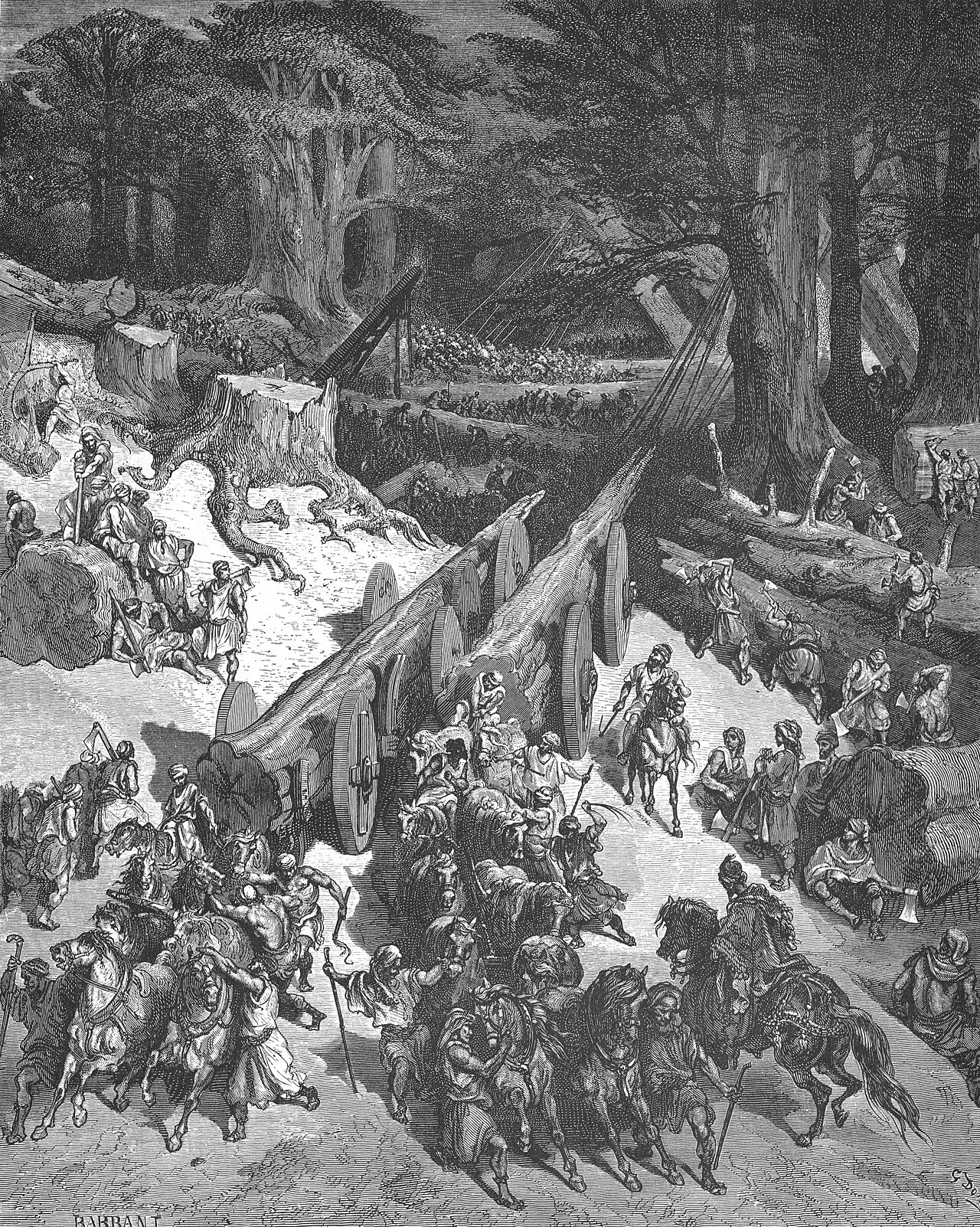
- 2 Chronicles 1:15The king made silver and gold as common in Jerusalem as stones, and cedar as abundant as sycamore in the foothills.
- 2 Chronicles 2:7Send me, therefore, a craftsman skilled in engraving to work with gold and silver, with bronze and iron, and with purple, crimson, and blue yarn. He will work with my craftsmen in Judah and Jerusalem, whom my father David provided.
- 2 Chronicles 2:16We will cut logs from Lebanon, as many as you need, and we will float them to you as rafts by sea down to Joppa. Then you can take them up to Jerusalem.”
- 2 Chronicles 3:1Then Solomon began to build the house of the LORD in Jerusalem on Mount Moriah, where the LORD had appeared to his father David. This was the place that David had prepared on the threshing floor of Ornan the Jebusite.
- 2 Chronicles 5:2At that time Solomon assembled in Jerusalem the elders of Israel—all the tribal heads and family leaders of the Israelites—to bring up the ark of the covenant of the LORD from Zion, the City of David.
109 further mentions in 2 Chronicles, read them in the book.
Ezra44 mentions
- Ezra 1:2“This is what Cyrus king of Persia says: ‘The LORD, the God of heaven, who has given me all the kingdoms of the earth, has appointed me to build a house for Him at Jerusalem in Judah.
- Ezra 1:3Whoever among you belongs to His people, may his God be with him, and may he go to Jerusalem in Judah and build the house of the LORD, the God of Israel; He is the God who is in Jerusalem.
- Ezra 1:4And let every survivor, wherever he lives, be assisted by the men of that region with silver, gold, goods, and livestock, along with a freewill offering for the house of God in Jerusalem.’”
- Ezra 1:5So the family heads of Judah and Benjamin, along with the priests and Levites—everyone whose spirit God had stirred—prepared to go up and rebuild the house of the LORD in Jerusalem.
- Ezra 1:7King Cyrus also brought out the articles belonging to the house of the LORD that Nebuchadnezzar had carried away from Jerusalem and placed in the temple of his gods.
- Ezra 1:11In all, there were 5,400 gold and silver articles. Sheshbazzar brought all these along when the exiles went up from Babylon to Jerusalem.
- Ezra 2:1Now these are the people of the province who came up from the captivity of the exiles carried away to Babylon by Nebuchadnezzar its king. They returned to Jerusalem and Judah, each to his own town,
- Ezra 2:68When they arrived at the house of the LORD in Jerusalem, some of the heads of the families gave freewill offerings to rebuild the house of God on its original site.
36 further mentions in Ezra, read them in the book.
Nehemiah34 mentions
- Nehemiah 1:2Hanani, one of my brothers, arrived with men from Judah. So I questioned them about the remnant of the Jews who had survived the exile, and also about Jerusalem.
- Nehemiah 1:3And they told me, “The remnant who survived the exile are there in the province, in great trouble and disgrace. The wall of Jerusalem is broken down, and its gates are burned with fire.”
- Nehemiah 2:11After I had arrived in Jerusalem and had been there three days,
- Nehemiah 2:12I set out at night with a few men. I did not tell anyone what my God had laid on my heart to do for Jerusalem. The only animal with me was the one on which I was riding.
- Nehemiah 2:13So I went out at night through the Valley Gate toward the Well of the Serpent and the Dung Gate, and I inspected the walls of Jerusalem that had been broken down and the gates that had been destroyed by fire.
- Nehemiah 2:17Then I said to them, “You see the trouble we are in. Jerusalem lies in ruins, and its gates have been burned down. Come, let us rebuild the wall of Jerusalem, so that we will no longer be a disgrace.”
- Nehemiah 2:20So I answered them and said, “The God of heaven is the One who will grant us success. We, His servants, will start rebuilding, but you have no portion, right, or claim in Jerusalem.”
- Nehemiah 3:8Next to them, Uzziel son of Harhaiah, one of the goldsmiths, made repairs, and next to him, Hananiah son of the perfumer made repairs. They fortified Jerusalem as far as the Broad Wall.
26 further mentions in Nehemiah, read them in the book.
Esther1 mention
Psalms18 mentions
- Psalms 51:18In Your good pleasure, cause Zion to prosper; build up the walls of Jerusalem.
- Psalms 68:29Because of Your temple at Jerusalem kings will bring You gifts.
- Psalms 76:2His tent is in Salem, His dwelling place in Zion.
- Psalms 79:1The nations, O God, have invaded Your inheritance; they have defiled Your holy temple and reduced Jerusalem to rubble.
- Psalms 79:3They have poured out their blood like water all around Jerusalem, and there is no one to bury the dead.
- Psalms 102:21that they may proclaim the name of the LORD in Zion and praise Him in Jerusalem,
- Psalms 116:19in the courts of the LORD’s house, in your midst, O Jerusalem. Hallelujah!
- Psalms 122:2Our feet are standing in your gates, O Jerusalem.
10 further mentions in Psalms, read them in the book.
Ecclesiastes5 mentions
- Ecclesiastes 1:1These are the words of the Teacher, the son of David, king in Jerusalem:
- Ecclesiastes 1:12I, the Teacher, was king over Israel in Jerusalem.
- Ecclesiastes 1:16I said to myself, “Behold, I have grown and increased in wisdom beyond all those before me who were over Jerusalem, and my mind has observed a wealth of wisdom and knowledge.”
- Ecclesiastes 2:7I acquired menservants and maidservants, and servants were born in my house. I also owned more herds and flocks than anyone in Jerusalem before me,
- Ecclesiastes 2:9So I became great and surpassed all in Jerusalem who had preceded me; and my wisdom remained with me.
Song of Solomon8 mentions
- Song of Solomon 1:5I am dark, yet lovely, O daughters of Jerusalem, like the tents of Kedar, like the curtains of Solomon.
- Song of Solomon 2:7O daughters of Jerusalem, I adjure you by the gazelles and does of the field: Do not arouse or awaken love until the time is right.
- Song of Solomon 3:5O daughters of Jerusalem, I adjure you by the gazelles and does of the field: Do not arouse or awaken love until the time is right.
- Song of Solomon 3:10He has made its posts of silver, its base of gold, its seat of purple fabric. Its interior is inlaid with love by the daughters of Jerusalem.
- Song of Solomon 5:8O daughters of Jerusalem, I adjure you, if you find my beloved, tell him I am sick with love.
- Song of Solomon 5:16His mouth is most sweet; he is altogether lovely. This is my beloved, and this is my friend, O daughters of Jerusalem.
- Song of Solomon 6:4You are as beautiful, my darling, as Tirzah, as lovely as Jerusalem, as majestic as troops with banners.
- Song of Solomon 8:4O daughters of Jerusalem, I adjure you: Do not arouse or awaken love until the time is right.
Isaiah47 mentions
- Isaiah 1:1This is the vision concerning Judah and Jerusalem that Isaiah son of Amoz saw during the reigns of Uzziah, Jotham, Ahaz, and Hezekiah, kings of Judah.
- Isaiah 2:1This is the message that was revealed to Isaiah son of Amoz concerning Judah and Jerusalem:
- Isaiah 2:3And many peoples will come and say: “Come, let us go up to the mountain of the LORD, to the house of the God of Jacob. He will teach us His ways so that we may walk in His paths.” For the law will go forth from Zion, and the word of the LORD from Jerusalem.
- Isaiah 3:1For behold, the Lord GOD of Hosts is about to remove from Jerusalem and Judah both supply and support: the whole supply of food and water,
- Isaiah 3:8For Jerusalem has stumbled and Judah has fallen because they spoke and acted against the LORD, defying His glorious presence.
- Isaiah 4:3Whoever remains in Zion and whoever is left in Jerusalem will be called holy—all in Jerusalem who are recorded among the living—
- Isaiah 4:4when the Lord has washed away the filth of the daughters of Zion and cleansed the bloodstains from the heart of Jerusalem by a spirit of judgment and a spirit of fire.
- Isaiah 5:3“And now, O dwellers of Jerusalem and men of Judah, I exhort you to judge between Me and My vineyard.
39 further mentions in Isaiah, read them in the book.
Jeremiah98 mentions
- Jeremiah 1:3and through the days of Jehoiakim son of Josiah king of Judah, until the fifth month of the eleventh year of Zedekiah son of Josiah king of Judah, when the people of Jerusalem went into exile.
- Jeremiah 1:15For I am about to summon all the clans and kingdoms of the north,” declares the LORD. “Their kings will come and set up their thrones at the entrance of the gates of Jerusalem. They will attack all her surrounding walls and all the other cities of Judah.
- Jeremiah 2:2“Go and proclaim in the hearing of Jerusalem that this is what the LORD says: ‘I remember the devotion of your youth, your love as a bride, how you followed Me in the wilderness, in a land not sown.
- Jeremiah 3:17At that time Jerusalem will be called The Throne of the LORD, and all the nations will be gathered in Jerusalem to honor the name of the LORD. They will no longer follow the stubbornness of their evil hearts.
- Jeremiah 4:3For this is what the LORD says to the men of Judah and Jerusalem: “Break up your unplowed ground, and do not sow among the thorns.
- Jeremiah 4:4Circumcise yourselves to the LORD, and remove the foreskins of your hearts, O men of Judah and people of Jerusalem. Otherwise, My wrath will break out like fire and burn with no one to extinguish it, because of your evil deeds.”
- Jeremiah 4:5Announce in Judah, proclaim in Jerusalem, and say: “Blow the ram’s horn throughout the land. Cry aloud and say, ‘Assemble yourselves and let us flee to the fortified cities.’
- Jeremiah 4:10Then I said, “Ah, Lord GOD, how completely You have deceived this people and Jerusalem by saying, ‘You will have peace,’ while a sword is at our throats.”
90 further mentions in Jeremiah, read them in the book.
Lamentations7 mentions
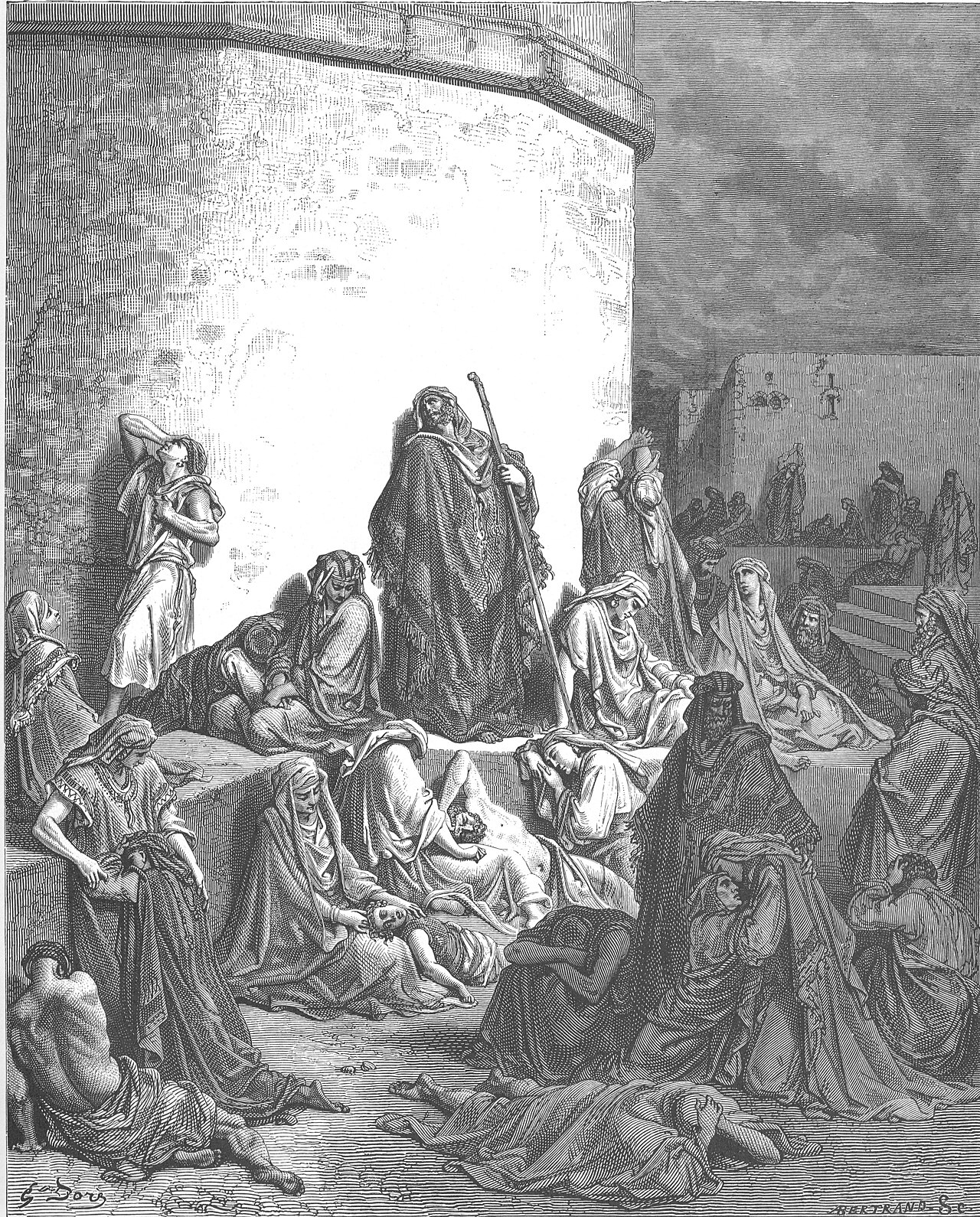
- Lamentations 1:7In the days of her affliction and wandering Jerusalem remembers all the treasures that were hers in days of old. When her people fell into enemy hands she received no help. Her enemies looked upon her, laughing at her downfall.
- Lamentations 1:8Jerusalem has sinned greatly; therefore she has become an object of scorn. All who honored her now despise her, for they have seen her nakedness; she herself groans and turns away.
- Lamentations 1:17Zion stretches out her hands, but there is no one to comfort her. The LORD has decreed against Jacob that his neighbors become his foes. Jerusalem has become an unclean thing among them.
- Lamentations 2:10The elders of the Daughter of Zion sit on the ground in silence. They have thrown dust on their heads and put on sackcloth. The young women of Jerusalem have bowed their heads to the ground.
- Lamentations 2:13What can I say for you? To what can I compare you, O Daughter of Jerusalem? To what can I liken you, that I may console you, O Virgin Daughter of Zion? For your wound is as deep as the sea. Who can ever heal you?
- Lamentations 2:15All who pass by clap their hands at you in scorn. They hiss and shake their heads at the Daughter of Jerusalem: “Is this the city that was called the perfection of beauty, the joy of all the earth?”
- Lamentations 4:12The kings of the earth did not believe, nor any people of the world, that an enemy or a foe could enter the gates of Jerusalem.
Ezekiel28 mentions
- Ezekiel 4:1“Now you, son of man, take a brick, place it before you, and draw on it the city of Jerusalem.
- Ezekiel 4:7You must turn your face toward the siege of Jerusalem with your arm bared, and prophesy against it.
- Ezekiel 4:16Then He told me, “Son of man, I am going to cut off the supply of food in Jerusalem. They will anxiously eat bread rationed by weight, and in despair they will drink water by measure.
- Ezekiel 5:5This is what the Lord GOD says: ‘This is Jerusalem, which I have set in the center of the nations, with countries all around her.
- Ezekiel 5:8Therefore this is what the Lord GOD says: ‘Behold, I Myself am against you, Jerusalem, and I will execute judgments among you in the sight of the nations.
- Ezekiel 8:3He stretched out what looked like a hand and took me by the hair of my head. Then the Spirit lifted me up between earth and heaven and carried me in visions of God to Jerusalem, to the entrance of the north gate of the inner court, where the idol that provokes jealousy was seated.
- Ezekiel 9:4“Go throughout the city of Jerusalem,” said the LORD, “and put a mark on the foreheads of the men sighing and groaning over all the abominations committed there.”
- Ezekiel 9:8While they were killing, I was left alone. And I fell facedown and cried out, “Oh, Lord GOD, when You pour out Your wrath on Jerusalem, will You destroy the entire remnant of Israel?”
20 further mentions in Ezekiel, read them in the book.
Daniel9 mentions
- Daniel 1:1In the third year of the reign of Jehoiakim king of Judah, Nebuchadnezzar king of Babylon came to Jerusalem and besieged it.
- Daniel 5:2Under the influence of the wine, Belshazzar gave orders to bring in the gold and silver vessels that Nebuchadnezzar his father had taken from the temple in Jerusalem, so that the king could drink from them, along with his nobles, his wives, and his concubines.
- Daniel 5:3Thus they brought in the gold vessels that had been taken from the temple, the house of God in Jerusalem, and the king drank from them, along with his nobles, his wives, and his concubines.
- Daniel 6:10Now when Daniel learned that the document had been signed, he went into his house, where the windows of his upper room opened toward Jerusalem, and three times a day he got down on his knees, prayed, and gave thanks to his God, just as he had done before.
- Daniel 9:2in the first year of his reign, I, Daniel, understood from the sacred books, according to the word of the LORD to Jeremiah the prophet, that the desolation of Jerusalem would last seventy years.
- Daniel 9:7To You, O Lord, belongs righteousness, but this day we are covered with shame—the men of Judah, the people of Jerusalem, and all Israel near and far, in all the countries to which You have driven us because of our unfaithfulness to You.
- Daniel 9:12You have carried out the words spoken against us and against our rulers by bringing upon us a great disaster. For under all of heaven, nothing has ever been done like what has been done to Jerusalem.
- Daniel 9:16O Lord, in keeping with all Your righteous acts, I pray that Your anger and wrath may turn away from Your city Jerusalem, Your holy mountain; for because of our sins and the iniquities of our fathers, Jerusalem and Your people are a reproach to all around us.
1 further mention in Daniel, read them in the book.
Joel6 mentions
- Joel 2:32And everyone who calls on the name of the LORD will be saved; for on Mount Zion and in Jerusalem there will be deliverance, as the LORD has promised, among the remnant called by the LORD.
- Joel 3:1“Yes, in those days and at that time, when I restore Judah and Jerusalem from captivity,
- Joel 3:6You sold the people of Judah and Jerusalem to the Greeks, to send them far from their homeland.
- Joel 3:16The LORD will roar from Zion and raise His voice from Jerusalem; heaven and earth will tremble. But the LORD will be a refuge for His people, a stronghold for the people of Israel.
- Joel 3:17Then you will know that I am the LORD your God, who dwells in Zion, My holy mountain. Jerusalem will be holy, never again to be overrun by foreigners.
- Joel 3:20But Judah will be inhabited forever, and Jerusalem from generation to generation.
Amos2 mentions
Obadiah2 mentions
- Obadiah 1:11On the day you stood aloof while strangers carried off his wealth and foreigners entered his gate and cast lots for Jerusalem, you were just like one of them.
- Obadiah 1:20And the exiles of this host of the Israelites will possess the land of the Canaanites as far as Zarephath; and the exiles from Jerusalem who are in Sepharad will possess the cities of the Negev.
Micah8 mentions
- Micah 1:1This is the word of the LORD that came to Micah the Moreshite in the days of Jotham, Ahaz, and Hezekiah, kings of Judah—what he saw regarding Samaria and Jerusalem:
- Micah 1:5All this is for the transgression of Jacob and the sins of the house of Israel. What is the transgression of Jacob? Is it not Samaria? And what is the high place of Judah? Is it not Jerusalem?
- Micah 1:9For her wound is incurable; it has reached even Judah; it has approached the gate of my people, as far as Jerusalem itself.
- Micah 1:12For the dwellers of Maroth pined for good, but calamity came down from the LORD, even to the gate of Jerusalem.
- Micah 3:10who build Zion with bloodshed and Jerusalem with iniquity.
- Micah 3:12Therefore, because of you, Zion will be plowed like a field, Jerusalem will become a heap of rubble, and the temple mount a wooded ridge.
- Micah 4:2And many nations will come and say: “Come, let us go up to the mountain of the LORD, to the house of the God of Jacob. He will teach us His ways, so that we may walk in His paths.” For the law will go forth from Zion and the word of the LORD from Jerusalem.
- Micah 4:8And you, O watchtower of the flock, O stronghold of the Daughter of Zion—the former dominion will be restored to you; sovereignty will come to the Daughter of Jerusalem.”
Zephaniah4 mentions
- Zephaniah 1:4“I will stretch out My hand against Judah and against all who dwell in Jerusalem. I will cut off from this place every remnant of Baal, the names of the idolatrous and pagan priests—
- Zephaniah 1:12And at that time I will search Jerusalem with lamps and punish the men settled in complacency, who say to themselves, ‘The LORD will do nothing, either good or bad.’
- Zephaniah 3:14Sing for joy, O Daughter of Zion; shout aloud, O Israel! Be glad and rejoice with all your heart, O Daughter of Jerusalem!
- Zephaniah 3:16On that day they will say to Jerusalem: “Do not fear, O Zion; do not let your hands fall limp.
Zechariah37 mentions
- Zechariah 1:12Then the angel of the LORD said, “How long, O LORD of Hosts, will You withhold mercy from Jerusalem and the cities of Judah, with which You have been angry these seventy years?”
- Zechariah 1:14Then the angel who was speaking with me said, “Proclaim this word: This is what the LORD of Hosts says: ‘I am very jealous for Jerusalem and Zion,
- Zechariah 1:16Therefore this is what the LORD says: ‘I will return to Jerusalem with mercy, and there My house will be rebuilt, declares the LORD of Hosts, and a measuring line will be stretched out over Jerusalem.’
- Zechariah 1:17Proclaim further that this is what the LORD of Hosts says: ‘My cities will again overflow with prosperity; the LORD will again comfort Zion and choose Jerusalem.’”
- Zechariah 1:19So I asked the angel who was speaking with me, “What are these?” And he told me, “These are the horns that have scattered Judah, Israel, and Jerusalem.”
- Zechariah 2:2“Where are you going?” I asked. “To measure Jerusalem,” he replied, “and to determine its width and length.”
- Zechariah 2:4and said to him, “Run and tell that young man: ‘Jerusalem will be a city without walls because of the multitude of men and livestock within it.
- Zechariah 2:12And the LORD will take possession of Judah as His portion in the Holy Land, and He will once again choose Jerusalem.
29 further mentions in Zechariah, read them in the book.
Malachi2 mentions
- Malachi 2:11Judah has broken faith; an abomination has been committed in Israel and in Jerusalem. For Judah has profaned the LORD’s beloved sanctuary by marrying the daughter of a foreign god.
- Malachi 3:4Then the offerings of Judah and Jerusalem will please the LORD, as in days of old and years gone by.
New Testament10 books · 143 mentions
Matthew12 mentions
- Matthew 2:1After Jesus was born in Bethlehem in Judea, during the time of King Herod, Magi from the east arrived in Jerusalem,
- Matthew 2:3When King Herod heard this, he was disturbed, and all Jerusalem with him.
- Matthew 3:5People went out to him from Jerusalem and all Judea and the whole region around the Jordan.
- Matthew 4:25The large crowds that followed Him came from Galilee, the Decapolis, Jerusalem, Judea, and beyond the Jordan.
- Matthew 5:35or by the earth, for it is His footstool; or by Jerusalem, for it is the city of the great King.
- Matthew 15:1Then some Pharisees and scribes came to Jesus from Jerusalem and asked,
- Matthew 16:21From that time on Jesus began to show His disciples that He must go to Jerusalem and suffer many things at the hands of the elders, chief priests, and scribes, and that He must be killed and on the third day be raised to life.
- Matthew 20:17As Jesus was going up to Jerusalem, He took the twelve disciples aside and said,
4 further mentions in Matthew, read them in the book.
Mark11 mentions
- Mark 1:5People went out to him from all of Jerusalem and the countryside of Judea. Confessing their sins, they were baptized by him in the Jordan River.
- Mark 3:8Jerusalem, Idumea, the region beyond the Jordan, and the vicinity of Tyre and Sidon. The large crowd came to Him when they heard what great things He was doing.
- Mark 3:22And the scribes who had come down from Jerusalem were saying, “He is possessed by Beelzebul,” and, “By the prince of the demons He drives out demons.”
- Mark 7:1Then the Pharisees and some of the scribes who had come from Jerusalem gathered around Jesus,
- Mark 10:32As they were going up the road to Jerusalem, Jesus was walking ahead of them. The disciples were amazed, but those who followed were afraid. Again Jesus took the Twelve aside and began to tell them what was going to happen to Him:
- Mark 10:33“Look, we are going up to Jerusalem, and the Son of Man will be delivered over to the chief priests and scribes. They will condemn Him to death and will deliver Him over to the Gentiles,
- Mark 11:1As they approached Jerusalem and came to Bethphage and Bethany at the Mount of Olives, Jesus sent out two of His disciples
- Mark 11:11Then Jesus entered Jerusalem and went into the temple courts. He looked around at everything, but since it was already late, He went out to Bethany with the Twelve.
3 further mentions in Mark, read them in the book.
Luke31 mentions
- Luke 2:22And when the time of purification according to the Law of Moses was complete, His parents brought Him to Jerusalem to present Him to the Lord
- Luke 2:25Now there was a man in Jerusalem named Simeon, who was righteous and devout. He was waiting for the consolation of Israel, and the Holy Spirit was upon him.
- Luke 2:38Coming forward at that moment, she gave thanks to God and spoke about the Child to all who were waiting for the redemption of Jerusalem.
- Luke 2:41Every year His parents went to Jerusalem for the Feast of the Passover.
- Luke 2:43When those days were over and they were returning home, the boy Jesus remained behind in Jerusalem, but His parents were unaware He had stayed.
- Luke 2:45When they could not find Him, they returned to Jerusalem to search for Him.
- Luke 4:9Then the devil led Him to Jerusalem and set Him on the pinnacle of the temple. “If You are the Son of God,” he said, “throw Yourself down from here.
- Luke 5:17One day Jesus was teaching, and the Pharisees and teachers of the law were sitting there. People had come from Jerusalem and from every village of Galilee and Judea, and the power of the Lord was present for Him to heal the sick.
23 further mentions in Luke, read them in the book.
John13 mentions
- John 1:19And this was John’s testimony when the Jews of Jerusalem sent priests and Levites to ask him, “Who are you?”
- John 2:13When the Jewish Passover was near, Jesus went up to Jerusalem.
- John 2:23While He was in Jerusalem at the Passover Feast, many people saw the signs He was doing and believed in His name.
- John 4:20Our fathers worshiped on this mountain, but you Jews say that the place where one must worship is in Jerusalem.”
- John 4:21“Believe Me, woman,” Jesus replied, “a time is coming when you will worship the Father neither on this mountain nor in Jerusalem.
- John 4:45Yet when He arrived, the Galileans welcomed Him. They had seen all the great things He had done in Jerusalem at the feast, for they had gone there as well.
- John 5:1Some time later there was a feast of the Jews, and Jesus went up to Jerusalem.
- John 5:2Now there is in Jerusalem near the Sheep Gate a pool with five covered colonnades, which in Hebrew is called Bethesda.
5 further mentions in John, read them in the book.
Acts60 mentions
- Acts 1:4And while they were gathered together, He commanded them: “Do not leave Jerusalem, but wait for the gift the Father promised, which you have heard Me discuss.
- Acts 1:8But you will receive power when the Holy Spirit comes upon you, and you will be My witnesses in Jerusalem, and in all Judea and Samaria, and to the ends of the earth.”
- Acts 1:12Then they returned to Jerusalem from the Mount of Olives, which is near the city, a Sabbath day’s journey away.
- Acts 1:19This became known to all who lived in Jerusalem, so they called that field in their own language Akeldama, that is, Field of Blood.)
- Acts 2:5Now there were dwelling in Jerusalem God-fearing Jews from every nation under heaven.
- Acts 2:14Then Peter stood up with the Eleven, lifted up his voice, and addressed the crowd: “Men of Judea and all who dwell in Jerusalem, let this be known to you, and listen carefully to my words.
- Acts 4:5The next day the rulers, elders, and scribes assembled in Jerusalem,
- Acts 4:16“What shall we do with these men?” they asked. “It is clear to everyone living in Jerusalem that a remarkable miracle has occurred through them, and we cannot deny it.
52 further mentions in Acts, read them in the book.
Romans4 mentions
- Romans 15:19by the power of signs and wonders, and by the power of the Spirit of God. So from Jerusalem all the way around to Illyricum, I have fully proclaimed the gospel of Christ.
- Romans 15:25Now, however, I am on my way to Jerusalem to serve the saints there.
- Romans 15:26For Macedonia and Achaia were pleased to make a contribution for the poor among the saints in Jerusalem.
- Romans 15:31Pray that I may be delivered from the unbelievers in Judea, and that my service in Jerusalem may be acceptable to the saints there,
1 Corinthians1 mention
Galatians5 mentions
- Galatians 1:17nor did I go up to Jerusalem to the apostles who came before me, but I went into Arabia and later returned to Damascus.
- Galatians 1:18Only after three years did I go up to Jerusalem to confer with Cephas, and I stayed with him fifteen days.
- Galatians 2:1Fourteen years later I went up again to Jerusalem, accompanied by Barnabas. I took Titus along also.
- Galatians 4:25Now Hagar stands for Mount Sinai in Arabia and corresponds to the present-day Jerusalem, because she is in slavery with her children.
- Galatians 4:26But the Jerusalem above is free, and she is our mother.
Hebrews3 mentions
- Hebrews 7:1This Melchizedek was king of Salem and priest of God Most High. He met Abraham returning from the slaughter of the kings and blessed him,
- Hebrews 7:2and Abraham apportioned to him a tenth of everything. First, his name means “king of righteousness.” Then also, “king of Salem” means “king of peace.”
- Hebrews 12:22Instead, you have come to Mount Zion, to the city of the living God, the heavenly Jerusalem. You have come to myriads of angels
Revelation3 mentions
- Revelation 3:12The one who overcomes I will make a pillar in the temple of My God, and he will never again leave it. Upon him I will write the name of My God, and the name of the city of My God (the new Jerusalem that comes down out of heaven from My God), and My new name.
- Revelation 21:2I saw the holy city, the new Jerusalem, coming down out of heaven from God, prepared as a bride adorned for her husband.
- Revelation 21:10And he carried me away in the Spirit to a mountain great and high, and showed me the holy city of Jerusalem coming down out of heaven from God,
The account
Read the account as one telling
The first name Scripture gives this ridge is Salem. Melchizedek is already its king and already priest of God Most High when Abram comes back from rescuing Lot, and he brings out bread and wine and blesses him (Genesis 14:18 to 14:20). Psalm 76:2 sets Salem in parallel with Zion, which is the main reason most readers take Salem to be this city. The identification is taken up further down this page.
By Joshua's day the town is called Jebus and the Jebusites hold it. The allotment list gives it to Benjamin under both names, Jebus and Jerusalem (Joshua 18:28), and Judges shows a traveller refusing to stop there for the night because it was not an Israelite town (Judges 19:10 to 19:11). Israel lived all around this ridge for generations without holding the top of it.
David took it after seven years reigning at Hebron. The Jebusites told him the blind and the lame could keep him out. The text says he captured the fortress of Zion, that the attack went in by a water shaft, and that he moved in and built the place up from the supporting terraces inward (2 Samuel 5:6 to 5:9). Then he brought the ark up from the house of Obed-edom with sacrifice every six paces, dancing in a linen ephod, and the sound of the ram's horn (2 Samuel 6:12 to 6:15).
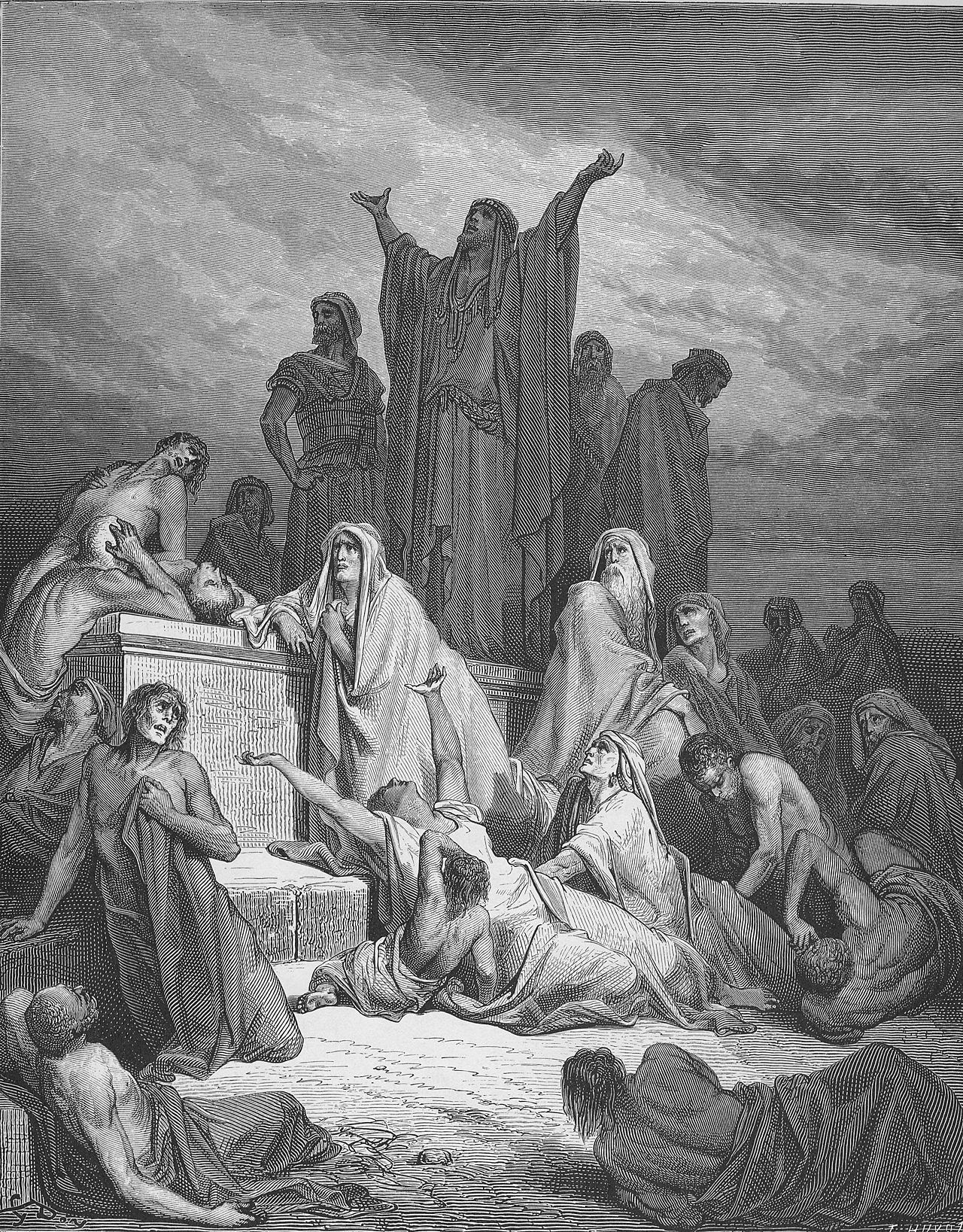
The temple site came later, and it came out of a plague. David was told to build an altar on the threshing floor of Araunah the Jebusite, he bought the ground and built there, and the plague stopped (2 Samuel 24:18 to 24:25). Solomon built the house of the LORD on that floor, and 2 Chronicles 3:1 names the hill: "Then Solomon began to build the house of the LORD in Jerusalem on Mount Moriah, where the LORD had appeared to his father David." When the cloud filled the finished house the priests could not stand to minister, and Solomon prayed that God would hear from heaven whatever was prayed toward this place.
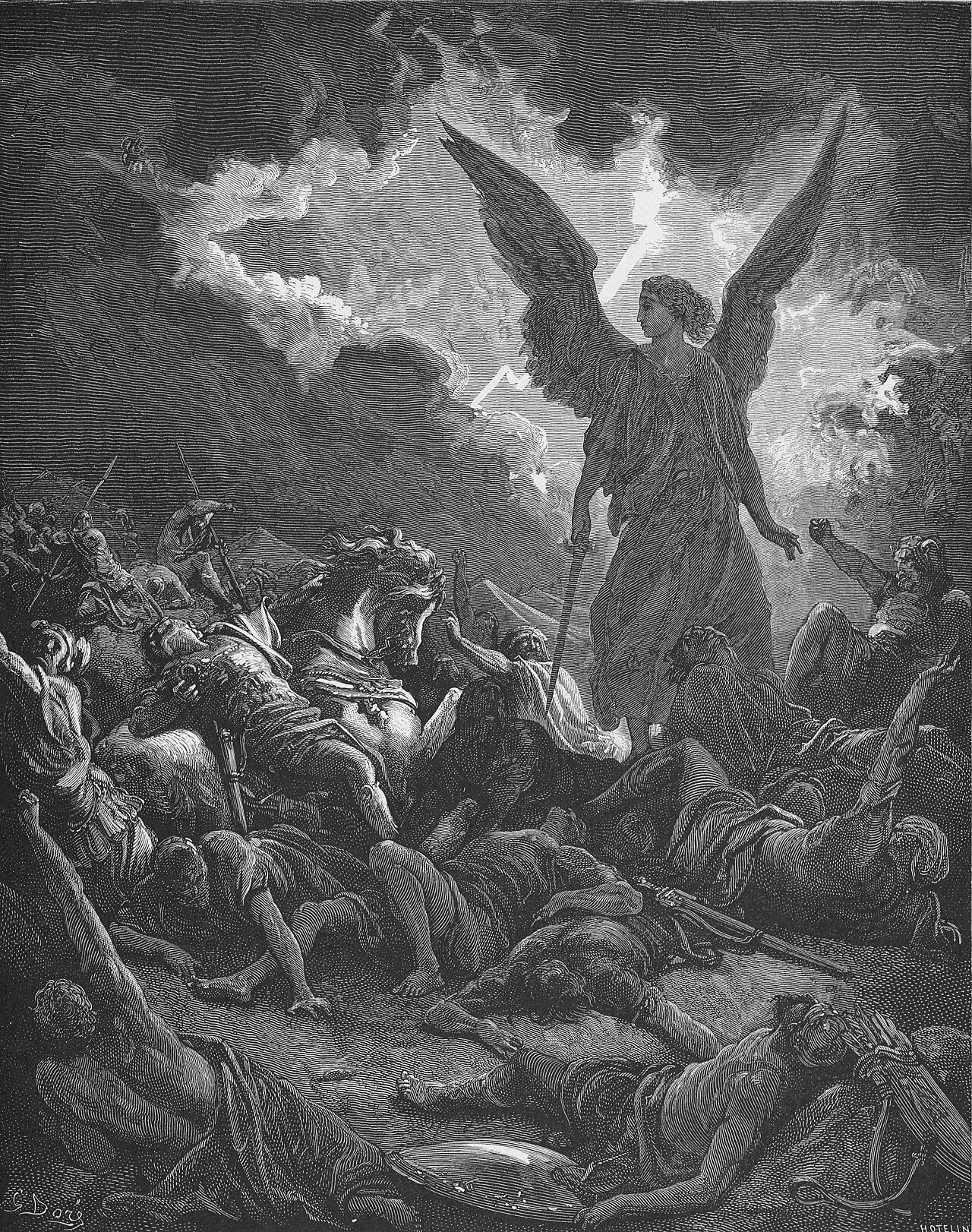
After Solomon the kingdom split and Jerusalem stayed the capital of Judah. Its hardest test came when Sennacherib of Assyria took every fortified city of Judah and turned toward the capital. Hezekiah stopped up the springs outside the wall and channelled the Gihon's water down inside the City of David (2 Chronicles 32:2 to 32:4 and 32:30). The Assyrians never got in. 2 Kings 19:35 says the angel of the LORD went out that night and struck down 185,000 men in their camp.
Babylon ended the first city. Nebuchadnezzar's army encamped against it in Zedekiah's ninth year and built a siege wall all around it. The wall was breached, Nebuzaradan came and burned the house of the LORD and the royal palace and every significant building, and the Chaldeans broke down the walls (2 Kings 25:1 to 25:10). Lamentations was written over that ruin, and it opens by asking how the city so full of people now sits alone.
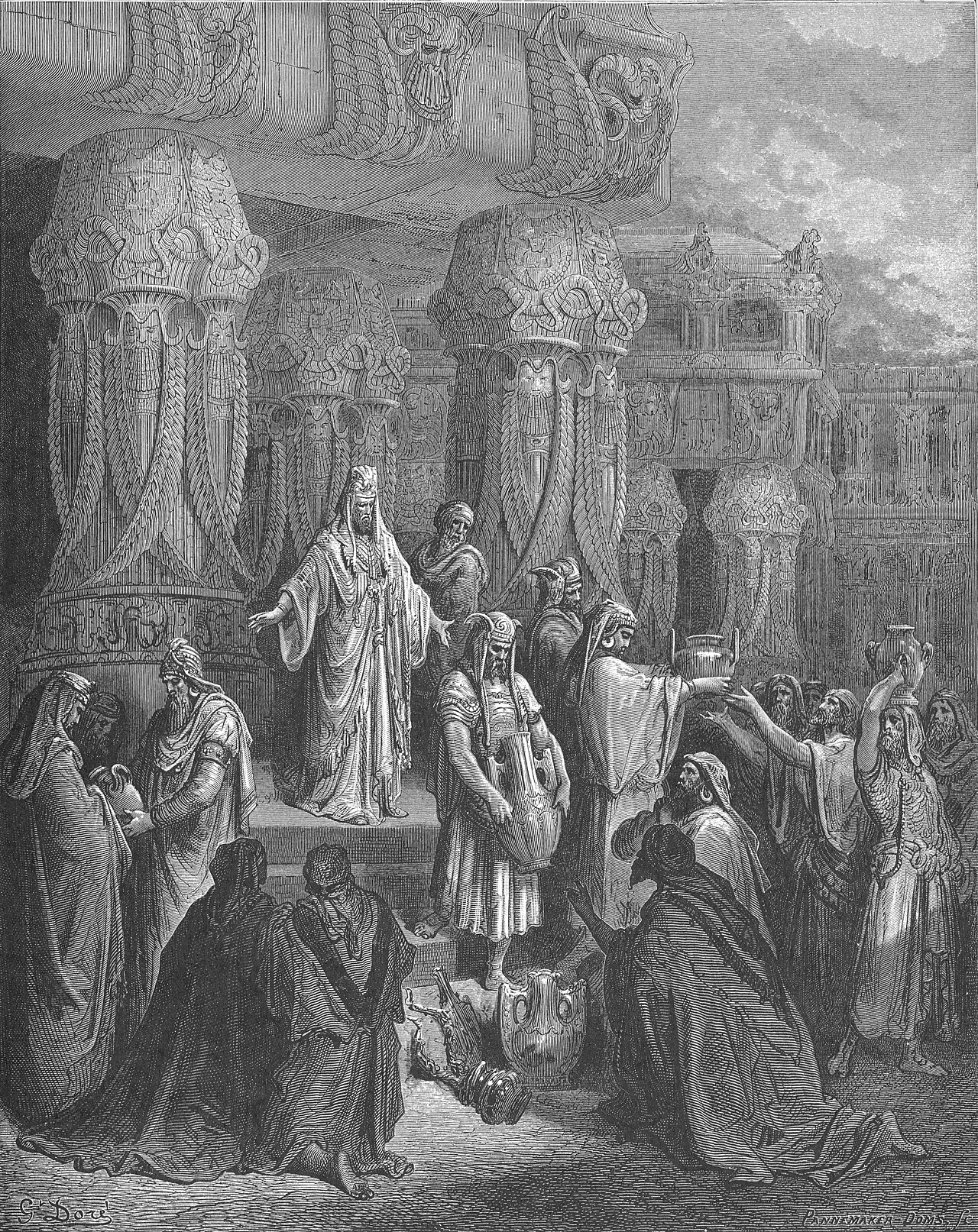
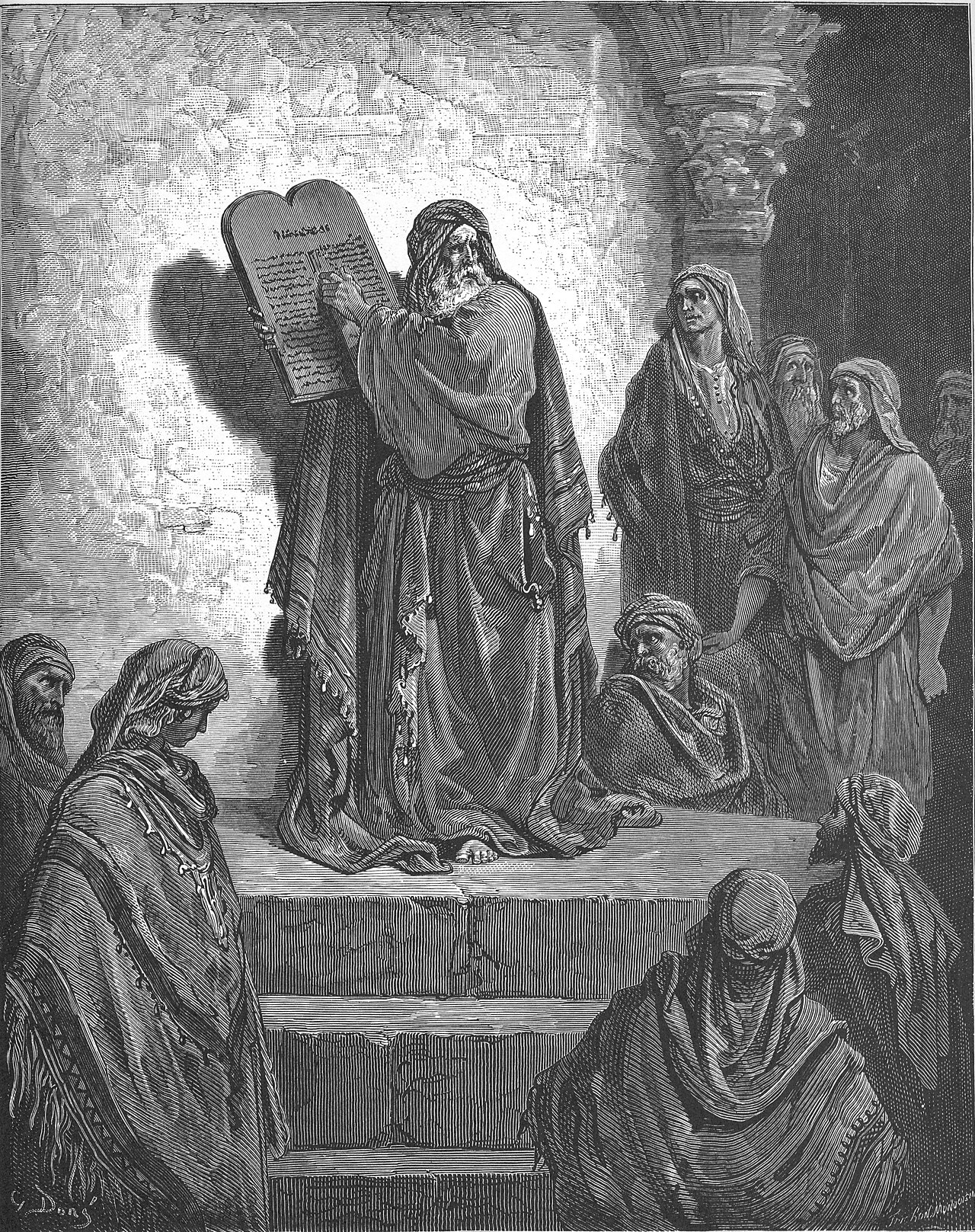
Cyrus of Persia sent the exiles back with orders to build the house of God at Jerusalem (Ezra 1:2). The foundation was laid to trumpets and cymbals, and the old priests and family heads who had seen the first temple wept so loudly that nobody could tell the weeping from the shouting (Ezra 3:10 to 3:13). The wall stayed broken for roughly another ninety years, until Nehemiah came from Susa, rode around the ruins at night, and finished the repair in fifty-two days. That is the story outlined above.
Herod the Great rebuilt the temple on a hugely enlarged platform in the decades before Jesus was born, and the lower courses of that platform's retaining walls are the stones a visitor still sees. Jesus came up to this city for the feasts, cleared the temple courts, wept over it on his last approach, and was crucified outside its gate. He was raised here on the first day of the week, the Spirit was given here at Pentecost, and the first church was a Jerusalem church that was told to carry the news outward from it.
Common questions
Why is Jerusalem the most important city in the Bible?
God chose it as the place where His Name would dwell, and Solomon prayed toward that promise when the temple was dedicated. David captured the Jebusite stronghold and brought the ark up to it, which turned a hill fort into the centre of Israel's worship.
Then Jesus was crucified and raised there, and the Spirit was given there at Pentecost. Scripture closes with a city bearing its name coming down out of heaven.
Was the Salem of Genesis 14 really Jerusalem?
Readers differ; the positions are named
Melchizedek is called king of Salem, and Psalm 76:2 sets Salem in parallel with Zion, which is the main reason most readers identify it with Jerusalem. Josephus took the same view.
Others have proposed a different Salem in the north, near Shechem or near Scythopolis, a reading Jerome records. The text itself gives no coordinates. This page presents the Jerusalem identification as the widely held reading and names the alternative rather than closing the question.
Is the Mount Moriah of Genesis 22 the same place as the Temple Mount?
Readers differ; the positions are named
The Chronicler makes the identification directly, saying Solomon built the house of the LORD on Mount Moriah, where the LORD had appeared to his father David. Genesis 22:2 says only the land of Moriah and names one of its mountains without saying which one.
The Samaritan tradition places the binding of Isaac on Mount Gerizim instead. This page gives the Chronicler's statement its full weight and names the Samaritan reading as a real and different tradition.
Did archaeologists find King David's palace?
Readers differ; the positions are named
Eilat Mazar excavated monumental walls above the Stepped Stone Structure in the City of David from 2005 and identified them as the palace of 2 Samuel 5:11, publishing in Biblical Archaeology Review 32:1 (2006). Israel Finkelstein, Ze'ev Herzog, Lily Singer-Avitz and David Ussishkin answered her in Tel Aviv 34:2 (2007), arguing the walls are not demonstrably one building and the dating allows later periods.
Amihai Mazar accepts a tenth-century date for parts of the complex while staying cautious about the identification. The stones are there and they are monumental. Whose house they were is not settled.
Is Hezekiah's Tunnel really Hezekiah's?
The Bible says Hezekiah stopped the springs outside the city and channelled the Gihon's water down inside it. The tunnel exists, runs about 533 metres under the ridge, and carried an inscription found in 1880 describing the two digging teams meeting.
John Rogerson and Philip Davies argued in 1996 for a much later Hasmonean date. Radiometric dating of the tunnel's plaster and stalactites, published in Nature in 2003, returned a date around 700 BC, and that is the field's majority position now. The exchange is set out in full further up this page.
Where in Jerusalem was Jesus crucified and buried?
Readers differ; the positions are named
John says He was crucified at The Place of the Skull, outside the city, and Hebrews 13:12 says He suffered outside the gate. Two sites are offered for it today.
The Church of the Holy Sepulchre stands on ground that lay outside the wall in Jesus' day, over an old quarry with rock-cut tombs, and the identification goes back to the fourth century; most archaeologists favour it. The Garden Tomb was promoted by Charles Gordon in 1883, and Gabriel Barkay's 1986 study dates that tomb to the Iron Age, centuries too early. This page names both and leaves the reader to weigh them.
Why did Jesus weep over Jerusalem?
He gives the reason Himself, that they did not recognize the time of their visitation from God. He wept as He came down toward the city on His last approach to it, and He described in advance the siege that would surround it.
The same grief is in Matthew 23:37, where He says He longed to gather the city's children as a hen gathers her chicks. That sentence ends with their unwillingness rather than with a curse.
What happened to Jerusalem in AD 70, and how do we know?
Roman armies under Titus besieged the city, built a wall of circumvallation around it, broke through, burned the temple and levelled the fortifications. Jesus had described that siege forty years earlier.
The eyewitness account is Josephus, The Jewish War, Book VI; he commanded Jewish forces in Galilee at the start of the war and was with the Romans by its end. The physical record includes the Burnt House in the Jewish Quarter, excavated by Nahman Avigad in 1970, with its ash layer and a stone weight naming the priestly family bar Kathros. The ancient casualty figures differ sharply and no modern historian takes them at face value: Josephus gives 1,100,000 dead, and Tacitus in Histories 5.13 gives 600,000 as the number besieged.
Notable art
10 verified pieces depicting Jerusalem
Sources cited
- Easton's Bible Dictionary (1897): Jerusalemread 2026-04-17Public domain.
- ISBE (1915): Jerusalemread 2026-04-17Public domain.
- Matthew Henry, An Exposition of the Old and New Testament (1708–1710): on Genesis 14:18read 2026-08-05Public domain — free to read in full. The reading behind Salem as Jerusalem.
- Josephus, The Jewish War (Whiston tr., public domain)read 2026-04-17Book VI is the eyewitness account of the AD 70 siege, quotable in full.
- Wikipedia: Jerusalemread 2026-04-17Background reading, credited under CC-BY-SA. No claim on this page rests on it.
- Gustave Doré, La Sainte Bible (Tours: Alfred Mame et fils, 1866)The engravings on this page. Public domain.
- Charles Warren and Claude Conder, The Survey of Western Palestine: Jerusalem (Palestine Exploration Fund, 1884)The first systematic survey of the city, and the shafts and tunnels the later work builds on.
- Kathleen M. Kenyon, Digging Up Jerusalem (London: Ernest Benn, 1974)Her City of David excavations, 1961 to 1967.
- Nahman Avigad, Discovering Jerusalem (Nashville: Thomas Nelson, 1983)The Jewish Quarter excavations from 1970: the Broad Wall and the Burnt House.
- Ronny Reich, Excavating the City of David: Where Jerusalem's History Began (Israel Exploration Society, 2011)The Gihon Spring work, Warren's Shaft re-read, and the Pool of Siloam.
- Amos Frumkin, Aryeh Shimron and Jeff Rosenbaum, "Radiometric dating of the Siloam Tunnel, Jerusalem", Nature 425 (2003), 169 to 171The radiometric date of around 700 BC for the tunnel.
- John Rogerson and Philip R. Davies, "Was the Siloam Tunnel Built by Hezekiah?", Biblical Archaeologist 59:3 (1996)The argument for a Hasmonean date, cited for the position it argues.
- Eilat Mazar, "Did I Find King David's Palace?", Biblical Archaeology Review 32:1 (2006)The identification of the Large Stone Structure as David's palace.
- Israel Finkelstein, Ze'ev Herzog, Lily Singer-Avitz and David Ussishkin, "Has King David's Palace in Jerusalem Been Found?", Tel Aviv 34:2 (2007), 142 to 164The reply to Eilat Mazar, in print, in the same field.
- Gabriel Barkay, "The Garden Tomb: Was Jesus Buried Here?", Biblical Archaeology Review 12:2 (1986)The Iron Age dating of the Garden Tomb.
- Gabriel Barkay, Andrew G. Vaughn, Marilyn J. Lundberg and Bruce Zuckerman, "The Amulets from Ketef Hinnom: A New Edition and Evaluation", BASOR 334 (2004)The silver amulets carrying the priestly blessing, the oldest known text of Scripture.
- Vassilios Tzaferis, "Jewish Tombs at and near Giv'at ha-Mivtar, Jerusalem", Israel Exploration Journal 20 (1970)The heel bone of Yehohanan with the nail still in it, the only skeletal evidence of Roman crucifixion.
- Zvi Greenhut, "The Caiaphas Tomb in North Talpiyot, Jerusalem", 'Atiqot 21 (1992)The ossuary inscribed with a form of the name Caiaphas, and the debate over the spelling.
- Tacitus, Histories 5.13The alternative figure for the number besieged in AD 70.
- Charles H. Spurgeon, The Treasury of David, Vol. 6Public domain.
- J.C. Ryle, Expository Thoughts on the Gospels: Luke (1858)Public domain, Grace Gems edition.
- Jamieson, Fausset & Brown, Commentary Critical and Explanatory on the Whole Bible (1871)Public domain.
- Albert Barnes, Notes, Explanatory and Practical, on the Old and New Testaments (1832-1869)Public domain.
- Matthew Henry, Commentary on the Whole Bible (1710)Public domain.
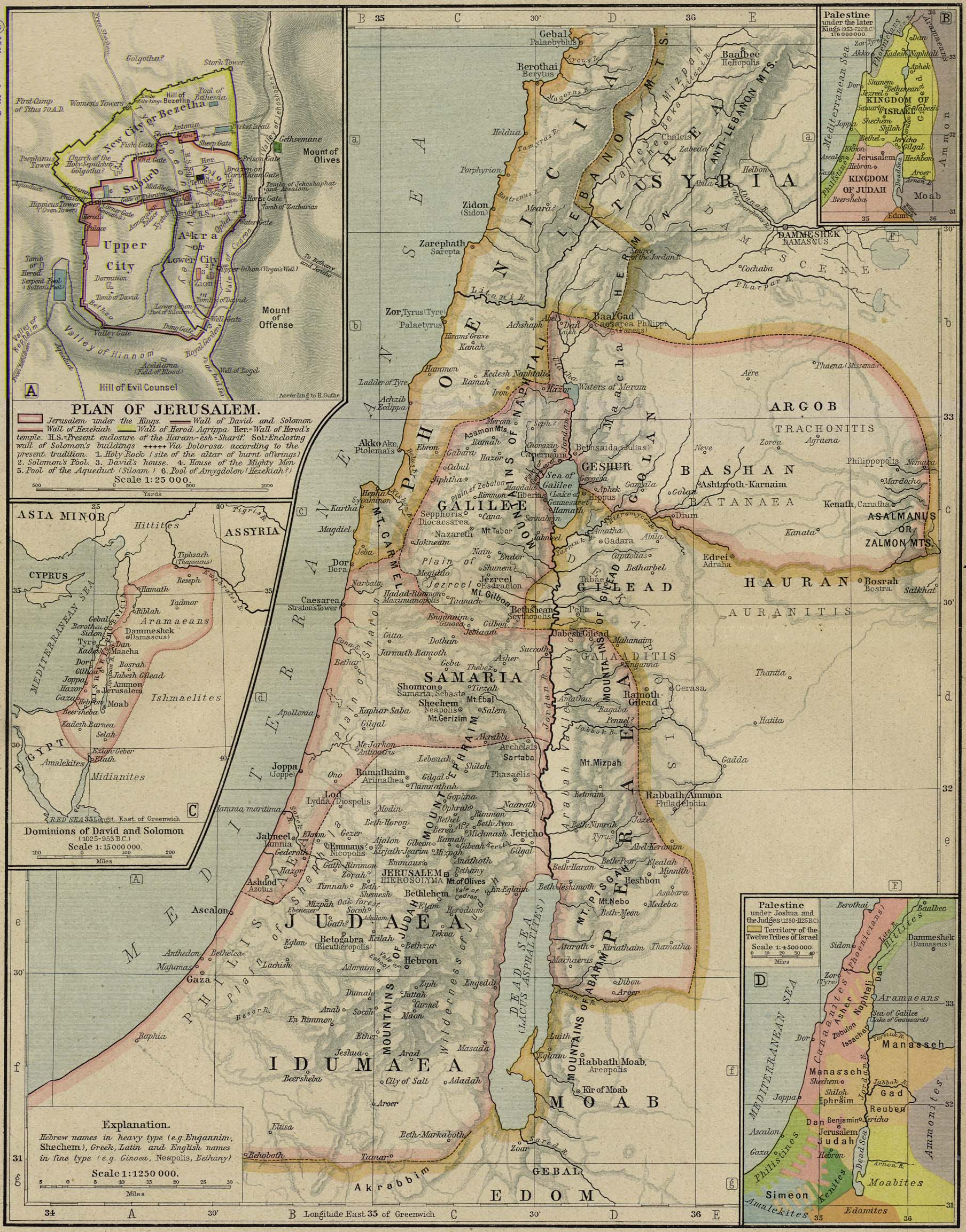
- George Adam Smith, Atlas of the Historical Geography of the Holy Land (1915)The atlas plates that carry Jerusalem. Public domain.
Keep studying
On this page
Studies23
- Nehemiah rebuilds the wall, outlined
- 2 Samuel: the Study Guide
- Jeremiah: the Study Guide
- Jesus at Twelve (Luke 2)
- Joel, the Study Guide
- Lamentations: the Study Guide
- Micah: the Study Guide
- The Cleansing of the Temple: John 2 · Matthew 21
- The Jerusalem Council: Acts 15
- The First People Told: The Shepherds of Bethlehem, Luke 2
- Men Who Read the Sky: The Wise Men and the Star, Matthew 2
- The Tabernacle
- The Exile and the Return
- Zion & Jerusalem
- The Seventy Weeks: Daniel 9:24-27
- The Binding of Isaac (Genesis 22)
- The Wall: the 52-Day Rebuild: Nehemiah 1-6
- The Historical Books
- The Messianic Psalms
- The Mountain
- The Third Temple
- Assyria
- Heaven
Doorway2
Keep this page