
Place
Bethel
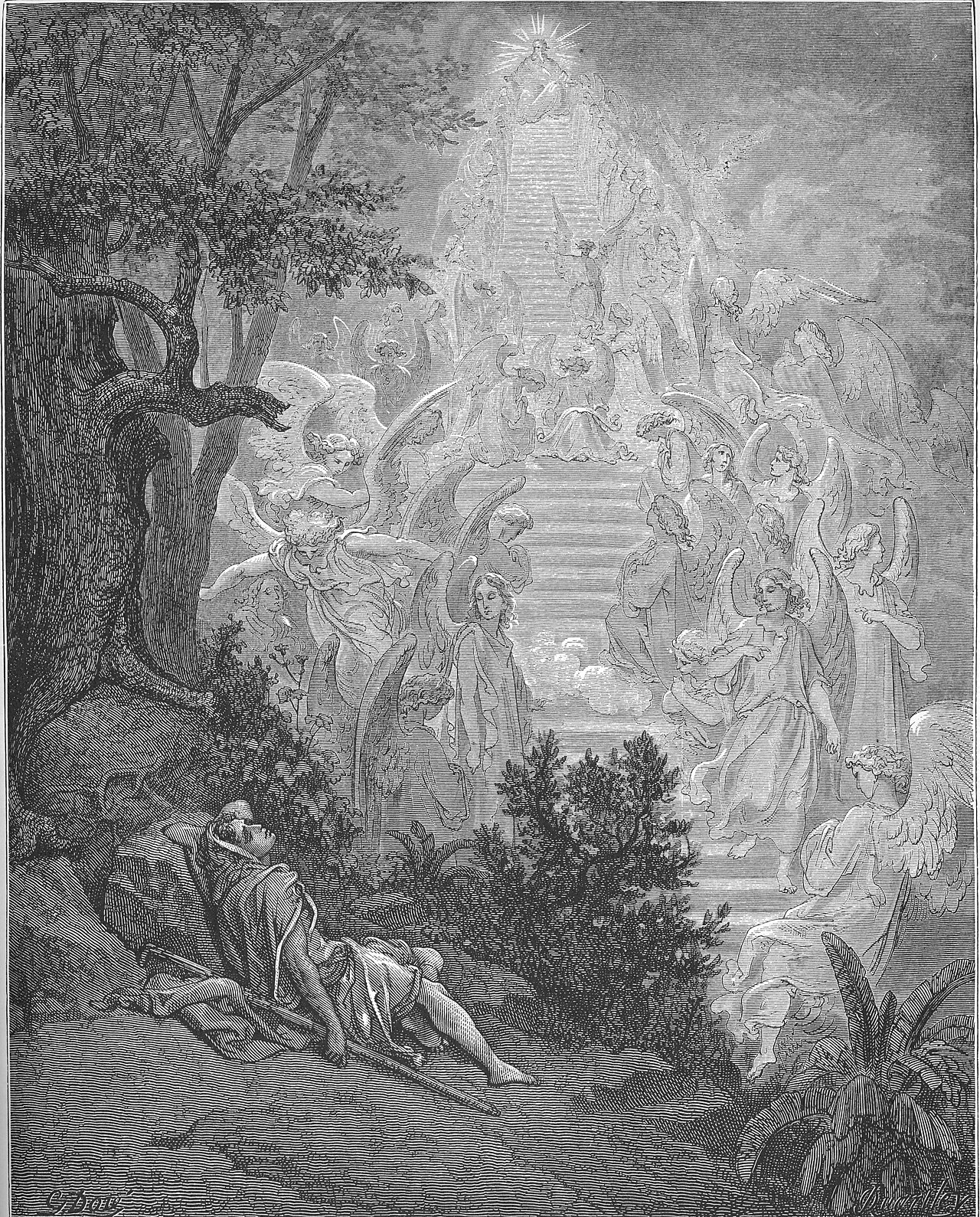
Gustave Doré, La Sainte Bible (Tours: Alfred Mame et fils, 1866). Public domain.
Summary
The house of God, where Jacob saw the ladder and heard the promise, where he returned to raise an altar, and where Jeroboam’s golden calf later stood until Josiah broke the altar down.
- Jacob slept on open ground here with a stone under his head, saw a ladder set between earth and heaven, and called the place the house of God.
- The town had a name before he arrived. It was called Luz, and Scripture keeps both names side by side for centuries.
- Abram built an altar between Bethel and Ai, the ark of the covenant stood here in the days of the judges, and Samuel judged here every year.
- Jeroboam then put a golden calf in the same town and made it the sanctuary of the northern kingdom, and the prophets named Bethel as Israel's ruin.
- Jesus took Jacob's ladder and put Himself where the ladder was, in front of a man He called a true Israelite.
On this page
In Scripture
- Verses
- 65
- Books
- 14
Near Bethel
- Ai4.1 km · 2.5 mi E
- Ramah4.2 km · 2.6 mi SW
- Ephraim7.8 km · 4.9 mi E
- Gibeah12 km · 7.4 mi S
- Nob15 km · 9.1 mi S
- Shiloh15 km · 9.5 mi NE
Straight-line distances, computed from the gazetteer coordinates.
Where it is
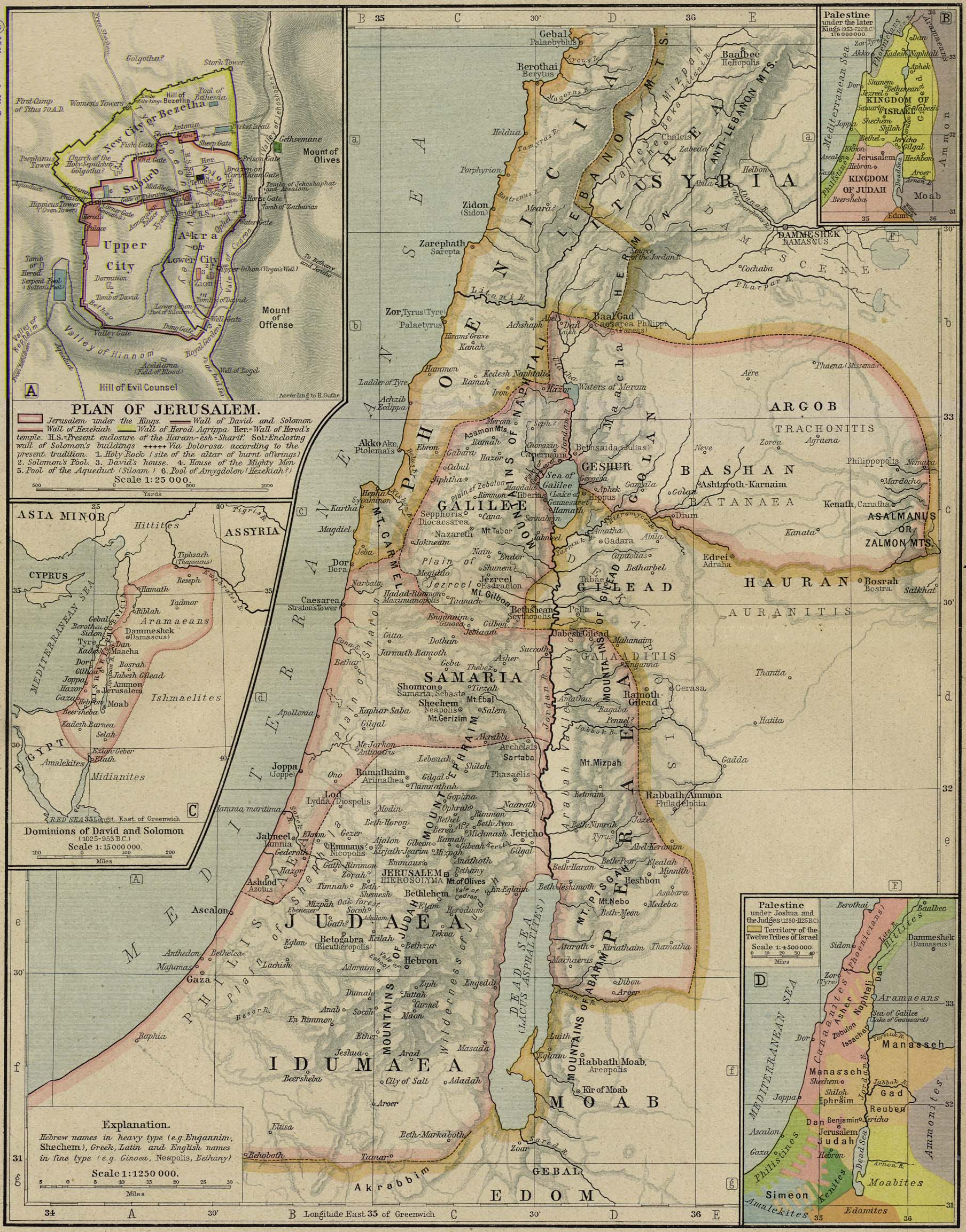
the country around it
- Coordinates
- 31.9305° N, 35.2210° Efind it on the Atlas →
- Region
- Central hill country
2 places the record names with Bethel, the farthest 22 km away
- 1Bethel counted in Benjamin's allotmentJoshua 18:22 · 22 kmJericho, Beth-hoglah, Emek-keziz, Beth-arabah, Zemaraim, Bethel,
- 2Deborah judges under a palm near BethelJudges 4:5 · 4.2 kmAnd she would sit under the Palm of Deborah between Ramah and Bethel in the hill country of Ephraim, where the Israelites would go up to her for judgment.
- Located: the gazetteer fixes one site
- ? Proposed: one candidate among several
- A dashed line ends at a place the gazetteer does not fix
Not located: The Temple. The gazetteer records no location for it, so it is not marked.
Why Bethel matters
What has been found
the evidence, and where it is disputed
Jacob's ladder, outlined
Genesis 28:10 to 28:22, in the order it happens
Read Genesis 28:10 to 28:22, in the order it happens
- A man leaves home ahead of his brother's angerGenesis 28:10Meanwhile Jacob left Beersheba and set out for Haran.
- A stone for a pillow, in open countryGenesis 28:11On reaching a certain place, he spent the night there because the sun had set. And taking one of the stones from that place, he put it under his head and lay down to sleep.
- The ladder, and the angels on itGenesis 28:12And Jacob had a dream about a ladder that rested on the earth with its top reaching up to heaven, and God’s angels were going up and down the ladder.
- God speaks first, and promises the landGenesis 28:13And there at the top the LORD was standing and saying, “I am the LORD, the God of your father Abraham and the God of Isaac. I will give you and your descendants the land on which you now lie.
- I will watch over you wherever you goGenesis 28:15Look, I am with you, and I will watch over you wherever you go, and I will bring you back to this land. For I will not leave you until I have done what I have promised you.”
- Jacob wakesGenesis 28:16When Jacob woke up, he thought, “Surely the LORD is in this place, and I was unaware of it.”
- The house of God and the gate of heavenGenesis 28:17And he was afraid and said, “How awesome is this place! This is none other than the house of God; this is the gate of heaven!”
- The pillow set up as a pillar and anointedGenesis 28:18Early the next morning, Jacob took the stone that he had placed under his head, and he set it up as a pillar. He poured oil on top of it,
- The town gets its second nameGenesis 28:19and he called that place Bethel, though previously the city had been named Luz.
- The first vow in Scripture, and the tenthGenesis 28:22And this stone I have set up as a pillar will be God’s house, and of all that You give me I will surely give You a tenth.”
Read in order, God promises everything before Jacob offers anything. The words of 28:13 to 28:15 carry no condition at all, and the vow of 28:20 answers a promise already made. The Hebrew word for the ladder, sullam, occurs once in the whole Old Testament, and translators have rendered it ladder, staircase and ramp.
Jacob's Ladder: the full studyWhat happened here, in order
in the order the canon tells it
- Abram builds an altar between Bethel and AiGenesis 12:8From there Abram moved on to the hill country east of Bethel and pitched his tent, with Bethel to the west and Ai to the east. There he built an altar to the LORD, and he called on the name of the LORD.
- God names Himself by the placeGenesis 31:13I am the God of Bethel, where you anointed the pillar and made a solemn vow to Me. Now get up and leave this land at once, and return to your native land.’”
- Jacob is sent back to BethelGenesis 35:1Then God said to Jacob, “Arise, go up to Bethel, and settle there. Build an altar there to the God who appeared to you when you fled from your brother Esau.”
- The name Israel confirmed at BethelGenesis 35:10And God said to him, “Though your name is Jacob, you will no longer be called Jacob. Instead, your name will be Israel.” So God named him Israel.
- Bethel counted in Benjamin's allotmentJoshua 18:22Jericho, Beth-hoglah, Emek-keziz, Beth-arabah, Zemaraim, Bethel,
- The house of Joseph takes the townJudges 1:22The house of Joseph also attacked Bethel, and the LORD was with them.
- Deborah judges under a palm near BethelJudges 4:5And she would sit under the Palm of Deborah between Ramah and Bethel in the hill country of Ephraim, where the Israelites would go up to her for judgment.
- The ark of the covenant stands at BethelJudges 20:27And the Israelites inquired of the LORD. (In those days the ark of the covenant of God was there,
- Samuel judges there every year1 Samuel 7:16Every year he would go on a circuit from Bethel to Gilgal to Mizpah, judging Israel in all these places.
- Jeroboam sets a golden calf in Bethel1 Kings 12:29One calf he set up in Bethel, and the other in Dan.
- A man of God names Josiah before he is born1 Kings 13:2And he cried out against the altar by the word of the LORD, “O altar, O altar, this is what the LORD says: ‘A son named Josiah will be born to the house of David, and upon you he will sacrifice the priests of the high places who burn incense upon you, and human bones will be burned upon you.’”
- Hiel the Bethelite rebuilds Jericho1 Kings 16:34In Ahab’s days, Hiel the Bethelite rebuilt Jericho. At the cost of Abiram his firstborn he laid its foundation, and at the cost of Segub his youngest he set up its gates, according to the word that the LORD had spoken through Joshua son of Nun.
- The sons of the prophets are living at Bethel2 Kings 2:3Then the sons of the prophets at Bethel came out to Elisha and said, “Do you know that the LORD will take your master away from you today?” “Yes, I know,” he replied. “Do not speak of it.”
- Elisha is jeered at on the road up to Bethel2 Kings 2:23From there, Elisha went up to Bethel, and as he was walking up the road, a group of boys came out of the city and jeered at him, chanting, “Go up, you baldhead! Go up, you baldhead!”
- A deported priest is sent back to Bethel2 Kings 17:28Thus one of the priests they had carried away came and lived in Bethel, and he began to teach them how they should worship the LORD.
- Josiah pulls the altar down2 Kings 23:15He even pulled down the altar at Bethel, the high place set up by Jeroboam son of Nebat, who had caused Israel to sin. Then he burned the high place, ground it to powder, and burned the Asherah pole.
- Men of Bethel counted home from BabylonEzra 2:28the men of Bethel and Ai, 223;
- Hosea calls it the calf of Beth-avenHosea 10:5The people of Samaria will fear for the calf of Beth-aven. Indeed, its people will mourn with its idolatrous priests— those who rejoiced in its glory— for it has been taken from them into exile.
- Amos is expelled from the king's sanctuaryAmos 7:13But never prophesy at Bethel again, because it is the sanctuary of the king and the temple of the kingdom.”
- Jesus takes up the ladder in front of NathanaelJohn 1:51Then He declared, “Truly, truly, I tell you, you will all see heaven open and the angels of God ascending and descending on the Son of Man.”
Where it points
The voices
each quoted from the work named
You must know too that the prevalent notion of the heathens among whom Jacob dwelt was that their gods had only local authority; that for instance, the god of Gaza was not the god of Askelon; the god of Beersheba would not be the God of Bethel. Their deities were gods of the hills and not of the valleys, and it may be but just possible that from great connection with the heathen, Jacob may have failed clearly to recognize the fact that his father’s God was not like their gods; so in leaving his father’s house there may have been this troublous thought rising in his mind, that he was also leaving his father’s God; that now his prayers would scarcely be heard; that he should be an alien from Jehovah’s land, and cut off from the congregation of the blessed.
All the intercourse between heaven and earth, since the fall, is by this ladder. Christ is the way; all God's favours come to us, and all our services go to him, by Christ. If God dwell with us, and we with him, it is by Christ.
now he gives the place a name, and he calls it Bethel, which means the house of God. The place was previously called Luz, which means nut or almond.
4 more teachers on these versesJohn Wesley · John Gill · Albert Barnes · Augustine of Hippo
And he confirmed the name he had formerly given to the place, Beth-el, the house of God. Yet this very place afterwards lost the honour of its name, and became Beth-aven, a house of iniquity, for here it was that Jeroboam set up one of his calves. It is impossible for the best men to entail so much as the profession and form of religion upon a place.
And he set the one in Bethel,.... In the southern part of the land, on the border of Ephraim and Benjamin; and the rather he chose this place, because its name signifies the house of God, and had been a sacred place, where Jacob more than once enjoyed the divine Presence:
But (and) seek not Bethel - Israel pretended to seek God in Bethel. Amos sets the two seeking, as incompatible. The god, worshiped at Bethel, was not the One God. To seek God there was to lose Him.
Let us recollect the Old Testament account. Jacob saw in a dream a ladder reaching from earth to heaven; the Lord resting upon it, and the angels ascending and descending upon it. Lastly, Jacob himself understanding what the vision meant, set up a stone, and poured oil upon it. (Gen. 28:12.) When he anointed the stone, did he make an idol? No: he only set up a symbol, not an object of worship. Thou seest here the anointing; see the Anointed also. He is the stone which the builders refused. If Jacob, who was named Israel, saw the ladder, and Nathanael was an Israelite indeed, there was a fitness in our Lord telling him Jacob's dream; as if he said, Whose name thou art called by, his dream hath appeared unto thee: for thou shalt see the heaven open, and the angels of God ascending and descending upon the Son of man. If they descend upon Him, and ascend to Him, then He is both up above and here below at the same time; above in Himself, below in His members.
Bethel in Scripture
65 verses name it, in 14 books
Open a book to read its mentions here. Text: Berean Standard Bible.
Old TestamentNew Testamentsegment width = share of mentions
Old Testament14 books · 65 mentions
Genesis11 mentions
- Genesis 12:8From there Abram moved on to the hill country east of Bethel and pitched his tent, with Bethel to the west and Ai to the east. There he built an altar to the LORD, and he called on the name of the LORD.
- Genesis 13:3From the Negev he journeyed from place to place toward Bethel, until he came to the place between Bethel and Ai where his tent had formerly been pitched,
- Genesis 28:19and he called that place Bethel, though previously the city had been named Luz.
- Genesis 31:13I am the God of Bethel, where you anointed the pillar and made a solemn vow to Me. Now get up and leave this land at once, and return to your native land.’”
- Genesis 35:1Then God said to Jacob, “Arise, go up to Bethel, and settle there. Build an altar there to the God who appeared to you when you fled from your brother Esau.”
- Genesis 35:3Then let us arise and go to Bethel. I will build an altar there to God, who answered me in my day of distress. He has been with me wherever I have gone.”
- Genesis 35:6So Jacob and everyone with him arrived in Luz (that is, Bethel) in the land of Canaan.
- Genesis 35:7There Jacob built an altar, and he called that place El-bethel, because it was there that God had revealed Himself to Jacob as he fled from his brother.
3 further mentions in Genesis, read them in the book.
Joshua10 mentions
- Joshua 7:2Meanwhile, Joshua sent men from Jericho to Ai, which is near Beth-aven to the east of Bethel, and told them, “Go up and spy out the land.” So the men went up and spied out Ai.
- Joshua 8:9So Joshua sent them out, and they went to the place of ambush and lay in wait between Bethel and Ai, to the west of Ai. But Joshua spent that night among the people.
- Joshua 8:12Now Joshua had taken about five thousand men and set up an ambush between Bethel and Ai, to the west of the city.
- Joshua 8:17Not a man was left in Ai or Bethel who did not go out after Israel, leaving the city wide open while they pursued Israel.
- Joshua 12:9the king of Jericho, one; the king of Ai, which is near Bethel, one;
- Joshua 12:16the king of Makkedah, one; the king of Bethel, one;
- Joshua 16:1The allotment for the descendants of Joseph extended from the Jordan at Jericho to the waters of Jericho on the east, through the wilderness that goes up from Jericho into the hill country of Bethel.
- Joshua 16:2It went on from Bethel (that is, Luz) and proceeded to the border of the Archites in Ataroth.
2 further mentions in Joshua, read them in the book.
Judges8 mentions
- Judges 1:22The house of Joseph also attacked Bethel, and the LORD was with them.
- Judges 1:23They sent spies to Bethel (formerly known as Luz),
- Judges 4:5And she would sit under the Palm of Deborah between Ramah and Bethel in the hill country of Ephraim, where the Israelites would go up to her for judgment.
- Judges 20:18The Israelites set out, went up to Bethel, and inquired of God, “Who of us shall go up first to fight against the Benjamites?” “Judah will be first,” the LORD replied.
- Judges 20:26Then the Israelites, all the people, went up to Bethel, where they sat weeping before the LORD. That day they fasted until evening and presented burnt offerings and peace offerings to the LORD.
- Judges 20:31The Benjamites came out against them and were drawn away from the city. They began to attack the people as before, killing about thirty men of Israel in the fields and on the roads, one of which led up to Bethel and the other to Gibeah.
- Judges 21:2So the people came to Bethel and sat there before God until evening, lifting up their voices and weeping bitterly.
- Judges 21:19“But look,” they said, “there is a yearly feast to the LORD in Shiloh, which is north of Bethel east of the road that goes up from Bethel to Shechem, and south of Lebonah.”
1 Samuel4 mentions
- 1 Samuel 7:16Every year he would go on a circuit from Bethel to Gilgal to Mizpah, judging Israel in all these places.
- 1 Samuel 10:3Then you will go on from there until you come to the Oak of Tabor. Three men going up to God at Bethel will meet you there, one carrying three young goats, another carrying three loaves of bread, and another carrying a skin of wine.
- 1 Samuel 13:2He chose for himself three thousand men of Israel: Two thousand were with Saul at Michmash and in the hill country of Bethel, and a thousand were with Jonathan in Gibeah of Benjamin. And the rest of the troops he sent away, each to his own home.
- 1 Samuel 30:27He sent gifts to those in Bethel, Ramoth Negev, and Jattir;
1 Kings8 mentions
- 1 Kings 12:29One calf he set up in Bethel, and the other in Dan.
- 1 Kings 12:32And Jeroboam ordained a feast on the fifteenth day of the eighth month, like the feast that was in Judah, and he offered sacrifices on the altar; he made this offering in Bethel to sacrifice to the calves he had set up, and he installed priests in Bethel for the high places he had set up.
- 1 Kings 12:33On the fifteenth day of the eighth month, a month of his own choosing, Jeroboam offered sacrifices on the altar he had set up in Bethel. So he ordained a feast for the Israelites, offered sacrifices on the altar, and burned incense.
- 1 Kings 13:1Suddenly, as Jeroboam was standing beside the altar to burn incense, there came a man of God from Judah to Bethel by the word of the LORD.
- 1 Kings 13:4Now when King Jeroboam, who was at the altar in Bethel, heard the word that the man of God had cried out against it, he stretched out his hand and said, “Seize him!” But the hand he stretched out toward him withered, so that he could not pull it back.
- 1 Kings 13:10So the man of God went another way and did not return by the way he had come to Bethel.
- 1 Kings 13:11Now a certain old prophet was living in Bethel, and his sons came and told him all the deeds that the man of God had done that day in Bethel. They also told their father the words that the man had spoken to the king.
- 1 Kings 13:32for the message that he cried out by the word of the LORD against the altar in Bethel and against all the shrines on the high places in the cities of Samaria will surely come to pass.”
2 Kings9 mentions
- 2 Kings 2:2and Elijah said to Elisha, “Please stay here, for the LORD has sent me on to Bethel.” But Elisha replied, “As surely as the LORD lives and as you yourself live, I will not leave you.” So they went down to Bethel.
- 2 Kings 2:3Then the sons of the prophets at Bethel came out to Elisha and said, “Do you know that the LORD will take your master away from you today?” “Yes, I know,” he replied. “Do not speak of it.”
- 2 Kings 2:23From there, Elisha went up to Bethel, and as he was walking up the road, a group of boys came out of the city and jeered at him, chanting, “Go up, you baldhead! Go up, you baldhead!”
- 2 Kings 10:29but he did not turn away from the sins that Jeroboam son of Nebat had caused Israel to commit—the worship of the golden calves at Bethel and Dan.
- 2 Kings 17:28Thus one of the priests they had carried away came and lived in Bethel, and he began to teach them how they should worship the LORD.
- 2 Kings 23:4Then the king commanded Hilkiah the high priest, the priests second in rank, and the doorkeepers to remove from the temple of the LORD all the articles made for Baal, Asherah, and all the host of heaven. And he burned them outside Jerusalem in the fields of Kidron and carried their ashes to Bethel.
- 2 Kings 23:15He even pulled down the altar at Bethel, the high place set up by Jeroboam son of Nebat, who had caused Israel to sin. Then he burned the high place, ground it to powder, and burned the Asherah pole.
- 2 Kings 23:17Then the king asked, “What is this monument I see?” And the men of the city replied, “It is the tomb of the man of God who came from Judah and pronounced these things that you have done to the altar of Bethel.”
1 further mention in 2 Kings, read them in the book.
1 Chronicles1 mention
2 Chronicles1 mention
Ezra1 mention
Nehemiah2 mentions
Jeremiah1 mention
Hosea2 mentions
Amos6 mentions
- Amos 3:14On the day I punish Israel for their transgressions, I will visit destruction on the altars of Bethel; the horns of the altar will be cut off, and they will fall to the ground.
- Amos 4:4“Go to Bethel and transgress; rebel even more at Gilgal! Bring your sacrifices every morning, your tithes every three days.
- Amos 5:5Do not seek Bethel or go to Gilgal; do not journey to Beersheba, for Gilgal will surely go into exile, and Bethel will come to nothing.
- Amos 5:6Seek the LORD and live, or He will sweep like fire through the house of Joseph; it will devour everything, with no one at Bethel to extinguish it.
- Amos 7:10Then Amaziah the priest of Bethel sent word to Jeroboam king of Israel, saying, “Amos has conspired against you in the midst of the house of Israel. The land cannot bear all his words,
- Amos 7:13But never prophesy at Bethel again, because it is the sanctuary of the king and the temple of the kingdom.”
The account
Read the account as one telling
Common questions
What does the name Bethel mean, and what was the town called before?
Bethel is Beth-El, the house of God, from bayith, house, and El, God. Jacob gave it that name after the night of the ladder, and Genesis says the city had been called Luz before that. Luz means almond or almond tree. The two names run side by side for centuries, and the writers of Joshua and Judges still stop to explain the change a whole era later.
Was Jacob's ladder actually a ladder?
Readers differ; the positions are named
The Hebrew word is sullam, and it occurs once in the entire Old Testament, so the sense has to be read from this one sentence. What the text says is that it was set on the earth with its top reaching heaven, and that God's angels were going up and down it. Translators have rendered it ladder, staircase and ramp, and the lexicons carry more than one of those. The picture the verse gives is a way between earth and heaven, and Scripture does not describe the object any further.
Did Jacob strike a bargain with God?
Readers differ; the positions are named
Read in order, God speaks first and promises the land, the descendants, blessing on all the families of the earth and His own presence, with no condition attached. Jacob's vow comes after that, and what it says is that if God does what He has just promised, the LORD will be his God and a tenth will follow. It is the first vow recorded in Scripture. Whether the word if is doubt or a solemn form of words has been read both ways, and the text does not settle it.
Why did Jeroboam put a golden calf at Bethel?
His reasoning is recorded in his own words. He feared that pilgrimage to the temple in Jerusalem would return his people to the house of David and cost him his life, so he built two sanctuaries at the ends of his kingdom and told the people that going up to Jerusalem was too much for them. Bethel was the southern one, closest to Judah, and it already carried four hundred years of holiness in its name, which is what made it useful. Matthew Henry and John Gill make the same point: Jeroboam did not invent a holy place, he took one.
Is Beth-aven a different town from Bethel?
In Joshua, Beth-aven is a real landmark of its own near Bethel and near Ai. In Hosea it is Bethel itself with its name broken on purpose: aven means emptiness or wickedness, so the house of God becomes the house of wickedness. The calf that Hosea says Samaria will mourn for is the calf of Beth-aven, which is Jeroboam's calf at Bethel. The prophet is turning a name that already existed on the map into a weapon against the sanctuary beside it.
What really happened with Elisha and the youths at Bethel?
Readers differ; the positions are named
Elisha was walking up the road to Bethel when a group came out of the city jeering “Go up, you baldhead!”, and he turned and called down a curse in the name of the LORD, and two female bears came out of the woods and mauled forty-two of them. The Hebrew word the Berean Standard Bible renders boys is the same word used elsewhere of grown young men, which is why John Wesley translates it young men and says they were old enough to know good from evil. Albert Barnes points at where it happened: Bethel was the older seat of the calf worship, and the jeer came days after Elijah went up, in the town most invested in denying that the God of Elijah mattered. The text does not say the forty-two died, and it does not say how large the group was.
Did the prophecy about Josiah really name him three hundred years early?
An unnamed man of God from Judah cried out against Jeroboam's altar and said a son named Josiah would be born to the house of David and would burn human bones on it. When Josiah did it, the writer of Kings says the act was done according to the word of the LORD proclaimed by the man of God who had foretold these things, and Josiah then asked whose tomb stood there and ordered the man's bones left undisturbed. Commentators differ on the interval: Adam Clarke reckons three hundred and forty years, Jamieson, Fausset and Brown reckon three hundred and twenty-six. The two chapters are tied together by the biblical writer himself and not only by later readers.
What did Jewish tradition make of Jacob's ladder?
This is reception history, named and dated, and it is not this site's own reading. Jubilees, a Second Temple work probably from the second century BC, has Levi receive his priesthood in a vision at Bethel and states that Bethel is not the place chosen for the temple. Genesis Rabbah, the Palestinian midrash on Genesis compiled around the fifth century AD, reads the angels in more than one way at 68:12 and 68:13, including angels of the land handing Jacob over to angels outside it, and the rising and falling of the empires that would rule over Israel. A tradition preserved in the Babylonian Talmud at Hullin 91b and in the Targum has the angels ascending to look at the image of Jacob engraved above. Later Jewish commentators often move the vision itself to Mount Moriah.
Where is Bethel, and is the identification certain?
Readers differ; the positions are named
The standard identification is the village of Beitin on the central ridge about 17 kilometres north of Jerusalem, proposed by Edward Robinson in 1838 on the strength of the Arabic name and the site's position beside Ai and the ridge road. W. F. Albright dug there in 1934 and J. L. Kelso directed further seasons in 1954, 1957 and 1960, publishing the final report in 1968; they found a Middle Bronze walled town, a burned Late Bronze town and Iron Age occupation through the monarchy. David Livingston argued in 1970 that Bethel is el-Bireh instead, reading the twelfth milestone of the Onomasticon of Eusebius and Jerome against Beitin, and Anson Rainey answered him in the same journal in 1971. No sanctuary of Jeroboam has been recovered at either site, and the date of the Late Bronze destruction has been argued over since Albright proposed it.
Notable art
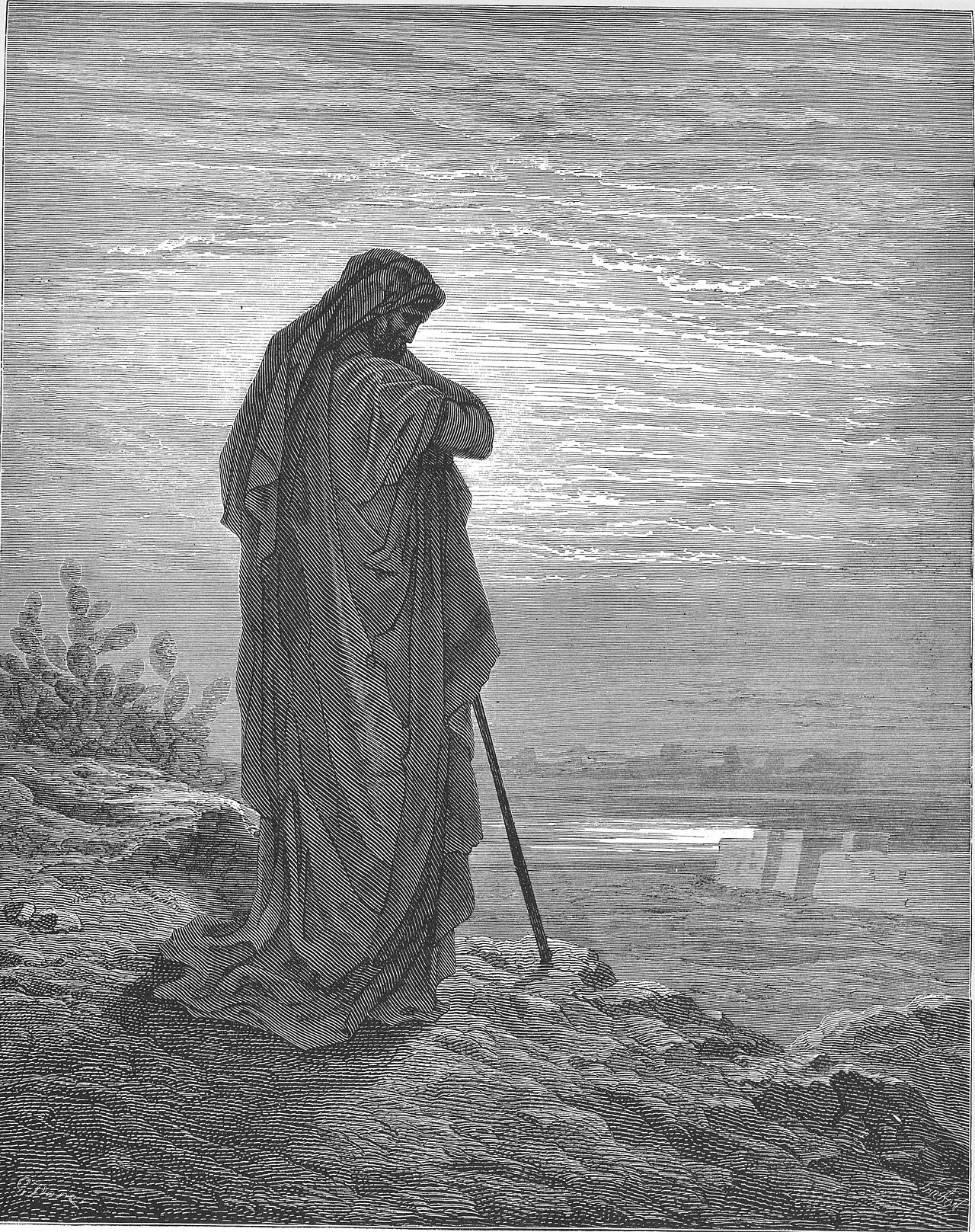
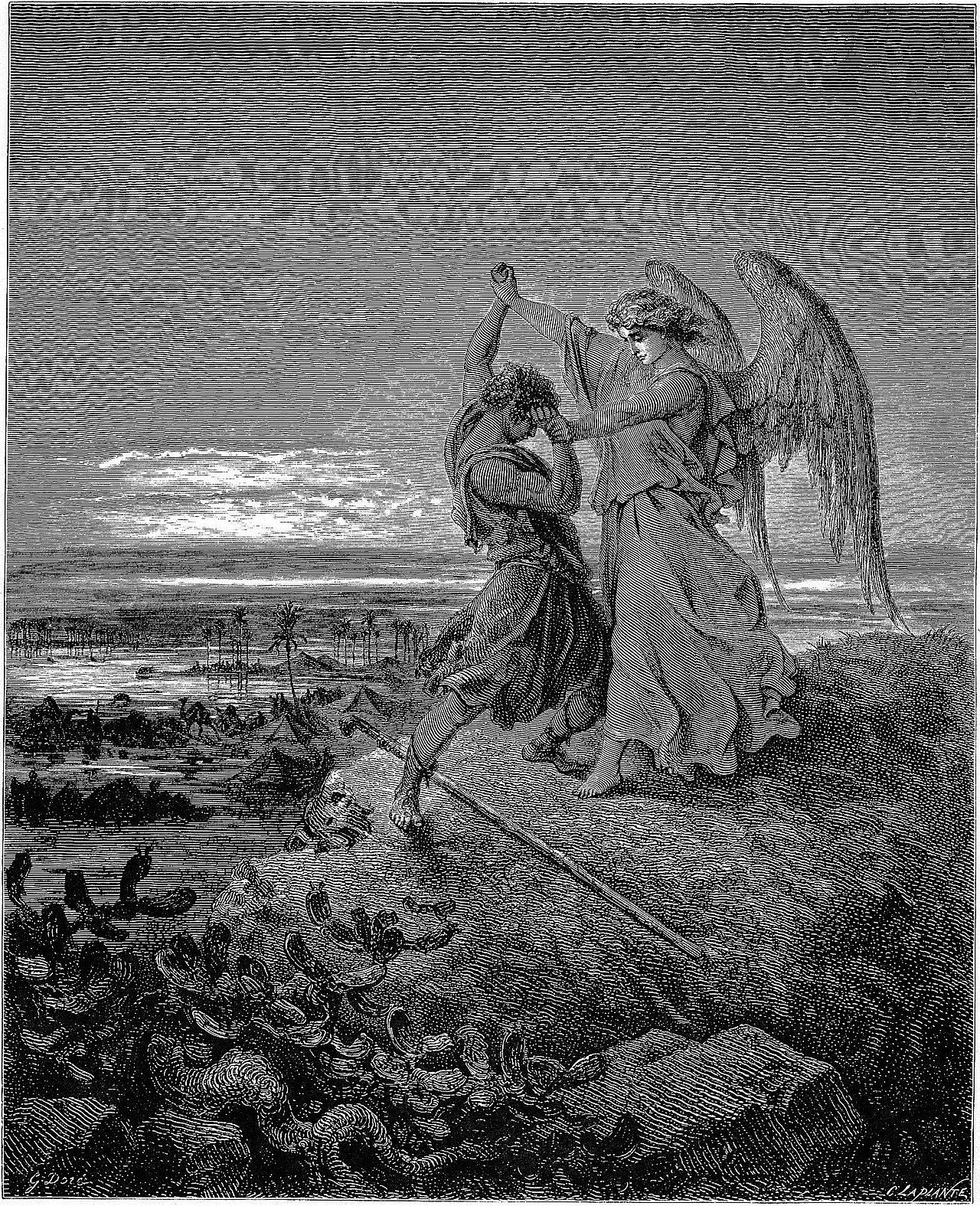
2 verified pieces depicting Bethel
Sources cited
- OpenBible.info Bible Geocoding: Bethel 1read 2026-08-20The coordinates on this page. Used under CC-BY with attribution to OpenBible.info.
- Berean Standard BiblePublic domain since 2023. All Scripture text on this page, from the site's own verse store.
- Edward Robinson, Biblical Researches in Palestine, Mount Sinai and Arabia Petraea (Boston: Crocker and Brewster, 1841)The 1838 identification of Beitin with Bethel.
- W. F. Albright and J. L. Kelso, The Excavation of Bethel (1934 to 1960), AASOR 39 (1968)The excavation report, cited for what the excavators recorded and for the dating they proposed.
- David Livingston, “Location of Biblical Bethel and Ai Reconsidered,” Westminster Theological Journal 33.1 (1970), 20 to 44The el-Bireh proposal, from a confessional body, Associates for Biblical Research.
- Anson F. Rainey, “Bethel Is Still Beitîn,” Westminster Theological Journal 33.2 (1971)The reply defending Beitin, in the same journal.
- Israel Finkelstein and Lily Singer-Avitz, “Reevaluating Bethel,” Zeitschrift des Deutschen Palästina-Vereins 125 (2009), 33 to 48The re-reading of the published Beitin pottery.
- Eusebius of Caesarea, Onomasticon, with Jerome's Latin translation and expansionThe twelfth-milestone notice both sides of the identification dispute argue from.
- Charles H. Spurgeon, The Metropolitan Tabernacle Pulpit, Sermons 401 and 1267Public domain, CCEL edition, lightly modernized text.
- Matthew Henry, Commentary on the Whole Bible (1710)Public domain.
- John Wesley, Explanatory Notes upon the Old Testament (1765)Public domain.
- Adam Clarke, Commentary on the Bible (1832)Public domain. Cited for the interval between 1 Kings 13:2 and Josiah.
- Albert Barnes, Notes, Explanatory and Practical, on the Old and New Testaments (1832 to 1869)Public domain.
- Jamieson, Fausset & Brown, Commentary Critical and Explanatory on the Whole Bible (1871)Public domain. The forty-eight mile figure for Beersheba to Bethel is theirs, and so is the interval of three hundred and twenty-six years.
- John Gill, Exposition of the Old Testament (1748 to 1763)Public domain.
- Jerome, Hebrew Questions on Genesis (c. 420)Public domain. The source for the name and for Luz.
- Augustine of Hippo, in the Catena Aurea compiled by Thomas AquinasPublic domain. His reading of Genesis 28 alongside John 1, given as his reading.
- Aphrahat the Persian Sage, On Prayer (345)Public domain. The earliest witness on this page for reading the gate of heaven as Christ.
- Cyril of Alexandria, Glaphyra on GenesisPublic domain. His reading of the anointed stone, given as a reading.
- Jubilees 31 to 32, Genesis Rabbah 68:12 to 68:13, and the Babylonian Talmud, Hullin 91bSecond Temple and rabbinic reception of Jacob's ladder, named and dated as study resources and never as canon.
- Gustave Doré, La Sainte Bible (Tours: Alfred Mame et fils, 1866)The engravings on this page. Public domain.
Keep studying
On this page
Studies9
Doorway2
Keep this page