
Ramah
Summary
Samuel's home town, the seat of his circuit as judge, the place David fled to, and the prophet's burial place.
- Samuel's family home, called Ramathaim-zophim in the hill country of Ephraim, before his birth (1 Samuel 1:1).
- Samuel judged Israel on a circuit and always returned to Ramah, where he lived and built an altar (1 Samuel 7:17).
- David fled here to Samuel when Saul turned on him, and Saul's own messengers began to prophesy instead of capturing him (1 Samuel 19:18-24).
- Samuel died and was buried in Ramah, his own city (1 Samuel 25:1).
- A different Ramah, near Jerusalem, is where Jeremiah 31:15 pictures Rachel weeping, a verse Matthew quotes of Herod's slaughter of the children of Bethlehem.
On this page
In Scripture
- Verses
- 35
- Books
- 12
Near Ramah
- Bethel4.2 km · 2.6 mi NE
- Ai6.1 km · 3.8 mi E
- Gibeah8.5 km · 5.3 mi S
- Nob11 km · 6.9 mi S
- Ephraim11 km · 7.0 mi NE
- Moriah14 km · 8.4 mi S
Straight-line distances, computed from the gazetteer coordinates.
Where it is
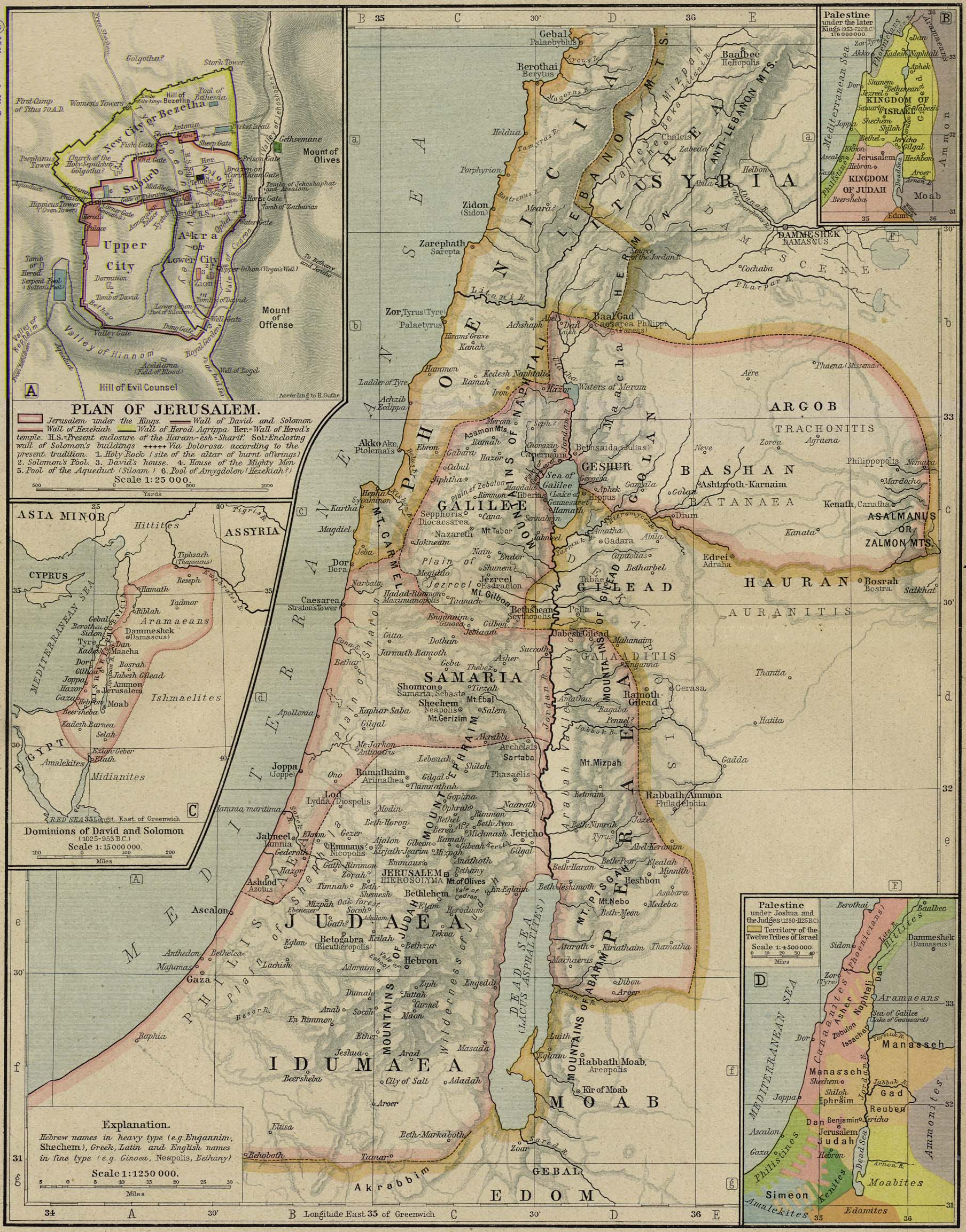
the country around it
- Coordinates
- 31.8964° N, 35.2017° Efind it on the Atlas →
- Region
- Hill country of Ephraim
- Kind of place
- Town
2 places the record names with Ramah, the farthest 14 km away
- 1Samuel returns to Ramah, never to see Saul again1 Samuel 15:34 · 8.5 kmThen Samuel went to Ramah, but Saul went up to his home in Gibeah of Saul.
- 2Jeremiah released at RamahJeremiah 40:1 · 14 kmThis is the word that came to Jeremiah from the LORD after Nebuzaradan captain of the guard had released him at Ramah, having found him bound in chains among all the captives of Jerusalem and Judah who were being exiled to Babylon.
- Located: the gazetteer fixes one site
- ? Proposed: one candidate among several
- A dashed line ends at a place the gazetteer does not fix
Why Ramah matters
David flees to Samuel at Ramah
1 Samuel 19, in the order it happens
Read 1 Samuel 19, in the order it happens
- David runs to Samuel1 Samuel 19:18So David ran away and escaped. And he went to Samuel at Ramah and told him all that Saul had done to him. Then he and Samuel went to Naioth and stayed there.
- Saul's messengers sent1 Samuel 19:19When Saul was told that David was at Naioth in Ramah,
- The messengers prophesy instead1 Samuel 19:20he sent messengers to capture him. But when they saw the group of prophets prophesying, with Samuel leading them, the Spirit of God came upon them, and Saul’s messengers also began to prophesy.
- A third round of messengers, same result1 Samuel 19:21When this was reported to Saul, he sent more messengers, but they began to prophesy as well. So Saul tried again and sent messengers a third time, and even they began to prophesy.
- Saul goes himself1 Samuel 19:23So Saul went to Naioth in Ramah. But the Spirit of God came upon even Saul, and he walked along prophesying until he came to Naioth in Ramah.
- "Is Saul also among the prophets?"1 Samuel 19:24Then Saul stripped off his robes and also prophesied before Samuel. And he collapsed and lay naked all that day and night. That is why it is said, “Is Saul also among the prophets?”
What happened here, in order
in the order the canon tells it
- Elkanah and Hannah return home to Ramah1 Samuel 1:19The next morning Elkanah and Hannah got up early to bow in worship before the LORD, and then returned home to Ramah. And Elkanah had relations with his wife Hannah, and the LORD remembered her.
- Elkanah goes home to Ramah1 Samuel 2:11Then Elkanah went home to Ramah, but the boy began ministering to the LORD before Eli the priest.
- Samuel judges Israel from Ramah1 Samuel 7:17Then he would return to Ramah because his home was there, and there he judged Israel and built an altar to the LORD.
- The elders ask for a king at Ramah1 Samuel 8:4So all the elders of Israel gathered together and came to Samuel at Ramah.
- Samuel returns to Ramah, never to see Saul again1 Samuel 15:34Then Samuel went to Ramah, but Saul went up to his home in Gibeah of Saul.
- Samuel goes to Ramah after anointing David1 Samuel 16:13So Samuel took the horn of oil and anointed him in the presence of his brothers, and the Spirit of the LORD rushed upon David from that day forward. Then Samuel set out and went to Ramah.
- Samuel dies and is buried at Ramah1 Samuel 25:1When Samuel died, all Israel gathered to mourn for him; and they buried him at his home in Ramah. Then David set out and went down to the Wilderness of Paran.
- Samuel's burial recalled before Endor1 Samuel 28:3Now by this time Samuel had died, and all Israel had mourned for him and buried him in Ramah, his own city. And Saul had removed the mediums and spiritists from the land.
- A different Ramah, in Benjamin's territoryJoshua 18:25Gibeon, Ramah, Beeroth,
- A third Ramah, in Naphtali's territoryJoshua 19:36Adamah, Ramah, Hazor,
- Baasha fortifies Ramah of Benjamin1 Kings 15:17Baasha king of Israel went to war against Judah and fortified Ramah to prevent anyone from leaving or entering the territory of Asa king of Judah.
- Asa dismantles Ramah's fortifications1 Kings 15:22Then King Asa summoned all the men of Judah, with no exceptions, and they carried away the stones of Ramah and the timbers Baasha had used for building. And with these materials King Asa built up Geba of Benjamin, as well as Mizpah.
- A voice heard in RamahJeremiah 31:15This is what the LORD says: “A voice is heard in Ramah, mourning and great weeping, Rachel weeping for her children, and refusing to be comforted, because they are no more.”
- Jeremiah released at RamahJeremiah 40:1This is the word that came to Jeremiah from the LORD after Nebuzaradan captain of the guard had released him at Ramah, having found him bound in chains among all the captives of Jerusalem and Judah who were being exiled to Babylon.
- Matthew applies the verse to BethlehemMatthew 2:18“A voice is heard in Ramah, weeping and great mourning, Rachel weeping for her children, and refusing to be comforted, because they are no more.”
Ramah in Scripture
35 verses name it, in 12 books
Open a book to read its mentions here. Text: Berean Standard Bible.
Old TestamentNew Testamentsegment width = share of mentions
Old Testament11 books · 34 mentions
Joshua4 mentions
- Joshua 18:25Gibeon, Ramah, Beeroth,
- Joshua 19:8and all the villages surrounding these cities as far as Baalath-beer (Ramah of the Negev). This was the inheritance of the clans of the tribe of Simeon.
- Joshua 19:29The border then turned back toward Ramah as far as the fortified city of Tyre, turned toward Hosah, and came out at the Sea in the region of Achzib,
- Joshua 19:36Adamah, Ramah, Hazor,
Judges2 mentions
1 Samuel13 mentions
- 1 Samuel 1:19The next morning Elkanah and Hannah got up early to bow in worship before the LORD, and then returned home to Ramah. And Elkanah had relations with his wife Hannah, and the LORD remembered her.
- 1 Samuel 2:11Then Elkanah went home to Ramah, but the boy began ministering to the LORD before Eli the priest.
- 1 Samuel 7:17Then he would return to Ramah because his home was there, and there he judged Israel and built an altar to the LORD.
- 1 Samuel 8:4So all the elders of Israel gathered together and came to Samuel at Ramah.
- 1 Samuel 15:34Then Samuel went to Ramah, but Saul went up to his home in Gibeah of Saul.
- 1 Samuel 16:13So Samuel took the horn of oil and anointed him in the presence of his brothers, and the Spirit of the LORD rushed upon David from that day forward. Then Samuel set out and went to Ramah.
- 1 Samuel 19:18So David ran away and escaped. And he went to Samuel at Ramah and told him all that Saul had done to him. Then he and Samuel went to Naioth and stayed there.
- 1 Samuel 19:19When Saul was told that David was at Naioth in Ramah,
5 further mentions in 1 Samuel, read them in the book.
1 Kings3 mentions
- 1 Kings 15:17Baasha king of Israel went to war against Judah and fortified Ramah to prevent anyone from leaving or entering the territory of Asa king of Judah.
- 1 Kings 15:21When Baasha learned of this, he stopped fortifying Ramah and withdrew to Tirzah.
- 1 Kings 15:22Then King Asa summoned all the men of Judah, with no exceptions, and they carried away the stones of Ramah and the timbers Baasha had used for building. And with these materials King Asa built up Geba of Benjamin, as well as Mizpah.
2 Kings1 mention
2 Chronicles4 mentions
- 2 Chronicles 16:1In the thirty-sixth year of Asa’s reign, Baasha king of Israel went up against Judah and fortified Ramah to prevent anyone from leaving or entering the territory of Asa king of Judah.
- 2 Chronicles 16:5When Baasha learned of this, he stopped fortifying Ramah and abandoned his work.
- 2 Chronicles 16:6Then King Asa brought all the men of Judah, and they carried away the stones of Ramah and the timbers Baasha had used for building. And with these materials he built up Geba and Mizpah.
- 2 Chronicles 22:6so he returned to Jezreel to recover from the wounds they had inflicted on him at Ramah when he fought against Hazael king of Aram. Then Ahaziah son of Jehoram king of Judah went down to Jezreel to visit Joram son of Ahab, because Joram had been wounded.
Ezra1 mention
Nehemiah2 mentions
Isaiah1 mention
Jeremiah2 mentions
- Jeremiah 31:15This is what the LORD says: “A voice is heard in Ramah, mourning and great weeping, Rachel weeping for her children, and refusing to be comforted, because they are no more.”
- Jeremiah 40:1This is the word that came to Jeremiah from the LORD after Nebuzaradan captain of the guard had released him at Ramah, having found him bound in chains among all the captives of Jerusalem and Judah who were being exiled to Babylon.
New Testament1 book · 1 mention
Common questions
Why does Ramah keep coming back throughout Samuel's story?
It was his family's home before his birth, and it stayed the base he returned to between the stops on his circuit as judge, right up to his own burial there.
Which Ramah is Samuel's Ramah?
Ramathaim-zophim, in the hill country of Ephraim. Scripture names at least two other towns called Ramah, one in Benjamin near Jerusalem and one in Naphtali in the north, and neither of those is Samuel's home.
Is the Ramah of Jeremiah 40:1 the same as Samuel's Ramah?
No. The natural reading places it at Ramah of Benjamin, close to Jerusalem, where captives were staged on the road toward Babylon.
Why does Matthew apply Jeremiah 31:15 to Herod's slaughter at Bethlehem?
Matthew reads Rachel's weeping as finding a fresh fulfillment in a new generation of grieving mothers, an example of Scripture answering Scripture rather than a claim that the original verse was predicting Bethlehem.
What happened when Saul followed David to Ramah?
Saul's messengers, and then Saul himself, began to prophesy under the Spirit of God instead of capturing David, and Saul ended up stripped and lying before Samuel all that day and night.
Where is Samuel's Ramah located today?
Readers differ; the positions are named
The exact site is not settled among geographers. Following the fourth-century Onomasticon of Eusebius, which places Ramah about six Roman miles north of Jerusalem opposite Bethel, many modern historical geographers identify it with the town of er-Ram. Others hold to the older identification with Nebi Samwil, a hill northwest of Jerusalem whose Arabic name still carries the prophet's own.
Sources cited
- OpenBible.info Bible Geocoding: Ramah 1read 2026-08-20The coordinates on this page. Used under CC-BY with attribution to OpenBible.info.
Keep studying
On this page
Studies12
- David flees to Samuel at Ramah
- David and Jonathan: 1 Samuel 18 & 20
- Saul at Endor: 1 Samuel 28
- Hannah: 1 Samuel 1:1-2:21
- Hannah's Prayer: 1 Samuel 2:1-10
- The Horn
- The Stone
- The King
- Abigail: 1 Samuel 25
- The Firstborn
- The Fulfillment Formula (Matthew's Ten Quotations)
- The Weeping Prophet: the Confessions of Jeremiah
Doorway2
Keep this page