
Place
Gibeah
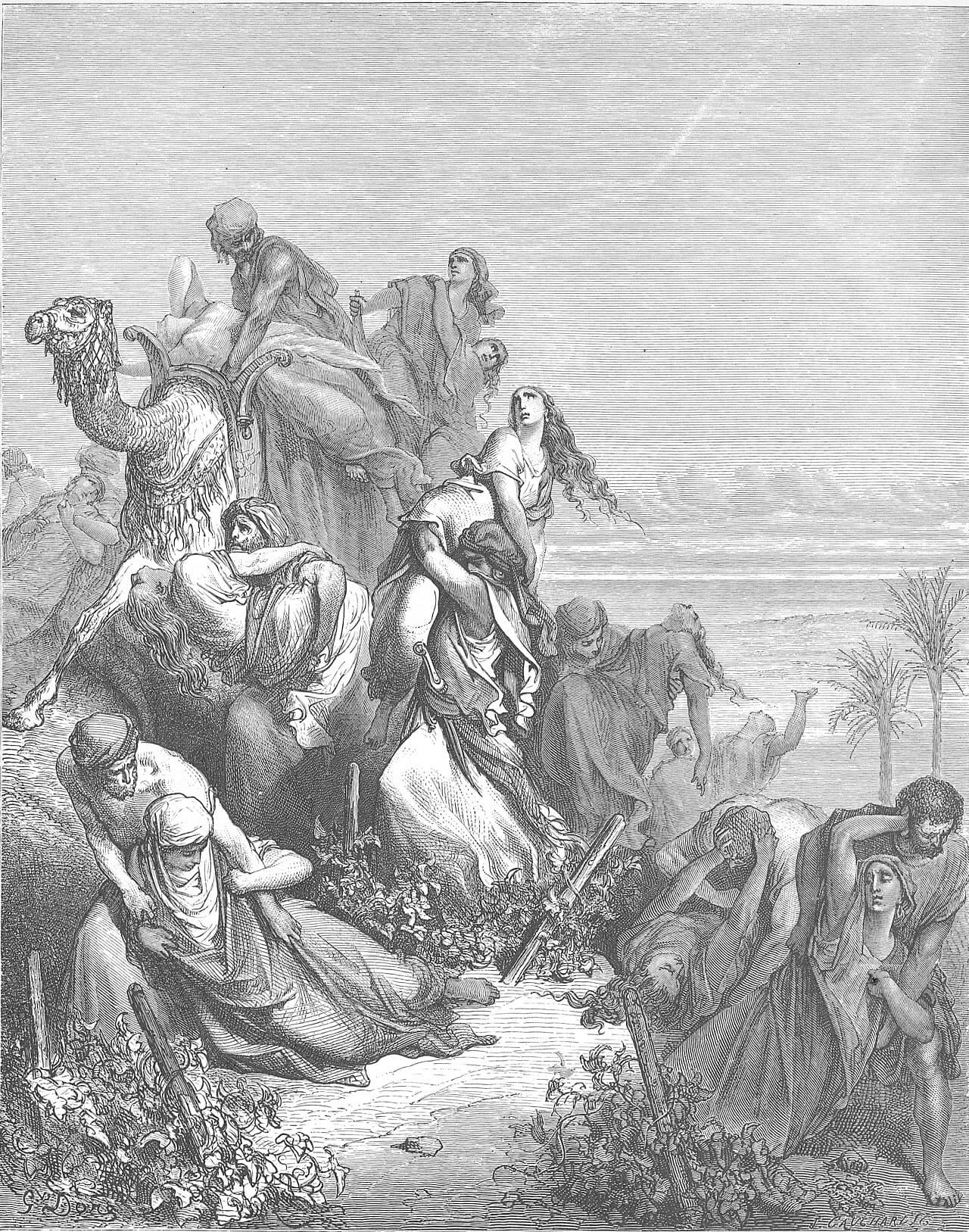
Gustave Doré, La Sainte Bible (Tours: Alfred Mame et fils, 1866). Public domain.
Summary
Saul's hometown and capital in Benjamin, the same Gibeah whose outrage in Judges 19 nearly erased the tribe.
- Gibeah was a town of Benjamin, just north of Jerusalem, where an unspeakable crime against a traveler's concubine led to civil war against the whole tribe.
- The war that followed nearly wiped Benjamin from Israel: 25,000 swordsmen fell, and only 600 men survived.
- This same Gibeah later became the hometown and capital of Saul, Israel's first king.
- Hosea, writing centuries later, still calls Israel's corruption "the days of Gibeah," assuming his readers remember exactly what happened.
On this page
In Scripture
- Verses
- 47
- Books
- 8
Near Gibeah
- Nob2.7 km · 1.7 mi S
- Moriah5.2 km · 3.2 mi S
- Mount of Olives5.3 km · 3.3 mi S
- Zion5.6 km · 3.5 mi S
- Jerusalem6.4 km · 4.0 mi S
- Bethany6.5 km · 4.0 mi SE
Straight-line distances, computed from the gazetteer coordinates.
Where it is
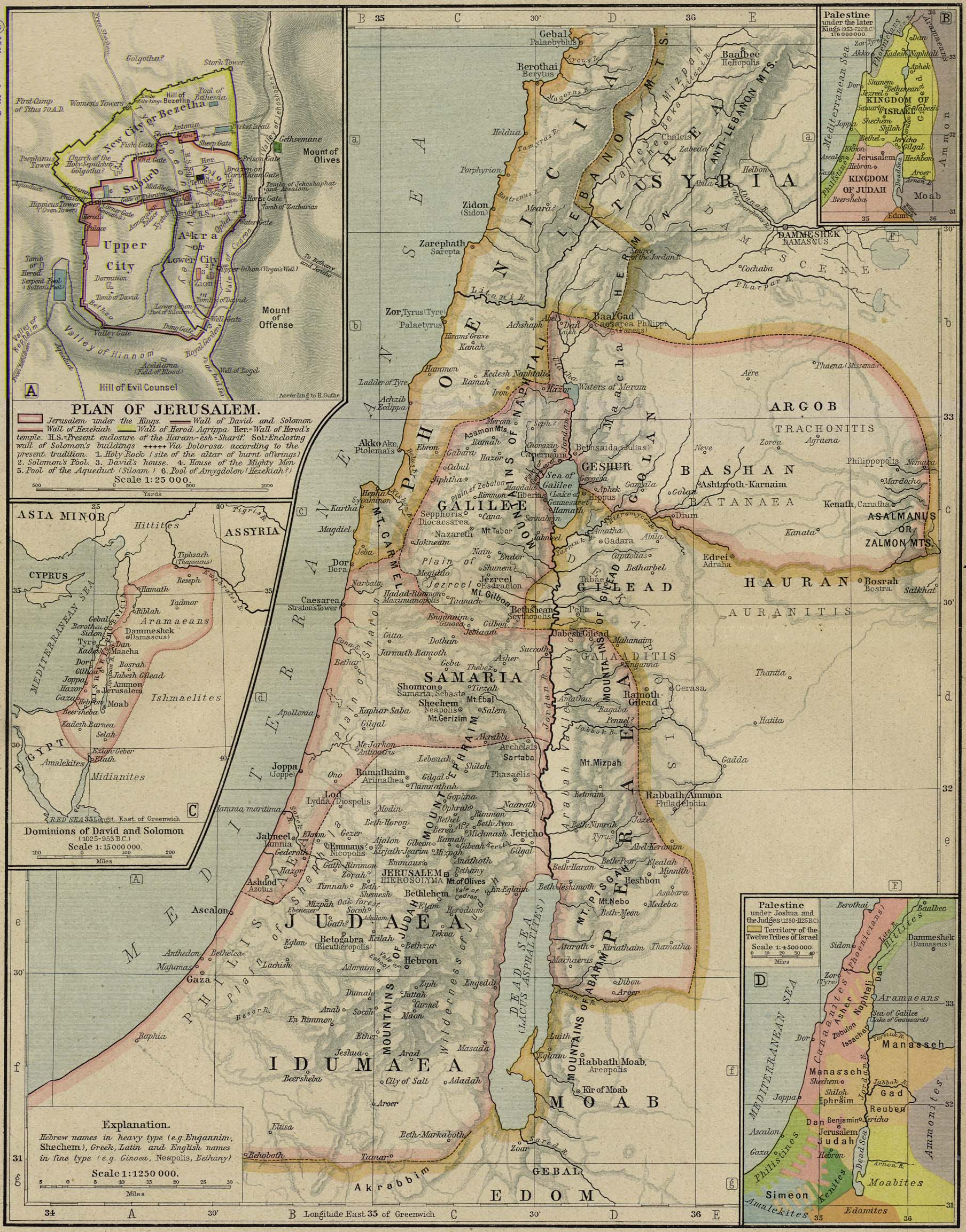
the country around it
- Coordinates
- 31.8238° N, 35.2310° Efind it on the Atlas →
- Region
- Benjamin
- Kind of place
- Town
1 place the record names with Gibeah, the farthest 8.5 km away
- Located: the gazetteer fixes one site
- Placed: the point stands for an area, or is rounded
- ? Proposed: one candidate among several
- A dashed line ends at a place the gazetteer does not fix
Not located: Egypt. The gazetteer records no location for it, so it is not marked.
Why Gibeah matters
The outrage at Gibeah
Judges 19-21, in the order it happens
Read Judges 19-21, in the order it happens
- A Levite chooses Gibeah over a foreign cityJudges 19:12But his master replied, “We will not turn aside to the city of foreigners, where there are no Israelites. We will go on to Gibeah.”
- No one in the square will take them inJudges 19:15They stopped to go in and lodge in Gibeah. The Levite went in and sat down in the city square, but no one would take them into his home for the night.
- The wicked men of the city surround the houseJudges 19:22While they were enjoying themselves, suddenly the wicked men of the city surrounded the house. Pounding on the door, they said to the old man who owned the house, “Bring out the man who came to your house, so we can have relations with him!”
- The concubine is found dead at the doorstepJudges 19:27In the morning, when her master got up and opened the doors of the house to go out on his journey, there was his concubine, collapsed in the doorway of the house, with her hands on the threshold.
- Israel gathers as one man at MizpahJudges 20:1Then all the Israelites from Dan to Beersheba and from the land of Gilead came out, and the congregation assembled as one man before the LORD at Mizpah.
- Benjamin refuses to hand over the guilty menJudges 20:13Hand over the wicked men of Gibeah so we can put them to death and purge Israel of this evil.” But the Benjamites refused to heed the voice of their fellow Israelites.
- Twenty-five thousand Benjamites fallJudges 20:46That day 25,000 Benjamite swordsmen fell, all men of valor.
- "A tribe is cut off from Israel"Judges 21:6And the Israelites grieved for their brothers, the Benjamites, and said, “Today a tribe is cut off from Israel.
What happened here, in order
in the order the canon tells it
- The travelers near Gibeah in BenjaminJudges 19:14So they continued on their journey, and the sun set as they neared Gibeah in Benjamin.
- "Nothing like this has been seen"Judges 19:30And everyone who saw it said, “Nothing like this has been seen or done from the day the Israelites came out of the land of Egypt until this day. Think it over, take counsel, and speak up!”
- The ambush takes the cityJudges 20:37The men in ambush rushed suddenly against Gibeah; they advanced and put the whole city to the sword.
- Six hundred men escape to the rock of RimmonJudges 20:47But 600 men turned and fled into the wilderness to the rock of Rimmon, where they stayed four months.
- "Everyone did what was right in his own eyes"Judges 21:25In those days there was no king in Israel; everyone did what was right in his own eyes.
- Saul goes home to Gibeah after his anointing1 Samuel 10:26Saul also went to his home in Gibeah, and the men of valor whose hearts God had touched went with him.
- Messengers from Jabesh-gilead reach Gibeah of Saul1 Samuel 11:4When the messengers came to Gibeah of Saul and relayed these words in the hearing of the people, they all wept aloud.
- Samuel goes up to Gibeah in Benjamin1 Samuel 13:15Then Samuel set out from Gilgal and went up to Gibeah in Benjamin. And Saul numbered the troops who were with him, about six hundred men.
- Saul's watchmen at Gibeah see the Philistines break1 Samuel 14:16Now when Saul’s watchmen at Gibeah in Benjamin looked and saw the troops melting away and scattering in every direction,
- Saul sits at Gibeah, spear in hand1 Samuel 22:6Soon Saul learned that David and his men had been discovered. At that time Saul was in Gibeah, sitting under the tamarisk tree on the hill at Gibeah, with his spear in hand and all his servants standing around him.
- The Gibeonites ask for Saul's descendants at Gibeah2 Samuel 21:6let seven of his male descendants be delivered to us so that we may hang them before the LORD at Gibeah of Saul, the chosen of the LORD.” “I will give them to you,” said the king.
- The alarm sounded in GibeahHosea 5:8Blow the ram’s horn in Gibeah, the trumpet in Ramah; raise the battle cry in Beth-aven: Lead on, O Benjamin!
- "As in the days of Gibeah"Hosea 9:9They have deeply corrupted themselves as in the days of Gibeah; He will remember their guilt; He will punish their sins.
- "Since the days of Gibeah you have sinned"Hosea 10:9Since the days of Gibeah you have sinned, O Israel, and there you have remained. Did not the battle in Gibeah overtake the sons of iniquity?
- The invading army reaches Gibeah of SaulIsaiah 10:29They have crossed at the ford: “We will spend the night at Geba.” Ramah trembles; Gibeah of Saul flees.
Gibeah in Scripture
47 verses name it, in 8 books
Open a book to read its mentions here. Text: Berean Standard Bible.
Old TestamentNew Testamentsegment width = share of mentions
Old Testament8 books · 47 mentions
Joshua3 mentions
- Joshua 15:57Kain, Gibeah, and Timnah—ten cities, along with their villages.
- Joshua 18:28Zelah, Haeleph, Jebus (that is, Jerusalem), Gibeah, and Kiriath-jearim—fourteen cities, along with their villages. This was the inheritance of the clans of the tribe of Benjamin.
- Joshua 24:33Eleazar son of Aaron also died, and they buried him at Gibeah, which had been given to his son Phinehas in the hill country of Ephraim.
Judges24 mentions
- Judges 19:12But his master replied, “We will not turn aside to the city of foreigners, where there are no Israelites. We will go on to Gibeah.”
- Judges 19:13He continued, “Come, let us try to reach one of these towns to spend the night in Gibeah or Ramah.”
- Judges 19:14So they continued on their journey, and the sun set as they neared Gibeah in Benjamin.
- Judges 19:15They stopped to go in and lodge in Gibeah. The Levite went in and sat down in the city square, but no one would take them into his home for the night.
- Judges 19:16That evening an old man from the hill country of Ephraim, who was residing in Gibeah (the men of that place were Benjamites), came in from his work in the field.
- Judges 20:4So the Levite, the husband of the murdered woman, answered: “I and my concubine came to Gibeah in Benjamin to spend the night.
- Judges 20:5And during the night, the men of Gibeah rose up against me and surrounded the house. They intended to kill me, but they abused my concubine, and she died.
- Judges 20:9Now this is what we will do to Gibeah: We will go against it as the lot dictates.
16 further mentions in Judges, read them in the book.
1 Samuel12 mentions
- 1 Samuel 10:5After that you will come to Gibeah of God, where the Philistines have an outpost. As you approach the city, you will meet a group of prophets coming down from the high place, preceded by harps, tambourines, flutes, and lyres, and they will be prophesying.
- 1 Samuel 10:10When Saul and his servant arrived at Gibeah, a group of prophets met him. Then the Spirit of God rushed upon him, and he prophesied along with them.
- 1 Samuel 10:26Saul also went to his home in Gibeah, and the men of valor whose hearts God had touched went with him.
- 1 Samuel 11:4When the messengers came to Gibeah of Saul and relayed these words in the hearing of the people, they all wept aloud.
- 1 Samuel 13:2He chose for himself three thousand men of Israel: Two thousand were with Saul at Michmash and in the hill country of Bethel, and a thousand were with Jonathan in Gibeah of Benjamin. And the rest of the troops he sent away, each to his own home.
- 1 Samuel 13:15Then Samuel set out from Gilgal and went up to Gibeah in Benjamin. And Saul numbered the troops who were with him, about six hundred men.
- 1 Samuel 14:2Meanwhile, Saul was staying under the pomegranate tree in Migron on the outskirts of Gibeah. And the troops who were with him numbered about six hundred men,
- 1 Samuel 14:16Now when Saul’s watchmen at Gibeah in Benjamin looked and saw the troops melting away and scattering in every direction,
4 further mentions in 1 Samuel, read them in the book.
2 Samuel2 mentions
1 Chronicles1 mention
2 Chronicles1 mention
Isaiah1 mention
Hosea3 mentions
- Hosea 5:8Blow the ram’s horn in Gibeah, the trumpet in Ramah; raise the battle cry in Beth-aven: Lead on, O Benjamin!
- Hosea 9:9They have deeply corrupted themselves as in the days of Gibeah; He will remember their guilt; He will punish their sins.
- Hosea 10:9Since the days of Gibeah you have sinned, O Israel, and there you have remained. Did not the battle in Gibeah overtake the sons of iniquity?
Common questions
Where was Gibeah, and how do we know?
Judges 19 places it in Benjamin's territory, reached from Jerusalem by travelers heading toward the hill country of Ephraim. Isaiah 10 confirms the same area: an invading army marches through Geba, then Ramah, then Gibeah of Saul, before turning on Jerusalem itself. This page's coordinates, from OpenBible.info's geocoding, place Gibeah just north of Jerusalem, in keeping with both passages. The traditional archaeological identification, made by W.F. Albright after excavating the mound of Tell el-Ful in 1922-1923 and 1933, points to that site, three and a half miles north of Jerusalem, where Albright found Iron Age remains he dated to Saul's era. Other scholars, including J.M. Miller, P.M. Arnold and Israel Finkelstein, dispute the identification and argue for a different site, so the location rests on the text's own geography rather than on a settled excavation.
Is the Gibeah of Judges the same as "Gibeah of Saul"?
Yes. 1 Samuel 10:26 says Saul went home to Gibeah after Samuel anointed him, 1 Samuel 11:4 calls it "Gibeah of Saul" outright, and 2 Samuel 21:6 and Isaiah 10:29 use the same name. It is the same town through the whole account, from the outrage of Judges 19 to Saul's reign a generation or two later.
Why does Hosea call back to "the days of Gibeah"?
Hosea uses the phrase twice, treating the atrocity of Judges 19 and the civil war it caused as a fixed example of how deeply a nation can corrupt itself. Writing two or three centuries after the event, Hosea assumes his readers still know exactly what "the days of Gibeah" means without further explanation.
How close did the tribe of Benjamin come to disappearing?
Judges 20 records 25,000 Benjamite swordsmen killed in the war, with only 600 men escaping to the rock of Rimmon. Judges 21 opens with Israel grieving that "a tribe is cut off from Israel" and scrambling to find the survivors wives, since the rest of Israel had sworn not to give them their own daughters.
Does the story approve of what the Levite did to his concubine?
Readers differ; the positions are named
The text does not present the Levite's actions, or the mob's, as anything other than horror. Judges frames the whole account with the same refrain at its start and its end, that there was no king in Israel and everyone did what was right in his own eyes, a description of the period's moral collapse rather than an endorsement of what happened in it.
Sources cited
- OpenBible.info Bible Geocoding: Gibeah 1read 2026-08-20The coordinates on this page. Used under CC-BY with attribution to OpenBible.info.
- Gustave Doré, La Sainte Bible (Tours: Alfred Mame et fils, 1866)The engraving on this page. Public domain.
- "Albright's Identification of Gibeah with Tell el-Ful", Palestine Exploration Quarterly 146.1 (2014)Albright's 1922-1923 and 1933 excavation and his identification of the site with Gibeah, used in the common_questions entry on the location.
- "Tell el-Ful Revisited: The Assyrian and Hellenistic Periods (with a New Identification)", Palestine Exploration Quarterly 143.2 (2011)The scholarly dispute over Albright's identification (Miller, Arnold, Finkelstein), used in the same entry to name the dispute honestly.
Keep studying
On this page
Studies15
Every page that names it1
Books that name it6
Doorway2
Keep this page