
Skip to content
mannafest.faith
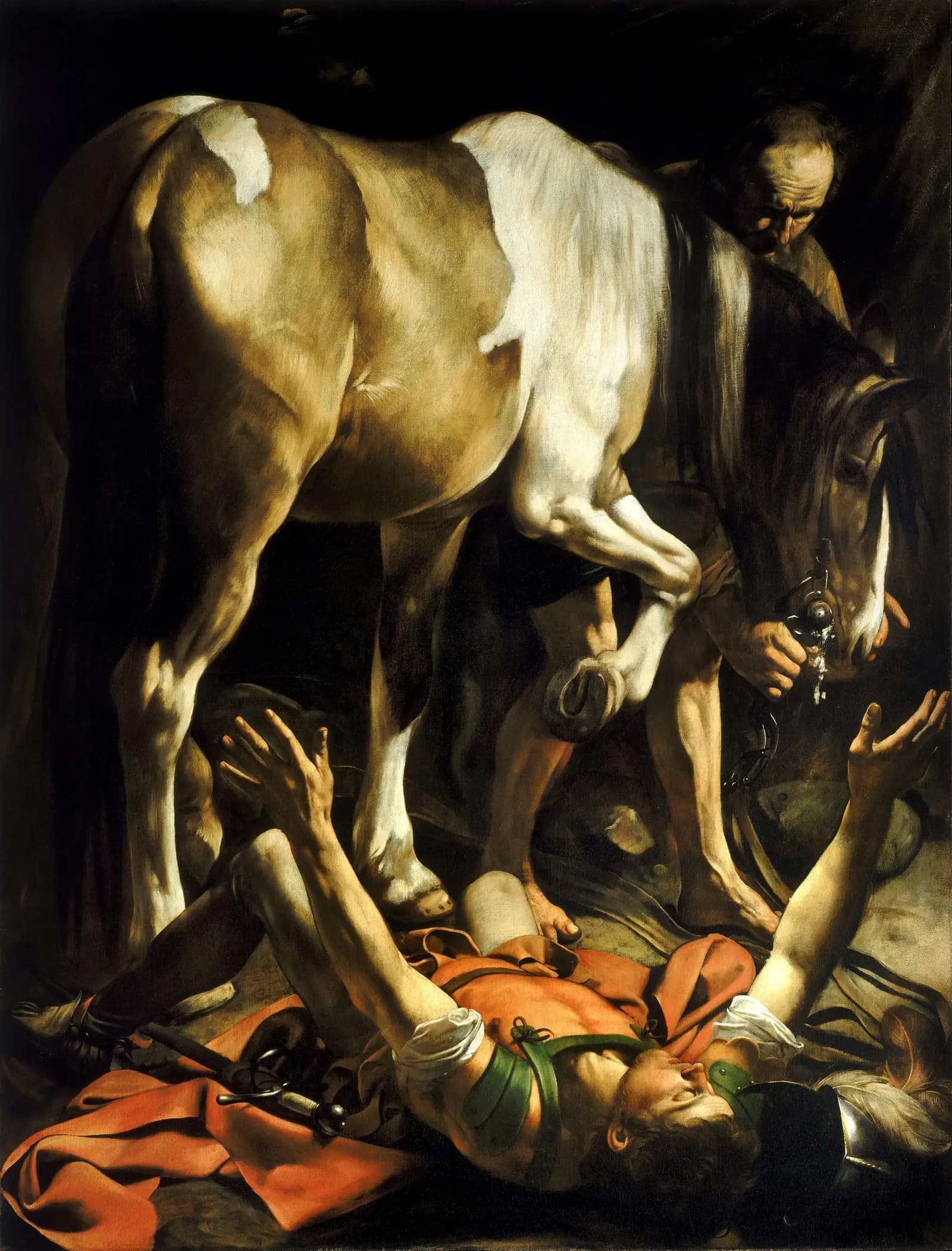
Rembrandt van Rijn, The Apostle Paul at His Writing Desk (c. 1630)

New Testament · Book 48 of 66

Galatians

Paul's gospel defended against a different gospel. Biography, then argument, then ethics: the Magna Carta of Christian liberty.

Rembrandt van Rijn, The Apostle Paul at His Writing Desk (c. 1630): public domain.

Rembrandt van Rijn, The Apostle Paul at His Writing Desk (c. 1630)

Rembrandt van Rijn, The Apostle Paul at His Writing Desk (c. 1630): public domain.

  • 6
    Chapters
  • 1
    Gospel defended
  • 3-part
    Biography/theology/ethics

I am crucified with Christ: nevertheless I live; yet not I, but Christ liveth in me: and the life which I now live in the flesh I live by the faith of the Son of God, who loved me, and gave himself for me.

Galatians 2:20

If you only read a few chapters

Pauline Epistles · Galatians

No Other Gospel: Justified by Faith, Free to Walk in the Spirit

Christian liberty's Magna Carta. Judaizing agitators told the Galatian churches that faith in Christ was not enough: Gentile believers had to be circumcised and keep the law to be fully saved. Paul answers in white-hot alarm, defending in three movements the gospel that will not be added to: Christ alone justifies, and the Spirit alone sanctifies. So stand fast in the freedom for which Christ has set you free.

Summary

Galatians is walked as a three-movement defense brief: Paul's gospel from Christ, not man (1-2), justification by faith proved three ways (3-4), and freedom lived out in the Spirit (5-6). The page carries the letter's Christ-content, its key vocabulary, ten approved voices, and its contested points at full strength.

  • Six chapters are mapped onto three color-coded movements, each chapter a door into the reader, with the two Jerusalem visits and the Antioch confrontation marked as hinge points.
  • A Christ in Galatians section pulls six passages, from co-crucifixion in 2:20 to the marks of Jesus in 6:17, showing the letter's argument is built entirely on Him.
  • Ten approved voices are summarized with the specific work cited, from Luther's 1535 commentary to Piper and Sproul's defense of the traditional justification reading.
  • Three contested points get full-strength treatment: North versus South Galatia dating, the New Perspective on Paul debate, and guarding against both the antinomian and legalist misreadings of freedom.

The Defense Brief

three movements, the letter's own outline: every chapter a door

Galatians is Paul's least courteous opening: no thanksgiving, straight to rebuke (1:6), because the issue is not a secondary matter but the gospel itself. The letter announces its own three moves: he defends his apostolic authority and gospel as directly from Christ, not from man (1–2); he proves justification by faith apart from works of the law (3–4); and he draws out what that freedom looks like lived: not license, but love and the fruit of the Spirit (5–6).

The DefenseThe CaseThe Lifekey hinge (1 · 2 · 6)
  1. The DefenseGalatians 1:1–2:21

    No thanksgiving: Paul moves straight to rebuke (1:6)

    Unique among Paul's openings: no word of thanks, because there is nothing to thank God for in what has happened to them. He defends his apostolic authority and his gospel as directly revealed by Christ, not derived from or subordinate to the Jerusalem apostles: his conversion (1:11–17), two Jerusalem visits (1:18–24; 2:1–10), and the public confrontation with Peter at Antioch (2:11–21). The movement lands on its own thesis sentence: “I have been crucified with Christ… I live in faith, the faith which is in the Son of God” (2:20).

  2. The CaseGalatians 3:1–4:31

    “O foolish Galatians, who did bewitch you?” (3:1)

    The doctrinal center, proved three ways: from the Galatians' own experience of the Spirit (3:1–5), from Scripture (Abraham believed God, and it was reckoned to him for righteousness (3:6–9)) and from the Abrahamic covenant itself, which the law could not annul four hundred years later (3:15–18). The law is unmasked as a tutor, not a life-giver (3:19–29), sonship is Spirit-sealed (“Abba, Father,” 4:1–7), and Paul's own allegory of Hagar and Sarah names two covenants in one household (4:21–31).

  3. The LifeGalatians 5:1–6:18

    Freedom is not license: “through love be servants one to another” (5:13)

    Doctrine becomes ethics. Stand fast in the freedom for which Christ set them free (5:1–12); walk by the Spirit against the works of the flesh (5:16–21); the Spirit's fruit (singular, one integrated character) against the flesh's catalogued works (5:22–26); bear one another's burdens (6:1–10). The letter closes in Paul's own large-lettered hand (6:11): no boast but the cross, and “a new creature” (6:15).

The double anathema: 1:8–9

“Though we, or an angel from heaven, should preach unto you any gospel other than that which we preached unto you, let him be anathema… If any man preacheth unto you any gospel other than that which ye received, let him be anathema.”

Near-verbatim repetition, deliberately: the letter's opening bracket, before a single doctrinal argument has been made: even an angel from heaven is cursed for preaching a different gospel.

What Galatians Alone Teaches

One gospel, and no room for a second

Paul opens with the sharpest sentence in his correspondence. Anyone preaching another gospel is under a curse, and he includes himself and any angel in the condemnation: 'though we, or an angel from heaven, should preach unto you any gospel other than that which we preached unto you, let him be anathema' (1:8). He repeats it in the next verse so nobody can put it down to temper. What is at stake is the source of the message, which is why the first two chapters are autobiography. He did not receive it from an apostle: 'neither did I receive it from man, nor was I taught it, but it came to me through revelation of Jesus Christ' (1:12). He was in Arabia and Damascus for three years before he saw Cephas at all (1:17-18), and even then he saw no other apostle, 'save James the Lord’s brother' (1:19). The argument is that the gospel he preached in Galatia has no human editor to appeal to over his head.

Galatians 1:6 · Galatians 1:8 · Galatians 1:12

A man is justified by faith in Jesus Christ

The letter's central sentence is put as something Paul and Peter already agreed on before the argument started: 'knowing that a man is not justified by the works of the law but through faith in Jesus Christ, even we believed on Christ Jesus, that we might be justified by faith in Christ, and not by the works of the law: because by the works of the law shall no flesh be justified' (2:16). The word for justified is a courtroom word, the verdict a judge returns, and Paul insists the verdict is given on the ground of Christ rather than earned by performance. He states the alternative bluntly at 2:21, 'if righteousness is through the law, then Christ died for nought'. Then he calls Habakkuk as his witness, 'The righteous shall live by faith' (3:11), a line that would move Luther five hundred years later and that Paul uses in Romans as well.

Galatians 2:16 · Galatians 2:21 · Galatians 3:11

Abraham got there first, and the promise came first

Paul answers the appeal to Moses by going back further. Abraham was reckoned righteous before circumcision and before Sinai: 'Even as Abraham believed God, and it was reckoned unto him for righteousness' (3:6), which makes 'they that are of faith, the same are sons of Abraham' (3:7). He goes on to say that the promise to Abraham was the gospel in advance, since 'the scripture, foreseeing that God would justify the Gentiles by faith, preached the gospel beforehand unto Abraham' (3:8). Then the chronology does the work. A covenant already confirmed cannot be cancelled by a later document, and 'the law, which came four hundred and thirty years after, doth not disannul, so as to make the promise of none effect' (3:17). Gentile believers are brought into a promise God made to Abraham, so 'if ye are Christ’s, then are ye Abraham’s seed, heirs according to promise' (3:29).

Galatians 3:6 · Galatians 3:8 · Galatians 3:17 · Galatians 3:29

What the law was for, and what it could never do

Paul asks his own question at 3:19, 'What then is the law?', and the answer he gives assigns it a real office in God's own plan. It was 'added because of transgressions, till the seed should come to whom the promise hath been made' (3:19), it kept its charges in custody, 'we were kept in ward under the law' (3:23), and it had a job with an end date: 'the law is become our tutor to bring us unto Christ, that we might be justified by faith' (3:24), 'But now that faith is come, we are no longer under a tutor' (3:25). The tutor of that image is a household slave who walked a boy to school and kept him out of trouble on the way, an office held in trust for a fixed season and laid down when the boy came of age. What follows is the point the whole argument was built for: 'ye are all sons of God, through faith, in Christ Jesus' (3:26), and 'There can be neither Jew nor Greek, there can be neither bond nor free, there can be no male and female; for ye all are one man in Christ Jesus' (3:28).

Galatians 3:19 · Galatians 3:24 · Galatians 3:26 · Galatians 3:28

Sons, heirs, and the Spirit who says Abba

Chapter 4 turns the legal argument into a family one. God waited for a moment of his own choosing: 'when the fulness of the time came, God sent forth his Son, born of a woman, born under the law' (4:4), and the purpose is stated in the next line, 'that he might redeem them that were under the law, that we might receive the adoption of sons' (4:5). Then a second sending, matching the first: 'because ye are sons, God sent forth the Spirit of his Son into our hearts, crying, Abba, Father' (4:6). Abba is Aramaic, the word a child used at home, and Paul leaves it untranslated in a letter to Greek-speaking Gentiles because it is the word the Spirit puts in their mouths. The result is a change of legal standing that can be stated in one line: 'thou art no longer a bondservant, but a son; and if a son, then an heir through God' (4:7). Going back to the old arrangement is described as turning 'back again to the weak and beggarly rudiments' (4:9).

Galatians 4:4 · Galatians 4:6 · Galatians 4:7

Freedom, the Spirit, and the fruit that grows

The last two chapters answer the obvious objection, that a gospel without law will produce people who do as they please. Paul agrees that freedom can be abused and rules the abuse out in the same sentence he grants the freedom: 'ye, brethren, were called for freedom; only use not your freedom for an occasion to the flesh, but through love be servants one to another' (5:13). His summary of the law is Leviticus, 'Thou shalt love thy neighbor as thyself' (5:14). The engine is the Spirit rather than a rule sheet, 'Walk by the Spirit, and ye shall not fulfil the lust of the flesh' (5:16), with a real conflict inside the believer, 'the flesh lusteth against the Spirit, and the Spirit against the flesh' (5:17). What the Spirit produces is described as one fruit with nine parts, 'love, joy, peace, longsuffering, kindness, goodness, faithfulness' (5:22), 'meekness, self-control; against such there is no law' (5:23). The same Spirit had been supplying the Galatians and working miracles among them while they were being told they needed something more (3:5), and Paul's whole appeal rests on their memory of it.

Galatians 5:1 · Galatians 5:13 · Galatians 5:22 · Galatians 5:23

Christ in Galatians

  • ProphecyThe seed, singular. Paul rests an argument on the grammatical number of one Hebrew word. 'Now to Abraham were the promises spoken, and to his seed. He saith not, And to seeds, as of many; but as of one, And to thy seed, which is Christ' (3:16). The promise he is quoting is Genesis 22:18, 'in thy seed shall all the nations of the earth be blessed'. The Hebrew word is a collective noun and can carry a whole line of descendants, which is how Genesis usually uses it, and Paul knows that, since eleven verses later he tells Gentile believers they are Abraham's seed too (3:29). What he is claiming is that the promise runs through one person before it runs through many, and that the many are heirs by being joined to that one. Read that way the argument and Genesis agree. Galatians 3:16
  • QuotationCursed is every one that hangeth on a tree. 'Christ redeemed us from the curse of the law, having become a curse for us; for it is written, Cursed is every one that hangeth on a tree' (3:13). The verse Paul quotes is Deuteronomy 21:23, where a body hung on a tree after execution shows that 'he that is hanged is accursed of God'. Paul's citation leaves out the words 'of God', which readers have noticed since the early commentators, and the omission is usually read as reverence for what he is about to say. The law itself pronounced a curse on a man hanged on wood, and Paul says Christ went to that place on purpose, taking the sentence so that 'upon the Gentiles might come the blessing of Abraham in Christ Jesus' (3:14). The curse and the blessing change places at the cross. Galatians 3:13
  • QuotationThe righteous shall live by faith. 'Now that no man is justified by the law before God, is evident: for, The righteous shall live by faith' (3:11). Habakkuk had written it in the middle of a complaint about a coming invasion, 'the righteous shall live by his faith' (Habakkuk 2:4), where the word carries both faith and faithfulness and the promise is that the man who trusts God will still be standing when the empire has gone. Paul quotes it here and again in Romans, and Hebrews quotes it a third time. The three uses press different words in the line, and together they make the sentence one of the load-bearing texts of the New Testament. Galatians 3:11
  • TypologyBorn of a woman, born under the law. 'when the fulness of the time came, God sent forth his Son, born of a woman, born under the law' (4:4). Every clause carries weight. The timing was appointed, which makes the incarnation the keeping of a schedule rather than a rescue improvised late. Born of a woman states a real human birth in the plainest words available. Born under the law places him inside the very system he came to redeem people from, so that the redemption is done from the inside by someone who kept it. The purpose clause names the result, 'that we might receive the adoption of sons' (4:5), and the pattern repeats in the next verse when God sends the Spirit of his Son. Galatians 4:4
  • TypologyCrucified with Christ. 'I have been crucified with Christ; and it is no longer I that live, but Christ liveth in me: and that life which I now live in the flesh I live in faith, the faith which is in the Son of God, who loved me, and gave himself up for me' (2:20). Paul puts himself at the cross as a participant rather than a spectator, and the tense of the Greek verb describes something done in the past whose effect stands. The same picture closes the letter, where the cross has cut the world and the writer apart from each other: 'far be it from me to glory, save in the cross of our Lord Jesus Christ, through which the world hath been crucified unto me, and I unto the world' (6:14). What comes out of that death is stated in the next line, 'a new creature' (6:15). Galatians 2:20

The Argument

the whole letter in three sentences

Author
Paul the apostle (1:1): at least the closing in his own hand (6:11)
Span
c. AD 48–49 (South Galatia) or c. AD 53–57 (North Galatia): see Contested
Genre
Occasional letter: urgent, polemical; no thanksgiving section
Shape
6 chapters · 3 movements · 1 named allegory (4:21–31)
  1. 1

    After Paul's departure, Judaizing agitators infiltrated the Galatian churches insisting Gentile believers be circumcised and keep the Mosaic law to be fully saved: turning what looked like a secondary matter into an assault on the gospel itself. Paul answers not with courtesy but with alarm: “I marvel” (1:6), “O foolish Galatians” (3:1).

  2. 2

    His defense runs in three movements: his apostolic authority and gospel are established as directly from Christ, not derived from or subordinate to Jerusalem (1–2); justification by faith apart from works of the law is then proved from Scripture, experience, and the Abrahamic covenant itself (3–4); and the practical outworking of that freedom is drawn as life in the Spirit: not license, but love and the fruit of the Spirit (5–6).

  3. 3

    The whole force of the letter lands in one sentence near its center: “I have been crucified with Christ; and it is no longer I that live, but Christ liveth in me… I live in faith, the faith which is in the Son of God” (2:20): the doctrine of justification and its existential center, in a single verse.

Where Galatians Points to Christ

not an added ornament: the letter's entire argument

Crucified with Christ2:20

The most personal, mystical statement of union-with-Christ theology in Paul's corpus: “I have been crucified with Christ; and it is no longer I that live, but Christ liveth in me.” Justification's existential center: not merely a verdict received, but a life exchanged.

“He lives, and yet not he. This is strange: I live, and yet not I; he lives in the exercise of grace; he has the comforts and the triumphs of grace; and yet that grace is not from himself, but from another.”

Matthew Henry, Commentary on the Whole Bible (1710), on Galatians 2:20: public domain

The promised Seed of Abraham3:16 · Gen 22:18

Paul makes a singular-noun argument from Genesis (“he saith not, And to seeds, as of many; but as of one, And to thy seed, which is Christ”) reading the Abrahamic covenant's ultimate referent as Christ himself, the one Seed in whom all nations are blessed.

Open the study →
Made a curse for us3:13 · Deut 21:23

Substitutionary atonement stated in the sharpest terms in Paul: “Christ redeemed us from the curse of the law, having become a curse for us.” Christ becomes the accursed thing so the blessing of Abraham might come to the Gentiles through faith (3:14).

“Not merely accursed (in the concrete), but a curse in the abstract, bearing the universal curse of the whole human race.”

Jamieson, Fausset & Brown, Commentary Critical and Explanatory on the Whole Bible (1871), on Galatians 3:13 — public domain

Open the study →
Born of a woman, born under the law4:4–5

A compressed incarnation-and-redemption formula: “when the fulness of the time came, God sent forth his Son, born of a woman, born under the law, that he might redeem them that were under the law, that we might receive the adoption of sons.” Genuinely human and law-keeping on Israel's behalf.

Christ formed in you4:19

Paul's pastoral travail, and one of the tenderest lines he ever wrote: “My little children, of whom I am again in travail until Christ be formed in you.” Sanctification is not a legal standing topped up with effort: it is Christ's own life taking shape inside the convert, and Paul is in labor until it does.

The marks of Jesus6:17

The letter's closing seal on its own cruciform theology: “I bear branded on my body the marks of Jesus.” Against opponents who wanted circumcision as the mark that counted, Paul points to scars: his suffering as visible participation in Christ's own passion.

Themes

six load-bearing lines through the letter

01

Justification by faith, not works of the law

Galatians 2:16; 3:6–14, 24

Galatians' single most concentrated statement of the doctrine: the polemical, embattled companion to Romans's more systematic treatment.

02

Union with Christ / co-crucifixion

Galatians 2:20

Justification's existential center: it is no longer I that live, but Christ liveth in me: the life now lived in the flesh is lived in faith, the faith which is in the Son of God.

03

The law as tutor, not life-giver

Galatians 3:19–25

The law was “added because of transgressions,” and is “become our tutor to bring us unto Christ”: a temporary, protective office, not itself the means of life.

04

Sonship and adoption: “Abba, Father”

Galatians 4:1–7

Believers move from slavery under the law to adopted sonship, receiving the Spirit who cries the same cry Jesus cried in Gethsemane.

05

Freedom, not license

Galatians 5:1, 6, 13–14

“For freedom did Christ set us free: stand fast therefore, and be not entangled again in a yoke of bondage”: but faith works through love, and the whole law is fulfilled in loving one's neighbor.

06

The fruit of the Spirit vs. the works of the flesh

Galatians 5:16–26

A single ninefold fruit against a catalogued list of flesh-works: Spirit-walking, not law-keeping, produces the character the law could only demand. Full treatment on its own page.

Author
Paul (1:1), no co-sender
Date
c. AD 48–49 (south-Galatia view) or c. AD 53–55 (north-Galatia view)
Audience
Churches of Galatia: probably Pisidian Antioch, Iconium, Lystra, Derbe

As the earliest witnesses report them; positions and holders under Who Wrote It.

The world behind this book

The book of Galatians
Where
Written most likely from Syrian Antioch, and carried to the young churches of Galatia in central Asia Minor, in what is now Turkey.

The history, and what it meant to them

The history

Galatia got its name from Gauls. Celtic tribes crossed out of Europe in the 200s BC and settled the high plateau of central Asia Minor, and the region kept their name long after Rome absorbed it. Rome made the old client kingdom a province in 25 BC and stretched its borders south to take in Pisidian Antioch, Iconium, Lystra, and Derbe - the towns Paul evangelized on his first journey.

That double meaning is why the letter's address is still argued over. 'Galatia' can mean the Roman province in the south or the older Celtic homeland in the north, and the letter's date moves several years depending on the answer.

Circumcision was not a small ritual question in that world. Along with food laws and Sabbath, it was the visible boundary marking a Jew off from everyone else in a Greek or Roman city. Asking Gentile believers to accept it was asking them to change nationality, not just habits - which is why Paul treats the demand as an attack on the gospel itself.

Paul also reaches for Roman law to explain what God had done. Under Roman adoption an adopted son received full legal standing and an inheritance the father could not later revoke, a firmer guarantee than most family arrangements of the day. When Paul says God adopted them and put his Spirit in their hearts crying 'Abba, Father,' provincials living under Roman law knew exactly how binding that was.

What it meant to them

For churches only a few years old, this letter settled whether they were second-class Christians. Visiting teachers had told them faith in Jesus got them started, but circumcision and law-keeping made them real members of God's people. Paul answers that adding anything to Christ is not an improved gospel but a different one - and he says so without a word of the polite thanksgiving that opens his other letters.

The freedom he hands them is not a loose leash. Free people, he says, do not walk back into slavery and do not use liberty as cover for the flesh; they walk by the Spirit and grow fruit. To a Gentile farmer or shopkeeper in Lystra, it meant he already belonged, fully, on the same footing as Abraham himself.

Sources cited

  • W. M. Ramsay, St. Paul the Traveller and the Roman Citizen
  • J. B. Lightfoot, St. Paul's Epistle to the Galatians
  • Martin Luther, Lectures on Galatians (1535)
  • F. F. Bruce, Paul: Apostle of the Heart Set Free

Every work MannaFest builds on →

Who Wrote It, and When

Author
Paul, and nobody has ever argued otherwise. The letter opens on the point it is about to defend, 'Paul, an apostle (not from men, neither through man, but through Jesus Christ, and God the Father, who raised him from the dead)' (1:1), and it ends with the writer taking the pen from his secretary: 'See with how large letters I write unto you with mine own hand' (6:11). Galatians is one of the four letters that even the most sceptical nineteenth-century criticism accepted without reservation, and Ferdinand Christian Baur, who doubted most of the Pauline collection, built his reconstruction of early Christianity on this letter's first two chapters.
  • Paul wrote it

    held by the letter's own claim and its autobiographical detail, which no forger would invent; its use by Irenaeus and Tertullian; the place of honor Marcion gave it around AD 140, opening his collection of Paul with it; and the unanimous agreement of ancient and modern scholarship of every school

Date
The date depends entirely on who the Galatians were, and the two questions cannot be separated. If Paul is writing to the churches of Pisidian Antioch, Iconium, Lystra, and Derbe, founded on his first mission through the southern part of the Roman province, he can have written as early as AD 48 or 49, which would make Galatians the earliest of his surviving letters and would place it before the council at Jerusalem. If he is writing to ethnic Galatian communities on the northern plateau around Ancyra, the letter belongs to the middle 50s, alongside or after the Corinthian correspondence. Both readings are set out under the Audience question and in the difficulties.
  • AD 48 or 49, written from Antioch in Syria before the Jerusalem council

    held by the South Galatian reading, whose modern case was made by William M. Ramsay (A Historical Commentary on St. Paul's Epistle to the Galatians, 1899) and which has been followed by F. F. Bruce (The Epistle to the Galatians, New International Greek Testament Commentary, 1982)

    The strongest support is that Galatians 2:1-10 describes a private conference and never mentions the public decision of Acts 15, which would have settled the circumcision argument on the spot if it had already happened.

  • AD 53 to 57, written during the third mission

    held by the North Galatian reading, argued in detail by J. B. Lightfoot (Saint Paul's Epistle to the Galatians, 1865) and long standard in continental scholarship

    The strongest support is the ordinary Greek use of Galatia for the old Celtic territory, and Paul's address 'O foolish Galatians' (3:1), which reads more naturally as a people's name than as the name of an administrative province.

Audience
The letter is sent 'unto the churches of Galatia' (1:2), in the plural, so a group of congregations rather than one city. The trouble is that the name had two meanings in the first century. Galatia was the old territory of Celtic tribes who crossed into Asia Minor in the third century BC and settled the plateau around Ancyra, and it was also the much larger Roman province created in 25 BC, which swept southward to include Pisidian Antioch, Iconium, Lystra, and Derbe. Whichever region is in view, the congregations are largely Gentile, since Paul can say to them 'if ye receive circumcision, Christ will profit you nothing' (5:2), which has no force spoken to men already circumcised. They had received the Spirit and had seen miracles among them (3:2, 3:5), and Paul reminds them that he first preached to them 'because of an infirmity of the flesh' (4:13) and that they received him 'as an angel of God, even as Christ Jesus' (4:14).
  • The southern cities of the Roman province, evangelized on the first mission

    held by William M. Ramsay (1899), F. F. Bruce (1982), and most English-language commentary since; Paul habitually names Roman provinces, as with Asia, Macedonia, and Achaia, and Acts 13 and 14 record churches founded in exactly those southern cities

  • The Celtic north around Ancyra, evangelized later

    held by J. B. Lightfoot (1865) and the older German commentaries, pointing to the ethnic sense of the name, to the address at 3:1, and to the passing notes at Acts 16:6 and 18:23 about the region of Galatia and Phrygia

Occasion
Teachers had come in behind Paul telling Gentile converts that faith in Christ was a beginning and circumcision under the law of Moses was the completion. Paul answers before he has finished the greeting, with no thanksgiving and no compliment: 'I marvel that ye are so quickly removing from him that called you in the grace of Christ unto a different gospel' (1:6), and then twice over, 'let him be anathema' (1:8, 1:9). He names what the teachers were after and what it would cost, that a man who takes circumcision as a requirement 'is a debtor to do the whole law' (5:3). The whole letter is written to keep churches he had planted from taking a step that would, in his words, sever them from Christ.

The Years of Galatians

Galatians timeline

  1. 3rd century BC

    Celtic tribes cross into Asia Minor and settle the plateau around Ancyra, giving the region its name.

  2. 25 BC

    Rome makes Galatia a province, extending the name far to the south over Pisidian Antioch, Iconium, Lystra, and Derbe.

  3. c. AD 34

    Paul is called on the road to Damascus; he goes into Arabia and returns to Damascus.

    Galatians 1:17

  4. c. AD 37

    After three years he goes up to Jerusalem and stays fifteen days with Cephas.

    Galatians 1:18

  5. c. AD 47-48

    The first mission: churches founded at Pisidian Antioch, Iconium, Lystra, and Derbe.

  6. c. AD 48-49

    On the South Galatian reading, Galatians is written from Syrian Antioch, the earliest surviving letter of Paul.

    Galatians 1:6

  7. c. AD 49

    The council at Jerusalem settles publicly that Gentile believers are not to be circumcised (Acts 15).

  8. c. AD 53-57

    On the North Galatian reading, Galatians belongs here, written during the third mission.

    Galatians 4:13

  9. c. AD 140

    Marcion places Galatians first in his collection of Paul and uses it against the Scriptures of Israel; Tertullian answers him.

  10. c. AD 200

    Papyrus 46 is copied, carrying Galatians complete.

  11. c. AD 394-405

    Jerome and Augustine exchange letters over the Antioch scene of chapter 2, and Augustine's insistence that the rebuke was real carries the day.

Further Reading on Galatianswith the work named
Chuck Misslerbrief quote

Learn the Bible in 24 Hours (2002)

Load-bearing for method, not a Galatians-specific claim: Missler's law-of-first-mention and typology approach is exactly what Paul himself exercises in the Abraham argument (ch. 3) and the Hagar–Sarah allegory (4:21–31).

John Piperbrief quote

Counted Righteous in Christ (2002) · The Future of Justification (2007)

The roster's principal defense of the traditional imputed-righteousness reading of 2:16 and 3:6 against the New Perspective on Paul (see Contested Points). Future Grace (1995) carries the Spirit-walk reading of ch. 5.

R. C. Sproulbrief quote

What Is Reformed Theology? (1997) · The Holiness of God (1985)

The law/grace-not-in-tension synthesis: grace produces holiness; holiness without grace is legalism, grace without holiness is antinomianism: directly applicable to Galatians 5–6. His penal-substitution defense bears on 3:13's “become a curse for us.”

Charles Spurgeonpublic domain

All of Grace (1886)

The evangelistic force of justification by faith, put in the plainest words Spurgeon could find. His Calvinist doctrine of election meets 1:15's “separated me, even from my mother's womb,” and his penal-substitution preaching bears directly on 3:13.

J. C. Rylepublic domain

Holiness (1877)

The Puritan-Reformed synthesis carried into chs. 5–6: sanctification is real and expected, and it flows from grace: never from law-keeping re-imported as a new law under a new name.

John Beverebrief quote

The Bait of Satan · The Fear of the Lord

Sharply critical of “hyper-grace” teaching that would misread Galatians' liberty language as license: the continuationist-charismatic guardrail against the antinomian misreading.

John Calvinpublic domain

Commentary on Galatians (1548)

The Reformation's careful exegetical reading of the letter, verse by verse: strongest where Paul's argument turns on the law's office and the Abrahamic promise it could not annul.

Matthew Henrypublic domain

Commentary on the Whole Bible, the Galatians volume

Devotional-expository throughout; his strength here is the pastoral turn of chs. 5–6, where the doctrine becomes daily conduct and the fruit of the Spirit is read as character rather than achievement.

Jamieson, Fausset & Brownpublic domain

Commentary Critical and Explanatory on the Whole Bible (1871), on Galatians

Concise and cross-reference-dense: the useful second public-domain voice on the historical questions the letter raises, especially the two Jerusalem visits and the Antioch confrontation.

Martin Lutherpublic domain

A Commentary on St. Paul's Epistle to the Galatians (1535)

The Reformation charter on this letter, and the single most influential commentary ever written on it. Luther is not among the founder's hundred approved voices by name: he is listed here because this book in particular is unthinkable without him, and the question of his inclusion belongs to Marcus, not to us.

Within a tier, All voices are equal : Missler and Spurgeon are through-lines, never elevated above their tier.

Contested Points

the positions, and who holds each

North Galatia vs. South Galatia: and when the letter was written

South Galatia (early)

Sir William Ramsay's itinerary and epigraphic work reads “Galatia” as the Roman province, including Paul's first-journey cities (Pisidian Antioch, Iconium, Lystra, Derbe (Acts 13–14). On this view Galatians is Paul's earliest letter (c. AD 48–49), written before the Jerusalem Council, which explains why the letter never once cites the Council's decree) its most decisive weapon against the Judaizers, had it existed yet.

North Galatia (later)

The traditional view (Lightfoot and much subsequent scholarship) reads “Galatia” in its ethnic sense (the Celtic tribal territory around Ancyra, Pessinus, and Tavium) inferred from Acts 16:6 and 18:23. This yields a later date (c. AD 53–57) and identifies the “fourteen years later” visit of 2:1 with the Jerusalem Council itself.

Where the readings meet: Both readings are held by serious scholarship, and this page's own vitals present the date as a range rather than a single point. Ramsay's itinerary and epigraphic case gives the South Galatia/early-date reading real strength and much conservative scholarship favors it; North Galatia/later-date remains the traditional reading, held by Lightfoot and much subsequent scholarship.

“Works of the law”: the New Perspective on Paul vs. the Reformation reading

The Reformation reading

“Works of the law” denotes any human effort to earn righteousness before God by law-keeping (moral, ceremonial, or covenantal) set in fundamental antithesis to grace received by faith. Luther's Galatians commentary (1535) reads the letter as the charter of justification by faith alone; Piper and Sproul defend this reading explicitly against the New Perspective.

The New Perspective on Paul

E. P. Sanders argued Second-Temple Judaism was “covenantal nomism,” not works-righteousness legalism; N. T. Wright and James Dunn then read “works of the law” as the boundary markers of Jewish covenant identity (circumcision, food laws, Sabbath) making Paul's quarrel principally about who belongs to the covenant people, not primarily how an individual sinner is declared righteous.

Where the readings meet: Both sides grant the NPP's historical correction to a caricature of first-century Judaism as a genuine gain. Where they part is what Galatians itself is arguing: Piper and Sproul read 3:10–12's doing/believing antithesis and 2:16's triple dikaioō as an argument about an individual's standing before God (Paul's own, and Peter's); Wright and Dunn read the same verses as chiefly about who belongs to the covenant people. See the full courtroom treatment of the doctrine.

The full case →

The law/grace balance: guarding both misreadings

The antinomian misreading

Treating Galatians' anti-legalism as license: “grace means the moral law no longer matters.” Paul forecloses this himself: “use not your freedom for an occasion to the flesh” (5:13), and the works-of-the-flesh list ends, “they who practise such things shall not inherit the kingdom of God” (5:21).

The legalist misreading

Treating the fruit of the Spirit (5:22–23) as a new law to be achieved by effort: re-importing the very error the letter refutes. The fruit is borne, not manufactured; it is Spirit-produced character, not law-driven performance.

Where the readings meet: The roster converges here: holiness and grace are not in tension (grace produces holiness; holiness without grace is legalism, grace without holiness is antinomianism. Chapters 1–4 demolish law as the ground of right standing; chapters 5–6 restore ethical seriousness on the only sustainable ground) Spirit-produced fruit. See the full grammar of 5:22–26.

The full case →

One more, named but not adjudicated on this page: Gal 3:28's “no male and female” is read by the roster's complementarian voices (Piper, Sproul) as equal standing in Christ without erasing ecclesial-office distinctions maintained elsewhere (1 Cor 14:34; 1 Tim 2:12); egalitarian readers take the threefold pairing (ethnicity, class, sex) as programmatically overturning all three. At full strength on its own contested-points page once built; see 1 Timothy's workbench for the companion passage.

Scripture quoted from the American Standard Version. Built on MannaFest's research on Galatians — the founder's approved-voices roster, each voice summarized with the specific work named; public-domain commentators (Spurgeon, Ryle, Calvin, Henry, JFB) quoted in full, modern voices cited. Luther appears here as the letter's most influential commentator; whether he joins the approved roster is a decision left to Marcus.

The Book’s Shape

The letter framed by the cross, with the promise at the center

proposed structure
  1. AGreeting with no thanksgiving, and the curse on another gospel1:1-10
  2. BWhere the gospel came from: Arabia, Jerusalem, Antioch, and crucified with Christ1:11-2:21
  3. CThe Spirit received by hearing, Abraham reckoned righteous, and the curse borne on a tree3:1-14
  4. XThe promise, the seed, the tutor, and all one in Christ Jesus3:15-29
  5. C'Sons and heirs, the Spirit crying Abba, and the two covenants4:1-31
  6. B'Freedom kept, the Spirit against the flesh, and burdens carried5:1-6:10
  7. A'Written in his own hand: the cross, the new creation, and peace on the Israel of God6:11-18

Mapped by the arrangement noted across commentary on the letter, with the rhetorical divisions set out in detail by Hans Dieter Betz (Galatians, Hermeneia, 1979), who read the whole as a single sustained argument rather than a series of topics.

Key Words, with Doors

  1. εὐαγγέλιονeuangéliongood news, the gospel

    A word the Greek world already used for the announcement of a victory or an emperor's accession, which is why it arrives with the sense of news rather than advice. Paul uses it and its verb repeatedly in the opening paragraph and makes it the thing that cannot be modified: 'any gospel other than that which we preached unto you' (1:8). At 3:8 he says the Scripture 'preached the gospel beforehand unto Abraham', which puts the announcement two thousand years before the letter.

    Greek · G2098 · open the word study →

  2. δικαιόωdikaióōto declare righteous, to acquit

    A courtroom verb. It describes a judge's verdict about a person's standing rather than a process that makes the person better, which is why the ASV renders it 'justified' and why Paul can put the whole letter's question as who does the declaring and on what ground. It carries 2:16, where the word appears three times in one verse, and 3:11.

    Greek · G1344 · open the word study →

  3. νόμοςnómoslaw, a settled prescription

    The word Greek-speaking Jews used for the Torah, and the word at the center of this argument. Paul treats it with respect throughout. He says it was added for a purpose (3:19), that it kept its charges in custody until faith came (3:23), and that a man who takes on circumcision as a requirement 'is a debtor to do the whole law' (5:3). At 6:2 he coins a phrase for the new situation, 'the law of Christ'.

    Greek · G3551 · open the word study →

  4. σπέρμαspérmaseed, offspring

    The word behind the argument of 3:16, where Paul reads the singular of the promise to Abraham as pointing to one person. Greek and Hebrew both use the word as a collective, and Paul uses it that way himself thirteen verses later of everyone joined to Christ (3:29). The two senses are held together on purpose: the promise runs through one, and the many inherit through him.

    Greek · G4690 · open the word study →

  5. παιδαγωγόςpaidagōgósa boy-leader, the slave who took a child to school

    The word behind 'tutor' at 3:24 and 3:25. In a Greek household this was a trusted slave who walked the boy to his lessons, carried his things, and kept him in order on the road, an office that ended when the boy came of age. The image gives the law a real and honorable job with a fixed term, and it explains why 3:25 speaks of the end of the arrangement rather than of the tutor's disgrace.

    Greek · G3807 · open the word study →

  6. ἐλευθερίαeleutheríafreedom, the state of a free person

    In a Roman colony this was a legal status with visible consequences, the difference between a slave and a citizen. Paul uses it of what Christ secured, 'For freedom did Christ set us free' (5:1), and of what the visiting teachers came to survey and remove, 'to spy out our liberty which we have in Christ Jesus' (2:4). At 5:13 he defines its use in one clause, 'through love be servants one to another', so the freed man takes up service by choice.

    Greek · G1657 · open the word study →

The Hard Questions, Honestly

The places a careful reader stops, with the readings named and their holders.

Who were the Galatians, and when was the letter written?

The two questions travel together, because the name Galatia covered two different things in Paul's day. It named the old Celtic territory on the northern plateau around Ancyra, settled by tribes who crossed from Europe in the third century BC.

The evidence, and the readings

It also named the Roman province created in 25 BC, which included that plateau and reached far to the south, taking in Pisidian Antioch, Iconium, Lystra, and Derbe, the cities Acts 13 and 14 say Paul evangelized on his first mission. If the letter goes south it can be dated to AD 48 or 49 and would be the earliest thing Paul wrote. If it goes north it belongs to the middle 50s. Nothing in Christian doctrine turns on the answer, and a good deal of Pauline chronology does.

  • South Galatia, and an early date

    held by William M. Ramsay (A Historical Commentary on St. Paul's Epistle to the Galatians, 1899), who came to the view from his own survey work in Asia Minor, and F. F. Bruce (1982); Paul names Roman provinces elsewhere, Acts records churches founded in the southern cities, and Barnabas appears in the letter as a man the readers know, which fits the first mission

  • North Galatia, and a later date

    held by J. B. Lightfoot (Saint Paul's Epistle to the Galatians, 1865) and the older continental commentaries; the ordinary Greek use of the name is ethnic, the address 'O foolish Galatians' (3:1) reads as a people rather than a province, and Acts 16:6 and 18:23 mention a region of Galatia distinct from the southern cities

Galatians, argued in full

Is Galatians 2:1-10 the Jerusalem council of Acts 15?

Paul records a visit to Jerusalem 'after the space of fourteen years' with Barnabas and Titus (2:1), where he set out his gospel privately before the leaders, Titus was not compelled to be circumcised (2:3), and James and Cephas and John 'gave to me and Barnabas the right hands of fellowship' (2:9) with one request, 'that we should remember the poor' (2:10). Acts 15 records a public council at Jerusalem on the same subject, ending in a written decision sent to the Gentile churches. The overlap is obvious and the differences are real: Galatians describes a private meeting and mentions no decree, and Paul is arguing in this very letter about circumcision, which the decree would have settled.

  • Galatians 2:1-10 is the famine relief visit of Acts 11:30, and the letter predates the council

    held by the South Galatian reading; William M. Ramsay (1899), F. F. Bruce (1982), and others, who note that Paul's silence about the decree is very hard to explain if he knew of it

  • Galatians 2:1-10 and Acts 15 are the same meeting seen from two sides

    held by J. B. Lightfoot (1865) and the majority of older commentary, taking Galatians as Paul's private account of the same occasion Acts reports publicly

    On this reading the difference in tone follows from the difference in purpose. Luke is writing history for the churches and Paul is defending his standing, so each records what serves his account.

  • The two passages describe different visits and Acts records more Jerusalem visits than Galatians mentions

    held by commentators who count the Jerusalem visits in each book and conclude the two lists were never meant to line up

The Jerusalem Council

What happened at Antioch between Paul and Peter?

Paul reports it plainly and does not soften it. 'when Cephas came to Antioch, I resisted him to the face, because he stood condemned' (2:11). Peter had been eating with Gentile believers, and when men came from James he 'drew back and separated himself, fearing them that were of the circumcision' (2:12), and others followed him, 'insomuch that even Barnabas was carried away with their dissimulation' (2:13). Paul's charge is about conduct rather than doctrine: they 'walked not uprightly according to the truth of the gospel' (2:14). Two things are worth holding steady. Paul says Peter acted out of fear and had already been eating freely, so this is a failure of nerve in a man who knew better. And Paul tells the story because it proves his point about his own standing, which is why the letter carries it at all. Scripture never records how it ended, and Peter's later letter speaks of 'our beloved brother Paul'.

  • A real and public rebuke, over conduct rather than belief, and Peter's own convictions were already on Paul's side

    held by the plain sense of 2:11-14 read with Acts 10 and 11, where Peter is the first man sent to a Gentile household and defends it in Jerusalem

  • The scene was staged for the benefit of onlookers

    held by a reading proposed in the early church to protect the apostles' dignity, which Jerome relayed and which Augustine answered at length in their exchange of letters

    Augustine's objection has carried the field since: if Paul reports a confrontation that did not happen, the honesty on which his whole argument rests is gone.

The Antioch Confrontation

Does the Hagar allegory say God has cast off the Jewish people?

It does not, and the passage says what it is doing before it starts. Paul writes 'Which things contain an allegory: for these women are two covenants' (4:24), so the subject named in the text is two covenants rather than two ethnic groups. One covenant comes 'from mount Sinai, bearing children unto bondage' (4:24) and Paul lines it up with 'the Jerusalem that now is' (4:25), meaning the party in that city demanding circumcision of Gentiles, the same people whose emissaries frightened Peter at Antioch. Over against it stands 'the Jerusalem that is above' (4:26). The line that troubles readers is the quotation at 4:30, 'Cast out the handmaid and her son', taken from Sarah's words in Genesis 21:10, and in the letter it is aimed at the teachers troubling these churches rather than at a nation. The reading has to be held together with Paul's own settled teaching that God has not cast off the people he foreknew, and with the fact that Paul, a Jew, calls Gentile believers children of a promise made to Abraham. Any use of this passage to argue that the church has replaced Israel goes past what Paul wrote and against what he taught elsewhere.

  • The allegory contrasts two covenants and two ways of seeking standing before God

    held by the reading required by Paul's own definition at 4:24 and by his argument in Romans 9 to 11, where he grieves over his own people and says the gifts and calling of God are not repented of

  • The 'Jerusalem that now is' names the circumcision party in that city and its influence on the Galatian churches

    held by commentators who read 4:25 against 2:12 and 6:12, where the pressure on the Galatians is traced to men who wanted to avoid persecution over the cross

  • The 'Israel of God' at 6:16 names Jewish believers in Christ, distinguished from the Gentile readers just addressed

    held by readers who take the final clause as adding a group rather than renaming the one before it, a reading that keeps Paul's usage of Israel consistent across his letters

    Others read 6:16 as a blessing on all who walk by the rule just stated. The Greek allows both, and this site names the two readings rather than settling the sentence, because a great deal has been built on it in both directions.

Hagar and Sarah, the Allegory

What does Paul mean by 'the works of the law'?

The phrase carries the argument of 2:16 and 3:10, and what it covers has been debated hard for fifty years. The older reading takes it as human moral effort of any kind, so that Paul is answering the attempt to earn a verdict from God by good behavior. A newer reading takes it as the boundary markers that separated Jew from Gentile, circumcision above all, then food laws and days, so that Paul is answering an attempt to make Gentiles into Jews before they can be counted in. The letter gives support to both. Circumcision, days, and table fellowship are exactly what is being argued about in Galatians (2:12, 4:10, 5:2). And Paul states the principle in the widest possible terms, 'by the works of the law shall no flesh be justified' (2:16), and says that anyone taking on circumcision 'is a debtor to do the whole law' (5:3), which reaches past any list of markers.

  • Human effort to establish a standing before God by obedience

    held by the reading of the Reformers and of most Protestant commentary since, resting on the universal terms of 2:16 and on Paul's statement that righteousness through the law would make Christ's death pointless (2:21)

  • The identity markers that fenced Israel off from the nations

    held by James D. G. Dunn, who named this reading, and N. T. Wright, both arguing that the argument in Galatians is about who belongs at the table; Dunn set it out in his lecture 'The New Perspective on Paul' (Bulletin of the John Rylands Library, 1983) and Wright in What Saint Paul Really Said (1997)

  • Both, since the boundary markers were the form the deeper problem took in Galatia

    held by commentators who accept the historical description while keeping the wider principle, noting that 5:3 extends the obligation to the whole law and that 6:13 says the teachers did not keep it themselves

The New Perspective on Paul

Does 5:4 mean a believer can fall out of grace?

The sentence is stark: 'Ye are severed from Christ, ye who would be justified by the law; ye are fallen away from grace' (5:4). Two features of the verse shape every reading of it. It is addressed to people taking a specific step, seeking to be justified by law, which is the very move the whole letter was written to stop. And the language of severance is the language of a system, since a man who goes to the law for his verdict has by that act left the ground of grace and put himself under the obligation of 5:3. The verse speaks to a course of action, and the wider question of a believer's perseverance is argued from other passages. Honored teachers differ on what it establishes, and this site names the readings and lets each stand in its own words.

  • A warning that the law and grace cannot both be the ground of a verdict, addressed to a course of action rather than a settled fall

    held by commentators who read 5:4 against 5:2-3 as a statement about the system a person chooses, so that turning to the law for justification cuts a person off from Christ as the ground of it

  • A real warning that grace can be abandoned, to be taken at full weight

    held by the Wesleyan and Arminian tradition, which reads the warnings of Galatians and Hebrews as addressed to believers and meant to be heeded; much of this site's own heritage stands in that tradition

  • A warning God uses to keep his own, whose keeping is finally his work

    held by the Reformed reading, which takes the warning as fully serious and as one of the means by which those who are Christ's are held, resting on John 10:28 and Philippians 1:6

Eternal Security

The Text and the Spade

  • Papyrus 46 (Chester Beatty II)c. AD 200

    The earliest substantial copy of Paul's letters carries Galatians in full and gives the text almost exactly as the later codices have it. Nothing in the letter's argument depends on a disputed reading, which is unusual for a document this heavily fought over.

  • Codex Sinaiticus and Codex Vaticanus4th century

    The two great parchment Bibles both carry Galatians complete. Their differences from each other in this letter are small ones of spelling and word order, and no reading in dispute touches the argument that has been fought over for centuries.

  • Codex Claromontanus6th century, Greek with a facing Latin column

    A Western witness to Paul, valuable because it shows how the Latin church was reading these chapters at the time Jerome and Augustine were arguing about the Antioch scene in chapter 2. The Latin column gives the readings behind much of the medieval discussion.

  • Marcion's collectionc. AD 140, known only through the writers who answered it

    Marcion put Galatians first in his collection of Paul and used it against the Old Testament and the God of Israel. Tertullian answered him at length. The episode matters for two reasons: it shows the letter circulating and carrying weight within a century of its writing, and it is the earliest example of the misuse this letter has always attracted, which is to read Paul's argument against a requirement as an argument against the Scriptures of Israel.

  • Inscriptions of the Sergii Pauli at Pisidian Antioch1st century AD

    Excavation at Pisidian Antioch, the first of the southern cities Paul evangelized, has produced inscriptions naming members of the Sergii Pauli, a Roman senatorial family with property in the region. Acts 13:7 names Sergius Paulus as the proconsul of Cyprus who called for Barnabas and Saul, and after Cyprus the party sailed directly for the mainland and went inland to Pisidian Antioch. The connection is suggestive rather than proved, because the inscriptions name the family without identifying the proconsul himself, and Roman names repeat across generations. What the finds do establish is that the family had standing in exactly the district the missionaries went to next.

  • Pisidian Antioch and the via Sebastethe colony founded under Augustus; the road built 6 BC

    Pisidian Antioch was a Roman colony with a sanctuary of Augustus at its center, and the via Sebaste ran from it through the country toward Iconium, Lystra, and Derbe. The road makes the itinerary of Acts 13 and 14 an ordinary road march rather than a trek, and it is one of the strongest practical supports for the South Galatian reading of this letter, since the four churches sit along a single Roman road inside one province.

  • The Monumentum Ancyranum at Ancyrathe inscription cut soon after AD 14

    The fullest surviving copy of the Res Gestae Divi Augusti, the emperor's own account of his reign, is carved on the walls of the temple of Rome and Augustus at Ancyra, the chief city of the northern Galatian plateau. It bears on this letter by showing what the north was in the first century: the old Celtic heartland, by then the administrative center of a Roman province and thoroughly reached by Roman power. Readers of the North Galatian view point to it as evidence that churches there are entirely plausible, and it is a useful corrective to any picture of the plateau as remote.

The ordinary Greek letter, on papyrus

Greco-Roman, surviving in thousands of examples from Egypt3rd century BC to 3rd century AD

The parallel

A Greek letter ran to a fixed shape: sender, recipient, a greeting, a wish for health or a word of thanks about the reader, then the body, then closing greetings. Paul follows the form in every other letter he wrote, and he follows it here as far as the greeting and then stops. Instead of thanks the Galatians get 'I marvel that ye are so quickly removing' (1:6).

Read honestly

A real and pointed contrast, and the readers would have felt it in the first seconds. The missing thanksgiving is the loudest thing on the page, and it tells us how Paul rated the emergency before he had made a single argument. He also breaks the form at the other end, taking the pen himself at 6:11 to write the closing paragraph in his own large hand.

The paidagogos in the Greek household

Greek, and Roman households following Greek practiceclassical period onward; the figure appears in Plato and Xenophon and on painted pottery

The parallel

A trusted household slave escorted a freeborn boy to and from his lessons, carried his tablets, corrected his manners, and had authority over him until he came of age. Paul calls the law exactly this at 3:24, 'the law is become our tutor to bring us unto Christ', and then says the arrangement ended when faith came (3:25).

Read honestly

A genuine institution rather than a metaphor Paul invented, and knowing it fixes the meaning. The tutor held a position of household trust for a fixed season, and his charge ended at the boy's coming of age. The image gives the law an honorable office with a term attached, which is what Paul needs after saying at 3:19 that it was added for a purpose.

Guardianship and inheritance in Greek and Roman law

Roman, with local Greek and provincial variationsthe practice attested across the early empire

The parallel

An heir who was still a minor held title to an estate while living under guardians and stewards with no more freedom than a servant, until a date fixed by his father or by law. Paul opens chapter 4 with that picture, saying the heir 'differeth nothing from a bondservant' while he is a child, and applies it to the position of Israel under the law before Christ came.

Read honestly

The picture is genuine and it is the ordinary experience of any propertied family in the province. Which body of law Paul has in mind is debated, since Roman practice, Greek practice, and local custom set the age differently and Roman law did not usually let a father name the date. Paul's phrase about 'the day appointed of the father' (4:2) fits the general situation without matching any one statute, and the theological point stands on the family arrangement rather than on a legal technicality.

The Pulpit on Galatians

  • Our Manifesto

    The Metropolitan Tabernacle Pulpit, Sermon No. 2185: “Our Manifesto” (lightly modernized text, CCEL edition)

    Charles SpurgeonGalatians 1:11

  • 'It Pleased God'

    The Metropolitan Tabernacle Pulpit, Sermon No. 3202: “'It Pleased God'” (lightly modernized text, CCEL edition)

    Charles SpurgeonGalatians 1:15

  • The Metropolitan Tabernacle Pulpit, Sermon No. 2370: “"Christ First, Me Last—Nothing Between But Love"” (lightly modernized text, CCEL edition)

    The Metropolitan Tabernacle Pulpit, Sermon No. 2370: “"Christ First, Me Last—Nothing Between But Love"” (lightly modernized text, CCEL edition)

    Charles SpurgeonGalatians 2:20

  • Salvation By Works, A Criminal Doctrine

    The Metropolitan Tabernacle Pulpit, Sermon No. 1534: “Salvation By Works, A Criminal Doctrine” (lightly modernized text, CCEL edition)

    Charles SpurgeonGalatians 2:21

  • Life by Faith

    The Metropolitan Tabernacle Pulpit, Sermon No. 814: “Life by Faith” (lightly modernized text, CCEL edition)

    Charles SpurgeonGalatians 3:11

  • A Mediator

    The Metropolitan Tabernacle Pulpit, Sermon No. 2180: “A Mediator” (lightly modernized text, CCEL edition)

    Charles SpurgeonGalatians 3:20

  • Under Arrest

    The Metropolitan Tabernacle Pulpit, Sermon No. 2402: “Under Arrest” (lightly modernized text, CCEL edition)

    Charles SpurgeonGalatians 3:23

  • The Stern Teacher

    The Metropolitan Tabernacle Pulpit, Sermon No. 1196: “The Stern Teacher” (lightly modernized text, CCEL edition)

    Charles SpurgeonGalatians 3:24-26

Where Galatians leads

The heaviest chapters, the distinctive words, and the studies that cite Galatians

Every study that reaches into Galatians

28 studies, grouped by shelf

The Cast

the people and places named in the letter

Places

Not yet in the platform's people index: Titus (the Gentile test case, 2:1, 3), and the allegory's Hagar, Sarah, and Ishmael (4:21–31): named here without a link, awaiting entity seeding. The Judaizers themselves are never named: “there are some that trouble you” (1:7), the letter's unnamed polemical target throughout.