
Nehemiah 2:11
in Nehemiah 2After I had arrived in Jerusalem and had been there three days,
BSB
The same verse in ASV and KJV ▾
ASV
So I came to Jerusalem, and was there three days.
KJV
So I came to Jerusalem, and was there three days.
⋯
This verse in Nehemiah 2
Commentary
3 notes on this verseSo I came to Jerusalem, and was there three days. Before he entered on any business, resting himself from the fatigue of the journey, and receiving the visits of his friends, as Ezra before him did, Ezr 8:32.
This site's exposition
had been there three days
on Nehemiah 2:11-12
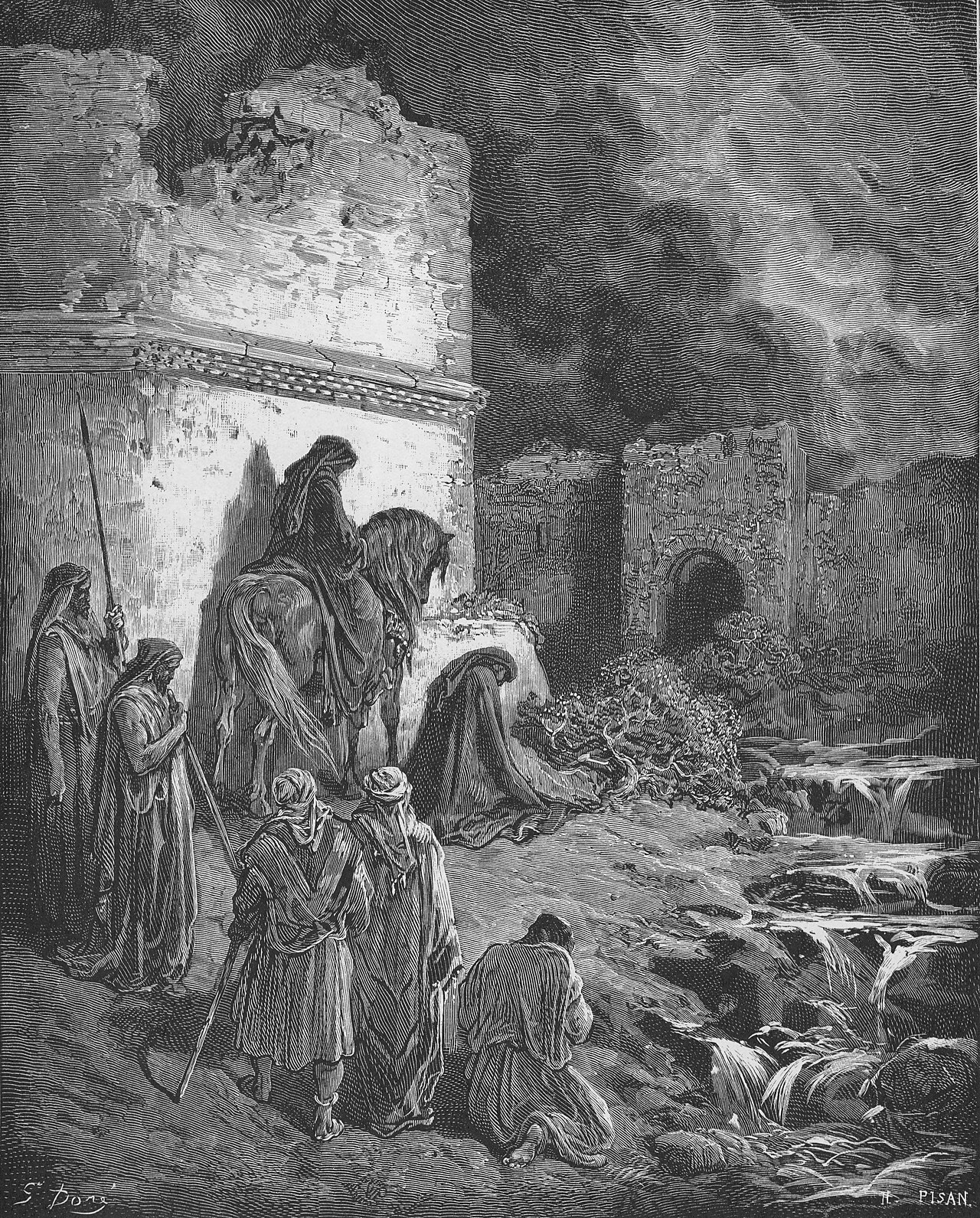
Nehemiah rests three days before he moves, the same pause Ezra took on arrival at Jerusalem (Ezra 8:32). Then he sets out "at night with a few men" and tells no one. He surveys the field before any building begins, the counting of the cost the Lord would later teach.
The record, by era
The Medieval Church1 voice
"And I came to Jerusalem and was there three days," etc. He wanders through various parts of the destroyed city, carefully scrutinizing each, and considers anxiously how they ought to be repaired. Thus it is with spiritual teachers, often rising at night and by diligent …
How the passage was read
What the Jewish commentators add
and I was there for three days I was in Jerusalem for three days, and at the end of three days, I and a few men with me arose at night, and I did not tell any person what the Holy One, blessed be He, had put into my heart.
2 more on this passage, in their own words ▾
Now Sanballat etc., heard When they heard that I had come to request good for Israel and to build the walls of Jerusalem it displeased them greatly, for they were the adversaries of Judah and Benjamin.
and there were no animals with me The few men who were with me went by foot and I alone rode on an animal. They did not ride their horses because they wanted to leave the city in secret, without anyone knowing.
This section is reception history: how the passage was read and kept in the Jewish tradition. Where a reading parts from an essential of the Christian faith, the section says so at that point.
Texts and citation data: Sefaria; each excerpt follows its version’s licence. 1 further source is cited on this chapter that carry no English text this site may quote or only restate the verse.
The words behind it
7 Hebrew wordsEvery Hebrew word of this verse in the order it stands, with what it means and the door to its own study. The last column counts the times a word stands in the whole Bible: the rarer the word, the more the places it appears belong together.
| Hebrew | Sound | Meaning | Word study | In the Bible |
|---|---|---|---|---|
| וָאָב֖וֹא | vaavo' | and I came | H935 → | 2568 times |
| אֶל־ | ʾel- | to | H413 → | 5510 times |
| יְרוּשָׁלִָ֑ם | yerushalim | Jerusalem | H3389 → | 643 times |
| וָאֱהִי־ | vaehi- | and I was | H1961 → | 3559 times |
| שָׁ֖ם | sham | there | H8033 → | 834 times |
| יָמִ֥ים | yamim | days | H3117 → | 2304 times |
| שְׁלֹשָֽׁה׃ | sheloshah | three | H7969 → | 432 times |
וָאָב֖וֹאand I came
vaavo'H935 →2568 times
אֶל־to
ʾel-H413 →5510 times
יְרוּשָׁלִָ֑םJerusalem
yerushalimH3389 →643 times
וָאֱהִי־and I was
vaehi-H1961 →3559 times
שָׁ֖םthere
shamH8033 →834 times
יָמִ֥יםdays
yamimH3117 →2304 times
שְׁלֹשָֽׁה׃three
sheloshahH7969 →432 times
A shaded row is a word that stands 400 times or fewer in the Bible.
The walk
1 stopEach card is a verse this one points to, and under it the verses that one points to in turn. Where several paths arrive at the same place, that place is listed first: the text keeps returning to it.
Through
Ezra 8:32So we arrived at Jerusalem and rested there for three days.
it leads to
- Ezra 7:8–9
Ezra arrived in Jerusalem in the fifth month of the seventh year of the king.
- Ezra 7:8–9
Where this verse is studied
On this page
Studies3
On this verse
On this chapter
About Nehemiah
Who and where
1 name in this verse with a page on the site.
This page draws on Bede, Commentary on Ezra and Nehemiah; Charles Spurgeon, Surveying the Field (Metropolitan Tabernacle Pulpit, No. 3364); John Gill, Exposition of the Old Testament (1748-1763) and John Gill, Exposition of the Old Testament.