
2 Samuel 10:14
in 2 Samuel 10When the Ammonites saw that the Arameans had fled, they too fled before Abishai, and they entered the city. So Joab returned from fighting against the Ammonites and came to Jerusalem.
BSB
The same verse in ASV and KJV ▾
ASV
And when the children of Ammon saw that the Syrians were fled, they likewise fled before Abishai, and entered into the city. Then Joab returned from the children of Ammon, and came to Jerusalem.
KJV
And when the children of Ammon saw that the Syrians were fled, then fled they also before Abishai, and entered into the city. So Joab returned from the children of Ammon, and came to Jerusalem.
⋯
This verse in 2 Samuel 10
Commentary
7 notes on this verseAnd when the children of Ammon saw that the Syrians were fled,.... In whom they put great confidence: then they fled also before Abishai; without engaging at all with him, as it seems: and entered into the city; out of which they came, either Rabbah or Medeba, for their safety: so Joab returned from the children of Ammon; did not stay to lay siege to their city, the season of the year not being proper for it, winter drawing near; see 2Sa 11:1, and came to Jerusalem; in triumph, to report to David the victory he had obtained.
This site's exposition
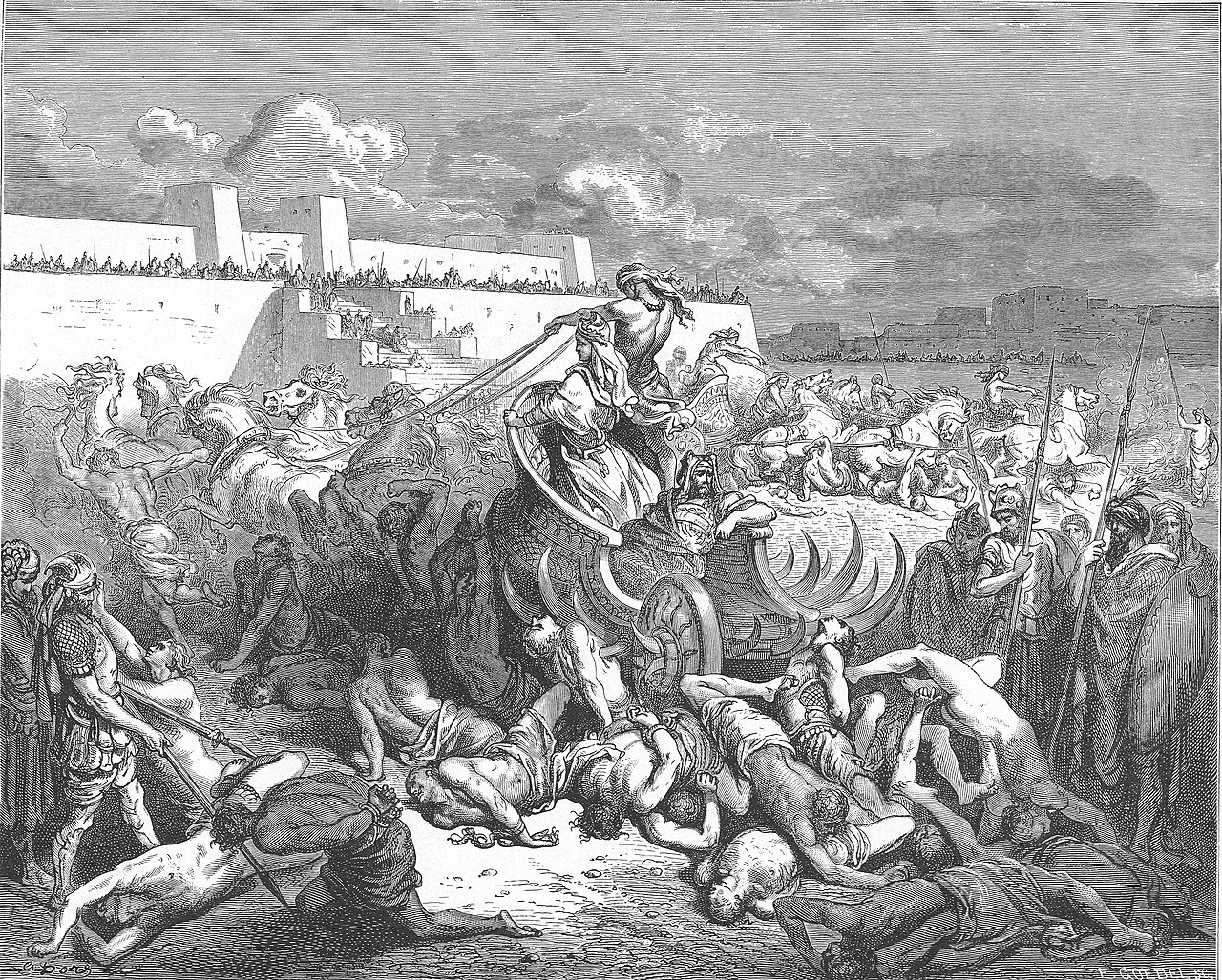
Joab and his troops advanced to fight the Arameans
on 2 Samuel 10:13-14
Joab routs the Arameans, and when the Ammonites see their hired strength break, they flee before Abishai. Joab returns to Jerusalem without besieging Rabbah, and John Gill gives the season as the reason. The next chapter opens “In the spring, at the time when kings march out to war”.
This site's exposition
they too fled before Abishai
Matthew Henry notes that the Ammonites fled into the city without a blow, a temptation for any army with walls at its back. Albert Barnes explains Joab's return by the strength of Rabbah. He adds that the Arameans were still too strong to risk a long siege.
The record, by era
The Puritans and the Awakening1 voice
The Syrians were first routed by Joab, and then the Ammonites by Abishai; the Ammonites seem not to have fought at all, but, upon the retreat of the Syrians, to have fled into the city. It is a temptation to soldiers to fly when they have a city at their backs to fly to. It is one thing when men may either fight or fly and another thing when they must either fight or die.
The Nineteenth Century3 voices
A commentator
Albert Barnes1798–1870
Notes, Explanatory and Practical, on the Old and New Testaments (1832-1869)
Joab returned - The great strength of Rabbah made it hopeless to take it by assault, and the Syrians were not sufficiently broken 2Sa 10:15 to make it safe to undertake a regular siege.
A commentator
Jamieson, Fausset & Brown1802–1910
Commentary Critical and Explanatory on the Whole Bible (1871)
proposed
It was a just and necessary war that had been forced on Israel, and they could hope for the blessing of God upon their arms. With great judgment the battle opened against the mercenaries, who could not stand against the furious onset of Joab, and not feeling the cause their own, consulted their safety by flight.
The Syrians were fled - They betook themselves to their own confines, while the Ammonites escaped into their own city.
The words behind it
18 Hebrew wordsEvery Hebrew word of this verse in the order it stands, with what it means and the door to its own study. The last column counts the times a word stands in the whole Bible: the rarer the word, the more the places it appears belong together.
| Hebrew | Sound | Meaning | Word study | In the Bible |
|---|---|---|---|---|
| וּבְנֵ֨י | uvenei | and [the] people of | H1121 → | 4930 times |
| עַמּ֤וֹן | amon | Ammon | H5983 → | 106 times |
| רָאוּ֙ | rau | they saw | H7200 → | 1300 times |
| כִּי־ | ki- | that | H3588 → | 4482 times |
| נָ֣ס | nas | it had fled | H5127 → | 159 times |
| אֲרָ֔ם | ʾaram | Aram | H758 → | 143 times |
| וַיָּנֻ֙סוּ֙ | vaiyanusu | and they fled | H5127 → | 159 times |
| מִפְּנֵ֣י | mipenei | from before | H6440 → | 2123 times |
| אֲבִישַׁ֔י | ʾavishai | Abishai | H52 → | 25 times |
| וַיָּבֹ֖אוּ | vaiyavou | and they went | H935 → | 2568 times |
| הָעִ֑יר | hair | the city | H5892 → | 1090 times |
| וַיָּ֣שָׁב | vaiyashov | and he returned | H7725 → | 1056 times |
| יוֹאָ֗ב | yoav | Joab | H3097 → | 144 times |
| מֵעַל֙ | meal | from on | H5921 → | 5755 times |
| בְּנֵ֣י | benei | [the] people of | H1121 → | 4930 times |
| עַמּ֔וֹן | amon | Ammon | H5983 → | 106 times |
| וַיָּבֹ֖א | vaiyavo' | and he came | H935 → | 2568 times |
| יְרוּשָׁלִָֽם׃ | yerushalim | Jerusalem | H3389 → | 643 times |
וּבְנֵ֨יand [the] people of
uveneiH1121 →4930 times
עַמּ֤וֹןAmmon
amonH5983 →106 times
רָאוּ֙they saw
rauH7200 →1300 times
כִּי־that
ki-H3588 →4482 times
נָ֣סit had fled
nasH5127 →159 times
אֲרָ֔םAram
ʾaramH758 →143 times
וַיָּנֻ֙סוּ֙and they fled
vaiyanusuH5127 →159 times
מִפְּנֵ֣יfrom before
mipeneiH6440 →2123 times
אֲבִישַׁ֔יAbishai
ʾavishaiH52 →25 times
וַיָּבֹ֖אוּand they went
vaiyavouH935 →2568 times
הָעִ֑ירthe city
hairH5892 →1090 times
וַיָּ֣שָׁבand he returned
vaiyashovH7725 →1056 times
יוֹאָ֗בJoab
yoavH3097 →144 times
מֵעַל֙from on
mealH5921 →5755 times
בְּנֵ֣י[the] people of
beneiH1121 →4930 times
עַמּ֔וֹןAmmon
amonH5983 →106 times
וַיָּבֹ֖אand he came
vaiyavo'H935 →2568 times
יְרוּשָׁלִָֽם׃Jerusalem
yerushalimH3389 →643 times
A shaded row is a word that stands 400 times or fewer in the Bible.
Where this verse is studied
On this page
About 2 Samuel
Who and where
1 name in this verse with a page on the site.
This page draws on Adam Clarke, Commentary on the Bible; Albert Barnes, Notes on the Old Testament; Albert Barnes, Notes, Explanatory and Practical, on the Old and New Testaments; Albert Barnes, Notes, Explanatory and Practical, on the Old and New Testaments (1832-1869); Jamieson, Fausset & Brown, Commentary Critical and Explanatory on the Whole Bible; John Gill, Exposition of the Old Testament (1748-1763); John Gill, Exposition of the Old Testament and Matthew Henry, Commentary on the Whole Bible.