
1 Kings 3:15
in 1 Kings 3Then Solomon awoke, and indeed it had been a dream. So he returned to Jerusalem, stood before the ark of the covenant of the Lord, and offered burnt offerings and peace offerings. Then he held a feast for all his servants.
BSB
The same verse in ASV and KJV ▾
ASV
And Solomon awoke; and, behold, it was a dream: and he came to Jerusalem, and stood before the ark of the covenant of Jehovah, and offered up burnt-offerings, and offered peace-offerings, and made a feast to all his servants.
KJV
And Solomon awoke; and, behold, it was a dream. And he came to Jerusalem, and stood before the ark of the covenant of the Lord, and offered up burnt offerings, and offered peace offerings, and made a feast to all his servants.
⋯
This verse in 1 Kings 3
Commentary
7 notes on this verseA commentator
Albert Barnes1798–1870
Notes, Explanatory and Practical, on the Old and New Testaments (1832-1869)
Solomon determined to inaugurate his reign by a grand religious ceremonial at each of the two holy places which at this time divided between them the reverence of the Jews. Having completed the religious service at Gibeon, where was the tabernacle of the congregation, he proceeded to Jerusalem, and sacrificed before the ark of the covenant, which was in Mount Zion 2Sa 6:12. A great feast naturally followed on a large sacrifice of peace-offerings.
This site's exposition
I will give you what you did not request
on 1 Kings 3:13-15
God adds riches and honor, which Solomon “did not request”. The promise of long life carries one condition, “if you walk in My ways and keep My statutes”. Solomon wakes to find “it had been a dream” and offers burnt and peace offerings “before the ark” in Jerusalem.
This site's exposition
stood before the ark of the covenant
Albert Barnes notes that two holy places divided Israel's worship, the tabernacle at Gibeon and the ark on Zion, and Solomon honours both. The peace offerings supplied the feast. John Wesley reads the burnt offerings as pointing to the blood of Christ.
The record, by era
The Puritans and the Awakening3 voices
The ark - Which was there in the city of David, 2 Sam. vi, 17, before which he presented himself in a way of holy adoration. Burnt offerings - Chiefly for the expiation of his and his peoples sin, through the blood of Christ, manifestly signified in these sacrifices.
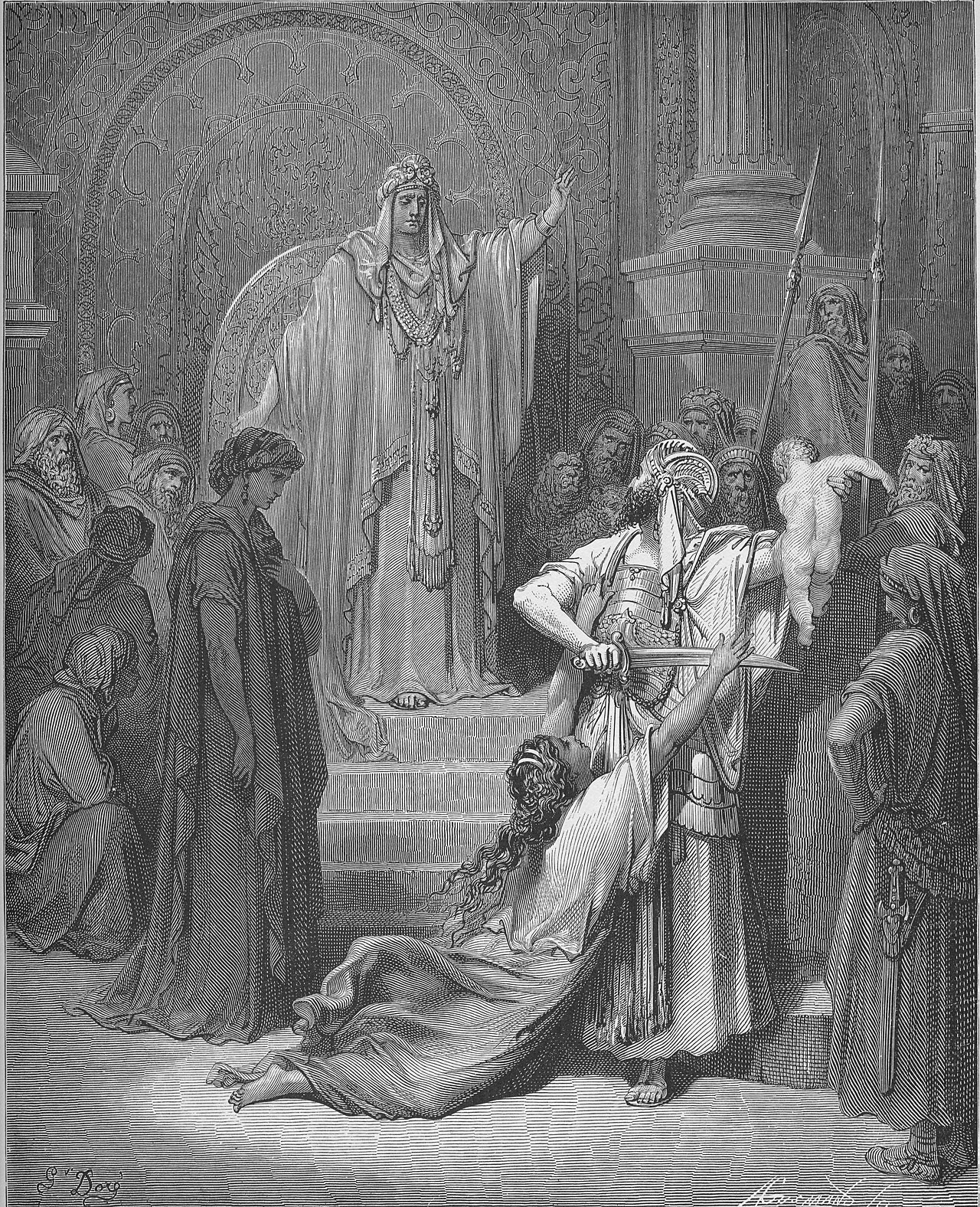
But the other said, Let it be neither mine nor thine, but divide it. 27 Then the king answered and said, Give her the living child, and in no wise slay it: she is the mother thereof. 28 And all Israel heard of the judgment which the king had judged; and they feared the king: for they saw that the wisdom of God was in him, to do judgment.
quarantine:scripture (2026-07-29) — verbatim-scripture
And Solomon awoke, and, behold, it was a dream,....
The Nineteenth Century1 voice
A commentator
Jamieson, Fausset & Brown1802–1910
Commentary Critical and Explanatory on the Whole Bible (1871)
The wisdom, however, that was asked and obtained was not so much of the heart as of the head--it was wisdom not for himself personally, but for his office, such as would qualify him for the administration of justice, the government of a kingdom, and for the attainment of general scientific knowledge. HIS JUDGMENT BETWEEN TWO HARLOTS.
How the passage was read
What the Jewish commentators add
Shlomo woke up and behold it was a dream. And behold he understood that his dream was true. He heard a bird chirping and understood its language, a dog barking and he understood its language.
1 more on this passage, in their own words ▾
And if you will go in My ways, etc., I will lengthen your days. The wealth and the honor for which I did not impose any conditions in my Torah to give to the king, I will give you whether deserving or not.
This section is reception history: how the passage was read and kept in the Jewish tradition. Where a reading parts from an essential of the Christian faith, the section says so at that point.
Texts and citation data: Sefaria; each excerpt follows its version’s licence. 5 further sources are cited on this chapter that carry no English text this site may quote or only restate the verse.
The words behind it
19 Hebrew wordsEvery Hebrew word of this verse in the order it stands, with what it means and the door to its own study. The last column counts the times a word stands in the whole Bible: the rarer the word, the more the places it appears belong together.
| Hebrew | Sound | Meaning | Word study | In the Bible |
|---|---|---|---|---|
| וַיִּקַ֥ץ | vaiyikatz | and he awoke | H3364 → | |
| שְׁלֹמֹ֖ה | shelomoh | Solomon | H8010 → | 291 times |
| וְהִנֵּ֣ה | vehineh | and there! | H2009 → | 843 times |
| חֲל֑וֹם | chalom | [it was] a dream | H2472 → | |
| וַיָּב֨וֹא | vaiyavo' | and he went | H935 → | 2568 times |
| יְרוּשָׁלִַ֜ם | yerushalim | Jerusalem | H3389 → | 643 times |
| וַֽיַּעֲמֹ֣ד׀ | vaiyaamod | and he stood | H5975 → | 521 times |
| לִפְנֵ֣י׀ | lifnei | <to> before | H6440 → | 2123 times |
| אֲר֣וֹן | ʾaron | [the] ark of | H727 → | 202 times |
| בְּרִית־ | berit- | [the] covenant of | H1285 → | 284 times |
| אֲדֹנָ֗י | ʾadonai | [the] Lord | H136 → | 440 times |
| וַיַּ֤עַל | vaiyaal | and he offered up | H5927 → | 890 times |
| עֹלוֹת֙ | ʾolot | burnt offerings | H5930 → | 287 times |
| וַיַּ֣עַשׂ | vaiyaas | and he made | H6213 → | 2628 times |
| שְׁלָמִ֔ים | shelamim | peace offerings | H8002 → | 87 times |
| וַיַּ֥עַשׂ | vaiyaas | and he made | H6213 → | 2628 times |
| מִשְׁתֶּ֖ה | mishteh | a feast | H4960 → | |
| לְכָל־ | lekhol | for all | H3605 → | 5413 times |
| עֲבָדָֽיו׃ פ | ʾavadav | servants his | H5650 → | 799 times |
וַיִּקַ֥ץand he awoke
vaiyikatzH3364 →
שְׁלֹמֹ֖הSolomon
shelomohH8010 →291 times
וְהִנֵּ֣הand there!
vehinehH2009 →843 times
חֲל֑וֹם[it was] a dream
chalomH2472 →
וַיָּב֨וֹאand he went
vaiyavo'H935 →2568 times
יְרוּשָׁלִַ֜םJerusalem
yerushalimH3389 →643 times
וַֽיַּעֲמֹ֣ד׀and he stood
vaiyaamodH5975 →521 times
לִפְנֵ֣י׀<to> before
lifneiH6440 →2123 times
אֲר֣וֹן[the] ark of
ʾaronH727 →202 times
בְּרִית־[the] covenant of
berit-H1285 →284 times
אֲדֹנָ֗י[the] Lord
ʾadonaiH136 →440 times
וַיַּ֤עַלand he offered up
vaiyaalH5927 →890 times
עֹלוֹת֙burnt offerings
ʾolotH5930 →287 times
וַיַּ֣עַשׂand he made
vaiyaasH6213 →2628 times
שְׁלָמִ֔יםpeace offerings
shelamimH8002 →87 times
וַיַּ֥עַשׂand he made
vaiyaasH6213 →2628 times
מִשְׁתֶּ֖הa feast
mishtehH4960 →
לְכָל־for all
lekholH3605 →5413 times
עֲבָדָֽיו׃ פservants his
ʾavadavH5650 →799 times
A shaded row is a word that stands 400 times or fewer in the Bible.
The walk
8 stopsEach card is a verse this one points to, and under it the verses that one points to in turn. Where several paths arrive at the same place, that place is listed first: the text keeps returning to it.
Through
Esther 1:3In the third year of his reign, Xerxes held a feast for all his officials and servants. The military leaders of Persia and Media were there, along with the nobles and princes of the…
it leads to
- Mark 6:21
On Herod’s birthday, her opportunity arose. Herod held a banquet for his nobles and military commanders and the leading men of Galilee.
- Genesis 40:20
On the third day, which was Pharaoh’s birthday, he held a feast for all his officials, and in their presence he lifted up the heads of the chief cupbearer and the chief baker.
Reached by 2 separate paths from here.
- Daniel 5:1
Later, King Belshazzar held a great feast for a thousand of his nobles, and he drank wine with them.
- Esther 2:18
Then the king held a great banquet, Esther’s banquet, for all his officials and servants. He proclaimed a tax holiday in the provinces and gave gifts worthy of the king’s bounty.
- Mark 6:21
Through
1 Kings 8:65So at that time Solomon and all Israel with him—a great assembly of people from Lebo-hamath to the Brook of Egypt—kept the feast before the LORD our God for seven days and seven more…
it leads to
- Numbers 34:5
where it will turn from Azmon, join the Brook of Egypt, and end at the Sea.
- Numbers 34:8
and from Mount Hor to Lebo-hamath, then extend to Zedad,
- 1 Kings 8:2
And all the men of Israel came together to King Solomon at the feast in the seventh month, the month of Ethanim.
- Numbers 34:5
Through
Daniel 5:1Later, King Belshazzar held a great feast for a thousand of his nobles, and he drank wine with them.
it leads to
- Esther 1:3
In the third year of his reign, Xerxes held a feast for all his officials and servants. The military leaders of Persia and Media were there, along with the nobles and princes of the…
- Esther 1:3
Where this verse is studied
About 1 Kings
Who and where
2 names in this verse with a page on the site.
This page draws on Adam Clarke, Commentary on the Bible; Albert Barnes, Notes, Explanatory and Practical, on the Old and New Testaments (1832-1869); Jamieson, Fausset & Brown, Commentary Critical and Explanatory on the Whole Bible; John Gill, Exposition of the Old Testament (1748-1763); John Wesley, Explanatory Notes upon the Old Testament; Keil, The Books of the Kings and Matthew Henry, Commentary on the Whole Bible.