
Place
Tekoa
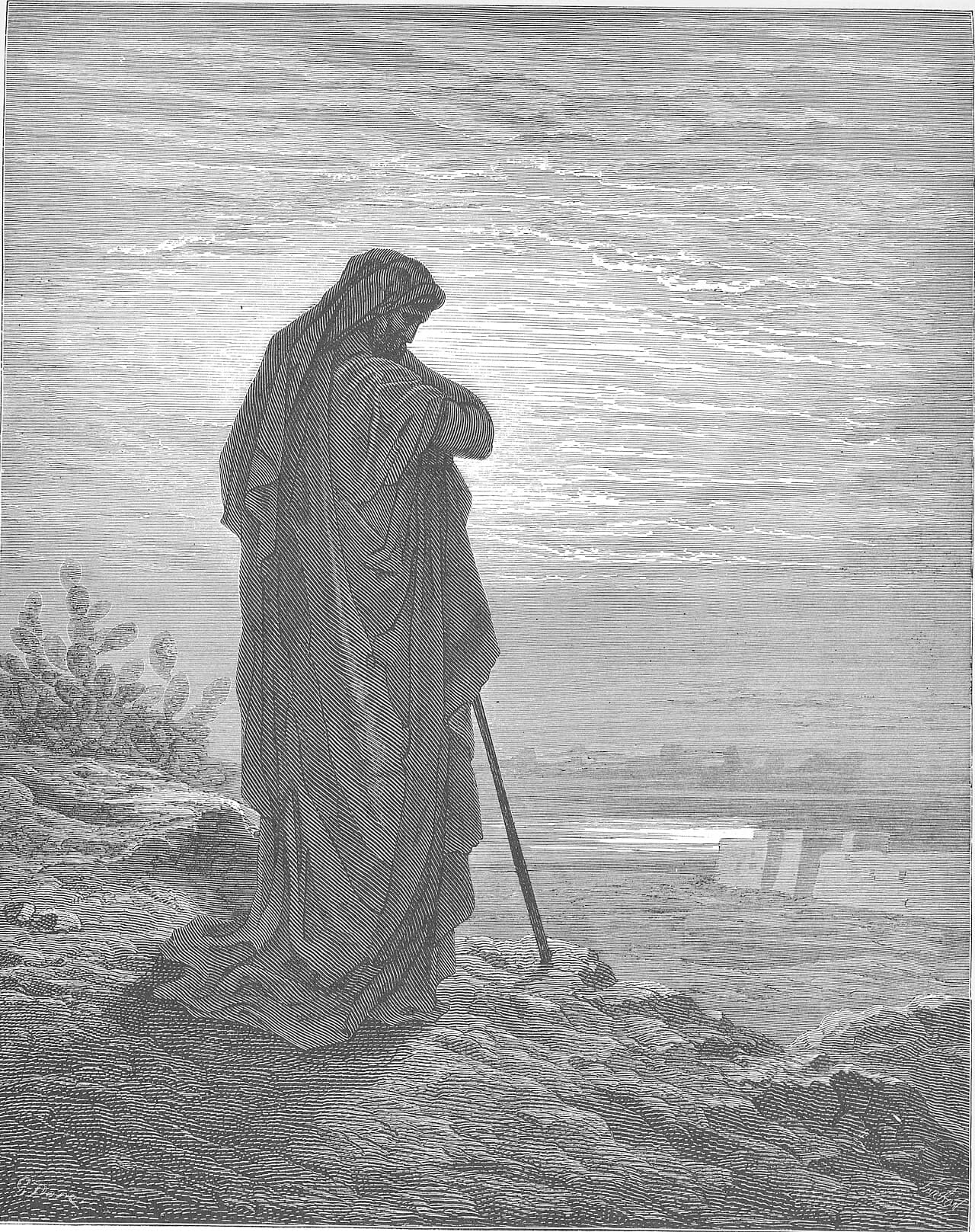
Gustave Doré, Doré's English Bible (1866). Public domain.
Summary
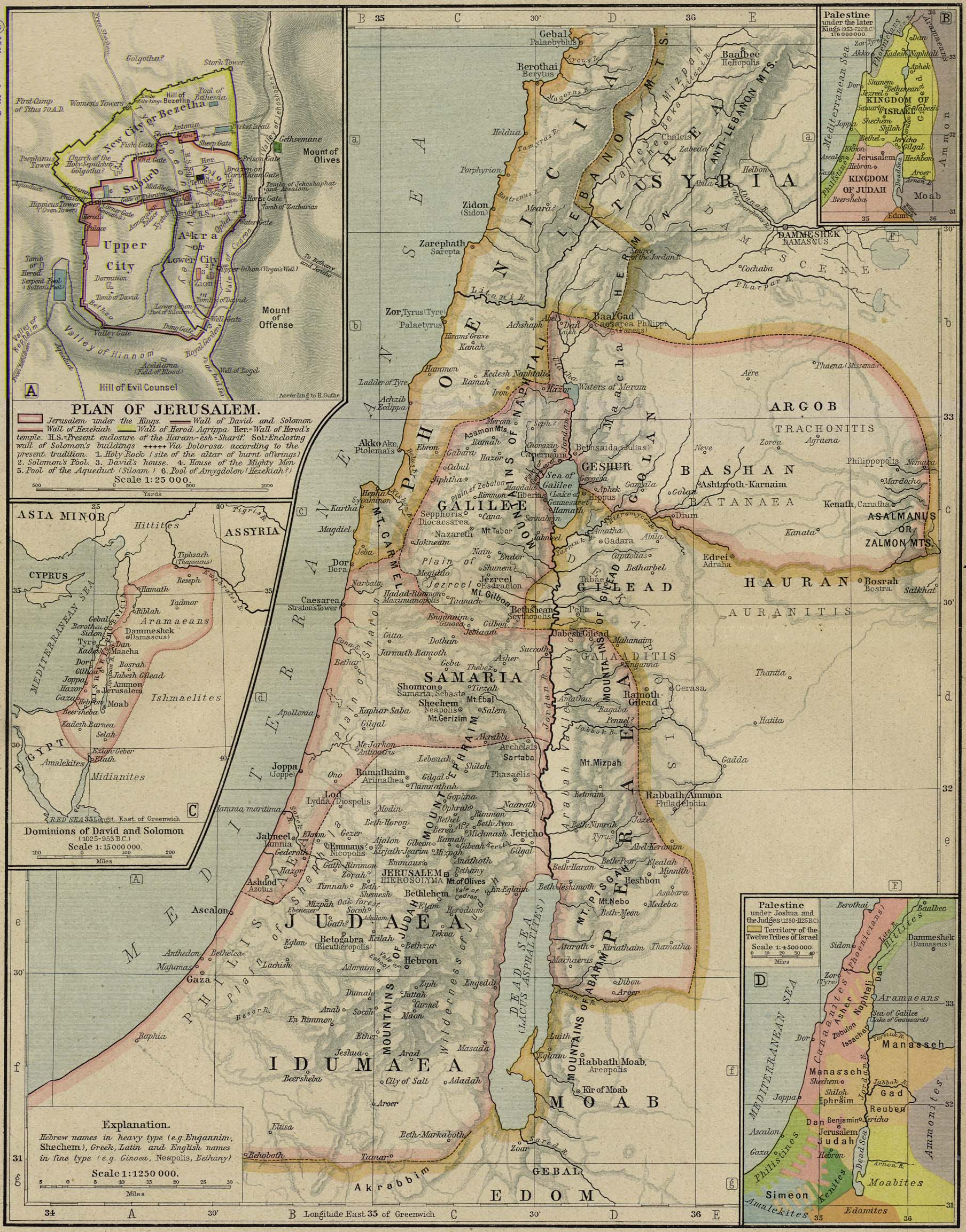
Judean town on the wilderness edge south of Bethlehem; home of Amos the herdman (Amos 1:1) and the wise woman of 2 Samuel 14.
- Tekoa was a Judean town on the edge of the wilderness south of Bethlehem, and Amos calls himself a herdsman from among its sheepherders.
- Joab sent a wise woman from Tekoa to move David toward his exiled son Absalom, and she carried the plan out with a story rather than a plea.
- Rehoboam fortified Tekoa as one of Judah's defense cities, and Jehoshaphat's army marched out through the wilderness that bears its name to a battle the LORD fought for them.
- Jeremiah tells Judah to sound the alarm from Tekoa when an army comes from the north.
- Men of Tekoa helped rebuild Jerusalem's wall under Nehemiah, though the text notes their nobles would not put their own shoulders to the work.
On this page
In Scripture
- Verses
- 9
- Books
- 5
Near Tekoa
- Bethlehem7.8 km · 4.8 mi N
- Jerusalem15 km · 9.1 mi N
- Mamre15 km · 9.3 mi SW
- Zion15 km · 9.6 mi N
- Bethany16 km · 9.8 mi N
- Machpelah16 km · 9.8 mi SW
Straight-line distances, computed from the gazetteer coordinates.
Where it is
the country around it
- Coordinates
- 31.6362° N, 35.2141° Efind it on the Atlas →
- Region
- Judean hill country
- Kind of place
- Town
2 places the record names with Tekoa, the farthest 15 km away
- 1Rehoboam builds up Tekoa among Judah's defense cities2 Chronicles 11:6 · 7.8 kmHe built up Bethlehem, Etam, Tekoa,
- 2Jehoshaphat's army sets out for the Wilderness of Tekoa2 Chronicles 20:20 · 15 kmEarly in the morning they got up and left for the Wilderness of Tekoa. As they set out, Jehoshaphat stood up and said, “Hear me, O people of Judah and Jerusalem. Believe in the LORD your God, and you will be upheld; believe in His prophets, and you will succeed.”
- Located: the gazetteer fixes one site
- Placed: the point stands for an area, or is rounded
- A dashed line ends at a place the gazetteer does not fix
Why Tekoa matters
What has been found
the evidence, and where it is disputed
Amos, the herdsman of Tekoa, and Amaziah's answer
Amos 7:10-17
Read Amos 7:10-17
- Amos names himself, and his homeAmos 1:1These are the words of Amos, who was among the sheepherders of Tekoa—what he saw concerning Israel two years before the earthquake, in the days when Uzziah was king of Judah and Jeroboam son of Jehoash was king of Israel.
- Amaziah reports Amos to the kingAmos 7:10Then Amaziah the priest of Bethel sent word to Jeroboam king of Israel, saying, “Amos has conspired against you in the midst of the house of Israel. The land cannot bear all his words,
- The words Amaziah reportsAmos 7:11for this is what Amos has said: ‘Jeroboam will die by the sword, and Israel will surely go into exile, away from their homeland.’”
- Go away, you seerAmos 7:12And Amaziah said to Amos, “Go away, you seer! Flee to the land of Judah; earn your bread there and do your prophesying there.
- Never prophesy at Bethel againAmos 7:13But never prophesy at Bethel again, because it is the sanctuary of the king and the temple of the kingdom.”
- A herdsman, and a tender of sycamore-fig treesAmos 7:14“I was not a prophet,” Amos replied, “nor was I the son of a prophet; rather, I was a herdsman and a tender of sycamore-fig trees.
- Taken from following the flockAmos 7:15But the LORD took me from following the flock and said to me, ‘Go, prophesy to My people Israel.’
- The judgment Amos answers withAmos 7:17Therefore this is what the LORD says: ‘Your wife will become a prostitute in the city, and your sons and daughters will fall by the sword. Your land will be divided by a measuring line, and you yourself will die on pagan soil. And Israel will surely go into exile, away from their homeland.’”
Amos names Tekoa once more, at 1:1, as the place he was among the sheepherders before the LORD sent him north to Israel.
Amos: the full study of the bookWhat happened here, in order
in the order the canon tells it
- Joab perceives the king's heart longs for Absalom2 Samuel 14:1Now Joab son of Zeruiah perceived that the king’s heart longed for Absalom.
- Joab sends to Tekoa for a wise woman2 Samuel 14:2So Joab sent to Tekoa to bring a wise woman from there. He told her, “Please pretend to be a mourner; put on clothes for mourning and do not anoint yourself with oil. Act like a woman who has mourned for the dead a long time.
- The parable's core line, water poured out on the ground2 Samuel 14:14For surely we will die and be like water poured out on the ground, which cannot be recovered. Yet God does not take away a life; but He devises ways that the banished one may not be cast out from Him.
- Rehoboam builds up Tekoa among Judah's defense cities2 Chronicles 11:6He built up Bethlehem, Etam, Tekoa,
- Jehoshaphat's army sets out for the Wilderness of Tekoa2 Chronicles 20:20Early in the morning they got up and left for the Wilderness of Tekoa. As they set out, Jehoshaphat stood up and said, “Hear me, O people of Judah and Jerusalem. Believe in the LORD your God, and you will be upheld; believe in His prophets, and you will succeed.”
- Sound the ram's horn in TekoaJeremiah 6:1“Run for cover, O sons of Benjamin; flee from Jerusalem! Sound the ram’s horn in Tekoa; send up a signal over Beth-haccherem, for disaster looms from the north, even great destruction.
- The Tekoites repair, but their nobles will not stoopNehemiah 3:5Next to him, the Tekoites made repairs, but their nobles did not put their shoulders to the work under their supervisors.
- The Tekoites repair a second section of the wallNehemiah 3:27And next to them, the Tekoites repaired another section, from a point opposite the great tower that juts out to the wall of Ophel.
Tekoa in Scripture
9 verses name it, in 5 books
Open a book to read its mentions here. Text: Berean Standard Bible.
Old TestamentNew Testamentsegment width = share of mentions
Old Testament5 books · 9 mentions
2 Samuel3 mentions
- 2 Samuel 14:2So Joab sent to Tekoa to bring a wise woman from there. He told her, “Please pretend to be a mourner; put on clothes for mourning and do not anoint yourself with oil. Act like a woman who has mourned for the dead a long time.
- 2 Samuel 14:4When the woman from Tekoa went to the king, she fell facedown in homage and said, “Help me, O king!”
- 2 Samuel 14:9But the woman of Tekoa said to the king, “My lord the king, may any blame be on me and on my father’s house, and may the king and his throne be guiltless.”
1 Chronicles2 mentions
2 Chronicles2 mentions
- 2 Chronicles 11:6He built up Bethlehem, Etam, Tekoa,
- 2 Chronicles 20:20Early in the morning they got up and left for the Wilderness of Tekoa. As they set out, Jehoshaphat stood up and said, “Hear me, O people of Judah and Jerusalem. Believe in the LORD your God, and you will be upheld; believe in His prophets, and you will succeed.”
Jeremiah1 mention
Common questions
What did Amaziah accuse Amos of, and how did Amos answer?
Amaziah, the priest of Bethel, reported to Jeroboam that Amos had conspired against him and quoted Amos's own words back: Jeroboam would die by the sword and Israel would go into exile. He then told Amos to flee to Judah and never prophesy at Bethel again, since it was the king's own sanctuary.
Amos answered by naming his trade rather than defending a title. He was no prophet and no prophet's son, he said, but a herdsman and a tender of sycamore-fig trees, and it was the LORD who took him from following the flock and sent him to Israel. He then repeated the judgment Amaziah had tried to silence, this time naming Amaziah's own household in it.
Was the wise woman of Tekoa acting on her own, or was she sent?
She was sent. Joab perceived that David's heart longed for the exiled Absalom, and he sent to Tekoa for a wise woman, told her exactly how to dress and act as a long-mourning widow, and put the words of her story in her mouth before she ever came before the king. Her skill was in the delivery, not the plan.
Why does Jeremiah tell Judah to sound the alarm from Tekoa?
Tekoa sat on the edge of the hill country south of Jerusalem, positioned to give warning of trouble approaching from the north. Jeremiah pairs it with Beth-haccherem as a place to raise a signal, so that Jerusalem would have notice of the disaster he says is coming.
Why does Nehemiah note that the Tekoite nobles would not work?
The text draws the contrast itself. At 3:5 the Tekoites make repairs, but their nobles will not put their shoulders to the work under their supervisors. At 3:27 the Tekoites repair a second section of the wall without any such complaint recorded. Nehemiah simply reports it; the town's ordinary people carry the work in both places named.
What was Amos's own trade before he was sent to prophesy?
He calls himself a herdsman and a tender of sycamore-fig trees. Scripture itself places sycamore trees in the foothills rather than the high country: 1 Kings 10:27 speaks of cedar as abundant as sycamore in the foothills, and 1 Chronicles 27:28 names an officer over the olive and sycamore trees in the foothills. Tekoa sits in hill country on the wilderness edge, so the detail is part of why some readers take Amos to have worked more than one kind of land, tending flocks on the wilderness edge and trees in the lowlands nearby. Scripture itself does not explain the detail further than naming it.
Sources cited
- OpenBible.info Bible Geocoding: Tekoaread 2026-08-20The coordinates on this page. Used under CC-BY with attribution to OpenBible.info.
- Berean Standard BiblePublic domain since 2023. All Scripture quoted on this page, from the site's own verse store.
- Gustave Doré, Doré's English Bible (1866)The engraving on this page. Public domain, Commons file page recorded in src/lib/art/dore-bible.generated.json.
- Wikipedia, "Tekoa (Biblical)"Names the site's excavators (Heicksen 1968, Davis 1968 and 1970) and dates; used here since no excavation report itself is on hand. Confirmed by web search, 2026-09-02 (session 7).
- Philip Schaff, ed., Nicene and Post-Nicene Fathers, Second Series, vol. 6, "Jerome: The Principal Works of St. Jerome"Dates Jerome's Commentary on Amos to AD 406, addressed to Pammachius, its Preface to Book I describing Tekoa, Amos' birthplace. Confirmed by web search, 2026-09-02 (session 7).
Keep studying
On this page
Studies6
Every page that names it1
Doorway2
Books that name it3
Lives that run through it1
Keep this page