

605–516 BC · Featured Study · Judah in Babylon
The Exile and the Return
Judah did not fall in one blow. Three deportations over nineteen years, 605, 597, 586 BC, emptied the land in stages, until Jeremiah's promised seventy years stood between a burned temple and a rebuilt one. Then a Persian king who had never heard of Judah's God issued a decree that let three successive companies go home, Zerubbabel to lay a foundation, Ezra to reform a people, Nehemiah to raise a wall, while Ezekiel watched the LORD's glory leave the temple by its east gate, and promised it would one day return by the very same road.
Eduard Bendemann, The Mourning Jews in Exile (By the Waters of Babylon) (c. 1832) — Public domain, via Wikimedia Commons
Summary
This page walks the three deportations to Babylon, the seventy years under two honest reckonings, Cyrus's decree with the Cylinder cited as background rather than proof, and the three returns under Zerubbabel, Ezra, and Nehemiah.
- Three deportations (605, 597, 586 BC) traced verse by verse over nineteen years
- Two reckonings of Jeremiah's seventy years, both given, with the old commentators shown disagreeing too
- Cyrus's 539/538 BC decree, with the Cyrus Cylinder cited honestly as corroborating evidence, not proof of the biblical text itself
- Three separate returns to Jerusalem over nearly a century: Zerubbabel, Ezra, and Nehemiah
- Ezekiel's glory departing the temple eastward, then returning by the same road
Three Deportations, One Judgment
605, 597, 586 BC, nineteen years from first hostage to burned temple
- 605 BCDaniel 1:1–2the first, Daniel taken
“In the third year of the reign of Jehoiakim king of Judah came Nebuchadnezzar king of Babylon unto Jerusalem, and besieged it… he carried them into the land of Shinar to the house of his god.”
Jehoiakim submits as a vassal; Nebuchadnezzar takes hostages of the royal line, Daniel among them, and vessels from the temple. Judah remains standing, but the clock the prophets had warned of has started.
- 597 BC2 Kings 24:14–15the second, Jehoiachin and Ezekiel taken
“And he carried away all Jerusalem, and all the princes, and all the mighty men of valor, even ten thousand captives… And he carried away Jehoiachin to Babylon.”
A far larger deportation, the king, the court, the craftsmen, “none remained, save the poorest sort of the people of the land.” Ezekiel is among these captives (Ezek 1:1–2) and dates his own visions by “king Jehoiachin's captivity” rather than by any king still reigning in Jerusalem.
- 586 BC2 Kings 25:8–11the third, the city and the temple destroyed
“He burned down the house of the LORD, the royal palace, and all the houses of Jerusalem… broke down the walls around Jerusalem… Then Nebuzaradan captain of the guard carried into exile the people who remained in the city.”
The end of the kingdom of Judah as a political entity: Zedekiah blinded and taken, the temple Solomon built burned, the walls leveled. This is the deportation most chronologies mean by simply “the exile”, some date it 587 rather than 586, a one-year uncertainty in the Babylonian regnal-year count that does not affect anything argued on this page.
“Now from this first captivity most interpreters think the seventy years are to be dated, though Jerusalem was not destroyed, nor the captivity completed, till about nineteen years after.”
Matthew Henry, Commentary on the Whole Bible (1710), on Daniel 1:1–2 — public domain
Seventy Years, Two Honest Reckonings
Jeremiah 25:11–12, 29:10; 2 Chronicles 36:21, the same number, two starting lines
Jeremiah names the number twice, “these nations shall serve the king of Babylon seventy years” (25:11) and “After seventy years are accomplished for Babylon, I will visit you” (29:10), but Scripture and its oldest interpreters do not all start the clock at the same event. MannaFest presents both readings rather than forcing one.
Reckoning A, servitude to Babylon: 605–536 BC
From the first deportation (605 BC, when Judah first became a Babylonian vassal and Daniel was taken) to Cyrus's decree and the first return (538/537 BC, rounded to 536 in older chronologies). Matthew Henry, above, takes this line, the seventy years is Judah's subjection to Babylon, not the desolation of the land alone.
Reckoning B, desolation of the land: 586–516 BC
From the temple's destruction (586 BC) to the second temple's completion (516 BC, Ezra 6:15). This is the line 2 Chronicles 36:21 draws directly: “until the land had enjoyed its sabbaths: for as long as it lay desolate it kept sabbath, to fulfil threescore and ten years”, the land itself, not the exiles, keeping the count.
Even the old commentators split: Jamieson, Fausset & Brown read Jeremiah 29:10 differently than Henry reads Daniel 1: “This proves that the seventy years date from Jeconiah's captivity, not from the last captivity”, Jeconiah being Jehoiachin, taken in 597 BC, not 605. MannaFest names the disagreement rather than picking a side its own sources do not agree on.
Jamieson, Fausset & Brown, Commentary Critical and Explanatory (1871), on Jeremiah 29:10 — public domain
Cyrus, 539 BC
Babylon fell to Cyrus of Persia in 539 BC, dated by the Babylonian Nabonidus Chronicle, not by anything in Scripture. His decree freeing captive peoples to return home, including Judah, is dated to his first regnal year over Babylon, 538 BC (older 19th-century chronologies, working from a different starting point, placed it around 536 BC, Jamieson, Fausset & Brown cite Hales's figure of 536 for Cyrus's founding of the Persian empire; MannaFest follows the modern Babylonian- chronicle dating).
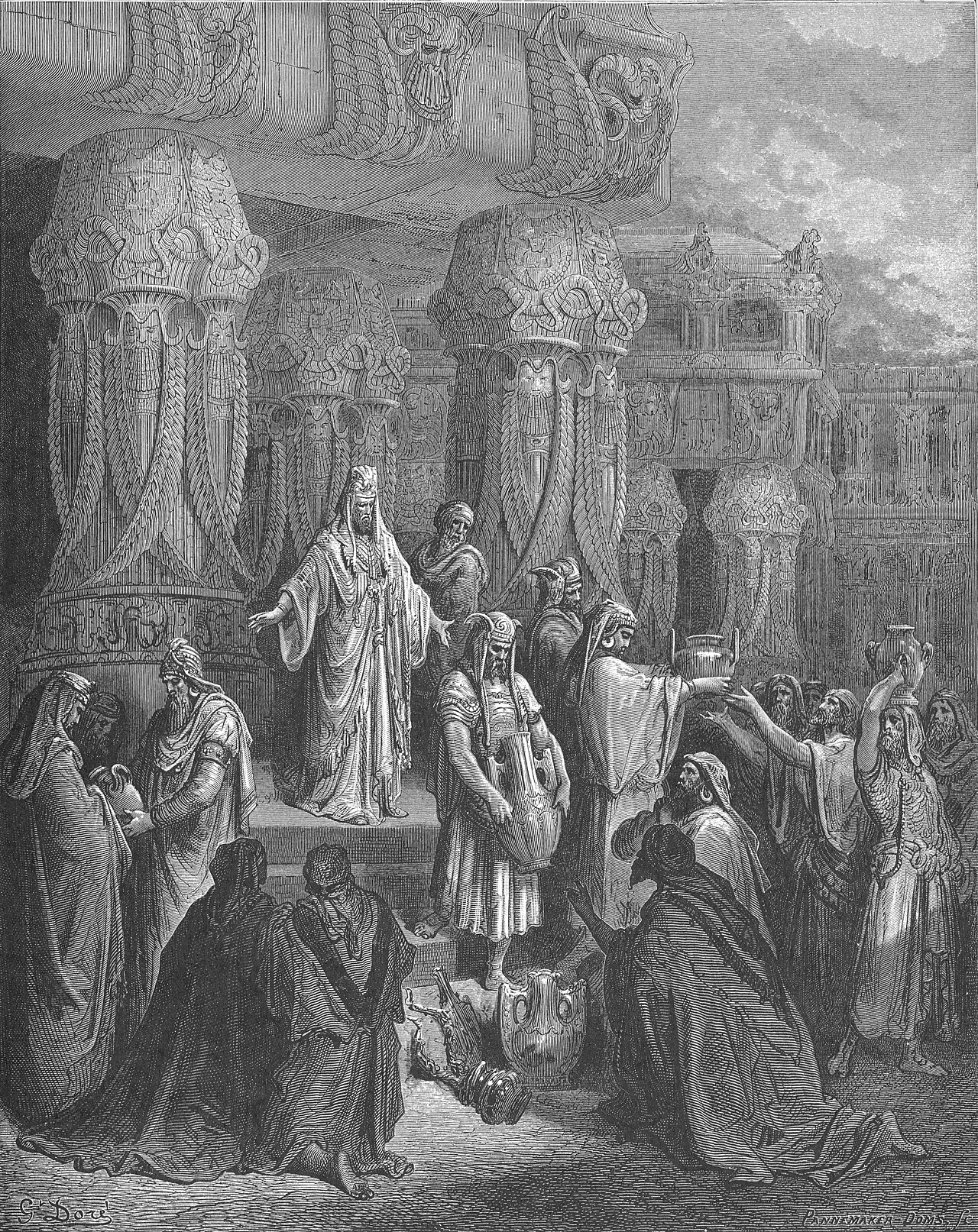
“In the first year of Cyrus king of Persia, to fulfill the word of the LORD spoken through Jeremiah, the LORD stirred the spirit of Cyrus king of Persia… Whoever among you belongs to His people, may his God be with him, and may he go to Jerusalem in Judah and build the house of the LORD.”
“The purport of the edict was to grant full permission to those Jewish exiles, in every part of his kingdom, who chose, to return to their own country, as well as to recommend those of their countrymen who remained to aid the poor and feeble on their way, and contribute liberally towards the rebuilding of the temple.”
Jamieson, Fausset & Brown, Commentary Critical and Explanatory (1871), on Ezra 1:3 — public domain
Corroboration, honestly framed, the Cyrus Cylinder
A clay cylinder Cyrus buried in Babylon's foundations (discovered 1879, now in the British Museum) has him declare that he returned displaced peoples to their homes and restored the sanctuaries of their gods, a general Persian policy, stated in Cyrus's own words. It does not name Judah, Jerusalem, or the LORD, and it is not a record of the biblical decree itself, it corroborates the *kind* of policy Ezra 1 describes, not the specific edict. MannaFest cites it as background evidence of Cyrus's documented practice, not as external proof of Ezra 1:1–3's own text.
Three Returns
one decree, three separate companies, over nearly a century
- Zerubbabel538/537 BC
Cyrus's decree (Ezra 1:1–3) authorizes the first return. Ezra 2 counts the company at 42,360 free persons (Ezra 2:64), besides servants and singers. The altar is rebuilt first (Ezra 3:1–3), then the temple foundation is laid to shouts of praise and weeping mixed together (Ezra 3:10–13), some remembered Solomon's temple and wept. Samaritan opposition stalls the work for years; it resumes under Haggai and Zechariah's preaching and the temple is finished in the sixth year of Darius (Ezra 6:15).
- Ezra458 BC
Nearly eighty years after Zerubbabel, Ezra the priest and scribe leads a second company from Babylon, arriving “in the fifth month, which was the seventh year of” Artaxerxes (Ezra 7:8). His mission is reformation more than construction, he confronts the mixed marriages that had crept back in (Ezra 9–10) and re-centers the community on the Law.
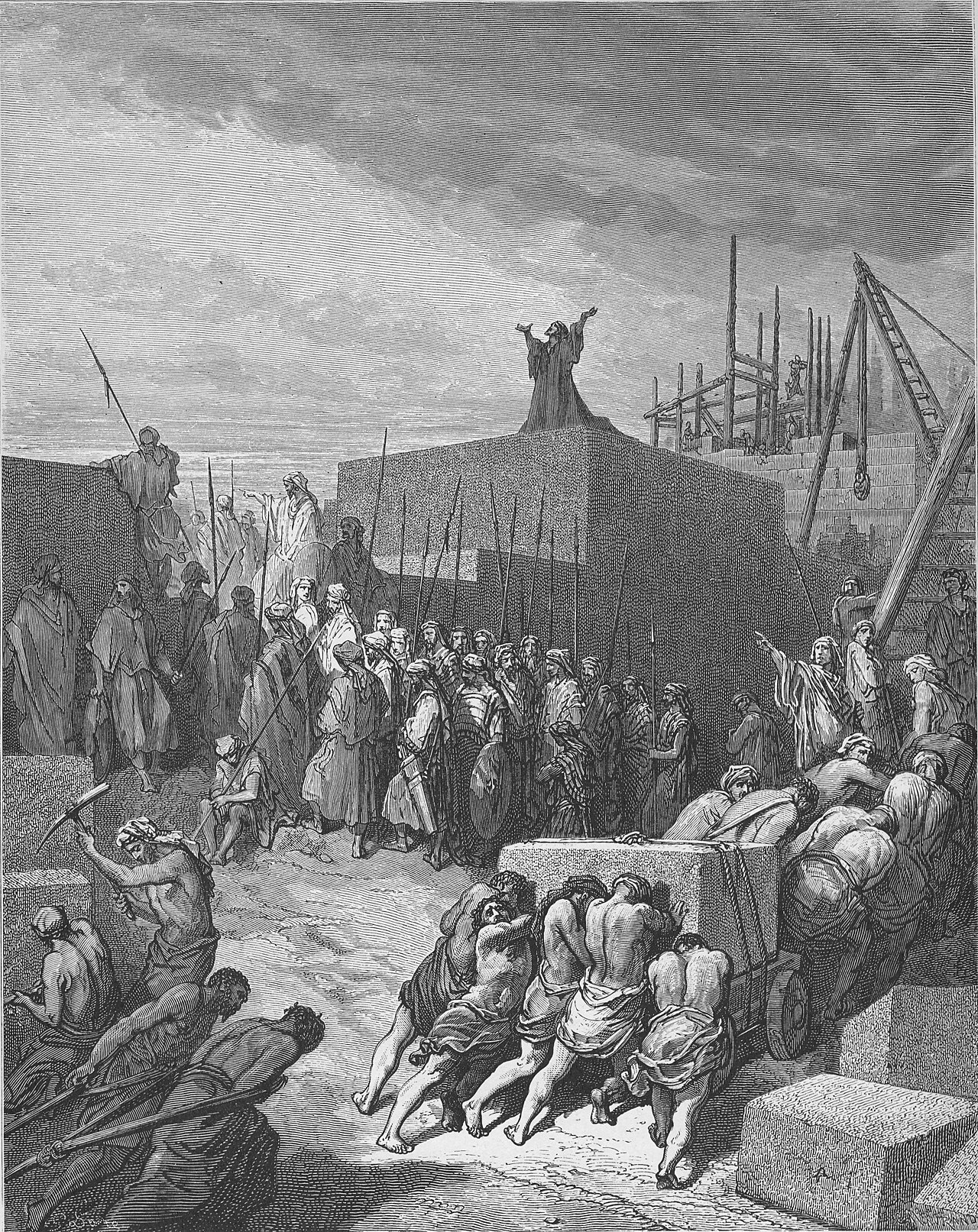
- Nehemiah445 BC
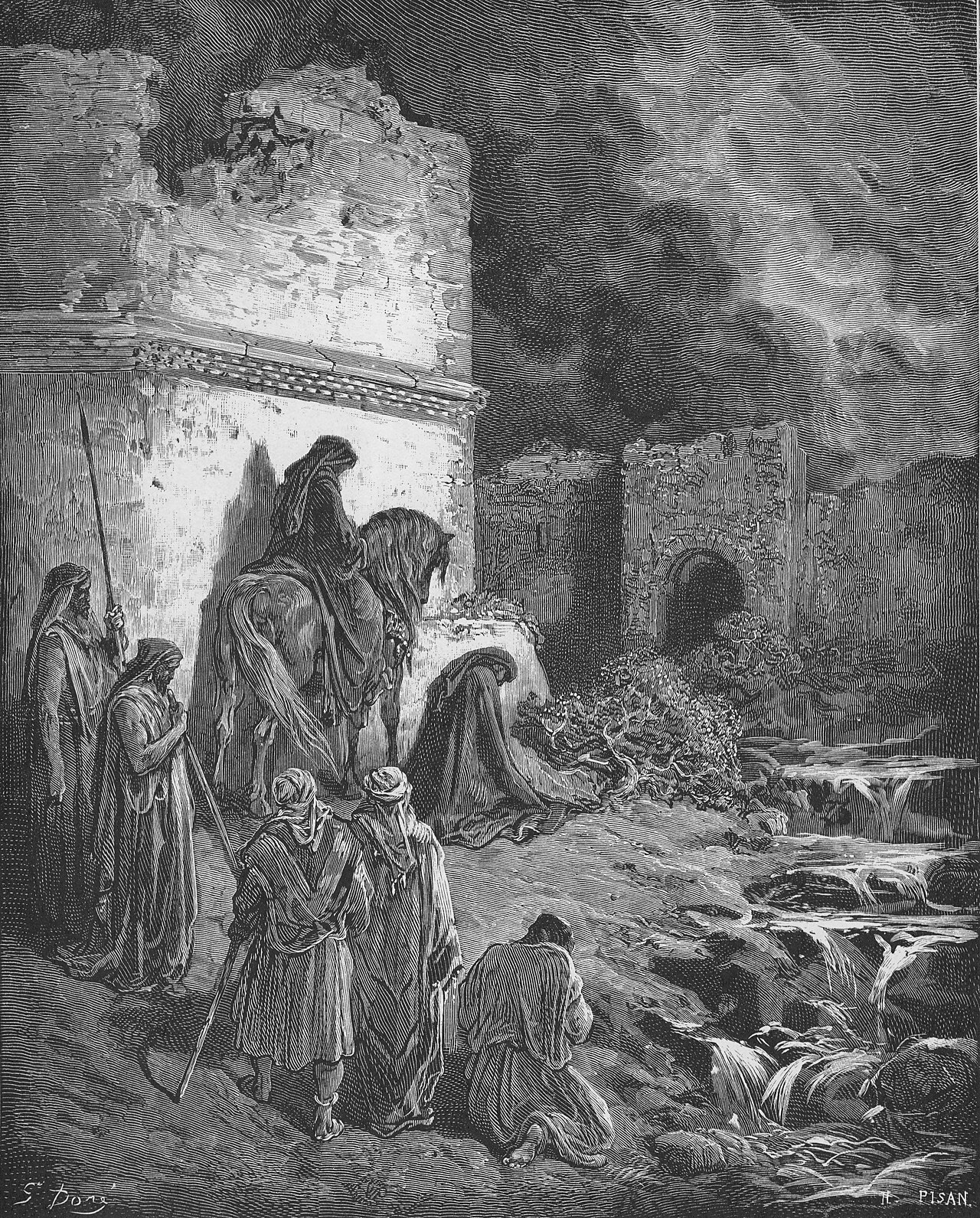
Thirteen years after Ezra, Nehemiah, cupbearer to Artaxerxes, asks leave to go and “build” the city of his fathers' sepulchres (Neh 2:5). He surveys the broken walls by night (Neh 2:11–16) and rallies the people: “Ye see the evil case that we are in, how Jerusalem lieth waste, and the gates thereof are burned with fire: come, and let us build up the wall of Jerusalem, that we be no more a reproach” (Neh 2:17). The wall is finished in fifty-two days (Neh 6:15) despite Sanballat and Tobiah's opposition.
“It is a pity that a good motion should be lost purely for want of one to move it and to break the ice in it.”
Matthew Henry, Commentary on the Whole Bible (1710), on Nehemiah 2:17 — public domain
The Theology of Exile
Jeremiah 29 and Ezekiel's departing, then returning, glory
Build houses, seek the city's peace, Jeremiah 29
“For this is what the LORD says: “When Babylon’s seventy years are complete, I will attend to you and confirm My promise to restore you to this place. For I know the plans I have for you, declares the LORD, plans to prosper you and not to harm you, to give you a future and a hope.”
Jeremiah's letter to the exiles (Jer 29:4–9) told them the opposite of what the false prophets promised: not a quick return, but a long settling in, build houses, plant gardens, marry, seek the peace of the city they had been carried to. The promise of return is real, but it is not an excuse to stop living.
The glory that leaves, and the glory that comes back, Ezekiel
“Then the glory of the LORD moved away from the threshold of the temple and stood above the cherubim” (Ezek 10:18), then, years later: “the glory of the God of Israel coming from the east… and the glory of the LORD entered the temple through the gate facing east” (Ezek 43:2, 4).
Ezekiel, already a captive among the second deportation (Ezek 1:1–3), watches the temple's glory withdraw eastward before its destruction, then, in his final vision, watches it return by the same road. The full account of the departure sits on the doorway below.
“The sins of Israel caused the glory of the Lord to go out of his house, now the repentance of Israel is blest with the return of this glory.”
John Wesley, Explanatory Notes upon the Bible (1765), on Ezekiel 43:4 — public domain
The Words the Exile Rests On
four Hebrew words, removal, return, glory, and the number that ties two reckonings together
Notable art
— click a piece to enlargeKeep studying
On this page
Doctrines2