MANNAFEST

Acts · The Study Guide

The Acts of the Holy Spirit

The oldest title for this book was not the Acts of the Apostles. Luke's first volume covered everything Jesus began to do and to teach; this one covers what He kept doing after He sat down — no longer walking Galilee but enthroned, and pouring out His Spirit on ordinary people until the word had travelled from a borrowed upstairs room in Jerusalem to a rented house in the capital of the world. The book announces its own shape in its eighth verse and then walks it, and it ends with one adverb: unhindered.

Vitals

Luke's second volume — history with a thesis
Author
Luke — the beloved physician
Date
c. AD 62 (the early date)
Genre
Ancient historiography
Addressed to
Theophilus (1:1)
Shape
28 ch · 7 movements · 6 refrains
“But ye shall receive power, when the Holy Spirit is come upon you: and ye shall be my witnesses both in Jerusalem, and in all Judæa and Samaria, and unto the uttermost part of the earth.”— Acts 1:8 (ASV) →

The 1:8 Arc

one command, drawn as the ripple it became — every marker is a movement of the book
JerusalemJudea & Samariathe ends of the earththe upper room11:1–2:47Prologue & Pentecost23:1–6:7The Jerusalem Church36:8–9:31The Widening49:32–12:24The Gentile Door512:25–16:5First Journey & the Council616:6–19:20Into the Aegean World719:21–28:31Jerusalem, the Trials, Rome

The rings are not decoration. Acts 1:8 names three zones, and Luke fills them in order — two movements inside Jerusalem, two that break into Judea and Samaria, three that carry the word across the empire. The gospel never leaves the centre behind; it keeps arriving further out from the same source.

1Acts 1:1–2:47

Prologue & Pentecost

The Twelve · Jerusalem

Forty days of resurrection appearances, the ascension, a replacement apostle — and then the promised Spirit falls on a praying room and 3,000 are added in a day. The church begins as an act of God, not an act of organisation.

2:47the Lord added to them day by day those that were saved

2Acts 3:1–6:7

The Jerusalem Church

Peter · Jerusalem

A lame man walks, the Sanhedrin summons, the apostles pray for boldness and the building shakes; Ananias and Sapphira die; Gamaliel counsels restraint; seven are appointed so the word is not crowded out by administration.

6:7the word of God increased; and the number of the disciples multiplied in Jerusalem exceedingly

3Acts 6:8–9:31

The Widening

Stephen · Philip · Saul · Judea & Samaria

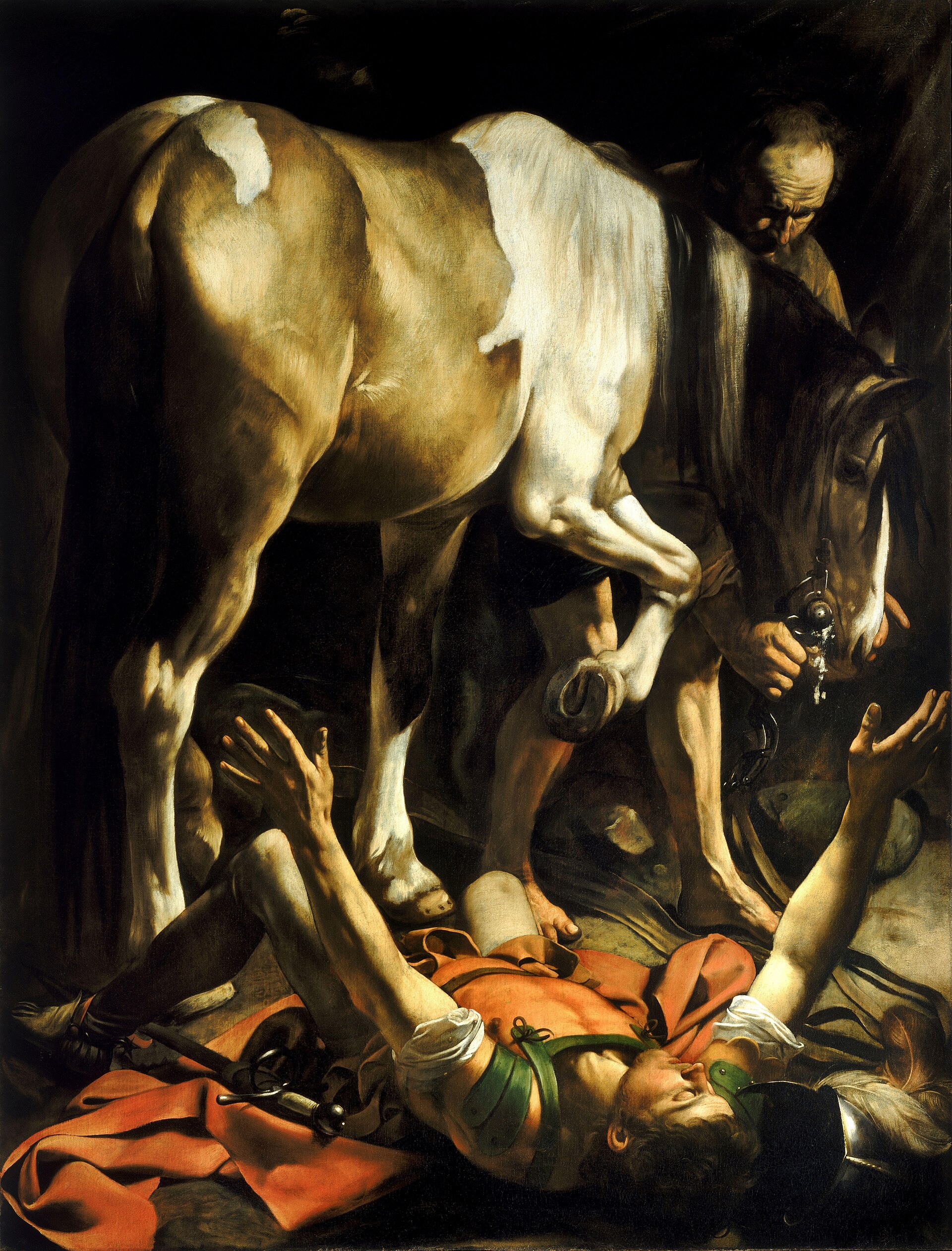
Stephen's speech and death scatter the church — and the scattering is the mission. Philip takes Samaria and a Gaza road; the chief persecutor is knocked flat on the Damascus road and stands up an apostle.

9:31the church throughout all Judæa and Galilee and Samaria had peace, being edified… was multiplied

4Acts 9:32–12:24

The Gentile Door

Peter · Judea & Samaria

A sheet lowered from heaven, a centurion's household filled with the Spirit before anyone can object, an argument settled in Jerusalem, a mixed church at Antioch that gets a new name — and a king who takes God's glory and does not survive it.

12:24the word of God grew and multiplied

5Acts 12:25–16:5

First Journey & the Council

Paul (the pivot) · the ends of the earth

The Spirit says 'separate me Barnabas and Saul' and the sending church becomes Antioch, not Jerusalem. Cyprus, Galatia, stoning at Lystra — then the Council settles on what terms the nations come in.

16:5the churches were strengthened in the faith, and increased in number daily

6Acts 16:6–19:20

Into the Aegean World

Paul · the ends of the earth

The Spirit forbids Asia and a night vision opens Europe: Philippi's jail, Thessalonica's politarchs, the Areopagus, eighteen months in Corinth under Gallio, two years in the school of Tyrannus at Ephesus.

19:20so mightily grew the word of the Lord and prevailed

7Acts 19:21–28:31

Jerusalem, the Trials, Rome

Paul in chains · the ends of the earth

Arrest in the Temple, four defence speeches, an appeal to Caesar, a hurricane in the Adria and a shipwreck at Malta — and the prisoner arrives at the capital to preach for two years in his own hired house.

28:31preaching the kingdom of God… with all boldness, none forbidding him

Open the Acts reader →

The Hinge

chapters 12–13, where the book turns on its axis

Chapters 1–12

The Peter half

Jerusalem at the centre, the circumcised in view, and a fisherman doing the preaching. It ends with Peter walking out of a prison, telling the brethren to report to James, and departing “to another place” (12:17). He is never the lead again.

The axis

Acts 12–13

Peter exits (12:17). The persecuting king is struck down and eaten of worms (12:23). The word grows (12:24). And at Antioch the Spirit says: separate me Barnabas and Saul for the work (13:2). Three verses turn Jerusalem into a memory and Rome into a destination.

Chapters 13–28

The Paul half

Antioch sends, the nations receive, and a Roman citizen argues his way up the imperial chain of appeal until the gospel is being preached in the capital at the emperor's expense. The sending church is no longer the mother church.

The mirror — Luke tells the same six things twice

What happensPeterPaul
Heals a man lame from birth3:2–814:8–10
Confronts a magus8:18–2413:6–11
Raises the dead9:36–4220:9–12
Delivered from prison12:6–1116:25–26
Preaches the landmark sermon2:14–4113:16–41
Extraordinary healings at a distance5:1519:11–12

This is not coincidence and Luke does not hide it. The mirroring is an argument for the second half of his own book: whatever the Spirit did through the man who walked with Jesus, He did through the man who only ever met Him on a road.

Conversion on the Way to Damascus (Caravaggio)
The road that supplied the second half of Acts. Caravaggio, Conversion on the Way to Damascus (1601) — public domain.

Original Language

the Greek that carries the book

One distinction in that grid does a great deal of work. Luke uses baptizō for the promise — you shall be baptized in the Holy Spirit (1:5; 11:16) — and a different family of verbs, pimplēmi and plēroō, for what keeps happening afterwards: the same people are filled again in 4:8 and again in 4:31. One baptism, many fillings. The doctrine page works this out →

Literary Design

how Luke built it

1:8 as table of contents

The programmatic verse is not a theme buried in the text; it is the announced structure, fulfilled zone by zone. Ancient rhetoric called this the propositio — the thesis stated up front and then walked out.

The six seams

6:7 · 9:31 · 12:24 · 16:5 · 19:20 · 28:31. Each closes a panel with a variation on one sentence. Luke builds the book on a recurring joint, and the joint always says the same thing: the word grew.

Peter mirrored in Paul

Lame man healed, magus confronted, dead raised, prison opened, landmark sermon preached — twice, once in each half. The design is an argument: one Spirit drives both, so the apostle to the nations is no lesser witness.

The three Pentecosts

Jerusalem (2), Cornelius's house (10), the Ephesian twelve (19). The same outpouring-with-tongues repeats as the circle widens — Jew, God-fearing Gentile, disciples of John. The repetition is the point.

The speeches as architecture

Roughly eight major addresses (2, 3, 7, 13, 17, 20, 22, 26) carry about a third of the book and stand at every hinge. Stephen's is the longest — a salvation-history retrospect that turns the story toward the nations.

The kingdom inclusio

The book opens with the risen Jesus speaking of the kingdom of God (1:3) and closes with Paul preaching the kingdom of God (28:31). The frame holds everything between it.

The open ending

No 'Amen,' no death of Paul, no verdict. The last word is akōlytōs — unhindered. Luke stops mid-stride because the advance of the word is not finished; the reader is the next chapter.

The 'we' passages

16:10–17; 20:5–21:18; 27:1–28:16. The narrative slips into the first person exactly where the author is aboard — a memoirist's seam, not a literary flourish (see the contested points).

Themes

what the book is about, in twelve lines
01

The Holy Spirit as the book's true protagonist — He falls, fills, forbids, sends, speaks, appoints

02

Witness that costs: martys carries the seed of 'martyr' (Stephen, James, Paul's chains)

03

The kerygma — promise fulfilled, Jesus attested, crucified, RAISED, exalted, therefore repent

04

The word of God as the real subject: it grows, multiplies, prevails

05

The Gentile mission and the fall of the wall — included on faith, apart from circumcision

06

God's sovereignty over history: persecution scatters and thereby spreads

07

Prayer, koinōnia, and the Spirit-formed common life (2:42–47)

08

Boldness against fear — parrhēsia as the Spirit's gift to ordinary people

09

Signs and wonders as the church's normal equipment, not its decoration

10

The name of Jesus as the church's entire authority

11

The 'last days' inaugurated at Pentecost — the age between the two comings

12

Rome as the goal, not the enemy: the empire's roads carry the word to its own capital

People & Places

the cast, and the map the cast walks

People

Also in the book, with pages still to come: Barnabas · Philip the evangelist · James the Lord's brother · Cornelius · Silas · Timothy · Lydia · Priscilla & Aquila · Apollos · Ananias of Damascus · Matthias · John Mark · Gamaliel · Simon Magus · Herod Agrippa I · Gallio · Felix · Festus · Agrippa II · Publius.

Places

The rest of the itinerary, awaiting its pages: Samaria · Damascus · Joppa · Caesarea · Cyprus · Pisidian Antioch · Iconium · Lystra · Derbe · Troas · Philippi · Thessalonica · Berea · Athens · Miletus · Malta · Syracuse · Puteoli.

Contested Points

the other case at full strength, then where MannaFest plants its flag

Cessationism vs. continuationism

The case against

The sign gifts authenticated a foundational era: apostles and prophets are the once-laid foundation (Eph 2:20), miracles in Acts cluster around apostolic hands, and with the canon complete 'that which is perfect is come' (1 Cor 13:10) and the partial is done away. Acts records an inauguration, and inaugurations do not repeat.

MannaFest's flag

Continuationist. The promise is expressly 'to all that are afar off, even as many as the Lord our God shall call' (2:39) — co-extensive with the call, therefore with the age; Luke widens the Spirit-outpouring pattern (2, 10, 19) rather than closing it; and Joel's 'last days' (2:17) run to the Day of the Lord.

Worked out in full →

Is Spirit-baptism subsequent to conversion?

The case against

One stage: Spirit-baptism IS regeneration — 'in one Spirit were we all baptized into one body' (1 Cor 12:13), and whoever lacks the Spirit is not Christ's at all (Rom 8:9). The Acts 'second experiences' are the seams of a transitional era: Samaria delayed to bind it to the apostles, Cornelius to certify the Gentile door, the Ephesians because they were not yet Christians.

MannaFest's flag

Wesleyan-Pentecostal. MannaFest honours a real and often distinct empowering for witness (1:8), presenting the classical two-stage reading as a first-class position while giving the one-stage case its full weight — with Luke's own vocabulary (one baptizō, many pimplēmi fillings) offered as the bridge.

Worked out in full →

Tongues as initial physical evidence

The case against

Against: Acts never commands tongues as a universal test; Samaria (8:17) records reception without naming them; and Paul's rhetorical 'do all speak with tongues?' (1 Cor 12:30) expects the answer no. For: the three outpourings each pair Spirit-reception with tongues, which is precisely how a narrative teaches a pattern.

MannaFest's flag

Genuine, normative, and to be sought — 'forbid not to speak with tongues' (1 Cor 14:39). The initial-evidence position is given full and sympathetic voice per the roster, without being hardened into a bar across those who have not spoken in them.

Worked out in full →

Apostles and prophets today

The case against

The apostolate of 1:22 — eyewitness of the resurrection, appointed by the risen Lord — is closed by definition; nobody today meets the qualification Peter set for Judas's replacement.

MannaFest's flag

Hold both without flattening: the foundational apostolate (the Twelve plus Paul) is not repeatable, while the FUNCTIONS of apostolic pioneering and prophetic edification continue, since the Spirit still gives and still sends.

Author and date

The case against

Dependence on finished Gospel tradition, possible knowledge of Josephus, and a reading of the 'we' passages as a literary convention of sea-voyage narrative push some scholars to AD 80–90 or later, loosening Lukan authorship.

MannaFest's flag

Luke, writing c. AD 62. The silence is decisive: no Neronian persecution (64), no martyrdom of James (62), no fall of Jerusalem (70), no verdict in Paul's own trial. The 'we' passages are the author's memoir, and Luke's checkable accuracy is his character reference.

Worked out in full →

Why does it just stop?

The case against

Some read 28:31 as a lost ending, a planned third volume, or a deliberate refusal to record a defeat.

MannaFest's flag

It stops because that is where the story stood when Luke wrote — which is the strongest argument for the early date — and because the shape is the sermon: the word runs on past the last page.

The Voices

the roster on Acts — Marcus Brown's own commentary leads above all
Chuck Misslermodern · ≤50w

Learn the Bible in 24 Hours; the Acts commentary (Koinonia House) — cite-only

Missler reads Acts through the prophetic calendar: Pentecost is the fourth spring feast fulfilled to the day, and the church age it opens is the parenthesis between Israel's clock stopping and starting again. Marcus Brown's formative teacher; affirms the gifts.

Derek Princemodern · ≤50w

The Spirit-Filled Believer's Handbook; From Jordan to Pentecost — cite-only

Prince treats Acts as the normal entrance into power rather than an exceptional era: a distinct baptism in the Spirit, subsequent to the new birth, with tongues as its initial evidence — the classical Pentecostal reading argued from the pattern of the narrative itself.

A. W. Tozermodern · ≤50w

The Pursuit of God; Keys to the Deeper Life — cite-only

Tozer's charge is that most of a modern church's programme would run on unchanged if the Spirit were quietly withdrawn — and that the church of Acts would have stopped dead. The book is a measuring rod held against our machinery.

Dutch Sheetsmodern · ≤50w

Intercessory Prayer — cite-only

Sheets reads the praying room of Acts 1 and the shaken house of Acts 4 as the charter for intercession: the advance in this book is prayed open before it is preached open.

John Beveremodern · ≤50w

The Fear of the Lord — cite-only

Bevere takes Ananias and Sapphira (5) as the passage the contemporary church skips: the same Spirit who empowers also sanctifies, and a church without the fear of the Lord has traded holiness for atmosphere.

John ChrysostomPD

Homilies on the Acts of the Apostles (55 homilies, public domain)

The great patristic exposition of Acts, preached at Constantinople. Chrysostom presses the pastoral scandal of the book — unlearned men made wise, the tongues 'as of fire' rather than fire itself, and a common purse he thought his own congregation had quietly abandoned.

John CalvinPD

Commentary upon the Acts of the Apostles (public domain)

Calvin's register is providence: the opposition in Acts does not slow the gospel but serves it, because God governs the course of His own word. Measured, and often restrained, on the miraculous.

John WesleyPD

Explanatory Notes upon the New Testament (public domain)

Wesley's notes on Acts 10:34–35 make the Gentile door a statement about God's character — He is no respecter of persons — and the whole commentary is warm toward the Spirit's ongoing work, which is why the Wesleyan tradition reads Acts as a pattern rather than a museum.

Matthew HenryPD

Commentary on the Whole Bible, on Acts 2:42 (public domain)

Henry finds four marks of a healthy church in one verse — the apostles' doctrine, fellowship, breaking of bread, and prayers — and reads 'continued stedfastly' as the operative word: not four events but four habits.

William RamsayPD

St. Paul the Traveller and the Roman Citizen (1895, public domain)

Ramsay went to Asia Minor expecting to disprove Acts from the ground and came back its most formidable defender, concluding that Luke belongs among historians of the very first rank. The full ledger of what he tested is on the reliability page.

Modern voices are summarised, never quoted at length. The public-domain commentators are summarised here too; their exact wording is pulled to the sources page as it is confirmed against the printed text.

The Open Ending

28:31 — the last word in the book is an adverb

“…preaching the kingdom of God, and teaching the things concerning the Lord Jesus Christ with all boldness, none forbidding him.”

— Acts 28:31 (ASV) →

The Greek behind “none forbidding him” is a single adverb, akōlytōs — unhindered. There is no amen, no verdict, no martyrdom, no rounding off. A book that has spent twenty-eight chapters showing that no Sanhedrin, no Herod, no riot, no storm and no empire could arrest the word simply stops on the word for “nothing stopped it.” The story is not finished because it was never going to be, and the reader is standing in the next chapter.

The frame

Opens with the kingdom of God (1:3), closes with the kingdom of God (28:31).

The silence

No Nero, no fall of Jerusalem, no death of Paul — the strongest case for a date around AD 62.

The design

Luke ends mid-stride on purpose: the word's advance has no natural stopping place.

The charge

1:8 was never fulfilled in chapter 28. Rome is a waypoint, not the uttermost part of the earth.

Keep studying

— more from The Gospels & Acts

Artwork: El Greco, Pentecost (c. 1600) — public domain. Compiled from MannaFest's research brief on Acts (§1–§11) with the founder's approved-voices roster — Missler, Prince, Tozer, Sheets and Bevere cite-only; Chrysostom, Calvin, Wesley, Henry and Ramsay in the public domain, summarised here pending verbatim confirmation. Scripture ASV. Every cited work — the sources registry →