
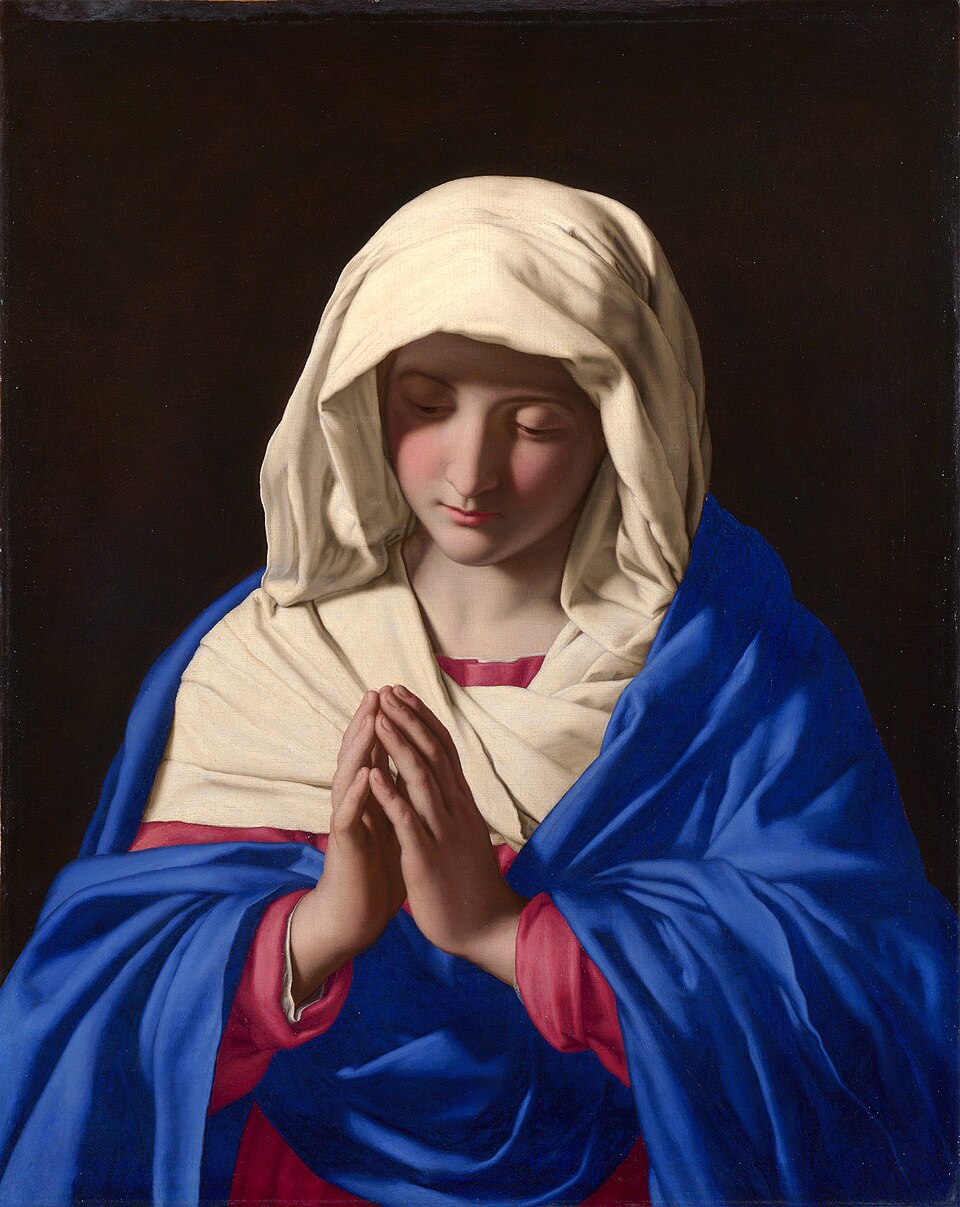
1 Corinthians 11:2-16 · Featured Study
Head Coverings
Paul spends fifteen verses on what a worshiper wears on the head, and the church has read those verses at least three ways ever since. Every reading agrees on one thing: women were praying and prophesying in the assembly, and the passage regulates the manner of that ministry. This page walks the text in order: the headship chain, the covering, the argument from creation, “because of the angels,” the appeal to nature, and the closing word on custom, then sets out the main positions with the voices who hold each.
Summary
In 1 Corinthians 11:2-16 Paul regulates how men and women in Corinth were to appear while praying or prophesying in the assembly, arguing from headship, from creation, from the angels, and from nature. The church holds three main readings of the covering, and this page presents each with its holders and stamps no verdict.
- The passage assumes women praying and prophesying in the assembly (11:5); every reading agrees it regulates the manner of that ministry
- The headship chain of 11:3 runs Christ, man, woman, and God, and 11:11-12 immediately balances it: neither is without the other in the Lord
- The reason "because of the angels" (11:10) has carried more than one reading since the early church
- The three main positions: a continuing practice for every age, a cultural sign bound to Corinth, and the long hair of 11:15 as the covering itself
- Paul closes on custom, and the commentators themselves divide over what "no such custom" (11:16) refers to
The Common Ground
11:2, 11:5: what every reading of this passage agrees on
“Now I commend you for remembering me in everything and for maintaining the traditions, just as I passed them on to you.” 1 Corinthians 11:2
Paul opens with praise, then takes up a question of practice in the Corinthian assembly. Before any of the contested ground, one fact stands in the text itself and every reading of the passage builds on it: verse 5 speaks of “every woman praying or prophesying,” in the same breath and with the same verbs it uses of the men in verse 4. Women were praying and prophesying when the church gathered. The whole passage regulates how that was to be done; the doing of it is the ground the argument stands on.
“Or, though she might not preach even by inspiration (because teaching is the business of a superior), yet she might pray or utter hymns by inspiration, even in the public assembly. She did not show any affectation of superiority over the man by such acts of public worship. It is plain the apostle does not in this place prohibit the thing, but reprehend the manner of doing it.”
Matthew Henry · Commentary on the Whole Bible, 1710Nonconformist
1 Cor 11:5
“But every woman that prayeth or prophesieth - In the Old Testament prophetesses are not unfrequently mentioned. Thus, Miriam is mentioned Exo 15:20; Deborah Jdg 4:4; Huldah 2Ki 22:14; Noadiah Neh 6:14. So also in the New Testament Anna is mentioned as a prophetess; Luk 2:36. That there were females in the early Christian church who corresponded to those known among the Jews in some measure as endowed with the inspiration of the Holy Spirit, cannot be doubted.”
Albert Barnes · Notes, Explanatory and Practical, on the Old and New Testaments, 1832-1869Presbyterian
1 Cor 11:5
The Headship Order
11:3: Christ, man, woman, God
“But I want you to understand that the head of every man is Christ, and the head of the woman is man, and the head of Christ is God.” 1 Corinthians 11:3
The argument begins with a chain of headship, and the chain itself guards against a wrong reading of it. The head of Christ is God, and the Son is fully God; whatever “head” means in this verse, it is a relation that can hold between equals. The order Paul names is the frame the rest of the passage hangs on, and verses 11 and 12 will return to balance it in so many words.
“I would have you know - He does not seem to have given them any order before concerning this. The head of every man - Particularly every believer. Is Christ, and the head of Christ is God - Christ, as he is Mediator, acts in all things subordinately to his Father.”
John Wesley · Explanatory Notes upon the New Testament, 1755Wesleyan
1 Cor 11:3
The Covering While Praying or Prophesying
11:4-6: the veil, and the shorn-or-shaven argument
“Every man who prays or prophesies with his head covered dishonors his head.” 1 Corinthians 11:4
“And every woman who prays or prophesies with her head uncovered dishonors her head, for it is just as if her head were shaved.” 1 Corinthians 11:5
“If a woman does not cover her head, she should have her hair cut off. And if it is shameful for a woman to have her hair cut or shaved off, she should cover her head.” 1 Corinthians 11:6
The rule runs both directions. A man covered while praying or prophesying dishonors his head; a woman uncovered while doing the same dishonors hers. Paul then argues from shame: in Corinth, a shaven head on a woman was a public disgrace, and an uncovered head, he says, amounts to the same statement. What that statement meant on a Corinthian street, and how far it travels beyond Corinth, is exactly where the readings divide.
“But every woman - Who, under an immediate impulse of the Spirit, (for then only was a woman suffered to speak in the church,) prays or prophesies without a veil on her face, as it were disclaims subjection, and reflects dishonour on man, her head. For it is the same, in effect, as if she cut her hair short, and wore it in the distinguishing form of the men.”
John Wesley · Explanatory Notes upon the New Testament, 1755Wesleyan
1 Cor 11:5
The Argument from Creation
11:7-9 and 11:11-12: Genesis 2, then the balance
“A man ought not to cover his head, since he is the image and glory of God; but the woman is the glory of man.” 1 Corinthians 11:7
Paul reaches back to Genesis 2: the woman was formed from the man and for the man (11:8-9). The commentators are careful here, because Genesis 1:27 says plainly that both male and female are created in the image of God. Verse 7 speaks of glory and of order, and the tradition has read it with Genesis 1 open beside it.
“woman . . . glory of . . . man--He does not say, also, ‘the image of the man.’ For the sexes differ: moreover, the woman is created in the image of God, as well as the man (Ge 1:26, 27).”
Jamieson, Fausset & Brown · Commentary Critical and Explanatory on the Whole Bible, 1871Reformed
1 Cor 11:7
“Just as the Church, the bride, is made for Christ; and yet in both the natural and the spiritual creations, the bride, while made for the bridegroom, in fulfilling that end, attains her own true ‘glory,’ and brings ‘shame’ and ‘dishonor’ on herself by any departure from it (1Co 11:4, 6).”
Jamieson, Fausset & Brown · Commentary Critical and Explanatory on the Whole Bible, 1871Reformed
1 Cor 11:9
1 Corinthians 11:11-12 (BSB)
“In the Lord, however, woman is not independent of man, nor is man independent of woman. For just as woman came from man, so also man is born of woman. But everything comes from God.” 1 Corinthians 11:11-12
Paul balances his own argument before anyone else can unbalance it. Woman came from man at creation; every man since has come into the world through a woman; and all things are of God. The order of 11:3 stands inside a mutuality stated just as plainly.
“Nevertheless - Lest the man should assume to himself too much superiority, and lest he should regard the woman as made solely for his pleasure, and should treat her as in all respects inferior, and withhold the respect that is due to her.”
Albert Barnes · Notes, Explanatory and Practical, on the Old and New Testaments, 1832-1869Presbyterian
1 Cor 11:11
“Nevertheless in the Lord Jesus, there is neither male nor female - Neither is excluded; neither is preferred before the other in his kingdom.”
John Wesley · Explanatory Notes upon the New Testament, 1755Wesleyan
1 Cor 11:11
Because of the Angels
11:10: a sign of authority, and a phrase with more than one reading
“For this reason a woman ought to have a sign of authority on her head, because of the angels.” 1 Corinthians 11:10
The BSB reads “a sign of authority”; the KJV reads “power on her head.” The Greek word is exousia, authority, the word this same letter uses for an authority the subject holds (9:4-6). The KJV translators added one of the longest marginal notes in their whole work here, glossing it as a covering worn as a sign. Then comes the reason: “because of the angels.” The verse gives no further explanation, and the church has carried more than one reading of it from the beginning.
“For this cause ought the woman to have power on her head because of the angels - There are few portions in the sacred writings that have given rise to such a variety of conjectures and explanations, and are less understood, than this verse, and 1Co 15:29. Our translators were puzzled with it; and have inserted here one of the largest marginal readings found any where in their work; but this is only on the words power on her head, which they interpret thus: that is, a covering, in sign that she is under the power of her husband.”
Adam Clarke · Commentary on the Bible, 1832Methodist
1 Cor 11:10
The ministering-angels reading: decorum before unseen witnessesMatthew Henry, 1710 · the broad tradition
The oldest and most widely held reading takes the angels as the holy angels, present in the assemblies of God’s people and honored by order there. On this reading the covering is worn before witnesses the congregation cannot see.
“Others say because of the good angels. Jews and Christians have had an opinion that these ministering spirits are many of them present in their assemblies. Their presence should restrain Christians from all indecencies in the worship of God.”
Matthew Henry · Commentary on the Whole Bible, 1710
1 Cor 11:10
The Genesis 6 reading: the angels of the incursionTertullian, c. 220 · Michael Heiser, 2015
A reading as old as the second century takes the angels of 11:10 as the fallen “sons of God” of Genesis 6:2, who “saw the daughters of men that they were fair.” Tertullian argues it directly in On the Veiling of Virgins (c. 220), where the covering guards against the kind of angelic transgression Genesis records. In the modern day Michael Heiser reads the phrase the same way against the Genesis 6 incursion in The Unseen Realm (2015), cited here without quotation. This site treats Genesis 6 on its own pages; the door below leads there.
Neither reading is stamped as this site’s verdict. The verse states its reason in four words and stops; the page holds the readings side by side, each with its holders named.
Nature and the Long Hair
11:13-15: the appeal to what nature itself teaches
“Judge for yourselves: Is it proper for a woman to pray to God with her head uncovered?” 1 Corinthians 11:13
“Doesn’t nature itself teach you that if a man has long hair, it is a disgrace to him, but that if a woman has long hair, it is her glory? For long hair is given to her as a covering.” 1 Corinthians 11:14-15
Paul turns from argument to appeal: judge for yourselves. Long hair on a man is a disgrace (11:14, with the Nazirite vow as the tradition’s standing exception); long hair on a woman is her glory, “given to her as a covering.” That last clause carries a whole position within it, taken up below: if the hair is given as a covering, some conclude the hair is the covering the passage requires.
“The fact that nature has provided woman, and not man, with long hair, proves that man was designed to be uncovered, and woman covered. The Nazarite, however, wore long hair lawfully, as being part of a vow sanctioned by God (Nu 6:5).”
Jamieson, Fausset & Brown · Commentary Critical and Explanatory on the Whole Bible, 1871Reformed
1 Cor 11:14
“It is a glory unto her - It is an ornament, and adorning. The same instinctive promptings of nature which make it proper for a man to wear short hair, make it proper that the woman should suffer hers to grow long. For a covering - Margin, ‘veil.’ It is given to her as a sort of natural veil, and to indicate the propriety of her wearing a veil.”
Albert Barnes · Notes, Explanatory and Practical, on the Old and New Testaments, 1832-1869Presbyterian
1 Cor 11:15
No Such Custom
11:16: the closing word, and what the custom is
“If anyone is inclined to dispute this, we have no other practice, nor do the churches of God.” 1 Corinthians 11:16
Paul ends the section by refusing a quarrel. The BSB renders the clause “we have no other practice”, and the older English read “no such custom”, the wording the commentators below are working from. They divide over which custom he disclaims. One line reads it: we have no custom of women praying uncovered, so the churches’ shared practice settles the question. Another hears in the verse the weight of custom itself: in matters of this kind, the practice of each place carries real authority. Both readings come from within the same tradition, and both are given here in their own words.
“no such custom--as that of women praying uncovered. Not as CHRYSOSTOM, ‘that of being contentious.’ The Greek term implies a usage, rather than a mental habit (Joh 18:39).”
Jamieson, Fausset & Brown · Commentary Critical and Explanatory on the Whole Bible, 1871Reformed
1 Cor 11:16
“And in all things merely indifferent the custom of each place was of sufficient weight to determine prudent and peaceable men. Yet even this cannot overrule a scrupulous conscience, which really doubts whether the thing be indifferent or no. But those who are referred to here by the apostle were contentious, not conscientious, persons.”
John Wesley · Explanatory Notes upon the New Testament, 1755Wesleyan
1 Cor 11:16
The Three Readings
the main positions, with the voices and traditions who hold each
The church has carried three main readings of what this passage asks of believers after Corinth. Each is held by real traditions and real teachers, each takes the text seriously, and all three stand on the same shared ground: the passage assumes women praying and prophesying, and regulates the manner of it. This page presents the positions and stamps no verdict; the founder’s own slot follows below.
A continuing practice: the covering for every church in every ageTertullian, c. 220 · Anabaptist and other traditions today
On this reading the covering itself is the apostolic instruction, grounded in creation and the angels rather than in Corinthian dress, and so it continues. Tertullian argued in the early third century that the veil belongs on unmarried women as well as wives, evidence of how seriously the early African churches took the practice. It is kept today by the Amish, Old Order and conservative Mennonites, the Hutterites, many Plymouth Brethren assemblies, and as customary practice in many Eastern Orthodox parishes.
“For they who allow to virgins immunity from head-covering, appear to rest on this; that the apostle has not defined ‘virgins’ by name, but ‘women,’ as ‘to be veiled; ‘nor the sex generally, so as to say ‘females,’ but a class of the sex, by saying ‘women: ‘for if he had named the sex by saying ‘females,’ he would have made his limit absolute for every woman; but while he names one class of the sex, he separates another class by being silent.”
Tertullian · On Prayer, 220Church Father
1 Cor 11:5
A cultural sign: the principle permanent, the veil CorinthianWesley's notes on the eastern custom · Barnes on acknowledged customs
On this reading the permanent instruction is honor and order in worship, and the veil was that instruction’s first-century Corinthian clothing, where an uncovered head made a public statement it does not make everywhere. Wesley’s notes repeatedly ground the sign in the custom of the eastern assemblies, and his comment on 11:16, quoted in the section above, gives local custom its weight in plain words. Barnes reads Paul appealing to the established customs of the place, and most evangelical churches today receive the passage this way.
The long hair as the covering: reading 11:15 as the answerOneness-Pentecostal bodies, among others
On this reading verse 15 states the resolution the passage was building to: “long hair is given to her as a covering.” The covering God requires is the one God gave, and the instruction is carried by the woman’s long hair itself rather than by a garment over it. It is held today most prominently among Oneness-Pentecostal bodies; the United Pentecostal Church teaches uncut hair as the covering. Barnes, quoted above, records the textual ground the reading stands on while himself taking the hair as nature’s pointer to a veil, one example of how the same verse carries both readings.
The Words Underneath
the Greek the argument turns on
Three Greek words carry most of the passage’s weight, and two of them are rendered “covering” in English while translating different words.
The words underneath
exousia: authority
Greek · G1849Strong's entry: privilege, i.e. (subjectively) force, capacity, competency, freedom, or (objectively) mastery (concretely, magistrate, superhuman, potentate, token of control), delegated influence
11:10's own word: exousia, authority. The BSB renders it "a sign of authority"; the KJV "power on her head." Elsewhere in this letter it names an authority the subject holds (9:4-6).
102 times in the New Testament · exousia, in full →
katakalypto: to cover
Greek · G2619Strong's entry: to cover wholly, i.e. veil
The verb of 11:6-7: katakalypto, to cover or veil fully. This is the covering the passage debates.
3 times in the New Testament · katakalypto, in full →
peribolaion: covering
Greek · G4018Strong's entry: something thrown around one, i.e. a mantle, veil
11:15's word: peribolaion, a wrap or mantle. The hair is given "for a covering" in this word, a different word from the veiling verb above; the readings divide over how much that difference decides.
2 times in the New Testament · peribolaion, in full →
The Voices
with the work named
Explanatory Notes upon the New Testament (1755) · public domain
Grounds the covering in the custom of the eastern assemblies, and on 11:16 gives the weight of local custom its plainest statement.
Commentary on the Whole Bible (1710) · public domain
States the shared ground of the passage on 11:5: the apostle does not prohibit the praying and prophesying, he corrects the manner of it.
Notes, Explanatory and Practical, on the Old and New Testaments (1832-1869) · public domain
Lists the prophetesses of both Testaments on 11:5, and reads the long hair of 11:15 as a natural veil.
Commentary Critical and Explanatory on the Whole Bible (1871) · public domain
On 11:7 marks that the woman is created in the image of God as well as the man; on 11:16 reads the disclaimed custom as women praying uncovered.
Commentary on the Bible (1832) · public domain
Names 11:10 as one of the least understood verses in Scripture, and records the KJV translators' long marginal note on it.
On the Veiling of Virgins and On Prayer (c. 220) · public domain
The earliest surviving advocate of the covering as a continuing practice, arguing it should extend to unmarried women as well.
Marcus Brown's own commentary leads above all; within a tier, all voices are equal. Michael Heiser (tier-1, modern) is named cite-only on the Genesis 6 reading of 11:10, since no quotation from him sits in the site's quote pool for this chapter.
Word studies
The Hebrew and Greek under this study, each word in its own room.
Keep Studying
Read it1
On this page
Studies1
Doctrines5