
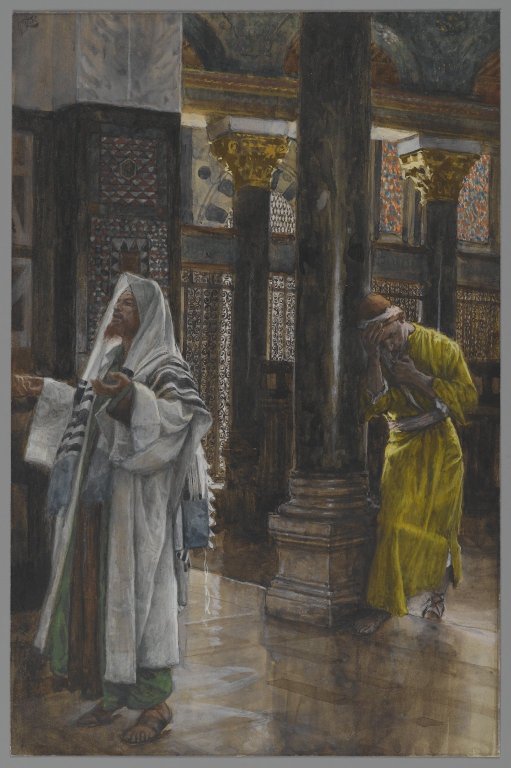
A Second Temple Sect · The Sects of Second Temple Judaism
The Pharisees
“Pharisee” has become a Western byword for hypocrite. The men Jesus argued with were something else first: a renewal movement trying to carry the holiness of the Temple into ordinary Jewish homes, table by table. This page tells who they actually were, what they believed, why Jesus sided with them against the Sadducees on the one point that mattered most, and why every rabbinic source this site cites descends from their own stream of Judaism.
Summary
The Pharisees were a lay renewal movement of the Second Temple period who tried to bring the Torah's detail into everyday life. They affirmed the resurrection, angels, and spirits, and kept an oral tradition alongside the written Torah. Jesus' sharpest words fell on their hypocrisy, never on the practices themselves, and rabbinic Judaism today descends from their own stream.
- A movement of about six thousand by Josephus' count, not a synonym for hypocrite
- They affirmed resurrection, angels, and spirits, and stood with Jesus on that ground against the Sadducees
- The houses of Hillel and Shammai argued with each other for a generation; Jesus is repeatedly asked to take a side in their live disputes
- The woes of Matthew 23 target hypocrisy, not Torah observance: "these you ought to have done" (23:23)
- Nicodemus, the scribe of Mark 12:34, Gamaliel, and Paul all show the movement was never one thing
Who They Were
the name, the origin, and the size of the movement
The Pharisees emerged out of the Hasidim, the pious loyalists of the Maccabean revolt against the Greek empire that tried to stamp out Jewish worship in the second century before Christ. Once the revolt succeeded, that same devotion to Torah turned toward a new question: how does an ordinary Jew, not a priest, live a holy life inside a Roman-occupied land. The Pharisees answered it by extending the priest’s table into the layman’s kitchen, keeping careful purity and tithing at home the way the Temple kept it in the sanctuary.
The name itself most likely comes from a Hebrew root meaning “separated ones,” describing a people set apart by the detail of their obedience rather than a claim to be better than their neighbors. Josephus, the first-century Jewish historian and a Pharisee himself for a time, counts the movement at about six thousand men (Antiquities 17.42), a minority inside a nation of several million, but one with real standing among ordinary people. The Sadducees held the Temple and the priesthood; the Pharisees held the synagogue and the classroom, and it was the Pharisees, not the priestly aristocracy, whom most Jews looked to for how the law should be kept.
- c. 150 BCroots in the Maccabean Hasidim
- ~6,000Josephus' count of the movement
- AD 70the Temple falls; the Sadducees vanish, the Pharisees do not
- G5330Pharisaios, the Greek name, about 100 uses in the NT
What They Believed
resurrection, angels and spirits, the oral Torah, providence and free will
Josephus, writing for a Roman audience, lays out the Pharisaic creed in his own summary (Antiquities 18.12-15; War 2.162-163): they affirmed the resurrection of the dead, the existence of angels and spirits, and a doctrine that held both God’s providence and human free will together, without letting either one cancel the other. Every one of those points would matter in the Gospels. The resurrection puts them on Jesus’ side against the Sadducees. Angels and spirits give the Gospels’ demon-possession accounts a hearing inside Judaism rather than outside it. Providence held with free will gave the movement its reputation for practical, livable piety rather than fatalism.
Alongside the written Torah, the Pharisees held an oral tradition, a chain of interpretation handed teacher to student (the Mishnah opens its own record of that chain at Pirkei Avot 1:1). The tradition was meant to apply Moses to daily questions the text itself does not answer: how far a Sabbath rest extends, what counts as work, how a vow may be worded. Some of Jesus’ collisions with Pharisees are arguments with the written Torah; most are arguments about how far this oral tradition should reach, and Jesus does not reject the category of tradition itself. He tells a crowd to “do and observe whatsoever they bid you,” then adds, “but do not ye after their works” (Matt 23:3), a distinction between the teaching office and the failure to live up to it.
Hillel and Shammai
the two great schools, and Jesus asked to take a side
The Pharisees were not of one mind. The generation before Jesus produced two great teaching schools, the house of Hillel and the house of Shammai, and the Mishnah records their disagreements by the hundreds. The two schools split most sharply over divorce. Deuteronomy 24:1 permits a man to divorce his wife over “some indecency,” two Hebrew words the schools read differently: Shammai’s house limited the ground to sexual unfaithfulness, while Hillel’s house allowed divorce even over a ruined meal (Mishnah Gittin 9:10).
When the Pharisees ask Jesus, “is it lawful for a man to put away his wife for any cause,” they are quoting Hillel’s own slogan back at him, testing which school he will join (Matt 19:3). Jesus answers neither school directly. He goes behind Moses to Genesis, grounding marriage in creation rather than in either school’s casuistry, and lands closer to Shammai’s narrower exception than to Hillel’s wide one. The scene only makes sense once the internal Pharisaic debate behind it is visible: Jesus is not being asked whether divorce is permitted in the abstract, but which of two live Jewish positions he holds.
The Woes
Matthew 23: critique from inside, aimed at hypocrisy, never at observance
“The scribes and the Pharisees sit on Moses’ seat: all things therefore whatsoever they bid you, these do and observe: but do not ye after their works; for they say, and do not.” Matthew 23:2-3
Jesus opens the chapter by affirming the teaching office before he indicts anyone who holds it. Moses’ seat was the actual place a synagogue teacher sat while expounding the law, and Jesus tells the crowd to keep doing what is taught from it. The seven woes that follow do not undo that opening line. They land on the gap between the standard taught and the life lived behind it.
“By the seat of Moses, we are to understand authority to teach the law. Moses was the great teacher of the Jewish people; and the scribes, etc., are here represented as his successors.”
Adam Clarke · Commentary on the Bible, 1832Methodist
Matt 23:2
“All, therefore, whatsoever ... - That is, all that they teach that is consistent with the Law of Moses - all the commands of Moses which they read to you and properly explain. The word 'all' could not be taken without such a restriction, for Christ himself accuses them of teaching many things contrary to that law, and of making it void by their traditions, Mat 15:1-6. They say, and do not - The interpretation which they give to the law is in the main correct, but their lives do not correspond with their teaching.”
Albert Barnes · Notes, Explanatory and Practical, on the Old and New Testaments, 1832-1869Evangelical
Matt 23:3
Tithing mint, dill, and cumin: the woe is about proportionMatthew 23:23
“Woe unto you, scribes and Pharisees, hypocrites! for ye tithe mint and anise and cummin, and have left undone the weightier matters of the law, justice, and mercy, and faith: but these ye ought to have done, and not to have left the other undone.” Matthew 23:23
The Torah commands tithing on grain, wine, and oil (Deut 14:22-29). The tradition extended the tithe to garden herbs, a stricter practice than the written law required, and Jesus does not mock it. He names the weightier matters, justice, mercy, and faith, and says the smaller obedience should have stood alongside the larger one, not instead of it.
“Ye pay tithe - A tenth part. The law required the Jews to devote a tenth part of all their property to the support of the Levites, Num 18:20-24.”
Albert Barnes · Notes, Explanatory and Practical, on the Old and New Testaments, 1832-1869
Matt 23:23
Whited sepulchres: a real, dated custom, not an invented imageMatthew 23:27
“Woe unto you, scribes and Pharisees, hypocrites! for ye are like unto whited sepulchres, which outwardly appear beautiful, but inwardly are full of dead men’s bones, and of all uncleanness.” Matthew 23:27
Before Passover, tombs along the pilgrim roads into Jerusalem were whitewashed so pilgrims would not touch one unaware and become ceremonially unclean. Jesus’ hearers had walked past freshly whitened graves on their way into the city that same season. The image is concrete and current, not invented for effect.
“Those tombs were annually whitewashed to prevent the people from accidentally coming in contact with them as they went up to Jerusalem. This custom is still continued.”
Albert Barnes · Notes, Explanatory and Practical, on the Old and New Testaments, 1832-1869
Matt 23:27
The tradition’s own literature carries the same critique. The Talmud preserves a saying naming seven types of Pharisee, most of them bad, including “the plague of Pharisees” (Sotah 22b): a self-examination sharper than most sermons on the subject. Jesus’ woes stand in the register of Israel’s own prophets, Isaiah and Malachi before him, correcting from inside rather than attacking from outside. The chapter ends not in triumph but in grief: “O Jerusalem, Jerusalem, that killeth the prophets... how often would I have gathered thy children together, even as a hen gathereth her chickens under her wings, and ye would not” (Matt 23:37). Matthew 23:37
The gospel collisions behind these woes, the Sabbath grain and healings, handwashing and korban, the oath casuistry, are each argued in full in the site’s Hebraic context notes on their own passages. This page names the shape of the pattern; the case-by-case halakhic detail lives on those verses themselves.
Not a Monolith
Nicodemus, the scribe near the kingdom, Gamaliel, and Paul
The Gospels themselves refuse the flat picture. Nicodemus, “a ruler of the Jews” and by every mark a Pharisee, comes to Jesus by night with an honest question, defends him before the council, “doth our law judge a man before it hear him?” (John 7:51), and helps bury him at the end (John 19:39). A scribe who answers Jesus well on the great commandment hears, “thou art not far from the kingdom of God” (Mark 12:34), a collision scene that closes in near embrace rather than conflict. Gamaliel, a leading Pharisee teacher, talks the council out of executing the apostles (Acts 5:34-39). Some Pharisees warn Jesus that Herod means to kill him (Luke 13:31).
Paul is the clearest case of all. He does not describe his Pharisaism as a former life he left behind. Standing before the council years after his conversion, he says in the present tense, “I am a Pharisee, a son of Pharisees” (Acts 23:6), and uses the claim to split his accusers over the very doctrine, the resurrection, that the next section takes up.
With Jesus, Against the Sadducees
Matthew 22:23-33 and Acts 23:6-10: the one point where Jesus stands with the Pharisees
“But when Paul perceived that the one part were Sadducees and the other Pharisees, he cried out in the council, Brethren, I am a Pharisee, a son of Pharisees: touching the hope and resurrection of the dead I am called in question.” Acts 23:6
“For the Sadducees say that there is no resurrection, neither angel, nor spirit; but the Pharisees confess both” (Acts 23:8). This is the single clearest doctrinal line separating the two parties, and it runs in the Pharisees’ favor against Christian confession, not away from it. When the Sadducees put their resurrection riddle to Jesus, seven brothers and one widow, Jesus answers from the Torah they themselves granted as Scripture, Exodus 3:6: “I am the God of Abraham, and the God of Isaac, and the God of Jacob... God is not the God of the dead, but of the living” (Matt 22:32).
“I am the God of Abraham - The argument runs thus: God is not the God of the dead, but of the living: (for that expression, Thy God, implies both benefit from God to man, and duty from man to God) but he is the God of Abraham, Isaac, and Jacob: therefore, Abraham, Isaac, and Jacob are not dead, but living.”
John Wesley · Explanatory Notes upon the New Testament, 1755Wesleyan
Matt 22:32
“I am a Pharisee, the son of a Pharisee--The true reading seems to be, 'the son of Pharisees,' that is, belonging to a family who from father to son had long been such. Of the hope and resurrection of the dead--that is, not the vague hope of immortality, but the definite expectation of the resurrection.”
Jamieson, Fausset & Brown · Commentary Critical and Explanatory on the Whole Bible, 1871Reformed
Acts 23:6
Some of the Pharisees in the room take Paul’s side on the spot: “We find no evil in this man: and what if a spirit hath spoken to him, or an angel?” (Acts 23:9). It is worth seeing plainly: on the point that matters most for the Christian hope, the resurrection of the dead, the Pharisaic party is not Jesus’ opponent. It is his ally against the party that denied it outright.
“A great cry - A great clamor and tumult. The scribes - The learned men. They would naturally be the chief speakers. Of the Pharisees' part - Who were Pharisees, or who belonged to that party. ... We find no evil in this man - No opinion which is contrary to the Law of Moses; no conduct in spreading the doctrine of the resurrection which we do not approve.”
Albert Barnes · Notes, Explanatory and Practical, on the Old and New Testaments, 1832-1869Evangelical
Acts 23:9
The Afterlife of the Pharisees
rabbinic Judaism's own descent, and where the traditions part from Christ
The Temple fell in AD 70, and with it the Sadducees, whose whole identity was built on priesthood and altar, disappear from history. The Pharisees did not need a temple to survive. Their program had always been carried in homes, synagogues, and schools, and it was their teachers, gathered at Yavneh in the years after the war, who preserved and organized Jewish law into what became the Mishnah and, later, the Talmud. Rabbinic Judaism as it exists today, the tradition this site cites whenever a rabbinic source appears on a page, descends from the Pharisaic stream. A reader who meets a citation to the Mishnah or the Talmud anywhere on this site is meeting the intellectual heirs of the Pharisees Jesus taught alongside and argued with.
That inheritance is honored on its own terms and, where it parts from Christian confession, the parting is named plainly rather than smoothed over or mocked. Rabbinic Judaism does not confess Jesus as Messiah, does not hold the doctrine of the Trinity, and does not read the Hebrew Scriptures as pointing to his resurrection as their fulfillment. Those are the essentials of the Christian faith, and this site teaches them at full strength elsewhere. The point of contact here is historical lineage, not agreement: the Pharisaic stream survived and became the Judaism practiced today, a living tradition worthy of being understood accurately rather than caricatured.
The Voices
with the work named
Commentary on the Bible (1832) · public domain
Reads “Moses’ seat” plainly as teaching authority, and grounds the whitewashed-tombs image in living custom.
Notes, Explanatory and Practical (1832-1869) · public domain
Distinguishes the Pharisees’ correct exposition of the law from their failure to live it, and names the Pharisee scribes who defended Paul.
Commentary Critical and Explanatory on the Whole Bible (1871) · public domain
Reads Paul’s claim at Acts 23:6 as the definite expectation of the resurrection, the doctrinal ground he shares with the Pharisaic party.
Explanatory Notes upon the New Testament (1755) · public domain
Lays out step by step the argument from Exodus 3:6 that Jesus uses to prove the resurrection.
Marcus Brown's own commentary leads above all. No roster voice met the relevance gate for this historical portrait; none is used. Historical framing draws on Josephus, Antiquities (Whiston translation, public domain), named for content and not quoted.
Word studies
The Hebrew and Greek under this study, each word in its own room.
Keep Studying
On this page
Values1