
Philippi
Summary
A Roman colony in Macedonia and the first city of Europe to hear the gospel, where Lydia believed at a riverside prayer meeting, a slave girl was delivered, and a jailer's household was baptized before dawn.
- Philippi was the first city in Europe to hear the gospel, on Paul's second missionary journey.
- Lydia believed at a riverside prayer meeting outside the city gate, and her household was baptized.
- Paul cast a spirit of divination out of an enslaved girl, and her owners had Paul and Silas beaten and jailed for it.
- An earthquake at midnight opened the prison, and the jailer's whole household was baptized before dawn.
- Paul later wrote his letter to the Philippians thanking them for support that reached him more than once.
On this page
In Scripture
- Verses
- 6
- Books
- 5
Where it is
the country around it
- Coordinates
- 41.0120° N, 24.2862° Efind it on the Atlas →
- Region
- Macedonia
- Kind of place
- City
- Located: the gazetteer fixes one site
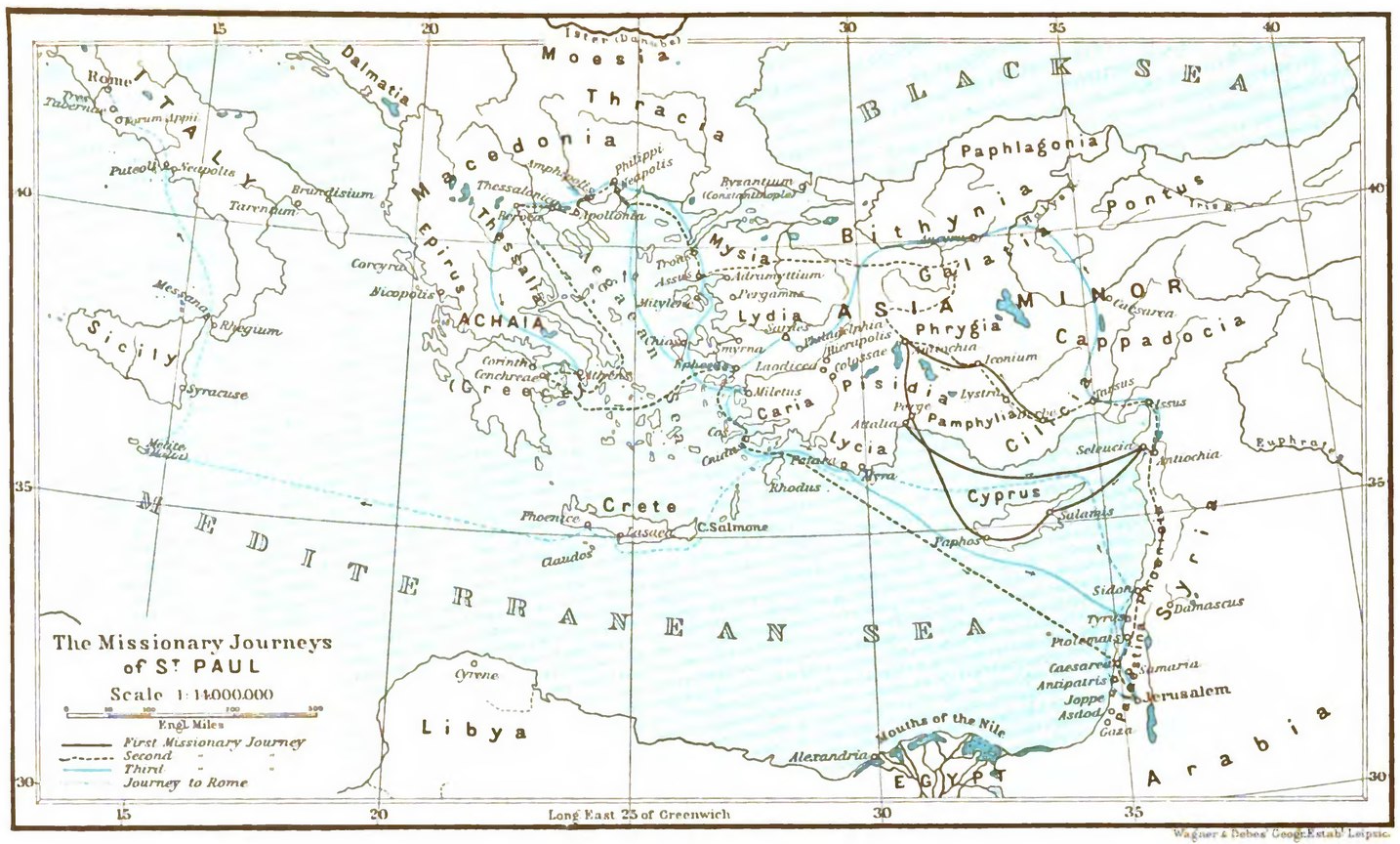
Why Philippi matters
Paul at Philippi, in the order it happens
Acts 16:11-40
Read Acts 16:11-40
- The Roman colony, the leading city of the districtActs 16:12From there we went to the Roman colony of Philippi, the leading city of that district of Macedonia. And we stayed there several days.
- Lydia at the place of prayer by the riverActs 16:14Among those listening was a woman named Lydia, a dealer in purple cloth from the city of Thyatira, who was a worshiper of God. The Lord opened her heart to respond to Paul’s message.
- The slave girl deliveredActs 16:18She continued this for many days. Eventually Paul grew so aggravated that he turned and said to the spirit, “In the name of Jesus Christ I command you to come out of her!” And the spirit left her at that very moment.
- Paul and Silas beaten and jailedActs 16:23And after striking them with many blows, they threw them into prison and ordered the jailer to guard them securely.
- Praying and singing at midnight, the earthquakeActs 16:26Suddenly a strong earthquake shook the foundations of the prison. At once all the doors flew open and everyone’s chains came loose.
- What must I do to be savedActs 16:30Then he brought them out and asked, “Sirs, what must I do to be saved?”
- Believe in the Lord Jesus, and the household baptizedActs 16:33At that hour of the night, the jailer took them and washed their wounds. And without delay, he and all his household were baptized.
- Roman citizens, and the magistrates come themselvesActs 16:37But Paul said to the officers, “They beat us publicly without a trial and threw us into prison, even though we are Roman citizens. And now do they want to send us away secretly? Absolutely not! Let them come themselves and escort us out!”
The letter Paul later sent this church, and its record of a gift that reached him more than once, is told on the Philippians page.
Paul and Silas at Midnight: the full studyWhat happened here, in order
in the order the canon tells it
- Paul reaches PhilippiActs 16:12From there we went to the Roman colony of Philippi, the leading city of that district of Macedonia. And we stayed there several days.
- Lydia's household baptized, her hospitalityActs 16:15And when she and her household had been baptized, she urged us, “If you consider me a believer in the Lord, come and stay at my house.” And she persuaded us.
- The jailer's household rejoicesActs 16:34Then he brought them into his home and set a meal before them. So he and all his household rejoiced that they had come to believe in God.
- Paul and Silas leave the cityActs 16:40After Paul and Silas came out of the prison, they went to Lydia’s house to see the brothers and encourage them. Then they left the city.
- Paul sails from Philippi on the return journeyActs 20:6And after the Feast of Unleavened Bread, we sailed from Philippi, and five days later we rejoined them in Troas, where we stayed seven days.
- The letter opens, to all the saints at PhilippiPhilippians 1:1Paul and Timothy, servants of Christ Jesus, To all the saints in Christ Jesus at Philippi, together with the overseers and deacons:
- No church partnered with Paul in giving but this onePhilippians 4:15And as you Philippians know, in the early days of the gospel, when I left Macedonia, no church but you partnered with me in the matter of giving and receiving.
- Support sent again and againPhilippians 4:16For even while I was in Thessalonica, you provided for my needs again and again.
- The gift called a fragrant offering to GodPhilippians 4:18I have all I need and more, now that I have received your gifts from Epaphroditus. They are a fragrant offering, an acceptable sacrifice, well-pleasing to God.
- Greetings from the household of CaesarPhilippians 4:22All the saints send you greetings, especially those from the household of Caesar.
- Paul recalls the suffering he had endured at Philippi1 Thessalonians 2:2As you are aware, we had already endured suffering and shameful treatment in Philippi. But in the face of strong opposition, we were bold in our God to speak to you the gospel of God.
Philippi in Scripture
6 verses name it, in 5 books
Open a book to read its mentions here. Text: Berean Standard Bible.
Old TestamentNew Testamentsegment width = share of mentions
New Testament5 books · 6 mentions
Matthew1 mention
Mark1 mention
Acts2 mentions
Philippians1 mention
Common questions
Why does Luke call Philippi "a Roman colony," and why does that detail matter?
After Octavian's victory at Actium in 31 BC, he resettled Philippi with veteran Roman soldiers and granted it ius Italicum, the legal standing of Italian soil, with the civic and tax privileges that came with it. That history stands behind the pride the city took in Roman citizenship, the very thing Paul later invokes when he refuses to leave quietly after an unlawful beating.
Who was Lydia, and why does her conversion open the story?
Lydia was a dealer in purple cloth from Thyatira and already a worshiper of God when Paul met her at a place of prayer by the river outside the city. Scripture says plainly that the Lord opened her heart to respond to Paul's message, and she became the first convert in Europe, opening her home to Paul's whole company afterward.
Why were Paul and Silas singing in prison at midnight?
They had been stripped, beaten with rods, and locked in the inner cell with their feet in the stocks, and Scripture records that at midnight they were praying and singing hymns to God with the other prisoners listening. The earthquake that followed shook the prison's foundations, opened every door, and loosed every chain.
What did the jailer mean by "what must I do to be saved," and why does Paul answer the way he does?
The jailer had drawn his sword to kill himself, believing his prisoners had escaped and that he would be executed for it. When Paul called out that everyone was still there, the jailer fell trembling before him and asked how to be saved. Paul's answer names the one condition Scripture gives: believe in the Lord Jesus, and by that same hour the man and his whole household had been baptized.
Why did Paul insist on his Roman citizenship after being released, when he had not mentioned it before the beating?
Readers differ; the positions are named
Scripture records what happened, that Paul refused to leave quietly and made the magistrates come and escort them out themselves, but it does not say why he waited until after the beating to raise his citizenship. Readers have proposed that speaking sooner might not have stopped an angry crowd already demanding punishment, or that Paul wanted the injustice publicly acknowledged rather than quietly buried, but the text itself leaves the question there.
Sources cited
- OpenBible.info Bible Geocoding: Philippiread 2026-08-20The coordinates on this page. Used under CC-BY with attribution to OpenBible.info.
- Berean Standard Bible, verses table, translation_id 3The Scripture text on this page.
- MannaFest Philippians research dossierRepo file, section 9, for the colony's founding history.
Keep studying
On this page
Books that name it5
Doorway2
Keep this page