
Lystra
Summary
The Lycaonian town where Paul healed a lame man, the crowd tried to sacrifice to him and Barnabas as gods and then stoned him and left him for dead, and the home of Timothy.
- Lystra was a Roman colony in Lycaonia where Paul healed a man lame from birth.
- The crowd took Paul and Barnabas for Zeus and Hermes come down in human form, and tried to sacrifice to them.
- Days later a hostile crowd, turned by opponents from Antioch and Iconium, stoned Paul and left him for dead.
- Lystra was the home town of Timothy, whom Paul took as a companion on his return visit.
- Paul later reminded Timothy of the persecutions and sufferings he had endured there.
On this page
In Scripture
- Verses
- 6
- Books
- 2
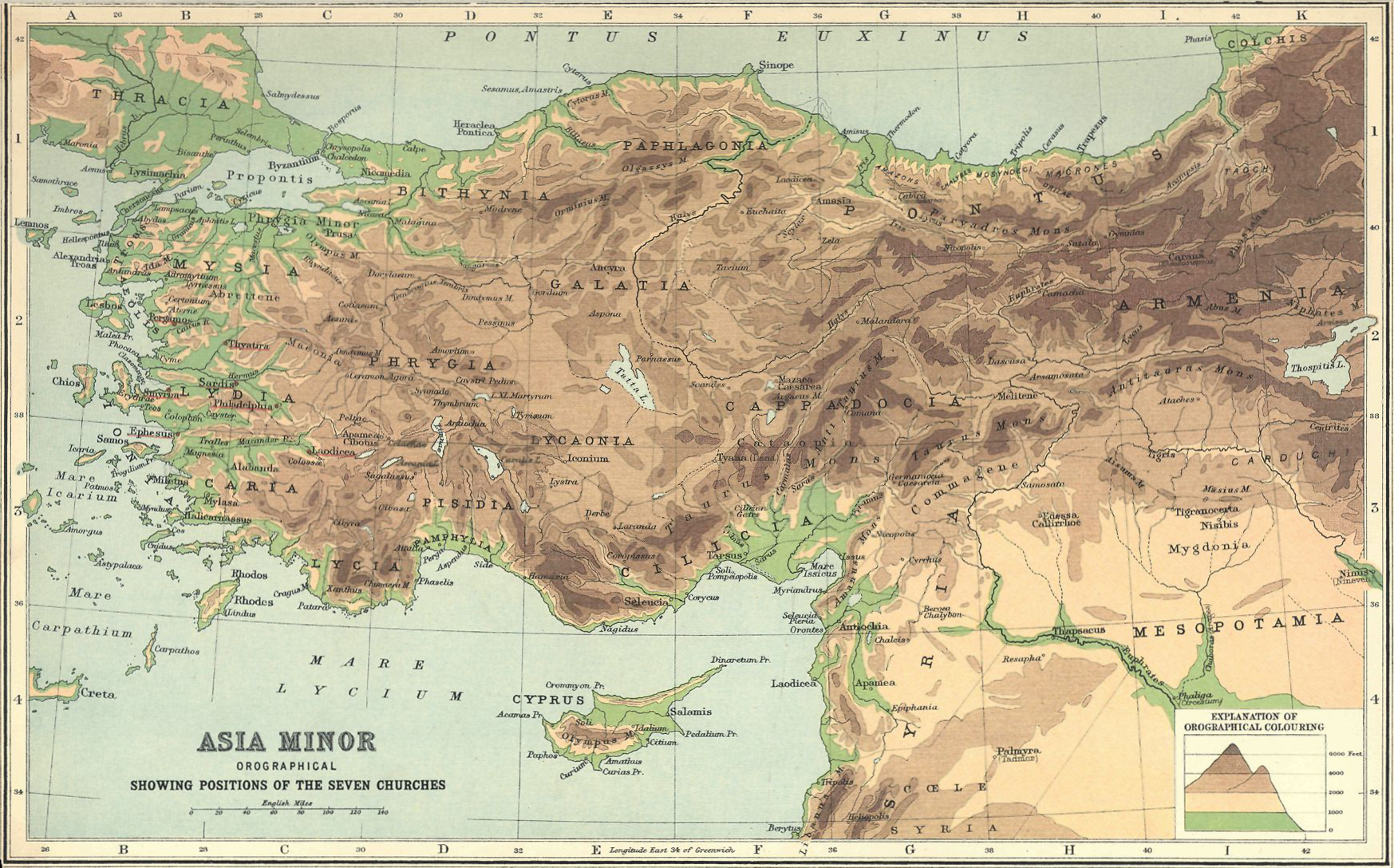
Where it is
the country around it
- Coordinates
- 37.5781° N, 32.4532° Efind it on the Atlas →
- Region
- Lycaonia
- Kind of place
- Town
- Located: the gazetteer fixes one site
Why Lystra matters
The healing and the stoning at Lystra
Acts 14:6 to 14:20, in the order it happens
Read Acts 14:6 to 14:20, in the order it happens
- Paul and Barnabas flee to LystraActs 14:6-7they found out about it and fled to the Lycaonian cities of Lystra and Derbe and to the surrounding region, where they continued to preach the gospel.
- A man lame from birthActs 14:8In Lystra there sat a man crippled in his feet, who was lame from birth and had never walked.
- Stand up on your feetActs 14:9-10This man was listening to the words of Paul, who looked intently at him and saw that he had faith to be healed. In a loud voice Paul called out, “Stand up on your feet!” And the man jumped up and began to walk.
- The gods have come down to usActs 14:11-12When the crowds saw what Paul had done, they lifted up their voices in the Lycaonian language: “The gods have come down to us in human form!” Barnabas they called Zeus, and Paul they called Hermes, because he was the chief speaker.
- The priest of Zeus brings bulls to the gatesActs 14:13The priest of Zeus, whose temple was just outside the city, brought bulls and wreaths to the city gates, hoping to offer a sacrifice along with the crowds.
- We too are only menActs 14:14-15But when the apostles Barnabas and Paul found out about this, they tore their clothes and rushed into the crowd, shouting, “Men, why are you doing this? We too are only men, human like you. We are bringing you good news that you should turn from these worthless things to the living God, who made heaven and earth and sea and everything in them.
- Stoned and dragged out for deadActs 14:19Then some Jews arrived from Antioch and Iconium and won over the crowds. They stoned Paul and dragged him outside the city, presuming he was dead.
- He gets up and returns to the cityActs 14:20But after the disciples had gathered around him, he got up and went back into the city. And the next day he left with Barnabas for Derbe.
What happened here, in order
in the order the canon tells it
- Paul and Barnabas flee here from IconiumActs 14:6they found out about it and fled to the Lycaonian cities of Lystra and Derbe and to the surrounding region,
- The lame man who had never walkedActs 14:8In Lystra there sat a man crippled in his feet, who was lame from birth and had never walked.
- Paul commands him to standActs 14:10In a loud voice Paul called out, “Stand up on your feet!” And the man jumped up and began to walk.
- Barnabas named Zeus, Paul named HermesActs 14:12Barnabas they called Zeus, and Paul they called Hermes, because he was the chief speaker.
- Turn from these worthless things to the living GodActs 14:15“Men, why are you doing this? We too are only men, human like you. We are bringing you good news that you should turn from these worthless things to the living God, who made heaven and earth and sea and everything in them.
- Paul is stoned and left for deadActs 14:19Then some Jews arrived from Antioch and Iconium and won over the crowds. They stoned Paul and dragged him outside the city, presuming he was dead.
- Paul rises and goes back into the cityActs 14:20But after the disciples had gathered around him, he got up and went back into the city. And the next day he left with Barnabas for Derbe.
- Timothy, a disciple of Lystra, well spoken ofActs 16:1-2Paul came to Derbe and then to Lystra, where he found a disciple named Timothy, the son of a believing Jewish woman and a Greek father. The brothers in Lystra and Iconium spoke well of him.
- Paul takes Timothy as a companionActs 16:3Paul wanted Timothy to accompany him, so he took him and circumcised him on account of the Jews in that area, for they all knew that his father was a Greek.
- Paul recalls the sufferings at Lystra to Timothy2 Timothy 3:11my persecutions, and the sufferings that came upon me in Antioch, Iconium, and Lystra. What persecutions I endured! Yet the Lord rescued me from all of them.
Lystra in Scripture
6 verses name it, in 2 books
Open a book to read its mentions here. Text: Berean Standard Bible.
Old TestamentNew Testamentsegment width = share of mentions
New Testament2 books · 6 mentions
Acts5 mentions
- Acts 14:6they found out about it and fled to the Lycaonian cities of Lystra and Derbe and to the surrounding region,
- Acts 14:8In Lystra there sat a man crippled in his feet, who was lame from birth and had never walked.
- Acts 14:21They preached the gospel to that city and made many disciples. Then they returned to Lystra, Iconium, and Antioch,
- Acts 16:1Paul came to Derbe and then to Lystra, where he found a disciple named Timothy, the son of a believing Jewish woman and a Greek father.
- Acts 16:2The brothers in Lystra and Iconium spoke well of him.
Common questions
Why did the crowd call Paul and Barnabas gods?
Ancient Lycaonia carried a local legend, recorded by the Roman poet Ovid, that Zeus and Hermes had once visited the region in human form and gone unrecognized. A sudden, unmistakable healing, in a town that had a temple of Zeus standing just outside its gates, was close enough to that legend that the crowd reached for it at once.
Why was Barnabas called Zeus and Paul called Hermes?
Ancient sources pictured Zeus as the senior, commanding figure and Hermes as his messenger and spokesman. Acts explains the choice directly: the crowd named Paul Hermes because he was the one doing the speaking.
How could the same crowd move from worship to stoning so fast?
Acts names the cause plainly. Opponents arrived from Antioch and Iconium, the same two cities that had already driven Paul and Barnabas out, and turned the crowd against them.
Was Paul actually dead after the stoning?
Acts says the crowd presumed him dead when they dragged him outside the city; it does not say he had actually died. He got up once his disciples gathered around him and walked back into the city that same day.
What is Timothy's connection to Lystra?
Lystra was Timothy's home town. Acts names him there as a disciple already well spoken of by the believers in Lystra and Iconium before Paul took him along as a traveling companion.
Sources cited
- OpenBible.info Bible Geocoding: Lystraread 2026-08-20The coordinates on this page. Used under CC-BY with attribution to OpenBible.info.
- Berean Standard BibleAll Scripture text on this page, from the site's own verse store. Public domain since 2023.
Keep studying
On this page
Studies1
Lives that run through it1
Doorway2
Keep this page