
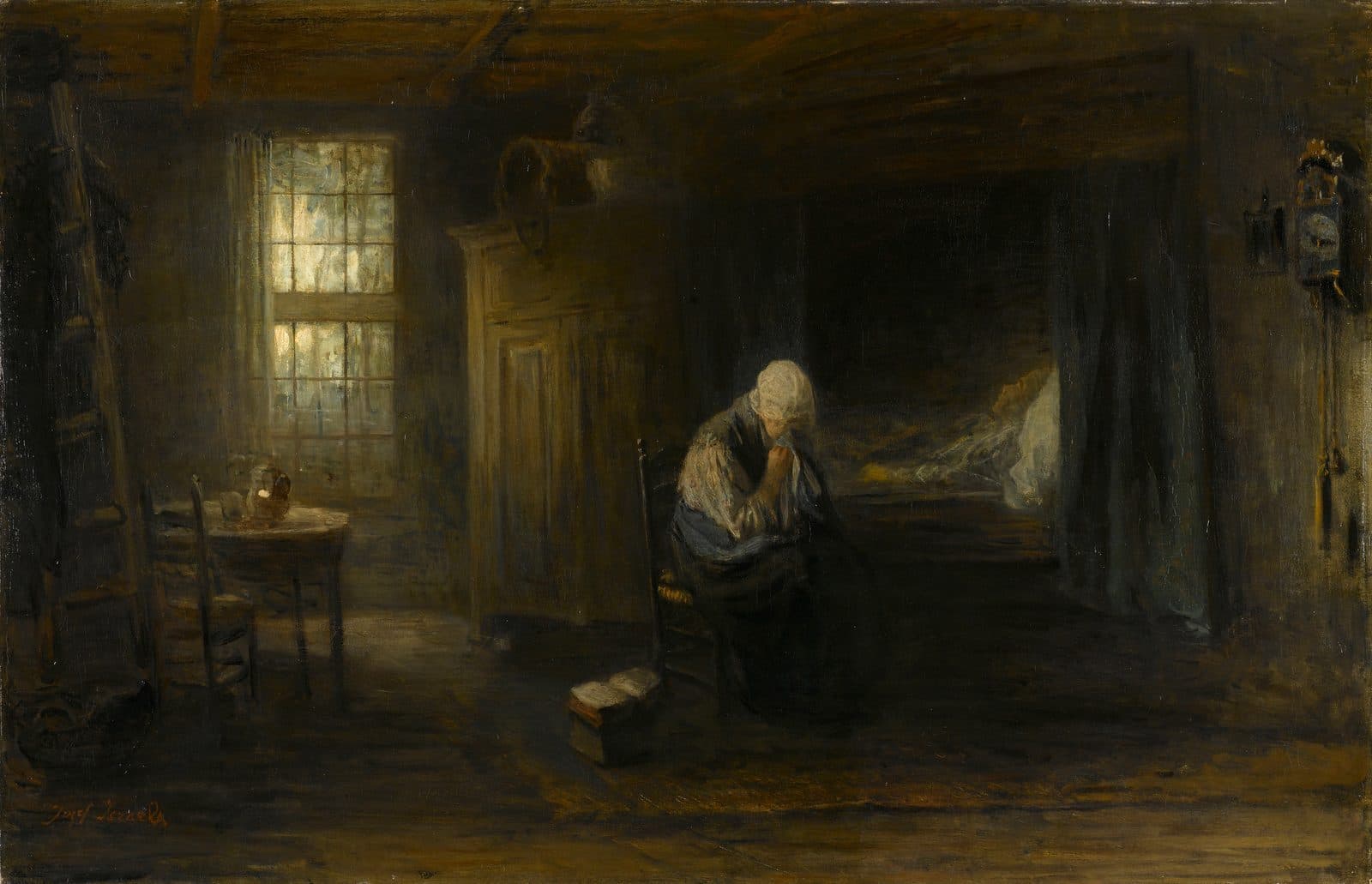
Psalm 6 · Passage · Grief and Loss
The Prayers of the Grieving
Psalm 6, Psalm 31 and Lamentations 3 are prayers spoken to God from sickness, siege and the ruin of a city.
Hannah, Jeremiah and Jesus each spoke words that these prayers share.
I am weary from groaning; all night I flood my bed with weeping and drench my couch with tears.
- The passage
- Psalm 6:1 to 10, Psalm 31:1 to 24, Lamentations 3:1 to 33
- Books
- Psalms, Lamentations
- Hold in memory
- Psalm 31:5, Psalm 6:9
Summary
A mourner can pray these three prayers as they stand. Each one brings its sorrow to the LORD in plain words and asks Him to act. Each one rests its hope on the LORD Himself, on His loving devotion, His hearing and His faithfulness. So the grieving are given words for every stage, from the first night of tears to the morning when the mercies are new.
- Psalm 6 is a prayer for healing and mercy prayed through a night of tears (Psalm 6:2 and Psalm 6:6).
- Psalm 31 asks for mercy in a body worn by grief and commits the psalmist's spirit into the LORD's hands (Psalm 31:5 and Psalm 31:9 to 10).
- Lamentations 3 is spoken by a man who has seen affliction, and it turns from lost hope to hope in the LORD's loving devotion (Lamentations 3:18 to 24).
Words Scripture Gives the Mourner
Three prayers of grief stand in the Psalms and in Lamentations.
Grief and loss, the trial this study belongs to, can leave a believer with no words to pray. Scripture holds prayers written from that place, and three of them say the same things in the same order: Psalm 6, Psalm 31 and Lamentations 3. A sick man prays the first at night, and a man surrounded by enemies prays the second. The third is the voice of "the man who has seen affliction under the rod of God's wrath" (Lamentations 3:1).
The question this study answers is what these prayers give a grieving person to say to God, and how each one moves from complaint to trust. It sets the three prayers side by side, tells each one in order and reads the Hebrew words the two psalms share. It follows Psalm 31:5 to the cross and gives the words of teachers who preached these prayers to the suffering.
Complaint, Turn and Trust
Each prayer moves from a complaint to a turn and then to trust.
Each of the three prayers turns to trust while its trouble is still present.
| Prayer | The complaint | The turn | The trust |
|---|---|---|---|
| Psalm 6 | "How long, O LORD, how long?" (Psalm 6:3) | "the LORD has heard my weeping" (Psalm 6:8) | "the LORD accepts my prayer" (Psalm 6:9) |
| Psalm 31 | "I am like a broken vessel." (Psalm 31:12) | "But I trust in You, O LORD" (Psalm 31:14) | "My times are in Your hands" (Psalm 31:15) |
| Lamentations 3 | "My strength has perished" (Lamentations 3:18) | "Yet I call this to mind, and therefore I have hope" (Lamentations 3:21) | "The LORD is my portion" (Lamentations 3:24) |
The foes of Psalm 6:7 are still present at the turn, and the man of Lamentations 3 has just said that God trampled him in the dust (Lamentations 3:16).
The Three Prayers in Order
Each prayer is told from its first line to its last, with its verses in the Berean text.
Psalm 6, a night of weeping and the LORD who hearsPsalm 6:1 to 10
The psalm opens with a plea that the LORD would not rebuke in anger, and with a plea for mercy on a frail body whose bones are in agony (Psalm 6:1 to 2).
For there is no mention of You in death; who can praise You from Sheol?The psalmist asks to live because he wants to go on praising God, and he sees no praise rising from Sheol.
My eyes fail from grief; they grow dim because of all my foes.Weeping has worn out the psalmist's eyes, so his grief has reached his body as well as his heart.
The turn follows at once. The psalmist sends away the workers of iniquity and ends sure that his enemies will be turned back in disgrace (Psalm 6:8 to 10).
Psalm 31, wasted strength and a spirit given to GodPsalm 31:1 to 24
Psalm 31 begins in refuge. The psalmist asks the LORD to be his rock and his fortress and to free him from the net laid out for him (Psalm 31:1 to 4).
Be merciful to me, O LORD, for I am in distress; my eyes fail from sorrow, my soul and body as well. For my life is consumed with grief and my years with groaning; my iniquity has drained my strength, and my bones are wasting away.The psalmist names his eyes, his soul, his body, his years and his bones, so the whole person is worn down by grief.
His friends flee when they see him in the street, and he feels forgotten like a dead man (Psalm 31:11 to 12).
In my alarm I said, “I am cut off from Your sight!” But You heard my plea for mercy when I called to You for help.The psalmist admits that in his alarm he thought God had cut him off, and he records that God heard him all the same.
Lamentations 3, hope called to mind in the darkLamentations 3:1 to 24
For most of twenty verses the speaker describes God's hand against him. He names darkness, walls, chains, a prayer shut out, bitterness and wormwood (Lamentations 3:2 to 15).
Remember my affliction and wandering, the wormwood and the gall. Surely my soul remembers and is humbled within me.The speaker's memory of his affliction humbles him, and an act of remembering becomes his turn in the next verse.
Because of the loving devotion of the LORD we are not consumed, for His mercies never fail. They are new every morning; great is Your faithfulness!These verses give the ground of the hope the speaker calls to mind, in the LORD's loving devotion and faithfulness.
Into Your Hands
Psalm 31:5 became a prayer of the dying, and Lamentations 3:31 to 33 names the ground of every turn.
Into Your hands I commit my spirit; You have redeemed me, O LORD, God of truth.The psalmist puts his life in God's keeping in the middle of his trouble, and he grounds it in the LORD who has redeemed him.
Then Jesus called out in a loud voice, “Father, into Your hands I commit My Spirit.” And when He had said this, He breathed His last.Jesus prayed the psalm's words as He died, so the prayer of a grieving psalmist became the last prayer of the Son on the cross.
While they were stoning him, Stephen appealed, “Lord Jesus, receive my spirit.”Stephen, dying under the stones, gave his spirit to the Lord Jesus as the psalmist gave his to the LORD.
For the Lord will not cast us off forever. Even if He causes grief, He will show compassion according to His abundant loving devotion. For He does not willingly afflict or grieve the sons of men.These verses name the ground beneath the turn in all three prayers, the compassion of a Lord who takes no pleasure in afflicting.
Where grief wears on the body, as Psalm 31:9 to 10 describes, these prayers stand beside the care of a doctor and never in its place.
Acts 7:59, Lamentations 3:31 to 33
How the Prayers Have Been Read
Charles Spurgeon and John Calvin read these prayers for people who suffer.
1509 to 1564 · John Calvin
Commentaries
The quotation1 quotation
“Jeremiah, then, does not here plead his own private cause, but shews to his own nation what remedy there was for them in such a state of despair, even to have an immediate recourse to God, and on the one hand to consider their sins, and on the other to look to the mercy of God, so that they might entertain hope, and exercise themselves in prayer.”
John Calvin · Commentaries · on Lamentations 3:1Reformed
1834 to 1892 · Charles Spurgeon
The Treasury of David, Vol. 1
The quotation1 quotation
“The Psalmist gives a fearful description of his long agony: ‘I am weary with my groaning.’ He has groaned till his throat was hoarse; he had cried for mercy till prayer became a labour. God's people may groan, but they may not grumble. Yea, they must groan, being burdened, or they will never shout in the day of deliverance. The next sentence, we think, is not accurately translated. It should be, ‘I shall make my bed to swim every night’ (when nature needs rest, and when I am most alone with my God).”
Charles Spurgeon · The Treasury of David, Vol. 1 · on Psalm 6:6
Strength for Those Who Hope
Psalm 31 ends with a call to everyone who waits on the LORD.
The three prayers give the grieving words for the weeping, for the turn and for the trust that follows it.
Be strong and courageous, all you who hope in the LORD.The psalm that began with one man's refuge ends by calling every believer who hopes in the LORD to take courage.
Sources
Scripture is the Berean Standard Bible.
- STEP Bible, the Translators Amalgamated Hebrew Old Testament (TAHOT), Tyndale House, Cambridge, CC BY 4.0, with Strong's numbers, morphology, glosses and transliterations.
- STEP Bible, the Brief lexicon of Extended Strongs for Hebrew (TBESH), Tyndale House, Cambridge, CC BY 4.0.
- Charles Spurgeon, The Treasury of David, volume 1, on Psalm 6:6.
- John Calvin, Commentaries, on Lamentations 3:1.
Keep Studying
People and groups4
Doctrines1
In this trial6
Trials of life1