
Romans 10:2 · Passage · Zeal
Zeal Without Knowledge
Romans 10:2 stands in Romans 9 to 11, the chapters on the place of Israel in God's purpose.
Before the Damascus road, Saul asked the high priest for letters to arrest the followers of Jesus.
For I testify about them that they are zealous for God, but not on the basis of knowledge.
- The passage
- Romans 10:1 to 4, Proverbs 19:2, Philippians 3:4 to 9
- Books
- Romans, Proverbs, Philippians
- Hold in memory
- Romans 10:2, Romans 10:4
Summary
In Romans 10:1 to 4 Paul prays for the salvation of his own people and grants that they are zealous for God. Their zeal, he says, lacks knowledge, and they sought to establish a righteousness of their own. Paul sets Christ at the end of the law for everyone who believes. He wrote from experience, since his own zeal had once driven him to persecute the church.
- Paul's words are a prayer and a grief for his people, spoken by one of them.
- The knowledge Paul names is the knowledge of God's righteousness, received by faith in Christ.
- Sincere zeal can fight against God, as Saul's zeal did before the Damascus road.
- Proverbs 19:2 gives the older form of the same truth, that zeal is no good without knowledge.
Paul's Prayer for His People
Paul opens the chapter with his heart's desire for Israel and gives his witness to their zeal.
Zeal Without Knowledge studies Romans 10:1 to 4 and sets Paul's account of his own life beside it. It belongs to the value of zeal, because it shows that zeal for God can be real and still go wrong.
The question this study answers is what knowledge Paul found wanting, and what his own former zeal teaches about a zeal that fights against God. It gives Paul's words in their setting and a table of his zeal before and after the Damascus road. It then sets out the knowledge of God's righteousness, the proverb behind the title, Saul at the death of Stephen and two readings of Paul's witness.
Brothers, my heart’s desire and prayer to God for the Israelites is for their salvation.Paul sets his witness about Israel's zeal inside a prayer for their salvation.
The chapter before opens in the same grief. Paul writes, “I have deep sorrow and unceasing anguish in my heart” (Romans 9:2), for the sake of “my brothers, my own flesh and blood” (Romans 9:3).
Paul's Zeal Before and After the Damascus Road
Paul describes his own zeal in his letters and in his speeches in Acts, before he met Christ and after.
Before the Damascus road Paul speaks of his zeal for God and the law, and after it of the mercy he was shown and the worth of knowing Christ.
| Text | When | The Berean words |
|---|---|---|
| Acts 22:3 | Before the Damascus road | “I am just as zealous for God as any of you here today.” |
| Acts 26:9 | Before the Damascus road | “So then, I too was convinced that I ought to do all I could to oppose the name of Jesus of Nazareth.” |
| Galatians 1:14 | Before the Damascus road | “I was advancing in Judaism beyond many of my contemporaries and was extremely zealous for the traditions of my fathers.” |
| Philippians 3:6 | Before the Damascus road | “as to zeal, persecuting the church; as to righteousness in the law, faultless.” |
| 1 Timothy 1:13 | After the Damascus road | “I was formerly a blasphemer, a persecutor, and a violent man; yet because I had acted in ignorance and unbelief, I was shown mercy.” |
| Philippians 3:8 | After the Damascus road | “I count all things as loss compared to the surpassing excellence of knowing Christ Jesus my Lord” |
| 1 Corinthians 15:9 | After the Damascus road | “For I am the least of the apostles and am unworthy to be called an apostle, because I persecuted the church of God.” |
Ignorant of God's Righteousness
Paul names the missing knowledge in the next sentence of the letter.
Because they were ignorant of God’s righteousness and sought to establish their own, they did not submit to God’s righteousness.This verse follows Romans 10:2 in the letter and gives the reason for the lack Paul named there.
For Christ is the end of the law, to bring righteousness to everyone who believes.Paul answers the self-made righteousness of the verse before with Christ Himself.
Paul says the same of himself. He wants to be found in Christ, “not having my own righteousness from the law, but that which is through faith in Christ, the righteousness from God on the basis of faith” (Philippians 3:9).
The Proverb Behind the Title
The wisdom of Israel had already warned that zeal needs knowledge.
Even zeal is no good without knowledge, and he who hurries his footsteps misses the mark.The account of King Saul in the next paragraph shows this proverb at work in Israel's history.
Scripture records the fault in King Saul, who sought to kill the Gibeonites “in his zeal for Israel and Judah” although the Israelites had taken an oath concerning them (2 Samuel 21:2).
Zeal That Fought God
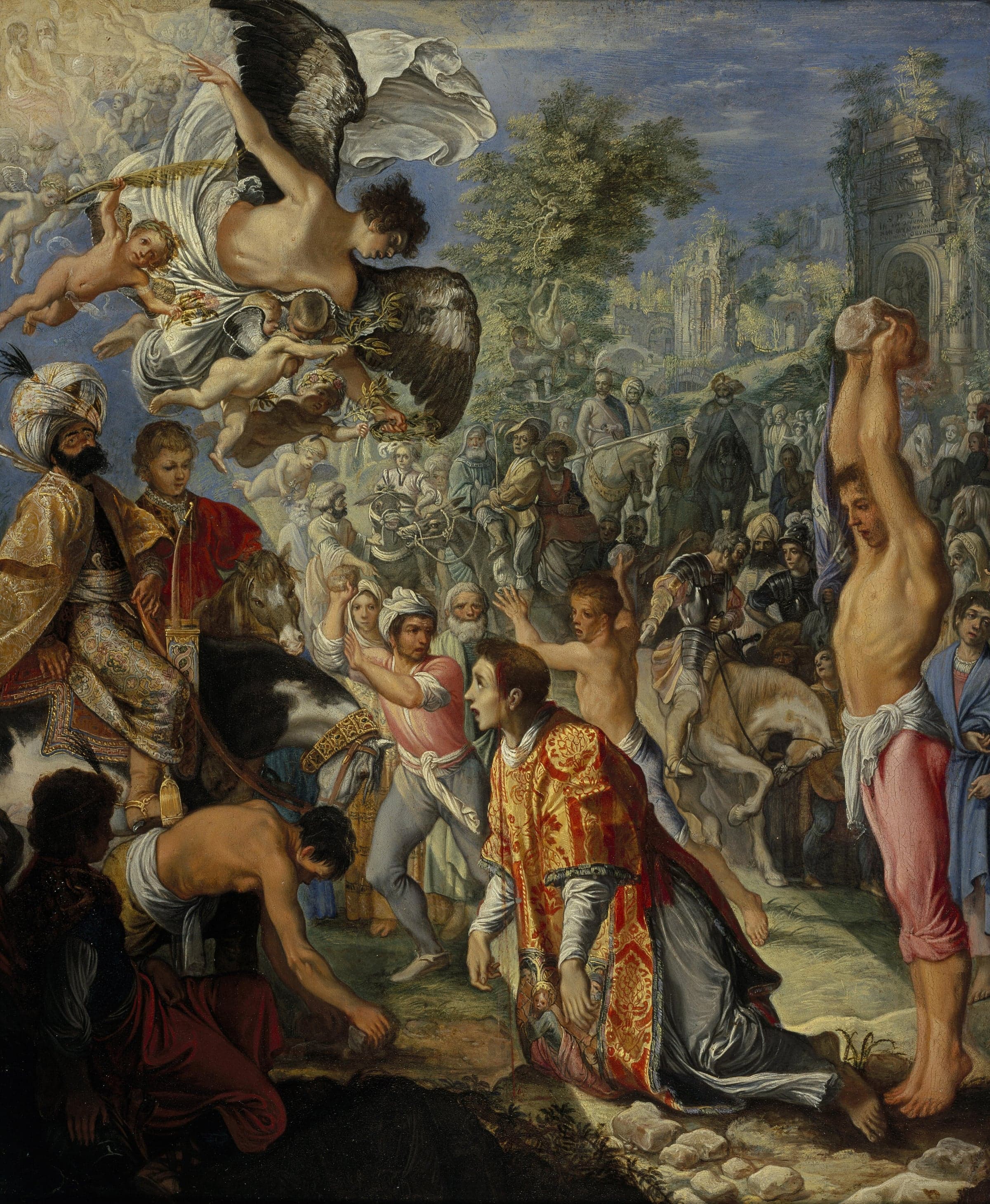
Saul of Tarsus stood by at Stephen's death and went on to persecute the church while he believed he was serving God.
When Stephen was stoned, “the witnesses laid their garments at the feet of a young man named Saul” (Acts 7:58). Luke adds, “And Saul was there, giving approval to Stephen’s death” (Acts 8:1).
They will put you out of the synagogues. In fact, a time is coming when anyone who kills you will think he is offering a service to God.Saul's persecution matched these words of Jesus to His disciples.
He fell to the ground and heard a voice say to him, “Saul, Saul, why do you persecute Me?” “Who are You, Lord?” Saul asked. “I am Jesus, whom you are persecuting,” He replied.The risen Jesus names Saul's persecution of the church as persecution of Himself.
A Ground for Pity or a Warning
Commentators read Paul's witness to Israel's zeal in two ways, as a plea for pity or as proof that sincerity falls short of faith.
Paul's witness pleads for pityJohn Chrysostom; John Calvin; Adam Clarke
John Chrysostom, in his seventeenth homily on Romans, finds Paul both pleading for Israel and naming its fault.
“‘For I bear them record,’ says he, ‘that they have a zeal of God, but not according to knowledge.’ Ought not this then to be a ground for pardoning and not for accusing them? For if it is not of man that they are separated, but through zeal, they deserved to be pitied rather than punished. But observe how adroitly he favors them in the word, and yet shows their unseasonable obstinacy.”
John Chrysostom · Homily on Romans 17 · on Romans 10:2Patristic
John Calvin, in his commentary on Romans, explains why Paul could look on Israel without anger.
“There was indeed a just cause why he should regard them with compassion rather than hatred, since he perceived that they had fallen only through ignorance, and not through malignancy of mind, and especially as he saw that they were not led except by some regard for God to persecute the kingdom of Christ.”
John Calvin · Commentaries · on Romans 10:2Reformed
Adam Clarke, in his Commentary on the Bible (1832), wrote on Romans 10:2 that “they sin more through ignorance than malice; and this pleads in their excuse.”
The objection: Romans 10:3 holds Israel to account for that ignorance.
Paul's witness warns that sincerity falls shortAlbert Barnes
Albert Barnes, in his Notes, Explanatory and Practical (1832 to 1869), granted that many were sincere and wrote that “sincerity does not of itself constitute true piety”. He held that “the zeal which is acceptable is what aims at the glory of God”.
The objection: 1 Timothy 1:13 lets ignorance weigh in a sinner's favour.
Zeal Made New
The churches of Judea knew Paul at first only by report.
They only heard the account: “The man who formerly persecuted us is now preaching the faith he once tried to destroy.”Paul cites the report to show that his change was known among churches that had never seen him.
Sources
Scripture is the Berean Standard Bible.
- John Chrysostom, Homilies on Romans, homily 17, on Romans 10:2 (Nicene and Post-Nicene Fathers, first series, volume 11)
- John Calvin, Commentary on the Epistle to the Romans, English translation, on Romans 10:2.
- Adam Clarke, Commentary on the Bible (1832), on Romans 10:2.
- Albert Barnes, Notes, Explanatory and Practical, on the Old and New Testaments (1832 to 1869), on Romans 10:2.
Keep Studying
Read it1
In this value4
People and groups7
Show the next 1 title
Doctrines2