

2 Corinthians 9 · Value 16 of 41 · Featured Study
Generosity
Generosity is the free and glad giving of what God first gave, to God and to people in need.
In the first church at Jerusalem “there were no needy ones among them,” because owners sold lands and houses to provide for them.
Each one should give what he has decided in his heart to give, not out of regret or compulsion. For God loves a cheerful giver.
- Anchor text
- 2 Corinthians 9:7 “Each one should give what he has…”
- Its opposite
- Greed, and the hand that withholds
- Hold in memory
- 2 Corinthians 9:7
Summary
Scripture teaches generosity as an answer to God, who gave first and gave His own Son. The Law, the wisdom books and the prophets told Israel to share with the poor, and the apostles taught the churches to give as each had decided. The New Testament keeps a saying of Jesus that no Gospel records, that it is more blessed to give than to receive.
- The Hebrew and Greek words for a generous gift name the giver's willing heart.
- Paul set Christ, who became poor for the sake of His people, as the ground of the Corinthians' giving.
- Scripture names the stingy eye and the love of money as the opposite of generosity.
What Generosity Is
Four words of Hebrew and Greek name the willing gift, the freewill offering, the single heart and the gift as a blessing.
What does Scripture ask of a generous person, and why does it ask it? This study of generosity answers from the text in order. It gives the Hebrew and Greek words, the key texts and the commands, and it shows the ground of giving in God and in Christ. It names the people who gave, the practice and the opposite, then the stories, the voices and the questions on which readers disagree. Five studies take its parts further, among them the word study, the proverb and the story of John Wesley's rule.
Nadab, to give willingly
The Hebrew verb nadab (H5068) is glossed to impel, and it names the gift no one compels. Deborah sang, “when the people volunteer, bless the LORD.”
Nedabah, the freewill offering
The Hebrew noun nedabah (H5071) names the offering no law required, and a psalm uses it of worship: “Freely I will sacrifice to You.”
Haplotes, generosity
The Greek noun haplotes (G572) means singleness of heart and generosity. Paul writes, “if it is giving, let him give generously.”
Eulogia, a bountiful gift
The Greek noun eulogia (G2129) is the word for blessing, and Paul uses it of the Corinthians' gift: “your gift will be prepared generously and not begrudgingly.”
Nadab, to give willingly, Nedabah, the freewill offering, Haplotes, generosity, Eulogia, a bountiful gift, The Words Nadab and Haplotes, the study in brief
The Key Texts of Generosity
The key texts carry the command to give from Deuteronomy to the first letter of John.
Law
Give generously to him, and do not let your heart be grieved when you do so. And because of this the LORD your God will bless you in all your work and in everything to which you put your hand.
The command looks at the giver's heart as well as his hand.
Law
Everyone must appear with a gift as he is able, according to the blessing the LORD your God has given you.
The law ties the size of each gift at the three feasts to what the giver has received.
Wisdom
A generous man will be blessed, for he shares his bread with the poor.
The Hebrew calls this man good of eye, one who sees the poor.
Wisdom
All day long he covets more, but the righteous give without restraint.
The proverb makes giving, set against coveting, the mark of the righteous.
Prophets
Isn’t it to share your bread with the hungry, to bring the poor and homeless into your home, to clothe the naked when you see him, and not to turn away from your own flesh and blood?
Isaiah answers a people who fasted while they oppressed their workers.
Isaiah 58:7BSB
Gospels
Heal the sick, raise the dead, cleanse the lepers, drive out demons. Freely you have received; freely give.
Jesus gives the rule to the Twelve as He sends them out to preach.
Matthew 10:8BSB
Gospels
Give, and it will be given to you. A good measure, pressed down, shaken together, and running over will be poured into your lap. For with the measure you use, it will be measured back to you.”
Jesus speaks the line just after the command not to judge.
Luke 6:38BSB
Epistles
And do not neglect to do good and to share with others, for with such sacrifices God is pleased.
The line follows the call to offer God a sacrifice of praise.
Epistles
If anyone with earthly possessions sees his brother in need, but withholds his compassion from him, how can the love of God abide in him?
John asks the question right after he says that Jesus laid down His life for us.
1 John 3:17BSB
Deuteronomy 16:17, Proverbs 22:9, Proverbs 21:26, Isaiah 58:7, Matthew 10:8, Luke 6:38, Hebrews 13:16, 1 John 3:17
Where Scripture Commands Generosity
The Law asked Israel to open its hand, Proverbs promised blessing to the giver, and Paul asked for a willing gift.
The Law forbade Israel to "harden your heart or shut your hand from your poor brother" (Deuteronomy 15:7). It told Israel instead to "open your hand to him and freely loan him whatever he needs" (Deuteronomy 15:8). It gave the reason that "there will never cease to be poor in the land" (Deuteronomy 15:11).
Paul gave the same command to the churches. "Whoever sows sparingly will also reap sparingly, and whoever sows generously will also reap generously," he told the Corinthians (2 Corinthians 9:6). He added that "God is able to make all grace abound to you" so that they would abound in every good work (2 Corinthians 9:8).
Instruct those who are rich in the present age not to be conceited and not to put their hope in the uncertainty of wealth, but in God, who richly provides all things for us to enjoy. Instruct them to do good, to be rich in good works, and to be generous and ready to share,Paul gives Timothy a charge to pass on to the wealthy members of the church.
The Generous Will Prosper, the study in brief
Generosity Rests on God's Own Giving
James, a temple prayer and Paul all trace each gift back to God.
James calls God the one "who gives generously to all without finding fault" (James 1:5).
But who am I, and who are my people, that we should be able to give as generously as this? For everything comes from You, and from Your own hand we have given to You.The line comes at the close of the offering in 1 Chronicles 29.
Paul grounds the Corinthians' gift in God's supply, the one "who supplies seed to the sower and bread for food" (2 Corinthians 9:10). He ends his appeal with thanks for a greater gift.
Thanks be to God for His indescribable gift!Paul ends two chapters on the collection for Jerusalem with this line.
Every good and perfect gift is from above, coming down from the Father of the heavenly lights, with whom there is no change or shifting shadow.James sets God's giving against the idea that God tempts anyone.
The teaching that a believer holds his goods as a steward of God's gifts is set out in Stewardship.
Christ, Who Gave Himself
Christ fed the hungry, taught that giving is more blessed than receiving, and gave His own life.
By the Sea of Galilee about five thousand men sat down on the grass, and a boy had five barley loaves and two small fish (John 6:9 to 10).
Then Jesus took the loaves and the fish, gave thanks, and distributed to those who were seated as much as they wanted.Jesus Himself hands out the food, as much as each one wants.
He taught His disciples to "lend to them, expecting nothing in return" (Luke 6:35), and His teaching on money in the Gospels is gathered in Jesus on Money.
In everything, I showed you that by this kind of hard work we must help the weak, remembering the words of the Lord Jesus Himself: ‘It is more blessed to give than to receive.’”Paul ends his farewell to the Ephesian elders with these words.
His greatest gift was Himself. He said that He came "to give His life as a ransom for many" (Mark 10:45). In Romans 8:32 Paul asks, "He who did not spare His own Son but gave Him up for us all, how will He not also, along with Him, freely give us all things?"
For you know the grace of our Lord Jesus Christ, that though He was rich, yet for your sakes He became poor, so that you through His poverty might become rich.Paul writes this line in the middle of his appeal for the Jerusalem collection.
The Crucifixion, the study in brief
Who Gave
Six people and churches of the Bible are remembered by name for what they gave.
The disciples at Antioch
“Each according to his ability, decided to send relief to the brothers living in Judea.”
Acts 11:29The Philippians
Paul called their gifts “a fragrant offering, an acceptable sacrifice, well-pleasing to God.”
Philippians 4:18
Barnabas, Tabitha, The disciples at Antioch, The Philippians
The Practice of Generosity
Scripture names seven practices of giving, each in the words of the verse that gives it.
- 1Give the firstfruits“Honor the LORD with your wealth and with the firstfruits of all your harvest.”Proverbs 3:9
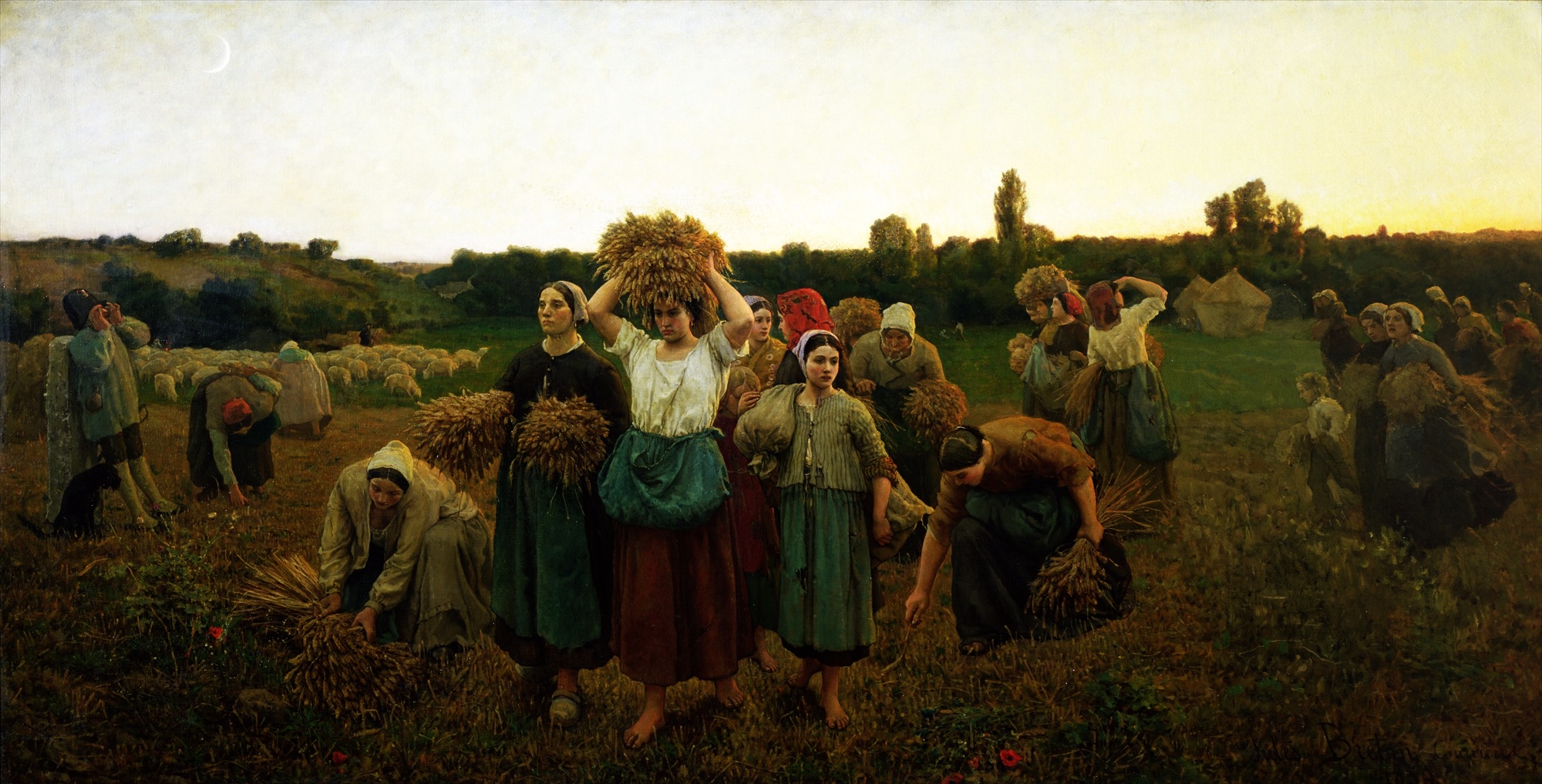
- 2Leave the gleanings“If you are harvesting in your field and forget a sheaf there, do not go back to get it.”Deuteronomy 24:19
- 3Set aside each week“On the first day of every week, each of you should set aside a portion of his income.”1 Corinthians 16:2
- 4Give in secret“When you give to the needy, do not let your left hand know what your right hand is doing.”Matthew 6:3
- 5Share what you have“Whoever has two tunics should share with him who has none, and whoever has food should do the same.”Luke 3:11
- 6Work in order to shareHe “must work, doing good with his own hands, that he may have something to share with the one in need.”Ephesians 4:28
- 7Share with the saints“Share with the saints who are in need. Practice hospitality.”Romans 12:13
Leave the gleanings, Set aside each week, Give in secret, Share what you have, Work in order to share, Share with the saints
Jesus told His disciples that their Father, who sees what is done in secret, will reward the gift given in secret (Matthew 6:4).
What Stands Against Generosity
Jesus, Peter, Proverbs and the prophets warn against the hand that keeps.
Jesus told of a rich man who planned bigger barns for his grain and was told, "This very night your life will be required of you" (Luke 12:20). The parable ends with a warning for "anyone who stores up treasure for himself but is not rich toward God" (Luke 12:21).
Ananias and Sapphira sold a field and kept back part of the price while they pretended to give it all. Peter told Ananias that the land had been his to keep, and he said in Acts 5:4, "You have not lied to men, but to God!"
Wisdom
A stingy man hastens after wealth and does not know that poverty awaits him.
The proverb warns the man who means to grow rich by holding back.
Prophets
You have planted much but harvested little. You eat but never have enough. You drink but never have your fill. You put on clothes but never get warm. You earn wages to put into a bag pierced through.”
Haggai speaks to a people who built their own houses while the LORD's house lay in ruins.
Haggai 1:6BSB
Prophets
Will a man rob God? Yet you are robbing Me! But you ask, ‘How do we rob You?’ In tithes and offerings.
Malachi names the withheld gift as theft from God.
Malachi 3:8BSB
Epistles
For the love of money is the root of all kinds of evil. By craving it, some have wandered away from the faith and pierced themselves with many sorrows.
Paul gives the warning just after he speaks of those who want to be rich.
Haggai 1:6, Malachi 3:8, 1 Timothy 6:10
Proverbs 28:22, Haggai 1:6, Malachi 3:8, 1 Timothy 6:10
Generosity in the Stories of the Bible
Four stories tell of a people who gave more than enough, a widow who gave her last meal, a widow who gave two coins and churches who gave in poverty.
The offering for the tabernacleExodus 35 to 36
Moses asked for gifts from "everyone whose heart is willing" (Exodus 35:5). Men and women brought gold, yarn, skins and wood, morning after morning, until the craftsmen told Moses, "The people are bringing more than enough" (Exodus 36:5). Moses sent a proclamation through the camp, "So the people were restrained from bringing more" (Exodus 36:6).
Read the page on the tabernacle 10 sections, 14 verses set out
The widow of Zarephath1 Kings 17
In the famine of Elijah's day a widow of Zarephath had "only a handful of flour in a jar and a little oil in a jug" for a last meal (1 Kings 17:12). Elijah asked her to bake for him first, and she did. "The jar of flour was not exhausted and the jug of oil did not run dry" until the rain came (1 Kings 17:16).
Read the study that tells her story 9 sections, 10 verses set out
The widow's two coinsMark 12
In the temple Jesus watched the rich put large gifts into the treasury and a poor widow put in two small copper coins. He told His disciples that she "has put more than all the others into the treasury", because the others gave out of their surplus and "she out of her poverty has put in all she had to live on" (Mark 12:43 to 44).
The churches of Macedonia2 Corinthians 8
Paul told the Corinthians about the grace God had given the churches of Macedonia. "In the terrible ordeal they suffered, their abundant joy and deep poverty overflowed into rich generosity" (2 Corinthians 8:2). They gave beyond their ability, of their own accord, and "they gave themselves first to the Lord and then to us" (2 Corinthians 8:5).
The widow of Zarephath (1 Kings 17), The widow's two coins (Mark 12), The churches of Macedonia (2 Corinthians 8)
Generosity in the Church's History
Four accounts tell of a Sunday collection, a bishop who praised a poor widow, a martyr who showed the poor as treasure and a preacher who gave all he had.
Justin Martyrthe second century
Justin described Christian worship to the emperor in his First Apology (chapter 67, translated by M. Dods and G. Reith, 1885). After the Sunday meal, he wrote, "they who are well to do, and willing, give what each thinks fit". The president used the gifts to help "the orphans and widows", the sick, prisoners and strangers.
Cyprian of Carthagethe third century
In On Works and Alms (chapter 15, translated by R. E. Wallis, 1886) Cyprian rebuked rich Christians who came to the Lord's Supper without an offering. He set the poor widow of the Gospel before them. The Lord, he wrote, considered "not how much, but from how much, she had given".
Lawrence of Romethe third century
Ambrose of Milan tells in On the Duties of the Clergy (book 2, chapter 28, translated in 1896) that Lawrence was ordered to hand over the treasures of the Church. The next day he brought the poor together, "he pointed to the poor, saying: These are the treasures of the Church." The account is Ambrose's report of the martyr.
John Wesleythe eighteenth century
Wesley taught the Methodists to gain all they could, save all they could and give all they could. In 1790 he stopped keeping accounts and wrote in his diary that he gained, saved and gave all he could, "that is, all I have."
Read the story of Wesley's rule 9 sections, 1 verse set out
Cyprian of Carthage (the third century), Lawrence of Rome (the third century), John Wesley (the eighteenth century)
Voices on Generosity, by Century
Four quotations from the sixteenth century to the nineteenth, each under the line it teaches.
1509 to 1564 · John Calvin
Commentaries
A sixteenth-century reading: the Macedonians' joy sustained them in their affliction.
The quotation1 quotation
“By the term joy he means that spiritual consolation by which believers are sustained under their afflictions; for the wicked either delude themselves with empty consolations, by avoiding a perception of the evil, and drawing off the mind to rambling thoughts, or else they wholly give way to grief, and allow themselves to be overwhelmed with it.”
John Calvin · Commentaries · on 2 Corinthians 8:2Reformed
1662 to 1714 · Matthew Henry
Commentary on the Whole Bible
An eighteenth-century reading: a gift squeezed out of an unwilling giver is spoiled.
The quotation1 quotation
“Persons sometimes will give merely to satisfy the importunity of those who ask their charity, and what they give is in a manner squeezed or forced from them, and this unwillingness spoils all they do.”
Matthew Henry · Commentary on the Whole Bible · on 2 Corinthians 9:7Puritan
1798 to 1870 · Albert Barnes
Notes, Explanatory and Practical, on the Old and New Testaments (1832-1869)
A nineteenth-century reading: giving should be voluntary and cheerful, an offering of the heart.
The quotation1 quotation
“Every man according as he purposeth in his heart ... - The main idea in this verse is, that the act of giving should be voluntary and cheerful. It should not seem to be extorted by the importunity of others 2Co 9:6; nor should it be given from urgent necessity, but it should be given as an offering of the heart. On this part of the verse we may remark: (1) That the heart is usually more concerned in the business of giving than the head.”
Albert Barnes · Notes, Explanatory and Practical, on the Old and New Testaments (1832-1869) · on 2 Corinthians 9:7Evangelical
1802 to 1910 · Jamieson, Fausset & Brown
Commentary Critical and Explanatory on the Whole Bible
A nineteenth-century reading: Paul's word for bountifully means in blessings.
The quotation1 quotation
“I say--ELLICOTT and others supply the ellipsis thus: ‘But remember this.’ bountifully--literally, ‘with,’ or ‘in blessings.’ The word itself implies a beneficent spirit in the giver (compare 2Co 9:7, end), and the plural implies the abundance and liberality of the gifts.”
Jamieson, Fausset & Brown · Commentary Critical and Explanatory on the Whole Bible · on 2 Corinthians 9:6Reformed
Albert Barnes, Jamieson, Fausset & Brown
How Generosity Has Been Taught
Clement of Alexandria and John Chrysostom taught the right use of wealth and the willing gift in the second and fourth centuries.
Clement of Alexandria taught that wealth used for others is not to be thrown away.1 paragraph
Clement wrote on the rich young ruler in Who Is the Rich Man That Shall Be Saved? (chapter 14, translated by William Wilson, 1885). He said that "Riches, then, which benefit also our neighbours, are not to be thrown away." He called wealth an instrument that "is subservient to righteousness" in the hands of one who uses it rightly.
John Chrysostom taught that a gift given freely is given more readily than one compelled.1 quotation
“‘Let each man do according as he hath purposed in his heart.’ For a man when left to himself, does a thing more readily than when compelled. Wherefore also he dwells upon this: for having said, ‘according as he is disposed,’ he added, ‘Not grudgingly, nor of necessity.’ And neither was he content with this, but he adds a testimony from Scripture also, saying, ‘For God loveth a cheerful giver.’ Seest thou how frequently he lays this down? ‘I speak not by commandment:’ and, ‘Herein I give my advice:’ and, ‘as a matter of bounty, and not as of extortion,’ and again, ‘not grudgingly, nor of necessity; for God loveth a cheerful giver.’ In this passage I am of opinion that a large giver is intended; the Apostle however has taken it as giving with readiness. For because the example of the Macedonians and all those other things were enough to produce sumptuousness, he does not say many things on that head, but upon giving without reluctance. For if it is a work of virtue, and yet all that is done of necessity is shorn of its reward, with reason also he labors at this point.”
John Chrysostom · Homily 19 on 2 Corinthians · on 2 Corinthians 9:7Patristic
Where the Science Speaks
Two studies measured giving and the giver's reward, and each finding has limits.
Harbaugh, Mayr and Burghart (2007) measured brain activity in people as money went to a charity. Even a tax-like transfer drew activity in areas linked to reward, and the activity rose further when the people gave by their own choice.
Aknin and her colleagues (2013) found in survey data from 136 countries that spending on others went with greater happiness in poor and rich countries alike. The studies measure money and passing feeling only, and Scripture grounds the command in God's own giving.
Five Studies of Generosity
Each study takes one part of generosity into more depth.
The texts
1 study
- Passages and psalms · 10 verses set outThe Generous Will Prosper
The proverb stands in Solomon's collection, and its Hebrew turns on words for scattering, blessing and watering.
- Passages and psalms · 10 verses set outThe Generous Will Prosper
The stories
1 study
- Stories · 1 verse set outGain All You Can, Give All You Can
John Wesley taught the Methodists three rules for money, and he kept them in his own accounts until his sight failed in 1790.
- Stories · 1 verse set outGain All You Can, Give All You Can
The words
1 study
- Symbols and words · 15 verses set outThe Words Nadab and Haplotes
Nadab in Hebrew is the heart that moves a person to give of his own will, and haplotes in Greek is the single heart that gives without holding back.
- Symbols and words · 15 verses set outThe Words Nadab and Haplotes
The practice
2 studies
- Doctrines · 19 verses set outThe Tithe
The tenth given to God in Scripture, from Abram's gift to Melchizedek, through the Levites' tithe and Malachi's storehouse, to the argument of Hebrews 7.
- Symbols and words · 10 verses set outThe Widow, the Orphan & the Stranger
Scripture names these three together from Exodus 22 to James 1, and God takes the place of the relative each one lacks.
- Doctrines · 19 verses set outThe Tithe
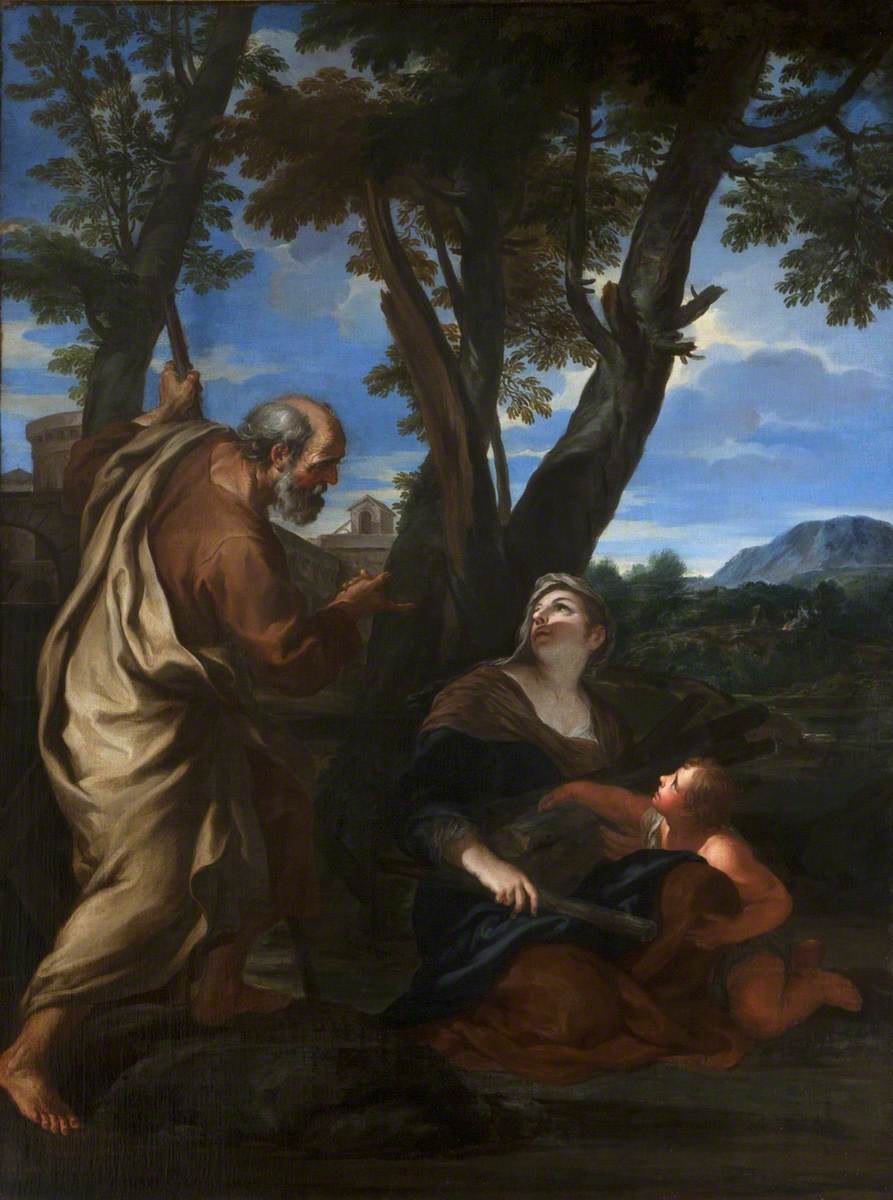
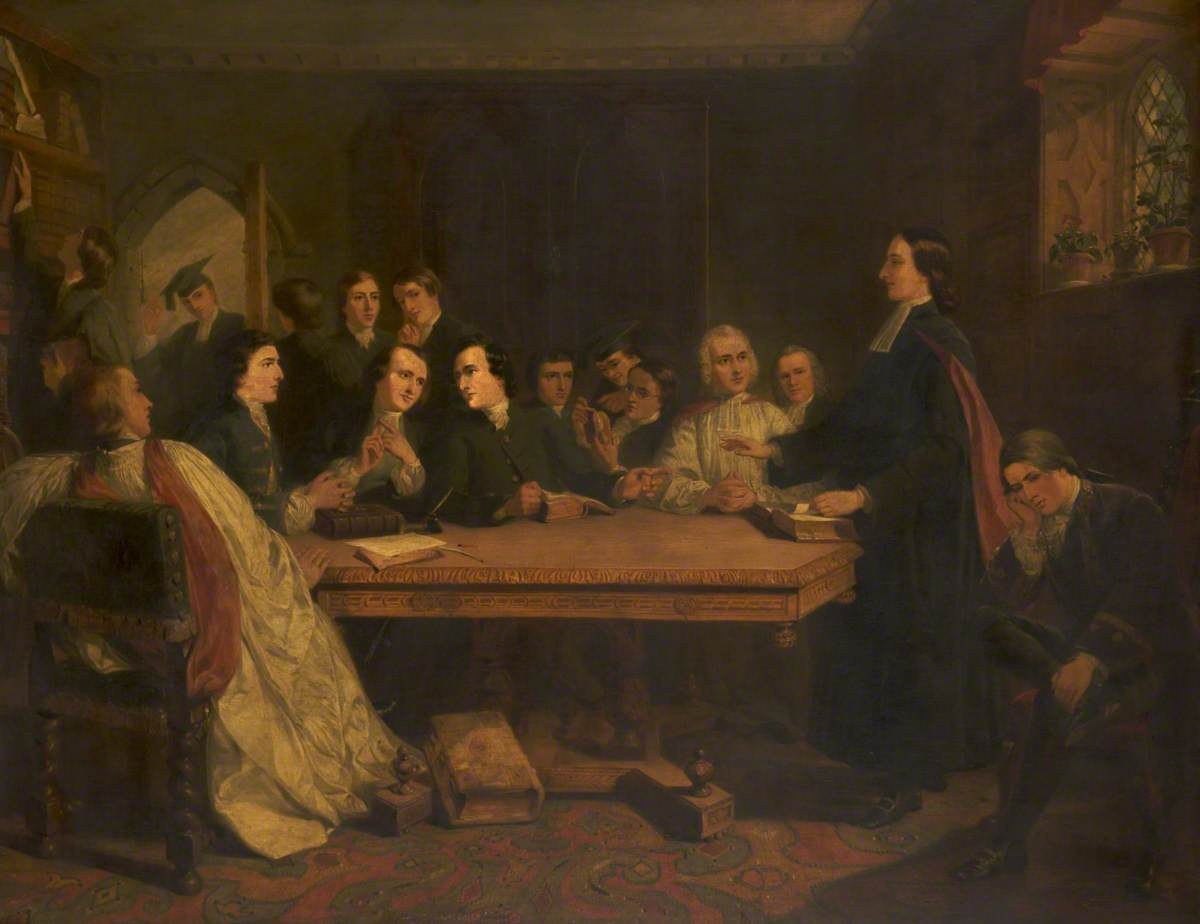
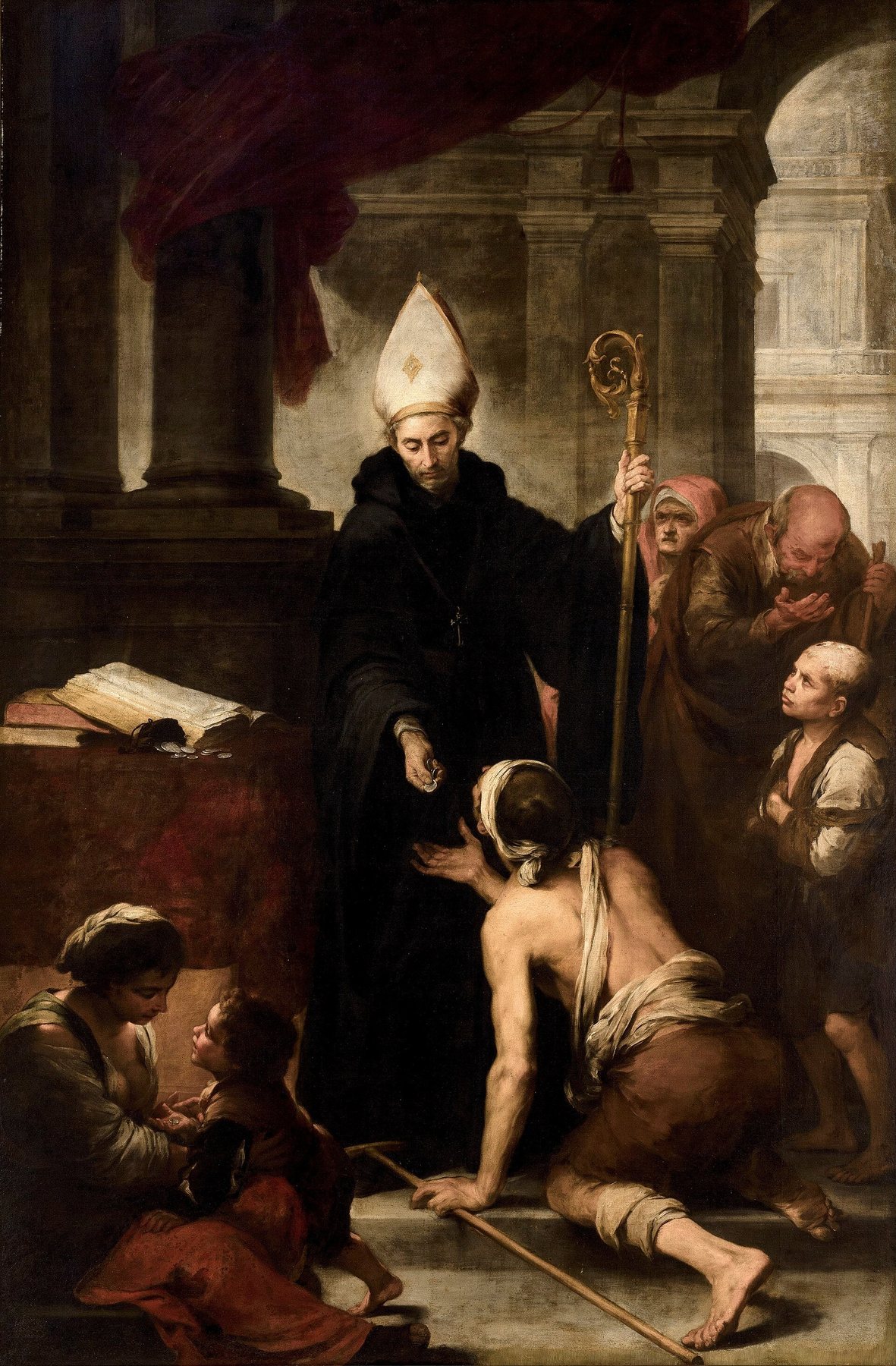
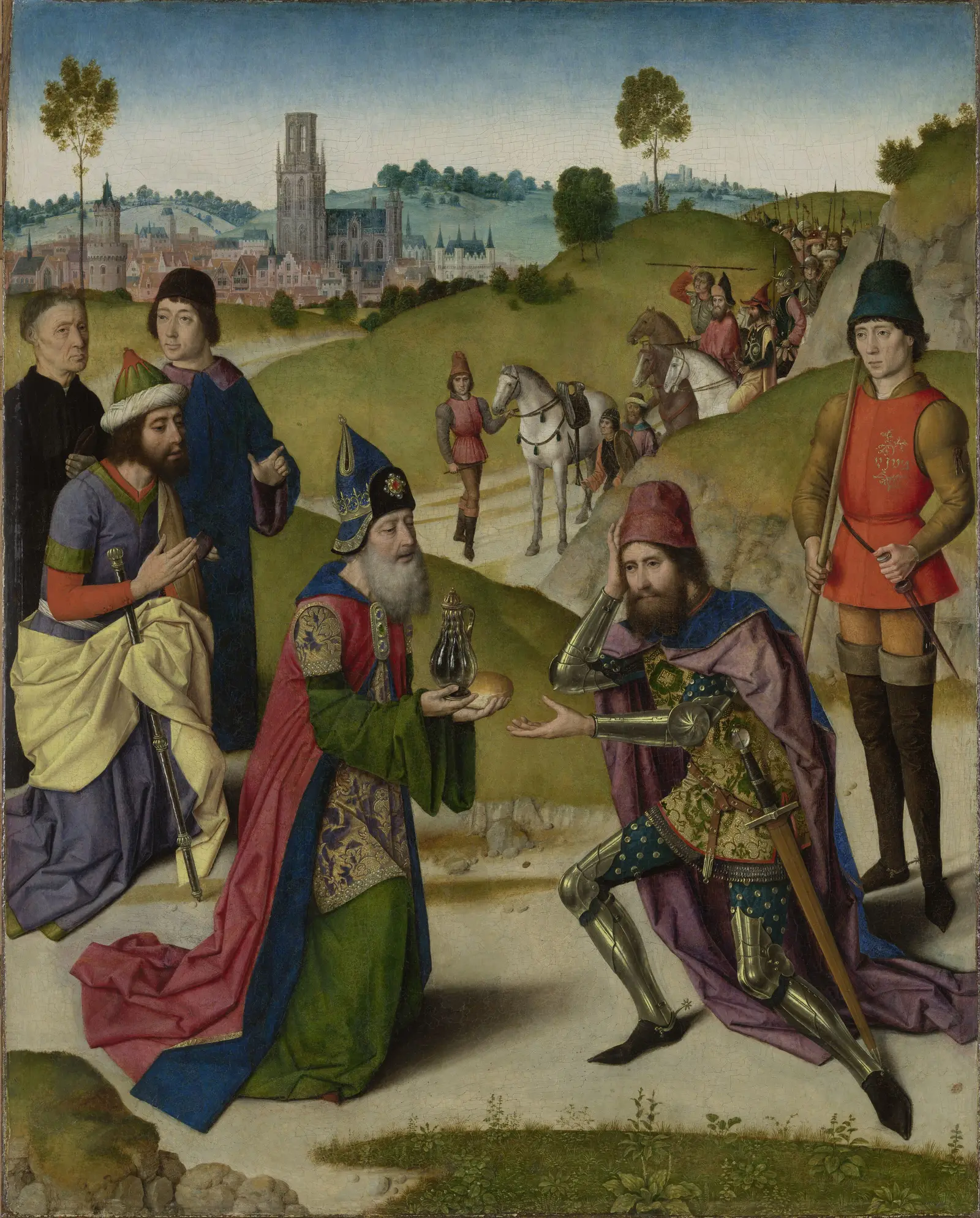
Gain All You Can, Give All You Can, The Words Nadab and Haplotes, The Tithe, The Widow, the Orphan & the Stranger
Where Readers Disagree
Nine readings answer three questions, each with its holders, the work that argues it and the objection raised against it.
What return God gives the generous
Read the study of Proverbs 11:24 to 26 9 sections, 10 verses set out
| Reading | Held by | Work | Objection |
|---|---|---|---|
| A return in this life, by God's blessing on the giver's goods | John Gill (Particular Baptist) | Gill, Exposition of the Old Testament (1748 to 1763), on Proverbs 11:24 | Proverbs 13:7 warns that wealth is not always what it appears, and the poor widow gave all she had. |
| A harvest in the age to come | Thomas Aquinas (Catholic) | Aquinas, Commentary on 2 Corinthians, on 9:6 | Paul promises the Corinthians all that they need and to be enriched in every way now (2 Corinthians 9:8, 11). |
| More to give, so that the giver gives again | John Wesley (Methodist) | Wesley, Explanatory Notes upon the New Testament (1755), on 2 Corinthians 9:8 | The reading still promises an increase that a giver in famine or persecution may never see. |
A harvest in the age to come, More to give, so that the giver gives again
Whether a fixed share binds the Christian giver
Read The Tithe 11 sections, 19 verses set out
| Reading | Held by | Work | Objection |
|---|---|---|---|
| The duty is moral, and the tenth was fixed for Israel | Thomas Aquinas (Catholic) | Aquinas, Summa Theologiae, II-II, question 87, article 1 | The New Testament names no tenth for the church and asks each to give as he has decided in his heart. |
| No, for all beyond need belongs to God | John Wesley (Methodist) | Wesley, Sermon 50, The Use of Money | A rule of all with no floor leaves the giver to judge that little is all. |
| Each gives in proportion to his means, after due thought | Matthew Henry (Presbyterian) | Henry, Commentary on the Whole Bible (1710), on 2 Corinthians 9:7 | Proportion alone gives no measure of how much a giver owes. |
No, for all beyond need belongs to God, Each gives in proportion to his means, after due thought
Whether a Christian may keep wealth
Read the story of Wesley's rule 9 sections, 1 verse set out
| Reading | Held by | Work | Objection |
|---|---|---|---|
| Yes, if it is used to benefit others | Clement of Alexandria (Patristic) | Clement, Who Is the Rich Man That Shall Be Saved?, chapter 14 | Jesus told the rich young ruler to sell all he had and give to the poor (Mark 10:21). |
| No, the rich must sell all to enter the kingdom | The teachers whom Augustine answers (Patristic) | As reported in Augustine, Letter 157, to Hilarius (414) | Augustine answers from Abraham, Isaac and Jacob, who were rich and are named among those at the feast of the kingdom. |
| Only what the household needs, and the rest is given | John Wesley (Methodist) | Wesley, Sermon 87, The Danger of Riches | Clement holds that wealth kept and used well is no fault, so the rule asks more than Scripture commands of every believer. |
No, the rich must sell all to enter the kingdom, Only what the household needs, and the rest is given
Sources
Scripture is the Berean Standard Bible.
- STEP Bible, Translators Brief lexicon of Extended Strongs for Hebrew and for Greek (Tyndale House, Cambridge), CC BY 4.0.
- Justin Martyr, First Apology, chapter 67, translated by M. Dods and G. Reith, Ante-Nicene Fathers, volume 1 (1885)
- Cyprian of Carthage, On Works and Alms, chapter 15, translated by R. E. Wallis, Ante-Nicene Fathers, volume 5 (1886)
- Ambrose of Milan, On the Duties of the Clergy, book 2, chapter 28, translated by H. de Romestin and others, Nicene and Post-Nicene Fathers, second series, volume 10 (1896)
- Clement of Alexandria, Who Is the Rich Man That Shall Be Saved?, chapter 14, translated by William Wilson, Ante-Nicene Fathers, volume 2 (1885)
- John Chrysostom, Homilies on 2 Corinthians, homily 19, on 2 Corinthians 9:7.
- John Wesley, Sermon 50, The Use of Money, and Sermon 87, The Danger of Riches, 1872 edition.
- The Journal of the Rev. John Wesley, Standard Edition, edited by Nehemiah Curnock, volume 8, page 83.
- John Wesley, Explanatory Notes upon the New Testament (1755), on 2 Corinthians 9:8.
- Thomas Aquinas, Summa Theologiae, II-II, question 87, article 1, translated by the Fathers of the English Dominican Province (1920)
- Thomas Aquinas, Commentary on 2 Corinthians, on 9:6.
- John Gill, Exposition of the Old Testament (1748 to 1763), on Proverbs 11:24.
- Matthew Henry, Commentary on the Whole Bible (1710), on 2 Corinthians 9:7.
- John Calvin, Commentaries (1554), on 2 Corinthians 8:2.
- Albert Barnes, Notes, Explanatory and Practical, on 2 Corinthians 9:7.
- Jamieson, Fausset and Brown, Commentary Critical and Explanatory on the Whole Bible (1871), on 2 Corinthians 9:6.
- Augustine of Hippo, Letter 157, to Hilarius (414), on riches (cite-only, a modern translation)
- W. T. Harbaugh, U. Mayr and D. R. Burghart, Neural responses to taxation and voluntary giving reveal motives for charitable donations, Science 316(5831): 1622 to 1625 (2007)
- L. B. Aknin and others, Prosocial spending and well-being: cross-cultural evidence for a psychological universal, Journal of Personality and Social Psychology 104(4): 635 to 652 (2013)
Keep Studying
Studies11
In this value5
People and groups18
Places1