

Apostle
Paul
Apostle to the Gentiles · New Testament · c. 5-67 AD
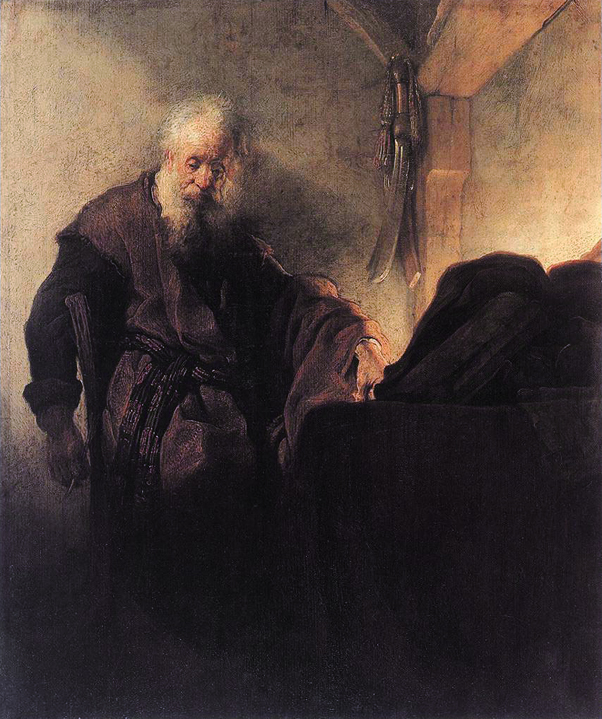
The Apostle Paul, Rembrandt
Summary
Paul was a Pharisee who persecuted Christians until the risen Christ appeared to him on the Damascus road. He became the greatest missionary and theologian of the early church.
- Paul was a Pharisee trained in Jerusalem who hunted the church house to house, and he never stopped saying so in his own letters.
- On the road to Damascus the risen Christ asked him one question, why do you persecute Me, counting the attack on His people as an attack on Himself.
- He carried the gospel across the eastern Roman world for about thirty years, and he was flogged, stoned, jailed and shipwrecked doing it.
- He wrote the largest block of letters in the New Testament, and in Romans 11 he says plainly that God has not rejected Israel.
- Acts leaves him under guard in Rome, preaching for two full years, with no verdict recorded.
On this page
Start here
I have been crucified with Christ, and I no longer live, but Christ lives in me. The life I live in the body, I live by faith in the Son of God, who loved me and gave Himself up for me.
Galatians 2:20→- 5 key events in order
- 208 verses name Paul, across 15 books
In Scripture
- Verses
- 208
- Books
- 15
Paul
- Role
- Apostle to the Gentiles
- Era
- New Testament
- Dates
- c. 5-67 AD
- Tribe
- Benjamin (Tarsus)
- Father
- Unknown
- Mother
- Unknown
The life in order
in the order the canon tells it
- Born in Tarsus, raised in Jerusalem, taught by GamalielActs 22:3“I am a Jew, born in Tarsus of Cilicia, but raised in this city. I was educated at the feet of Gamaliel in strict conformity to the law of our fathers. I am just as zealous for God as any of you here today.
- His own list of credentials, written years laterPhilippians 3:5circumcised on the eighth day, of the people of Israel, of the tribe of Benjamin; a Hebrew of Hebrews; as to the law, a Pharisee;
- At Stephen's execution, holding the coatsActs 7:58They dragged him out of the city and began to stone him. Meanwhile the witnesses laid their garments at the feet of a young man named Saul.
- House to house, men and women dragged to prisonActs 8:3But Saul began to destroy the church. Going from house to house, he dragged off men and women and put them in prison.
- On the road to Damascus, one questionActs 9:4He fell to the ground and heard a voice say to him, “Saul, Saul, why do you persecute Me?”
- Called a chosen instrument before he had done anythingActs 9:15“Go!” said the Lord. “This man is My chosen instrument to carry My name before the Gentiles and their kings, and before the people of Israel.
- Into Arabia, and back to DamascusGalatians 1:17nor did I go up to Jerusalem to the apostles who came before me, but I went into Arabia and later returned to Damascus.
- Barnabas takes a man nobody trusted to the apostlesActs 9:27Then Barnabas brought him to the apostles and described how Saul had seen the Lord, who spoke to him on the road to Damascus, and how Saul had spoken boldly in that city in the name of Jesus.
- A year of teaching at Antioch, where the name Christian startsActs 11:26and when he found him, he brought him back to Antioch. So for a full year they met together with the church and taught large numbers of people. The disciples were first called Christians at Antioch.
- The Spirit sets him apart with BarnabasActs 13:2While they were worshiping the Lord and fasting, the Holy Spirit said, “Set apart for Me Barnabas and Saul for the work to which I have called them.”
- The Roman name appears, four chapters after the roadActs 13:9Then Saul, who was also called Paul, filled with the Holy Spirit, looked directly at Elymas
- Stoned at Lystra and dragged out of the cityActs 14:19Then some Jews arrived from Antioch and Iconium and won over the crowds. They stoned Paul and dragged him outside the city, presuming he was dead.
- The sharp disagreement with Barnabas over MarkActs 15:39Their disagreement was so sharp that they parted company. Barnabas took Mark and sailed for Cyprus,
- The vision of a man of MacedoniaActs 16:9During the night, Paul had a vision of a man of Macedonia standing and pleading with him, “Come over to Macedonia and help us.”
- At Athens, the altar to an unknown GodActs 17:23For as I walked around and examined your objects of worship, I even found an altar with this inscription: TO AN UNKNOWN GOD. Therefore what you worship as something unknown, I now proclaim to you.
- At Ephesus, the Spirit comes with tongues and prophecyActs 19:6And when Paul laid his hands on them, the Holy Spirit came upon them, and they spoke in tongues and prophesied.
- Arrested in the temple courts and bound with two chainsActs 21:33The commander came up and arrested Paul, ordering that he be bound with two chains. Then he asked who he was and what he had done.
- I appeal to CaesarActs 25:11If, however, I am guilty of anything worthy of death, I do not refuse to die. But if there is no truth to their accusations against me, no one has the right to hand me over to them. I appeal to Caesar!”
- Two full years in Rome, in his own rented houseActs 28:30Paul stayed there two full years in his own rented house, welcoming all who came to visit him.
- His last surviving word on his own course2 Timothy 4:7I have fought the good fight, I have finished the race, I have kept the faith.
Why Paul matters
Paul was born a Jew in Tarsus, a Greek city of Cilicia, and raised in Jerusalem. He was trained at the feet of Gamaliel, whom Acts calls a teacher of the law honored by all the people. He held Roman citizenship from birth, which the commander who arrested him had to buy. He was a Pharisee whose father was a Pharisee, which names a family and a party rather than a private opinion. He stood at Stephen's execution while the witnesses laid their coats at his feet. Then he went house to house, dragging men and women off to prison. In his own account before Agrippa he says he cast his vote for death sentences and tried to force believers to blaspheme. He never softened any of it in later years. He was on the road to Damascus with arrest warrants from the high priest when a light stopped him and a voice asked why he was persecuting Me. Not them. He spent three days blind and without food. The first Christian word spoken to him was Brother Saul, said by a man who had just told the Lord exactly what this man had done. The name did not change on that road. Luke goes on calling him Saul for four more chapters and switches at Acts 13:9, on Cyprus, with the phrase “Saul, who was also called Paul.” Saul was his Hebrew name and Paul his Roman one, and a Roman citizen from a Greek city would have carried both from birth. For about thirty years he crossed the eastern Roman world and planted churches in Cyprus, Asia Minor, Macedonia and Achaia. At Lystra a crowd tried to sacrifice to him and then stoned him and left him for dead, and he got up and went back into the city. By his own count he took five floggings, three beatings with rods, one stoning and three shipwrecks before the famous wreck of Acts 27 ever happened. He argued the case for Gentile freedom at Jerusalem and refused to let Titus be circumcised. He corrected Peter to his face at Antioch when a shared meal turned into a test of the gospel. He also parted from Barnabas over whether to take Mark, and Luke calls that disagreement sharp. Years later he asked for Mark by name and called him useful in the ministry. He was arrested in the temple courts on a charge Luke says rested on an assumption, held two years at Caesarea by a governor who was hoping for a bribe, and sent on to Rome because he appealed to Caesar. Acts ends with him under guard in a rented house, preaching for two full years, and reports no verdict.
Biography
Saul of Tarsus was a Pharisee zealous for the law, trained under Gamaliel, and a violent persecutor of the early church. He approved of Stephen's stoning and was "breathing threats and murder" against Christians when Christ appeared to him on the Damascus road. The persecutor became the preacher. Blinded by the light and humbled before the risen Lord, Paul spent time in Arabia before beginning the most influential missionary career in history. His three missionary journeys established churches throughout Asia Minor and Greece, and his letters form the largest section of the New Testament. Paul's theology clarified salvation by grace through faith, the relationship between law and gospel, the nature of the church as Christ's body, and the hope of resurrection. His personal testimony remained constant: "The life I now live in the flesh I live by faith in the Son of God, who loved me and gave himself for me." Paul suffered shipwrecks, beatings, stonings, imprisonments, and constant danger. Tradition holds he was beheaded under Nero, having "fought the good fight, finished the race, and kept the faith."
I have been crucified with Christ, and I no longer live, but Christ lives in me. The life I live in the body, I live by faith in the Son of God, who loved me and gave Himself up for me.
Paul's union with Christ
The Damascus road
Acts 9:1-27, with Paul's own two retellings in Acts 22 and Acts 26 beside it
- He asked the high priest for warrantsActs 9:1-2Meanwhile, Saul was still breathing out murderous threats against the disciples of the Lord. He approached the high priest and requested letters to the synagogues in Damascus, so that if he found any men or women belonging to the Way, he could bring them as prisoners to Jerusalem.
- A light, and one questionActs 9:3-6As Saul drew near to Damascus on his journey, suddenly a light from heaven flashed around him. He fell to the ground and heard a voice say to him, “Saul, Saul, why do you persecute Me?” “Who are You, Lord?” Saul asked. “I am Jesus, whom you are persecuting,” He replied. “Now get up and go into the city, and you will be told what you must do.”
- His companions, and three days without sightActs 9:7-9The men traveling with Saul stood there speechless. They heard the voice but did not see anyone. Saul got up from the ground, but when he opened his eyes he could not see a thing. So they led him by the hand into Damascus. For three days he was without sight, and he did not eat or drink anything.
- A disciple in Damascus is given an addressActs 9:10-12In Damascus there was a disciple named Ananias. The Lord spoke to him in a vision, “Ananias!” “Here I am, Lord,” he answered. “Get up!” the Lord told him. “Go to the house of Judas on Straight Street and ask for a man from Tarsus named Saul, for he is praying. In a vision he has seen a man named Ananias come and place his hands on him to restore his sight.”
- Ananias says what everyone knew about the manActs 9:13-14But Ananias answered, “Lord, many people have told me about this man and all the harm he has done to Your saints in Jerusalem. And now he is here with authority from the chief priests to arrest all who call on Your name.”
- The commission, and the suffering inside itActs 9:15-16“Go!” said the Lord. “This man is My chosen instrument to carry My name before the Gentiles and their kings, and before the people of Israel. I will show him how much he must suffer for My name.”
- Brother SaulActs 9:17-18So Ananias went to the house, and when he arrived, he placed his hands on Saul. “Brother Saul,” he said, “the Lord Jesus, who appeared to you on the road as you were coming here, has sent me so that you may see again and be filled with the Holy Spirit.” At that instant, something like scales fell from Saul’s eyes, and his sight was restored. He got up and was baptized,
- He preached in the synagogues he had come to raidActs 9:20-22Saul promptly began to proclaim Jesus in the synagogues, declaring, “He is the Son of God.” All who heard him were astounded and asked, “Isn’t this the man who wreaked havoc in Jerusalem on those who call on this name? And hasn’t he come here to take them as prisoners to the chief priests?” But Saul was empowered all the more, and he confounded the Jews living in Damascus by proving that Jesus is the Christ.
- The plot, and the basket through the wallActs 9:23-25After many days had passed, the Jews conspired to kill him, but Saul learned of their plot. Day and night they watched the city gates in order to kill him. One night, however, his disciples took him and lowered him in a basket through a window in the wall.
- Nobody in Jerusalem believed him, and Barnabas vouched for himActs 9:26-27When Saul arrived in Jerusalem, he tried to join the disciples, but they were all afraid of him, not believing that he was a disciple. Then Barnabas brought him to the apostles and described how Saul had seen the Lord, who spoke to him on the road to Damascus, and how Saul had spoken boldly in that city in the name of Jesus.
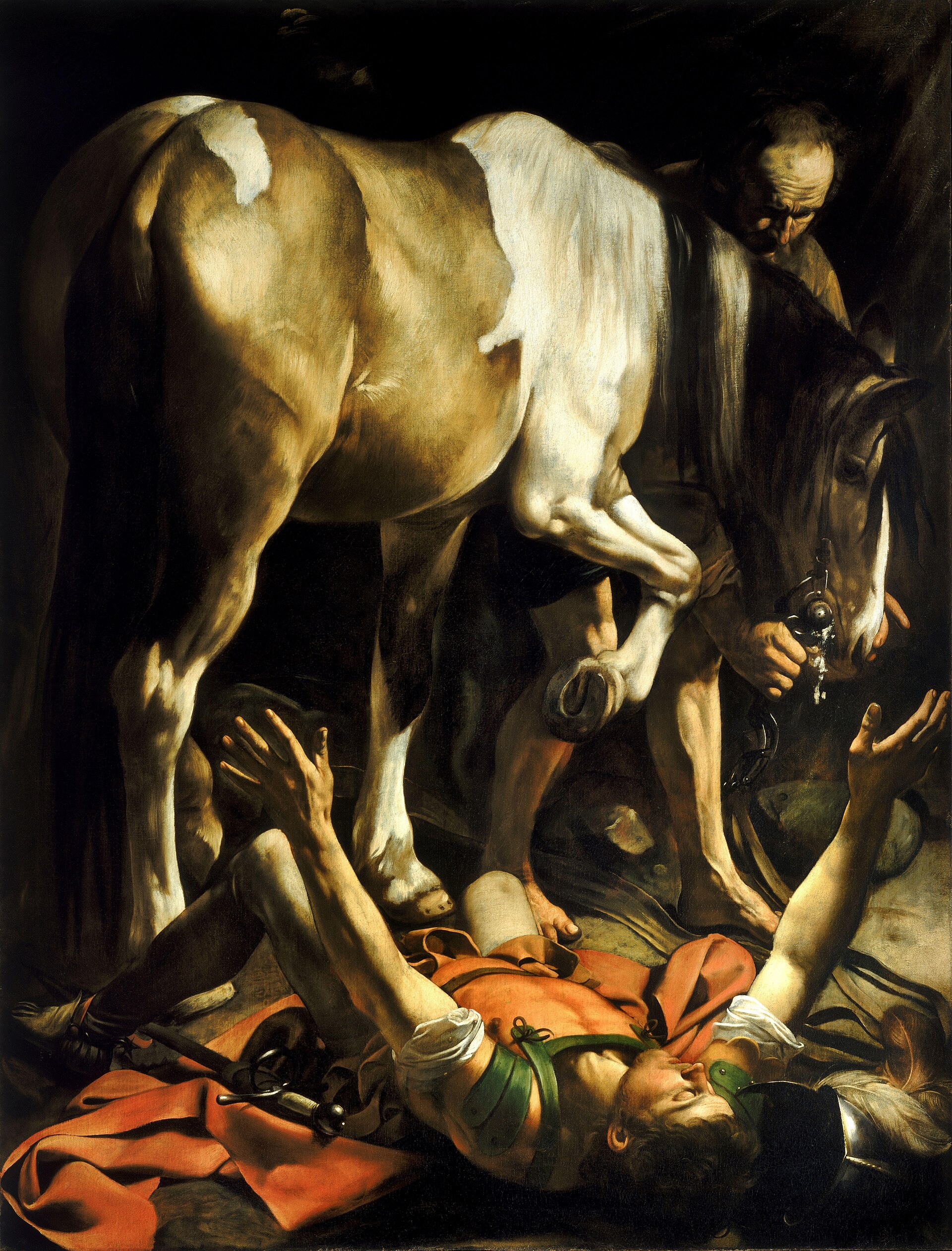
No horse appears in any of the three accounts. Acts 9:4, 22:7 and 26:14 all say he fell to the ground. Paul tells the story twice himself, once in Hebrew from the barracks steps and once to a Roman court, and the audience shapes each telling. Acts 22 stresses that Ananias was a devout observer of the law, well regarded by the Jews of Damascus. Acts 26 leaves Ananias out and adds the line about kicking against the goads.
The Damascus road, verse by verseKey events
- 1Conversion on Damascus roadActs 9:1-19→
The risen Christ appeared and transformed the persecutor
Read the verse here
Acts 9:1-19Meanwhile, Saul was still breathing out murderous threats against the disciples of the Lord. He approached the high priest
- 2First missionary journeyActs 13-14→
Paul and Barnabas planted churches in Asia Minor
- 3Jerusalem councilActs 15:1-29→
Paul defended Gentile freedom from circumcision
Read the verse here
Acts 15:1-29Then some men came down from Judea and were teaching the brothers, “Unless you are circumcised according to the custom of Moses, you cannot be saved.”
- 4Philippian imprisonmentActs 16:16-40→
Imprisoned and released after earthquake
Read the verse here
Acts 16:16-40One day as we were going to the place of prayer, we were met by a slave girl with a spirit of divination, who earned a large income for her masters by fortune-telling.
- 5Roman imprisonmentActs 28:16-31→
Paul preached in Rome under house arrest
Read the verse here
Acts 28:16-31When we arrived in Rome, Paul was permitted to stay by himself, with a soldier to guard him.
More key verses
Text: Berean Standard Bible.
“For to me, to live is Christ, and to die is gain.”
“I have fought the good fight, I have finished the race, I have kept the faith.”
What they got right, and what they got wrong
Strengths
Theological depth, tireless missionary zeal, pastoral care, courage under persecution, contentment in all circumstances
Weaknesses
Former persecutor of the church, sharp disagreement with Barnabas over Mark, struggled with ongoing internal conflict
Lessons
No one is beyond God's reach. Grace transforms persecutors into preachers. Suffering is a normal part of faithful ministry. Contentment is possible in all circumstances.
Spiritual significance
Paul demonstrates that Christ transforms His worst enemies into His greatest servants. His life shows the power of grace to overcome any past.
How Paul points to Jesus
Paul says the center of what he preached was handed to him rather than composed by him. He writes to Corinth: “For what I received I passed on to you as of first importance: that Christ died for our sins according to the Scriptures, that He was buried, that He was raised on the third day according to the Scriptures, and that He appeared to Cephas and then to the Twelve.” The list of witnesses runs on through more than five hundred at once, then James, then all the apostles, and it ends with him: “And last of all He appeared to me also, as to one of untimely birth.” The shortest statement of the Christian message in the New Testament closes with the name of the man who had tried to destroy it. He is never presented as a type of Christ. He is presented as the demonstration case for Christ's patience. His own words are: “But for this very reason I was shown mercy, so that in me, the worst of sinners, Christ Jesus might display His perfect patience as an example to those who would believe in Him for eternal life.” The worst instance is handled first, so that nobody who comes later can claim to stand outside the offer. Augustine of Hippo said the same thing about the work that followed, writing in the early fifth century that Paul did not labor in order to receive grace, but received grace so that he might labor. Paul's own summary of his preaching, given under guard to a Roman court, is Christ out of Israel's prophets. “I am saying nothing beyond what the prophets and Moses said would happen: that the Christ would suffer, and as the first to rise from the dead, would proclaim light to our people and to the Gentiles.” Tertullian read that sentence in the early third century as a claim of continuity rather than a break, and said Paul was maintaining just such a resurrection as the prophets had foretold. Notice the order Paul gives. To our people, and to the Gentiles. Romans 11 is where he answers the charge most often laid at his own door. He raises it himself and answers it in the first person: “I ask then, did God reject His people? Certainly not! I am an Israelite myself, a descendant of Abraham, from the tribe of Benjamin.” He closes the argument in the same place: “Regarding the gospel, they are enemies on your account; but regarding election, they are loved on account of the patriarchs. For God’s gifts and His call are irrevocable.” John Calvin wrote in 1554 that the point of the passage is that nobody should think the covenant made with Abraham has been abrogated. John Wesley drew the plain conclusion in 1755, that Israel is neither totally nor finally rejected. Cyril of Alexandria, in the fifth century, said Israel will be saved in its own time. Replacement theology is condemned on this site, and Paul is the last writer in the New Testament who can be enlisted for it. The gifts he describes are given to the church rather than withdrawn from it. At Ephesus he laid his hands on disciples who had not heard there was a Holy Spirit, and “the Holy Spirit came upon them, and they spoke in tongues and prophesied.” Writing to a congregation that had mishandled the same gifts, his instruction was not to stop using them: “Earnestly pursue love and eagerly desire spiritual gifts, especially the gift of prophecy,” and at the close of the argument, “So, my brothers, be eager to prophesy, and do not forbid speaking in tongues.” The correction he gives is order, and everything is to be done in a proper and orderly manner. This site teaches that the gifts continue. He also wrote the clearest account in the New Testament of the catching up of the church. “For the Lord Himself will descend from heaven with a loud command, with the voice of an archangel, and with the trumpet of God, and the dead in Christ will be the first to rise. After that, we who are alive and remain will be caught up together with them in the clouds to meet the Lord in the air. And so we will always be with the Lord.” Where that event falls in relation to the tribulation is a question Scripture leaves genuinely open, and serious people hold each of the answers. The site's page on the rapture plots the timings on one timeline of Daniel's seventieth week, gives each its best case and its hardest problem, and names this site's own tradition. This page quotes the verses and argues none of it.
Paul's conversion is the pattern for sinners finding mercy through Christ (1 Timothy 1:16). He became an example for all who would believe.
The voices
each quoted from the work named
Saul, Saul, saith He, why persecutest thou me? And He tells him nothing: does not say, Believe, nor anything whatever of the kind: but expostulates with him, all but saying, What wrong, great or small, hast thou suffered from Me, that thou doest these things?
HOW MARVELLOUS the condescension which induced the Saviour to take notice of such a wretch as Saul! Enthroned in the highest heavens, amidst the eternal melodies of the redeemed, and the seraphic sonnets of the cherubim and all the angelic hosts, it was strange that the Saviour should stoop himself from his dignity to speak to a persecutor.
Paul did not labor in order to receive grace, but he received grace so that he might labor.
4 more teachers on these versesJohn Calvin · Cyril of Alexandria · Jamieson, Fausset & Brown · Clement of Rome
This objection is what he anticipates in this passage, and he so modifies what he had previously said respecting the repudiation of the Jews, that no one might think that the covenant formerly made with Abraham is now abrogated, or that God had so forgotten it that the Jews were now so entirely alienated from his kingdom, as the Gentiles were before the coming of Christ.
Although it was rejected, Israel will also be saved eventually, a hope which Paul confirms by quoting this text of Scripture. For indeed, Israel will be saved in its own time and will be called at the end, after the calling of the Gentiles.
It is beautiful to see how earthly misunderstandings of Christians are lost in Christ. For in 2Pe 3:15, Peter praises the very Epistles of Paul which he knew contained his own condemnation. Though apart from one another and differing in characteristics, the two apostles were one in Christ.
But not to dwell upon ancient examples, let us come to the most recent spiritual heroes. Let us take the noble examples furnished in our own generation. Through envy and jealousy the greatest and most righteous pillars [of the church] have been persecuted and put to death. Let us set before our eyes the illustrious apostles... Owing to envy, Paul also obtained the reward of patient endurance, after being seven times thrown into captivity, compelled to flee, and stoned. After preaching both in the east and west, he gained the illustrious reputation due to his faith, having taught righteousness to the whole world, and come to the extreme limit of the west, and suffered martyrdom under the prefects. Thus was he removed from the world, and went into the holy place, having proved himself a striking example of patience.
Paul in Scripture
Open a book to read its mentions here. Text: Berean Standard Bible. Names repeat in Scripture, so some of these verses may speak of another person called Paul. The two marks are drawn from the chapters this page's own references stand in.
Old TestamentNew Testamentsegment width = share of mentions
New Testament15 books · 208 mentions
Acts179 mentions
- Acts 13:9Then Saul, who was also called Paul, filled with the Holy Spirit, looked directly at Elymas
- Acts 13:13After setting sail from Paphos, Paul and his companions came to Perga in Pamphylia, where John left them to return to Jerusalem.
- Acts 13:16Paul stood up, motioned with his hand, and began to speak: “Men of Israel and you Gentiles who fear God, listen to me!
- Acts 13:42As Paul and Barnabas were leaving the synagogue, the people urged them to continue this message on the next Sabbath.
- Acts 13:43After the synagogue was dismissed, many of the Jews and devout converts to Judaism followed Paul and Barnabas, who spoke to them and urged them to continue in the grace of God.
174 further mentions in Acts, read them in the book.
Romans1 mention
1 Corinthians7 mentions
- 1 Corinthians 1:1Paul, called to be an apostle of Christ Jesus by the will of God, and our brother Sosthenes,
- 1 Corinthians 1:12What I mean is this: Individuals among you are saying, “I follow Paul,” “I follow Apollos,” “I follow Cephas,” or “I follow Christ.”
- 1 Corinthians 1:13Is Christ divided? Was Paul crucified for you? Were you baptized into the name of Paul?
- 1 Corinthians 3:4For when one of you says, “I follow Paul,” and another, “I follow Apollos,” are you not mere men?
- 1 Corinthians 3:5What then is Apollos? And what is Paul? They are servants through whom you believed, as the Lord has assigned to each his role.
2 further mentions in 1 Corinthians, read them in the book.
2 Corinthians2 mentions
- 2 Corinthians 1:1Paul, an apostle of Christ Jesus by the will of God, and Timothy our brother, To the church of God in Corinth, together with all the saints throughout Achaia:
- 2 Corinthians 10:1Now by the mildness and gentleness of Christ, I appeal to you—I, Paul, who am humble when face to face with you, but bold when away.
Galatians2 mentions
Ephesians2 mentions
Philippians1 mention
Colossians3 mentions
- Colossians 1:1Paul, an apostle of Christ Jesus by the will of God, and Timothy our brother,
- Colossians 1:23if indeed you continue in your faith, established and firm, not moved from the hope of the gospel you heard, which has been proclaimed to every creature under heaven, and of which I, Paul, have become a servant.
- Colossians 4:18This greeting is in my own hand—Paul. Remember my chains. Grace be with you.
1 Thessalonians2 mentions
2 Thessalonians2 mentions
1 Timothy1 mention
2 Timothy1 mention
Titus1 mention
Philemon3 mentions
- Philemon 1:1Paul, a prisoner of Christ Jesus, and Timothy our brother, To Philemon our beloved fellow worker,
- Philemon 1:9I prefer to appeal on the basis of love. For I, Paul, am now aged, and a prisoner of Christ Jesus as well.
- Philemon 1:19I, Paul, write this with my own hand. I will repay it—not to mention that you owe me your very self.
Common questions
Was Paul renamed from Saul to Paul when he was converted?
No. Luke goes on calling him Saul for four more chapters and switches in the middle of Acts 13:9, on Cyprus, with the phrase “Saul, who was also called Paul.” That is a note about two names already in use, not a note about a change.
Saul was his Hebrew name and Paul his Roman one, and a Roman citizen born in a Greek city of Cilicia would have carried both from birth. None of the three accounts of the Damascus road mentions a new name.
Do the three accounts of the Damascus road contradict each other?
Readers differ; the positions are named
Acts 9:7 says his companions heard the voice and saw no one. Acts 22:9 says they saw the light and could not understand the voice of the One speaking to him. Acts 26:14 says they all fell to the ground. Read together, the men took in the light and a sound without receiving the message that was spoken to Paul.
That is the reading carried from the ancient commentators onward. Theophylact of Ohrid, writing in the eleventh century, makes the point directly on Acts 9:7: the light shines on all of them so that they can bear witness to what happened, and it blinds Paul alone. This page shows all three texts rather than harmonizing the difficulty out of sight.
What was the thorn in the flesh?
Readers differ; the positions are named
The text names neither an illness nor an enemy. It says a thorn in the flesh and a messenger of Satan, given to keep him from becoming conceited, and it records three requests to have it removed and three refusals.
The ancient readings split. Severian of Gabala, writing in the early fifth century, held that Paul meant the persecutions he suffered rather than a bodily ailment. Theophylact of Ohrid in the eleventh century records a headache reading and rejects it. Neither side settles it and this page names no ailment either. What the text does settle is the answer he was given: “My grace is sufficient for you, for My power is perfected in weakness.”
Did Paul teach that the church replaced Israel?
No. Romans 11:1 raises the question and answers it in his own first person: did God reject His people, certainly not, I am an Israelite myself. Romans 11:28-29 says they are loved on account of the patriarchs and that God's gifts and His call are irrevocable.
Galatians 2:7 sets two commissions side by side, Peter's to the circumcised and Paul's to the uncircumcised, recognized by one grace, with neither replacing the other. Replacement theology is condemned on this site, and this page carries Romans 11 at full strength.
Why did Paul circumcise Timothy after refusing to circumcise Titus?
They were two different questions. Galatians 2:3-5 was about whether circumcision is required for salvation, and Paul would not concede that for a moment. Acts 16:3 was about whether Timothy, whose mother was Jewish and whose father was Greek, could go with him into synagogues.
One question is the gospel itself and the other is access to a hearing, and he treated them differently on purpose.
Did Paul and Peter fall out for good at Antioch?
Readers differ; the positions are named
The text does not say so. The pillars had already given Paul and Barnabas the right hand of fellowship, and Peter's own second letter calls Paul a beloved brother afterward.
What happened at Antioch was a real and public correction. Paul says he opposed Cephas to his face because the practice was not walking in line with the truth of the gospel. Whether the rebuke was a genuine disagreement or a scene arranged for the benefit of those watching was argued in the early church, with Theophylact of Ohrid carrying the older Eastern reading and Augustine of Hippo reading it as a real fault really rebuked. Both men are honored here and the site's page on that confrontation carries the argument in full.
How did Paul die?
Readers differ; the positions are named
Scripture does not say. Acts leaves him under guard in Rome for two full years, preaching without hindrance and with no verdict reported, and 2 Timothy 4:6 has him saying the time of his departure is at hand.
The earliest witness outside Scripture is Clement of Rome, writing to Corinth near the end of the first century. He says Paul preached in the east and the west, came to the extreme limit of the west, and suffered martyrdom under the prefects. He does not say how. Ignatius of Antioch calls him the holy, the martyred, early in the second century, and Eusebius of Caesarea in the fourth century reads 2 Timothy 4 as Paul foreseeing his own death. The martyrdom at Rome is early tradition and it is reported here as tradition. The manner of it is not sourced on this page, so this page does not state one.
Did Paul get his gospel from the apostles in Jerusalem?
He says he did not. Galatians 1:11-12 says he received it by revelation from Jesus Christ, 1:17 says he did not go up to Jerusalem but went into Arabia, and 1:20 puts the claim under oath before God.
Acts and Galatians agree on what came next. Barnabas introduced him to the apostles, and the pillars recognized his commission rather than granting it. Galatians 1:17 names Arabia and says nothing else about it, and this page leaves that silence alone.
Is there evidence outside Scripture for when Paul was in Corinth?
Yes. Acts 18:12 says Gallio was proconsul of Achaia when the Jews of Corinth brought Paul before his judgment seat, and Acts 18:11 says Paul had already stayed there a year and six months. An inscription found at Delphi records a letter of the emperor Claudius that names Gallio as proconsul of Achaia and can be dated to about AD 52, which places his term in office at about AD 51 to 52.
The inscription is a Roman civil record rather than a Christian text, and it names the same office and the same man Luke names in Acts. It is one of the few points in Paul's story where an outside date can be set beside the text.
Do the gifts Paul describes in 1 Corinthians 12 to 14 continue today?
Yes. Paul is writing to a congregation that had abused the gifts, and his instruction is to pursue love, to desire the gifts, to be eager to prophesy and not to forbid speaking in tongues, with everything done in a proper and orderly manner.
At Ephesus he laid his hands on disciples who had not heard there was a Holy Spirit, and they spoke in tongues and prophesied. This site teaches that the gifts continue, at full strength.
Notable art
4 verified pieces depicting Paul
Sources cited
- Berean Standard BibleEvery verse quoted on this page, taken byte for byte from the site's verses table. Public domain since 2023.
- Caravaggio, Conversion on the Way to Damascus (c. 1600-1601)The picture at the head of this page. Public domain. The horse in it is the painter's, not the text's, and the caption says so.
- Rembrandt van Rijn, The Apostle Paul at His Writing Desk (c. 1630)The letters picture on this page. Public domain.
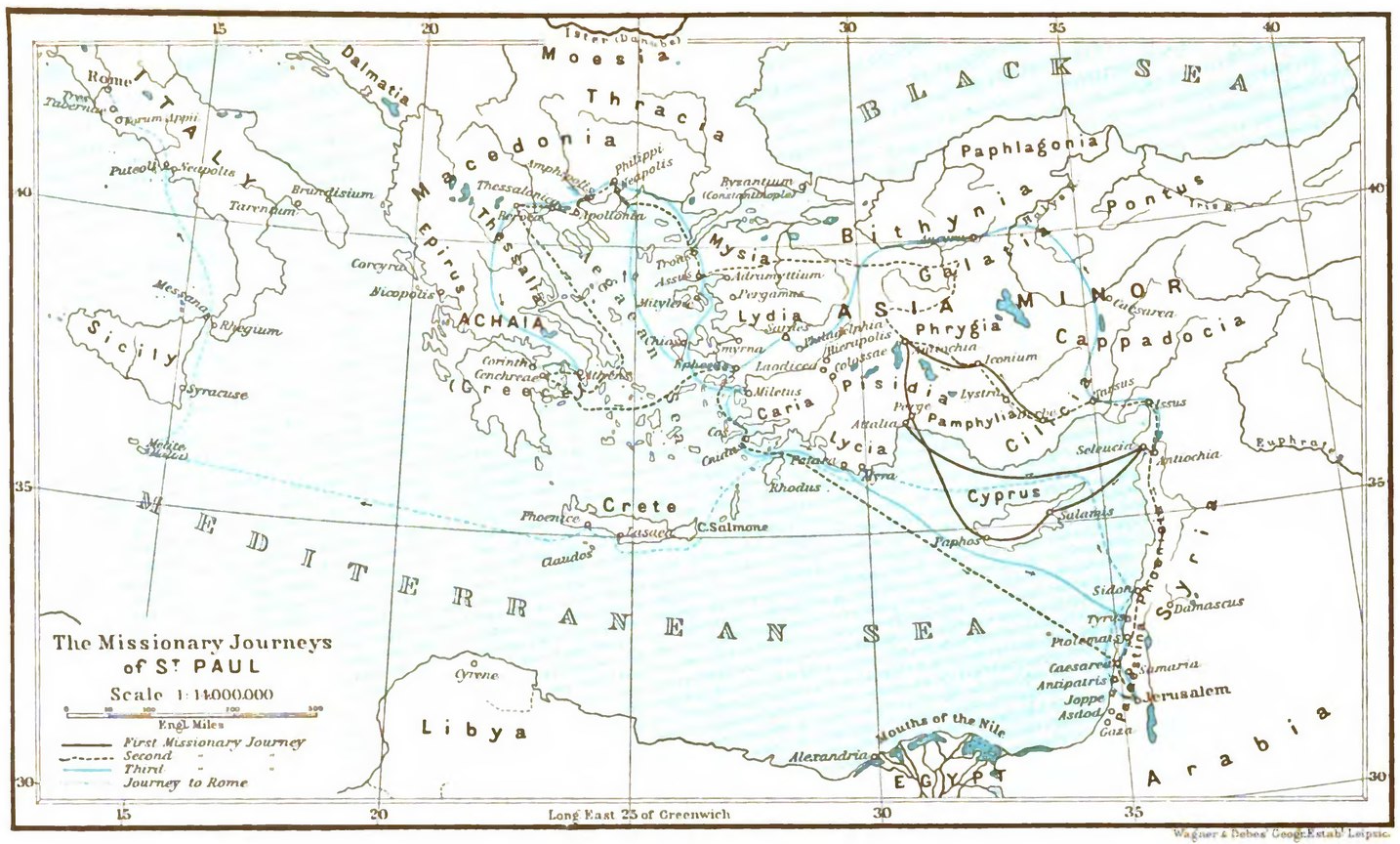
- F. J. Knecht, The Missionary Journeys of St. PaulFrom Practical Commentary on Holy Scripture. The journeys map on this page. Public domain.
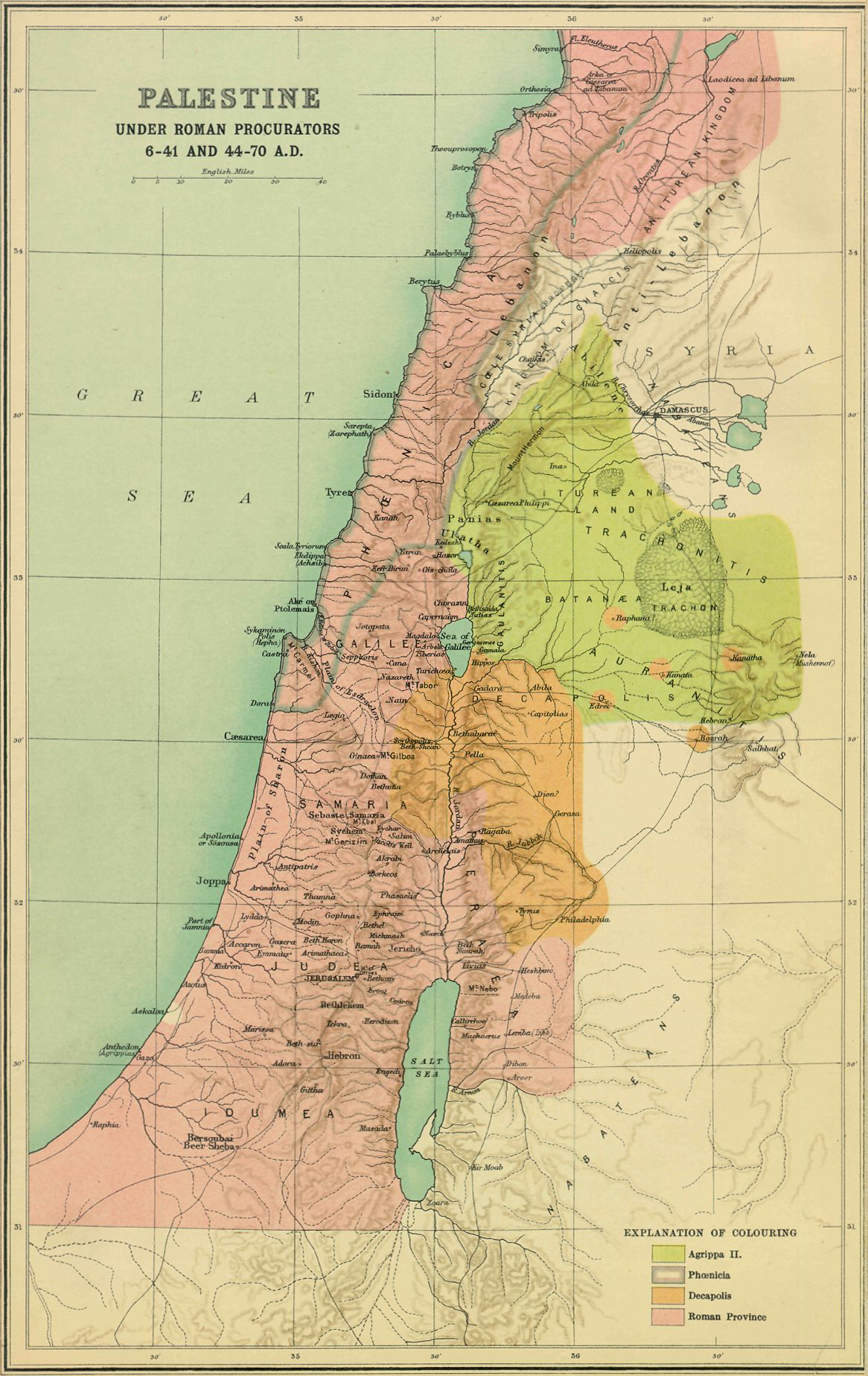
- George Adam Smith, Palestine Under the Roman ProcuratorsFrom Atlas of the Historical Geography of the Holy Land (1915). Public domain.
- William R. Shepherd, The Development of ChristianityFrom Historical Atlas (1923). Public domain.
- Clement of Rome, First Letter to the CorinthiansQuoted from chapter 5 beside 2 Timothy 4:6-8. The earliest surviving Christian writing outside the New Testament to speak of how Paul's life ended, and it names no manner of death. Named by century, because the year stored on patristic rows in the site's pool is usually the author's death year rather than the date of the work. Public domain translation.
- Ignatius of Antioch, Epistle to the Ephesians, and Eusebius of Caesarea, Ecclesiastical History 2.22Reported in the question on Paul's death. Ignatius, early in the second century, calls Paul the holy, the martyred. Eusebius, in the fourth century, reads 2 Timothy 4:6-18 as Paul foreseeing his own end. Neither describes an execution. Public domain translations.
- John Chrysostom, Homilies on the Acts of the ApostlesQuoted from Homily 19 on Acts 9:4. Public domain translation.
- Augustine of Hippo, Proceedings of PelagiusQuoted on 1 Corinthians 15:10, and reported on Galatians 2:11-14, where he reads the rebuke at Antioch as a real fault really rebuked. Public domain translation.
- Tertullian, On the Resurrection of the FleshReported on Acts 26:22, where he reads Paul's defense before Agrippa as continuity with the prophets rather than a break from them. Written in the early third century. Public domain translation.
- Theophylact of Ohrid, Commentaries on Acts, Galatians and 2 CorinthiansReported three times: on Acts 9:7 for the reading of what the companions saw and heard, on Galatians 2:11 for the older Eastern reading of the Antioch scene, and on 2 Corinthians 12:7 for his rejection of the headache reading of the thorn. Written in the eleventh century.
- John Calvin, Commentaries (1554)Quoted on Romans 11:1. Public domain.
- Cyril of Alexandria, Explanation of the Letter to the RomansQuoted on Romans 11:26. Written in the fifth century. Public domain translation.
- John Wesley, Explanatory Notes upon the New Testament (1755)Reported on Romans 11:25, where he concludes that Israel is neither totally nor finally rejected. Public domain.
- Charles H. Spurgeon, The New Park Street PulpitSermon No. 202, "The Conversion of Saul of Tarsus" (1858), quoted here on Acts 26:14. Public domain, CCEL edition.
- Jamieson, Fausset & Brown, Commentary Critical and Explanatory on the Whole Bible (1871)Quoted on Galatians 2:12. Public domain.
- The Damascus road, on this siteThe one story of this page told verse by verse, with the Acts 22 and Acts 26 retellings set beside Acts 9.
- The confrontation at Antioch, on this siteThe two ancient readings of Galatians 2:11-14, with the men who hold each. That page carries the argument in full and this one does not restate it.
- The rapture, on this siteThe timings plotted on one timeline of Daniel's seventieth week, each with its best case and its hardest problem, and this site's own tradition named. The question is open in Scripture and this page argues none of it.
- The Gallio Inscription, Delphi, GreeceA Greek inscription recording a rescript of the emperor Claudius naming Lucius Junius Gallio proconsul of Achaia, dated to about AD 52 and placing his term at about AD 51 to 52. Used in the question on outside evidence for Paul's stay in Corinth, Acts 18:12.
Keep studying
On this page
Studies20
On this person
On this passage
Trails6
On this subject
Every page that names them1
Books14
Show the next 6 titles
Doorway1
Keep this page