
Romans 8 · Trial 5 of 21 · Featured Study
Suffering
Suffering is the pain and loss a person bears in body, mind or circumstance, the anguish Paul set against the glory to come.
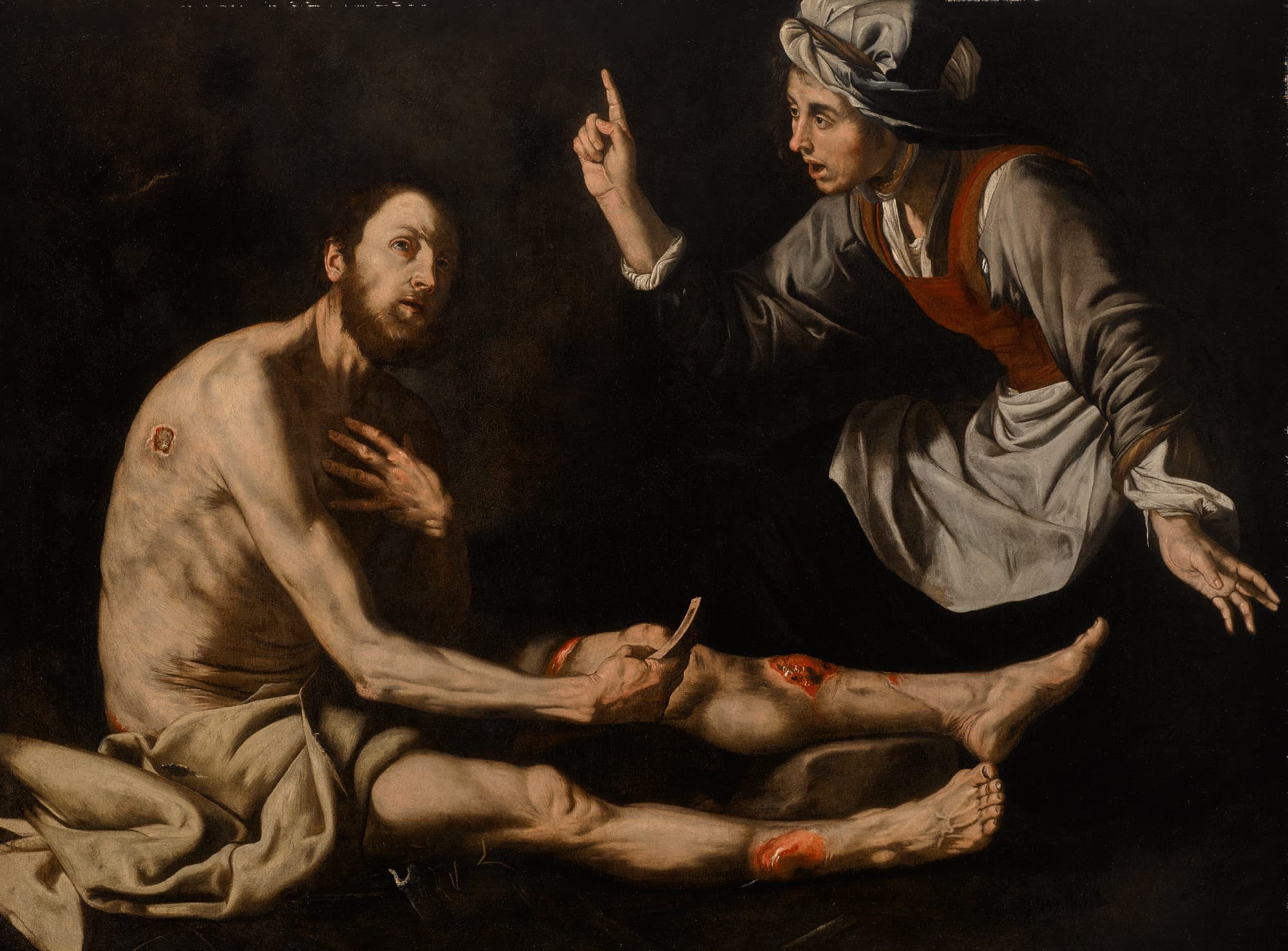
Job's three friends sat on the ground with him for seven days, and “no one spoke a word to him” (Job 2:13).
I consider that our present sufferings are not comparable to the glory that will be revealed in us.
- Anchor text
- Romans 8:18 “I consider that our present sufferings are…”
- The lament
- Psalm 22:1 to 2 “My God, my God, why have You forsaken…”
- Hold in memory
- Romans 8:18, Psalm 34:19
Summary
Job, Jeremiah and the psalmists brought their anguish to God in plain words, and Scripture keeps their prayers for every sufferer. It sets all suffering under the rule of God, who works good through it for those who love Him. At its center stands Christ, who bore suffering in His own body for His people. Its last pages promise a world in which pain has ended.
- God told Job's friends, who held that his losses proved hidden sin, that they had not spoken accurately about Him (Job 42:7).
- Peter told believers not to be surprised by a fiery trial, as though something strange were happening to them (1 Peter 4:12).
- Hebrews teaches that Christ is able to help those who suffer because He Himself suffered (Hebrews 2:18).
What Scripture Calls Suffering
The Hebrew and Greek words name trouble, affliction, pressure, hardship undergone and the act of suffering.
Suffering is one of the trials of life that a reader brings to Scripture. This study asks where suffering comes from in the Bible's own account, what God says to the one who suffers, and what a believer is given to do in it. It gives the Hebrew and Greek words for suffering, the texts Scripture sets at its center, its ground in the Fall and in God's rule, and what Christ bore. It also names the people and stories of the Bible who carry it, the church's voices across the centuries, and the questions on which readers disagree.
Tsarah, trouble
73 uses in the canon
The Hebrew noun tsarah (H6869) means tightness, and so trouble. A psalm calls God “an ever-present help in times of trouble.”
Oni, affliction
36 uses in the canon
The noun oni (H6040) names affliction and misery. At the burning bush the LORD said, “I have indeed seen the affliction of My people in Egypt.”
Thlipsis, pressure and tribulation
44 uses in the canon
The Greek noun thlipsis (G2347) means pressure, and so affliction. Paul told the Romans to be “patient in affliction, persistent in prayer.”
Pathema, what is undergone
16 uses in the canon
The noun pathema (G3804) names something undergone, a hardship or a pain. Peter told his readers that “your brothers throughout the world are undergoing the same kinds of suffering.”
Pascho, to suffer
42 uses in the canon
The verb pascho (G3958) means to undergo something painful. Of Paul the Lord told Ananias, “I will show him how much he must suffer for My name.”
Tsarah, trouble, Oni, affliction, Thlipsis, pressure and tribulation, Pathema, what is undergone, Pascho, to suffer, The Words Pathema and Thlipsis, the study in brief
The Key Texts on Suffering
A lament, the wisdom books, a prophet, a letter and Revelation each speak to the one who suffers.
Lament
For the Lord will not cast us off forever. Even if He causes grief, He will show compassion according to His abundant loving devotion. For He does not willingly afflict or grieve the sons of men.
This lament grieves over a ruined city and still holds that God does not afflict willingly.
Wisdom
saying: “Naked I came from my mother’s womb, and naked I will return. The LORD gave, and the LORD has taken away. Blessed be the name of the LORD.”
Job blessed the name of the LORD on the day he lost his children and his flocks.
Job 1:21BSB
Wisdom
Many are the afflictions of the righteous, but the LORD delivers him from them all.
The psalm counts affliction as ordinary for the righteous and names the LORD as the one who delivers.
Psalm 34:19BSB
Prophets
When you pass through the waters, I will be with you; and when you go through the rivers, they will not overwhelm you. When you walk through the fire, you will not be scorched; the flames will not set you ablaze.
This promise stands here because it gives the sufferer God's presence in the trial itself.
Isaiah 43:2BSB
Letters
For our light and momentary affliction is producing for us an eternal weight of glory that is far beyond comparison.
Paul, who was beaten, stoned and shipwrecked, weighs his own afflictions here.
Revelation
‘He will wipe away every tear from their eyes,’ and there will be no more death or mourning or crying or pain, for the former things have passed away.”
This verse stands last because Scripture's final word on suffering is its end.
Job 1:21, Psalm 34:19, Isaiah 43:2, 2 Corinthians 4:17, Revelation 21:4
Where Suffering Comes From, and What Christ Bore
Genesis, the Gospels and the letters name five sources of pain, and the section ends with what Christ Himself bore.
After Adam and Eve ate from the forbidden tree, God told the woman, “in pain you will bring forth children” (Genesis 3:16), and He spoke a curse over the ground to the man.
And to Adam He said: “Because you have listened to the voice of your wife and have eaten from the tree of which I commanded you not to eat, cursed is the ground because of you; through toil you will eat of it all the days of your life.The curse on the ground is Scripture's first word on why work became toil.
We know that the whole creation has been groaning together in the pains of childbirth until the present time.Paul widens the curse beyond humanity to everything God made.
Then should not this daughter of Abraham, whom Satan has kept bound for eighteen long years, be released from her bondage on the Sabbath day?”This verse stands here because Jesus Himself named the enemy behind a woman's long illness.
For if anyone endures the pain of unjust suffering because he is conscious of God, this is to be commended.This verse stands here because some pain comes from the wrongs of other people.
Before I was afflicted, I went astray; but now I keep Your word.This verse stands here because the psalmist says his affliction turned him back from straying.
Scripture refuses to make that the rule for every case.
and His disciples asked Him, “Rabbi, who sinned, this man or his parents, that he was born blind?” Jesus answered, “Neither this man nor his parents sinned, but this happened so that the works of God would be displayed in him.This answer stands here because it refuses the rule that Job's friends held.
Who has spoken and it came to pass, unless the Lord has ordained it? Do not both adversity and good come from the mouth of the Most High?This verse stands here because it sets every source of pain under God's rule.
And we know that God works all things together for the good of those who love Him, who are called according to His purpose.Paul places every trial within the purpose of God for His people.
Christ Himself bore suffering. Isaiah, the Gospels, Peter and Hebrews show what He bore in His own body and how He helps those who suffer now.
The Man of Sorrows foretoldIsaiah 53
Isaiah describes a Servant of the LORD who is rejected, wounded and crushed for the sins of others. When an Ethiopian official read the chapter, Philip “began with this very Scripture and told him the good news about Jesus” (Acts 8:35).
He was despised and rejected by men, a man of sorrows, acquainted with grief. Like one from whom men hide their faces, He was despised, and we esteemed Him not.
Isaiah 53:3BSB Isaiah names the Servant a man of sorrows before any word of His victory.
Sorrow to the point of deathMatthew 26
In Gethsemane Jesus took Peter and the two sons of Zebedee with Him “and began to be sorrowful and deeply distressed” (Matthew 26:37).
Then He said to them, “My soul is consumed with sorrow to the point of death. Stay here and keep watch with Me.”
Matthew 26:38BSB Jesus speaks His own anguish to His friends on the night He was betrayed.
The cry from the crossMatthew 27
At the ninth hour Jesus prayed the opening line of Psalm 22 in His own tongue, and Matthew gives its meaning.
About the ninth hour Jesus cried out in a loud voice, “Eli, Eli, lema sabachthani?” which means, “My God, My God, why have You forsaken Me?”
Matthew 27:46BSB The Son takes the lament of the forsaken onto His own lips at the cross.
Read the study of The Crucifixion 12 sections, 12 verses set out
He suffered for us1 Peter 2
Peter wrote to believers who suffered unjustly and pointed them to Christ, who “Himself bore our sins in His body on the tree” (1 Peter 2:24).
For to this you were called, because Christ also suffered for you, leaving you an example, that you should follow in His footsteps:
1 Peter 2:21BSB Peter joins the suffering Christ bore for His people to the example He left them.
Read the study of Christ Who Suffered for Us 8 sections, 7 verses set out
The High Priest who sympathizesHebrews 4
Hebrews says that Christ was made like His brothers in every way, so that He might become a merciful and faithful high priest (Hebrews 2:17).
For we do not have a high priest who is unable to sympathize with our weaknesses, but we have one who was tempted in every way that we are, yet was without sin.
Hebrews 4:15BSB The letter tells sufferers that their High Priest knows weakness from the inside.
Sorrow to the point of death (Matthew 26), The cry from the cross (Matthew 27), He suffered for us (1 Peter 2), The High Priest who sympathizes (Hebrews 4)
Luke 13:16, 1 Peter 2:19, Psalm 119:67, John 9:2 to 3, Lamentations 3:37 to 38, Romans 8:28, Isaiah 53:3, Matthew 26:38 and 3 more
The Fall & the Protoevangelium, the study in brief, Romans 8:22, the study in brief, Luke 13:16, 1 Peter 2:19, Psalm 119:67, John 9:2 to 3, Lamentations 3:37 to 38 and 7 more
Who Walked Through Suffering
Five people of the Bible carried suffering in a barren womb, a prophet's sorrow, a mother's grief, a mortal sickness and a martyr's death.
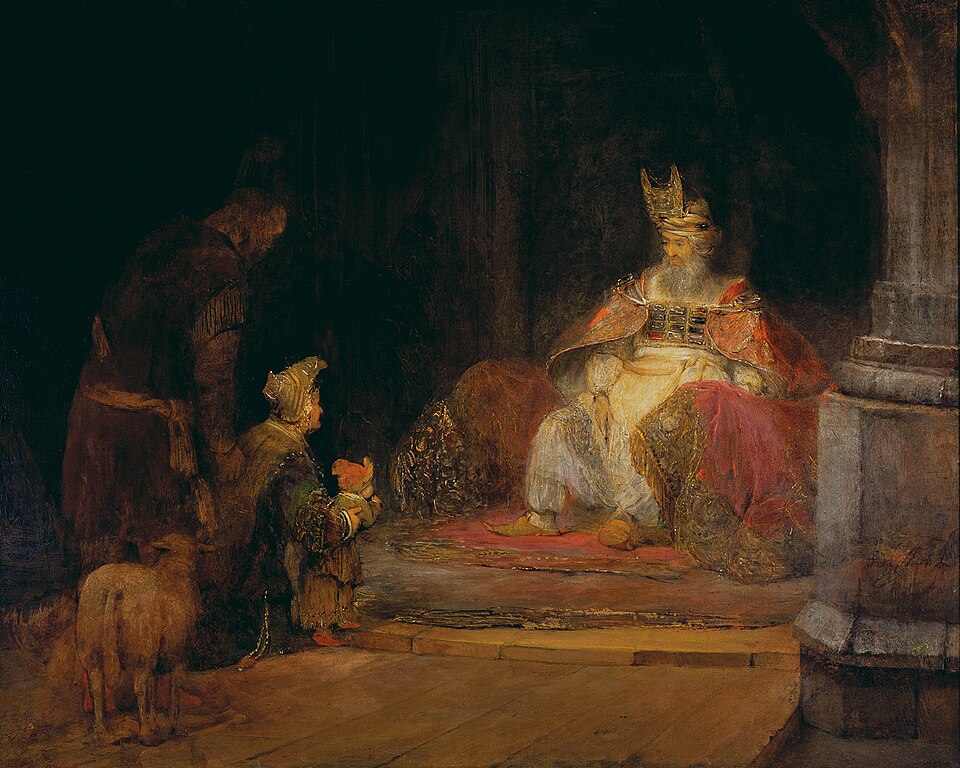
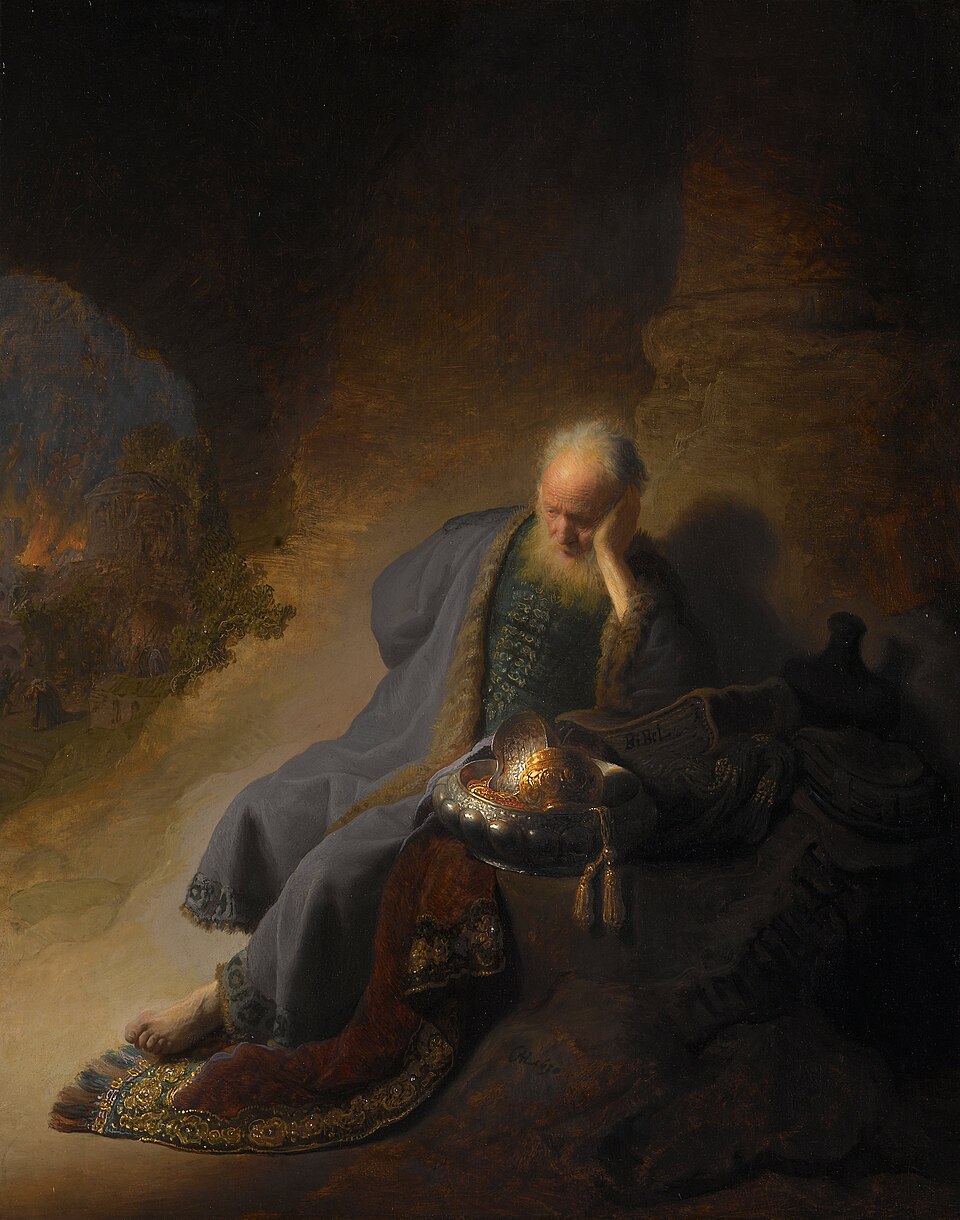
He asked, “Why did I come out of the womb to see only trouble and sorrow, and to end my days in shame?”
Jeremiah 20:18
Simeon told her in the temple that “a sword will pierce your soul as well.”
Luke 2:35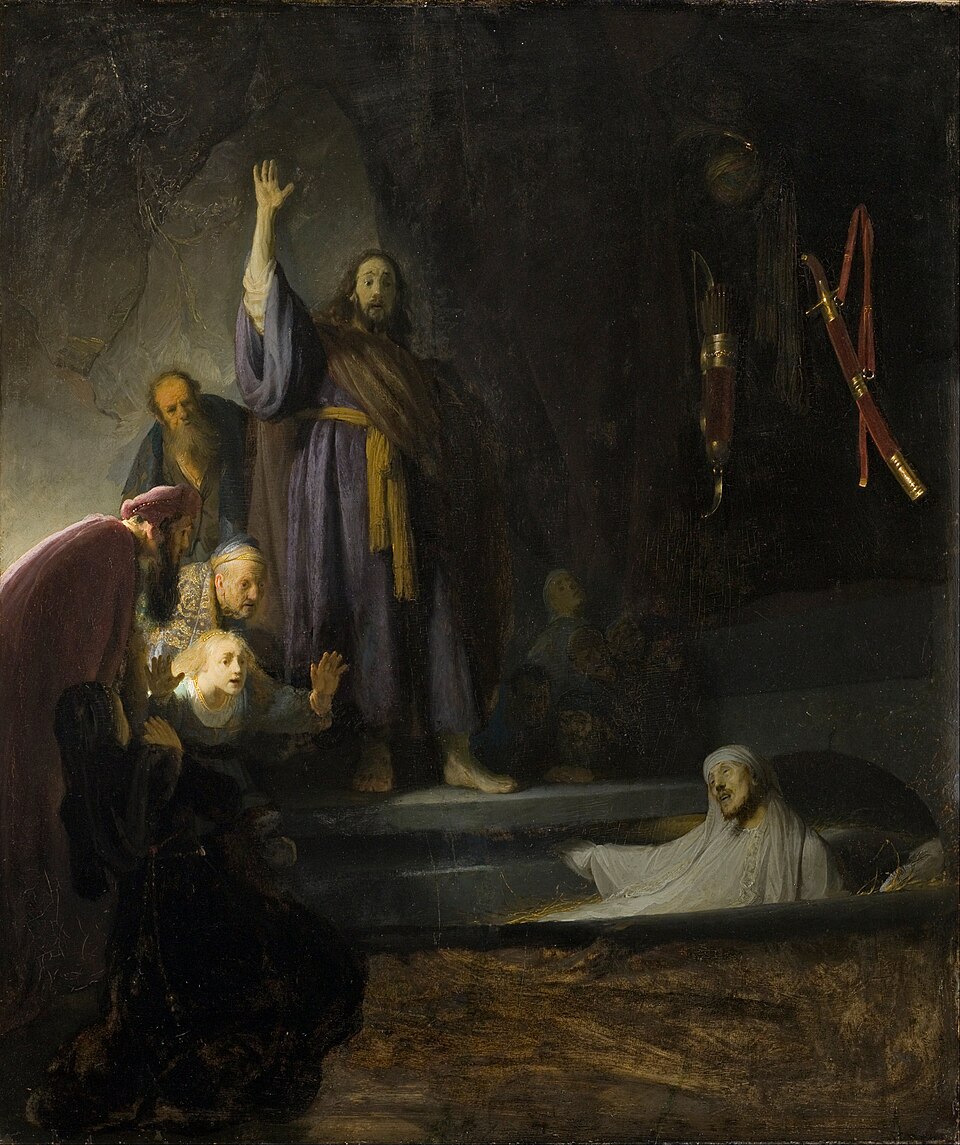
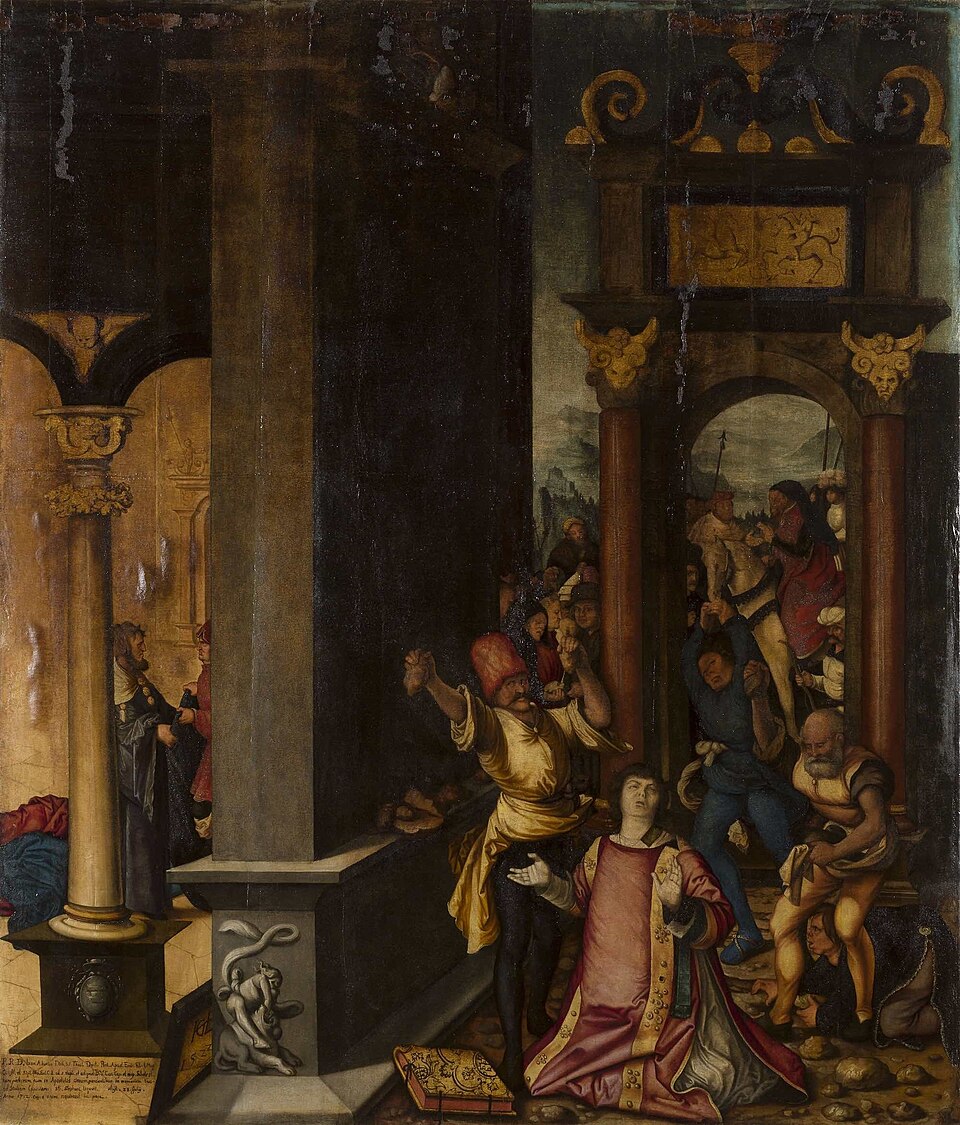
Mary, Mother of Jesus, Lazarus, Stephen
What Scripture Gives the Sufferer to Do
Scripture names seven things to do in suffering, each in the words of the verse that gives it.
- 1Pour out your heart to God“Trust in Him at all times, O people; pour out your hearts before Him. God is our refuge.”Psalm 62:8
- 2Pray in the suffering“Is any one of you suffering? He should pray.”James 5:13
- 3Cast the burden on the LORD“Cast your burden upon the LORD and He will sustain you”Psalm 55:22
- 4Confess sin where sin is the cause“Then I acknowledged my sin to You and did not hide my iniquity.”Psalm 32:5
- 5Wait for the LORD“Wait patiently for the LORD; be strong and courageous.”Psalm 27:14
- 6Entrust your soul to God and keep doing good“those who suffer according to God’s will should entrust their souls to their faithful Creator and continue to do good.”1 Peter 4:19
- 7Comfort others as you were comfortedGod “comforts us in all our troubles, so that we can comfort those in any trouble with the comfort we ourselves have received from God.”2 Corinthians 1:4
Pray in the suffering, Cast the burden on the LORD, Confess sin where sin is the cause, Wait for the LORD, Entrust your soul to God and keep doing good, Comfort others as you were comforted
Where suffering is an illness of the body or the mind, a doctor's care stands beside prayer and never in its place. Paul told Timothy to use a little wine “because of your stomach and your frequent ailments” (1 Timothy 5:23).
The Lament of Psalm 22
Psalm 22 voices the cry of one who feels forsaken by God and turns to praise that God has heard.
Psalm 22 moves from a cry that God does not answer to the scorn of those who mock and a body poured out like water. It ends in the vow “I will praise You in the assembly” (Psalm 22:22).
My God, my God, why have You forsaken me? Why are You so far from saving me, so far from my words of groaning? I cry out by day, O my God, but You do not answer, and by night, but I have no rest.These verses give a sufferer words for the hours when God seems silent.
For He has not despised or detested the torment of the afflicted. He has not hidden His face from him, but has attended to his cry for help.This verse is the turn of the psalm, where the cry becomes praise.
Psalm 22:1 to 2, Psalm 22:24
Suffering in the Stories of the Bible
Three stories tell of a blameless man stripped of everything, a brother sold into slavery and an apostle given a thorn in the flesh.
Job on the ash heapJob 1 to 42
In one day Job lost his oxen, donkeys, sheep and camels, his servants, and his sons and daughters when a wind struck the house where they were eating (Job 1:13 to 19). Then Satan infected him with terrible boils. His three friends insisted that he must have sinned. God answered Job out of the whirlwind, and Job's last words to Him tell what changed.
My ears had heard of You, but now my eyes have seen You.
Job 42:5BSB Job's answer closes the book's long argument with his own sight of God.
Joseph sold by his brothersGenesis 37 to 50
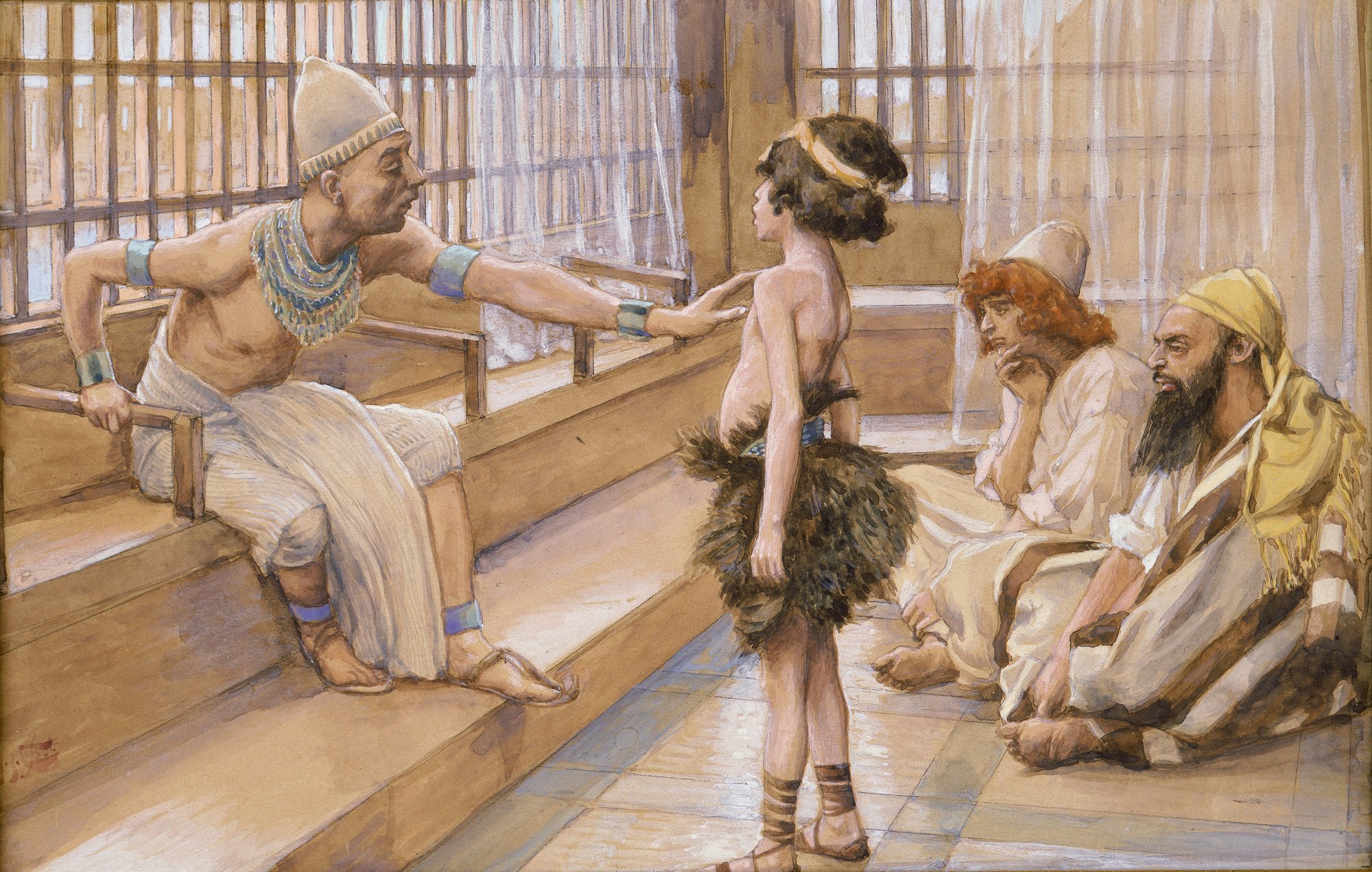
Joseph's brothers sold him “for twenty shekels of silver to the Ishmaelites, who took him to Egypt” (Genesis 37:28). There he was falsely accused and put in prison, where the cupbearer he had helped “forgot all about him” (Genesis 40:23). He rose to rule over Egypt, and after their father died he spoke to his brothers of what God had done with their evil.
As for you, what you intended against me for evil, God intended for good, in order to accomplish a day like this—to preserve the lives of many people.
Genesis 50:20BSB Joseph names two intentions in one act, the brothers' evil and God's good.
Read the story of Joseph: Meant for Good 7 sections, 6 verses set out
Paul's thorn in the flesh2 Corinthians 12
After great revelations Paul was given “a thorn in my flesh, a messenger of Satan, to torment me” (2 Corinthians 12:7). “Three times I pleaded with the Lord to take it away from me,” he wrote (2 Corinthians 12:8), and the thorn remained.
But He said to me, “My grace is sufficient for you, for My power is perfected in weakness.” Therefore I will boast all the more gladly in my weaknesses, so that the power of Christ may rest on me.
2 Corinthians 12:9BSB The Lord's answer to Paul's prayer gives grace in place of removal.
Read the story of Paul's Thorn 9 sections, 10 verses set out
Joseph sold by his brothers (Genesis 37 to 50), Paul's thorn in the flesh (2 Corinthians 12)
Suffering in the Church's History
Three accounts tell of Polycarp before a proconsul, Augustine after the sack of Rome and Rutherford in exile at Aberdeen.
Polycarp in the stadium at Smyrna2nd century
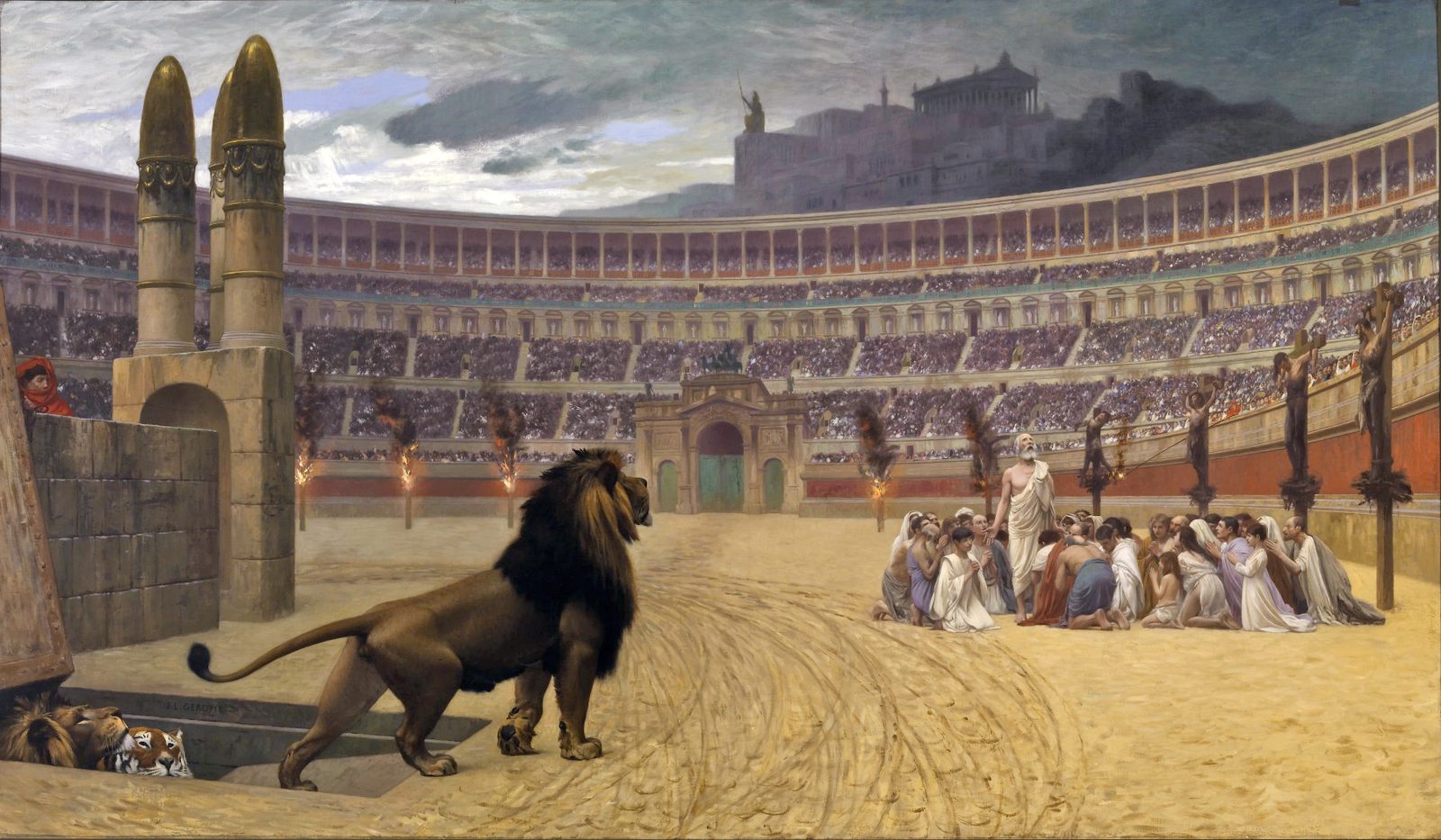
When the aged bishop Polycarp was brought into the stadium at Smyrna, the proconsul told him to reproach Christ and go free. Polycarp answered, “Eighty and six years have I served Him, and He never did me any injury: how then can I blaspheme my King and my Saviour?”
Augustine and the sack of Rome410
When Alaric the Visigoth sacked Rome in 410, pagans blamed the disaster on the Christian religion. Augustine answered them in the first book of The City of God.
Samuel Rutherford in Aberdeen1636
In 1636 the Scottish minister Samuel Rutherford was deprived of his ministry and banished to Aberdeen, until the Kirk Assembly restored him in 1638. To John Ewart he wrote of Christ, “His cross is the sweetest burden that ever I bare; it is such a burden as wings are to a bird, or sails are to a ship, to carry me forward to my harbor.”
Augustine and the sack of Rome (410), Samuel Rutherford in Aberdeen (1636)
Voices on Suffering, by Century
Five quotations from the second century to the nineteenth, each under the line it teaches.
died 108 · Ignatius of Antioch
Epistle of Ignatius to the Trallians
A second-century reading: believers are to imitate the sufferings and the love of Christ, who gave Himself as a ransom.
The quotation1 quotation
“Do ye therefore, clothing yourselves with meekness, become the imitators of His sufferings, and of His love, wherewith He loved us when He gave Himself a ransom for us, that He might cleanse us by His blood from our old ungodliness, and bestow life on us when we were almost on the point of perishing through the depravity that was in us.”
Ignatius of Antioch · Epistle of Ignatius to the Trallians · on Ephesians 2:4Patristic
died 253 · Origen of Alexandria
EXHORTATION TO MARTYRDOM 39
A third-century reading: the grief of 1 Peter 1:6 means suffering, as a woman suffers before a birth.
The quotation1 quotation
“Read ‘grieve’ in this verse in the sense of ‘suffer,’ as in ‘in grief you shall bring forth children.’ For a woman experiences grief not in bearing children but rather in suffering before birth.”
Origen of Alexandria · Exhortation to Martyrdom 39 · on 1 Peter 1:6Patristic
died 444 · Cyril of Alexandria
Catena Aurea by Aquinas
A fifth-century reading: the narrow gate stands for the toils and sufferings of the saints, and enduring them makes a person strong.
The quotation1 quotation
“The narrow gate also represents the toils and sufferings of the saints. For as a victory in battle bears witness to the strength of the soldiers, so a courageous endurance of labours and temptations will make a man strong. Now our Lord does not seem to satisfy him who asked whether there are few that be saved, when He declares the way by which man may become righteous.”
Cyril of Alexandria · Catena Aurea by Aquinas · on Luke 13:23 to 24Patristic
1662 to 1714 · Matthew Henry
Commentary on the Whole Bible
An eighteenth-century reading: present sufferings are small and short beside a glory that is eternal.
The quotation1 quotation
“They cannot merit that glory; and, if suffering for Christ will not merit, much less will doing. They should not at all deter and frighten us from the diligent and earnest pursuit of that glory. The sufferings are small and short, and concern the body only; but the glory is rich and great, and concerns the soul, and is eternal.”
Matthew Henry · Commentary on the Whole Bible · on Romans 8:18Puritan
1816 to 1900 · J.C. Ryle
Expository Thoughts on the Gospels: Mark (lightly modernized text, Grace Gems edition)
A nineteenth-century reading: the sufferings of Christ show His love toward sinners, since the sufferer was the eternal Son of God.
The quotation1 quotation
“The passage we have now read, is one of those which show us the infinite love of Christ toward sinners. The sufferings described in it would fill our minds with mingled horror and compassion, if they had been inflicted on one who was only a man like ourselves. But when we reflect that the sufferer was the eternal Son of God, we are lost in wonder and amazement.”
J.C. Ryle · Expository Thoughts on the Gospels: Mark (lightly modernized text, Grace Gems edition) · on Mark 15:16 to 32Reformed Evangelical
Cyril of Alexandria, Matthew Henry, J.C. Ryle
How Suffering Has Been Taught
The Imitation of Christ and John Calvin's Institutes taught how a believer bears the cross.
The Imitation of Christ called the cross the royal way that every believer walks.1 paragraph
The Imitation of Christ, attributed to Thomas à Kempis and translated by William Benham, gives a chapter of its second book to “the royal way of the Holy Cross”. It says that no one escapes the cross, which comes as pain of the body or as trouble of the soul. It holds that the one who has suffered understands the Passion of Christ best, and that the cross borne willingly carries the one who bears it. Its praise of the cross begins, “In the Cross is health, in the Cross is life”.
Calvin taught that a believer under the cross still feels pain and may grieve.1 paragraph
John Calvin took up grief in the Institutes of the Christian Religion (book 3, chapter 8, translated by Henry Beveridge). He wrote that the cheerfulness asked of believers “does not imply a total insensibility to pain.” He rejected the Christians who held it wrong to grieve, calling them “a new kind of Stoics”. He pointed to Christ, who “both grieved and shed tears for his own and others' woes.”
The Studies of Suffering
Each study takes one part of suffering into more depth.
The texts
3 studies
- Debates · 4 verses set outWhy Does God Allow Suffering?
Christians have answered the problem of suffering with free will, with the growth of souls, and with God's reply to Job.
- Doctrines · 7 verses set outChrist Who Suffered for Us
First Peter 2 and Hebrews 2 teach why Christ suffered and what His suffering means for those who suffer now.
- Passages and psalms · 2 verses set outTrials of Many Kinds
James 1:2 to 4 and 1 Peter 1:6 to 7 call believers to rejoice when their faith is tested by trials.
- Debates · 4 verses set outWhy Does God Allow Suffering?
The stories
1 study
- Stories · 6 verses set outJoseph: Meant for Good
The scene of Genesis 50:15 to 21 falls in the last chapter of the account of Jacob's line, which opens at Genesis 37:2.
- Stories · 6 verses set outJoseph: Meant for Good
The words
1 study
- Symbols and words · 8 verses set outThe Words Pathema and Thlipsis
Pathema stands only in the letters, from Romans to 1 Peter, while thlipsis runs from the Gospels to Revelation.
- Symbols and words · 8 verses set outThe Words Pathema and Thlipsis
The practice
1 study
- Doctrines · 11 verses set outSuffering as a Christian
The name Christian in Acts and 1 Peter, and what the churches of Asia Minor faced from Nero to Pliny.
- Doctrines · 11 verses set outSuffering as a Christian
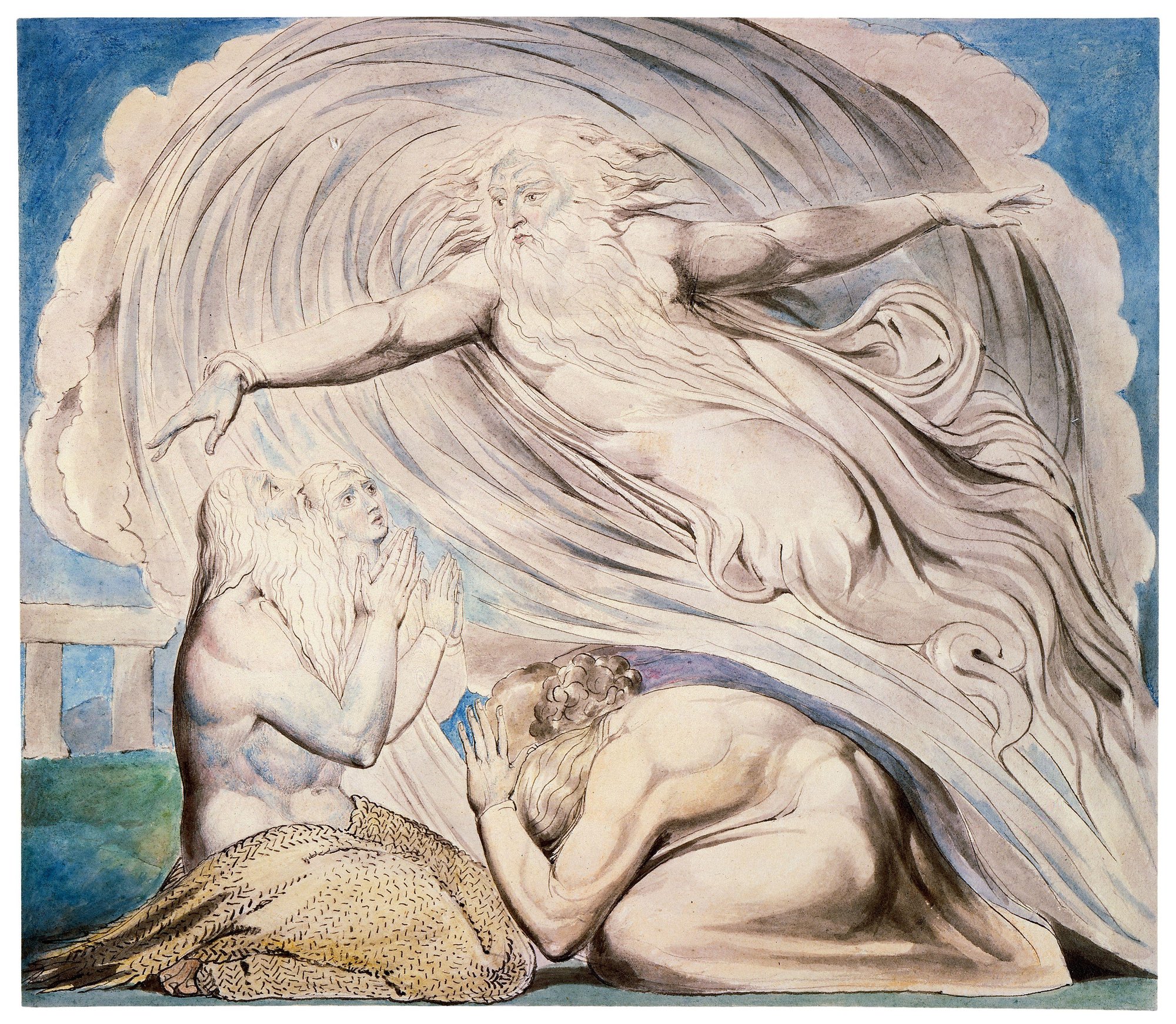
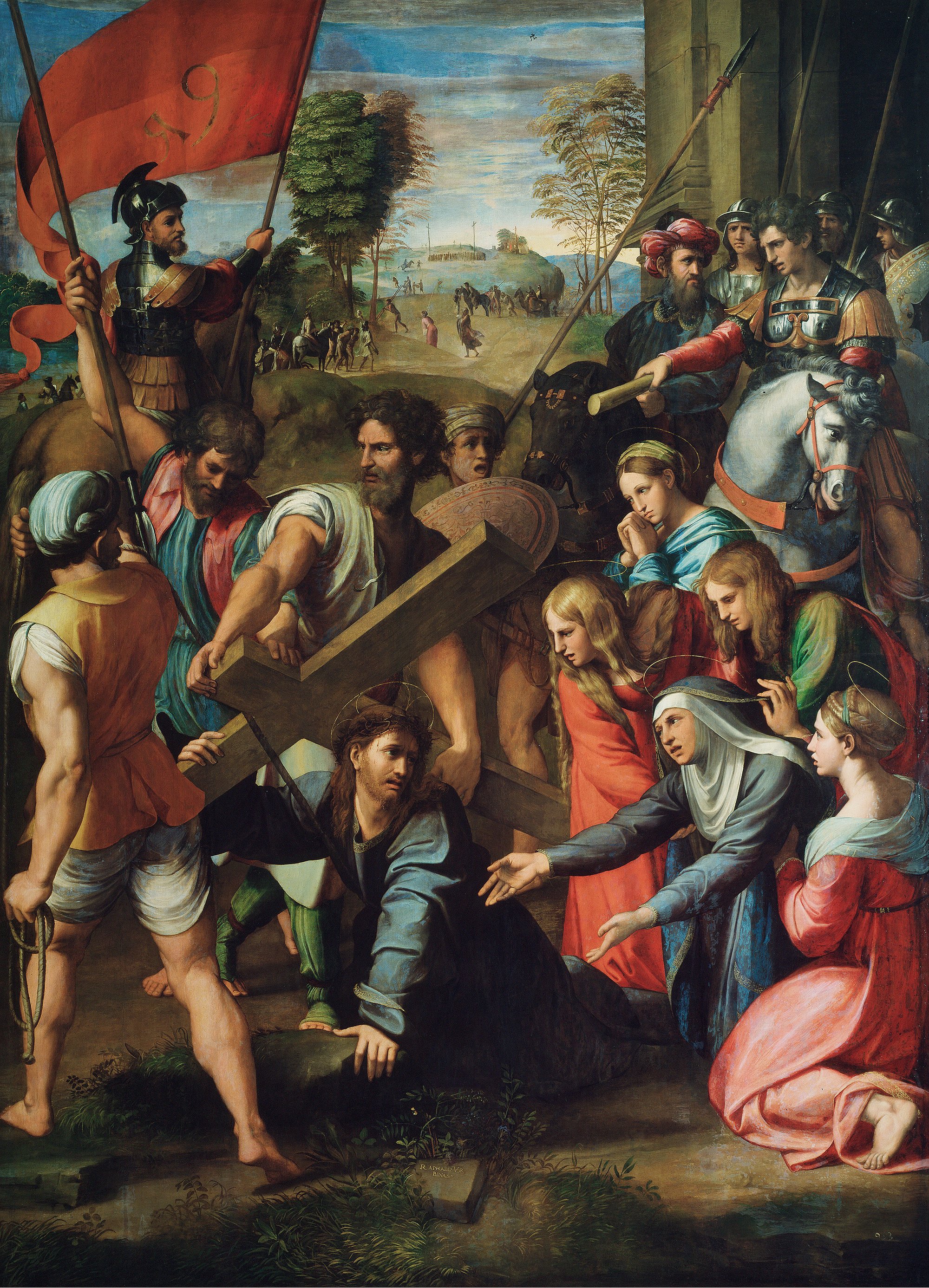
Christ Who Suffered for Us, Trials of Many Kinds, Joseph: Meant for Good, The Words Pathema and Thlipsis, Suffering as a Christian
Where Readers Disagree
Six readings answer three questions, each with its holder, the work that argues it and the objection raised against it.
Whether suffering repays the sufferer's own sin
| Reading | Held by | Work | Objection |
|---|---|---|---|
| Affliction comes from our own sins, and God is never to be blamed for it | Cyril of Jerusalem (Greek patristic writing) | Cyril of Jerusalem, Sermon on the Paralytic 17 | Jesus said of the man born blind that neither he nor his parents had sinned (John 9:3). |
| The righteous suffer affliction for a time to be purified, while the wicked face lasting woe | Gregory the Great (Latin patristic writing) | Gregory the Great, Morals on the Book of Job, book 9, on Job 10:15 | Paul told the Corinthians that many of them were weak and sick because they ate the Lord's Supper in an unworthy way (1 Corinthians 11:30), so some suffering does follow sin. |
Why God allows suffering
Read the debate Why Does God Allow Suffering? 7 sections, 4 verses set out
| Reading | Held by | Work | Objection |
|---|---|---|---|
| The same affliction proves and purges the good and ruins the wicked, so what matters is who suffers | Augustine of Hippo (Latin patristic writing) | Augustine, The City of God, book 1, chapter 8 (translated by Marcus Dods, 1887) | Hebrews calls the hardship of believers the discipline of a Father who loves them (Hebrews 12:6 to 7), which ties it to their correction as well as to their testing. |
| Humanity was made as an infant and must grow toward God through what it undergoes | Irenaeus (Greek patristic writing) | Irenaeus, Against Heresies, book 4, chapter 38 (translated by Alexander Roberts and William Rambaut) | Scripture traces pain and toil to the curse that followed sin (Genesis 3:17), and not to the first making of humanity. |
What Paul fills up in Christ's afflictions (Colossians 1:24)
| Reading | Held by | Work | Objection |
|---|---|---|---|
| Afflictions borne in Christ's body, which is the Church | Tertullian (Latin patristic writing) | Tertullian, Against Marcion, book 5, on Colossians 1:24 | Paul writes of sufferings in his own flesh and for the Colossians, so the verse speaks first of his sufferings as an apostle. |
| Paul's sufferings conform him to Christ as wax fills the hollows of a seal | Matthew Henry (English Presbyterian) | Matthew Henry, Commentary on the Whole Bible (1710), on Colossians 1:24 | Other readers hold that Paul names a real share in the afflictions of Christ, which is more than conformity to His pattern. |
Every Text on Suffering
The essays and verses of the older subject pages on suffering, in their own words.
The subject page's essay, from /tag/suffering4 paragraphs
Suffering enters the story at the Fall, and Scripture never argues it away. Genesis 3 turns childbirth into pain and labor into toil, and the rest of the Old Testament treats hardship as the ordinary texture of life east of Eden rather than an anomaly. Job is the canon's sustained case study: a righteous man loses everything, his friends insist the loss must be payment for hidden sin, and the book systematically dismantles that retribution theology without supplying a tidy replacement. God's answer from the whirlwind is not an explanation but a confrontation with His own greatness; Job's resolution comes relationally ("now mine eye seeth thee," Job 42:5), not theoretically. The Psalms carry the same honesty into worship, alternating lament and trust in the same breath (Psalm 22; Psalm 34:19), and Isaiah 53 pushes suffering to its sharpest point: a Servant of the LORD who is despised, stricken, and "bruised for our iniquities," whose suffering is not merely endured but purposeful and substitutionary.
The Gospels present Jesus as both the fulfillment of that Servant figure and its clearest teacher. He predicts His own suffering repeatedly and treats it as necessary rather than accidental (Mark 8:31; Luke 24:26; "Behooved it not the Christ to suffer these things, and to enter into his glory?"). Gethsemane shows the cost held inside real human will (Matthew 26:39), and the cross itself is where Isaiah 53 lands in history. Christ's suffering does double duty in the New Testament: it is substitutionary (done for sinners, once, sufficient) and it is exemplary, a pattern disciples are called to walk in (1 Peter 2:21; Matthew 16:24, "take up his cross"). The two are never confused; only His suffering atones, but His suffering also becomes the shape every subsequent chapter reads suffering through.
The epistles turn that pattern into a working theology for the church. Paul treats suffering as normal Christian experience, not exceptional (Acts 14:22; Romans 8:18), sees it as productive rather than merely survived (Romans 5:3, tribulation working perseverance), and frames it as participation in Christ rather than isolation from Him (Philippians 3:10, "the fellowship of his sufferings"; Colossians 1:24). Suffering also becomes the occasion for a ministry of comfort passed from the comforted to the still-suffering (2 Corinthians 1:4), and for grace proven adequate precisely where strength runs out (2 Corinthians 12:9). James and Peter add the testing motif: trials prove whether faith is genuine (James 1:2–4; 1 Peter 1:6–7), and Peter names present suffering "the fiery trial" believers should expect, not one that catches them by surprise (1 Peter 4:12).
The canon answers suffering with several true answers at once, and holds them all. Job's friends' mechanical cause-and-effect theology is explicitly rejected by the book itself; not all suffering is discipline for sin, and Job, Paul's thorn in 2 Corinthians 12, and Christ's own innocent suffering all stand as scriptural refutations of that reflex: the point Matthew Henry presses in his Commentary on the Whole Bible on Job 42, and Gregory the Great spends thirty-five books on in the Moralia in Job. At the same time, Scripture does affirm real purposes in suffering (refining faith, producing endurance, conforming believers to Christ), without claiming to have named every purpose in every case. The honest tension is between the church's confidence that God works good through suffering (Romans 8:28) and the same church's honest confession that it does not always know how, or why a given affliction remains unresolved this side of eternity. Revelation 21:4 does not explain suffering; it ends it ("death shall be no more; neither shall there be mourning, nor crying, nor pain, any more") and that eschatological horizon, not a philosophical resolution, is where the biblical treatment of suffering finally rests. The full study: Not Why, Who, and the Suffering Servant.
The topic's summary, from /topics/suffering1 paragraph
Suffering in Scripture is not explained away but inhabited — by Job, by the psalms of lament, by the prophets, by the Suffering Servant of Isaiah 53, and finally by Christ on the cross. The Bible holds suffering together with the character of God without simplifying either. Every mature biblical response teaches the sufferer to speak honestly and to wait.
The theme's essay, from /themes/suffering4 paragraphs
Suffering enters the story at the Fall. Genesis 3 turns childbirth into pain and labor into toil, and the rest of the Old Testament treats hardship as the ordinary texture of life east of Eden rather than an anomaly to be argued away. Job is the canon's sustained case study: a righteous man loses everything, his friends insist the loss must be payment for hidden sin, and the book systematically dismantles that retribution theology without supplying a tidy replacement. God's answer from the whirlwind is not an explanation but a confrontation with His own greatness — Job's resolution comes relationally ("now mine eye seeth thee," Job 42:5), not theoretically. The Psalms carry the same honesty into worship, alternating lament and trust in the same breath (Psalm 22; Psalm 34:19), and Isaiah 53 pushes suffering to its sharpest point: a Servant of the LORD who is despised, stricken, and "bruised for our iniquities," whose suffering is not merely endured but purposeful and substitutionary.
The Gospels present Jesus as both the fulfillment of that Servant figure and its clearest teacher. He predicts his own suffering repeatedly and treats it as necessary rather than accidental (Mark 8:31; Luke 24:26 — "Behooved it not the Christ to suffer these things, and to enter into his glory?"). Gethsemane shows the cost held inside real human will (Matthew 26:39), and the cross itself is where Isaiah 53 lands in history. Christ's suffering does double duty in the New Testament: it is substitutionary — done for sinners, once, sufficient — and it is exemplary, a pattern disciples are called to walk in (1 Peter 2:21; Matthew 16:24, "take up his cross"). The two are not confused with each other; only His suffering atones, but His suffering also becomes the shape every subsequent chapter reads suffering through.
The epistles turn that pattern into a working theology for the church. Paul treats suffering as normal Christian experience, not exceptional (Acts 14:22; Romans 8:18), sees it as productive rather than merely survived (Romans 5:3, tribulation working perseverance), and frames it as participation in Christ rather than isolation from Him (Philippians 3:10, "the fellowship of his sufferings"; Colossians 1:24). Suffering also becomes the occasion for a ministry of comfort passed from the comforted to the still-suffering (2 Corinthians 1:4), and for grace proven adequate precisely where strength runs out (2 Corinthians 12:9). James and Peter add the testing motif: trials are not merely endured but examined, since they prove whether faith is genuine (James 1:2–4; 1 Peter 1:6–7), and Peter names present suffering "the fiery trial" believers should expect, not one that catches them by surprise (1 Peter 4:12).
The canon answers suffering with several true answers at once, and holds them all. Job's friends' mechanical cause-and-effect theology is explicitly rejected by the book itself; not all suffering is discipline for sin, and Job, Paul's thorn in 2 Corinthians 12, and Christ's own innocent suffering all stand as scriptural refutations of that reflex. At the same time, Scripture does affirm real purposes in suffering — refining faith, producing endurance, conforming believers to Christ — without claiming to have named every purpose in every case. The honest tension is between the church's confidence that God works good through suffering (Romans 8:28) and the same church's honest confession that it does not always know how, or why a given affliction remains unresolved this side of eternity. Revelation 21:4 does not explain suffering; it ends it — "death shall be no more; neither shall there be mourning, nor crying, nor pain, any more" — and that eschatological horizon, not a philosophical resolution, is where the biblical treatment of suffering finally rests.
More verses on suffering21 verses
But I know that my Redeemer lives, and in the end He will stand upon the earth.It speaks of faith in a living Redeemer while the suffering stays unresolved.
It was good for me to be afflicted, that I might learn Your statutes.It speaks of affliction that drove the psalmist to God's statutes.
But He was pierced for our transgressions, He was crushed for our iniquities; the punishment that brought us peace was upon Him, and by His stripes we are healed.It speaks of the Servant's suffering for the transgressions of others.
Yet it was the LORD’s will to crush Him and to cause Him to suffer; and when His soul is made a guilt offering, He will see His offspring, He will prolong His days, and the good pleasure of the LORD will prosper in His hand.It speaks of the Servant's suffering within the LORD's own purpose.
Because of the loving devotion of the LORD we are not consumed, for His mercies never fail.It speaks of mercies that do not fail amid Jerusalem's ruin.
yet I will exult in the LORD; I will rejoice in the God of my salvation!It speaks of joy in the LORD when every provision fails.
Blessed are those who are persecuted because of righteousness, for theirs is the kingdom of heaven.It speaks of persecution named among the Beatitudes.
Then Jesus told His disciples, “If anyone wants to come after Me, he must deny himself and take up his cross and follow Me.It speaks of the cross that every disciple takes up.
Going a little farther, He fell facedown and prayed, “My Father, if it is possible, let this cup pass from Me. Yet not as I will, but as You will.”It speaks of the prayer of Gethsemane yielded to the Father.
Then He began to teach them that the Son of Man must suffer many things and be rejected by the elders, chief priests, and scribes, and that He must be killed and after three days rise again.It speaks of Jesus' word that the Son of Man must suffer.
Was it not necessary for the Christ to suffer these things and then to enter His glory?”It speaks of the risen Christ reading His suffering before His glory.
strengthening the souls of the disciples and encouraging them to continue in the faith. “We must endure many hardships to enter the kingdom of God,” they said.It speaks of hardship as the road into the kingdom.
Not only that, but we also rejoice in our sufferings, because we know that suffering produces perseverance;It speaks of suffering that produces perseverance.
No temptation has seized you except what is common to man. And God is faithful; He will not let you be tempted beyond what you can bear. But when you are tempted, He will also provide an escape, so that you can stand up under it.It speaks of trials common to all, with God's way of escape.
I want to know Christ and the power of His resurrection and the fellowship of His sufferings, being conformed to Him in His death,It joins the believer's pain to union with the risen Lord.
Now I rejoice in my sufferings for you, and I fill up in my flesh what is lacking in regard to Christ’s afflictions for the sake of His body, which is the church.It speaks of Paul's sufferings for the church.
Consider it pure joy, my brothers, when you encounter trials of many kinds,It opens the letter's teaching on hardship with a command to the reader.
See how blessed we consider those who have persevered. You have heard of Job’s perseverance and have seen the outcome from the Lord. The Lord is full of compassion and mercy.It sends the church back to the righteous sufferer of Uz as its pattern of endurance under loss.
In this you greatly rejoice, though now for a little while you may have had to suffer grief in various trialsIt sets sorrow and gladness side by side in one sentence of the apostle.
Beloved, do not be surprised at the fiery trial that has come upon you, as though something strange were happening to you.It tells the church to expect hardship as a normal part of following Christ.
Let us fix our eyes on Jesus, the author and perfecter of our faith, who for the joy set before Him endured the cross, scorning its shame, and sat down at the right hand of the throne of God.It speaks of Christ, who endured the cross for the joy set before Him.
The other pages and words the subject page named1 paragraph
The subject page also pointed readers to the book of Job and to the first letter of Peter, and it named four words. Three of them, tsarah, thlipsis and pascho, stand under What Scripture Calls Suffering. The fourth is the Hebrew noun sheber (H7667), a fracture and so ruin, which stands 45 times.
Sources
Scripture is the Berean Standard Bible.
- STEP Bible brief lexicons of Extended Strongs for Hebrew and for Greek (Tyndale House, Cambridge), CC BY 4.0, with the Strong's glosses.
- The Martyrdom of Polycarp, chapters 9 and 10, translated by Alexander Roberts and James Donaldson, Ante-Nicene Fathers, volume 1 (Buffalo: Christian Literature Publishing, 1885)
- Augustine of Hippo, The City of God, book 1, chapter 8, translated by Marcus Dods, Nicene and Post-Nicene Fathers, first series, volume 2 (Buffalo: Christian Literature Publishing, 1887), with the editor's summary and note on the sack of Rome in 410.
- Samuel Rutherford, A Selection from his Letters, the foreword and letter 23, to John Ewart, Bailie of Kirkcudbright.
- Thomas à Kempis (attributed), The Imitation of Christ, the second book, chapter 12, translated by William Benham.
- John Calvin, Institutes of the Christian Religion, book 3, chapter 8, sections 8 and 9, translated by Henry Beveridge.
- Irenaeus, Against Heresies, book 4, chapter 38, translated by Alexander Roberts and William Rambaut (Ante-Nicene Fathers, volume 1)
- Ignatius of Antioch, Epistle to the Trallians.
- Origen of Alexandria, Exhortation to Martyrdom 39, on 1 Peter 1:6.
- Cyril of Jerusalem, Sermon on the Paralytic 17.
- Gregory the Great, Morals on the Book of Job, book 9, on Job 10:15.
- Matthew Henry, Commentary on the Whole Bible (1710), on Romans 8:18 and Colossians 1:24.
- J. C. Ryle, Expository Thoughts on the Gospels: Mark (1857), on Mark 15:16 to 32.
- Cyril of Alexandria, on Luke 13:23 to 24, in Thomas Aquinas, Catena Aurea.
- Tertullian, Against Marcion, book 5, on Colossians 1:24.
- The essay on suffering of the subject page /tag/suffering, with its Markdown marks set aside.
- The summary of the topic page /topics/suffering.
- The essay of the theme page /themes/suffering.
- The verses and pages listed on the subject page /tag/suffering.
Keep Studying
Studies7
People and groups24
Show the next 6 titles
Symbols3
Doctrines10
In this trial6
Values3
Trials of life1