
Psalm 133 · Passage · Unity and Fellowship
How Good and Pleasant
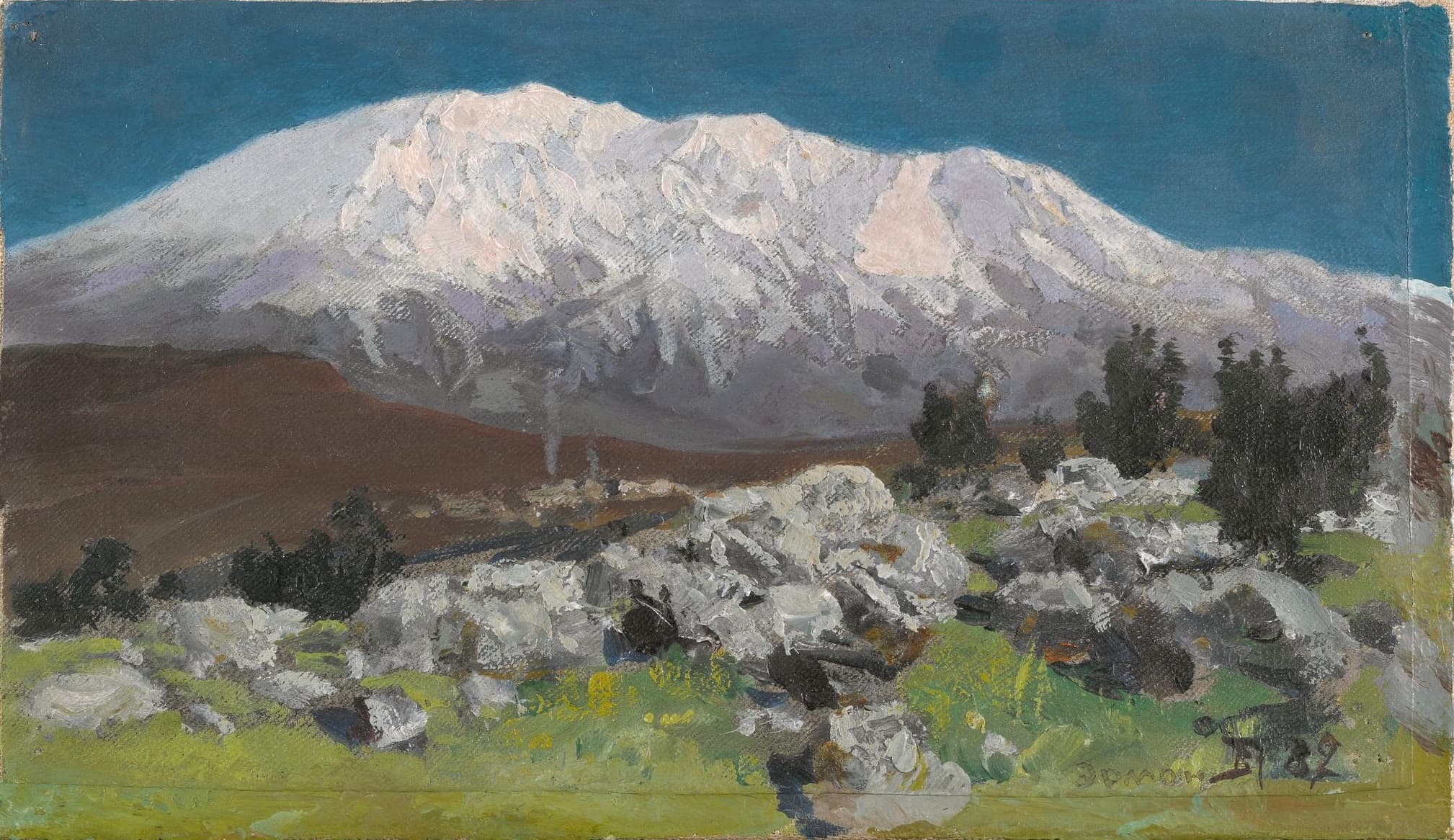
Psalm 133 compares the harmony of brothers to the anointing oil on Aaron and the dew of Hermon.
Of all the sights a psalm could praise, Psalm 133 calls the life of brothers as one both good and pleasant.
Behold, how good and pleasant it is when brothers live together in harmony!
- The passage
- Psalm 133:1 to 3, Exodus 30:30 to 33
- Books
- Psalms, Exodus
- Hold in memory
- Psalm 133:1
Summary
Psalm 133 is a short song with the heading “A song of ascents. Of David.” It praises the life of God's people as brothers, and its last line names the LORD as the giver of the blessing that rests where they dwell as one. Christian teachers have read the psalm as a picture of the church, and they have differed over what its two comparisons mean.
- The oil of the psalm is the holy anointing oil that the law kept for Aaron and his sons.
- The blessing comes by the LORD's command, and the psalm names it life forevermore.
- Readers differ over where the dew of Hermon falls and over what the oil pictures.
A Song of Ascents of David
Psalm 133 stands among fifteen psalms that share one heading.
How Good and Pleasant studies Psalm 133, the psalm of brothers who dwell as one. It belongs to the value of unity, because it praises a oneness among God's people and names the LORD as the one who blesses it.
The question this study answers is what the psalm's pictures teach about unity and why the blessing comes where brothers live as one. It gives the psalm's movement line by line, the law behind its oil, the mountain behind its dew, the meaning of its last line, two voices and two questions on which readers have differed.
Psalms 120 to 134 each open with “A song of ascents.” Psalms 122, 124, 131 and 133 add “Of David,” and Psalm 127 adds “Of Solomon.”
Jerusalem is built up as a city united together, where the tribes go up, the tribes of the LORD, as a testimony for Israel, to give thanks to the name of the LORD.Psalm 122, another of the fifteen, names Jerusalem as the city where the tribes go up, the setting in which Psalm 133 places its blessing.
The tagged Hebrew of the psalm's first verse ends with the word yachad, glossed together, after the words for the dwelling of brothers.
The Psalm Line by Line
Each line of the last two verses moves the picture on.
Psalm 133 moves downward twice, the oil from Aaron's head to his collar and the dew from Hermon to Zion, and ends in the blessing the LORD gives.
| Rung | The Berean words | What it adds |
|---|---|---|
| The oil on the head | “It is like fine oil on the head,” | The picture opens at the top, where the anointing oil is first poured. |
| The beard | “running down on the beard,” | The oil spreads past the place where it was poured. |
| The priest's collar | “running down Aaron’s beard over the collar of his robes.” | The psalm names Aaron, so the oil is the oil of the high priest's anointing, reaching his garments. |
| The dew of Hermon | “It is like the dew of Hermon” | The comparison turns from the priest's oil to the land's dew. |
| The mountains of Zion | “falling on the mountains of Zion.” | The dew comes down on the hills of Jerusalem. |
| The blessing | “For there the LORD has bestowed the blessing of life forevermore.” | The psalm ends with the LORD, who gives the blessing where His people dwell as one. |
The Oil of Aaron's Anointing
The oil of the psalm belongs to the law of Israel's priesthood.
Anoint Aaron and his sons and consecrate them to serve Me as priests. And you are to tell the Israelites, ‘This will be My sacred anointing oil for the generations to come. It must not be used to anoint an ordinary man, and you must not make anything like it with the same formula. It is holy, and it must be holy to you. Anyone who mixes perfume like it or puts it on an outsider shall be cut off from his people.’”The oil the psalm names was set apart for God, so the psalm compares unity to a holy thing.
The Dew of Hermon
The psalm's second picture joins a far mountain to the hills of Jerusalem.
Moses named Hermon as the northern limit of the land taken east of the Jordan, “as far as Mount Hermon” (Deuteronomy 3:8). He added that the Sidonians called it Sirion and the Amorites Senir (Deuteronomy 3:9).
The word for dew in Psalm 133:3 is tal, which Strong's glosses “dew (as covering vegetation)”.
The Blessing the LORD Commands
The psalm's last line names who gives the blessing and where it rests.
The verb behind the Berean bestowed in Psalm 133:3 is tsavah, glossed “he has commanded” in the tagged Hebrew. The Berean text uses decree for the same verb in Deuteronomy 28:8: “The LORD will decree a blessing on your barns and on everything to which you put your hand.”
The multitude of believers was one in heart and soul. No one claimed that any of his possessions was his own, but they shared everything they owned.Luke's word for the first believers, one in heart and soul, is the oneness Psalm 133 praised.
Voices on Psalm 133
Two voices read the psalm's two adjectives and its closing blessing.
died 420 · Jerome
Jerome stands here for the joining of good and pleasant in one thing.
“Behold how good and how pleasant it is for brethren to dwell together in unity. He says two things: good and pleasant. Martyrdom is good, but it is not pleasant: for it has its tortures and punishments, and there is always pain in torments, and certainly in pain there is no pleasantness. Behold how good and how pleasant. Again, pleasure is pleasant. For example, to eat sweet foods seems to be pleasant: for it drives one to lust.”
Jerome · Homily 45, on Psalm 132 · on Psalm 133:1Patristic
1662 to 1714 · Matthew Henry
Henry stands here for the blessing as God's command and His prerogative.
Read the page on Matthew Henry
“They are blessed of God, and therefore blessed indeed: There, where brethren dwell together in unity, the Lord commands the blessing, a complicated blessing, including all blessings. It is God's prerogative to command the blessing, man can but beg a blessing. Blessings according to the promise are commanded blessings, for he has commanded his covenant for ever.”
Matthew Henry · Commentary on the Whole Bible · on Psalm 133:1Puritan
Where Does the Dew Fall, and What Does the Oil Picture?
Commentators have differed over the Zion of Psalm 133:3 and over the meaning of the oil in Psalm 133:2.
The first question is whether the dew falls on Jerusalem's Zion or on a peak of Hermon itself.
Jerusalem's Zion, in a pictureAlbert Barnes
Albert Barnes, in his Notes on the Psalms, read the verse as a comparison and wrote that the poet thought of the dew of Hermon “as descending on the mountains of Zion”.
The objection: Hermon lies far to the north of Jerusalem, so the picture joins two places no dew could join.
A peak of Hermon itselfAdam Clarke
Adam Clarke, in his Commentary on the Bible (1832), held that this was not Mount Zion in Jerusalem but “Sion, שיאן which is a part of Hermon”, citing Deuteronomy 4:48.
The objection: the tagged Hebrew of Psalm 133:3 has Tsiyon, which the Tyndale House brief lexicon glosses “a mountain of Jerusalem”, while Deuteronomy 4:48 has the different word Siyon.
The second question is what the oil running down from Aaron's head pictures.
The Spirit, flowing from Christ the headAugustine of Hippo
Augustine, in his Exposition on Psalm 133, asked, “Who is a priest, except that one Priest, who entered into the Holy of Holies?”
He read the oil as the Holy Spirit, who “came from the head” and descended first on the apostles.
The objection: the psalm names Aaron, and the oil of Exodus 30:30 was the anointing of Israel's priests.
Brotherly love, reaching the whole householdCharles Spurgeon
Charles Spurgeon, in The Treasury of David (1885), read the oil as brotherly love, which “descending from the head distils and descends, anointing as it runs”. He wrote that even the servants of a household are the happier for its unity.
The objection: the law tells Moses to pour the oil at God's command (Exodus 29:7), so the picture speaks of a gift received before it speaks of a love shown.
Where Brothers Dwell as One
The close joins the psalm's praise to its last word.
Psalm 133 ends with the LORD, so the unity it praises is a gift He gives before it is a duty His people keep.
Sources
Scripture is the Berean Standard Bible.
- The Holy Bible, Berean Standard Bible, the superscriptions of Psalms 120 to 135.
- STEP Bible, Translators Amalgamated Hebrew Old Testament, the tagged text (Tyndale House, Cambridge), CC BY 4.0.
- STEP Bible, Translators Brief lexicon of Extended Strongs for Hebrew (Tyndale House, Cambridge), CC BY 4.0, with the Strong's definitions in the same entries.
- Augustine of Hippo, Exposition on Psalm 133, translated by J. E. Tweed, Nicene and Post-Nicene Fathers, first series, volume 8 (Buffalo: Christian Literature Publishing, 1888)
- Jerome, Homily 45, on Psalm 133 (Psalm 132 in the Latin numbering)
- Charles Spurgeon, The Treasury of David, volume 7 (1885), on Psalm 133:2.
- Matthew Henry, Commentary on the Whole Bible (1710), on Psalm 133:3.
- Adam Clarke, Commentary on the Bible (1832), on Psalm 133:3.
- Albert Barnes, Notes, Explanatory and Practical, on the Book of Psalms, on Psalm 133:3.
Keep Studying
Studies5
People and groups10
Places3
Doctrines1