
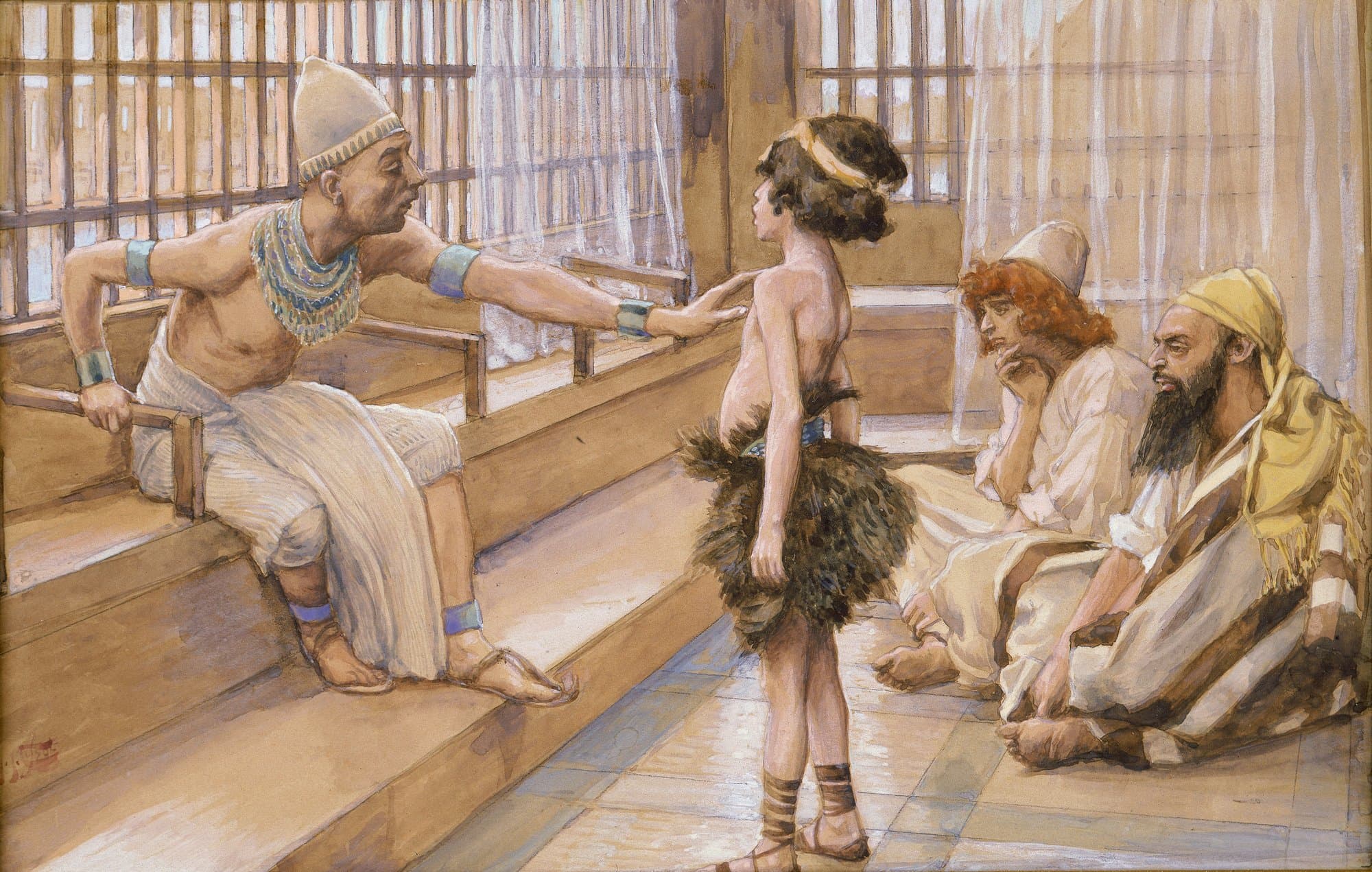
Genesis 50 · Story · Suffering
Joseph: Meant for Good
The scene of Genesis 50:15 to 21 falls in the last chapter of the account of Jacob's line, which opens at Genesis 37:2.
Jacob lived seventeen years in Egypt, and his death left his sons afraid of the brother they had sold.
As for you, what you intended against me for evil, God intended for good, in order to accomplish a day like this—to preserve the lives of many people.
- Where
- Egypt
- Who
- Joseph, Jacob
Summary
Genesis ends the story of Joseph and his brothers with a scene of fear and an answer of grace. Joseph had suffered thirteen years of slavery and prison because of what they did, and he had ruled Egypt through the famine. Now, with their father buried, he weeps at their plea and turns their fear toward what God has done.
- Scripture holds the brothers guilty for what they did while it sets God's purpose over the same act.
- Joseph left the judgment of the wrong done to him with God.
- The good God intended in Joseph's suffering reached the lives of many, his brothers' families among them.
The Brothers' Fear After Jacob's Death
The scene follows Jacob's burial in Canaan, after Joseph and his brothers had returned to Egypt.
Every sufferer who trusts God asks at some point what God was doing while others did him harm. Joseph's words to his brothers at the end of Genesis answer that question from a man who lived through it. Joseph's years in Egypt trace suffering from a pit in Canaan to a household fed through famine.
The question this study answers is how Joseph could say that God intended his suffering for good without calling his brothers innocent. It tells the scene after Jacob's death, sets out the years of suffering behind it, and shows how Genesis holds the brothers' guilt and God's purpose together. It also sets out two questions readers have argued over the scene.
When Joseph’s brothers saw that their father was dead, they said, “What if Joseph bears a grudge? Then he will surely repay us for all the evil that we did to him.”The brothers' own word for what they did is evil, the word Joseph will use of their intent.
So they sent word to Joseph, saying, “Before he died, your father commanded, ‘This is what you are to say to Joseph: I beg you, please forgive the transgression and sin of your brothers, for they did you wrong.’ So now, Joseph, please forgive the transgression of the servants of the God of your father.” When their message came to him, Joseph wept.The message comes in their dead father's name, and Joseph's tears are his first answer to it.
His brothers also came to him, bowed down before him, and said, “We are your slaves!”The brothers bow down as Joseph's dreams had foretold, and their offer shows how fully they expect judgment.
But Joseph replied, “Do not be afraid. Am I in the place of God?This question comes before Joseph says anything of God's purpose, and the rest of his answer stands on it.
Genesis 50:18, Genesis 50:19
From the Pit to Pharaoh's Court
Genesis tells the years of slavery and prison in order, from the brothers' sale to Pharaoh's summons.
Joseph was sold at seventeen and raised up at thirty, and Genesis names the LORD's presence with him in the slave years.
- At seventeenJoseph tends the flock with his brothers and brings their father a bad report.When Joseph was seventeen years oldGenesis 37:2
- The same yearHis brothers sell him to traders bound for Egypt.sold him for twenty shekels of silver to the IshmaelitesGenesis 37:28
- In Potiphar's houseHe serves an Egyptian master as a slave.And the LORD was with JosephGenesis 39:2
- After the false chargeHis master puts him in prison on the word of his master's wife.the prison where the king’s prisoners were confinedGenesis 39:20
- After the dreamsThe cupbearer is restored and forgets him.he forgot all about himGenesis 40:23
- Two years laterPharaoh dreams, and Joseph is brought from the dungeon.After two full years had passedGenesis 41:1
- At thirtyJoseph enters Pharaoh's service over the land of Egypt.Joseph was thirty years old when he entered the service of Pharaoh king of EgyptGenesis 41:46
A timeline of seven events from Genesis 37 to 41, each with its verse and the Berean words that tell it.
Two Intentions in One Act
Joseph's words before and after Jacob's death show how he read his own suffering.
Joseph had said the same thing when he made himself known to his brothers. He told them, "God sent me before you to preserve you as a remnant on the earth and to save your lives by a great deliverance" (Genesis 45:7). His forgiving of his brothers runs from Genesis 42 to 45 and returns here in Genesis 50.
John Calvin read Joseph's words as a lesson in the providence of God, by which God governs the counsels of men and turns even their wrongs to His ends.
Joseph's Suffering Retold in the Psalms and Acts
A psalm and Stephen's speech retell Joseph's years in Egypt, and both name God as the one at work in them.
Psalm 105:17 says that God sent Joseph ahead of his family, sold as a slave. Psalm 105:18 adds a detail Genesis does not give, that "They bruised his feet with shackles and placed his neck in irons". The psalm counts the prison years as the time "until his prediction came true and the word of the LORD proved him right" (Psalm 105:19).
Because the patriarchs were jealous of Joseph, they sold him as a slave into Egypt. But God was with him and rescued him from all his troubles. He granted Joseph favor and wisdom in the sight of Pharaoh king of Egypt, who appointed him ruler over Egypt and all his household.Stephen sets the brothers' jealousy and God's rescue side by side, the same two intentions Joseph named.
The Greek word Stephen uses for Joseph's troubles is thlipsis, the word the New Testament letters use for the afflictions of believers.
Stephen tells Joseph's story before the story of Moses, and in his speech the fathers turn against each man before God raises him to rule (Acts 7:9 to 10 and Acts 7:35).
How the Scene Has Been Read
An English commentator of the eighteenth century read the brothers' fear and Joseph's answer.
1662 to 1714 · Matthew Henry
Matthew Henry, in his Commentary on the Whole Bible (1710), wrote on the brothers' fear in Genesis 50:15 that "A guilty conscience exposes men to continual frights, even where no fear is". On Genesis 50:20 he wrote that God's bringing good out of the deed "does not make sin the less sinful, nor sinners the less punishable".
Where Readers Disagree
Readers of Genesis 50:20 have asked how God intended a deed the brothers did, and whom the verse speaks to now.
How did God intend what the brothers did?John Chrysostom, John Calvin, the Westminster Confession
John Chrysostom, in his Homilies on Genesis, gave Joseph's words as "You acted against me with evil intent, but God turned everything to good for me". On this reading God takes the evil the brothers chose and turns it to His end.
John Calvin, in his Commentary on Genesis, held that God did more than turn the deed afterward. He wrote, "neither did God merely remain at rest, and by conniving for a time, let loose the reins of human malice, in order that afterwards he might make use of this occasion". He still kept the guilt with the brothers, since "the wickedness of the deed belongs to them, and the blame of it is imputed to them". The Westminster Confession (1646), chapter 5, section 4, says that God's providence reaches all sins "not by a bare permission", and that God "neither is nor can be the author or approver of sin".
Is Genesis 50:20 a promise for every sufferer?John Chrysostom, John Calvin, the Westminster Confession
Chrysostom joined Joseph's words to Paul's in Romans 8:28 and read both as a rule for those who love God. Calvin drew from the verse the comfort that "whatever poison Satan produces, God turns it into medicine for his elect". The Westminster Confession, chapter 5, section 7, says that providence takes care of the Church "after a most special manner" and disposes all things to its good.
Each of these readers applies the verse to God's people, and Joseph spoke it of one deed and one purpose, the saving of many lives in the famine.
He Spoke Kindly to Them
Joseph's reply to his brothers' fear ends in care for the men who wronged him.
Therefore do not be afraid. I will provide for you and your little ones.” So Joseph reassured his brothers and spoke kindly to them.Joseph's last word in the scene is provision for the brothers' little ones, and Genesis adds that he spoke kindly to them.
Sources
Scripture is the Berean Standard Bible.
- STEP Bible, the Translators Amalgamated Greek New Testament (TAGNT), Tyndale House, Cambridge, CC BY 4.0.
- John Calvin, Commentaries on the First Book of Moses Called Genesis, volume 2, on Genesis 50:20, translated by John King (Calvin Translation Society, 1847 to 1850)
- The Confession of Faith of the Assembly of Divines at Westminster (1646), chapter 5, sections 4 and 7, edited by S. W. Carruthers (1946)
- John Chrysostom, Homilies on Genesis, homily 67, section 19, on Genesis 50:20.
- John Gill, Exposition of the Old Testament (1748 to 1763), on Genesis 50:18.
- Matthew Henry, Commentary on the Whole Bible (1710), on Genesis 50:15.
- Matthew Henry, Commentary on the Whole Bible (1710), on Genesis 50:20.
Keep Studying
Studies1
People and groups5