
Luke's Second Volume · Acts
Acts
Before He ascends, the risen Christ hands His second volume its outline in a single sentence: “you will be My witnesses in Jerusalem, and in all Judea and Samaria, and to the ends of the earth” (Acts 1:8, BSB). Everything that follows is that map unfolding, one widening at a time, the Spirit taking the initiative at every turn.
Summary
A proportional map sizes the book's three widening zones by their true share of the twenty-eight chapters, with six of Luke's own growth-reports pinned along the same timeline. Genesis 11's Babel and Acts 2's Pentecost are set side by side as the hinge the whole book turns on.
- A proportional map shows the book's three widening zones sized by their actual share of the chapters.
- Six places where Luke pauses to report the word's growth are marked along the same timeline.
- Two Greek words, witness and boldness, are traced from the upper room to the book's open ending.
- Genesis 11's Babel and Acts 2's Pentecost are set side by side as judgment reversed.
- Doorways lead out to the Jerusalem Council, the Three Pentecosts, and the Pauline Epistles the journeys produced.
One Command, Three Fronts
Acts 1:8 walked as the book's own outline
Luke does not need an outline imposed from outside; the risen Christ gives it to him. The geography moves in three widening fronts (sized below by their true share of the book's twenty-eight chapters) each opened by the Spirit's own initiative, not the apostles' planning.
Jerusalem
the Spirit falls at Pentecost (Acts 2) and the church is established
Judea & Samaria
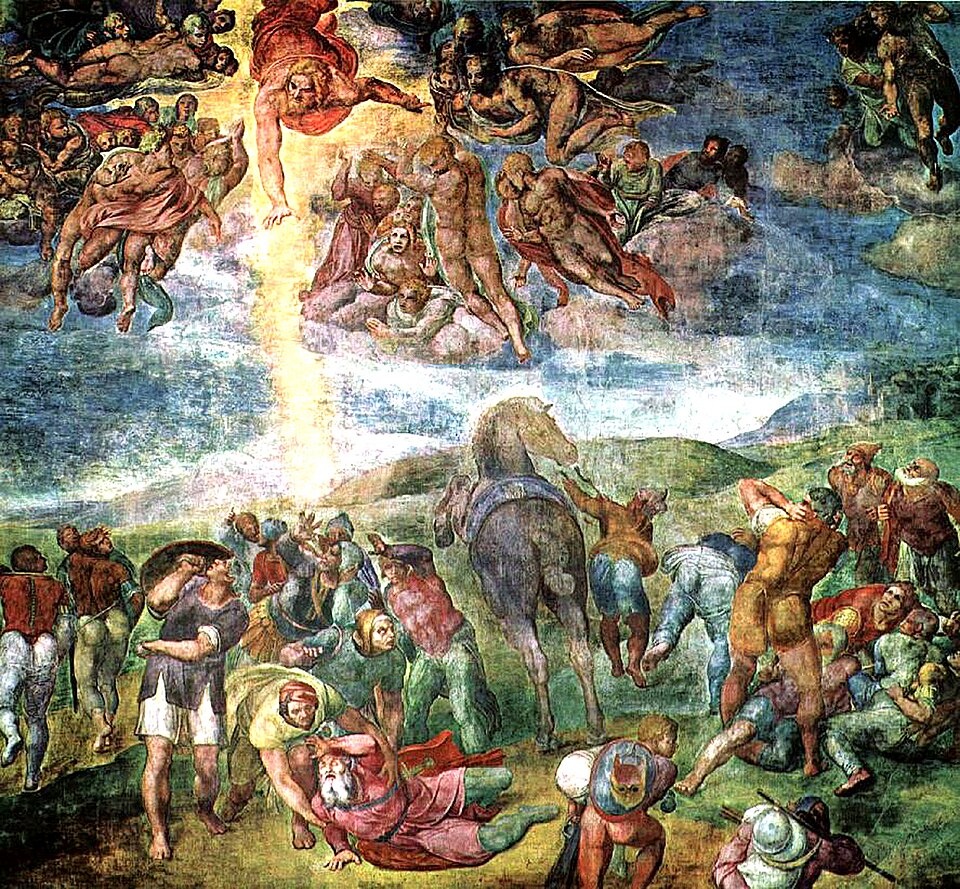
the scattering after Stephen's death drives the word outward: Philip preaches in Samaria (8:5), the persecutor Saul is stopped on the Damascus road (9:1–19), and Peter's visit to Cornelius opens the door to the Gentiles (10)
the ends of the earth
the Antioch church sends Paul out, and the road bends toward Rome (Acts 28:31)
Six times Luke pauses the narrative to record the word's growth or the church's increase (6:7; 9:31; 12:24; 16:5; 19:20; 28:31): each one closing a panel and opening the next. The phrasing differs every time: only 12:24 reads “the word of God grew and multiplied,” while 9:31 and 16:5 report the churches multiplying rather than the word. Read in sequence they trace, from the inside, the same expansion the Lord commanded at 1:8. Each pin above is a milestone stone set beside the road.
Six Times Luke Pauses the Story
his own progress-reports: each in its own words
The six are a structure, not a formula. Luke never repeats himself word for word: three report the word increasing, growing, prevailing; two report the churches multiplying and increasing; and the last simply leaves Paul preaching with nobody able to stop him.
The book is roughly thirty years of history (from the ascension (c. AD 30) to Paul's Roman imprisonment (c. AD 62)) and its abrupt ending, with Paul still awaiting trial, reads most naturally as written before the outcome was known. Two early witnesses stand behind that reading: Irenaeus names Luke, Paul's travelling companion, as the author (Against Heresies3.14), and the Muratorian Canon (c. AD 170) lists Acts as Luke's and notes that it stops where it does because Luke wrote only what happened in his own presence. The panels are Luke's own architecture, carrying a single thesis: nothing (not prison, shipwreck, or empire) halts the advance of the word.
Original Language
the word the book's own title and its first grave are built on
a witness: the word Christ uses at 1:8 ("you will be My witnesses"), and the root behind English "martyr." Acts is where the two meanings meet: Stephen bears witness before the council and is stoned for it (7:54–60), and Paul, hearing the risen Christ, is given Stephen the same title: "Your witness Stephen" (22:20).
boldness, freedom of speech: what the church prays for under threat (4:29), receives (4:31), and still has on the book's last line, preaching in Rome boldly and freely (28:31).
The book carries no title of its own in the earliest manuscripts; Praxeis Apostolon(“Acts of the Apostles”) was added later, and readers have argued ever since that “Acts of the Holy Spirit” would name it better, since the Spirit takes the initiative at every widening.
Babel Undone at Pentecost
the hinge of the whole book
Babel: judgment as division
“The whole earth was of one language and of one speech” (Gen 11:1), and it builds one proud tower; the LORD confounds their speech and scatters them across the earth. Genesis 11:1–9 : the nations fractured into tongues that cannot understand one another.
Pentecost: grace as gathering
The Spirit gives the disciples other tongues, and the crowd (“Parthians, and Medes, and Elamites,” every nation under heaven) each hears “the mighty works of God” in its own language. Acts 2:6–11 : the scattered peoples drawn back around one word; three thousand added in a day (2:41).
That reversal is the theological engine of the whole book. The gospel's crossing to the Gentiles is not an accident of history but the design announced from Genesis forward, now executed by the Spirit: when Saul becomes the “chosen vessel” to bear the name before the Gentiles (Acts 9:15), and when Peter concedes at Cornelius's house that “God is no respecter of persons” (Acts 10:34), the ingathering of the nations: Babel undone: is well under way.
“I will not refute that high and subtle interpretation of Augustine, that like as the law was given to the old people fifty days after Easter, being written in tables of stone by the hand of God, so the Spirit, whose office it is to write the same in our hearts, did fulfill that which was figured in the giving of the law as many days after the resurrection of Christ, who is the true Passover.”
John Calvin, Commentaries (1554), on Acts 2:1: public domain.
Keep Studying
Read it1
By subject
The church age44 pages
On this page
Studies4
People and groups1
Doctrines5
Go further2