
Place
Samaria
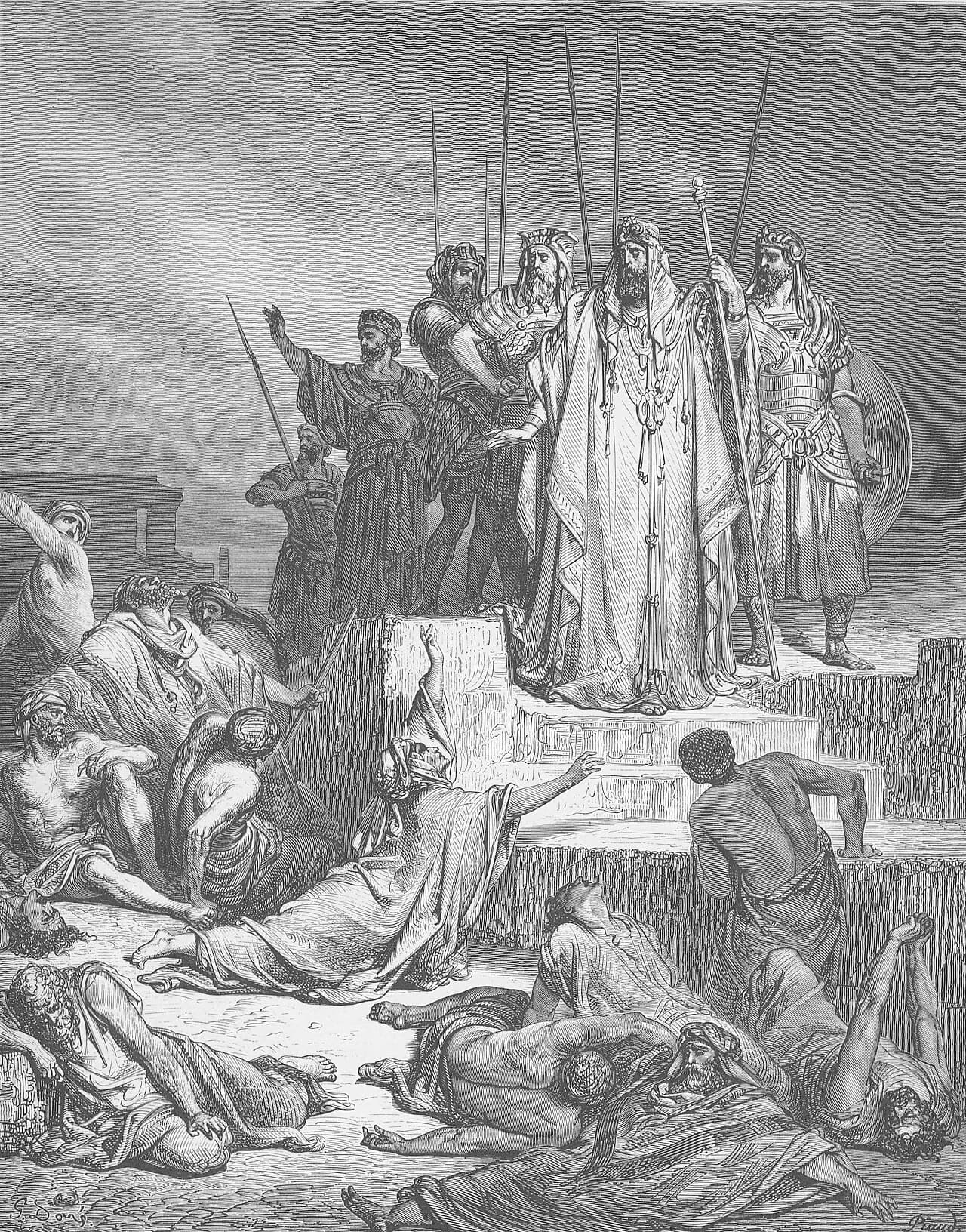
Gustave Doré, La Sainte Bible (Tours: Alfred Mame et fils, 1866). Public domain.
Summary
The hill Omri bought and built his capital on, where Ahab raised a temple to Baal, where the four lepers found the Aramean camp empty, which fell to Assyria in 722 BC, and where Philip preached and the Spirit was given.
- Samaria is two things in the Bible. It is the city Omri bought as a bare hill around 880 BC and built into the capital of the northern kingdom, and it is the hill country region that took the city’s name and kept it for a thousand years.
- Omri paid Shemer two talents of silver for the hill and named the city after the man who had owned it. No other Israelite capital is bought outright like this in Scripture.
- The city fell to Assyria in 722 BC. 2 Kings 17 stops the story to explain the fall, and the explanation is not that Assyria was strong.
- Assyria deported much of the population and settled peoples from five other conquered places in the towns of Samaria. That resettlement stands behind the split between Jews and Samaritans seven hundred years later.
- Jesus put a Samaritan at the centre of three of His best known stories, and Acts 1:8 names Samaria as the second zone of the mission. Acts 8 records the Spirit given to Samaritan believers through Peter and John.
On this page
In Scripture
- Verses
- 114
- Books
- 15
Near Samaria
- Mount Ebal8.8 km · 5.5 mi SE
- Shechem11 km · 6.7 mi SE
- Mount Gerizim11 km · 7.1 mi SE
- Sychar14 km · 8.5 mi SE
- Dothan16 km · 9.8 mi N
- Shiloh26 km · 16 mi S
Straight-line distances, computed from the gazetteer coordinates.
Where it is
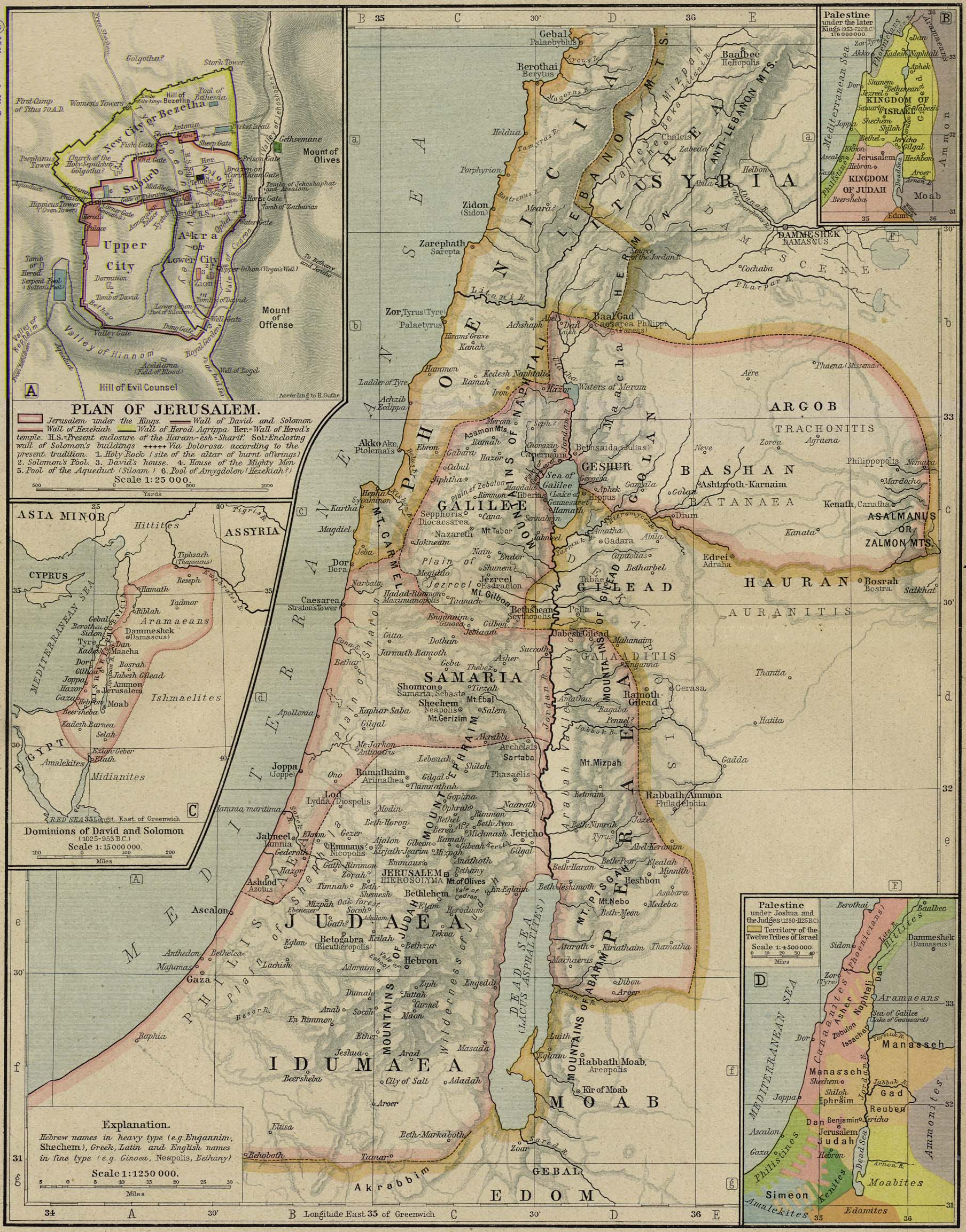
the country around it
- Coordinates
- 32.2802° N, 35.1979° Efind it on the Atlas →
- Region
- The northern hill country
- Kind of place
- Region
1 place the record names with Samaria, the farthest 38 km away
- Located: the gazetteer fixes one site
- Placed: the point stands for an area, or is rounded
- A dashed line ends at a place the gazetteer does not fix
Not located: The Temple, Assyria. The gazetteer records no location for them, so they are not marked.
Why Samaria matters
What has been found
the evidence, and where it is disputed
Today is a day of good news
2 Kings 6:24 to 7:20, the siege of Samaria and the four men at the gate
Read 2 Kings 6:24 to 7:20, the siege of Samaria and the four men at the gate
- Ben-hadad marches up and shuts the city in2 Kings 6:24Some time later, Ben-hadad king of Aram assembled his entire army and marched up to besiege Samaria.
- The famine drives the price of a donkey’s head to eighty shekels2 Kings 6:25So there was a great famine in Samaria. Indeed, they besieged the city so long that a donkey’s head sold for eighty shekels of silver, and a quarter cab of dove’s dung sold for five shekels of silver.
- The king swears to take the head of Elisha2 Kings 6:31He announced, “May God punish me, and ever so severely, if the head of Elisha son of Shaphat remains on his shoulders through this day!”
- Elisha says flour will sell cheap at this gate tomorrow2 Kings 7:1Then Elisha said, “Hear the word of the LORD! This is what the LORD says: ‘About this time tomorrow at the gate of Samaria, a seah of fine flour will sell for a shekel, and two seahs of barley will sell for a shekel.’”
- The officer at the king’s arm says it cannot happen2 Kings 7:2But the officer on whose arm the king leaned answered the man of God, “Look, even if the LORD were to make windows in heaven, could this really happen?” “You will see it with your own eyes,” replied Elisha, “but you will not eat any of it.”
- Four men with leprosy sit outside the gate and decide to move2 Kings 7:3Now there were four men with leprosy at the entrance of the city gate, and they said to one another, “Why just sit here until we die?
- They walk into the Aramean camp and find nobody in it2 Kings 7:5So they arose at twilight and went to the camp of the Arameans. But when they came to the outskirts of the camp, there was not a man to be found.
- They stop looting and say the day is a day of good news2 Kings 7:9Finally, they said to one another, “We are not doing what is right. Today is a day of good news. If we are silent and wait until morning light, our sin will overtake us. Now, therefore, let us go and tell the king’s household.”
- The people plunder the camp and the price falls as Elisha said2 Kings 7:16Then the people went out and plundered the camp of the Arameans. It was then that a seah of fine flour sold for a shekel, and two seahs of barley sold for a shekel, according to the word of the LORD.
- The officer is trampled in the gateway and dies2 Kings 7:20And that is just what happened to him. The people trampled him in the gateway, and he died.
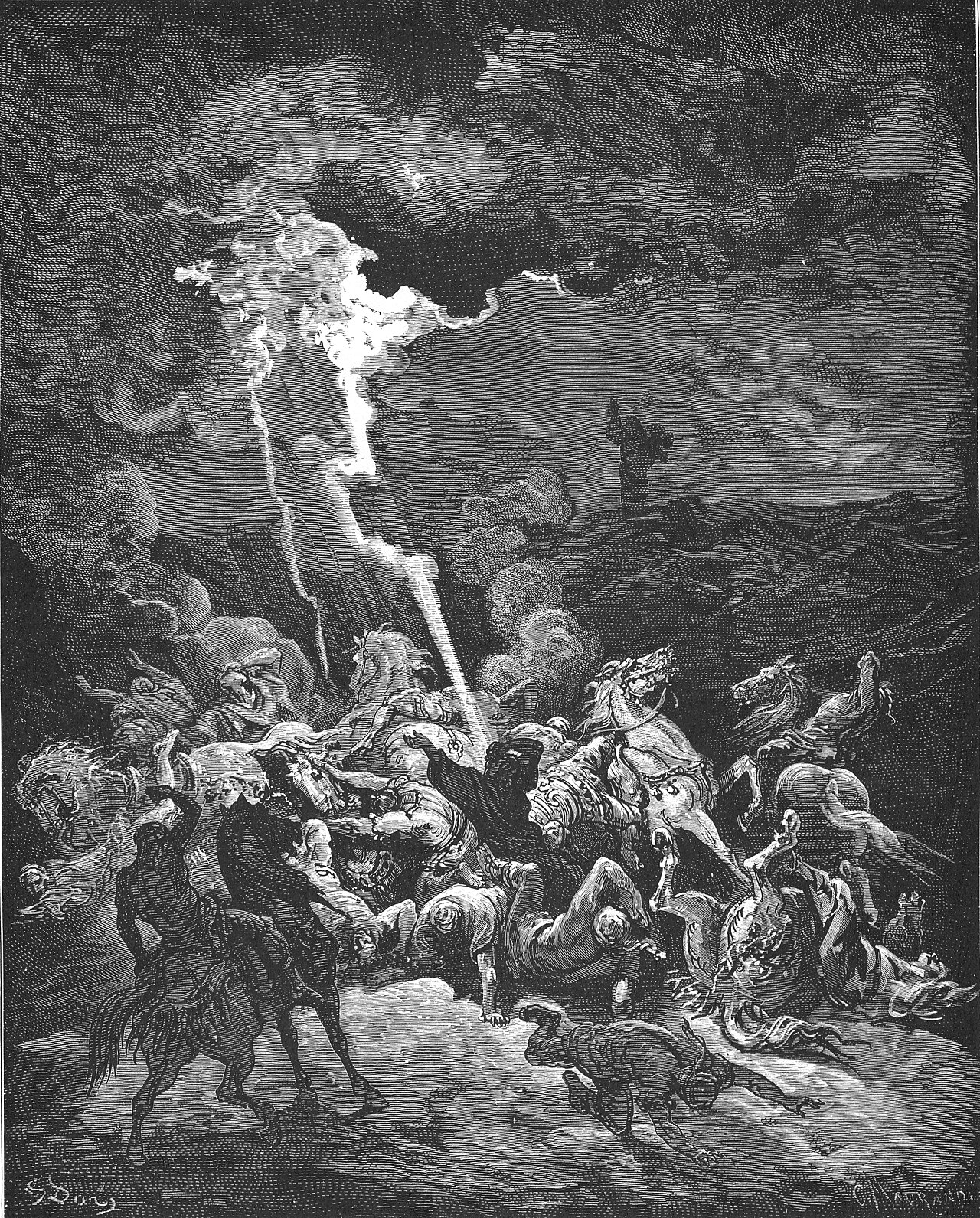
The site holds no image of the four men at the gate. The hero plate above shows the famine inside the besieged city, which is the chapter before, so the story runs on the words themselves rather than on a picture of something else. Read the beats in order and watch where the news starts. It does not start with the king, the prophet or the army. It starts with four men who were not allowed inside the walls.
Elisha and the Double Portion: the full studyWhat happened here, in order
in the order the canon tells it
- Omri buys the hill of Samaria from Shemer and builds the capital on it1 Kings 16:24He bought the hill of Samaria from Shemer for two talents of silver and built a city there, calling it Samaria after the name of Shemer, who had owned the hill.
- Ahab builds a temple for Baal in Samaria and sets up an altar in it1 Kings 16:32First, Ahab set up an altar for Baal in the temple of Baal that he had built in Samaria.
- Ben-hadad of Aram besieges the city for the first time1 Kings 20:1Now Ben-hadad king of Aram assembled his entire army. Accompanied by thirty-two kings with their horses and chariots, he marched up, besieged Samaria, and waged war against it.
- Ahab’s chariot is washed at the pool of Samaria and the dogs lick his blood1 Kings 22:38And the chariot was washed at the pool of Samaria where the prostitutes bathed, and the dogs licked up Ahab’s blood, according to the word that the LORD had spoken.
- The second siege brings a famine so deep that a donkey’s head is a luxury2 Kings 6:25So there was a great famine in Samaria. Indeed, they besieged the city so long that a donkey’s head sold for eighty shekels of silver, and a quarter cab of dove’s dung sold for five shekels of silver.
- Four men with leprosy carry the news of the empty camp to the gate2 Kings 7:9Finally, they said to one another, “We are not doing what is right. Today is a day of good news. If we are silent and wait until morning light, our sin will overtake us. Now, therefore, let us go and tell the king’s household.”
- Jehu reaches Samaria and destroys what is left of the house of Ahab2 Kings 10:17When Jehu came to Samaria, he struck down everyone belonging to Ahab who remained there, until he had destroyed them, according to the word that the LORD had spoken to Elijah.
- Assyria takes the city in the ninth year of Hoshea and deports Israel2 Kings 17:6In the ninth year of Hoshea, the king of Assyria captured Samaria and carried away the Israelites to Assyria, where he settled them in Halah, in Gozan by the Habor River, and in the cities of the Medes.
- Israel is carried away from its own land, and 2 Kings 17 says why at length2 Kings 17:23Finally, the LORD removed Israel from His presence, as He had declared through all His servants the prophets. So Israel was exiled from their homeland into Assyria, where they are to this day.
- The king of Assyria settles peoples from five conquered places in the towns of Samaria2 Kings 17:24Then the king of Assyria brought people from Babylon, Cuthah, Avva, Hamath, and Sepharvaim and settled them in the towns of Samaria to replace the Israelites. They took possession of Samaria and lived in its towns.
- Isaiah calls the city a fading crown of pride on the head of a fertile valleyIsaiah 28:1Woe to the majestic crown of Ephraim’s drunkards, to the fading flower of his glorious splendor, set on the summit above the fertile valley, the pride of those overcome by wine.
- The same chapter promises a crown of glory to the remnant of His peopleIsaiah 28:5On that day the LORD of Hosts will be a crown of glory, a diadem of splendor to the remnant of His people,
- Hosea names the calf of Samaria and says God has rejected itHosea 8:5He has rejected your calf, O Samaria. My anger burns against them. How long will they be incapable of innocence?
- Amos says the houses of ivory will perishAmos 3:15I will tear down the winter house along with the summer house; the houses of ivory will also perish, and the great houses will come to an end,” declares the LORD.
- Micah says the city will be made a heap of rubble in the open fieldMicah 1:6Therefore I will make Samaria a heap of rubble in the open field, a planting area for a vineyard. I will pour her stones into the valley and expose her foundations.
- Jesus makes a Samaritan the one who stops on the Jericho roadLuke 10:33But when a Samaritan on a journey came upon him, he looked at him and had compassion.
- The one leper of ten who comes back to give thanks is a SamaritanLuke 17:16He fell facedown at Jesus’ feet in thanksgiving to Him—and he was a Samaritan.
- The risen Christ names Samaria as the second zone of the missionActs 1:8But you will receive power when the Holy Spirit comes upon you, and you will be My witnesses in Jerusalem, and in all Judea and Samaria, and to the ends of the earth.”
- Peter and John lay hands on the Samaritan believers and they receive the Holy SpiritActs 8:17Then Peter and John laid their hands on them, and they received the Holy Spirit.
- The apostles preach the gospel in many Samaritan villages on the way backActs 8:25And after Peter and John had testified and spoken the word of the Lord, they returned to Jerusalem, preaching the gospel in many of the Samaritan villages.
Where it points
The voices
each quoted from the work named
The site is marked by the modern “Sebustiyeh,” an Arabic corruption of Sebaste, the name given by Herod to Samaria when he rebuilt it. Sebustiyeh is situated on a very remarkable “hill.” In the heart of the mountains of Israel occurs a deep basin-shaped depression, in the midst of which rises an oblong hill, with steep but not inaccessible sides, and a long flat top. This was the site which Omri chose for his new capital. Politically it was rather more central than Shechem, and probably than Tirzah. In a military point of view it was admirably calculated for defense. The country round it was especially productive. The hill itself possessed abundant springs of water.
You are not surprised to find that, when those four lepers outside the gate of Samaria had made the great discovery that the Syrian camp was deserted, they first satisfied their own hunger and thirst. And quite right, too. Who would do otherwise? It is true that they were bound to go and tell other hungry ones, but they could do that with all the louder voice and they were the more sure of the truth they had to tell when they had first refreshed themselves.
The Hebrews, however, call a guard somer, and thus they also hand on in their tradition that the Samaritans first received this name because the king of the Assyrians sent them to be guards of the land of Israel after the captivity, that is, that other Israel besides Judah, which was taken captive into Assyria because of their many sins.
4 more teachers on these versesMatthew Henry · Ambrose of Milan · Charles Spurgeon · Jamieson, Fausset & Brown
The strength of the soldiery depends as much upon God as the wisdom of the magistracy; and where God gives both these he is to that people a crown of glory. This may well be supposed to refer to Christ, and so the Chaldee paraphrast understands it: In that day shall the Messiah be a crown of glory.
That extraordinary Samaritan did not himself shun him whom the priest and the Levite had shunned. In the name of a sect, you may not shun him whom you will admire by interpretation of the word. Indeed, "guard" is signified by the name Samaritan. The interpretation means this. Who is the Guard, if not, "The Lord preserves the infants"? Thus, as there is one Jew in the letter and another in the spirit, so there is one Samaritan in public, another in secret. Here the Samaritan is going down.
THE whole narrative connected with the text is worthy of your careful reading. There were 10 men, lepers who, according to the old proverb that "birds of a feather flock together," had made a company and seemed to have lived in greater amity through kinship of suffering than they would have done had they been healthy and competent to share the fragrance of each other's joys. Mutual woe may have softened some of their natural jealousies, for we find that there was at least one in the company who was a Samaritan, while the others were Jews.
In the present case an important object was served by it--"the sudden appearance of a body of baptized disciples in Samaria, by the agency of one who was not an apostle, requiring the presence and power of apostles to perform their special part as the divinely appointed founders of the Church" [ALFORD]. Beautiful, too, was the spectacle exhibited of Jew and Samaritan, one in Christ.
Samaria in Scripture
114 verses name it, in 15 books
Open a book to read its mentions here. Text: Berean Standard Bible.
Old TestamentNew Testamentsegment width = share of mentions
Old Testament12 books · 104 mentions
1 Kings17 mentions
- 1 Kings 13:32for the message that he cried out by the word of the LORD against the altar in Bethel and against all the shrines on the high places in the cities of Samaria will surely come to pass.”
- 1 Kings 16:24He bought the hill of Samaria from Shemer for two talents of silver and built a city there, calling it Samaria after the name of Shemer, who had owned the hill.
- 1 Kings 16:28And Omri rested with his fathers and was buried in Samaria, and his son Ahab reigned in his place.
- 1 Kings 16:29In the thirty-eighth year of Asa’s reign over Judah, Ahab son of Omri became king of Israel, and he reigned in Samaria twenty-two years.
- 1 Kings 16:32First, Ahab set up an altar for Baal in the temple of Baal that he had built in Samaria.
- 1 Kings 18:2So Elijah went to present himself to Ahab. The famine was severe in Samaria,
- 1 Kings 20:1Now Ben-hadad king of Aram assembled his entire army. Accompanied by thirty-two kings with their horses and chariots, he marched up, besieged Samaria, and waged war against it.
- 1 Kings 20:10Then Ben-hadad sent another message to Ahab: “May the gods deal with me, and ever so severely, if enough dust remains of Samaria for each of my men to have a handful.”
9 further mentions in 1 Kings, read them in the book.
2 Kings45 mentions
- 2 Kings 1:2Now Ahaziah had fallen through the lattice of his upper room in Samaria and injured himself. So he sent messengers and instructed them: “Go inquire of Baal-zebub, the god of Ekron, whether I will recover from this injury.”
- 2 Kings 1:3But the angel of the LORD said to Elijah the Tishbite, “Go up to meet the messengers of the king of Samaria and ask them, ‘Is it because there is no God in Israel that you are on your way to inquire of Baal-zebub, the god of Ekron?’
- 2 Kings 2:25And Elisha went on to Mount Carmel, and from there he returned to Samaria.
- 2 Kings 3:1In the eighteenth year of Jehoshaphat’s reign over Judah, Jehoram son of Ahab became king of Israel, and he reigned in Samaria twelve years.
- 2 Kings 3:6So at that time King Jehoram set out from Samaria and mobilized all Israel.
- 2 Kings 5:3She said to her mistress, “If only my master would go to the prophet who is in Samaria, he would cure him of his leprosy.”
- 2 Kings 6:19And Elisha told them, “This is not the way, and this is not the city. Follow me, and I will take you to the man you are seeking.” And he led them to Samaria.
- 2 Kings 6:20When they had entered Samaria, Elisha said, “O LORD, open the eyes of these men that they may see.” Then the LORD opened their eyes, and they looked around and discovered that they were in Samaria.
37 further mentions in 2 Kings, read them in the book.
2 Chronicles8 mentions
- 2 Chronicles 18:2And some years later he went down to visit Ahab in Samaria, where Ahab sacrificed many sheep and cattle for him and the people with him, and urged him to march up to Ramoth-gilead.
- 2 Chronicles 18:9Dressed in royal attire, the king of Israel and Jehoshaphat king of Judah were sitting on their thrones at the threshing floor by the entrance of the gate of Samaria, with all the prophets prophesying before them.
- 2 Chronicles 22:9Then Jehu looked for Ahaziah, and Jehu’s soldiers captured him while he was hiding in Samaria. So Ahaziah was brought to Jehu and put to death. They buried him, for they said, “He is the grandson of Jehoshaphat, who sought the LORD with all his heart.” So no one was left from the house of Ahaziah with the strength to rule the kingdom.
- 2 Chronicles 25:13Meanwhile the troops that Amaziah had dismissed from battle raided the cities of Judah, from Samaria to Beth-horon. They struck down 3,000 people and carried off a great deal of plunder.
- 2 Chronicles 25:24He took all the gold and silver and all the articles found in the house of God with Obed-edom and in the treasuries of the royal palace, as well as some hostages. Then he returned to Samaria.
- 2 Chronicles 28:8Then the Israelites took 200,000 captives from their kinsmen—women, sons, and daughters. They also carried off a great deal of plunder and brought it to Samaria.
- 2 Chronicles 28:9But a prophet of the LORD named Oded was there, and he went out to meet the army that returned to Samaria. “Look,” he said to them, “because of His wrath against Judah, the LORD, the God of your fathers, has delivered them into your hand. But you have slaughtered them in a rage that reaches up to heaven.
- 2 Chronicles 28:15Then the men who were designated by name arose, took charge of the captives, and provided from the plunder clothing for the naked. They clothed them, gave them sandals and food and drink, anointed their wounds, and put all the feeble on donkeys. So they brought them to Jericho, the City of Palms, to their brothers. Then they returned to Samaria.
Ezra2 mentions
- Ezra 4:10and the rest of the peoples whom the great and honorable Ashurbanipal deported and settled in the cities of Samaria and elsewhere west of the Euphrates.
- Ezra 4:17Then the king sent this reply: To Rehum the commander, Shimshai the scribe, and the rest of your associates living in Samaria and elsewhere in the region west of the Euphrates: Greetings.
Nehemiah1 mention
Isaiah7 mentions
- Isaiah 7:9The head of Ephraim is Samaria, and the head of Samaria is the son of Remaliah. If you do not stand firm in your faith, then you will not stand at all.’”
- Isaiah 8:4For before the boy knows how to cry ‘Father’ or ‘Mother,’ the wealth of Damascus and the plunder of Samaria will be carried off by the king of Assyria.”
- Isaiah 9:9All the people will know it—Ephraim and the dwellers of Samaria. With pride and arrogance of heart they will say:
- Isaiah 10:9“Is not Calno like Carchemish? Is not Hamath like Arpad? Is not Samaria like Damascus?
- Isaiah 10:10As my hand seized the idolatrous kingdoms whose images surpassed those of Jerusalem and Samaria,
- Isaiah 10:11and as I have done to Samaria and its idols, will I not also do to Jerusalem and her idols?”
- Isaiah 36:19Where are the gods of Hamath and Arpad? Where are the gods of Sepharvaim? Have they delivered Samaria from my hand?
Jeremiah3 mentions
- Jeremiah 23:13“Among the prophets of Samaria I saw an offensive thing: They prophesied by Baal and led My people Israel astray.
- Jeremiah 31:5Again you will plant vineyards on the hills of Samaria; the farmers will plant and enjoy the fruit.
- Jeremiah 41:5eighty men who had shaved off their beards, torn their garments, and cut themselves came from Shechem, Shiloh, and Samaria, carrying grain offerings and frankincense for the house of the LORD.
Ezekiel6 mentions
- Ezekiel 16:46Your older sister was Samaria, who lived with her daughters to your north; and your younger sister was Sodom, who lived with her daughters to your south.
- Ezekiel 16:51Furthermore, Samaria did not commit half the sins you did. You have multiplied your abominations beyond theirs, and all the abominations you have committed have made your sisters appear righteous.
- Ezekiel 16:53But I will restore Sodom and her daughters from captivity, as well as Samaria and her daughters. And I will restore you along with them.
- Ezekiel 16:55And your sisters, Sodom with her daughters and Samaria with her daughters, will return to their former state. You and your daughters will also return to your former state.
- Ezekiel 23:4The older was named Oholah, and her sister was named Oholibah. They became Mine and gave birth to sons and daughters. As for their identities, Oholah is Samaria, and Oholibah is Jerusalem.
- Ezekiel 23:33You will be filled with drunkenness and grief, with a cup of devastation and desolation, the cup of your sister Samaria.
Hosea6 mentions
- Hosea 7:1When I heal Israel, the iniquity of Ephraim will be exposed, as well as the crimes of Samaria. For they practice deceit and thieves break in; bandits raid in the streets.
- Hosea 8:5He has rejected your calf, O Samaria. My anger burns against them. How long will they be incapable of innocence?
- Hosea 8:6For this thing is from Israel—a craftsman made it, and it is not God. It will be broken to pieces, that calf of Samaria.
- Hosea 10:5The people of Samaria will fear for the calf of Beth-aven. Indeed, its people will mourn with its idolatrous priests— those who rejoiced in its glory— for it has been taken from them into exile.
- Hosea 10:7Samaria will be carried off with her king like a twig on the surface of the water.
- Hosea 13:16Samaria will bear her guilt because she has rebelled against her God. They will fall by the sword; their little ones will be dashed to pieces, and their pregnant women ripped open.
Amos5 mentions
- Amos 3:9Proclaim to the citadels of Ashdod and to the citadels of Egypt: “Assemble on the mountains of Samaria; see the great unrest in the city and the acts of oppression in her midst.”
- Amos 3:12This is what the LORD says: “As the shepherd snatches from the mouth of the lion two legs or a piece of an ear, so the Israelites dwelling in Samaria will be rescued having just the corner of a bed or the cushion of a couch.
- Amos 4:1Hear this word, you cows of Bashan on Mount Samaria, you women who oppress the poor and crush the needy, who say to your husbands, “Bring us more to drink.”
- Amos 6:1Woe to those at ease in Zion and those secure on Mount Samaria, the distinguished ones of the foremost nation, to whom the house of Israel comes.
- Amos 8:14Those who swear by the guilt of Samaria and say, ‘As surely as your god lives, O Dan,’ or, ‘As surely as the way of Beersheba lives’—they will fall, never to rise again.”
Obadiah1 mention
Micah3 mentions
- Micah 1:1This is the word of the LORD that came to Micah the Moreshite in the days of Jotham, Ahaz, and Hezekiah, kings of Judah—what he saw regarding Samaria and Jerusalem:
- Micah 1:5All this is for the transgression of Jacob and the sins of the house of Israel. What is the transgression of Jacob? Is it not Samaria? And what is the high place of Judah? Is it not Jerusalem?
- Micah 1:6Therefore I will make Samaria a heap of rubble in the open field, a planting area for a vineyard. I will pour her stones into the valley and expose her foundations.
New Testament3 books · 10 mentions
Luke1 mention
John2 mentions
Acts7 mentions
- Acts 1:8But you will receive power when the Holy Spirit comes upon you, and you will be My witnesses in Jerusalem, and in all Judea and Samaria, and to the ends of the earth.”
- Acts 8:1And Saul was there, giving approval to Stephen’s death. On that day a great persecution broke out against the church in Jerusalem, and all except the apostles were scattered throughout Judea and Samaria.
- Acts 8:5Philip went down to a city in Samaria and proclaimed the Christ to them.
- Acts 8:9Prior to that time, a man named Simon had practiced sorcery in the city and astounded the people of Samaria. He claimed to be someone great,
- Acts 8:14When the apostles in Jerusalem heard that Samaria had received the word of God, they sent Peter and John to them.
- Acts 9:31Then the church throughout Judea, Galilee, and Samaria experienced a time of peace. It grew in strength and numbers, living in the fear of the Lord and the encouragement of the Holy Spirit.
- Acts 15:3Sent on their way by the church, they passed through Phoenicia and Samaria, recounting the conversion of the Gentiles and bringing great joy to all the brothers.
The account
Read the account as one telling
- Around 880 BC
Samaria begins as a piece of private property. Around 880 BC Omri, king of Israel, bought a hill from a man named Shemer for two talents of silver, built a city on it, and named the city after the man who had sold it. No other Israelite capital is bought outright like this in Scripture. Omri had ruled from Tirzah, and Adam Clarke reads the move as a fresh start after the civil war that had burned the old seat. The hill he chose is an oblong mound with a flat top, standing in a basin ringed by higher hills, with good springs and rich farmland around it, defensible on every side and central to the roads of the northern kingdom.
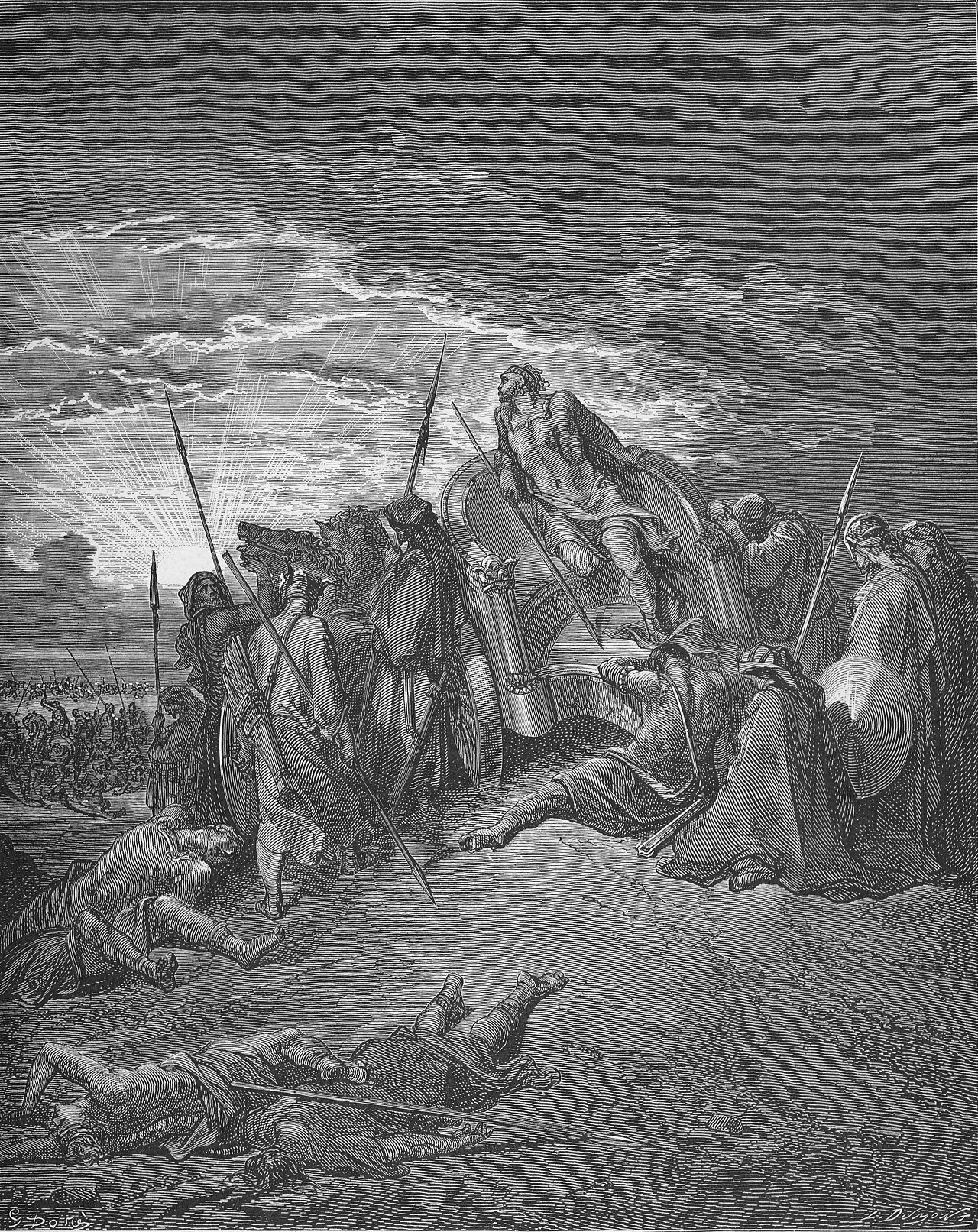
His son Ahab reigned there twenty-two years and made the city what the prophets would remember. He married Jezebel, daughter of the king of the Sidonians, built a temple for Baal inside his capital and set up an altar in it, and raised an Asherah pole beside it. 1 Kings 22:39 also names an ivory palace among his works. Ben-hadad of Aram besieged the city with thirty-two kings behind him and was beaten off twice. Ahab took Naboth's vineyard at Jezreel while his address was still Samaria, and the word spoken against him for it landed at home: he died of an arrow at Ramoth-gilead, his body was carried back, and his chariot was washed at the pool of Samaria where the dogs licked his blood.
The city's hardest hours come in the Elisha chapters. Ben-hadad shut it in again and the famine went so deep that a donkey's head sold for eighty shekels of silver and two women agreed to eat their sons. The king walked the wall in sackcloth and swore to take the prophet's head. Elisha answered that flour would be cheap at that gate within a day. Four men with leprosy, kept outside the wall by the law, walked into the Aramean camp at twilight and found it empty. They ate, they looted, and then they stopped and said the day was a day of good news and the news belonged to the city.
Jehu ended the house of Ahab. Seventy sons of Ahab were being raised in Samaria, and Jehu's letters brought their heads to Jezreel in baskets. He came to the capital, struck down everyone of Ahab's house who remained, gathered the worshippers of Baal into their own temple, and pulled the temple down. The calves that Jeroboam had set up at Bethel and Dan stayed, and Kings says so plainly, so the reform stopped short of the sin it had been sent to end.
- eighth century
The eighth century brought wealth and then the prophets. Under Jeroboam II the capital was rich, and Amos names its winter houses and summer houses, its ivory houses and its beds inlaid with ivory, and says all of it will end. Hosea names the calf of Samaria and says God has rejected it. Isaiah calls the city the majestic crown of Ephraim's drunkards, a fading flower set on the summit above a fertile valley. Micah says God will make Samaria a heap of rubble in the open field and pour her stones into the valley.
- around 722 BC
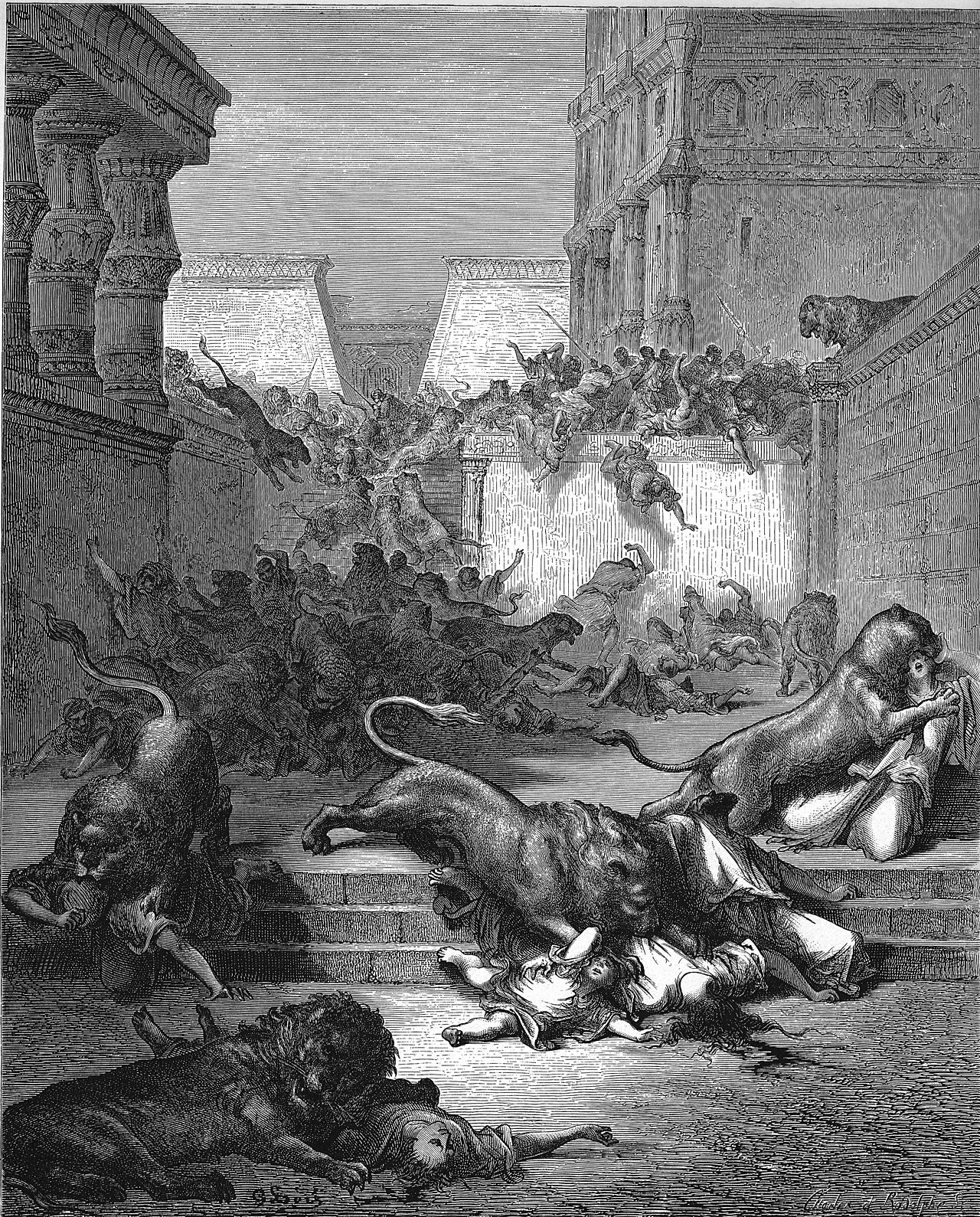
Assyria came, and the city held out about three years. In the ninth year of Hoshea, around 722 BC, the Assyrians captured Samaria and deported Israelites to Halah, to Gozan by the Habor River, and to the cities of the Medes. Then the narrative stops. 2 Kings 17:7 to 17:23 spends seventeen verses explaining the fall, and Assyrian strength is not the explanation it gives. The king of Assyria then brought people from Babylon, Cuthah, Avva, Hamath and Sepharvaim and settled them in the towns of Samaria. Lions came among them, a priest was sent back from exile to teach them how to fear the LORD, and he taught them at Bethel. 17:33 records the result: they feared the LORD and served their own gods at the same time.
After the fall the name stayed on the hill country. Hezekiah sent couriers north through Ephraim and Manasseh and some came to Jerusalem. Josiah went north to tear down the high places in the towns of Samaria. When the exiles returned from Babylon, the people of the land offered to help build the temple and were refused, and Sanballat mocked the wall of Jerusalem from the army of Samaria. A rival sanctuary stood on Mount Gerizim. John Hyrcanus destroyed that sanctuary about 128 BC and the city itself about 108 BC, and the hostility recorded in the Gospels has a history on both sides of it.
Augustus gave the site to Herod the Great, who rebuilt it on a large scale, settled colonists in it, raised a temple to Augustus on the acropolis, and renamed the place Sebaste, which is Greek for Augusta. That is why the modern village beside the mound is called Sebastia. It is also why Albert Barnes and Adam Clarke, writing in the nineteenth century, both argued that no city actually named Samaria was standing in the first century.
Common questions
Is Samaria a city or a region?
Both, and the Bible uses the word both ways. Omri bought a hill about 880 BC, built a city on it, and called it Samaria after Shemer, who had owned the hill. The city gave its name to the kingdom ruled from it, so "the king of Samaria" means the king of Israel, and after the city fell the name stayed on the surrounding hill country. By the first century the word almost always means that region, between Judea and Galilee.
Why did Samaria fall, and when?
Assyria besieged the city for three years and captured it, and the usual date is 722 BC. Scripture does not leave the reason to politics. 2 Kings 17:7 to 17:23 stops the narrative to say the people had worshipped other gods, would not listen to the prophets, and were removed from the LORD’s presence. The hill Omri had bought was poured back into the valley, which is what Micah said would happen.
Did Shalmaneser or Sargon capture Samaria?
Readers differ; the positions are named
2 Kings names Shalmaneser as the king who besieged the city, and the Babylonian Chronicle records that Shalmaneser shattered Samaria. Sargon II, his successor, claims the conquest in his own inscriptions from Khorsabad and counts 27,290 deportees. One reading is that Shalmaneser took the city in 722 shortly before his death and Sargon claimed the credit. A second is that Sargon took it again about 720 after a revolt, which is the case Hayim Tadmor argued in 1958. A third takes Sargon’s claim at face value. Bob Becking and K. Lawson Younger Jr. have each surveyed the evidence at length, and the question is open.
Who were the Samaritans, and where did they come from?
Readers differ; the positions are named
2 Kings 17:24 records that the Assyrians settled peoples from Babylon, Cuthah, Avva, Hamath and Sepharvaim in the towns of Samaria, and 17:33 says of the community that grew up there, "They worshiped the LORD, but they also served their own gods." Jewish tradition takes this as the origin of the Samaritans and calls them Kutim, after Cuthah, and Josephus follows that line in the Antiquities, written about AD 94. The Samaritans give a different account of themselves. They call themselves Shamerim, the keepers of the Torah, and hold that they descend from Ephraim, Manasseh and a line of Levites who kept the original worship at Mount Gerizim. Both accounts stand here in the terms each community uses.
Why did Jews and Samaritans not get along?
John states the fact and does not explain it: "For Jews do not associate with Samaritans." Behind it lie the mixed worship of 2 Kings 17, the refusal in Ezra 4 to let the northerners help rebuild the temple, Sanballat’s opposition to Nehemiah from the army of Samaria, the rival sanctuary on Mount Gerizim, and the destruction of that sanctuary and of the city itself by John Hyrcanus in the second century BC. Luke records the hostility running the other way too, when a Samaritan village refused to receive Jesus because He was heading for Jerusalem.
Is the Samaritan Pentateuch a corrupted Bible?
Readers differ; the positions are named
No. It is a second ancient Hebrew text of the five books of Moses, written in a script descended from old palaeo-Hebrew letters, and it differs from the Masoretic Text in a few thousand mostly small places. Several hundred of its readings agree with the Septuagint, and manuscripts from Qumran carry readings of the same family, so it stands in a real ancient stream. A small number of readings are sectarian, and the clearest is the Samaritan tenth commandment directing an altar on Mount Gerizim where the Masoretic Text of Deuteronomy 27:4 reads Mount Ebal. Scholars generally judge that reading a later expansion, and naming who judges it so is a different thing from calling anyone a forger.
What can you see at Samaria today?
The mound is Tell Sebastiyeh, beside the village of Sebastia, about 11 km northwest of Nablus. On the summit the excavators found the royal quarter of the Israelite kings on its platform, with a casemate wall and fine ashlar masonry, which Kathleen Kenyon assigned to Omri and Ahab. Above and around it stands Herod’s Sebaste: the temple of Augustus with its staircase, a theatre, a stadium, a forum, and the colonnaded street that most photographs show, which is largely Severan rather than Herodian. On the southern slope is the Byzantine church associated with John the Baptist, with a Crusader cathedral built over the site later.
Are the ivory houses of Amos real?
Readers differ; the positions are named
Amos names ivory houses and ivory-inlaid beds in the capital, and 1 Kings 22:39 names the ivory palace among the works of Ahab. Both excavations recovered carved ivory plaques and fragments from the royal quarter, several hundred pieces, in Phoenician and Syrian style with Egyptian motifs, which is what a Sidonian marriage would predict. They are furniture inlay and wall panelling rather than building material. The dating of parts of the collection is argued and this page does not settle it.
What happened in Samaria in the book of Acts?
Persecution scattered the Jerusalem church, Philip went down to a city in Samaria and preached Christ, unclean spirits came out, the sick were healed, and there was great joy in that city. When the apostles in Jerusalem heard that Samaria had received the word of God they sent Peter and John, who prayed and laid hands on the believers, and they received the Holy Spirit. Which city Philip went to is not stated. Albert Barnes and Adam Clarke both argued that no city named Samaria was standing then, since Hyrcanus had destroyed it, and Clarke thought Shechem the more likely place. The line Jesus drew in Matthew 10:5 is gone by Acts 9:31, where the church throughout Judea, Galilee and Samaria is at peace and growing.
Notable art
4 verified pieces depicting Samaria
Sources cited
- OpenBible.info Bible Geocoding: Samariaread 2026-08-20The coordinates on this page. Used under CC-BY with attribution to OpenBible.info.
- Berean Standard BiblePublic domain since 2023. All Scripture quoted on this page, from the site's own verse store.
- George A. Reisner, Clarence S. Fisher and David G. Lyon, Harvard Excavations at Samaria, 1908 to 1910 (Cambridge: Harvard University Press, 1924)The first campaign, the royal quarter on the summit and the ostraca.
- J. W. Crowfoot, Kathleen M. Kenyon and E. L. Sukenik, The Buildings at Samaria, Samaria-Sebaste I (London: Palestine Exploration Fund, 1942)The Joint Expedition on the platform, the casemate wall and the palace.
- J. W. Crowfoot and Grace M. Crowfoot, Early Ivories from Samaria, Samaria-Sebaste II (London: Palestine Exploration Fund, 1938)The published ivories from the royal quarter.
- J. W. Crowfoot, Grace M. Crowfoot and Kathleen M. Kenyon, The Objects from Samaria, Samaria-Sebaste III (London: Palestine Exploration Fund, 1957)The finds volume of the Joint Expedition.
- Ron E. Tappy, The Archaeology of Israelite Samaria, volumes I and II (Harvard Semitic Studies, 1992 and 2001)The re-examination of the stratigraphic record, cited for the position it argues.
- Hayim Tadmor, "The Campaigns of Sargon II of Assur: A Chronological-Historical Study", Journal of Cuneiform Studies 12 (1958)The two-stage reading of the fall of the city, cited for the position it argues.
- Bob Becking, The Fall of Samaria: An Historical and Archaeological Study (Leiden: Brill, 1992)A book-length survey of the Assyrian and biblical evidence.
- K. Lawson Younger Jr., "The Fall of Samaria in Light of Recent Research", Catholic Biblical Quarterly 61 (1999)The later survey of the same question.
- Sargon II, the Display Inscription and the Nimrud Prism, Khorsabad and Nimrud, late eighth century BCThe Assyrian claim to the conquest and the deportation figures of 27,290 and 27,280, quoted from standard published translations.
- The Babylonian Chronicle, Chronicle 1, on the reign of Shalmaneser VThe record that Shalmaneser shattered Samaria.
- Flavius Josephus, Antiquities of the Jews, books 9, 11, 13 and 15, and The Jewish War, book 1The Samaritan community, the Gerizim temple, the destructions under John Hyrcanus, and Herod at Sebaste. Public domain in the Whiston translation.
- Masekhet Kutim, a minor tractate appended to the Talmud, and the Babylonian Talmud, closed in Babylonia around AD 500Named, dated and placed per the rabbinic-sources rule. Law and reception history from a specific community, linked to the wing on the Jewish writings.
- Targum Jonathan on the Prophets, the Aramaic paraphrase transmitted from the early centuries ADThe messianic reading of Isaiah 28:5, cited here through Matthew Henry.
- Rufinus of Aquileia, Ecclesiastical History 11.28, about AD 402The earliest dated witness this page names for the tomb of John the Baptist at Sebaste.
- Jerome, Letter 108, the pilgrimage of Paula, about AD 404The tomb at Sebaste named again about two years later. Public domain in translation.
- Origen, Commentary on the Gospel of John, book 20, AD 253The guard etymology of the name, reported as a Hebrew tradition. Public domain in translation.
- Irenaeus, Against Heresies, book 1, AD 202The earliest surviving Christian account of Simon of Samaria. Public domain in translation.
- Tertullian, Against Marcion, book IV, AD 220A second-century writer's summary of where Samaria came from, given as the reception of it in his own century.
- Cyril of Jerusalem, Catechetical Lecture 16, AD 386What Simon actually asked Peter for. Public domain in translation.
- Ambrose of Milan, Commentary on Luke, AD 397The earliest reading this page carries on the Samaritan of the Jericho road. Public domain in translation.
- Jerome, Commentary on Matthew, AD 420The prohibition of Matthew 10:5 held together with the commission of Matthew 28:19. Public domain in translation.
- Bede, On the Gospel of Luke and Commentary on Acts, AD 735The guard etymology again, seven centuries after Origen. Public domain in translation.
- Matthew Henry, Commentary on the Whole Bible (1710)The crown of glory of Isaiah 28:5 and the Targum reading behind it. Public domain.
- Adam Clarke, Commentary on the Bible (1832)Why Omri moved the capital, Maundrell on the hill, and Assyrian deportation policy. Public domain.
- Albert Barnes, Notes, Explanatory and Practical, on the Old and New Testaments (1832 to 1869)The description of the site, the Beth-khumri name, the lions, the priest sent back, and the city of Acts 8:5. Public domain.
- Robert Jamieson, A. R. Fausset and David Brown, Commentary Critical and Explanatory on the Whole Bible (1871)The Beth-khumri tablet from Nineveh and the sentence on Jew and Samaritan one in Christ. Public domain.
- Charles H. Spurgeon, The Metropolitan Tabernacle Pulpit, sermons 1238, 1996, 2352, 2894 and 2960The siege, the four men at the gate, the day of good news, and the one leper who returned. Public domain.
- Henry Maundrell, A Journey from Aleppo to Jerusalem at Easter A.D. 1697The traveller Adam Clarke quotes on the hill of Samaria at Isaiah 28:1. Public domain.
- Gustave Doré, La Sainte Bible (Tours: Alfred Mame et fils, 1866)The five plates on this page. Public domain.
- George Adam Smith, Atlas of the Historical Geography of the Holy Land (1915)The two map plates the site holds for this region. Public domain.
Keep studying
On this page
Studies20
Every page that names it1
Books that name it3
Lives that run through it6
Doorway2
Keep this page