
The Intermediate State
Between death and resurrection, Scripture says the Christian dead are both with Christ and asleep — set the passages side by side and see how they resolve.
Summary
Between death and resurrection, Scripture says the Christian dead are both with Christ and asleep. Set the passages side by side and see how they resolve.
- To depart and be with Christ is far better: presence, now.
- Sleep is the Bible's word for the body, not the soul.
- This site holds conscious presence with Christ; the other readings get their due.
- The intermediate state is not the destination; resurrection is.
The question, stated plainly
What happens the moment a believer dies? Scripture answers in two registers that seem to collide. In one, the dead are awake and glad: Jesus tells the thief, "To-day shalt thou be with me in Paradise" (Luke 23:43); Paul desires "to depart and be with Christ; for it is very far better" (Phil 1:23) and calls being "absent from the body" the same as being "at home with the Lord" (2 Cor 5:8); John sees "the souls of them that had been slain" crying out beneath the altar (Rev 6:9-10).
In the other register, the dead are asleep: Paul writes of "them that fall asleep" (1 Thess 4:13), Daniel of "them that sleep in the dust of the earth" (Dan 12:2), and Stephen, stoned, simply "fell asleep" (Acts 7:60).
The tension is not a translation artifact. Both idioms are apostolic, and the reader is meant to feel the pull before resolving it. The intermediate state is the name for that gap, the condition of the person between the last breath and the resurrection of the body at the last trumpet. It is a waiting room, not a destination; every text about it points forward to something not yet arrived. Getting it right guards against two errors at once: imagining the dead as ghosts already glorified, and imagining them as simply extinguished.
Why the site holds conscious presence with Christ
The traditional and majority Christian reading holds that the believer's spirit is consciously present with Christ between death and resurrection. The case rests on the weight of specific words. Paul's comparatives are the hinge: to die is "gain," and to depart is "very far better" (Phil 1:21, 23). A comparison of value only weighs something if someone is there to experience the better thing; unconsciousness is not "far better" than fruitful ministry, it is simply nothing. Likewise "at home with the Lord" (2 Cor 5:8) describes presence, not absence; and the souls under the altar in Revelation 6 speak, remember, and wait, conscious, though not yet raised.
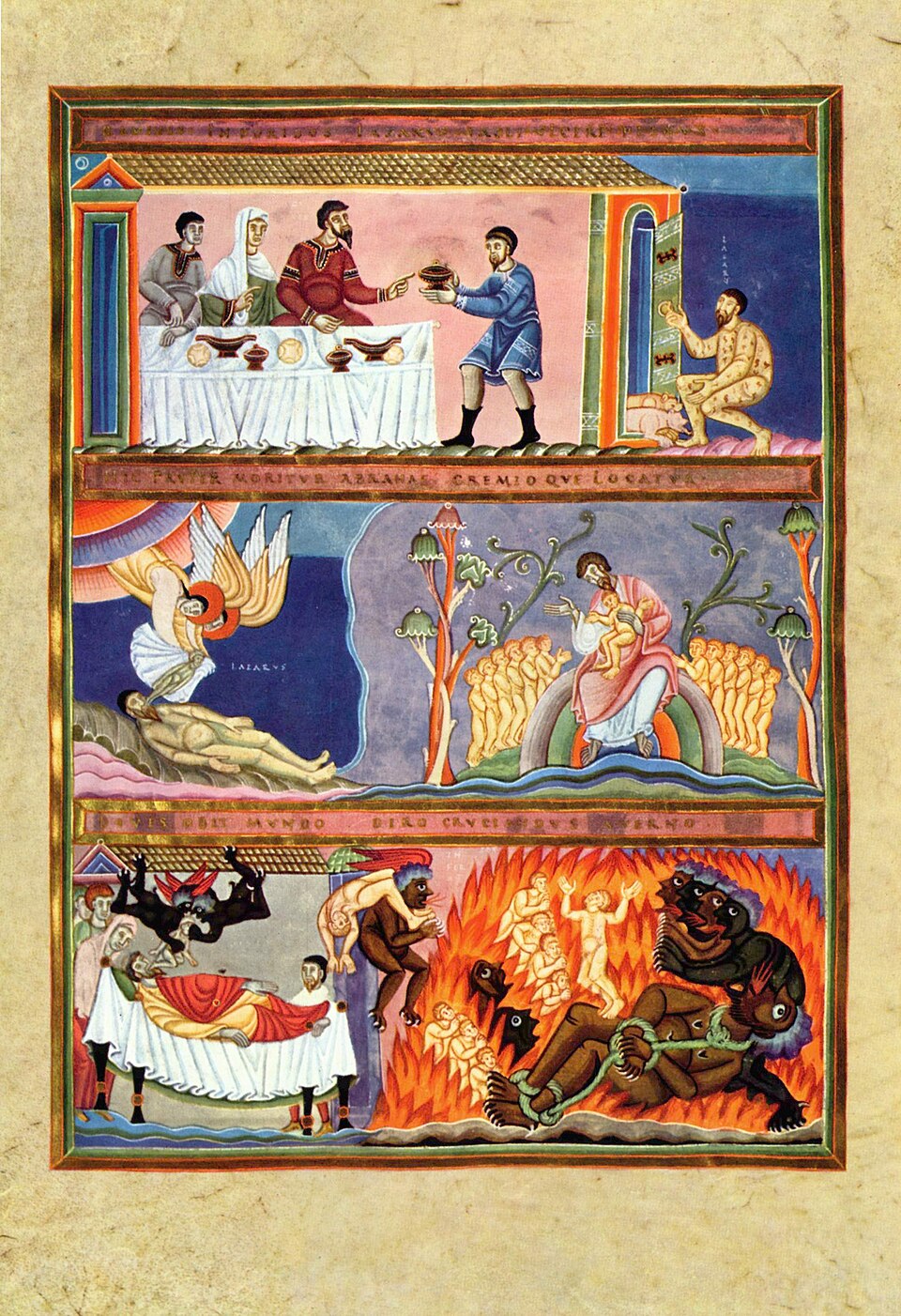
On this reading, the "sleep" language is a tender euphemism aimed at the body, not the soul. The Greek verb is koimáō, "to fall asleep", the very root of koimētḗrion, from which English gets "cemetery," literally a sleeping-place or dormitory. A body laid in the ground looks like a sleeper and, crucially, is guaranteed to wake. "Sleep" therefore names the outward rest of the corpse and the certainty of resurrection, not the extinction of awareness. Jesus' own picture in Luke 16, the rich man and Lazarus, both aware and speaking in hádēs, reinforces the point: the dead in his telling are anything but unconscious.
Luke names the comforted side of that scene "Abraham's bosom" (Luke 16:22), reclining at the patriarch's side, a Second Temple Jewish figure of speech for the righteous dead at rest, not a Christian invention. And Hades itself, in the very same scene, is explicitly not the last word on the rich man's fate:
"in hell--not the final place of the lost (for which another word is used), but as we say "the unseen world." But as the object here is certainly to depict the whole torment of the one and the perfect bliss of the other, it comes in this case to much the same." — Jamieson, Fausset & Brown, Commentary Critical and Explanatory on the Whole Bible (1871), on Luke 16:23
The rich man's torment is Hades' dark half, not Gehenna's furnace, the KJV's single word "hell" for Sheol, Hades, and Gehenna alike blurs a distinction the underlying languages keep sharp (see Afterlife Vocabulary for the fuller map of that terrain). Lee Strobel reaches the same floor from evidence rather than exegesis: The Case for Heaven (2021) weighs near-death testimony as support for, never proof of, a conscious afterlife, confirmation running alongside the text, never ahead of it.
The other readings, given their due
Fair treatment means presenting at full strength the alternatives. Soul sleep (psychopannychism) holds that the whole person, soul included, rests unconscious until the resurrection. Its texts are real: "the dead know not anything" (Eccl 9:5), "in death there is no remembrance of thee" (Ps 6:5), "his thoughts perish" (Ps 146:4), and the sheer consistency of the "sleep" idiom across both Testaments.
Its most elegant move answers Philippians directly: because a sleeper perceives no passage of time, the believer would experience death and resurrection as a single instant, so "to depart and be with Christ" remains true without any conscious middle state. The view was held by some early Anabaptists and has recurred through church history (Schaff, History of the Christian Church).
A last question about the passage itself deserves an honest answer: is the rich man and Lazarus a parable, or a reported account? Nothing in the text calls it "a parable," unlike Luke's surrounding chapters, 15:3 opens flatly, "he spake unto them this parable", and it is the only such story in Jesus' teaching to give a character a proper name, "Lazarus," where his other illustrations use unnamed figures: a sower, a shepherd, a Samaritan, a rich fool.
That missing label, plus the name, has led some readers to take it as a narrated disclosure of the afterlife's actual furniture. Others read it as parabolic all the same, Luke 15-16 is wall-to-wall parables, labeled or not, using a vivid scene to press a point about riches and "Moses and the prophets" rather than to draw hell's floor plan.
MannaFest does not need to settle which it is: the case for conscious presence stands first on Philippians 1:23, 2 Corinthians 5:8, and Revelation 6:9-11 in their own words; Luke 16 corroborates it either way.
A separate axis is purgatory, the Roman Catholic teaching that the saved who die imperfectly sanctified undergo purifying suffering before glory. It draws on 1 Corinthians 3:15 and on 2 Maccabees 12, the latter an Apocryphal book, labeled here as a study resource and not counted among the 66 canonical books. It is included for completeness, not endorsed. The debate, in the end, is lexical: everything turns on whether koimáō describes a body at rest or a soul switched off.
The site reads it as the former, and reads the whole intermediate state as a lit room where the departed wait, awake, for the trumpet. Both scenes at the center of this page, the beggar at Abraham's side, the thief on the cross, come from the one Gospel writer who follows Jesus all the way to Jerusalem; see Gospel of Luke for the fuller portrait.
Between death and resurrection
Two vocabularies, one death
Scripture speaks of the Christian dead in two registers at once. One says they are with Christ, awake and glad. The other says they sleep. Set the passages side by side: the tension is real, and the reader is meant to feel it before resolving it.
With Christ
The waking texts
Truly I tell you, today you will be with Me in Paradise.I desire to depart and be with Christ, which is far better indeed.We are confident, then, and would prefer to be away from the body and at home with the Lord.I saw under the altar the souls of those who had been slain… And they cried out in a loud voice.Asleep
The sleeping texts
Brothers, we do not want you to be uninformed about those who sleep in death.Our friend Lazarus has fallen asleep… So Jesus told them plainly, Lazarus is dead.And many who sleep in the dust of the earth will awake, some to everlasting life.For the living know that they will die, but the dead know nothing.The hinge1
The word that resolves it
Paul stakes the question on one comparative. To depart is not annihilation and not a blank; it is far better — a phrase that only weighs anything if the one who departs is there to know it.
For to me, to live is Christ, and to die is gain… I desire to depart and be with Christ, which is far better indeed.“Gain” and “far better indeed” are conscious comparisons: the textual anchor for readers who hold conscious presence with Christ over soul sleep.
The words underneath
Four terms the dispute turns on
The debate is finally lexical. Does “sleep” (koimáō) describe the body's rest and the certainty of waking, or the soul's unconsciousness? Each word below opens its own study.
- koimáōto fall asleepG2837 · root of koimētḗrion, “cemetery”: a sleeping-place
- paradeisosparadise, a gardenG3857 · the place promised the thief (Luke 23:43)
- hádēsthe realm of the deadG86 · the NT counterpart of Sheol (Luke 16)
- she’ôlthe grave, the gathering-placeH7585 · the OT abode of the dead, morally neutral
The views, presented at full strength
How Christians read the same texts
◈Conscious presence, soul sleep, and purgatorycontested · Contested: three readings, named by who holds them
Conscious presence with Christ
The believer's spirit is consciously with Christ between death and resurrection: the reading Jamieson, Fausset & Brown take in their Commentary Critical and Explanatory (1871), and that Lee Strobel argues from evidence in The Case for Heaven (2021). “Sleep” names the body's outward rest and the sureness of waking, as Greek koimētḗrion (“cemetery”) means a dormitory. The souls under the altar speak (Rev 6:9-10); “to depart and be with Christ” is “far better” (Phil 1:23); “absent from the body” is “at home with the Lord” (2 Cor 5:8). None of these weigh anything if the departed are unconscious.
Soul sleep (psychopannychism)
The whole person, soul included, rests unconscious until the resurrection. Because the sleeper perceives no interval, being “with Christ” is experienced as instantaneous at waking, so Phil 1:23 still holds without any conscious middle state. Load-bearing: “the dead know not anything” (Eccl 9:5), “in death there is no remembrance” (Ps 6:5), and the uniform “sleep” idiom. Held by some early Anabaptists and discussed across church history (Schaff, History of the Christian Church).
Purgatory (Roman Catholic)
A distinct axis: the saved who die imperfectly sanctified undergo purifying suffering before glory. It rests on 1 Cor 3:15 and on 2 Maccabees 12, an Apocryphal text, labeled here as a study resource, not flattened into the 66-book canon. Included for completeness, not endorsed.
The scene painted
Abraham’s side, and the rich man’s
The Rich Man and Lazarus (Abraham’s Bosom) — Master of the Codex Aureus of Echternach, c. 1035–1040. Luke names the beggar’s place at rest “Abraham’s bosom” (Luke 16:22) — reclining at the patriarch’s side, a Second Temple figure of speech for the righteous dead, not a Christian invention. The rich man’s torment, on the other side of the same scene, is Hades’ dark half, not Gehenna’s furnace — the two men painted here as this page’s own reading of Luke 16 describes them: both aware, both speaking, neither yet raised.
Follow the thread
Where this opens
Word study
koimáō: “to fall asleep”The verb that carries the whole dispute, and the root of the word “cemetery.”Word study
hádēs: the realm of the deadThe New Testament counterpart of Sheol, and the setting of the rich man and Lazarus.Passage
The rich man and LazarusJesus' own picture of the conscious dead (aware, speaking, remembering) in Hades.Lens
Resurrection typologyThe intermediate state is a waiting room; the lens traces what the sleepers wake to.Chapter
The resurrection bodyWhere sleep ends: 1 Corinthians 15 on the reunion of spirit and a glorified body at the last trumpet.Featured study
The Lake of FireWhere this waiting room leads for those outside Christ: the final judgment, not the intermediate state.Featured study
The New JerusalemWhere it leads for those in Christ: the resurrection body's home, once the waiting ends.