
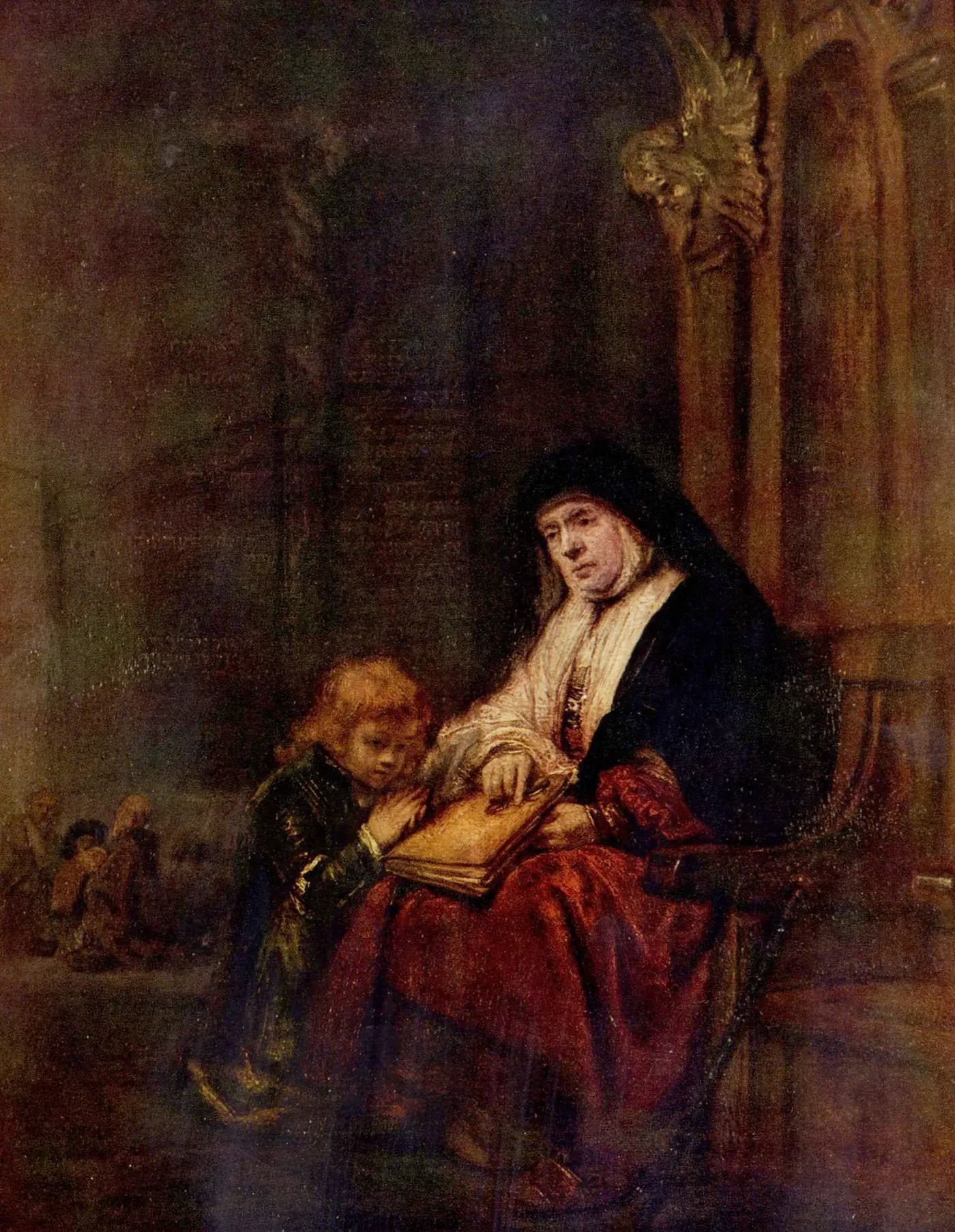
Saint Timothy in the Temple, Willem Drost, 1648. Public domain.
New Testament · Book 55 of 66
2 Timothy
2 Timothy is Paul's letter to Timothy from prison in Rome, written when Paul expected to die soon. He charges Timothy to guard the gospel, endure hardship and preach the word.
2 Timothy is Paul's letter to Timothy from prison in Rome, written when Paul expected to die soon. He charges Timothy to guard the gospel, endure hardship and preach the word.
What is 2 Timothy about?
2 Timothy is the last letter of Paul, written in chains at Rome to Timothy, his child in the faith. Paul expects to die, and he writes so that the faith he taught outlives him. He tells Timothy to guard what was entrusted to him and to hand it to faithful men who will teach others. Against the teachers of the last days he tells him to “continue in the things you have learned” (3:14) and in the Scriptures he has known from infancy. The letter ends with the charge to preach the word, Paul's race finished, and a call to come before winter.
All 4 chapters
Every chapter of the book, in one grid. Each cell opens that chapter.
- Guard the depositChapter 1
- A good soldierChapter 2
- The sacred writingsChapter 3
- The race finishedChapter 4
The colour is the movement of the letter the chapter stands in, one movement to a chapter, and every cell opens that chapter's Study level.
Who wrote it, where, when, for whom, and why?
The letter opens in the name of Paul, an apostle of Christ Jesus by the will of God, writing to Timothy, his beloved child (1:1 and 2). Paul writes of himself as the Lord's prisoner (1:8), chained like a criminal (2:9), who was appointed a preacher, an apostle and a teacher (1:11).
to which I was appointed as a preacher, an apostle, and a teacher.
2 Timothy 1:11, Berean Standard Bible.
Paul writes from Rome, where Onesiphorus searched until he found him (1:17). Timothy is away from him, and the letter asks him to come by way of Troas, where the cloak was left (4:13).
Paul writes near the end of his life: he is being poured out like a drink offering and the time of his departure is at hand (4:6). A first defense has already taken place (4:16), and he asks Timothy to come before winter (4:21).
Timothy knew the Scriptures from infancy (3:15), and his mother was a believing Jewish woman of Lystra (Acts 16:1). He has seen Paul's persecutions at Antioch, Iconium and Lystra (3:10 and 11), and the greetings of 4:19 tell him to greet Prisca and Aquila and the household of Onesiphorus.
The letter gives its reasons in its charges: fan the gift into flame (1:6), guard the treasure (1:14), entrust the teaching to faithful men (2:2), continue in what you have learned (3:14), preach the word (4:2), and come quickly (4:9).
Sources. 2 Timothy 1:1 and 2, 1:6, 1:8, 1:11, 1:14, 1:17, 2:2, 2:9, 3:10 and 11, 3:14 and 15, 4:2, 4:6, 4:9, 4:13, 4:16, 4:19 and 4:21; Acts 16:1. Every verse is read in the Berean Standard Bible.
How is 2 Timothy arranged, and what is it for?
The four movements the letter falls into, one to a chapter, then what it teaches and what it was written to do.
- Guard the depositChapter 1, 18 verses, the turn at 1:14
The faith of Lois and Eunice, the gift fanned into flame, and the treasure kept by the Spirit.
- A good soldierChapter 2, 26 verses, the turn at 2:2
The teaching passed to faithful men, seven pictures of the worker, and the word that cannot be chained.
- The sacred writingsChapter 3, 17 verses, the turn at 3:16
The people of the last days, Paul's own example, and the Scriptures Timothy has known from infancy.
- The race finishedChapter 4, 22 verses, the turn at 4:7
The charge to preach the word, Paul poured out as an offering, and the friends who stayed and left.
The theme
The letter is about a faith that has to outlast the man who taught it. Paul is in chains and expects to die, and he writes so that what he was given outlives him. Timothy is to guard the deposit, suffer for the gospel unashamed, hand the teaching to faithful men, hold to the Scriptures against the teachers of the last days, and preach the word. Against every friend who leaves, the letter sets the Lord who stood by Paul, and the crown laid up for all who long for his appearing.
The purpose
Paul writes to call Timothy to Rome before winter, and to leave him ready to carry on if he arrives too late. The letter gives him courage for suffering, a method for passing on the teaching, a standard in the Scriptures, and Paul's own finished life as an example. It is the last letter of Paul the Scriptures hold.
The faith handed on, link by link
- Link 3Timothy as a childTaught the Scriptures at home“From infancy you have known the Holy Scriptures”3:15
- Link 4Paul to TimothyThe pattern of teaching given, the treasure put in his keeping“the pattern of sound teaching you have heard from me”1:13 and 14
- Link 6Faithful men to othersThose taught become teachers“who will be qualified to teach others as well”2:2
Guard the deposit, 2 Timothy 1
What the text says in these 18 verses, and the pages they open on.
Paul greets Timothy as his beloved child and remembers his tears (1:2 to 4). The faith Timothy holds lived first in his grandmother Lois and his mother Eunice (1:5), and the gift of God came to him when Paul laid hands on him, so he is to fan it into flame (1:6). God gave a spirit of power, love and self-control (1:7), so Timothy is to stand unashamed of the testimony and of Paul the prisoner and share in suffering for the gospel (1:8). That gospel is grace given in Christ before time began and now revealed in the Savior who abolished death (1:9 and 10). Paul himself stands unashamed, because he knows whom he has believed (1:12). He asks Timothy to hold the pattern of sound teaching and to guard the treasure entrusted to him by the Holy Spirit (1:13 and 14). The chapter ends with two kinds of friend: everyone in Asia has deserted him, but Onesiphorus searched Rome until he found him (1:15 to 18).
Guard the treasure entrusted to you, with the help of the Holy Spirit who dwells in us.
- Study
2 Timothy 1the faith of three generations, the gift fanned, and the deposit guardedShow the summary and 3 pagesShow summary, 3 pagesHide the summary
Paul, an apostle of Jesus Christ by the will of God, to Timothy, my dearly beloved son. I thank God, whom I serve from my forefathers with pure conscience, as without ceasing I have remembrance of you in my prayers. I call to remembrance the sincere faith that is in you. Which dwelt first in your grandmother Lois, and your mother Eunice. Stir up the gift of God. God has not given us the spirit of fear; but of power, and of love, and of a sound mind. Be not ashamed of the testimony of our Lord. Henry reads the chapter as the opening challenge to faithful witness.
On this chapter (3)
- Spiritual gifts
The gifts the Spirit gives, and the laying on of hands.
- Did Paul write this letter, and from a second imprisonment at Rome?
Answered under Where do readers disagree, lower on this page, with each reading and who holds it.
- 2 Timothy 1:6
The verse on its own page, with the commentators on it by era.
- Spiritual gifts
Who turned away, and who stood unashamed
Turned away (2)
Stood unashamed (3)
- Paul1:12
Suffers unashamed, because he knows whom he has believed.
Unashamed
- Onesiphorus1:16 and 17
Often refreshed Paul, was unashamed of his chains and searched Rome until he found him.
Unashamed
- Timothy, as charged1:8
Is to stand unashamed of the testimony and of Paul, and to join him in suffering.
Unashamed
Characters (7)
Who the text names. A name with a page carries its door.
- Paul
An apostle by the will of God, writing as a prisoner (1:1, 1:8).
- Timothy
Paul's beloved child, charged to guard what he was given (1:2, 1:14).
- Lois
Timothy's grandmother, in whom his faith first lived (1:5).
- Eunice
Timothy's mother, who held the same faith (1:5).
Show the next 3
- Phygelus
Named among those in Asia who deserted Paul (1:15).
- Hermogenes
Named with Phygelus among the deserters (1:15).
- Onesiphorus
Searched Rome until he found Paul, unashamed of his chains (1:16 to 18).
Places (3)
Where the chapter stands.
Themes (3)
What the chapter raises, each on its own page where one stands.
- Spiritual gifts
The gift given through the laying on of hands (1:6).
- Suffering for the gospel
Sharing in suffering by the power of God (1:8).
- The deposit
The treasure entrusted to Timothy and kept by the Spirit (1:14).
In Acts and 1 Timothy. Acts 16:1 names Timothy the son of a believing Jewish woman at Lystra; 1 Timothy 4:14 tells of the gift given at the laying on of the elders' hands, and 1 Timothy 6:20 gives the same charge to guard what was entrusted.
A good soldier, 2 Timothy 2
What the text says in these 26 verses, and the pages they open on.
Timothy is to be strong in grace and to entrust what he heard from Paul to faithful men who will teach others (2:1 and 2). Paul gives him pictures to think with: a soldier who keeps free of civilian affairs, a competitor who wins the crown only by the rules, a farmer who works before he eats (2:3 to 6). He is to remember Jesus Christ, raised from the dead and descended from David; Paul is chained like a criminal, but the word of God is not chained (2:8 and 9). A trustworthy saying follows in four lines on dying, enduring, denying and faithlessness (2:11 to 13). Timothy is to handle the word of truth accurately and avoid empty chatter, the talk that spread like gangrene through Hymenaeus and Philetus, who said the resurrection had already occurred (2:15 to 18). God's firm foundation still stands with its seal (2:19). In a large house some vessels are for honour, and the servant of the Lord must be kind, able to teach and gentle with opponents (2:20 to 26).
And the things that you have heard me say among many witnesses, entrust these to faithful men who will be qualified to teach others as well.
- Study
2 Timothy 2faithful men, the soldier, the athlete and the farmer, and the worker approvedShow the summary and 3 pagesShow summary, 3 pagesHide the summary
Be strong in the grace that is in Christ Jesus. Commit the things you have heard to faithful men, who shall be able to teach others also. You therefore endure hardship, as a good soldier of Jesus Christ. If a man also strive for masteries, yet is he not crowned, except he strive lawfully. Study to show yourself approved to God, a workman who does not need to be ashamed, rightly dividing the word of truth. In a great house there are not only vessels of gold. If a man therefore purge himself, he shall be a vessel for honour. Calvin reads the chapter as the workman's catalogue of metaphors.
On this chapter (3)
- Eternal security
The four lines of 2:11 to 13 and how they are read.
- What did Hymenaeus and Philetus teach in saying the resurrection had already occurred?
Answered under Where do readers disagree, lower on this page, with each reading and who holds it.
- 2 Timothy 2:15
The verse on its own page, with the commentators on it by era.
- Eternal security
7 pictures of the one who serves
- 1The child2:1
Strength comes from the grace that is in Christ Jesus.
- 2The soldier2:3 and 4
He keeps free of civilian affairs to please the one who enlisted him.
- 3The athlete2:5
The crown goes to the one who competes by the rules.
- 4The farmer2:6
The one who works hard is first to share in the crop.
- 5The workman2:15
He is an unashamed workman who handles the word of truth accurately.
- 6The vessel2:20 and 21
One cleansed of what is unfit is useful to the Master for every good work.
- 7The servant2:24 and 25
He is kind to all, able to teach, and gentle with those who oppose him.
Characters (4)
Who the text names. A name with a page carries its door.
Places (1)
Where the chapter stands.
- A large house
The picture of vessels for honourable and common use (2:20).
Themes (3)
What the chapter raises, each on its own page where one stands.
- The word handled rightly
The workman who accurately handles the word of truth (2:15).
- The resurrection
The hope Hymenaeus and Philetus said was past (2:18).
- Eternal security
The four lines of the trustworthy saying (2:11 to 13).
Where these chapters take up the Old Testament (1)each marked as a quotation or an allusion, with the evidence
- Explicit quotation2 Timothy 2:19 at Numbers 16:5. The first words of the seal on God's foundation are the words Moses spoke to Korah and his followers, that the LORD will show who belongs to him. The store holds the pair as a quotation. Paul sets the words in quotation marks; the Berean text of Numbers reads who belongs to Him, and Paul's form, those who are His, follows the Greek of Numbers.
In Acts and 1 Timothy. 1 Timothy 1:20 names Hymenaeus among those Paul handed over to Satan to be taught not to blaspheme.
The sacred writings, 2 Timothy 3
What the text says in these 17 verses, and the pages they open on.
Paul warns that terrible times will come in the last days, and he lists the people who will fill them: lovers of themselves and of money, lovers of pleasure rather than of God, keeping a form of godliness and denying its power (3:1 to 5). They worm their way into households, and they oppose the truth as Jannes and Jambres opposed Moses, but their folly will be plain to all (3:6 to 9). Timothy has seen another life in Paul: his teaching, conduct, patience and the persecutions at Antioch, Iconium and Lystra, from which the Lord rescued him (3:10 and 11). All who desire to live godly lives in Christ will be persecuted (3:12). Timothy is to continue in what he learned, knowing from whom he learned it, and in the Holy Scriptures he has known from infancy (3:14 and 15). The chapter closes on where the Scriptures come from and what they equip the man of God to do (3:16 and 17).
All Scripture is God-breathed and is useful for instruction, for conviction, for correction, and for training in righteousness,
- Study
2 Timothy 3the last days, Paul's example, and the Scriptures from infancyShow the summary and 4 pagesShow summary, 4 pagesHide the summary
This know, that in the last days perilous times shall come. Men shall be lovers of their own selves, covetous, boasters, proud, blasphemers; having a form of godliness, but denying the power thereof. From such turn away. But continue in the things which you have learned, knowing from whom you have learned them, and that from a child you have known the holy scriptures. All scripture is given by inspiration of God, and is profitable for doctrine, for reproof, for correction, for instruction in righteousness. That the man of God may be perfect, thoroughly furnished for all good works. JFB reads the chapter as Scripture's testimony to its own sufficiency.
On this chapter (4)
- The God-breathed Scriptures
What the Scriptures are and where they come from.
- How is 3:16 translated, and which writings does it mean?
Answered under Where do readers disagree, lower on this page, with each reading and who holds it.
- Where do the names Jannes and Jambres come from?
Answered under Where do readers disagree, lower on this page, with each reading and who holds it.
- 2 Timothy 3:16
The verse on its own page, with the commentators on it by era.
- The God-breathed Scriptures
What Scripture is, what it is for, and what it makes
Useful (4)
- 1“for instruction”What to believe
- 2“for conviction”Where a life has gone wrong
- 3“for correction”How it is set right
- 4“for training in righteousness”How to go on in the right way
Characters (3)
Who the text names. A name with a page carries its door.
- Jannes and Jambres
The opponents of Moses whom the false teachers resemble (3:8).
- Moses
Opposed in Egypt, as the truth is opposed now (3:8).
- Paul the example
His teaching, conduct and persecutions, which Timothy saw (3:10 and 11).
Places (3)
Where the chapter stands.
Themes (3)
What the chapter raises, each on its own page where one stands.
- Scripture
God-breathed and useful for every good work (3:16 and 17).
- The last days
Terrible times and the people who fill them (3:1 to 5).
- Persecution
The lot of all who desire to live godly lives (3:12).
Where these chapters take up the Old Testament (1)each marked as a quotation or an allusion, with the evidence
- Probable allusion2 Timothy 3:8 at Exodus 7:11. Jannes and Jambres opposed Moses as the magicians of Egypt did when Pharaoh called them to copy the signs. The store holds the pair as a cross reference. The two names come from Jewish tradition, set out under Where do readers disagree.
In Acts and 1 Timothy. Acts 13 and 14 tell of the persecutions at Antioch, Iconium and Lystra, and Acts 16:2 says the brothers at Lystra and Iconium spoke well of Timothy.
The race finished, 2 Timothy 4
What the text says in these 22 verses, and the pages they open on.
Paul charges Timothy before God and Christ, the judge of the living and the dead, to preach the word in season and out of season (4:1 and 2). A time is coming when people will not bear sound teaching and will gather teachers to suit their itching ears (4:3 and 4), so Timothy must endure and fulfil his ministry (4:5). Paul is already being poured out like a drink offering; he has fought the good fight, finished the race and kept the faith, and the crown of righteousness is laid up for him and for all who long for the Lord's appearing (4:6 to 8). Then the names: Demas has deserted him, Crescens and Titus have gone, only Luke is with him, and Mark is to come (4:9 to 11). Timothy is to bring the cloak, the scrolls and the parchments, and to beware of Alexander the coppersmith (4:13 to 15). At the first defense no one stood with Paul, but the Lord stood by him and delivered him from the mouth of the lion (4:16 and 17). The letter closes with greetings and a last call to come before winter (4:19 to 22).
I have fought the good fight, I have finished the race, I have kept the faith.
- Study
2 Timothy 4preach the word, the drink offering, and the names at the endShow the summary and 4 pagesShow summary, 4 pagesHide the summary
I charge you before God. Preach the word; be instant in season, out of season; reprove, rebuke, exhort, with all longsuffering and doctrine. The time will come when they will not endure sound doctrine; but shall heap to themselves teachers, having itching ears. I am now ready to be offered, and the time of my departure is at hand. I have fought a good fight, I have finished my course, I have kept the faith. Henceforth there is laid up for me a crown of righteousness. Do your best to come to me soon. Bring the cloke, and the books, especially the parchments. Wesley reads this as the apostle's last will and testament.
On this chapter (4)
- The crown
The crowns promised to those who finish.
- What were the scrolls and the parchments of 4:13?
Answered under Where do readers disagree, lower on this page, with each reading and who holds it.
- What is the first defense of 4:16?
Answered under Where do readers disagree, lower on this page, with each reading and who holds it.
- 2 Timothy 4:8
The verse on its own page, with the commentators on it by era.
- The crown
12 names at the end of the letter
- Demas4:10
Deserted Paul in his love of this world.
Gone to Thessalonica
- Crescens4:10
Has left Paul's side.
Gone to Galatia
- Titus4:10
Has left Paul's side.
Gone to Dalmatia
- Luke4:11
The only one still with Paul.
With Paul at Rome
- Mark4:11
Useful to Paul in the ministry; Timothy is to bring him.
To come with Timothy
- Tychicus4:12
Sent by Paul.
Sent to Ephesus
- Carpus4:13
Keeps the cloak Paul left with him.
At Troas
- Alexander4:14 and 15
The coppersmith who did Paul great harm.
Timothy is to beware of him
- Prisca and Aquila4:19
Greeted by Paul.
With Timothy
- Erastus4:20
Stayed behind.
Remained at Corinth
- Trophimus4:20
Left behind sick.
Left at Miletus
- Eubulus, Pudens, Linus and Claudia4:21
Send Timothy their greetings with all the brothers.
With Paul at Rome
Characters (8)
Who the text names. A name with a page carries its door.
- Demas
Deserted Paul in love of this world (4:10).
- Luke
The only one still with Paul (4:11).
- Mark
Useful to Paul in the ministry (4:11).
- Tychicus
Sent to Ephesus (4:12).
Show the next 4
- Alexander the coppersmith
Did Paul great harm and opposed the message (4:14 and 15).
- Prisca
Greeted with her husband at the close (4:19).
- Aquila
Greeted with Prisca (4:19).
- Erastus
Remained at Corinth (4:20).
Places (6)
Where the chapter stands.
- Thessalonica
Where Demas went (4:10).
- Galatia
Where Crescens went (4:10).
- Dalmatia
Where Titus went (4:10).
- Troas
Where the cloak was left with Carpus (4:13).
Themes (3)
What the chapter raises, each on its own page where one stands.
- The crown of righteousness
Laid up for all who long for his appearing (4:8).
- Preaching the word
In season and out of season (4:2).
- Paul at Rome
The city of his last imprisonment.
Where these chapters take up the Old Testament (2)each marked as a quotation or an allusion, with the evidence
- Probable allusion2 Timothy 4:14 at Psalm 62:12. The Lord will repay Alexander according to his deeds, as the psalm says God repays each man. The store holds the pair as a cross reference. The phrase according to his deeds stands in both verses.
- Probable allusion2 Timothy 4:17 at Psalm 22:21. Paul says he was delivered from the mouth of the lion, the words of the psalmist's cry to be saved. The store holds the pair as a cross reference. The phrase the mouth of the lion stands in both verses.
In Acts and 1 Timothy. Acts 20:4 names Tychicus and Trophimus of Asia among Paul's companions, Acts 19:33 names an Alexander at Ephesus, and 1 Timothy 1:20 names an Alexander with Hymenaeus.
- Author
- Paul (1:1)
- Date
- c. AD 64–67, from Roman imprisonment shortly before his death
- Audience
- Timothy, whom Paul summons for one last visit
Where do readers disagree?
One list: the readings with their holders, and what the evidence does not settle.
Did Paul write this letter, and from a second imprisonment at Rome?
Who Wrote the Pastorals→- Paul, from a second imprisonment after a release. Held by Eusebius in his Ecclesiastical History, book 2, chapter 22, written about 325, and by J. N. D. Kelly, A Commentary on the Pastoral Epistles (1963).
- Genuine notes of Paul inside a later letter. Held by P. N. Harrison, The Problem of the Pastoral Epistles (1921).
- Written in Paul's name by a follower soon after his death. Held by I. Howard Marshall, The Pastoral Epistles, International Critical Commentary (1999).
What the evidence does not settle: Acts ends with Paul two full years at Rome in his own rented house, proclaiming the kingdom of God (Acts 28:30 and 31); the release and the second arrest are first told by later writers, Eusebius among them.
The argument in full
Paul, from a second imprisonment after a release. Eusebius reports that Paul was set free after his first defense, preached again, and on a second stay at Rome was put to death, and he names this letter as written then.
Genuine notes of Paul inside a later letter. The personal lines of chapter 4 read like real notes of Paul, while the vocabulary of the rest differs from his other letters.
Written in Paul's name by a follower soon after his death. The letter carries Paul's teaching and memory, written within his circle by someone with his authority.
How is 3:16 translated, and which writings does it mean?
The study of 3:16 in full→- Scripture is God-breathed, and useful. Held by B. B. Warfield, God-Inspired Scripture, Presbyterian and Reformed Review 11 (1900).
- Every God-breathed Scripture is also useful. Held by Henry Alford, The Greek Testament (1856), on 3:16.
What the evidence does not settle: The Greek sentence reads Scripture, God-breathed and useful, and the translator places the verb; the verse before names the Holy Scriptures Timothy had known from infancy (3:15), and readers differ on how far the word reaches beyond them.
The argument in full
Scripture is God-breathed, and useful. The two words joined by and are most naturally read together as what is said of Scripture, so Scripture is both breathed out by God and useful.
Every God-breathed Scripture is also useful. The first word describes the Scripture meant, and the word also adds usefulness to a quality already granted.
Where do the names Jannes and Jambres come from?
- From a Jewish book about the two magicians. Held by Origen in his Commentary on Matthew, on Matthew 27:9, who names a secret book called Jannes and Jambres as the source of 3:8.
- From tradition known to Jews and others alike. Held by Numenius of Apamea, On the Good, as Eusebius quotes him in Preparation for the Gospel, book 9, chapter 8.
- From the Jewish writings on Exodus. Held by John Gill in his Exposition of the New Testament (1746 to 1748), on 3:8, who cites the Targum of Jonathan on Exodus 7:11.
What the evidence does not settle: Exodus calls them the wise men, sorcerers and magicians of Egypt (Exodus 7:11), and the surviving copies of the book Origen names are later than Paul, so each reading rests on witnesses later than the letter.
The argument in full
From a Jewish book about the two magicians. Paul draws on a writing his readers knew, as he quotes a Cretan poet at Titus 1:12.
From tradition known to Jews and others alike. A pagan writer of the second century names Jannes and Jambres as the Egyptian scribes who stood against Moses, so the names were widely known.
From the Jewish writings on Exodus. The Targum names the two magicians at Exodus 7:11, where Pharaoh calls the wise men and sorcerers.
What did Hymenaeus and Philetus teach in saying the resurrection had already occurred?
The Resurrection Chapter→- A spiritual rising already past, in place of the raised body. Held by Tertullian in his On the Resurrection of the Flesh, chapter 19, written about 210.
- The resurrection turned into a figure. Held by John Calvin, Commentaries on the Epistles to Timothy, Titus and Philemon (1548), on 2:18.
What the evidence does not settle: The letter gives their teaching in one sentence, that the resurrection has already occurred (2:18), and each reading reasons from that sentence to the teaching behind it.
The argument in full
A spiritual rising already past, in place of the raised body. Some in his day said the resurrection was the soul's rising to the truth at baptism, and he reads 2:18 as the same claim.
The resurrection turned into a figure. They made the resurrection an allegory of new life, and so took away the hope of the body raised.
What were the scrolls and the parchments of 4:13?
- Books for the church after Paul's death. Held by John Chrysostom in his Homilies on Second Timothy, Homily 10.
- The scrolls, that is, the parchment notebooks. Held by T. C. Skeat, Especially the Parchments: A Note on 2 Timothy iv.13, Journal of Theological Studies 30 (1979).
What the evidence does not settle: The verse names the scrolls and the parchments by their material (4:13), and the readings weigh Scripture, Paul's own notes and his papers as their contents.
The argument in full
Books for the church after Paul's death. Paul was about to die and wanted the books so that the faithful would have them in place of his teaching.
The scrolls, that is, the parchment notebooks. The word translated especially can mean namely, so the parchments are the scrolls themselves, parchment notebooks Paul wanted with him.
What is the first defense of 4:16?
- The first defense at Rome, before the release. Held by Eusebius in his Ecclesiastical History, book 2, chapter 22, written about 325.
- The first hearing of the present trial. Held by J. N. D. Kelly, on 4:16, in the commentary named under the first question.
What the evidence does not settle: The verses say everyone deserted Paul at his first defense and the Lord stood by him and delivered him (4:16 and 17), and the readings differ on whether that hearing ended the case.
The argument in full
The first defense at Rome, before the release. Paul was delivered from the mouth of the lion at that hearing and set free, and preached again before his second arrest.
The first hearing of the present trial. A Roman trial could open with a first hearing before judgment, and Paul still expects to die, so the rescue was a delay before judgment.
The Text and the Spade
- The Erastus pavement at Corinth1st century AD, uncovered in 1929 near the theatre
A limestone paving block cut with a Latin inscription recording that Erastus, holding the office of aedile, laid the pavement at his own expense. Paul writes that 'Erastus has remained at Corinth' (4:20) and elsewhere names an Erastus as the city's treasurer. The identification is debated, because the name was common and the stone names an aedile where Romans 16:23 names the city's treasurer; a man of that name held civic office at Corinth in the right period.
- The Mamertine prison at Romethe Republican Carcer beneath the Capitoline, in use for centuries
A small stone chamber below street level, used for holding prisoners awaiting execution, and identified from at least the medieval period as the place of Paul's last confinement. The identification comes from tradition, and it should be reported that way. What the site does give a reader is the physical scale of Roman custody, which explains why the letter asks for a cloak and why Onesiphorus 'searched diligently until he found me' (1:17).
- Alexandria Troasthe Roman colony and harbor, excavated and surveyed from the 1990s
The port on the Asian side of the Aegean where travelers crossed for Macedonia, with a large harbor, a bath complex, and a street grid now traced by survey. It is the town where Paul left a cloak and books with Carpus (4:13), and it sits on the natural road from Ephesus to Rome, which is why the request makes sense as a stop on Timothy's way.
- Miletusexcavated from 1899 onward; the theatre and harbor monuments are Hellenistic and Roman
The harbor city where Paul had called the Ephesian elders to meet him, and where this letter says he left a companion behind: 'Trophimus I left sick in Miletus' (4:20). The site preserves a theatre seating many thousands and the remains of the harbor that has since silted up. The note is plain: an apostle who had seen many healed left a sick friend behind, and the letter records it in one line.
The pages 2 Timothy opens on
Studies39
- All Scripture, God-Breathed
- Who Wrote the Pastorals
- Spiritual Gifts
- Eternal Security
- The Crown
- The Resurrection Chapter
Show the next 6 titles
- The Letters of Paul
- How We Got the Bible
- Paul's Last Imprisonment and Death
- Hezekiah's Sundial, 2 Kings 20 & Isaiah 38
- Self-control
- Self-control and the Brain
Show the next 6 titles
- The Words Enkrateia and the City Without Walls
- Covenant Theology and Dispensationalism
- The Words Charuts and Spoude
- The Words Emunah and Pistos
- How to Study the Bible
- The Kindness of God Leads to Repentance
Show the next 6 titles
Words5
Books beside it5
Sources for this page
The painting in the band is Saint Timothy in the Temple, Willem Drost, 1648. Public domain. The movements, the chapter entries, the figures and the Context are read off the text of 2 Timothy. The works behind the readings under Where do readers disagree are Tertullian, On the Resurrection of the Flesh (about 210); Origen, Commentary on Matthew; Eusebius, Ecclesiastical History (about 325) and Preparation for the Gospel, which quotes Numenius of Apamea, On the Good; John Chrysostom, Homilies on Second Timothy; John Calvin, Commentaries on the Epistles to Timothy, Titus and Philemon (1548); John Gill, Exposition of the New Testament (1746 to 1748); Henry Alford, The Greek Testament, volume 3 (1856); B. B. Warfield, God-Inspired Scripture, Presbyterian and Reformed Review 11 (1900); P. N. Harrison, The Problem of the Pastoral Epistles (1921); J. N. D. Kelly, A Commentary on the Pastoral Epistles (1963); T. C. Skeat, Especially the Parchments, Journal of Theological Studies 30 (1979); and I. Howard Marshall, The Pastoral Epistles (1999). The Old Testament pairs are those the store records as quotations and cross references. Every verse quoted on this page is the Berean Standard Bible, read from the store.