
.jpg?width=1600)
Apostle
Peter
Rock, Chief Apostle · New Testament · c. 1-68 AD
The Crucifixion of Saint Peter, Caravaggio
Summary
Peter was a fisherman who became the leading apostle, bold, impulsive, and devoted to Jesus. He denied Christ, was restored, and became a pillar of the church.
- Peter was a married fisherman from Galilee whom Jesus renamed at their first meeting, before he had done anything at all.
- He confessed Jesus as the Christ at Caesarea Philippi and was rebuked in the same conversation for trying to talk Him out of the cross.
- He denied Christ three times in a courtyard over about an hour, and was restored on a beach by three questions and three commissions.
- At Pentecost he preached in the city that had killed his Lord, and at the house of Cornelius he opened the door to the nations.
- He wrote two letters telling churches under pressure that suffering is normal, and signed the pastoral one as a fellow elder.
On this page
Start here
Simon Peter answered, “You are the Christ, the Son of the living God.”
Matthew 16:16→- 6 key events in order
- 174 verses name Peter, across 8 books
In Scripture
- Verses
- 174
- Books
- 8
Peter
- Role
- Rock, Chief Apostle
- Era
- New Testament
- Dates
- c. 1-68 AD
- Tribe
- Galilee (Israel)
- Father
- Jonah
- Mother
- Unknown
- Spouse
- Unnamed wife (1 Cor 9:5)
The life in order
in the order the canon tells it
- Andrew brings him, and Jesus renames him on sightJohn 1:42Andrew brought him to Jesus, who looked at him and said, “You are Simon son of John. You will be called Cephas” (which is translated as Peter).
- The catch that filled two boats, and the first thing he saysLuke 5:8When Simon Peter saw this, he fell at Jesus’ knees. “Go away from me, Lord,” he said, “for I am a sinful man.”
- The house at Capernaum, where he lived with his wife's motherMark 1:29As soon as Jesus and His companions had left the synagogue, they went with James and John to the home of Simon and Andrew.
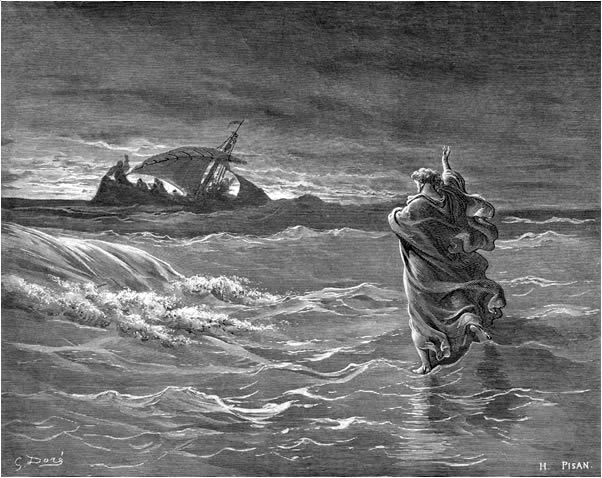
- He asks to come, and walks on the waterMatthew 14:29“Come,” said Jesus. Then Peter got down out of the boat, walked on the water, and came toward Jesus.
- At Caesarea Philippi, the confessionMatthew 16:16Simon Peter answered, “You are the Christ, the Son of the living God.”
- Seven verses later, the rebukeMatthew 16:23But Jesus turned and said to Peter, “Get behind Me, Satan! You are a stumbling block to Me. For you do not have in mind the things of God, but the things of men.”
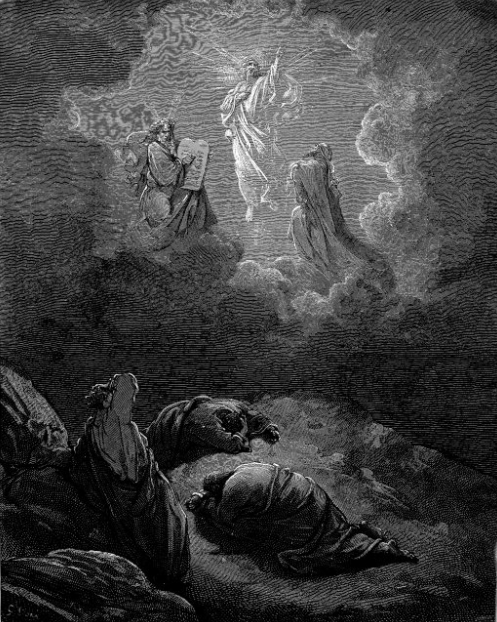
- On the mountain, he offers to build sheltersMatthew 17:4Peter said to Jesus, “Lord, it is good for us to be here. If You wish, I will put up three shelters—one for You, one for Moses, and one for Elijah.”
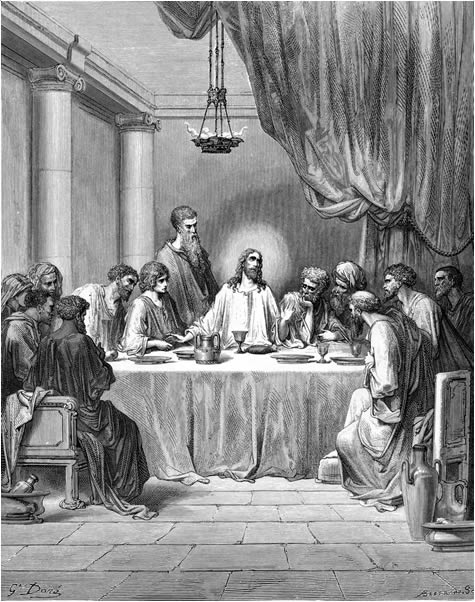
- In the upper room, he refuses the washingJohn 13:8“Never shall You wash my feet!” Peter told Him. Jesus answered, “Unless I wash you, you have no part with Me.”
- Prayed for before he falls, and given a job for afterwardLuke 22:32But I have prayed for you, Simon, that your faith will not fail. And when you have turned back, strengthen your brothers.”
- In the garden, he draws a swordJohn 18:10Then Simon Peter drew his sword and struck the servant of the high priest, cutting off his right ear. The servant’s name was Malchus.
- In the courtyard, the Lord looks at himLuke 22:61And the Lord turned and looked at Peter. Then Peter remembered the word that the Lord had spoken to him: “Before the rooster crows today, you will deny Me three times.”
- On the beach, the third question and the third chargeJohn 21:17Jesus asked a third time, “Simon son of John, do you love Me?” Peter was deeply hurt that Jesus had asked him a third time, “Do you love Me?” “Lord, You know all things,” he replied. “You know I love You.” Jesus said to him, “Feed My sheep.
- At Pentecost he preaches, and three thousand are baptizedActs 2:41Those who embraced his message were baptized, and about three thousand were added to the believers that day.
- At the temple gate, the lame manActs 3:6But Peter said, “Silver or gold I do not have, but what I have I give you: In the name of Jesus Christ of Nazareth, get up and walk!”
- Before the council, the answer he never took backActs 5:29But Peter and the other apostles replied, “We must obey God rather than men.
- In a Roman officer's house at CaesareaActs 10:34Then Peter began to speak: “I now truly understand that God does not show favoritism,
- In Herod's prison, the chains fall offActs 12:7Suddenly an angel of the Lord appeared and a light shone in the cell. He tapped Peter on the side and woke him up, saying, “Get up quickly.” And the chains fell off his wrists.
- At the council in Jerusalem, his last words in ActsActs 15:11On the contrary, we believe it is through the grace of the Lord Jesus that we are saved, just as they are.”
- Two commissions, one gospel, and a handshakeGalatians 2:9And recognizing the grace that I had been given, James, Cephas, and John—those reputed to be pillars—gave me and Barnabas the right hand of fellowship, so that we should go to the Gentiles, and they to the circumcised.
- Writing to pastors, he signs himself a fellow elder1 Peter 5:1As a fellow elder, a witness of Christ’s sufferings, and a partaker of the glory to be revealed, I appeal to the elders among you:
Why Peter matters
Peter fished for a living on the north shore of the Sea of Galilee. His brother Andrew found him and brought him to Jesus, and at that first meeting Jesus looked at him and gave him a second name. He had done nothing yet. The name said what Christ would make of him, not what he already was. He left the boats and followed. He walked on water and sank. He said the sentence the whole Gospel had been building toward, that Jesus is the Christ, the Son of the living God, and seven verses later he was told to get behind his Lord. The same eagerness produced both halves. He swore he would die before he denied Christ. That same night he denied Him three times in a courtyard, to a servant girl and then to two other people, over about an hour. Luke writes that the Lord turned and looked at him, and that he went outside and wept bitterly. The repair is written down, and it is the reason this page exists. On a beach in Galilee, beside a charcoal fire, Jesus asked him three times whether he loved Him. Each answer was met with work. Feed My lambs. Shepherd My sheep. Feed My sheep. There was no penance and no probation, only a charge and two words, Follow Me. Seven weeks after the courtyard he stood up in the city that had killed his Lord and preached, and about three thousand people were baptized that day. He healed a lame man at the temple gate. He told the council he would obey God rather than men. He walked into a Roman officer's house because the Spirit told him to go, and then carried that decision back to Jerusalem and won the argument for it. Paul names him as the apostle entrusted with the gospel for the circumcised, the same gospel Paul carried to the Gentiles, recognized by the same grace. Paul also records correcting him to his face at Antioch over a meal he withdrew from. Peter's own second letter calls Paul our beloved brother. He wrote two letters to scattered churches under pressure. He tells them that suffering is normal and that glory is coming, and when he writes to pastors he signs himself a fellow elder rather than an apostle.
Biography
Simon Peter, a fisherman from Bethsaida, became the most prominent of Jesus' twelve apostles. Called with his brother Andrew, Peter left his nets to become a "fisher of men." His original name Simon was changed by Jesus to Cephas (Aramaic) or Peter (Greek), meaning "rock." Peter's personality leaps from the Gospel pages—bold, impulsive, passionate. He walked on water until he looked at the waves. He confessed Jesus as the Christ, then was rebuked for opposing the cross. He swore he would die with Jesus, then denied knowing Him three times. After the resurrection, Jesus restored Peter with three-fold affirmation: "Feed my sheep." At Pentecost, Peter preached and three thousand were converted. He opened the gospel to Gentiles by visiting Cornelius. Tradition holds that Peter was crucified upside down in Rome under Nero, having requested not to be crucified in the same manner as his Lord. His two letters encourage suffering believers, written by one who himself failed but was restored.
Simon Peter answered, “You are the Christ, the Son of the living God.”
Peter's confession of Christ
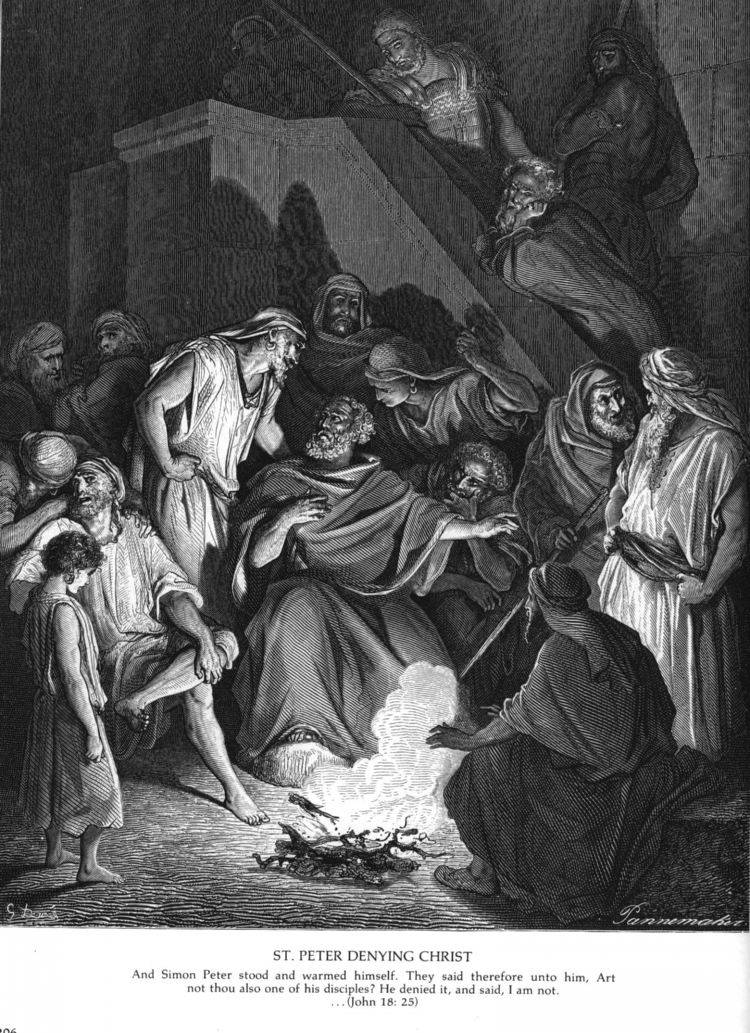
The denial, and the restoration
Luke 22:54-62, read with John 21:15-19
- He followed, at a distanceLuke 22:54Then they seized Jesus, led Him away, and took Him into the house of the high priest. And Peter followed at a distance.
- He sat down at their fire, and a servant girl looked at himLuke 22:55-57When those present had kindled a fire in the middle of the courtyard and sat down together, Peter sat down among them. A servant girl saw him seated in the firelight and looked intently at him. “This man also was with Him,” she said. But Peter denied it. “Woman, I do not know Him,” he said.
- Someone else, and the second denialLuke 22:58A short time later, someone else saw him and said, “You also are one of them.” But Peter said, “Man, I am not.”
- About an hour later, the third denial and the roosterLuke 22:59-60About an hour later, another man insisted, “Certainly this man was with Him, for he too is a Galilean.” “Man, I do not know what you are talking about,” Peter replied. While he was still speaking, the rooster crowed.
- The Lord turned and looked at himLuke 22:61And the Lord turned and looked at Peter. Then Peter remembered the word that the Lord had spoken to him: “Before the rooster crows today, you will deny Me three times.”
- He went outsideLuke 22:62And he went outside and wept bitterly.
- A charcoal fire on the shoreJohn 21:9When they landed, they saw a charcoal fire there with fish on it, and some bread.
- The first question, and the first chargeJohn 21:15When they had finished eating, Jesus asked Simon Peter, “Simon son of John, do you love Me more than these?” “Yes, Lord,” he answered, “You know I love You.” Jesus replied, “Feed My lambs.”
- The third question, and the hurtJohn 21:17Jesus asked a third time, “Simon son of John, do you love Me?” Peter was deeply hurt that Jesus had asked him a third time, “Do you love Me?” “Lord, You know all things,” he replied. “You know I love You.” Jesus said to him, “Feed My sheep.
- The death foretold, and two wordsJohn 21:18-19Truly, truly, I tell you, when you were young, you dressed yourself and walked where you wanted; but when you are old, you will stretch out your hands, and someone else will dress you and lead you where you do not want to go.” Jesus said this to indicate the kind of death by which Peter would glorify God. And after He had said this, He told him, “Follow Me.”
John gives the fire in the high priest's courtyard an uncommon name, and gives the fire on the beach the same one. Those are the only two places in the New Testament where that word appears.
The denial, verse by verseKey events
- 1Called by JesusMatthew 4:18-20→
Left his nets to follow Jesus
Read the verse here
Matthew 4:18-20As Jesus was walking beside the Sea of Galilee, He saw two brothers, Simon called Peter and his brother Andrew. They were casting a net into the sea, for they were fishermen.
- 2Confessed ChristMatthew 16:13-19→
Declared Jesus as the Christ, Son of the living God
Read the verse here
Matthew 16:13-19When Jesus came to the region of Caesarea Philippi, He questioned His disciples: “Who do people say the Son of Man is?”
- 3Denied JesusMatthew 26:69-75→
Denied knowing Jesus three times
Read the verse here
Matthew 26:69-75Meanwhile, Peter was sitting out in the courtyard, and a servant girl came up to him. “You also were with Jesus the Galilean,” she said.
- 4Restored by JesusJohn 21:15-19→
Jesus restored Peter with three affirmations
Read the verse here
John 21:15-19When they had finished eating, Jesus asked Simon Peter, “Simon son of John, do you love Me more than these?” “Yes, Lord,” he answered, “You know I love You.” Jesus replied, “Feed My lambs.”
- 5Pentecost sermonActs 2:14-41→
Preached at Pentecost; 3,000 converted
Read the verse here
Acts 2:14-41Then Peter stood up with the Eleven, lifted up his voice, and addressed the crowd: “Men of Judea and all who dwell in Jerusalem, let this be known to you, and listen carefully to my words.
- 6Vision of CorneliusActs 10:1-48→
God showed Peter that Gentiles receive the gospel
Read the verse here
Acts 10:1-48At Caesarea there was a man named Cornelius, a centurion in what was called the Italian Regiment.
More key verses
Text: Berean Standard Bible.
“Jesus asked a third time, “Simon son of John, do you love Me?” Peter was deeply hurt that Jesus had asked him a third time, “Do you love Me?” “Lord, You know all things,” he replied. “You know I love You.” Jesus said to him, “Feed My sheep.”
“Cast all your anxiety on Him, because He cares for you.”
What they got right, and what they got wrong
Strengths
Bold confession, passionate devotion, effective preacher, pastoral heart, perseverance to the end
Weaknesses
Impulsive speech, denied Christ under pressure, hypocrisy with Gentiles in Antioch
Lessons
Failure need not be final. Restoration follows repentance. Bold confession requires humble dependence. Christ uses weak vessels for His glory.
Spiritual significance
Peter demonstrates that Christ builds His church on weak but repentant sinners. His restoration after failure shows that denial is not final.
How Peter points to Jesus
Matthew 16:18-19 has been read three ways since the church's first centuries, and this site settles none of them. One reading takes the rock to be Peter himself, stated early by Tertullian in the third century, carried by the Catholic tradition from Cyprian onward, and honoured in Orthodoxy as a primacy of honour among equals. A second takes the rock to be the confession Peter had just made, held by John Chrysostom, by Theodore of Mopsuestia, and by the Protestant mainstream. A third takes the rock to be Christ, the reading Augustine preferred later in life and the one John Wesley took. The keys are given to Peter at 16:19, and the same words about binding and loosing are spoken to all the disciples at Matthew 18:18. The three readings and the teachers who hold each are set out in full on the site's page on that passage. One line is worth stating plainly at that point of contact, and it is about a practice rather than a reading. Scripture directs prayer to God through Christ, and that is what this site teaches. Prayer addressed to Peter, or to any other saint, is not taught here. Where a communion reads Matthew 16 as founding an office, the reading is named as the reading of a living tradition with serious holders, and nothing on this page is written against anyone who holds it. The clearest line from Peter to Christ runs through the word shepherd. At John 21:16 he is told to shepherd the sheep. In his own letter he tells other elders to do the same thing, in the same word, and then names the One over them all: "And when the Chief Shepherd appears, you will receive the crown of glory that will never fade away." The flock never becomes Peter's. Augustine pressed exactly this in a sermon of the early fifth century: "Feed 'my' sheep; he did not say 'yours,' did he? Feed, good servant, the Lord's sheep that bear the Lord's brand." The man who was given a rock's name spent his letter putting the rock language on Christ. He quoted Psalm 118:22 to the council in Acts 4:11, and quoted it again in 1 Peter 2:7. In that chapter Christ is the living stone, and the readers are the living stones built on Him into a spiritual house and a holy priesthood. John Wesley read those verses in 1755 as Peter's own comment on the question of the rock, and that reading stands beside the other two rather than above them. Luke 22:32 is the clearest picture in the Gospels of what Christ's intercession does. Satan asks for Peter. Permission is given. The prayer is not that the sifting be cancelled but that the faith survive it, and the turning back is stated as fact before the failure has happened. Peter is given his work on the far side of a fall he has not yet taken. Hebrews 7:25 and Romans 8:34 give the doctrine of that scene, and the scene gives the picture. Galatians 2:7 puts Peter's commission and Paul's side by side: "they saw that I had been entrusted to preach the gospel to the uncircumcised, just as Peter had been to the circumcised." Two commissions, one gospel, one grace, sealed with a handshake between men who agreed. That verse belongs next to 1 Peter 2:9, where the words God spoke to Israel at Sinai are addressed to a mixed church scattered across five Roman provinces. The language of Israel is extended to those readers. Nothing in the letter says it was taken away from Israel, and replacement theology is condemned on this site. Irenaeus made the same point from the other end in the second century, insisting that the God Cornelius already feared, the God of the law and the prophets, "is, in truth, God."
Peter's confession that Jesus is the Christ establishes the foundation on which Christ builds His church—not Peter himself, but the truth he confessed.
The voices
each quoted from the work named
When fear overwhelmed him, as the Lord had predicted, he three times denies the one for whom he promised to die. As it says, "The Lord looked at him and he, for his part, wept bitterly." Remembrance of his denial was necessarily bitter, so that the grace of redemption might be even more sweet. If Christ had not left him to himself, he would not have denied. If Christ had not looked at him, he would not have wept. God hates people relying presumptuously on their own powers. Like a doctor, he lances this swollen tumor in those whom he loves. By lancing it, of course, he inflicts pain, but he also ensures health later. When he rises again, the Lord entrusts his sheep to Peter, to that one who denied him. Peter denied him because he relied on himself, but later Peter would feed his flock as a pastor, because he loved him. After all, why does he ask him three times about his love, if not to prick his conscience about his threefold denial?
It was fitting that he should; it was meant that he should. But this accomplished, the painful dialogue concludes with a delightful "Feed My sheep"; as if He should say, "Now, Simon, the last speck of the cloud which overhung thee since that night of nights is dispelled: Henceforth thou art to Me and to My work as if no such scene had ever happened."
READ the whole chapter and observe the change of scene. First, they are on the lake fishing, casting their nets at Christ's command, and dragging to land a multitude of great fishes. They have all come on shore and when they have breakfasted, their faces are not turned to the sea, but to the pastures on the hillside. These are clothed with flocks and the Master says no more about fishermen and fish, but speaks of shepherds and sheep. Herein lies a parable—the servants of the Lord Jesus are first, fishermen, and then shepherds.
4 more teachers on these versesJohn Chrysostom · Cyprian of Carthage · John Wesley · Irenaeus of Lyons
He was the chosen one of the Apostles, the mouth of the disciples, the leader of the band; on this account also Paul went up upon a time to enquire of him rather than the others. And at the same time to show him that he must now be of good cheer, since the denial was done away, Jesus putteth into his hands the chief authority among the brethren; and He bringeth not forward the denial, nor reproacheth him with what had taken place, but saith, "If thou lovest Me, preside over thy brethren, and the warm love which thou didst ever manifest, and in which thou didst rejoice, show thou now; and the life which thou saidst thou wouldest lay down for Me, now give for My sheep."
And although to all the apostles, after His resurrection, He gives an equal power, and says, "As the Father hath sent me, even so send I you: Receive ye the Holy Ghost: Whose soever sins ye remit, they shall be remitted unto him; and whose soever sins ye retain, they shall be retained; " yet, that He might set forth unity, He arranged by His authority the origin of that unity, as beginning from one. Assuredly the rest of the apostles were also the same as was Peter, endowed with a like partnership both of honour and power; but the beginning proceeds from unity.
And St. Peter speaking of him thus, shows he did not judge himself, but Christ, to be the rock on which the church was built.
He thus clearly indicates, that He whom Cornelius had previously feared as God, of whom he had heard through the law and the prophets, for whose sake also he used to give alms, is, in truth, God.
Peter in Scripture
Open a book to read its mentions here. Text: Berean Standard Bible. Names repeat in Scripture, so some of these verses may speak of another person called Peter. The two marks are drawn from the chapters this page's own references stand in.
Old TestamentNew Testamentsegment width = share of mentions
New Testament8 books · 174 mentions
Matthew28 mentions
- Matthew 4:18As Jesus was walking beside the Sea of Galilee, He saw two brothers, Simon called Peter and his brother Andrew. They were casting a net into the sea, for they were fishermen.
- Matthew 8:14When Jesus arrived at Peter’s house, He saw Peter’s mother-in-law sick in bed with a fever.
- Matthew 10:2These are the names of the twelve apostles: first Simon, called Peter, and his brother Andrew; James son of Zebedee, and his brother John;
- Matthew 14:28“Lord, if it is You,” Peter replied, “command me to come to You on the water.”
- Matthew 14:29“Come,” said Jesus. Then Peter got down out of the boat, walked on the water, and came toward Jesus.
23 further mentions in Matthew, read them in the book.
Mark20 mentions
- Mark 3:16These are the twelve He appointed: Simon (whom He named Peter),
- Mark 5:37And He did not allow anyone to accompany Him except Peter, James, and John the brother of James.
- Mark 8:29“But what about you?” Jesus asked. “Who do you say I am?” Peter answered, “You are the Christ.”
- Mark 8:32He spoke this message quite frankly, and Peter took Him aside and began to rebuke Him.
- Mark 8:33But Jesus, turning and looking at His disciples, rebuked Peter and said, “Get behind Me, Satan! For you do not have in mind the things of God, but the things of men.”
15 further mentions in Mark, read them in the book.
Luke21 mentions
- Luke 5:8When Simon Peter saw this, he fell at Jesus’ knees. “Go away from me, Lord,” he said, “for I am a sinful man.”
- Luke 6:14Simon, whom He named Peter, and his brother Andrew; James and John; Philip and Bartholomew;
- Luke 8:45“Who touched Me?” Jesus asked. But they all denied it. “Master,” said Peter, “the people are crowding and pressing against You.”
- Luke 8:51When He entered the house, He did not allow anyone to go in with Him except Peter, John, James, and the child’s father and mother.
- Luke 9:20“But what about you?” Jesus asked. “Who do you say I am?” Peter answered, “The Christ of God.”
16 further mentions in Luke, read them in the book.
John33 mentions
- John 1:40Andrew, Simon Peter’s brother, was one of the two who heard John’s testimony and followed Jesus.
- John 1:42Andrew brought him to Jesus, who looked at him and said, “You are Simon son of John. You will be called Cephas” (which is translated as Peter).
- John 1:44Now Philip was from Bethsaida, the same town as Andrew and Peter.
- John 6:8One of His disciples, Andrew, Simon Peter’s brother, said to Him,
- John 6:68Simon Peter replied, “Lord, to whom would we go? You have the words of eternal life.
28 further mentions in John, read them in the book.
Acts68 mentions
- Acts 1:13When they arrived, they went to the upper room where they were staying: Peter and John, James and Andrew, Philip and Thomas, Bartholomew and Matthew, James son of Alphaeus, Simon the Zealot, and Judas son of James.
- Acts 1:15In those days Peter stood up among the brothers (a gathering of about a hundred and twenty) and said,
- Acts 2:14Then Peter stood up with the Eleven, lifted up his voice, and addressed the crowd: “Men of Judea and all who dwell in Jerusalem, let this be known to you, and listen carefully to my words.
- Acts 2:37When the people heard this, they were cut to the heart and asked Peter and the other apostles, “Brothers, what shall we do?”
- Acts 2:38Peter replied, “Repent and be baptized, every one of you, in the name of Jesus Christ for the forgiveness of your sins, and you will receive the gift of the Holy Spirit.
63 further mentions in Acts, read them in the book.
Galatians2 mentions
1 Peter1 mention
Common questions
Was Peter the first pope?
Readers differ; the positions are named
The New Testament never uses the word pope, never calls Peter the bishop of Rome, and never names him the head of the apostles. It calls him an apostle, a fellow elder, a witness of Christ's sufferings, and one of three men reputed to be pillars.
What Matthew 16:18-19 gives him has been read three ways since the church's first centuries, and every reading has held serious teachers in every age. Cyprian of Carthage, writing in 258, held both halves at once: the rest of the apostles were "endowed with a like partnership both of honour and power," and "the beginning proceeds from unity." John Chrysostom in the early fifth century called Peter "the chosen one of the Apostles, the mouth of the disciples, the leader of the band," and said in the same breath that what was handed him was care for the flock. John Wesley in 1755 read 1 Peter 2:4 as Peter's own answer, that Christ and not himself was the rock.
This site does not settle it. The three readings and their holders are laid out on the page for that passage, and the reader weighs them. Where a communion reads Matthew 16 as founding an office, that is named as the reading of a living tradition, and this page adds nothing against it. On one practice attached to the question the site does teach plainly: Scripture directs prayer to God through Christ, and prayer addressed to Peter or to any saint is not taught here.
Why did Jesus ask "do you love Me" three times, and do the two Greek words matter?
Readers differ; the positions are named
Three questions answering three denials is the reading of the fathers almost without exception. Ambrose of Milan in the fourth century said Peter "is asked three times whether he loves the Lord in order that he may confess him three times whom he had denied three times before his crucifixion." Augustine put it the same way: "To the threefold denial there is now appended a threefold confession."
Whether the change between the Greek verbs agapao and phileo carries weight is a separate question, and it is open. Augustine argued that the two words mean the same thing in this passage, and pointed out that the third question uses the word Peter himself had been using. Later writers have argued the other way.
So the threefold structure is the reading of the church, and the verb question is a reading rather than a fact. This page presents it as one.
Did Peter lose his salvation when he denied Christ?
Luke 22:32 answers this before it happens. Jesus does not pray that Peter will not fall. He prays that Peter's faith will not fail, tells him he will turn back, and gives him work for the far side of the failure.
Adam Clarke marked the distinction exactly. Peter's faith did fail, but not utterly: "he did fall, but he did not fall off, apostatize, or forsake his Master and his cause finally, as Judas did." Matthew Henry grounded the same distinction in Christ: "It is owing to the mediation and intercession of Jesus Christ that the faith of his disciples, though sometimes sadly shaken, yet is not sunk."
This site's tradition holds that a believer is kept, and Luke 22:31-32 is the strongest scene in the Gospels for it, because the outcome is stated as fact while the failure is still ahead.
Was Peter married?
Yes. Mark 1:30 has Jesus healing Peter's mother-in-law in Peter's own house at Capernaum, which means a wife and a household. Paul confirms it decades later, defending the right of the apostles to travel with a believing wife and naming Cephas among them.
Scripture names no children, and the character record for Peter leaves that field empty. The house itself is one of the most worked sites in Galilee, and the account of what was found there is on the Capernaum page.
Was Peter crucified upside down in Rome?
Readers differ; the positions are named
John 21:18-19 says only that when he was old he would stretch out his hands, that someone else would dress him and lead him where he did not want to go, and that this indicated the kind of death by which he would glorify God. It does not describe a cross, a city or a posture.
The earliest witness of all does not name a cross. Clement of Rome, writing to the Corinthians around AD 96, says Peter "endured not one nor two but many labours, and thus having borne his testimony went to his appointed place of glory," a suffering he blames on jealousy rather than describing.
The Roman crucifixion under Nero is early tradition. Tertullian, writing in North Africa in the early third century, says that "at Rome Nero was the first who stained with blood the rising faith. Then is Peter girt by another, when he is made fast to the cross." Cyril of Alexandria in the fifth century reads the same verse as pointing to the place where those who condemned Peter "had fixed the cross." Eusebius is the patristic source this site cites for Peter's later ministry and death at Rome.
The inverted cross is a different matter. It is not in Scripture, and no source carried on this site supports it, so the page does not state it. The detail is older than the painters, though: Origen, in the third century, is its earliest witness, reported by Eusebius, who writes that Peter "was crucified head-downwards, for he had requested that he might suffer in this way," citing Origen's own Commentary on Genesis. Caravaggio painted the inversion around 1600, thirteen centuries later, and the picture shows the tradition rather than the text.
Were Peter and Paul enemies?
Readers differ; the positions are named
No. Galatians 2:9 has James, Cephas and John giving Paul and Barnabas the right hand of fellowship, with two commissions and one gospel between them. Galatians 2:11-14 then records a real correction: Peter had been eating with the Gentile believers at Antioch, drew back when men came from James, and Paul opposed him to his face.
The fathers read that scene in two ways. Chrysostom, John of Damascus, Theophylact, Oecumenius and Theodoret read it as an arrangement between two men who already agreed, staged for the benefit of those watching. Irenaeus, Tertullian, Jerome's own text, Wesley, Barnes and Matthew Henry read it as a real fault really rebuked. This page gives both and ranks neither.
The relationship itself is settled by Peter's own hand. His second letter calls him "our beloved brother Paul," and says in the same breath that some of what Paul writes is hard to understand.
What are the keys of the kingdom, and who has them?
Readers differ; the positions are named
Matthew 16:19 gives Peter the keys, and adds the words about binding and loosing. Matthew 18:18 speaks the same words about binding and loosing to all the disciples, and John 20:23 gives a related word about forgiving and retaining.
Jamieson, Fausset and Brown read the keys through the book of Acts: Peter opens the door to Jewish hearers at Pentecost and then, at the house of Cornelius, to the Gentiles. Wesley reads the grant as given to Peter first and to the rest equally. A third reading treats the keys as the steward's authority over the household of a master who holds the house.
All three are on the site's page for that passage, with their holders, and no verdict is stamped on them here.
Does 1 Peter 2:9 mean the church replaced Israel?
No. Peter is writing to scattered believers in five Roman provinces and applying to them the words God spoke to Israel at Sinai in Exodus 19:6. Nothing in the letter says Israel forfeited them.
The same New Testament that carries 1 Peter 2:9 carries Galatians 2:7, where Peter's own commission is to the circumcised and Paul's is to the Gentiles, and both are recognized by the same grace. Peter says it himself at the council in Jerusalem: God "made no distinction between us and them, for He cleansed their hearts by faith," and the Jewish believers are saved by grace "just as they are." Note which way round he puts it.
Replacement theology is condemned on this site. The language of Israel is extended to a mixed church here. It is never transferred away.
Who are the spirits in prison in 1 Peter 3:19?
Readers differ; the positions are named
There are four readings and the site's page on 1 Peter sets out all of them. Irenaeus in the later second century read the passage as Christ's descent to the righteous dead. John Wesley in 1755 read it as Christ preaching through Noah to the people of Noah's own day, who are held now as in a prison. A third reading takes it as a general offer after death, which that page presents and marks as the least supported. The reading this site teaches takes the spirits to be the fallen angels of Genesis 6:1-4, held since the flood, and Christ's proclamation to be a declaration of victory over them.
That reading stands against a Second Temple background. 1 Enoch, a Jewish work of the centuries before Christ and a study resource on this site rather than Scripture, describes the same imprisonment in R. H. Charles's 1917 translation at 10:11-13: “And the Lord said unto Michael: ‘Go, bind Semjâzâ and his associates who have united themselves with women so as to have defiled themselves with them in all their uncleanness. And when their sons have slain one another, and they have seen the destruction of their beloved ones, bind them fast for seventy generations in the valleys of the earth, till the day of their judgement and of their consummation, till the judgement that is for ever and ever is consummated. In those days they shall be led off to the abyss of fire: and to the torment and the prison in which they shall be confined for ever.” Jude 6 and 2 Peter 2:4 use the same language of angels kept for judgment.
The Greek syntax across 3:18-20 is disputed among commentators whichever reading is held, and the site says so plainly rather than resting an argument on it.
Notable art
9 verified pieces depicting Peter
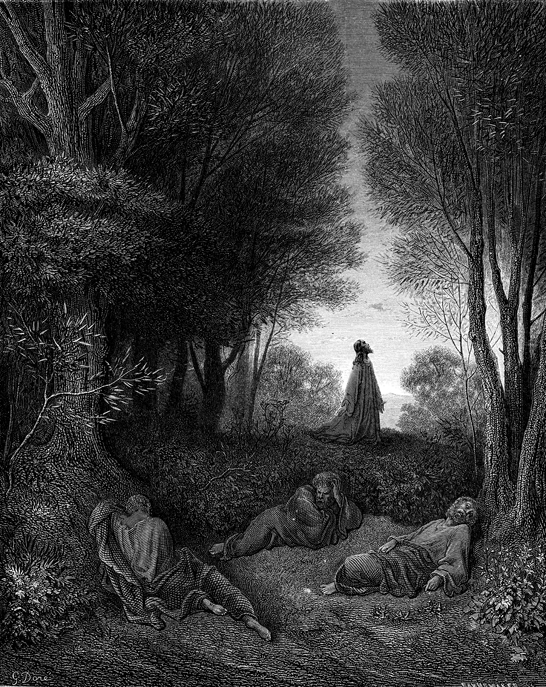
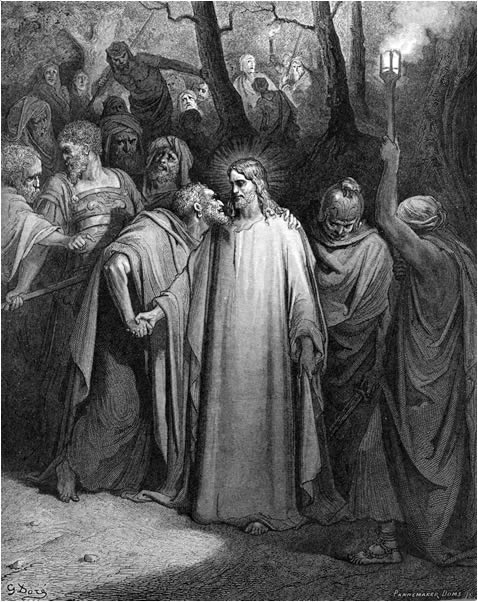
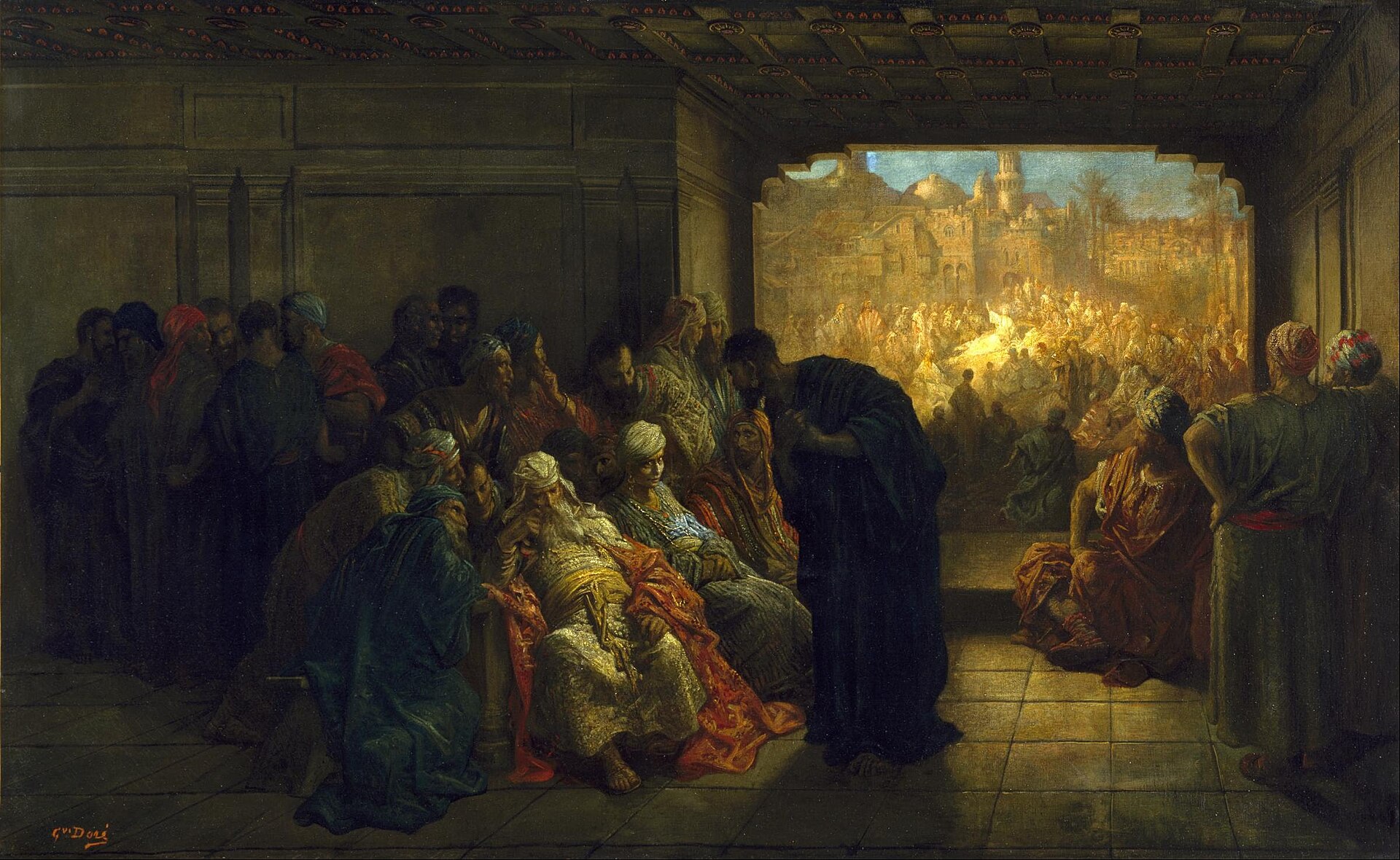
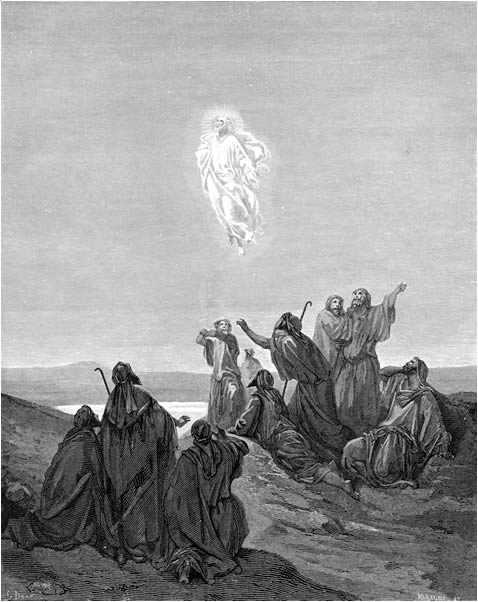
Sources cited
- Berean Standard BibleEvery verse quoted on this page, taken byte for byte from the site's verses table. Public domain since 2023.
- Gustave Doré, The Holy Bible with Illustrations by Gustave Doré (1866)Eight of the nine engravings on this page. Public domain.
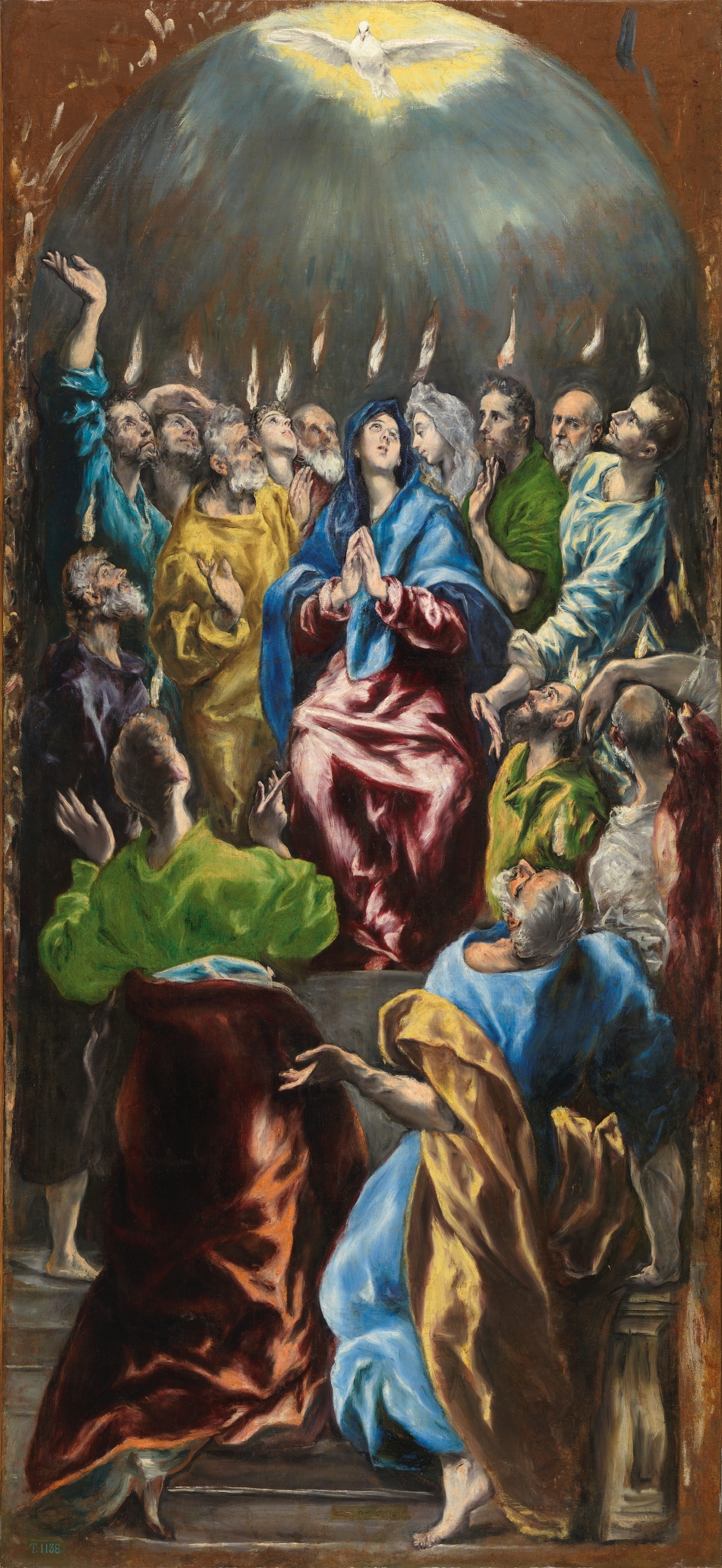
- El Greco, Pentecost (1597), Museo del PradoThe Acts 2 plate on this page. Public domain.
- Augustine of Hippo, Sermons and Tractates on the Gospel of JohnQuoted on Luke 22:61 from Sermon 285, and reported on John 21:15-17 and on the two Greek verbs. Named by century, because the stored year on these rows is his death year rather than the date of the work. Public domain translation.
- John Chrysostom, Homilies on the Gospel of JohnQuoted from Homily 88 on John 21:15. Named by century for the same reason. Public domain translation.
- Cyprian of Carthage, Treatise I, On the Unity of the ChurchQuoted on John 21:15 with Matthew 16. Both halves of his argument are given, because quoting only the first would misrepresent him. Public domain translation.
- Irenaeus of Lyons, Against HeresiesQuoted on Acts 10:35, and reported on Galatians 2:12 and on 1 Peter 3:19. Public domain translation.
- Ambrose of Milan, Exposition of the Christian FaithReported on John 21:15, the three questions answering the three denials. Public domain translation.
- Tertullian, Scorpiace, and Cyril of Alexandria, Commentary on the Gospel of JohnThe two earliest readings carried here of John 21:18. Tertullian, writing in the early third century, is the earliest witness on this site to the crucifixion at Rome under Nero. Neither describes an inverted cross. Public domain translations.
- Charles H. Spurgeon, The Metropolitan Tabernacle PulpitSermon No. 1684 on John 21:15, quoted here. Public domain, CCEL edition.
- John Wesley, Explanatory Notes upon the New Testament (1755)Quoted on 1 Peter 2:4, and reported on John 1:42, Luke 22:32, John 21:18, Galatians 2:11 and 1 Peter 3:19. Public domain.
- Jamieson, Fausset & Brown, Commentary Critical and Explanatory on the Whole Bible (1871)Quoted on John 21:17, and reported on Luke 22:32 and on the keys read through the book of Acts. Public domain.
- Adam Clarke, Commentary on the Bible, and Matthew Henry, Commentary on the Whole Bible (1710)Quoted on Luke 22:32, where both distinguish a faith that fails from a faith that falls away. Clarke's year is not printed, because the stored value is his death year rather than the date the commentary was published. Public domain.
- 1 Enoch, translated by R. H. Charles (1917)Quoted at 10:11-13 for the Second Temple background of 1 Peter 3:19. A labelled study resource on this site, never Scripture. Public domain.
- Upon this rock, on this siteThe three readings of Matthew 16:18, each with the teachers who hold it, and the keys beside them. That page renders no verdict and neither does this one.
- 1 Peter, on this siteThe four readings of the spirits in prison at 3:19, and the two readings of Babylon at 5:13, with their grounds. The reading this site teaches on 3:19 is named there.
- Capernaum, on this siteThe excavation of the town and of the house held by tradition to be Peter's, with the dated witnesses and the cautions that travel with them.
- Clement of Rome, First Epistle to the Corinthians 5:4 (Lightfoot translation)The earliest witness of all to Peter's sufferings, written around AD 96 and quoted on this page, confirmed by search 2026-09-02. Names no city and no manner of death.
- Eusebius, Church History 3.1, citing Origen's Commentary on GenesisThe earliest witness carried here to the inverted-cross detail, reported by Eusebius in the early fourth century as Origen's own report from the third. Confirmed by search 2026-09-02. Public domain translation.
Keep studying
On this page
Studies22
On this person
On this passage
People and groups4
Every page that names them1
Doorway1
Keep this page