
Thessalonica
Summary
The Macedonian capital whose magistrates Luke calls politarchs, a title once called his error and since confirmed by dozens of inscriptions.
- Paul preached in Thessalonica's synagogue on three Sabbaths before a mob drove him out, and the church he left behind became a model to all of Macedonia and Achaia.
- The mob could not find Paul, so they dragged a believer named Jason before the city officials instead, shouting that these men had turned the world upside down and proclaimed another king, named Jesus.
- Luke calls those officials politarchs, a title once dismissed as his mistake and since confirmed by roughly seventy inscriptions bearing that exact word.
- Paul wrote two letters back to this church within months, the earliest New Testament writings most scholars can date, and both survive.
- Aristarchus of Thessalonica stayed with Paul through the return journey and the shipwreck voyage to Rome.
On this page
In Scripture
- Verses
- 6
- Books
- 3
Where it is
the country around it
- Coordinates
- 40.6322° N, 22.9321° Efind it on the Atlas →
- Region
- Macedonia
- Kind of place
- City
- Located: the gazetteer fixes one site
Not located: Galatia. The gazetteer records no location for it, so it is not marked.
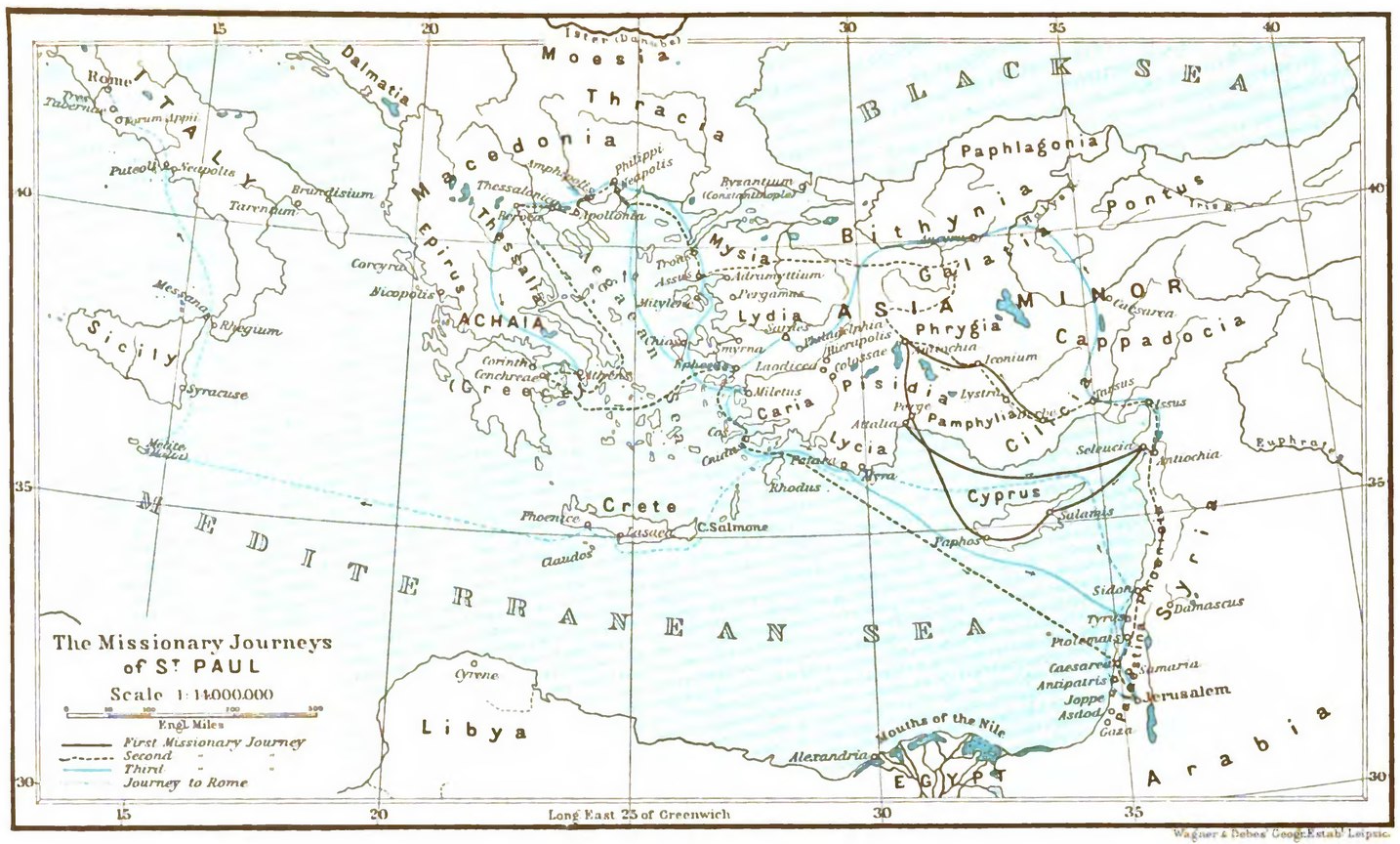
Why Thessalonica matters
What has been found
the evidence, and where it is disputed
The gospel comes to Thessalonica, and the mob that answers it
Acts 17:1 to 17:10, in the order it happens
Read Acts 17:1 to 17:10, in the order it happens
- Paul reasons in the synagogue on three SabbathsActs 17:2As was his custom, Paul went into the synagogue, and on three Sabbaths he reasoned with them from the Scriptures,
- This Jesus I am proclaiming to you is the ChristActs 17:3explaining and proving that the Christ had to suffer and rise from the dead. “This Jesus I am proclaiming to you is the Christ,” he declared.
- Some are persuaded, and the Jews grow jealousActs 17:4Some of the Jews were persuaded and joined Paul and Silas, along with a large number of God-fearing Greeks and quite a few leading women.
- A mob raids Jason's houseActs 17:5The Jews, however, became jealous. So they brought in some troublemakers from the marketplace, formed a mob, and sent the city into an uproar. They raided Jason’s house in search of Paul and Silas, hoping to bring them out to the people.
- These who have turned the world upside downActs 17:6But when they could not find them, they dragged Jason and some other brothers before the city officials, shouting, “These men who have turned the world upside down have now come here,
- There is another king, named JesusActs 17:7and Jason has welcomed them into his home. They are all defying Caesar’s decrees, saying that there is another king, named Jesus!”
- A bond is taken, and Jason is releasedActs 17:9And they collected bond from Jason and the others, and then released them.
- Paul and Silas are sent away by nightActs 17:10As soon as night had fallen, the brothers sent Paul and Silas away to Berea. On arriving there, they went into the Jewish synagogue.
Luke calls the city's magistrates politarchs, a title once treated as his invention. That question, and the inscriptions that answer it, are carried in full on the 1 Thessalonians study rather than repeated here.
1 Thessalonians: the full studyWhat happened here, in order
in the order the canon tells it
- Aristarchus of Thessalonica travels with PaulActs 20:4Paul was accompanied by Sopater son of Pyrrhus from Berea, Aristarchus and Secundus from Thessalonica, Gaius from Derbe, Timothy, and Tychicus and Trophimus from the province of Asia.
- Aristarchus sails with Paul toward RomeActs 27:2We boarded an Adramyttian ship about to sail for ports along the coast of Asia, and we put out to sea. Aristarchus, a Macedonian from Thessalonica, was with us.
- The church becomes an example to all Macedonia and Achaia1 Thessalonians 1:6And you became imitators of us and of the Lord when you welcomed the message with the joy of the Holy Spirit, in spite of your great suffering.
- They turned to God from idols1 Thessalonians 1:9For they themselves report what kind of welcome you gave us, and how you turned to God from idols to serve the living and true God
- Paul recalls that his visit was not in vain1 Thessalonians 2:1You yourselves know, brothers, that our visit to you was not in vain.
- Bold in the face of strong opposition1 Thessalonians 2:2As you are aware, we had already endured suffering and shameful treatment in Philippi. But in the face of strong opposition, we were bold in our God to speak to you the gospel of God.
- The Lord descends, and the dead in Christ rise first1 Thessalonians 4:16For the Lord Himself will descend from heaven with a loud command, with the voice of an archangel, and with the trumpet of God, and the dead in Christ will be the first to rise.
- Caught up together to meet the Lord in the air1 Thessalonians 4:17After that, we who are alive and remain will be caught up together with them in the clouds to meet the Lord in the air. And so we will always be with the Lord.
- Paul boasts of their perseverance under persecution2 Thessalonians 1:4That is why we boast among God’s churches about your perseverance and faith in the face of all the persecution and affliction you are enduring.
- The Philippians' gifts reached Paul even in ThessalonicaPhilippians 4:16For even while I was in Thessalonica, you provided for my needs again and again.
- Demas deserts Paul for Thessalonica2 Timothy 4:10because Demas, in his love of this world, has deserted me and gone to Thessalonica. Crescens has gone to Galatia, and Titus to Dalmatia.
Thessalonica in Scripture
6 verses name it, in 3 books
Open a book to read its mentions here. Text: Berean Standard Bible.
Old TestamentNew Testamentsegment width = share of mentions
New Testament3 books · 6 mentions
Acts4 mentions
- Acts 17:1When they had passed through Amphipolis and Apollonia, they came to Thessalonica, where there was a Jewish synagogue.
- Acts 17:13But when the Jews from Thessalonica learned that Paul was also proclaiming the word of God in Berea, they went there themselves to incite and agitate the crowds.
- Acts 20:4Paul was accompanied by Sopater son of Pyrrhus from Berea, Aristarchus and Secundus from Thessalonica, Gaius from Derbe, Timothy, and Tychicus and Trophimus from the province of Asia.
- Acts 27:2We boarded an Adramyttian ship about to sail for ports along the coast of Asia, and we put out to sea. Aristarchus, a Macedonian from Thessalonica, was with us.
Philippians1 mention
Common questions
Why did Paul leave Thessalonica after only three Sabbaths?
Paul reasoned in the synagogue on three Sabbaths, and in that short time some Jews believed along with a large number of God-fearing Greeks and leading women. The unbelieving Jews grew jealous, formed a mob, and raided the house of a believer named Jason looking for Paul. When they could not find him, the brothers sent Paul and Silas away by night to Berea. The stay was brief, but the church it left behind grew strong enough that Paul later called it an example to all of Macedonia and Achaia.
Who was Jason, and what did the mob accuse him of?
Jason hosted Paul and Silas in his home. When the mob could not find them, they dragged Jason and other believers before the city officials instead, accusing them of defying Caesar's decrees by saying there is another king, named Jesus, and of welcoming men who had turned the world upside down. The officials took a bond from Jason and the others, and then released them.
What is a politarch, and was Luke wrong to use that title?
Readers differ; the positions are named
A politarch was a city magistrate in Roman Macedonia, and Luke calls Thessalonica's officials by that exact title. Critics once treated the word as an error, since no ancient literary source used it. Roughly seventy inscriptions bearing that exact term have since been found in and around the city, and the term is no longer in doubt. The full case for it is carried on the 1 Thessalonians study.
Who was Aristarchus of Thessalonica?
Aristarchus was a believer from Thessalonica who stood by Paul through years of travel. He is named among Paul's companions on the journey back through Macedonia, and later as one of the men with Paul on the ship bound for Rome, a voyage that ended in shipwreck. Scripture gives no other detail about his life, only his steady presence at Paul's side.
What does 1 Thessalonians 4:13 to 4:18 teach about believers who have died, and when will this happen?
Readers differ; the positions are named
Paul tells the church not to grieve like people without hope, because those who have fallen asleep in Jesus will be raised when He comes. The Lord will descend with a command, an archangel's voice, and a trumpet, the dead in Christ will rise first, and then those still alive will be caught up together with them to meet the Lord in the air. Believers have long disagreed about exactly when this happens relative to a coming time of tribulation. This site's tradition holds a pre-tribulational reading, stated and reasoned in full on the rapture-timing study, without contempt for the other views held there.
Sources cited
- OpenBible.info Bible Geocoding: Thessalonicaread 2026-08-20The coordinates on this page. Used under CC-BY with attribution to OpenBible.info.
- Berean Standard Bible (2023)Public domain. All Scripture text on this page, drawn from the site's own verse store.
- Research brief: ThessalonicaThe brief this page is built from. Scripture, doors and sources, prepared 2026-09-02.
- The site's 1 Thessalonians studyQueried 2026-09-02 for the politarch case, quoted in that page's own words.
- The site's rapture-timing studyQueried 2026-09-02 for the site's tradition on rapture timing, carried into the common question without restating the full case.
- World History Encyclopedia, "Thessalonike of Macedon"Confirms Thessalonica's founding around 315 BC by Cassander, named for his wife. Confirmed by web search, 2026-09-02 (session 7).
- British Museum, object G_1877-0511-1 (Politarch inscription)Marble block from the Vardar Gate at Thessalonica, second century AD, naming six politarchs. Confirmed by web search, 2026-09-02 (session 7).
Keep studying
On this page
Studies4
Books that name it3
Lives that run through it1
Doorway2
Keep this page