
Corinth
Summary
The Greek port city from which Paul wrote Romans during his three-month stay, and home of the church of 1–2 Corinthians.
- Paul came to Corinth from Athens and found Aquila and Priscilla, tentmakers like himself.
- A night vision told Paul not to be afraid, because God had many people in this city, and he stayed a year and a half.
- Brought before Gallio's judgment seat, Paul was cleared when Gallio refused to judge a dispute about the Jewish law.
- Paul draws on the city's own races in 1 Corinthians 9:24-27, running for a crown that does not fade.
- Romans 16:23 greets from Gaius and Erastus, the city treasurer, names that place that letter's writing at Corinth.
On this page
In Scripture
- Verses
- 7
- Books
- 4
Near Corinth
Straight-line distances, computed from the gazetteer coordinates.
Where it is
the country around it
- Coordinates
- 37.9060° N, 22.8779° Efind it on the Atlas →
- Region
- Achaia
- Kind of place
- City
1 place the record names with Corinth, the farthest 76 km away
- Located: the gazetteer fixes one site
- A dashed line ends at a place the gazetteer does not fix
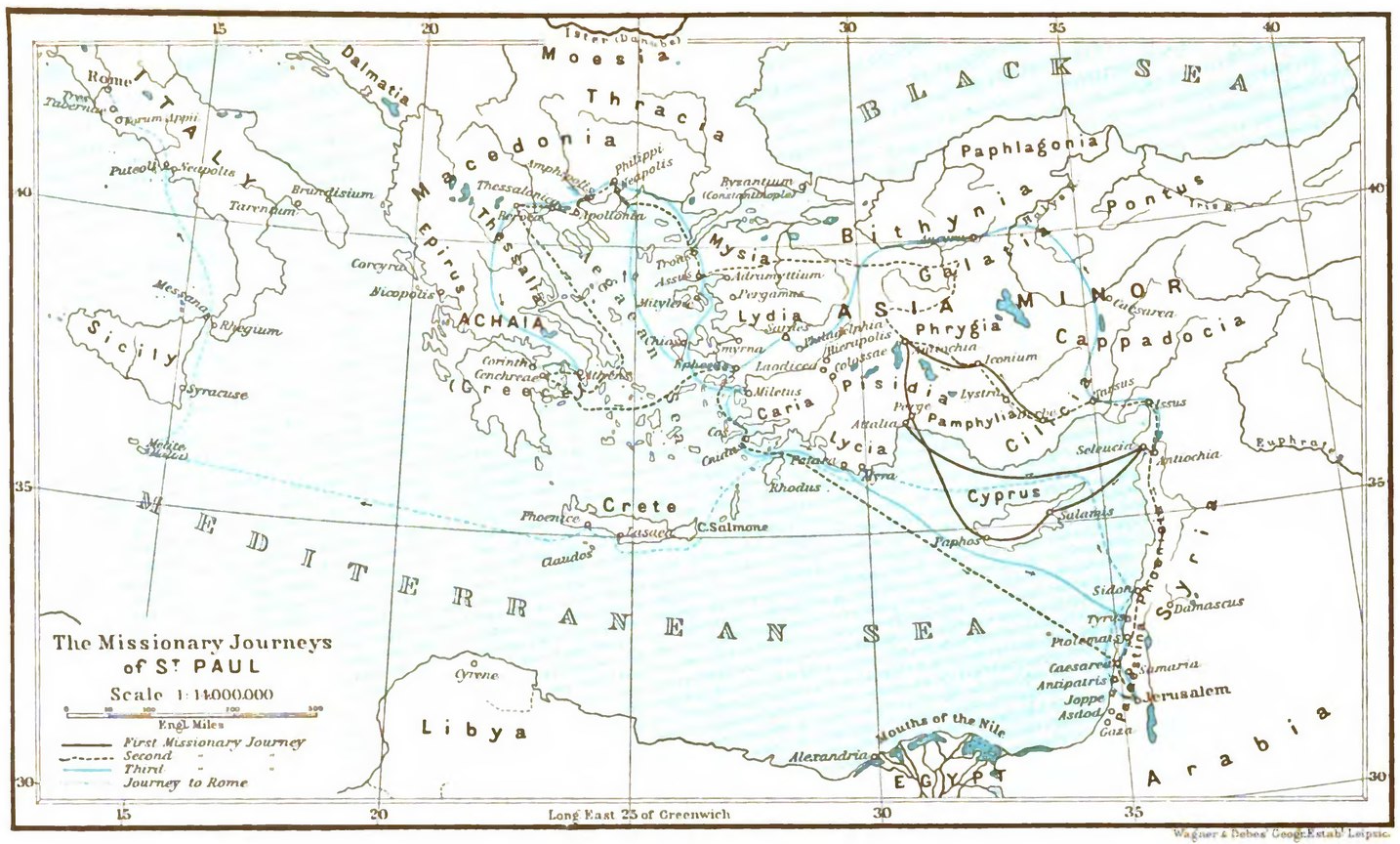
Why Corinth matters
What has been found
the evidence, and where it is disputed
Eighteen months at Corinth
Acts 18:1-18, from Aquila's house to Gallio's judgment seat
Read Acts 18:1-18, from Aquila's house to Gallio's judgment seat
- Paul comes to Corinth and finds Aquila and PriscillaActs 18:2There he found a Jew named Aquila, a native of Pontus, who had recently come from Italy with his wife Priscilla because Claudius had ordered all the Jews to leave Rome. Paul went to visit them,
- He stays and works with them as a fellow tentmakerActs 18:3and he stayed and worked with them because they were tentmakers by trade, just as he was.
- Opposed, he turns to the GentilesActs 18:6But when they opposed and insulted him, he shook out his garments and told them, “Your blood be on your own heads! I am innocent of it. From now on I will go to the Gentiles.”
- Crispus and many Corinthians believeActs 18:8Crispus, the synagogue leader, and his whole household believed in the Lord. And many of the Corinthians who heard the message believed and were baptized.
- The Lord speaks to Paul in a night visionActs 18:9One night the Lord spoke to Paul in a vision: “Do not be afraid; keep on speaking; do not be silent.
- He stays a year and a half, teachingActs 18:11So Paul stayed for a year and a half, teaching the word of God among the Corinthians.
- Brought before Gallio's judgment seatActs 18:12While Gallio was proconsul of Achaia, the Jews coordinated an attack on Paul and brought him before the judgment seat.
- Gallio refuses to judge a dispute about the lawActs 18:15But since it is a dispute about words and names and your own law, settle it yourselves. I refuse to be a judge of such things.
- Paul sails for Syria with Priscilla and AquilaActs 18:18Paul remained in Corinth for quite some time before saying goodbye to the brothers. He had his head shaved in Cenchrea to keep a vow he had made, and then he sailed for Syria, accompanied by Priscilla and Aquila.
What happened here, in order
in the order the canon tells it
- Paul leaves Athens for CorinthActs 18:1After this, Paul left Athens and went to Corinth.
- Aquila and Priscilla, driven from RomeActs 18:2There he found a Jew named Aquila, a native of Pontus, who had recently come from Italy with his wife Priscilla because Claudius had ordered all the Jews to leave Rome. Paul went to visit them,
- Paul reasons in the synagogue every SabbathActs 18:4Every Sabbath he reasoned in the synagogue, trying to persuade Jews and Greeks alike.
- Opposed, Paul turns to the GentilesActs 18:6But when they opposed and insulted him, he shook out his garments and told them, “Your blood be on your own heads! I am innocent of it. From now on I will go to the Gentiles.”
- Crispus and many Corinthians believe and are baptizedActs 18:8Crispus, the synagogue leader, and his whole household believed in the Lord. And many of the Corinthians who heard the message believed and were baptized.
- The night vision: do not be afraidActs 18:9One night the Lord spoke to Paul in a vision: “Do not be afraid; keep on speaking; do not be silent.
- A year and a half teaching among the CorinthiansActs 18:11So Paul stayed for a year and a half, teaching the word of God among the Corinthians.
- Brought before Gallio's judgment seatActs 18:12While Gallio was proconsul of Achaia, the Jews coordinated an attack on Paul and brought him before the judgment seat.
- Gallio refuses to judge a dispute about the lawActs 18:15But since it is a dispute about words and names and your own law, settle it yourselves. I refuse to be a judge of such things.
- Sosthenes is beaten before the seatActs 18:17At this, the crowd seized Sosthenes the synagogue leader and beat him in front of the judgment seat. But none of this was of concern to Gallio.
- Paul keeps a vow at Cenchrea and sails for SyriaActs 18:18Paul remained in Corinth for quite some time before saying goodbye to the brothers. He had his head shaved in Cenchrea to keep a vow he had made, and then he sailed for Syria, accompanied by Priscilla and Aquila.
- Run to win the prize1 Corinthians 9:24Do you not know that in a race all the runners run, but only one receives the prize? Run in such a way as to take the prize.
- A crown that does not fade1 Corinthians 9:25Everyone who competes in the games trains with strict discipline. They do it for a crown that is perishable, but we do it for a crown that is imperishable.
- Paul disciplines his own body1 Corinthians 9:27No, I discipline my body and make it my slave, so that after I have preached to others, I myself will not be disqualified.
- Gaius and Erastus, the city treasurer, send greetingsRomans 16:23Gaius, who has hosted me and all the church, sends you greetings. Erastus, the city treasurer, sends you greetings, as does our brother Quartus.
The voices
each quoted from the work named
When Gallio was proconsul of Achaia - Of which Corinth was the chief city. This Gallio, the brother of the famous Seneca, is much commended both by him and by other writers, for the sweetness and generosity of his temper, and easiness of his behaviour.
In this city, though it be a very profane wicked city, full of impurity, and the more so for a temple of Venus there, to which there was a great resort, yet in this heap, that seems to be all chaff, there is wheat; in this ore, that seems to be all dross, there is gold. Let us not despair concerning any place, when even in Corinth Christ had much people.
Know ye not that - In those famous games which are kept at the isthmus, near your city. They who run in the foot race all run, though but one receiveth the prize - How much greater encouragement have you to run; since ye may all receive the prize of your high calling!
1 more teacher on these versesOrigen of Alexandria
Erastus, the treasurer of the city, greets you, and Quartus the brother. I think this is the same Erastus of whom he says that he remained at Corinth, and who appears to be designated the steward of the city.
Corinth in Scripture
7 verses name it, in 4 books
Open a book to read its mentions here. Text: Berean Standard Bible.
Old TestamentNew Testamentsegment width = share of mentions
New Testament4 books · 7 mentions
Acts3 mentions
- Acts 18:1After this, Paul left Athens and went to Corinth.
- Acts 18:18Paul remained in Corinth for quite some time before saying goodbye to the brothers. He had his head shaved in Cenchrea to keep a vow he had made, and then he sailed for Syria, accompanied by Priscilla and Aquila.
- Acts 19:1While Apollos was at Corinth, Paul passed through the interior and came to Ephesus. There he found some disciples
1 Corinthians1 mention
2 Corinthians2 mentions
Common questions
Who did Paul meet in Corinth, and why were they there?
Acts 18:2 names Aquila, a Jew of Pontus, and his wife Priscilla, who had recently come from Italy because Claudius had ordered all Jews to leave Rome. Paul stayed and worked with them, since all three were tentmakers by trade. They later sailed with him from Corinth to Syria.
What happened when Paul was brought before Gallio?
Acts 18:12-17 records the Jews of Corinth bringing Paul before Gallio, the proconsul of Achaia, accusing him of persuading people to worship God contrary to the law. Before Paul could answer, Gallio ruled it a dispute about words, names, and their own law, refused to judge it, and drove them from the judgment seat. John Wesley's Explanatory Notes identify this Gallio as the brother of the famous Seneca, commended by ancient writers for the gentleness of his temper.
What vision did Paul receive at Corinth?
Acts 18:9-10 records a night vision in which the Lord told Paul not to be afraid and to keep speaking, promising that no one would harm him because God had many people in that city. Paul stayed on for a year and a half after that vision, teaching the word of God among the Corinthians.
What does 1 Corinthians 9:24-27 draw from Corinth's games?
Paul compares the Christian life to a footrace: many run, but only one receives the prize, so believers should run to win. Everyone who competes trains with strict discipline for a crown that fades, but Paul says believers run for a crown that never fades, and he disciplines his own body so that after preaching to others he will not be disqualified. Corinth was known for its games, and John Wesley's Explanatory Notes read this passage against those games kept at the isthmus near the city, though 1 Corinthians itself speaks generally of races and does not name them.
Is the Erastus of Romans 16:23 the same Erastus named elsewhere?
Readers differ; the positions are named
Romans 16:23 greets from Erastus, the city treasurer, in a letter widely held to have been written from Corinth. Acts 19:22 and 2 Timothy 4:20 both name an Erastus among Paul's coworkers, and 2 Timothy 4:20 says he remained at Corinth. Origen's Commentary on Romans reads the two as the same man, but states the identification as his own reasoning rather than as settled fact, and Scripture itself never confirms it directly.
Sources cited
- MannaFest canon study of Romans (AI-draft)Awaiting the founder's edit.
- OpenBible.info Bible Geocoding: Corinthread 2026-08-20The coordinates on this page. Used under CC-BY with attribution to OpenBible.info.
- Berean Standard BibleAll Scripture text on this page, from the site's own verse store. Public domain since 2023.
- John Wesley, Explanatory Notes upon the New Testament (1755)Public domain, CCEL edition.
- Origen of Alexandria, Commentary on Romans, Book 10Public domain.
- Encyclopaedia Britannica, "Isthmian Games"Location, biennial schedule, and rank of the Isthmian Games.
- Bible Archaeology Report, "Gallio: An Archaeological Biography"The Delphi (Gallio) Inscription and its date, fixing Gallio's proconsulship to about AD 51-52.
Keep studying
On this page
Studies4
Books that name it3
Doorway2
Keep this page