
Place
The Temple
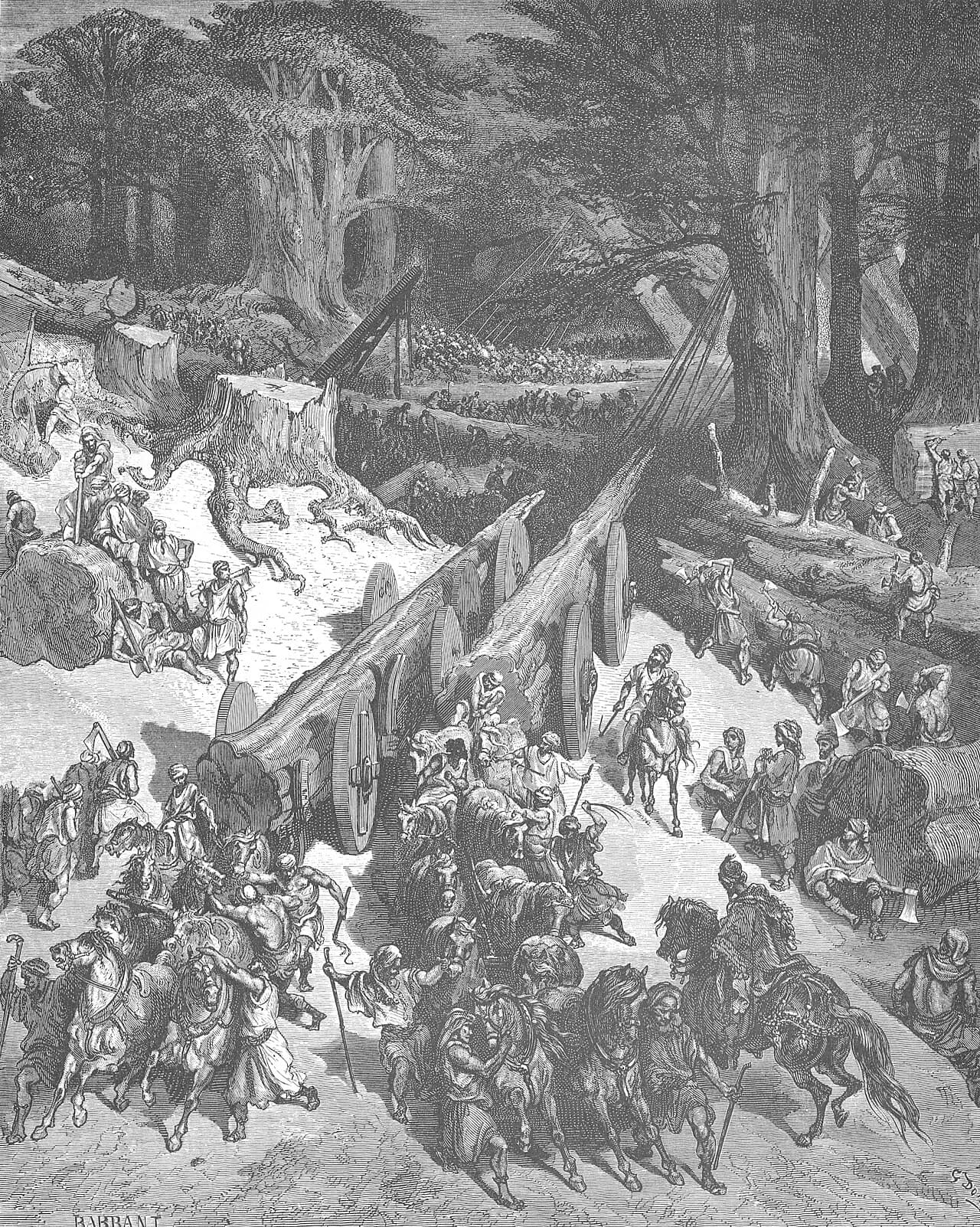
Gustave Doré, Doré's English Bible (1866). Public domain.
Summary
The house of the LORD in Jerusalem, Solomon's temple and the Second Temple after it, the place the Psalms long to enter.
- David wanted to build the LORD a house, but was told he had shed too much blood; his son Solomon would build it instead.
- Solomon built the temple in seven years, and when the ark was brought in the glory of the LORD filled the house so thickly the priests could not stand to minister.
- Babylon burned the temple in 586 BC and carried off its bronze, gold and silver; Ezra's exiles later laid a new foundation to weeping and shouting mixed together.
- Jesus called the rebuilt temple His Father's house, cleansed it, and said that destroying it would not be the last word, speaking of His own body.
- The veil was torn in two at His death, and Hebrews reads the whole pattern as a shadow of a greater sanctuary Christ entered once for all.
On this page
In Scripture
- Verses
- 368
- Books
- 34
Where it is
- Region
- Jerusalem
- Kind of place
- Structure
Why The Temple matters
What has been found
the evidence, and where it is disputed
Solomon builds and dedicates the house of the LORD
1 Kings 6 and 8, in the order it happens
Read 1 Kings 6 and 8, in the order it happens
- Solomon begins to build, in the 480th year1 Kings 6:1In the four hundred and eightieth year after the Israelites had come out of the land of Egypt, in the month of Ziv, the second month of the fourth year of Solomon’s reign over Israel, he began to build the house of the LORD.
- Finished in every detail, in seven years1 Kings 6:38In his eleventh year and eighth month, the month of Bul, the temple was finished in every detail and according to every specification. So he built the temple in seven years.
- Solomon assembles Israel to bring up the ark1 Kings 8:1At that time Solomon assembled before him in Jerusalem the elders of Israel—all the tribal heads and family leaders of the Israelites—to bring up the ark of the covenant of the LORD from Zion, the City of David.
- The glory of the LORD fills the house1 Kings 8:11so that the priests could not stand there to minister because of the cloud; for the glory of the LORD filled the house of the LORD.
- I have built You an exalted house1 Kings 8:13I have indeed built You an exalted house, a place for You to dwell forever.”
- Will God indeed dwell upon the earth?1 Kings 8:27But will God indeed dwell upon the earth? Even heaven, the highest heaven, cannot contain You, much less this temple I have built.
- May Your eyes be open toward this temple1 Kings 8:29May Your eyes be open toward this temple night and day, toward the place of which You said, ‘My Name shall be there,’ so that You may hear the prayer that Your servant prays toward this place.
- The king and all Israel dedicate the house1 Kings 8:63And Solomon offered as peace offerings to the LORD 22,000 oxen and 120,000 sheep. So the king and all the Israelites dedicated the house of the LORD.
David's own preparation for this house, and the reason he was told he could not build it himself, are carried in the timeline below from 2 Samuel 7 and 1 Chronicles 22 and 28.
What happened here, in order
in the order the canon tells it
- David wants to build a house for the ark2 Samuel 7:2he said to Nathan the prophet, “Here I am, living in a house of cedar, while the ark of God remains in a tent.”
- David's son will build it instead2 Samuel 7:13He will build a house for My Name, and I will establish the throne of his kingdom forever.
- You have shed too much blood to build it1 Chronicles 22:8but this word of the LORD came to me: ‘You have shed much blood and waged great wars. You are not to build a house for My Name because you have shed so much blood on the ground before Me.
- David hands Solomon the plans, in writing1 Chronicles 28:19“All this,” said David, “all the details of this plan, the LORD has made clear to me in writing by His hand upon me.”
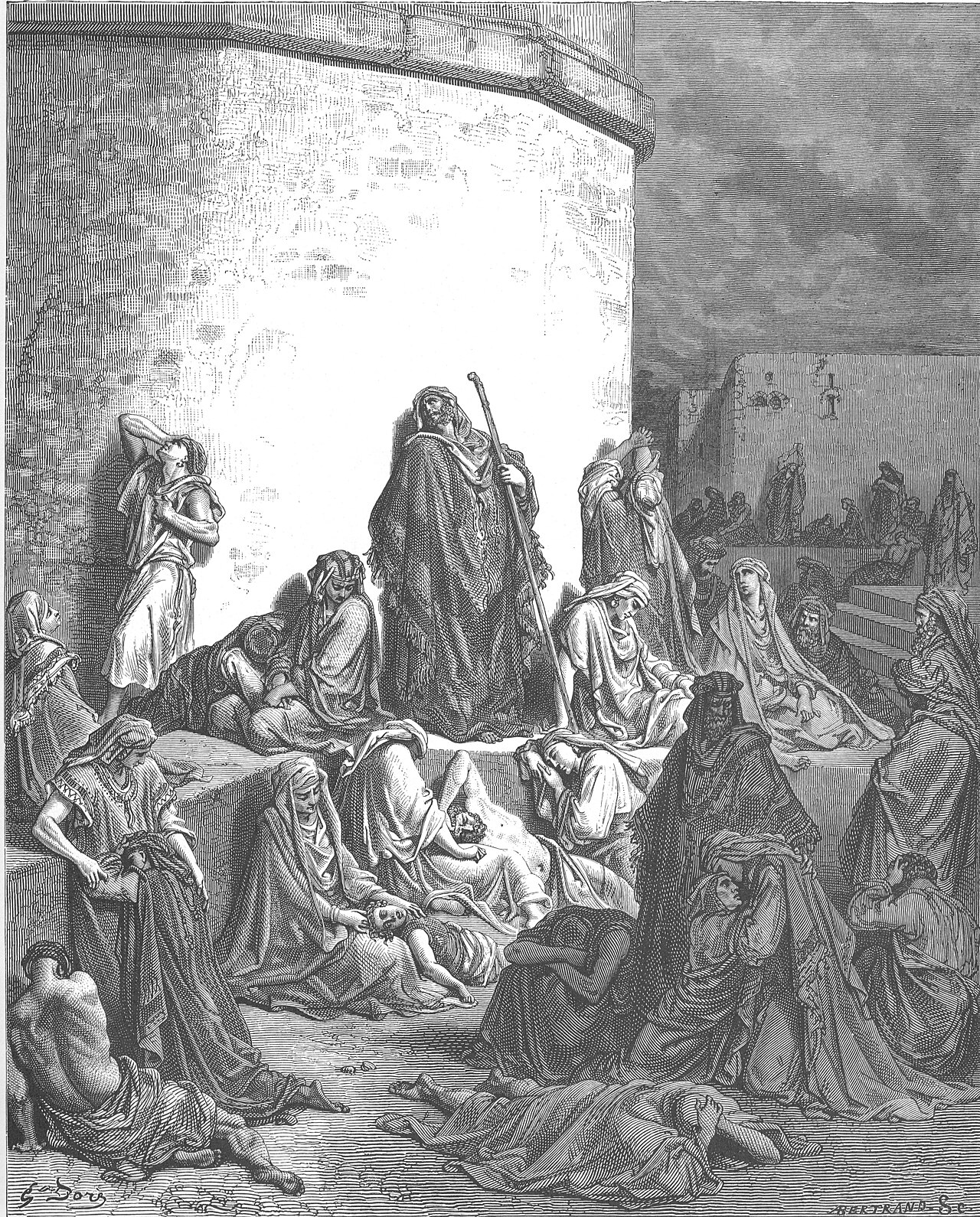
- Nebuzaradan burns the house of the LORD2 Kings 25:9He burned down the house of the LORD, the royal palace, and all the houses of Jerusalem—every significant building.
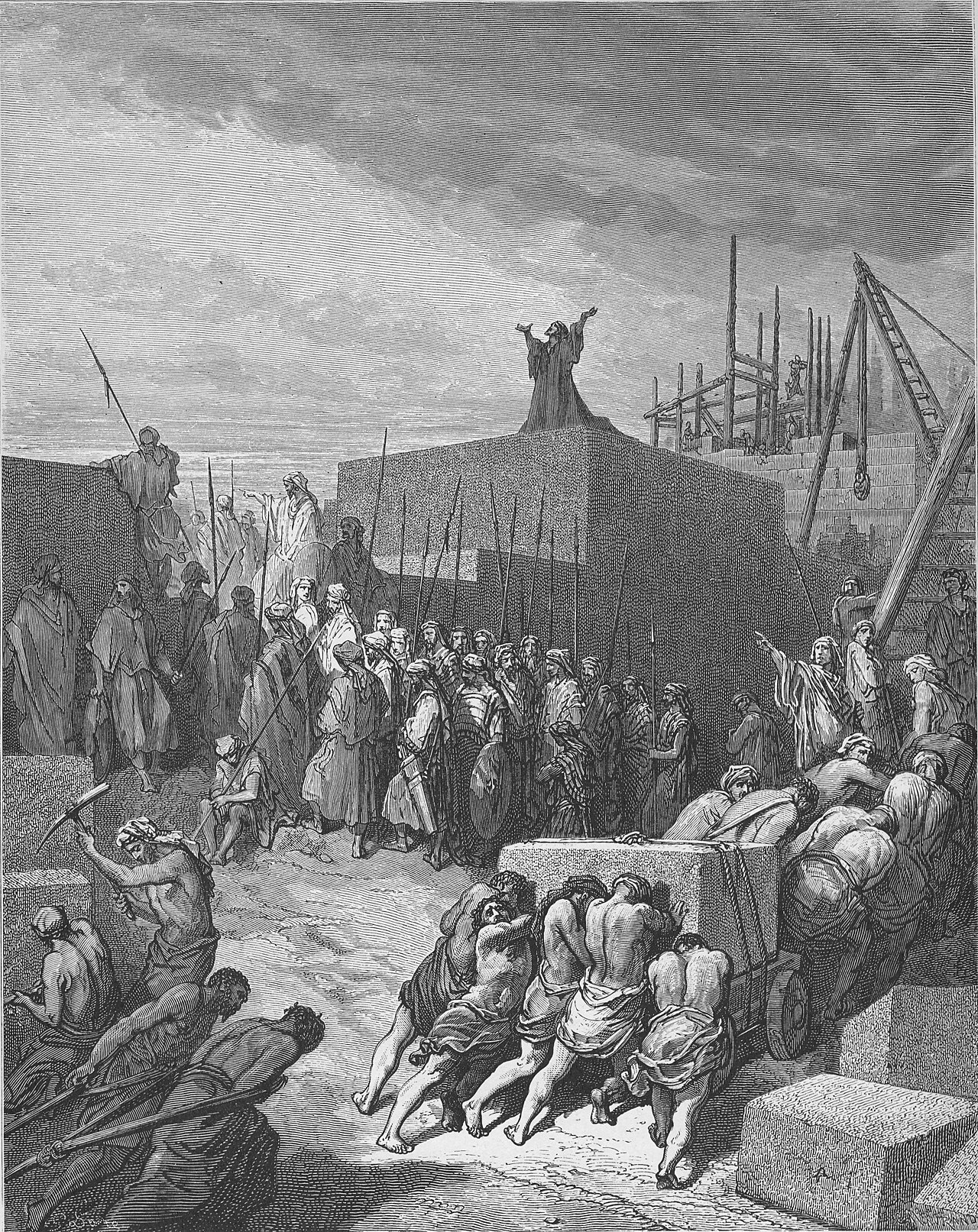
- The old men weep, others shout for joy, at the new foundationEzra 3:12But many of the older priests, Levites, and family heads who had seen the first temple wept loudly when they saw the foundation of this temple. Still, many others shouted joyfully.
- The second temple is completedEzra 6:15And this temple was completed on the third day of the month of Adar, in the sixth year of the reign of King Darius.
- The latter glory will be greater than the formerHaggai 2:9The latter glory of this house will be greater than the former, says the LORD of Hosts. And in this place I will provide peace, declares the LORD of Hosts.”
- Destroy this temple, and I will raise it upJohn 2:19Jesus answered, “Destroy this temple, and in three days I will raise it up again.”
- A house of prayer, not a den of robbersMatthew 21:13And He declared to them, “It is written: ‘My house will be called a house of prayer.’ But you are making it ‘a den of robbers.’”
- Not one stone left on anotherMatthew 24:2“Do you see all these things?” He replied. “Truly I tell you, not one stone here will be left on another; every one will be thrown down.”
- The veil of the temple torn in twoMatthew 27:51At that moment the veil of the temple was torn in two from top to bottom. The earth quaked and the rocks were split.
- Peter and John go up to the temple to prayActs 3:1One afternoon Peter and John were going up to the temple at the hour of prayer, the ninth hour.
- Christ enters the true sanctuary once for allHebrews 9:12He did not enter by the blood of goats and calves, but He entered the Most Holy Place once for all by His own blood, thus securing eternal redemption.
Where it points
The Temple in Scripture
368 verses name it, in 34 books
Open a book to read its mentions here. Text: Berean Standard Bible.
Old TestamentNew Testamentsegment width = share of mentions
Old Testament23 books · 257 mentions
Judges9 mentions
- Judges 4:21But as he lay sleeping from exhaustion, Heber’s wife Jael took a tent peg, grabbed a hammer, and went silently to Sisera. She drove the peg through his temple and into the ground, and he died.
- Judges 4:22When Barak arrived in pursuit of Sisera, Jael went out to greet him and said to him, “Come, and I will show you the man you are seeking.” So he went in with her, and there lay Sisera dead, with a tent peg through his temple.
- Judges 5:26She reached for the tent peg, her right hand for the workman’s hammer. She struck Sisera and crushed his skull; she shattered and pierced his temple.
- Judges 9:4So they gave him seventy shekels of silver from the temple of Baal-berith, with which Abimelech hired some worthless and reckless men to follow him.
- Judges 9:46On hearing of this, all the leaders in the tower of Shechem entered the inner chamber of the temple of El-berith.
- Judges 16:26Samson said to the servant who held his hand, “Lead me where I can feel the pillars supporting the temple, so I can lean against them.”
- Judges 16:27Now the temple was full of men and women; all the lords of the Philistines were there, and about three thousand men and women were on the roof watching Samson entertain them.
- Judges 16:29And Samson reached out for the two central pillars supporting the temple. Bracing himself against them with his right hand on one pillar and his left hand on the other,
1 further mention in Judges, read them in the book.
1 Samuel6 mentions
- 1 Samuel 1:9So after they had finished eating and drinking in Shiloh, Hannah stood up. Now Eli the priest was sitting on a chair by the doorpost of the temple of the LORD.
- 1 Samuel 3:3Before the lamp of God had gone out, Samuel was lying down in the temple of the LORD, where the ark of God was located.
- 1 Samuel 5:2carried it into the temple of Dagon, and set it beside his statue.
- 1 Samuel 5:5That is why, to this day, the priests of Dagon and all who enter the temple of Dagon in Ashdod do not step on the threshold.
- 1 Samuel 31:9They cut off Saul’s head, stripped off his armor, and sent messengers throughout the land of the Philistines to proclaim the news in the temples of their idols and among their people.
- 1 Samuel 31:10They put his armor in the temple of the Ashtoreths and hung his body on the wall of Beth-shan.
2 Samuel1 mention
1 Kings37 mentions
- 1 Kings 5:17And the king commanded them to quarry large, costly stones to lay the foundation of the temple with dressed stones.
- 1 Kings 5:18So Solomon’s and Hiram’s builders, along with the Gebalites, quarried the stone and prepared the timber and stone for the construction of the temple.
- 1 Kings 6:3The portico at the front of the main hall of the temple was twenty cubits long, extending across the width of the temple and projecting out ten cubits in front of the temple.
- 1 Kings 6:4He also had narrow windows framed high in the temple.
- 1 Kings 6:5Against the walls of the temple and the inner sanctuary, Solomon built a chambered structure around the temple, in which he constructed the side rooms.
- 1 Kings 6:6The bottom floor was five cubits wide, the middle floor six cubits, and the third floor seven cubits. He also placed offset ledges around the outside of the temple, so that nothing would be inserted into its walls.
- 1 Kings 6:7The temple was constructed using finished stones cut at the quarry, so that no hammer or chisel or any other iron tool was heard in the temple while it was being built.
- 1 Kings 6:8The entrance to the bottom floor was on the south side of the temple. A stairway led up to the middle level, and from there to the third floor.
29 further mentions in 1 Kings, read them in the book.
2 Kings25 mentions
- 2 Kings 5:18Yet may the LORD forgive your servant this one thing: When my master goes into the temple of Rimmon to worship there, and he leans on my arm, and I bow down in the temple of Rimmon, may the LORD forgive your servant in this matter.”
- 2 Kings 10:21Then Jehu sent word throughout Israel, and all the servants of Baal came; there was not a man who failed to show. They entered the temple of Baal, and it was filled from end to end.
- 2 Kings 10:23Next, Jehu and Jehonadab son of Rechab entered the temple of Baal, and Jehu said to the servants of Baal, “Look around to see that there are no servants of the LORD here among you—only servants of Baal.”
- 2 Kings 10:25When he had finished making the burnt offering, Jehu said to the guards and officers, “Go in and kill them. Do not let anyone out.” So the guards and officers put them to the sword, threw the bodies out, and went into the inner room of the temple of Baal.
- 2 Kings 10:26They brought out the sacred pillar of the temple of Baal and burned it.
- 2 Kings 10:27They also demolished the sacred pillar of Baal. Then they tore down the temple of Baal and made it into a latrine, which it is to this day.
- 2 Kings 11:6a third shall be at the gate of Sur, and a third at the gate behind the guards. You are to take turns guarding the temple—
- 2 Kings 11:11And the guards stood with weapons in hand surrounding the king by the altar and the temple, from the south side to the north side of the temple.
17 further mentions in 2 Kings, read them in the book.
1 Chronicles9 mentions
- 1 Chronicles 6:10Johanan was the father of Azariah, who served as priest in the temple that Solomon built in Jerusalem,
- 1 Chronicles 9:2Now the first to resettle their own property in their cities were Israelites, priests, Levites, and temple servants.
- 1 Chronicles 9:11Azariah son of Hilkiah, the son of Meshullam, the son of Zadok, the son of Meraioth, the son of Ahitub, the chief official of God’s temple;
- 1 Chronicles 9:33Those who were musicians, the heads of Levite families, stayed in the temple chambers and were exempt from other duties because they were on duty day and night.
- 1 Chronicles 10:9They stripped Saul, cut off his head, took his armor, and sent messengers throughout the land of the Philistines to proclaim the news in the temple of their idols and among their people.
- 1 Chronicles 10:10They put his armor in the temple of their gods and hung his head in the temple of Dagon.
- 1 Chronicles 22:19Now set your heart and soul to seek the LORD your God. Get started building the sanctuary of the LORD God, so that you may bring the ark of the covenant of the LORD and the holy articles of God into the temple that will be built for the Name of the LORD.”
- 1 Chronicles 28:11Then David gave his son Solomon the plans for the portico of the temple, its buildings, storehouses, upper rooms, inner rooms, and the room for the mercy seat.
1 further mention in 1 Chronicles, read them in the book.
2 Chronicles41 mentions
- 2 Chronicles 2:9to prepare for me timber in abundance, because the temple I am building will be great and wonderful.
- 2 Chronicles 2:12And Hiram added: “Blessed be the LORD, the God of Israel, who made the heavens and the earth! He has given King David a wise son with insight and understanding, who will build a temple for the LORD and a royal palace for himself.
- 2 Chronicles 3:4The portico at the front, extending across the width of the temple, was twenty cubits long and twenty cubits high. He overlaid the inside with pure gold.
- 2 Chronicles 3:6He adorned the temple with precious stones for beauty, and its gold was from Parvaim.
- 2 Chronicles 3:8Then he made the Most Holy Place; its length corresponded to the width of the temple—twenty cubits long and twenty cubits wide. And he overlaid the inside with six hundred talents of fine gold.
- 2 Chronicles 3:11The total wingspan of the cherubim was twenty cubits. One wing of the first cherub was five cubits long and touched the wall of the temple, and its other wing was five cubits long and touched the wing of the other cherub.
- 2 Chronicles 3:12The wing of the second cherub also measured five cubits and touched the wall of the temple, while its other wing measured five cubits and touched the wing of the first cherub.
- 2 Chronicles 3:15In front of the temple he made two pillars, which together were thirty-five cubits high, each with a capital on top measuring five cubits.
33 further mentions in 2 Chronicles, read them in the book.
Ezra20 mentions
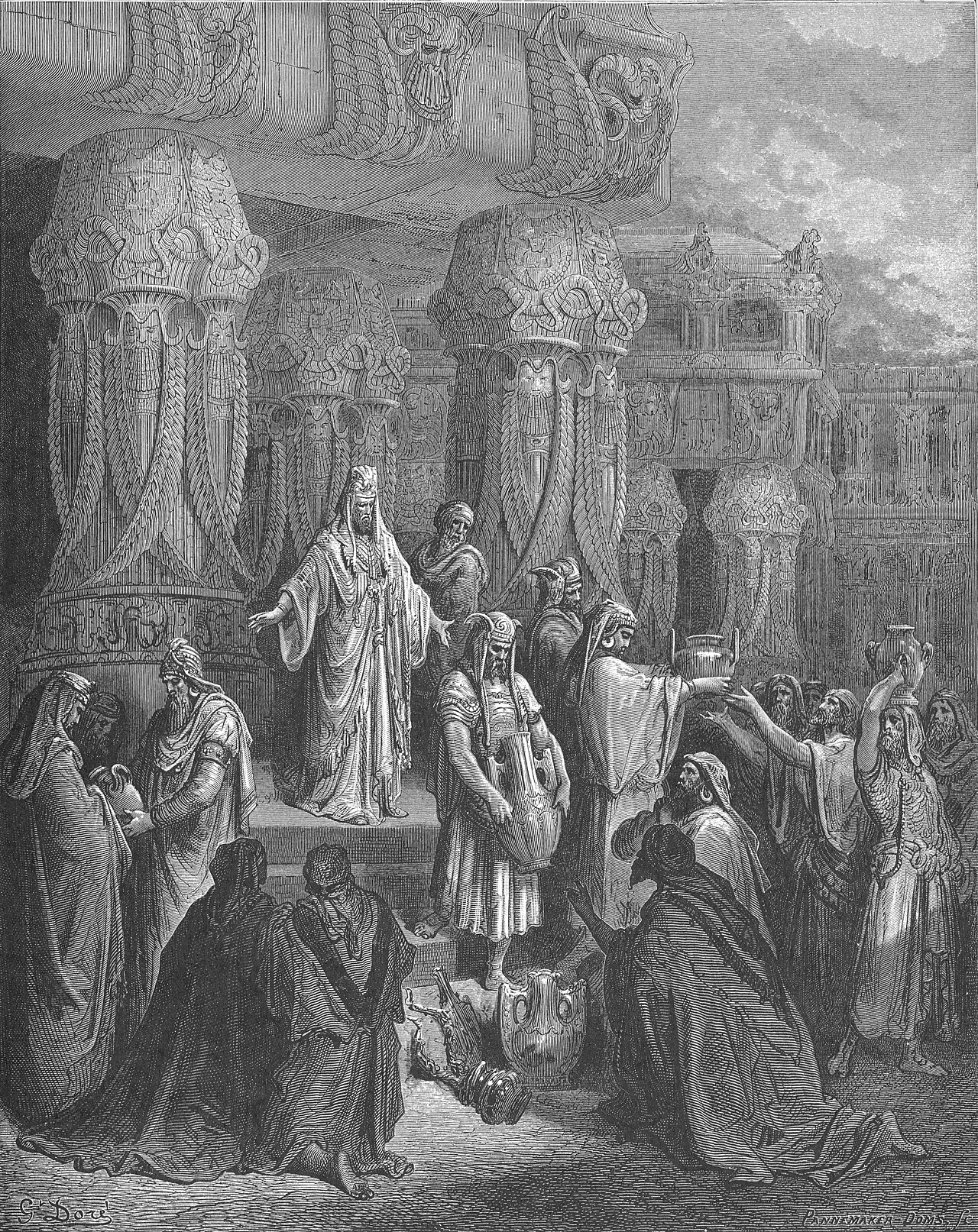
- Ezra 1:7King Cyrus also brought out the articles belonging to the house of the LORD that Nebuchadnezzar had carried away from Jerusalem and placed in the temple of his gods.
- Ezra 2:43The temple servants: the descendants of Ziha, the descendants of Hasupha, the descendants of Tabbaoth,
- Ezra 2:58The temple servants and descendants of the servants of Solomon numbered 392 in all.
- Ezra 2:70So the priests, the Levites, the singers, the gatekeepers, and the temple servants, along with some of the people, settled in their own towns; and the rest of the Israelites settled in their towns.
- Ezra 3:6On the first day of the seventh month, the Israelites began to offer burnt offerings to the LORD, although the foundation of the temple of the LORD had not been laid.
- Ezra 3:10When the builders had laid the foundation of the temple of the LORD, the priests in their apparel with trumpets, and the Levites (the sons of Asaph) with cymbals, took their positions to praise the LORD, as David king of Israel had prescribed.
- Ezra 3:12But many of the older priests, Levites, and family heads who had seen the first temple wept loudly when they saw the foundation of this temple. Still, many others shouted joyfully.
- Ezra 4:1When the enemies of Judah and Benjamin heard that the exiles were building a temple for the LORD, the God of Israel,
12 further mentions in Ezra, read them in the book.
Nehemiah13 mentions
- Nehemiah 2:8And may I have a letter to Asaph, keeper of the king’s forest, so that he will give me timber to make beams for the gates of the citadel to the temple, for the city wall, and for the house I will occupy.” And because the gracious hand of my God was upon me, the king granted my requests.
- Nehemiah 3:26and the temple servants living on the hill of Ophel made repairs opposite the Water Gate toward the east and the tower that juts out.
- Nehemiah 3:31Next to him, Malchijah, one of the goldsmiths, made repairs as far as the house of the temple servants and the merchants, opposite the Inspection Gate, and as far as the upper room above the corner.
- Nehemiah 6:10Later, I went to the house of Shemaiah son of Delaiah, the son of Mehetabel, who was confined to his house. He said: “Let us meet at the house of God inside the temple. Let us shut the temple doors because they are coming to kill you—by night they are coming to kill you!”
- Nehemiah 6:11But I replied, “Should a man like me run away? Should one like me go into the temple to save his own life? I will not go!”
- Nehemiah 7:46The temple servants: the descendants of Ziha, the descendants of Hasupha, the descendants of Tabbaoth,
- Nehemiah 7:60The temple servants and descendants of the servants of Solomon numbered 392 in all.
- Nehemiah 7:73So the priests, Levites, gatekeepers, singers, and temple servants, along with some of the people and the rest of the Israelites, settled in their own towns. And by the seventh month the Israelites had settled in their towns.
5 further mentions in Nehemiah, read them in the book.
Psalms10 mentions
- Psalms 5:7But I will enter Your house by the abundance of Your loving devotion; in reverence I will bow down toward Your holy temple.
- Psalms 11:4The LORD is in His holy temple; the LORD is on His heavenly throne. His eyes are watching closely; they examine the sons of men.
- Psalms 18:6In my distress I called upon the LORD; I cried to my God for help. From His temple He heard my voice, and my cry for His help reached His ears.
- Psalms 27:4One thing I have asked of the LORD; this is what I desire: to dwell in the house of the LORD all the days of my life, to gaze on the beauty of the LORD and seek Him in His temple.
- Psalms 29:9The voice of the LORD twists the oaks and strips the forests bare. And in His temple all cry, “Glory!”
- Psalms 48:9Within Your temple, O God, we contemplate Your loving devotion.
- Psalms 65:4Blessed is the one You choose and bring near to dwell in Your courts! We are filled with the goodness of Your house, the holiness of Your temple.
- Psalms 68:29Because of Your temple at Jerusalem kings will bring You gifts.
2 further mentions in Psalms, read them in the book.
Isaiah7 mentions
- Isaiah 6:1In the year that King Uzziah died, I saw the Lord seated on a throne, high and exalted; and the train of His robe filled the temple.
- Isaiah 6:4At the sound of their voices the doorposts and thresholds shook, and the temple was filled with smoke.
- Isaiah 15:2Dibon goes up to its temple to weep at its high places. Moab wails over Nebo, as well as over Medeba. Every head is shaved, every beard is cut off.
- Isaiah 37:38One day, while he was worshiping in the temple of his god Nisroch, his sons Adrammelech and Sharezer put him to the sword and escaped to the land of Ararat. And his son Esar-haddon reigned in his place.
- Isaiah 44:28who says of Cyrus, ‘My shepherd will fulfill all that I desire,’ who says of Jerusalem, ‘She will be rebuilt,’ and of the temple, ‘Let its foundation be laid.’”
- Isaiah 64:11Our holy and beautiful temple, where our fathers praised You, has been burned with fire, and all that was dear to us lies in ruins.
- Isaiah 66:6Hear the uproar from the city; listen to the voice from the temple! It is the voice of the LORD, repaying His enemies what they deserve!
Jeremiah10 mentions
- Jeremiah 7:4Do not trust in deceptive words, chanting: ‘This is the temple of the LORD, the temple of the LORD, the temple of the LORD.’
- Jeremiah 9:26Egypt, Judah, Edom, Ammon, Moab, and all the inhabitants of the desert who clip the hair of their temples. For all these nations are uncircumcised, and the whole house of Israel is uncircumcised in heart.”
- Jeremiah 24:1After Nebuchadnezzar king of Babylon had carried away Jeconiah son of Jehoiakim king of Judah, as well as the officials of Judah and the craftsmen and metalsmiths from Jerusalem, and had brought them to Babylon, the LORD showed me two baskets of figs placed in front of the temple of the LORD.
- Jeremiah 26:18“Micah the Moreshite prophesied in the days of Hezekiah king of Judah and told all the people of Judah that this is what the LORD of Hosts says: ‘Zion will be plowed like a field, Jerusalem will become a heap of rubble, and the temple mount a wooded ridge.’
- Jeremiah 43:12I will kindle a fire in the temples of the gods of Egypt, and Nebuchadnezzar will burn those temples and take their gods as captives. So he will wrap himself with the land of Egypt as a shepherd wraps himself in his garment, and he will depart from there unscathed.
- Jeremiah 43:13He will demolish the sacred pillars of the temple of the sun in the land of Egypt, and he will burn down the temples of the gods of Egypt.’”
- Jeremiah 49:32Their camels will become plunder, and their large herds will be spoil. I will scatter to the wind in every direction those who shave their temples; I will bring calamity on them from all sides,” declares the LORD.
- Jeremiah 50:28Listen to the fugitives and refugees from the land of Babylon, declaring in Zion the vengeance of the LORD our God, the vengeance for His temple.
2 further mentions in Jeremiah, read them in the book.
Lamentations1 mention
Ezekiel47 mentions
- Ezekiel 8:16So He brought me to the inner court of the house of the LORD, and there at the entrance to the temple of the LORD, between the portico and the altar, were about twenty-five men with their backs to the temple of the LORD and their faces toward the east; and they were bowing to the east in worship of the sun.
- Ezekiel 9:3Then the glory of the God of Israel rose from above the cherubim, where it had been, and moved to the threshold of the temple. And He called to the man clothed in linen who had the writing kit at his side.
- Ezekiel 9:6Slaughter the old men, the young men and maidens, the women and children; but do not go near anyone who has the mark. Now begin at My sanctuary.” So they began with the elders who were before the temple.
- Ezekiel 9:7Then He told them, “Defile the temple and fill the courts with the slain. Go forth!” So they went out and began killing throughout the city.
- Ezekiel 10:3Now when the man went in, the cherubim were standing on the south side of the temple, and a cloud filled the inner court.
- Ezekiel 10:4Then the glory of the LORD rose from above the cherubim and stood over the threshold of the temple. The temple was filled with the cloud, and the court was filled with the brightness of the glory of the LORD.
- Ezekiel 10:18Then the glory of the LORD moved away from the threshold of the temple and stood above the cherubim.
- Ezekiel 40:5And I saw a wall surrounding the temple area. Now the length of the measuring rod in the man’s hand was six long cubits (each measuring a cubit and a handbreadth), and he measured the wall to be one rod thick and one rod high.
39 further mentions in Ezekiel, read them in the book.
Daniel4 mentions
- Daniel 5:2Under the influence of the wine, Belshazzar gave orders to bring in the gold and silver vessels that Nebuchadnezzar his father had taken from the temple in Jerusalem, so that the king could drink from them, along with his nobles, his wives, and his concubines.
- Daniel 5:3Thus they brought in the gold vessels that had been taken from the temple, the house of God in Jerusalem, and the king drank from them, along with his nobles, his wives, and his concubines.
- Daniel 9:27And he will confirm a covenant with many for one week, but in the middle of the week he will put an end to sacrifice and offering. And on the wing of the temple will come the abomination that causes desolation, until the decreed destruction is poured out upon him.”
- Daniel 11:31His forces will rise up and desecrate the temple fortress. They will abolish the daily sacrifice and set up the abomination of desolation.
Joel1 mention
Amos2 mentions
Jonah2 mentions
Micah2 mentions
Habakkuk1 mention
Haggai2 mentions
Zechariah5 mentions
- Zechariah 6:12And you are to tell him that this is what the LORD of Hosts says: ‘Here is a man whose name is the Branch, and He will branch out from His place and build the temple of the LORD.
- Zechariah 6:13Yes, He will build the temple of the LORD; He will be clothed in splendor and will sit on His throne and rule. And He will be a priest on His throne, and there will be peaceful counsel between the two.’
- Zechariah 6:14The crown will reside in the temple of the LORD as a memorial to Helem, Tobijah, Jedaiah, and the gracious son of Zephaniah.
- Zechariah 6:15Even those far away will come and build the temple of the LORD, and you will know that the LORD of Hosts has sent Me to you. This will happen if you diligently obey the voice of the LORD your God.”
- Zechariah 8:9This is what the LORD of Hosts says: “Let your hands be strong, you who now hear these words spoken by the prophets who were present when the foundations were laid to rebuild the temple, the house of the LORD of Hosts.
Malachi2 mentions
- Malachi 1:10“Oh, that one of you would shut the temple doors, so that you would no longer kindle useless fires on My altar! I take no pleasure in you,” says the LORD of Hosts, “and I will accept no offering from your hands.
- Malachi 3:1“Behold, I will send My messenger, who will prepare the way before Me. Then the Lord whom you seek will suddenly come to His temple—the Messenger of the covenant, in whom you delight—see, He is coming,” says the LORD of Hosts.
New Testament11 books · 111 mentions
Matthew17 mentions
- Matthew 4:5Then the devil took Him to the holy city and set Him on the pinnacle of the temple.
- Matthew 12:5Or haven’t you read in the Law that on the Sabbath the priests in the temple break the Sabbath and yet are innocent?
- Matthew 12:6But I tell you that something greater than the temple is here.
- Matthew 21:12Then Jesus entered the temple courts and drove out all who were buying and selling there. He overturned the tables of the money changers and the seats of those selling doves.
- Matthew 21:14The blind and the lame came to Him at the temple, and He healed them.
- Matthew 21:15But the chief priests and scribes were indignant when they saw the wonders He performed and the children shouting in the temple courts, “Hosanna to the Son of David!”
- Matthew 21:23When Jesus returned to the temple courts and began to teach, the chief priests and elders of the people came up to Him. “By what authority are You doing these things?” they asked. “And who gave You this authority?”
- Matthew 23:16Woe to you, blind guides! You say, ‘If anyone swears by the temple, it means nothing; but if anyone swears by the gold of the temple, he is bound by his oath.’
9 further mentions in Matthew, read them in the book.
Mark11 mentions
- Mark 11:11Then Jesus entered Jerusalem and went into the temple courts. He looked around at everything, but since it was already late, He went out to Bethany with the Twelve.
- Mark 11:15When they arrived in Jerusalem, Jesus entered the temple courts and began to drive out those who were buying and selling there. He overturned the tables of the money changers and the seats of those selling doves.
- Mark 11:16And He would not allow anyone to carry merchandise through the temple courts.
- Mark 11:27After their return to Jerusalem, Jesus was walking in the temple courts, and the chief priests, scribes, and elders came up to Him.
- Mark 12:35While Jesus was teaching in the temple courts, He asked, “How can the scribes say that the Christ is the Son of David?
- Mark 13:1As Jesus was leaving the temple, one of His disciples said to Him, “Teacher, look at the magnificent stones and buildings!”
- Mark 13:3While Jesus was sitting on the Mount of Olives opposite the temple, Peter, James, John, and Andrew asked Him privately,
- Mark 14:49Every day I was with you, teaching in the temple courts, and you did not arrest Me. But this has happened that the Scriptures would be fulfilled.”
3 further mentions in Mark, read them in the book.
Luke19 mentions
- Luke 1:9he was chosen by lot, according to the custom of the priesthood, to enter the temple of the Lord and burn incense.
- Luke 1:21Meanwhile, the people were waiting for Zechariah and wondering why he took so long in the temple.
- Luke 1:22When he came out and was unable to speak to them, they realized he had seen a vision in the temple. He kept making signs to them but remained speechless.
- Luke 2:27Led by the Spirit, he went into the temple courts. And when the parents brought in the child Jesus to do for Him what was customary under the Law,
- Luke 2:37and then was a widow to the age of eighty-four. She never left the temple, but worshiped night and day, fasting and praying.
- Luke 2:46Finally, after three days they found Him in the temple courts, sitting among the teachers, listening to them and asking them questions.
- Luke 4:9Then the devil led Him to Jerusalem and set Him on the pinnacle of the temple. “If You are the Son of God,” he said, “throw Yourself down from here.
- Luke 18:10“Two men went up to the temple to pray. One was a Pharisee and the other a tax collector.
11 further mentions in Luke, read them in the book.
John14 mentions
- John 2:14In the temple courts He found men selling cattle, sheep, and doves, and money changers seated at their tables.
- John 2:15So He made a whip out of cords and drove all from the temple courts, both sheep and cattle. He poured out the coins of the money changers and overturned their tables.
- John 2:19Jesus answered, “Destroy this temple, and in three days I will raise it up again.”
- John 2:20“This temple took forty-six years to build,” the Jews replied, “and You are going to raise it up in three days?”
- John 2:21But Jesus was speaking about the temple of His body.
- John 5:14Afterward, Jesus found the man at the temple and said to him, “See, you have been made well. Stop sinning, or something worse may happen to you.”
- John 7:14About halfway through the feast, Jesus went up to the temple courts and began to teach.
- John 7:28Then Jesus, still teaching in the temple courts, cried out, “You know Me, and you know where I am from. I have not come of My own accord, but He who sent Me is true. You do not know Him,
6 further mentions in John, read them in the book.
Acts27 mentions
- Acts 2:46With one accord they continued to meet daily in the temple courts and to break bread from house to house, sharing their meals with gladness and sincerity of heart,
- Acts 3:1One afternoon Peter and John were going up to the temple at the hour of prayer, the ninth hour.
- Acts 3:2And a man who was lame from birth was being carried to the temple gate called Beautiful, where he was put every day to beg from those entering the temple courts.
- Acts 3:8He sprang to his feet and began to walk. Then he went with them into the temple courts, walking and leaping and praising God.
- Acts 3:10they recognized him as the man who used to sit begging at the Beautiful Gate of the temple, and they were filled with wonder and amazement at what had happened to him.
- Acts 4:1While Peter and John were speaking to the people, the priests and the captain of the temple guard and the Sadducees came up to them,
- Acts 5:20“Go, stand in the temple courts and tell the people the full message of this new life.”
- Acts 5:21At daybreak the apostles entered the temple courts as they had been told and began to teach the people. When the high priest and his associates arrived, they convened the Sanhedrin—the full assembly of the elders of Israel—and sent to the jail for the apostles.
19 further mentions in Acts, read them in the book.
Romans2 mentions
1 Corinthians5 mentions
- 1 Corinthians 3:16Do you not know that you yourselves are God’s temple, and that God’s Spirit dwells in you?
- 1 Corinthians 3:17If anyone destroys God’s temple, God will destroy him; for God’s temple is holy, and you are that temple.
- 1 Corinthians 6:19Do you not know that your body is a temple of the Holy Spirit who is in you, whom you have received from God? You are not your own;
- 1 Corinthians 8:10For if someone with a weak conscience sees you who are well informed eating in an idol’s temple, will he not be encouraged to eat food sacrificed to idols?
- 1 Corinthians 9:13Do you not know that those who work in the temple eat of its food, and those who serve at the altar partake of its offerings?
2 Corinthians1 mention
Ephesians1 mention
2 Thessalonians1 mention
Revelation13 mentions
- Revelation 3:12The one who overcomes I will make a pillar in the temple of My God, and he will never again leave it. Upon him I will write the name of My God, and the name of the city of My God (the new Jerusalem that comes down out of heaven from My God), and My new name.
- Revelation 7:15For this reason, they are before the throne of God and serve Him day and night in His temple; and the One seated on the throne will spread His tabernacle over them.
- Revelation 11:1Then I was given a measuring rod like a staff and was told, “Go and measure the temple of God and the altar, and count the number of worshipers there.
- Revelation 11:2But exclude the courtyard outside the temple. Do not measure it, because it has been given over to the nations, and they will trample the holy city for 42 months.
- Revelation 11:19Then the temple of God in heaven was opened, and the ark of His covenant appeared in His temple. And there were flashes of lightning, and rumblings, and peals of thunder, and an earthquake, and a great hailstorm.
- Revelation 14:15Then another angel came out of the temple, crying out in a loud voice to the One seated on the cloud, “Swing Your sickle and reap, because the time has come to harvest; for the crop of the earth is ripe.”
- Revelation 14:17Then another angel came out of the temple in heaven, and he too had a sharp sickle.
- Revelation 15:5After this I looked, and the temple—the tabernacle of the Testimony—was opened in heaven.
5 further mentions in Revelation, read them in the book.
Common questions
Why did God not let David build the temple?
David told Nathan the prophet that it troubled him to live in a house of cedar while the ark of God sat in a tent, and at first Nathan told him to go ahead. That night the LORD answered differently. David had shed much blood and waged great wars, and the LORD told him plainly that for that reason he was not the one to build a house for His Name. His son, a man of rest, would build it instead. David did not argue the point; he spent the rest of his life gathering the materials and the plans for the son who would.
What happened to the temple's furnishings when Jerusalem fell in 586 BC?
Nebuzaradan, captain of the guard, burned the house of the LORD along with the royal palace and every significant building in the city, and his army broke down Jerusalem's walls. The Chaldeans then broke up the bronze pillars, the bronze Sea, and the movable stands Solomon had made, and carried the bronze to Babylon along with every article of gold and silver used in the temple's service. The text says the weight of it all was beyond measure.
Was the rebuilt temple as glorious as Solomon's had been?
The text holds two honest reactions side by side rather than picking one. When the second temple's foundation was laid, the older priests and family heads who remembered the first temple wept loudly, while others who had never seen it shouted for joy, and Ezra says the two sounds could not be told apart. Haggai answers that grief directly a few years later: the latter glory of this house would be greater than the former, and in that place God would give peace.
What did Jesus mean by "destroy this temple, and I will raise it up in three days"?
The Jews who heard it took Him to mean the building itself, and answered that it had taken forty-six years to build. John tells the reader plainly that Jesus was speaking of the temple of His body, and that His disciples only remembered and believed the saying after He was raised from the dead. The building standing in front of Him became, in His own words, a picture of what would happen to Him.
Will there be a future temple, as Ezekiel 40-48 and 2 Thessalonians 2:4 describe?
Readers differ; the positions are named
This site's own Ezekiel's Temple page states the position plainly: a literal future millennial temple, within the pre-trib premillennial dispensational framework that is this site's tradition, with the fulfilled-in-Christ reading presented there at full strength as the strongest alternative rather than a foil. The site's Third Temple page carries the same question through Daniel 9:27, 2 Thessalonians 2:4 and Revelation 11:1-2, naming three readings of "the temple of God" with their holders and closing at Revelation 21:22, where no temple remains at all.
Notable art
3 verified pieces depicting The Temple
Sources cited
- MannaFest canon study of Psalms (AI-draft)Awaiting the founder's edit.
- Berean Standard BiblePublic domain since 2023. All Scripture quoted on this page, from the site's own verse store.
- Gustave Doré, Doré's English Bible (1866)The four engravings on this page. Public domain, Commons file pages recorded in src/lib/art/dore-bible.generated.json.
- Associates for Biblical Research, "John 2:12-21 and Herodian Chronology"Dates Herod's rebuilding of the temple to about 20 BC, per Josephus, Antiquities 15.11.1, explaining John 2:20's forty-six years. Confirmed by web search, 2026-09-02 (session 7).
Keep studying
On this page
Studies16
Every page that names it1
Doorway2
Keep this page