
Haggai 2:15
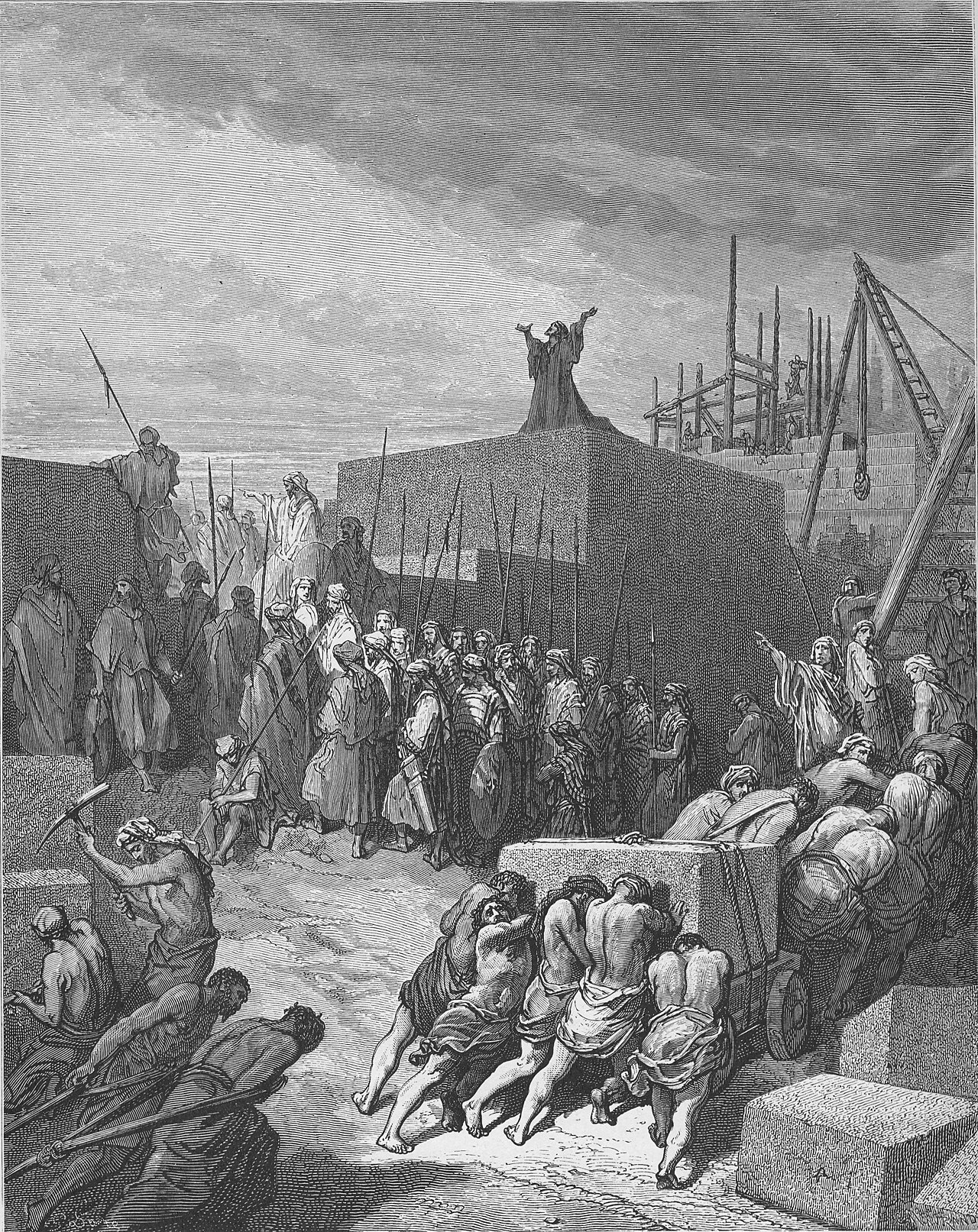
in Haggai 2Now consider carefully from this day forward: Before one stone was placed on another in the temple of the LORD,
BSB
The same verse in ASV and KJV ▾
ASV
And now, I pray you, consider from this day and backward, before a stone was laid upon a stone in the temple of Jehovah.
KJV
And now, I pray you, consider from this day and upward, from before a stone was laid upon a stone in the temple of the Lord:
⋯
This verse in Haggai 2
Commentary
5 notes on this verseThis site's exposition
consider carefully from this day forward
on Haggai 2:15-17
The nation is sent back to the time “Before one stone was placed on another in the temple of the LORD”. The LORD struck them “with blight, mildew, and hail, but you did not turn to Me”, the refrain Amos 4:6 to 11 had used.
The record, by era
The Puritans and the Awakening2 voices
And now, I pray you, consider from this day and upward,....
In the third he assures Zerubbabel that, as a reward of his pious zeal and activity herein, he should be a favourite of Heaven, and one of the ancestors of Messiah the Prince, whose kingdom should be set up on the ruins of all opposing powers,
The Nineteenth Century2 voices
A commentator
Jamieson, Fausset & Brown1802–1910
Commentary Critical and Explanatory on the Whole Bible (1871)
proposed
consider--literally, "lay it to heart." Ponder earnestly, retracing the past "upward" (that is, backward), comparing what evils heretofore befell you before ye set about this work, with the present time when you have again commenced it, and when in consequence I now engage to "bless you." Hence ye may perceive the evils of disobedience and the blessing of obedience.
quarantine:debris (2026-07-29) — starts-lowercase
A commentator
Albert Barnes1798–1870
Notes, Explanatory and Practical, on the Old and New Testaments (1832-1869)
proposed
And now, I pray you - Observe his tenderness, in drawing their attention to it , “Consider from this day and upward.” He bids them look backward, “from before a stone was laid upon a stone,” i. e., from the last moment of their neglect in building the house of God; “from since those days were,” or from the time backward “when those things were,” (resuming, in the word, “from-their-being” , the date which he had just given, namely, the beginning of their resuming the building backward, during all those years of neglect) “one came to a heap of twenty measures.” The precise measure is not mentioned: the force of the appeal lay in the proportion: the heap of grain which, usually, would yield twenty, (whether bushels or seahs or any other measure, for the heap itself being of no defined size, neither could the quantity expected from it be defined) there were ten only; “one came to the pressvat to draw out fifty” vessels out of the press, or perhaps fifty poorah, i. e., the ordinary quantity drawn out at one time from the press, there were, or it bad become twenty, two-fifths only of what they looked for and ordinarily obtained. The dried grapes yielded so little.
How the passage was read
What the Jewish commentators add
On the verses either side of this one
So is this people Just as you err in this, so do you err in many halachot.
This section is reception history: how the passage was read and kept in the Jewish tradition. Where a reading parts from an essential of the Christian faith, the section says so at that point.
Texts and citation data: Sefaria; each excerpt follows its version’s licence. 5 further sources are cited on this chapter that carry no English text this site may quote or only restate the verse.
The words behind it
15 Hebrew wordsEvery Hebrew word of this verse in the order it stands, with what it means and the door to its own study. The last column counts the times a word stands in the whole Bible: the rarer the word, the more the places it appears belong together.
| Hebrew | Sound | Meaning | Word study | In the Bible |
|---|---|---|---|---|
| וְעַתָּה֙ | veatah | and therefore | H6258 → | 433 times |
| שִֽׂימוּ־ | simu- | set | H7760 → | 584 times |
| נָ֣א | na' | please | H4994 → | 404 times |
| לְבַבְכֶ֔ם | levavkhem | heart your | H3824 → | 252 times |
| מִן־ | min- | from | H4480 → | 1188 times |
| הַיּ֥וֹם | haiyom | the day | H3117 → | 2304 times |
| הַזֶּ֖ה | hazeh | <the> this | H2088 → | 1180 times |
| וָמָ֑עְלָה | vamaelah | and up -wards | H4605 → | |
| מִטֶּ֧רֶם | miterem | from before | H2962 → | |
| שֽׂוּם־ | sum- | put | H7760 → | 584 times |
| אֶ֛בֶן | ʾeven | a stone | H68 → | |
| אֶל־ | ʾel- | to | H413 → | 5510 times |
| אֶ֖בֶן | ʾeven | a stone | H68 → | |
| בְּהֵיכַ֥ל | beheikhal | in [the] temple of | H1964 → | |
| יְהוָֽה׃ | yahweh | Yahweh | H3068 → | 6520 times |
וְעַתָּה֙and therefore
veatahH6258 →433 times
שִֽׂימוּ־set
simu-H7760 →584 times
נָ֣אplease
na'H4994 →404 times
לְבַבְכֶ֔םheart your
levavkhemH3824 →252 times
מִן־from
min-H4480 →1188 times
הַיּ֥וֹםthe day
haiyomH3117 →2304 times
הַזֶּ֖ה<the> this
hazehH2088 →1180 times
וָמָ֑עְלָהand up -wards
vamaelahH4605 →
מִטֶּ֧רֶםfrom before
miteremH2962 →
שֽׂוּם־put
sum-H7760 →584 times
אֶ֛בֶןa stone
ʾevenH68 →
אֶל־to
ʾel-H413 →5510 times
אֶ֖בֶןa stone
ʾevenH68 →
בְּהֵיכַ֥לin [the] temple of
beheikhalH1964 →
יְהוָֽה׃Yahweh
yahwehH3068 →6520 times
A shaded row is a word that stands 400 times or fewer in the Bible.
The walk
8 stopsEach card is a verse this one points to, and under it the verses that one points to in turn. Where several paths arrive at the same place, that place is listed first: the text keeps returning to it.
Through
Haggai 1:5Now this is what the LORD of Hosts says: “Consider carefully your ways.
it leads to
- Lamentations 3:40
Let us examine and test our ways, and turn back to the LORD.
- 2 Corinthians 13:5
Examine yourselves to see whether you are in the faith; test yourselves. Can’t you see for yourselves that Jesus Christ is in you—unless you actually fail the test?
- Haggai 2:15–18
Now consider carefully from this day forward: Before one stone was placed on another in the temple of the LORD,
- Haggai 1:7
This is what the LORD of Hosts says: “Consider carefully your ways.
- Lamentations 3:40
Through
Haggai 1:7This is what the LORD of Hosts says: “Consider carefully your ways.
it leads to
- Psalms 119:59–60
I considered my ways and turned my steps to Your testimonies.
- Haggai 1:5
Now this is what the LORD of Hosts says: “Consider carefully your ways.
- Psalms 119:59–60
Through
Haggai 2:18Consider carefully from this day forward—from the twenty-fourth day of the ninth month, the day the foundation of the LORD’s temple was laid—consider carefully:
it leads to
- Zechariah 8:9
This is what the LORD of Hosts says: “Let your hands be strong, you who now hear these words spoken by the prophets who were present when the foundations were laid to rebuild the…
- Ezra 5:1–2
Later, the prophets Haggai and Zechariah son of Iddo prophesied to the Jews in Judah and Jerusalem in the name of the God of Israel, who was over them.
- Zechariah 8:9
Where this verse is studied
About Haggai
This page draws on Albert Barnes, Notes on the Old Testament; Albert Barnes, Notes, Explanatory and Practical, on the Old and New Testaments (1832-1869); Carl Friedrich Keil, The Twelve Minor Prophets; Jamieson, Fausset & Brown, Commentary Critical and Explanatory on the Whole Bible; John Gill, Exposition of the Old Testament (1748-1763) and Matthew Henry, Commentary on the Whole Bible.