
Zechariah 6:13
in Zechariah 6Yes, He will build the temple of the LORD; He will be clothed in splendor and will sit on His throne and rule. And He will be a priest on His throne, and there will be peaceful counsel between the two.’
BSB
The same verse in ASV and KJV ▾
ASV
even he shall build the temple of Jehovah; and he shall bear the glory, and shall sit and rule upon his throne; and he shall be a priest upon his throne; and the counsel of peace shall be between them both.
KJV
Even he shall build the temple of the Lord; and he shall bear the glory, and shall sit and rule upon his throne; and he shall be a priest upon his throne: and the counsel of peace shall be between them both.
⋯
This verse in Zechariah 6
Commentary
12 notes on this verseA commentator
Albert Barnes1798–1870
Notes, Explanatory and Practical, on the Old and New Testaments (1832-1869)
Even He - Literally, “He Himself.” The repetition shows that it is a great thing, which he affirms; “and He,” again emphatic, “He,” the same who shall build the temple of the Lord, “He shall bear the glory.” Great must be the glory, since it is affirmed of Him as of none beside, “He shall bear glory,” “He should build the temple of the Lord,” as none beside ever built it; He should bear glory, as none beside ever bare it, “the glory as of the Only Begotten of the Father, full of grace and truth” Joh 1:
This site's exposition
Here is a man whose name is the Branch
on Zechariah 6:12-13
The word over Joshua names “a man whose name is the Branch”, the title Isaiah and Jeremiah give the righteous shoot of David's line. This Branch will build the temple, rule on His throne and “be a priest on His throne”, joining offices the law kept apart.
This site's exposition
He will be a priest on His throne
Barnes stressed the repeated He, so the one who builds the temple is the one clothed in splendor. Henry wrote that glory is a weight, and that Christ carried both the cross and the crown. Priest and king share one throne.
The record, by era
The Puritans and the Awakening3 voices
That Christ shall bear the glory. Glory is a burden, but not too heavy for him to bear who upholds all things. The cross was his glory, and he bore that; so was the crown an exceeding weight of glory, and he bears that.
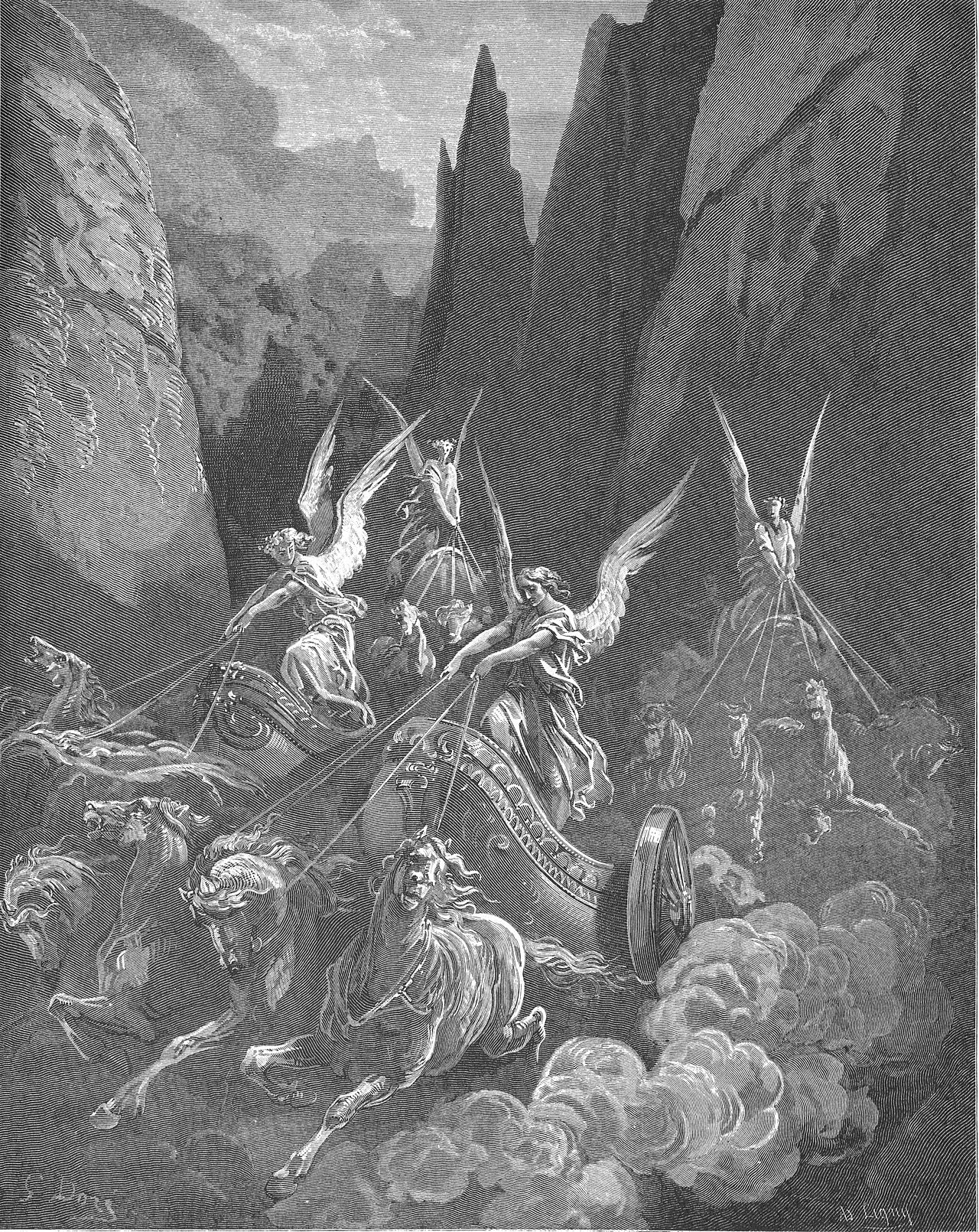
3 And in the third chariot white horses; and in the fourth chariot grisled and bay horses. 4 Then I answered and said unto the angel that talked with me, What are these, my lord? 5 And the angel answered and said unto me, These are the four spirits of the heavens, which go forth from standing before the Lord of all the earth.
quarantine:scripture (2026-07-29) — verbatim-scripture
Even he shall build the temple of the Lord,....
The Nineteenth Century2 voices
LET us first look at the historical setting of this passage. It would seem that three Jews of the captivity had come from Babylon with a contribution towards the building of the temple at Jerusalem under Zerubbabel and Joshua. Their names are given in the 10th verse of the chapter before us. Now, the Jews at Jerusalem had become exceedingly exclusive and, in some measure, rightly so. They would not accept help for the building of the Temple from Samaritans because they were a mixed race.
A commentator
Jamieson, Fausset & Brown1802–1910
Commentary Critical and Explanatory on the Whole Bible (1871)
proposed
bear the glory--that is, wear the insignia of the kingly glory, "the crowns" (Ps 21:5; He himself shall bear the glory, not thou, Joshua, though thou dost bear the crowns. The Church's dignity is in her head alone, Christ.
quarantine:debris (2026-07-29) — starts-lowercase+unbalanced-parens
4 more voices on this verse
The Nineteenth Century4 voices
LET us first look at the historical setting of this passage. It would seem that three Jews of the captivity had come from Babylon with a contribution towards the building of the temple at Jerusalem under Zerubbabel and Joshua. Their names are given in the 10th verse of the chapter before us. Now, the Jews at Jerusalem had become exceedingly exclusive and, in some measure, rightly so. They would not accept help for the building of the Temple from Samaritans because they were a mixed race. They had said to them, "You have nothing to do with us to build a house unto our God, but we ourselves together will build unto the Lord God of Israel." Possibly they had begun to feel some coolness with reference to the captivity at Babylon inasmuch as if any did not come back to their own land, their descent must be proven before they would be acknowledged. If they would not quit the ease and comfort of the towns in which they were settled and come up to Jerusalem to work with their brethren, could they be sure that they were really Israelites? At any rate there would need to be some enquiry into the pedigree of anyone offering gifts to make sure they might not be receiving help from Samaritan pretenders. There was, however, no difficulty about the acceptance of the offerings in this case, for the Prophet Zechariah was bid to hasten down that same day and meet the three worthy Jews from Babylon. He was to accept for the Lord the tribute which they had brought and make of it crowns of silver and gold. He was then to go with these Brothers and Josiah, the son of Zephaniah, their host, down to the Temple, call for the High Priest, Joshua, or Jesus, the son of Josedech, and place these coronets of silver and gold upon his head.
HEAVEN singeth evermore. Before the throne of God, angels and redeemed saints extol his name. And this world is singing too; sometimes with the loud noise of the rolling thunder, of the boiling sea of the dashing cataract, and of the lowing cattle; and often with that still, solemn harmony, which floweth from the vast creation, when in its silence it praises God.
HEAVEN singeth evermore. Before the throne of God, angels and redeemed saints extol his name. And this world is singing too; sometimes with the loud noise of the rolling thunder, of the boiling sea of the dashing cataract, and of the lowing cattle; and often with that still, solemn harmony, which floweth from the vast creation, when in its silence it praises God. Such is the song which gushes in silence from the mountain lifting its head to the sky, covering its face sometimes with the wings of mist, and at other times unveiling its snow-white brow before its Maker, and reflecting back his sunshine, gratefully thanking him for the light with which it has been made to glisten, and for the gladness of which it is the solitary spectator, as in its grandeur it looks down upon the laughing valleys. The tune to which heaven and earth are set, is the same. In heaven they sing, “The Lord be exalted; let his name be magnified for ever.” And the earth singeth the same: “Great art thou in thy works, O Lord! and unto thee be glory.” It would seem, therefore, a strange anomaly if the church, the temple of the living God, should be void of song, and we bless God that such an anomaly doth not exist, for “day and night they praise God in his temple.” And while it is true the ceaseless circles of the starry heavens are praising him without cessation, it is also true that the stars of earth, the churches of the Lord Jesus Christ, are each of them evermore singing their hymns of praise to him.
Even he shall build the temple - Joshua, not Zerubbabel. He shall bear the glory - Have all the honor of it; for none can do this but himself. The Messiah is still intended. And shall sit and rule upon his throne - For the government of the Church shall be upon his shoulder. And he shall be a priest upon his throne - He shall, as the great high priest, offer the only available offering and atonement; and so he shall be both king and priest, a royal king and a royal priest; for even the priest is here stated to sit upon his throne. And the counsel of peace shall be between them both - Whom? Zerubbabel and Joshua? Certainly not Zerubbabel, for he is not mentioned in all this prediction; but, as the Messiah is intended, the counsel of peace - the purpose to establish peace between heaven and earth, must be between the Father and the Son.
How the passage was read
What the Jewish commentators add
On the verses either side of this one
whose name is the Shoot He is Zerubbabel, mentioned above (3:8): “Behold, I bring My servant, the Shoot,” since his greatness burgeoned little by little. Some interpret this as referring to the King Messiah, but the entire context deals with the [time of the] Second Temple.
1 more on this passage, in their own words ▾
And the crowns shall be for Helem, etc. This is a transposed verse. It should be understood as: And the crowns shall be in the Temple of the Lord as a good memorial for Helem and for Tobijah, who donated the silver and the gold.
This section is reception history: how the passage was read and kept in the Jewish tradition. Where a reading parts from an essential of the Christian faith, the section says so at that point.
Texts and citation data: Sefaria; each excerpt follows its version’s licence. 5 further sources are cited on this chapter that carry no English text this site may quote or only restate the verse.
The words behind it
21 Hebrew wordsEvery Hebrew word of this verse in the order it stands, with what it means and the door to its own study. The last column counts the times a word stands in the whole Bible: the rarer the word, the more the places it appears belong together.
| Hebrew | Sound | Meaning | Word study | In the Bible |
|---|---|---|---|---|
| וְ֠הוּא | vehu' | and he | H1931 → | 1879 times |
| יִבְנֶ֞ה | yivneh | he will build | H1129 → | 376 times |
| אֶת־ | ʾet- | <obj.> | H853 → | 10935 times |
| הֵיכַ֤ל | heikhal | [the] temple of | H1964 → | 80 times |
| יְהוָה֙ | yahweh | Yahweh | H3068 → | 6520 times |
| וְהֽוּא־ | vehu'- | and he | H1931 → | 1879 times |
| יִשָּׂ֣א | yisa' | he will bear | H5375 → | 656 times |
| ה֔וֹד | hod | majesty | H1935 → | |
| וְיָשַׁ֥ב | veyashav | and he will sit | H3427 → | 1079 times |
| וּמָשַׁ֖ל | umashal | and he will rule | H4910 → | |
| עַל־ | ʾal- | on | H5921 → | 5755 times |
| כִּסְא֑וֹ | kiso | throne his | H3678 → | |
| וְהָיָ֤ה | vehayah | and he will be | H1961 → | 3559 times |
| כֹהֵן֙ | khohen | a priest | H3548 → | 750 times |
| עַל־ | ʾal- | on | H5921 → | 5755 times |
| כִּסְא֔וֹ | kiso | throne his | H3678 → | |
| וַעֲצַ֣ת | vaatzat | and a counsel of | H6098 → | |
| שָׁל֔וֹם | shalom | peace | H7965 → | 236 times |
| תִּהְיֶ֖ה | tihyeh | it will be | H1961 → | 3559 times |
| בֵּ֥ין | bein | between | H996 → | 407 times |
| שְׁנֵיהֶֽם׃ | sheneihem | [the] two of them | H8147 → | 768 times |
וְ֠הוּאand he
vehu'H1931 →1879 times
יִבְנֶ֞הhe will build
yivnehH1129 →376 times
אֶת־<obj.>
ʾet-H853 →10935 times
הֵיכַ֤ל[the] temple of
heikhalH1964 →80 times
יְהוָה֙Yahweh
yahwehH3068 →6520 times
וְהֽוּא־and he
vehu'-H1931 →1879 times
יִשָּׂ֣אhe will bear
yisa'H5375 →656 times
ה֔וֹדmajesty
hodH1935 →
וְיָשַׁ֥בand he will sit
veyashavH3427 →1079 times
וּמָשַׁ֖לand he will rule
umashalH4910 →
עַל־on
ʾal-H5921 →5755 times
כִּסְא֑וֹthrone his
kisoH3678 →
וְהָיָ֤הand he will be
vehayahH1961 →3559 times
כֹהֵן֙a priest
khohenH3548 →750 times
עַל־on
ʾal-H5921 →5755 times
כִּסְא֔וֹthrone his
kisoH3678 →
וַעֲצַ֣תand a counsel of
vaatzatH6098 →
שָׁל֔וֹםpeace
shalomH7965 →236 times
תִּהְיֶ֖הit will be
tihyehH1961 →3559 times
בֵּ֥יןbetween
beinH996 →407 times
שְׁנֵיהֶֽם׃[the] two of them
sheneihemH8147 →768 times
A shaded row is a word that stands 400 times or fewer in the Bible.
The walk
8 stopsEach card is a verse this one points to, and under it the verses that one points to in turn. Where several paths arrive at the same place, that place is listed first: the text keeps returning to it.
Through
Psalms 110:4The LORD has sworn and will not change His mind: “You are a priest forever in the order of Melchizedek.”
it leads to
- Hebrews 7:17
For it is testified: “You are a priest forever in the order of Melchizedek.”
- Hebrews 5:6
And in another passage God says: “You are a priest forever in the order of Melchizedek.”
- Hebrews 7:21
but Jesus became a priest with an oath by the One who said to Him: “The Lord has sworn and will not change His mind: ‘You are a priest forever.’”
- Genesis 14:18
Then Melchizedek king of Salem brought out bread and wine—since he was priest of God Most High—
- Hebrews 7:17
Through
Hebrews 3:1Therefore, holy brothers, who share in the heavenly calling, set your focus on Jesus, the apostle and high priest whom we confess.
it leads to
- 2 Timothy 1:9
He has saved us and called us to a holy calling, not because of our works, but by His own purpose and by the grace He granted us in Christ Jesus before time began.
- Philippians 3:14
I press on toward the goal to win the prize of God’s heavenly calling in Christ Jesus.
- 2 Timothy 1:9
Through
Isaiah 11:10On that day the Root of Jesse will stand as a banner for the peoples. The nations will seek Him, and His place of rest will be glorious.
it leads to
- Romans 15:9–12
so that the Gentiles may glorify God for His mercy. As it is written: “Therefore I will praise You among the Gentiles; I will sing hymns to Your name.”
- Luke 2:32
a light for revelation to the Gentiles, and for glory to Your people Israel.”
- Romans 15:9–12
Where this verse is studied
On this page
About Zechariah
This page draws on 9 works. Open the list of works
This page draws on Adam Clarke, Commentary on the Bible; Albert Barnes, Notes, Explanatory and Practical, on the Old and New Testaments (1832-1869); Carl Friedrich Keil, The Twelve Minor Prophets; Charles Spurgeon, The Metropolitan Tabernacle Pulpit, Sermon No. 1495: “The King-Priest” (lightly modernized text, CCEL edition); Charles Spurgeon, The New Park Street Pulpit, Sermon No. 191: “Christ Glorified as the Builder of His Church” (lightly modernized text, CCEL edition); Jamieson, Fausset & Brown, Commentary Critical and Explanatory on the Whole Bible; John Calvin, Commentaries on the Twelve Minor Prophets; John Gill, Exposition of the Old Testament (1748-1763) and Matthew Henry, Commentary on the Whole Bible.