
Ezra 3:12
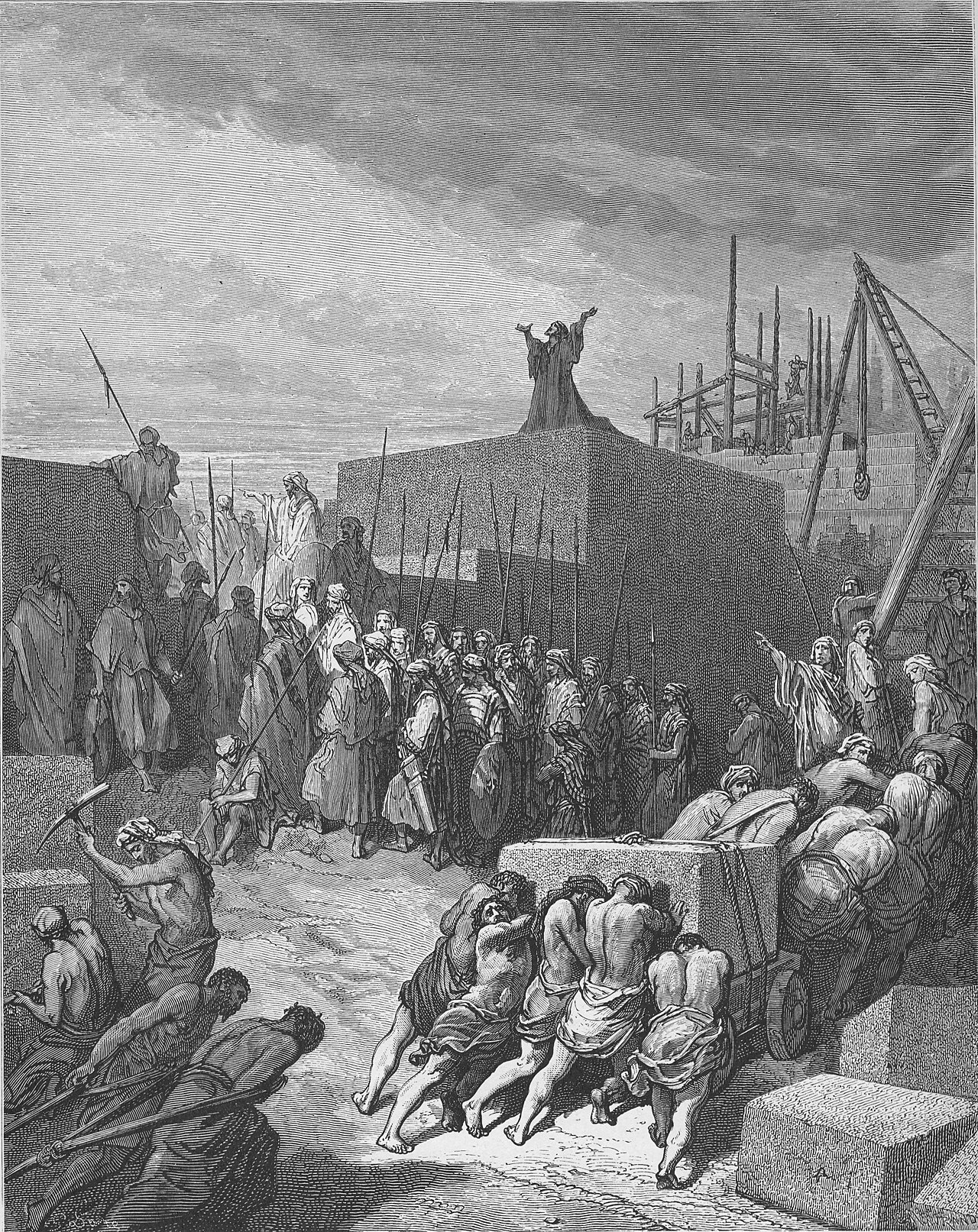
in Ezra 3But many of the older priests, Levites, and family heads who had seen the first temple wept loudly when they saw the foundation of this temple. Still, many others shouted joyfully.
BSB
The same verse in ASV and KJV ▾
ASV
But many of the priests and Levites and heads of fathers’ houses, the old men that had seen the first house, when the foundation of this house was laid before their eyes, wept with a loud voice; and many shouted aloud for joy:
KJV
But many of the priests and Levites and chief of the fathers, who were ancient men, that had seen the first house, when the foundation of this house was laid before their eyes, wept with a loud voice; and many shouted aloud for joy:
⋯
This verse in Ezra 3
Commentary
8 notes on this verseWept with a loud voice - They saw that the glory had departed from Israel; in their circumstances it was impossible to build such a house as the first temple was; and had this been even possible, still it would have been greatly inferior, because it wanted the ark of the covenant, the heavenly fire, the mercy-seat, the heavenly manna, Aaron’s rod that budded, the Divine shechinah, the spirit of prophecy, and most probably the Urim and Thummim.
This site's exposition
who had seen the first temple
on Ezra 3:12-13
Many of the older priests and family heads had seen the first temple, and they weep loudly at this foundation while others shout for joy. Haggai later speaks to these same old men, asking who among them saw this house in its first glory.
The record, by era
The Medieval Church1 voice
Many also of the priests and Levites, etc., who had seen the first temple founded, and this temple before their eyes, were emitting voices partly of weeping, partly of joy. Joy indeed, because the temple of the Lord, which had been destroyed, had now begun …
The Puritans and the Awakening3 voices
These lamented the disproportion between this temple and the former. And, (1.) There was some reason for it; and if they turned their tears into the right channel, and bewailed the sin that was the cause of this melancholy change, they did well. Sin sullies the glory of any church or people, and, when they find themselves diminished and brought low, that must bear the blame.
This was the day of small things, which was not to be despised, Zech. iv. The Renewal of the Sacrifices. 1 And when the seventh month was come, and the children of Israel were in the cities, the people gathered themselves together as one man to Jerusalem.
quarantine:scripture (2026-07-29) — verbatim-run:26w-of-46
But many of the priests and Levites, and chief of the fathers, who were ancient men,....
The Nineteenth Century1 voice
A commentator
Jamieson, Fausset & Brown1802–1910
Commentary Critical and Explanatory on the Whole Bible (1871)
Perhaps, however, the chief cause of grief was that the second temple would be destitute of those things which formed the great and distinguishing glory of the first; namely, the ark, the shekinah, the Urim and Thummim, &c. Not that this second temple was not a very grand and beautiful structure.
1 more voice on this verse
The Nineteenth Century1 voice
A commentator
Albert Barnes1798–1870
Notes, Explanatory and Practical, on the Old and New Testaments (1832-1869)
proposed
Wept ... shouted ... for joy - Compare the marginal reference and Zec 4:10. It is implied that the dimensions of the second temple were smaller than those of the first. Hence, the feeling of sorrow which came upon some. They, however, who had not seen the former temple, and so could not contrast the two, naturally rejoiced to see the sanctuary of their religion begin to rise from its ruins.
How the passage was read
What the Jewish commentators add
On the verses either side of this one
And the people did not recognize Those listeners did not recognize the voice of the shout of joy, because of the voice of the people’s weeping, for the rejoicing people were shouting with a great shout, and the voice of weeping was heard farther and farther away.
This section is reception history: how the passage was read and kept in the Jewish tradition. Where a reading parts from an essential of the Christian faith, the section says so at that point.
Texts and citation data: Sefaria; each excerpt follows its version’s licence. 5 further sources are cited on this chapter that carry no English text this site may quote or only restate the verse.
The words behind it
23 Hebrew wordsEvery Hebrew word of this verse in the order it stands, with what it means and the door to its own study. The last column counts the times a word stands in the whole Bible: the rarer the word, the more the places it appears belong together.
| Hebrew | Sound | Meaning | Word study | In the Bible |
|---|---|---|---|---|
| וְרַבִּ֡ים | verabim | and many | H7227 → | 454 times |
| מֵהַכֹּהֲנִ֣ים | mehakohanim | of the priests | H3548 → | 750 times |
| וְהַלְוִיִּם֩ | vehalviyim | and the Levites | H3881 → | 291 times |
| וְרָאשֵׁ֨י | verashei | and [the] heads of | H7218 → | 599 times |
| הָאָב֜וֹת | haavot | the fathers | H1 → | 1212 times |
| הַזְּקֵנִ֗ים | hazekenim | <the> old | H2205 → | 178 times |
| אֲשֶׁ֨ר | ʾasher | who | H834 → | 5497 times |
| רָא֜וּ | rau | they had seen | H7200 → | |
| אֶת־ | ʾet- | <obj.> | H853 → | 10935 times |
| הַבַּ֤יִת | habayit | the house | H1004 → | 2046 times |
| הָֽרִאשׁוֹן֙ | harishon | <the> first | H7223 → | 182 times |
| בְּיָסְד֔וֹ | beyasedo | when founded it | H3245 → | 43 times |
| זֶ֤ה | zeh | this | H2088 → | 1180 times |
| הַבַּ֙יִת֙ | habayit | the house | H1004 → | 2046 times |
| בְּעֵ֣ינֵיהֶ֔ם | beeineihem | with own eyes their | H5869 → | |
| בֹּכִ֖ים | bokhim | [were] weeping | H1058 → | 114 times |
| בְּק֣וֹל | bekol | with a voice | H6963 → | 506 times |
| גָּד֑וֹל | gadol | great | H1419 → | 526 times |
| וְרַבִּ֛ים | verabim | and many [people] | H7227 → | 454 times |
| בִּתְרוּעָ֥ה | bitruah | with a shout of joy | H8643 → | 36 times |
| בְשִׂמְחָ֖ה | vesimchah | with gladness | H8057 → | 94 times |
| לְהָרִ֥ים | leharim | to lift up | H7311 → | 190 times |
| קֽוֹל׃ | kol | a voice | H6963 → | 506 times |
וְרַבִּ֡יםand many
verabimH7227 →454 times
מֵהַכֹּהֲנִ֣יםof the priests
mehakohanimH3548 →750 times
וְהַלְוִיִּם֩and the Levites
vehalviyimH3881 →291 times
וְרָאשֵׁ֨יand [the] heads of
verasheiH7218 →599 times
הָאָב֜וֹתthe fathers
haavotH1 →1212 times
הַזְּקֵנִ֗ים<the> old
hazekenimH2205 →178 times
אֲשֶׁ֨רwho
ʾasherH834 →5497 times
רָא֜וּthey had seen
rauH7200 →
אֶת־<obj.>
ʾet-H853 →10935 times
הַבַּ֤יִתthe house
habayitH1004 →2046 times
הָֽרִאשׁוֹן֙<the> first
harishonH7223 →182 times
בְּיָסְד֔וֹwhen founded it
beyasedoH3245 →43 times
זֶ֤הthis
zehH2088 →1180 times
הַבַּ֙יִת֙the house
habayitH1004 →2046 times
בְּעֵ֣ינֵיהֶ֔םwith own eyes their
beeineihemH5869 →
בֹּכִ֖ים[were] weeping
bokhimH1058 →114 times
בְּק֣וֹלwith a voice
bekolH6963 →506 times
גָּד֑וֹלgreat
gadolH1419 →526 times
וְרַבִּ֛יםand many [people]
verabimH7227 →454 times
בִּתְרוּעָ֥הwith a shout of joy
bitruahH8643 →36 times
בְשִׂמְחָ֖הwith gladness
vesimchahH8057 →94 times
לְהָרִ֥יםto lift up
leharimH7311 →190 times
קֽוֹל׃a voice
kolH6963 →506 times
A shaded row is a word that stands 400 times or fewer in the Bible.
The walk
8 stopsEach card is a verse this one points to, and under it the verses that one points to in turn. Where several paths arrive at the same place, that place is listed first: the text keeps returning to it.
Through
Job 8:7Though your beginnings were modest, your latter days will flourish.
it leads to
- Matthew 13:31–32
He put before them another parable: “The kingdom of heaven is like a mustard seed that a man planted in his field.
Reached by 2 separate paths from here.
- Job 42:12–13
So the LORD blessed Job’s latter days more than his first. He owned 14,000 sheep, 6,000 camels, 1,000 yoke of oxen, and 1,000 female donkeys.
- Proverbs 19:20
Listen to counsel and accept discipline, that you may be wise the rest of your days.
- Zechariah 4:10
For who has despised the day of small things? But these seven eyes of the LORD, which scan the whole earth, will rejoice when they see the plumb line in the hand of Zerubbabel.”
- Proverbs 4:18
The path of the righteous is like the first gleam of dawn, shining brighter and brighter until midday.
- Matthew 13:31–32
Through
Isaiah 60:22The least of you will become a thousand, and the smallest a mighty nation. I am the LORD; in its time I will accomplish it quickly.
it leads to
- Habakkuk 2:3
For the vision awaits an appointed time; it testifies of the end and does not lie. Though it lingers, wait for it, since it will surely come and will not delay.
- Hebrews 10:36
You need to persevere, so that after you have done the will of God, you will receive what He has promised.
- Luke 18:7
Will not God bring about justice for His elect who cry out to Him day and night? Will He continue to defer their help?
- Habakkuk 2:3
Where this verse is studied
On this page
Studies5
About Ezra
This page draws on Adam Clarke, Commentary on the Bible; Albert Barnes, Notes, Explanatory and Practical, on the Old and New Testaments (1832-1869); Bede, Commentary on Ezra and Nehemiah; Jamieson Fausset and Brown, Commentary Critical and Explanatory on the Whole Bible; Jamieson, Fausset & Brown, Commentary Critical and Explanatory on the Whole Bible; John Gill, Exposition of the Old Testament (1748-1763) and Matthew Henry, Commentary on the Whole Bible.