
Place
The Jordan River
Also known as Jordan · Yarden
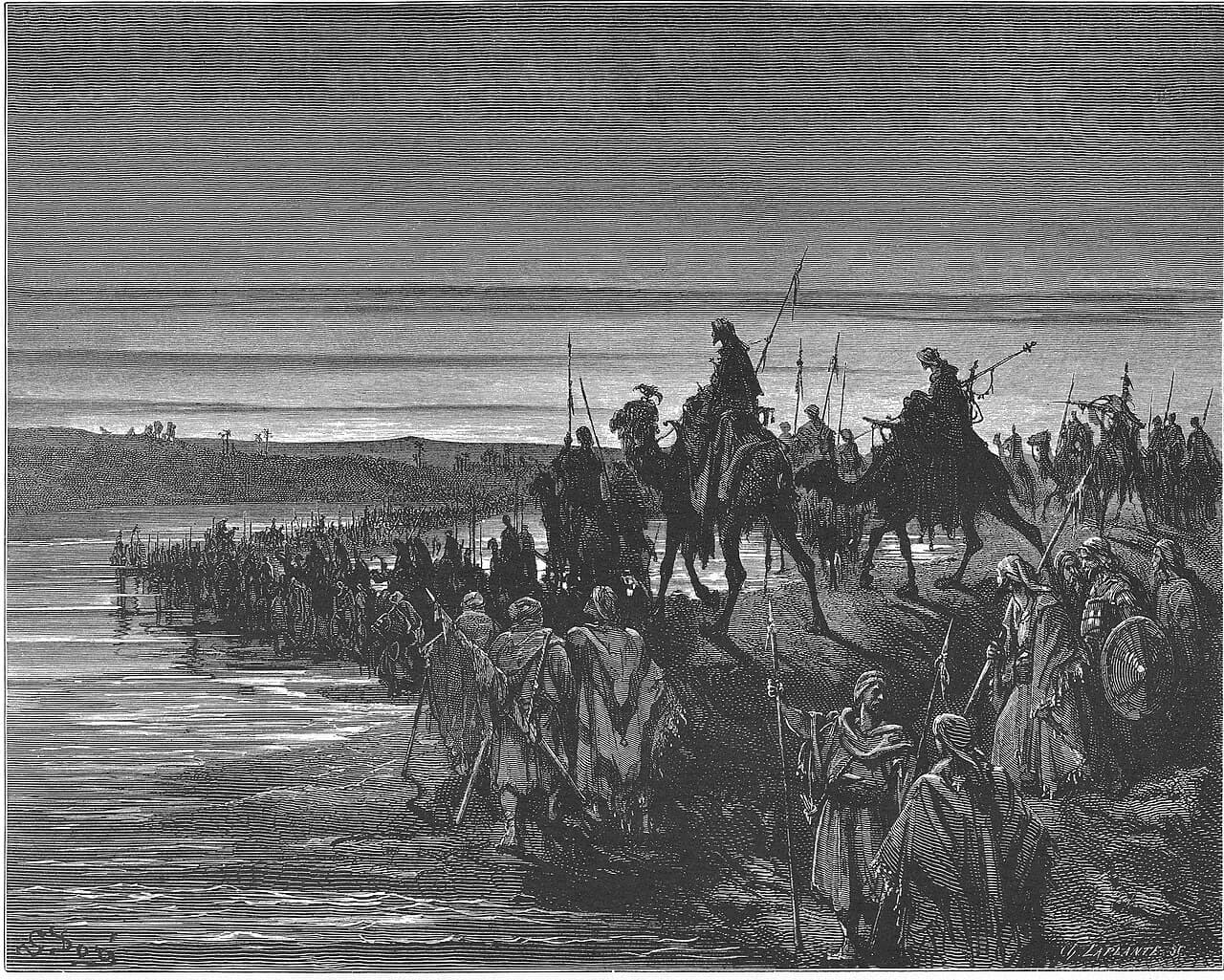
Gustave Doré, La Sainte Bible (Tours: Alfred Mame et fils, 1866). Public domain.
Summary
The river Israel crossed on dry ground into the land, where Elijah was taken up, Naaman was cleansed, and John baptized Jesus.
- Israel came out of Egypt through a divided sea and came into the land through a divided river.
- The priests carrying the ark stood in the riverbed until the whole nation had crossed, and the water returned the moment they stepped out.
- Elijah struck the water with his cloak and crossed east before he was taken up, and Elisha struck it with the same cloak and came back west.
- Naaman washed seven times in the river he had called beneath him, and his flesh was restored.
- John baptized in the Jordan, Jesus was baptized there, and all four Gospels start the public ministry at this water.
On this page
In Scripture
- Verses
- 185
- Books
- 21
Near The Jordan River
- Peniel19 km · 12 mi SE
- Sychar26 km · 16 mi SW
- Mount Gilboa26 km · 16 mi NW
- Shechem28 km · 18 mi W
- Mount Ebal28 km · 18 mi W
- Mount Gerizim30 km · 18 mi SW
Straight-line distances, computed from the gazetteer coordinates.
Where it is
the country around it
- Coordinates
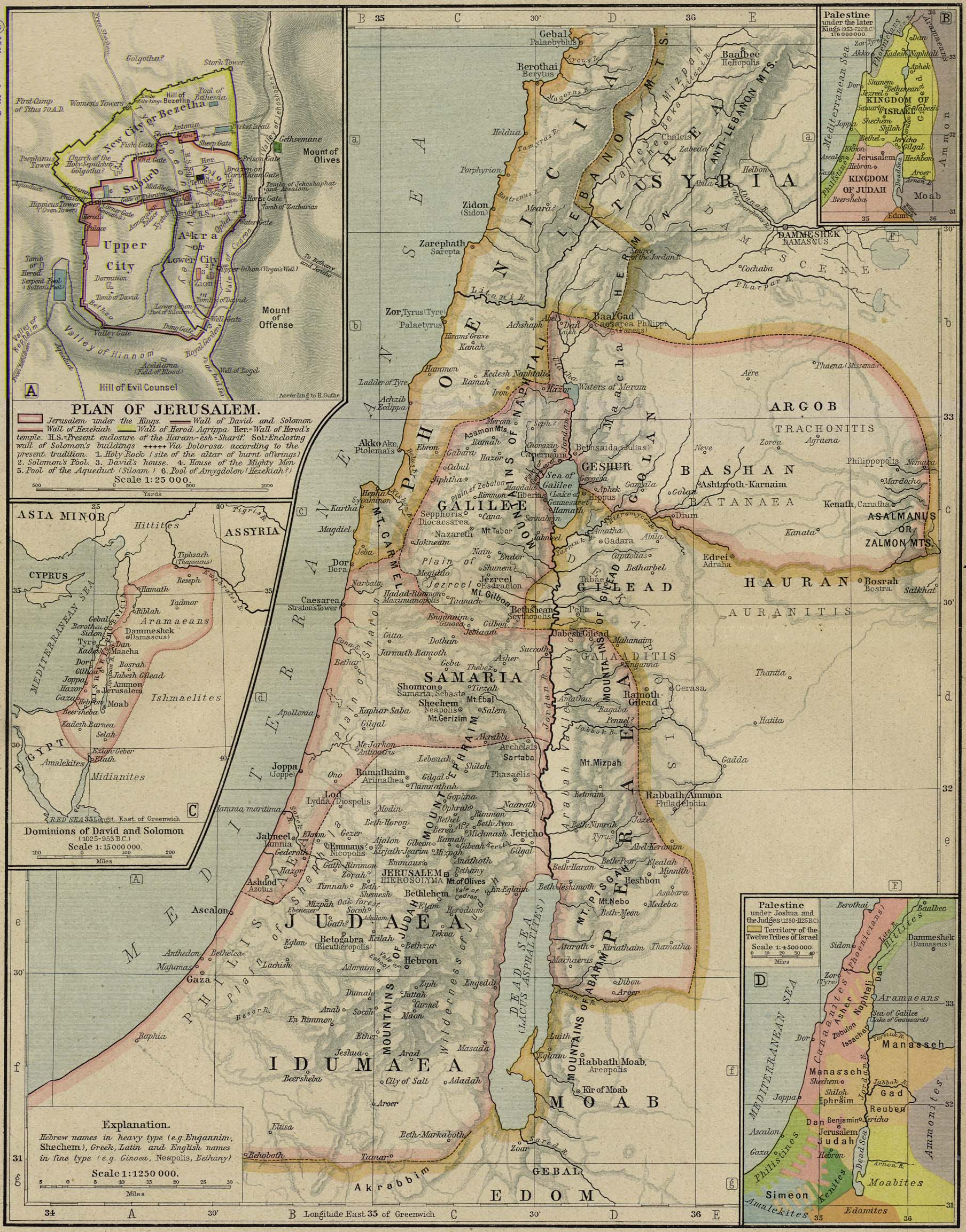
- 32.3091° N, 35.5599° Efind it on the Atlas →
- Region
- The rift valley
- Kind of place
- Body of water
- Located: the gazetteer fixes one site
- Placed: the point stands for an area, or is rounded
Not located: Egypt, Moab. The gazetteer records no location for them, so they are not marked.
Why The Jordan River matters
What has been found
the evidence, and where it is disputed
The crossing of the Jordan, outlined
Joshua 1 to 5, in the order it happens
Read Joshua 1 to 5, in the order it happens
- Arise and cross over this JordanJoshua 1:2“Moses My servant is dead. Now therefore arise, you and all these people, and cross over the Jordan into the land that I am giving to the children of Israel.
- The priests are told to stand in the riverJoshua 3:8Command the priests carrying the ark of the covenant: ‘When you reach the edge of the waters, stand in the Jordan.’”
- The waters will stand up in a heapJoshua 3:13When the feet of the priests who carry the ark of the LORD—the Lord of all the earth—touch down in the waters of the Jordan, its flowing waters will be cut off and will stand up in a heap.”
- The river was over its banksJoshua 3:15Now the Jordan overflows its banks throughout the harvest season. But as soon as the priests carrying the ark reached the Jordan and their feet touched the water’s edge,
- The water backs up as far as AdamJoshua 3:16the flowing water stood still. It backed up as far upstream as Adam, a city in the area of Zarethan, while the water flowing toward the Sea of the Arabah (the Salt Sea) was completely cut off. So the people crossed over opposite Jericho.
- The priests stand firm in the riverbedJoshua 3:17The priests carrying the ark of the covenant of the LORD stood firm on dry ground in the middle of the Jordan, while all Israel crossed over the dry ground, until the entire nation had crossed the Jordan.
- Twelve stones out of the middle of the riverJoshua 4:3and command them: ‘Take up for yourselves twelve stones from the middle of the Jordan where the priests were standing, carry them with you, and set them down in the place where you spend the night.’”
- The priests come up, and the river returnsJoshua 4:18When the priests carrying the ark of the covenant of the LORD came up out of the Jordan and their feet touched the dry land, the waters of the Jordan returned to their course and overflowed all the banks as before.
- Joshua sets it beside the Red SeaJoshua 4:23For the LORD your God dried up the waters of the Jordan before you until you had crossed over, just as He did to the Red Sea, which He dried up before us until we had crossed over.
- The kings of Canaan hear, and their hearts meltJoshua 5:1Now when all the Amorite kings west of the Jordan and all the Canaanite kings along the coast heard how the LORD had dried up the waters of the Jordan before the Israelites until they had crossed over, their hearts melted and their spirits failed for fear of the Israelites.
Two sets of twelve stones come out of this account. Twelve were carried out of the riverbed and set up in the camp at Gilgal, and twelve were set up in the middle of the river where the priests had stood. The stones at Gilgal have their own page.
The book of Joshua: the full studyWhat happened here, in order
in the order the canon tells it
- Lot looks at the plain of the Jordan and chooses by sightGenesis 13:10And Lot looked out and saw that the whole plain of the Jordan, all the way to Zoar, was well watered like the garden of the LORD, like the land of Egypt. (This was before the LORD destroyed Sodom and Gomorrah.)
- Jacob measures twenty years by one crossing with a staffGenesis 32:10I am unworthy of all the kindness and faithfulness You have shown Your servant. Indeed, with only my staff I came across the Jordan, but now I have become two camps.
- Israel camps in the plains of Moab by the JordanNumbers 22:1Then the Israelites traveled on and camped in the plains of Moab near the Jordan, across from Jericho.
- Moses is told he will not cross this JordanDeuteronomy 3:27Go to the top of Pisgah and look to the west and north and south and east. See the land with your own eyes, for you will not cross this Jordan.
- Twelve stones set up in the middle of the riverJoshua 4:9Joshua also set up twelve stones in the middle of the Jordan, in the place where the priests who carried the ark of the covenant stood. And the stones are there to this day.
- Israel comes up from the Jordan and camps at GilgalJoshua 4:19On the tenth day of the first month the people went up from the Jordan and camped at Gilgal on the eastern border of Jericho.
- The eastern tribes name their altar by the river WitnessJoshua 22:34So the Reubenites and Gadites named the altar Witness, for they said, “It is a witness between us that the LORD is God.”
- Ehud seizes the fords against MoabJudges 3:28“Follow me,” he told them, “for the LORD has delivered your enemies the Moabites into your hand.” So they followed him down and seized the fords of the Jordan leading to Moab, and did not allow anyone to cross over.
- Shibboleth at the fords, and forty-two thousand Ephraimites killedJudges 12:6they told him, “Please say Shibboleth.” If he said, “Sibboleth,” because he could not pronounce it correctly, they seized him and killed him at the fords of the Jordan. So at that time 42,000 Ephraimites were killed.
- David crosses the Jordan by daybreak, fleeing Absalom2 Samuel 17:22So David and all the people with him got up and crossed the Jordan. By daybreak, there was no one left who had not crossed the Jordan.
- Elijah hides by the Brook of Cherith, east of the Jordan1 Kings 17:5So Elijah did what the LORD had told him, and he went and lived by the Brook of Cherith, east of the Jordan.
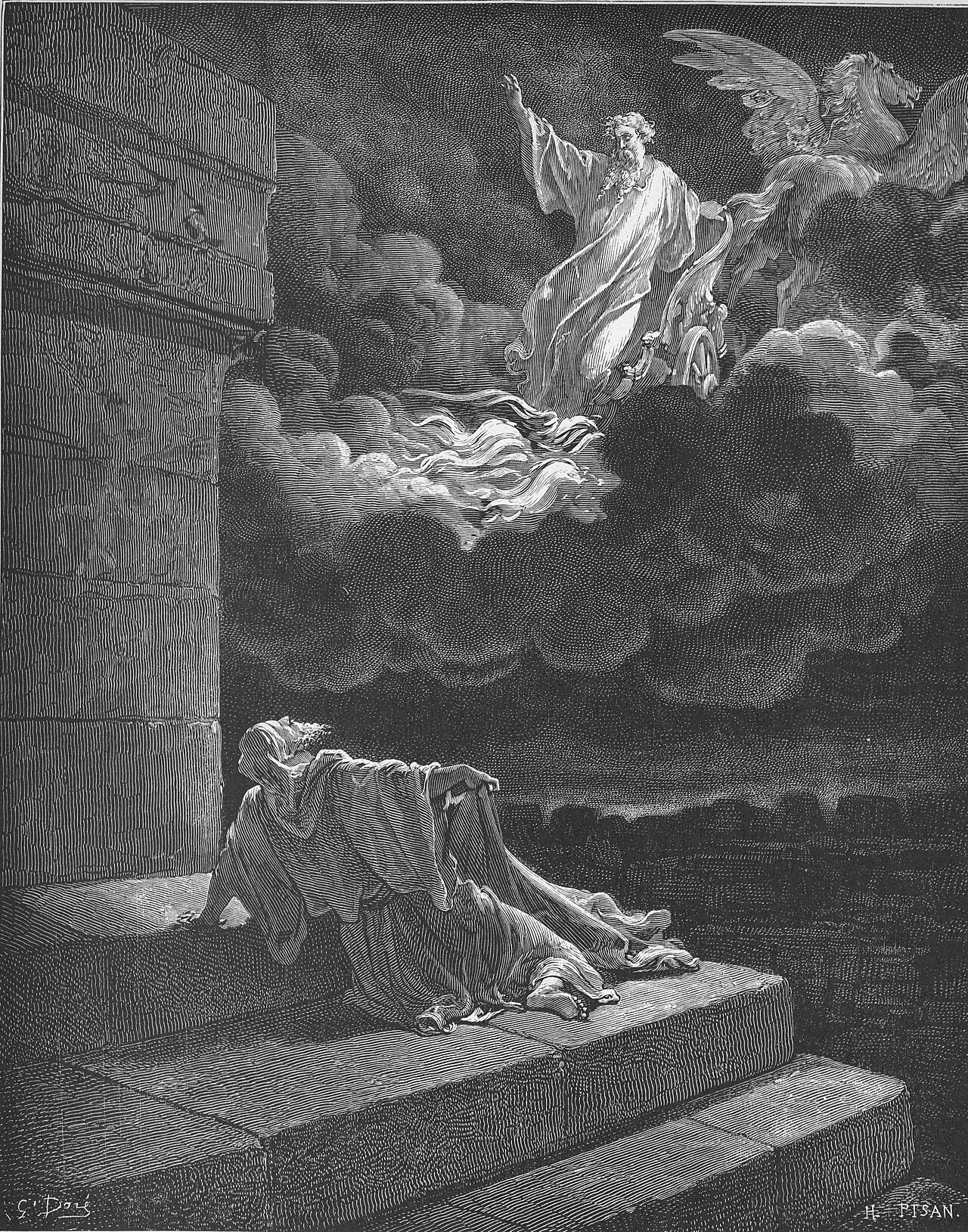
- Elijah strikes the water with his cloak and crosses east2 Kings 2:8And Elijah took his cloak, rolled it up, and struck the waters, which parted to the right and to the left, so that the two of them crossed over on dry ground.
- Elisha strikes the same water and crosses back2 Kings 2:14Then he took the cloak of Elijah that had fallen from him and struck the waters. “Where now is the LORD, the God of Elijah?” he asked. And when he had struck the waters, they parted to the right and to the left, and Elisha crossed over.
- Naaman dips seven times and his flesh is restored2 Kings 5:14So Naaman went down and dipped himself in the Jordan seven times, according to the word of the man of God, and his flesh was restored and became like that of a little child, and he was clean.
- The borrowed axe head floats2 Kings 6:6“Where did it fall?” asked the man of God. And when he showed him the place, the man of God cut a stick, threw it there, and made the iron float.
- The song asks the river what turned it backPsalms 114:5Why was it, O sea, that you fled, O Jordan, that you turned back,
- The thickets of the Jordan stand for the harder trialJeremiah 12:5“If you have raced with men on foot and they have worn you out, how can you compete with horses? If you stumble in a peaceful land, how will you do in the thickets of the Jordan?
- Jesus comes from Galilee to the Jordan to be baptizedMatthew 3:13At that time Jesus came from Galilee to the Jordan to be baptized by John.
- The heavens open and the Spirit descendsMatthew 3:16As soon as Jesus was baptized, He went up out of the water. Suddenly the heavens were opened, and He saw the Spirit of God descending like a dove and resting on Him.
- Jesus goes back across the Jordan to where John beganJohn 10:40Then Jesus went back across the Jordan to the place where John had first been baptizing, and He stayed there.
Where it points
The voices
each quoted from the work named
Note, Though the opposition given to the salvation of God's people have all imaginable advantages, yet god can and will conquer it. Let the banks of Jordan be filled to the brink, filled till they run over, it is as easy to Omnipotence to divide them, and dry them up, as if they were ever so narrow, ever so shallow; it is all one with the Lord.
Twelve stones - These stones are not the same with those which a man could carry upon his shoulder, ver. 5. They might be very much larger; and being set up in two rows one above another, might be seen, at least when the water was low, especially where it was shallow, as it was ordinarily, though not at this time, when Jordan overflowed all its banks.
And when do they come to the crossing of the Jordan? For I have noted that this also has been indicated, so that even the time might be distinguished, and with good reason. "On the tenth," it says, "of the first month." That is also the day on which the mystery of the lamb was prefigured in Egypt. On the tenth of the first month, these things were celebrated in Egypt; on the tenth of the first month, they go into the land of promise.
4 more teachers on these versesCharles Spurgeon · Jamieson, Fausset & Brown · Justin Martyr · J.C. Ryle
What ailed thee, O thou sea? Wert thou terribly afraid? Did thy strength fail thee? Did thy very heart dry up? What ailed thee, O thou sea, that thou fleddest? Thou wert neighbour to the power of Pharaoh, but thou didst never fear his hosts; stormy wind could never prevail against thee so as to divide thee in twain; but when the way of the Lord was in thy great waters thou was seized with affright, and thou becamest a fugitive from before him. Thou Jordan, that thou wast driven back? What ailed thee, O quick descending river?
Then went he down, and dipped himself seven times in Jordan--Persuaded by his calmer and more reflecting attendants to try a method so simple and easy, he followed their instructions, and was cured. The cure was performed on the basis of God's covenant with Israel, by which the land, and all pertaining to it, was blessed. Seven was the symbol of the covenant [KEIL].
Elisha, by casting a stick into the river Jordan, recovered the iron part of the axe with which the sons of the prophets had gone to cut down trees to build the house in which they wished to read and study the law and commandments of God; even as our Christ, by being crucified on the tree, and by purifying us with water, has redeemed us, though plunged in the direst offences which we have committed, and has made us a house of prayer and adoration.
These verses describe the ministry of John the Baptist, the forerunner of our Lord Jesus Christ: it is a ministry that deserves close attention. Few preachers ever produced such effects as John the Baptist: “There went out to him Jerusalem and all Judea and all the region round about Jordan.”None ever received such praise from the great head of the church: Jesus called him “a burning and a shining light” ( John 5:35 ); the great Bishop of souls Himself declared, that “among them that are born of women there hath not risen a greater than John the Baptist.”
The Jordan River in Scripture
185 verses name it, or one of its other names (Jordan, Yarden), in 21 books
Open a book to read its mentions here. Text: Berean Standard Bible.
Old TestamentNew Testamentsegment width = share of mentions
Old Testament17 books · 170 mentions
Genesis5 mentions
- Genesis 13:10And Lot looked out and saw that the whole plain of the Jordan, all the way to Zoar, was well watered like the garden of the LORD, like the land of Egypt. (This was before the LORD destroyed Sodom and Gomorrah.)
- Genesis 13:11So Lot chose the whole plain of the Jordan for himself and set out toward the east. And Abram and Lot parted company.
- Genesis 32:10I am unworthy of all the kindness and faithfulness You have shown Your servant. Indeed, with only my staff I came across the Jordan, but now I have become two camps.
- Genesis 50:10When they reached the threshing floor of Atad, which is across the Jordan, they lamented and wailed loudly, and Joseph mourned for his father seven days.
- Genesis 50:11When the Canaanites of the land saw the mourning at the threshing floor of Atad, they said, “This is a solemn ceremony of mourning by the Egyptians.” Thus the place across the Jordan is called Abel-mizraim.
Numbers20 mentions
- Numbers 13:29The Amalekites live in the land of the Negev; the Hittites, Jebusites, and Amorites live in the hill country; and the Canaanites live by the sea and along the Jordan.”
- Numbers 22:1Then the Israelites traveled on and camped in the plains of Moab near the Jordan, across from Jericho.
- Numbers 26:3So on the plains of Moab by the Jordan, across from Jericho, Moses and Eleazar the priest issued the instruction,
- Numbers 26:63These were the ones numbered by Moses and Eleazar the priest when they counted the Israelites on the plains of Moab by the Jordan, across from Jericho.
- Numbers 31:12They brought the captives, spoils, and plunder to Moses, to Eleazar the priest, and to the congregation of Israel at the camp on the plains of Moab, by the Jordan across from Jericho.
- Numbers 32:5“If we have found favor in your sight,” they said, “let this land be given to your servants as a possession. Do not make us cross the Jordan.”
- Numbers 32:19Yet we will not have an inheritance with them across the Jordan and beyond, because our inheritance has come to us on the east side of the Jordan.”
- Numbers 32:21and if every one of your armed men crosses the Jordan before the LORD, until He has driven His enemies out before Him,
12 further mentions in Numbers, read them in the book.
Deuteronomy29 mentions
- Deuteronomy 1:1These are the words that Moses spoke to all Israel in the wilderness east of the Jordan—in the Arabah opposite Suph—between Paran and Tophel, Laban, Hazeroth, and Dizahab.
- Deuteronomy 1:5On the east side of the Jordan in the land of Moab, Moses began to explain this law, saying:
- Deuteronomy 2:29just as the descendants of Esau who live in Seir and the Moabites who live in Ar did for us, until we cross the Jordan into the land that the LORD our God is giving us.”
- Deuteronomy 3:8At that time we took from the two kings of the Amorites the land across the Jordan, from the Arnon Valley as far as Mount Hermon—
- Deuteronomy 3:17The Jordan River in the Arabah bordered it from Chinnereth to the Sea of the Arabah (the Salt Sea) with the slopes of Pisgah to the east.
- Deuteronomy 3:20until the LORD gives rest to your brothers as He has to you, and they too have taken possession of the land that the LORD your God is giving them across the Jordan. Then each of you may return to the possession I have given you.”
- Deuteronomy 3:25Please let me cross over and see the good land beyond the Jordan—that pleasant hill country as well as Lebanon!”
- Deuteronomy 3:27Go to the top of Pisgah and look to the west and north and south and east. See the land with your own eyes, for you will not cross this Jordan.
21 further mentions in Deuteronomy, read them in the book.
Joshua59 mentions
- Joshua 1:2“Moses My servant is dead. Now therefore arise, you and all these people, and cross over the Jordan into the land that I am giving to the children of Israel.
- Joshua 1:11“Go through the camp and tell the people, ‘Prepare your provisions, for within three days you will cross the Jordan to go in and take possession of the land that the LORD your God is giving you to possess.’”
- Joshua 1:14Your wives, your young children, and your livestock may remain in the land that Moses gave you on this side of the Jordan. But all your mighty men of valor must be armed for battle to cross over ahead of your brothers and help them,
- Joshua 1:15until the LORD gives them rest as He has done for you, and your brothers also possess the land that the LORD your God is giving them. Then you may return to the land of your inheritance and take possession of that which Moses the servant of the LORD gave you on the east side of the Jordan.”
- Joshua 2:7So the king’s men set out in pursuit of the spies along the road to the fords of the Jordan, and as soon as they had gone out, the gate was shut.
- Joshua 2:10For we have heard how the LORD dried up the waters of the Red Sea before you when you came out of Egypt, and what you did to Sihon and Og, the two kings of the Amorites across the Jordan, whom you devoted to destruction.
- Joshua 3:1Early the next morning Joshua got up and left Shittim with all the Israelites. They went as far as the Jordan, where they camped before crossing over.
- Joshua 3:8Command the priests carrying the ark of the covenant: ‘When you reach the edge of the waters, stand in the Jordan.’”
51 further mentions in Joshua, read them in the book.
Judges13 mentions
- Judges 3:28“Follow me,” he told them, “for the LORD has delivered your enemies the Moabites into your hand.” So they followed him down and seized the fords of the Jordan leading to Moab, and did not allow anyone to cross over.
- Judges 5:17Gilead remained beyond the Jordan. Dan, why did you linger by the ships? Asher stayed at the coast and remained in his harbors.
- Judges 6:33Then all the Midianites, Amalekites, and other people of the east gathered together, crossed over the Jordan, and camped in the Valley of Jezreel.
- Judges 7:24Gideon sent messengers throughout the hill country of Ephraim to say, “Come down against the Midianites and seize the waters of the Jordan ahead of them as far as Beth-barah.” So all the men of Ephraim were called out, and they captured the waters of the Jordan as far as Beth-barah.
- Judges 7:25They also captured Oreb and Zeeb, the two princes of Midian; and they killed Oreb at the rock of Oreb and Zeeb at the winepress of Zeeb. So they pursued the Midianites and brought the heads of Oreb and Zeeb to Gideon on the other side of the Jordan.
- Judges 8:4Then Gideon and his three hundred men came to the Jordan and crossed it, exhausted yet still in pursuit.
- Judges 10:8who that very year harassed and oppressed the Israelites, and did so for eighteen years to all the Israelites on the other side of the Jordan in Gilead, the land of the Amorites.
- Judges 10:9The Ammonites also crossed the Jordan to fight against Judah, Benjamin, and the house of Ephraim, and Israel was in deep distress.
5 further mentions in Judges, read them in the book.
1 Samuel2 mentions
- 1 Samuel 13:7Some Hebrews even crossed the Jordan into the land of Gad and Gilead. Saul, however, remained at Gilgal, and all his troops were quaking in fear.
- 1 Samuel 31:7When the Israelites along the valley and those on the other side of the Jordan saw that the army of Israel had fled and that Saul and his sons had died, they abandoned their cities and ran away. So the Philistines came and occupied their cities.
2 Samuel13 mentions
- 2 Samuel 2:29And all that night Abner and his men marched through the Arabah. They crossed the Jordan, marched all morning, and arrived at Mahanaim.
- 2 Samuel 10:17When this was reported to David, he gathered all Israel, crossed the Jordan, and went to Helam. Then the Arameans arrayed themselves against David and fought against him.
- 2 Samuel 17:22So David and all the people with him got up and crossed the Jordan. By daybreak, there was no one left who had not crossed the Jordan.
- 2 Samuel 17:24Then David went to Mahanaim, and Absalom crossed the Jordan with all the men of Israel.
- 2 Samuel 19:15So the king returned, and when he arrived at the Jordan, the men of Judah came to Gilgal to meet him and escort him across the Jordan.
- 2 Samuel 19:17along with a thousand men of Benjamin, as well as Ziba the steward of the house of Saul and his fifteen sons and twenty servants. They rushed down to the Jordan before the king
- 2 Samuel 19:18and crossed at the ford to carry over the king’s household and to do what was good in his sight. When Shimei son of Gera crossed the Jordan, he fell down before the king
- 2 Samuel 19:31Now Barzillai the Gileadite had come down from Rogelim to cross the Jordan with the king and send him on his way from there.
5 further mentions in 2 Samuel, read them in the book.
1 Kings4 mentions
- 1 Kings 2:8Keep an eye on Shimei the son of Gera, the Benjamite from Bahurim who is with you. He called down bitter curses against me on the day I went to Mahanaim, but when he came down to meet me at the Jordan, I swore to him by the LORD: ‘I will never put you to the sword.’
- 1 Kings 7:46The king had them cast in clay molds in the plain of the Jordan between Succoth and Zarethan.
- 1 Kings 17:3“Leave here, turn eastward, and hide yourself by the Brook of Cherith, east of the Jordan.
- 1 Kings 17:5So Elijah did what the LORD had told him, and he went and lived by the Brook of Cherith, east of the Jordan.
2 Kings9 mentions
- 2 Kings 2:6And Elijah said to Elisha, “Please stay here, for the LORD has sent me on to the Jordan.” But Elisha replied, “As surely as the LORD lives and as you yourself live, I will not leave you.” So the two of them went on.
- 2 Kings 2:7Then a company of fifty of the sons of the prophets went and stood at a distance, facing Elijah and Elisha as the two of them stood by the Jordan.
- 2 Kings 2:13Elisha also picked up the cloak that had fallen from Elijah, and he went back and stood on the bank of the Jordan.
- 2 Kings 5:10Then Elisha sent him a messenger, who said, “Go and wash yourself seven times in the Jordan, and your flesh will be restored, and you will be clean.”
- 2 Kings 5:14So Naaman went down and dipped himself in the Jordan seven times, according to the word of the man of God, and his flesh was restored and became like that of a little child, and he was clean.
- 2 Kings 6:2Please let us go to the Jordan, where each of us can get a log so we can build ourselves a place to live there.” “Go,” said Elisha.
- 2 Kings 6:4So Elisha went with them, and when they came to the Jordan, they began to cut down some trees.
- 2 Kings 7:15And they tracked them as far as the Jordan, and indeed, the whole way was littered with the clothing and equipment the Arameans had thrown off in haste. So the scouts returned and told the king.
1 further mention in 2 Kings, read them in the book.
1 Chronicles5 mentions
- 1 Chronicles 6:78From the tribe of Reuben east of the Jordan opposite Jericho they were given Bezer in the wilderness, Jahzah,
- 1 Chronicles 12:15These are the ones who crossed the Jordan in the first month when it was overflowing all its banks, and they put to flight all those in the valleys, both to the east and to the west.
- 1 Chronicles 12:37And from east of the Jordan, from Reuben, Gad, and the half-tribe of Manasseh there: 120,000 armed with every kind of weapon of war.
- 1 Chronicles 19:17When this was reported to David, he gathered all Israel, crossed the Jordan, advanced toward the Arameans, and arrayed for battle against them. When David lined up to engage them in battle, they fought against him.
- 1 Chronicles 26:30From the Hebronites, Hashabiah and his relatives, 1,700 capable men, had charge of the affairs of Israel west of the Jordan for all the work of the LORD and for the service of the king.
2 Chronicles1 mention
Job1 mention
Psalms3 mentions
Isaiah1 mention
Jeremiah3 mentions
- Jeremiah 12:5“If you have raced with men on foot and they have worn you out, how can you compete with horses? If you stumble in a peaceful land, how will you do in the thickets of the Jordan?
- Jeremiah 49:19Behold, one will come up like a lion from the thickets of the Jordan to the watered pasture. For in an instant I will chase Edom from her land. Who is the chosen one I will appoint for this? For who is like Me, and who can challenge Me? What shepherd can stand against Me?”
- Jeremiah 50:44Behold, one will come up like a lion from the thickets of the Jordan to the watered pasture. For in an instant I will chase Babylon from her land. Who is the chosen one I will appoint for this? For who is like Me, and who can challenge Me? What shepherd can stand against Me?”
Ezekiel1 mention
New Testament4 books · 15 mentions
Matthew6 mentions
- Matthew 3:5People went out to him from Jerusalem and all Judea and the whole region around the Jordan.
- Matthew 3:6Confessing their sins, they were baptized by him in the Jordan River.
- Matthew 3:13At that time Jesus came from Galilee to the Jordan to be baptized by John.
- Matthew 4:15“Land of Zebulun and land of Naphtali, the Way of the Sea, beyond the Jordan, Galilee of the Gentiles—
- Matthew 4:25The large crowds that followed Him came from Galilee, the Decapolis, Jerusalem, Judea, and beyond the Jordan.
- Matthew 19:1When Jesus had finished saying these things, He left Galilee and went into the region of Judea beyond the Jordan.
Mark4 mentions
- Mark 1:5People went out to him from all of Jerusalem and the countryside of Judea. Confessing their sins, they were baptized by him in the Jordan River.
- Mark 1:9In those days Jesus came from Nazareth in Galilee and was baptized by John in the Jordan.
- Mark 3:8Jerusalem, Idumea, the region beyond the Jordan, and the vicinity of Tyre and Sidon. The large crowd came to Him when they heard what great things He was doing.
- Mark 10:1Then Jesus left that place and went into the region of Judea, beyond the Jordan. Again the crowds came to Him and He taught them, as was His custom.
Luke2 mentions
John3 mentions
- John 1:28All this happened at Bethany beyond the Jordan, where John was baptizing.
- John 3:26So John’s disciples came to him and said, “Look, Rabbi, the One who was with you beyond the Jordan, the One you testified about—He is baptizing, and everyone is going to Him.”
- John 10:40Then Jesus went back across the Jordan to the place where John had first been baptizing, and He stayed there.
The account
Read the account as one telling
The Jordan rises at the foot of Mount Hermon. Three headwater streams, the Dan, the Hasbani and the Banias, merge in the Hula basin and drop steeply into the Sea of Galilee, and out of that lake the river runs south along the floor of the rift to the Dead Sea. The Dan is the largest of the three, commonly given at roughly 240 to 252 million cubic metres a year, with the Hasbani adding about 118 million; both are reported ranges rather than fixed figures, since flow varies with rainfall and, for the Hasbani, with upstream use. It is an endorheic river, which means it drains into a basin with no outlet to the ocean. The Dead Sea itself has no outlet and its surface keeps falling; as of 2025 it stood at roughly 440 metres below sea level, dropping by about a metre a year from reduced inflow. Its length is about 251 kilometres, or 156 miles, and the straight-line distance is far shorter because the lower river winds heavily inside its own flood plain. The valley it runs in is part of the Dead Sea Transform, the plate boundary between the Arabian and African plates, and it is seismically active. The Hebrew name is יַרְדֵּן, Yardên, which the site's lexicon glosses as Jarden, the principal river of Palestine, and it stands 182 times in the Hebrew text.
The first time the river is named it is a temptation. Lot looked at the plain of the Jordan, saw that it was well watered like the garden of the LORD, and chose it by sight, and the narrator adds that this was before Sodom was destroyed. The second time, Jacob measured twenty years of God's dealing by one crossing of the same water. He had come over it with a staff in his hand, and he came back two camps.
Israel reached the river from the east. The nation camped in the plains of Moab by the Jordan, across from Jericho, and the whole book of Deuteronomy is preached on that bank. Moses asked to cross and was refused. He was told to go up Pisgah and look west and north and south and east, and to see the land with his own eyes because he would not cross this Jordan. He died on the far side, and Joshua brought the nation over.
The crossing itself is told above, step by step. What it left behind was a border and a memorial. The LORD set Israel's eastern boundary running down along the Jordan and ending at the Salt Sea, and twelve stones came up out of the riverbed to stand at Gilgal so that children would ask what they meant.
The river almost split the nation once. Reuben, Gad and half of Manasseh settled east of the water and built a large altar beside it. The western tribes gathered for war, and the quarrel ended when the eastern tribes explained that the altar was not built for sacrifice. They had raised it so that no one could later use the river to tell their children they had no share in the LORD, and they named it Witness.
In the era of the judges the fords were the prize. Ehud seized the crossings against Moab, Gideon called out Ephraim to take the waters against Midian, and Jephthah's Gileadites held the same fords against Ephraim and sorted friend from enemy by the sound of one word. Forty-two thousand men died there. David crossed the Jordan by daybreak fleeing Absalom and crossed back at the ford when the men of Judah came to Gilgal to bring him home, and the argument over who had the right to escort him broke out at that water. Solomon's bronze for the temple was cast in the plain of the Jordan, between Succoth and Zarethan.
The prophets worked at this river. Elijah hid by the Brook of Cherith, east of the Jordan, and was fed there by ravens. At the end of his life he rolled up his cloak, struck the water, and crossed east on dry ground with Elisha while fifty of the sons of the prophets watched from a distance. Elijah went up in a whirlwind, and Elisha picked up the fallen cloak, struck the same water, and came back west. Naaman of Syria was sent to wash in this river seven times and was cleansed. A borrowed axe head sank in it and floated again when Elisha threw a stick where it fell.
John the Baptist worked the whole region around the Jordan. People went out to him from Jerusalem and all Judea and were baptized by him in the river, confessing their sins. Jesus came from Galilee to be baptized, and as He came up out of the water the heavens opened, the Spirit descended like a dove, and a voice from heaven named Him. John baptized at Bethany beyond the Jordan, and later at Aenon near Salim. Near the end of His ministry, rejected in Jerusalem, Jesus went back across the river to the place where John had first been baptizing, and many there believed.
Common questions
Did the Jordan really stop, and how?
Readers differ; the positions are named
Scripture says the waters stood still, backed up as far upstream as Adam, and drained away below, and that they returned the instant the priests came out of the riverbed (Joshua 3:16; 4:18). Two readings sit alongside each other. One takes the text's own detail about Adam and holds that God used the collapse of the river's high marl banks at that point, a reading John Garstang set out in 1931 and Amos Nur and Dawn Burgess took up in 2008. The other holds that Scripture names no agent at all and ties the event straight to the Red Sea, a reading Adam Clarke argued in 1832 and Matthew Henry in 1710, and that is the older reading and this site's tradition.
Both agree that the river was at flood stage, that the hour was announced beforehand, and that the water came back the moment the priests stepped clear. The evidence and the names are set out in full further up this page.
Where exactly was Jesus baptized?
Readers differ; the positions are named
John 1:28 says Bethany beyond the Jordan, and nearly all the ancient manuscripts read Bethany rather than Bethabara. Origen, in the middle of the third century, could find no Bethany east of the river and proposed reading Bethabara instead, a proposal Albert Barnes and Adam Clarke both record and both decline.
Two sites carry the tradition today. Al-Maghtas on the eastern bank holds the church of John the Baptist built under the emperor Anastasius and recorded by the pilgrim Theodosius, and Mohammad Waheeb excavated there from 1997. Qasr el-Yahud on the western bank has the sixth-century Madaba mosaic behind it, which puts Bethabara west of the water. This site presents both as traditions with their witnesses named and dated, and settles neither.
What does the name Jordan mean?
The Hebrew name is יַרְדֵּן, Yardên, and the site's lexicon glosses it as Jarden, the principal river of Palestine. It stands 182 times in the Hebrew text, more than any other river name in Scripture.
The name is commonly derived from the verb יָרַד, yârad, to go down, and the river's course bears that sense out. Origen already used the derivation in the third century, reading the name as their descent. Hebrew place names of this shape are debated, so this page gives it as the common derivation rather than as settled philology.
Why are there two sets of twelve stones?
Twelve stones were carried out of the riverbed and set up at Gilgal, and Joshua also set up twelve in the middle of the river where the priests had stood (Joshua 4:8, 4:9, 4:20). John Wesley took the second set to be much larger stones, stacked in rows so they could be seen when the water was low.
Adam Clarke records Benjamin Kennicott's proposal that the Hebrew of 4:9 should read from the midst rather than in the midst, which would make one set rather than two, and Clarke himself did not accept the emendation. The plain reading of the text is two sets. The stones at Gilgal have their own page.
Why was Moses not allowed to cross the Jordan?
The LORD told Moses plainly that he would see the land but not enter it, and Deuteronomy comes back to it four times (Deuteronomy 3:25 to 3:27; 4:21 to 4:22; 34:1 to 34:4). Moses went up Mount Nebo, looked over the whole land, and died there.
The man who brought Israel out of Egypt did not bring Israel into the land. Hebrews later says that even the rest Joshua gave was not the final one.
Why did Naaman object to washing in the Jordan?
Naaman commanded the army of Syria, and the Abanah and the Pharpar at Damascus run clear and cold off the mountains while the lower Jordan runs brown and narrow. He said so out loud and went away in a rage.
Adam Clarke put the point exactly: the waters of Jordan had no power to remove the disease, and God chose them anyway as the means by which He would convey His healing. The cure came when Naaman went down into the water he thought was beneath him.
Why was Jesus baptized if He had no sin?
John asked the same question and tried to stop Him. Jesus gave His own answer, that it was fitting for them to fulfill all righteousness in this way.
Jerome, at the end of the fourth century, gave three reasons: to fulfill the righteousness and humility of the Law as a man, to confirm John's baptism by His own, and so that at the descent of the dove the Holy Spirit would be shown forth in the baptism of believers. What follows in the text is the Father speaking and the Spirit descending, which the earliest readers took as the Trinity made plain at that river.
Is the Jordan really a picture of death?
Scripture does not call it that in so many words, but two of its own threads point that way. Israel went down into the riverbed and came up in the inheritance, and Paul says baptism is burial and rising with Christ.
Matthew Henry put it directly in 1710, that when God takes His faithful ones to heaven, death is the Jordan they must pass through, and that the death of Christ has divided those waters. Charles Spurgeon preached the whole picture from Jeremiah 12:5 in 1865. It is a reading held by many teachers rather than a statement the text makes, and the page says so.
Does 1 Enoch say anything about the Jordan?
No. The Jordan is not named anywhere in 1 Enoch on the copy this site holds, the R. H. Charles edition of 1917, searched in full. What the book carries is a scene at the river's headwaters: Enoch says he sat down at the waters of Dan, in the land of Dan, south of the west of Hermon, and read the Watchers' petition until he fell asleep.
The spring of Dan is one of the Jordan's three headwaters, and Hermon, where 1 Enoch places the descent of the two hundred, is the mountain whose snowmelt fills the river. The Enochic material touches the river's source rather than the river. 1 Enoch is a Second Temple study resource on this site, never Scripture, and no doctrine is built on it.
Notable art
3 verified pieces depicting The Jordan River
Sources cited
- OpenBible.info Bible Geocoding: Jordanread 2026-09-02The coordinates on this page mark the dataset's reference point on the river, not a single site. Used under CC-BY with attribution to OpenBible.info.
- Berean Standard BibleEvery verse quoted on this page. Public domain since 2023.
- STEPBible lexicon data, Tyndale House, CambridgeEntries h3383, h3381, g907 and g908. CC BY 4.0.
- Gustave Doré, La Sainte Bible (Tours: Alfred Mame et fils, 1866)Plates 044 and 095, the engravings on this page. Public domain.
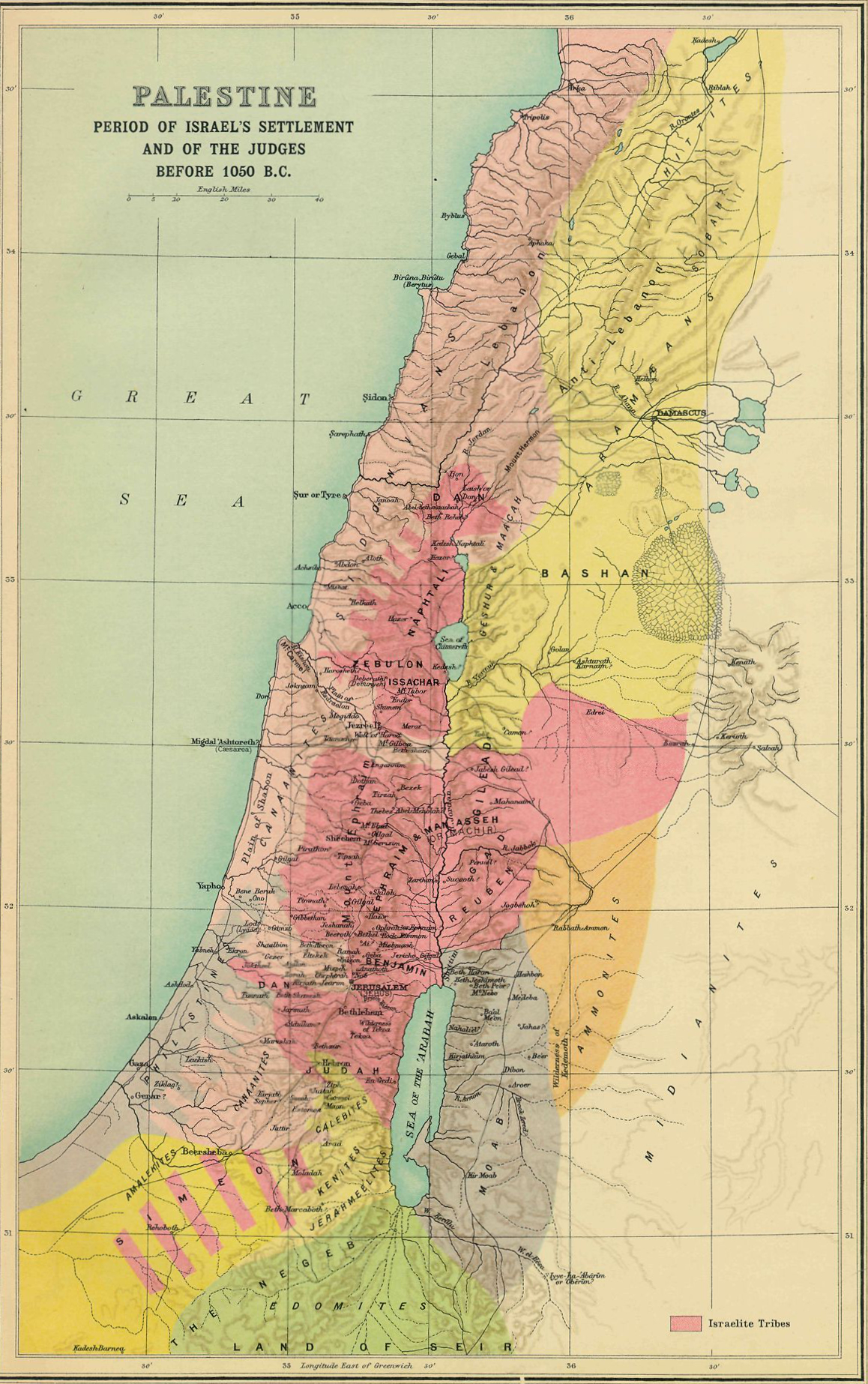
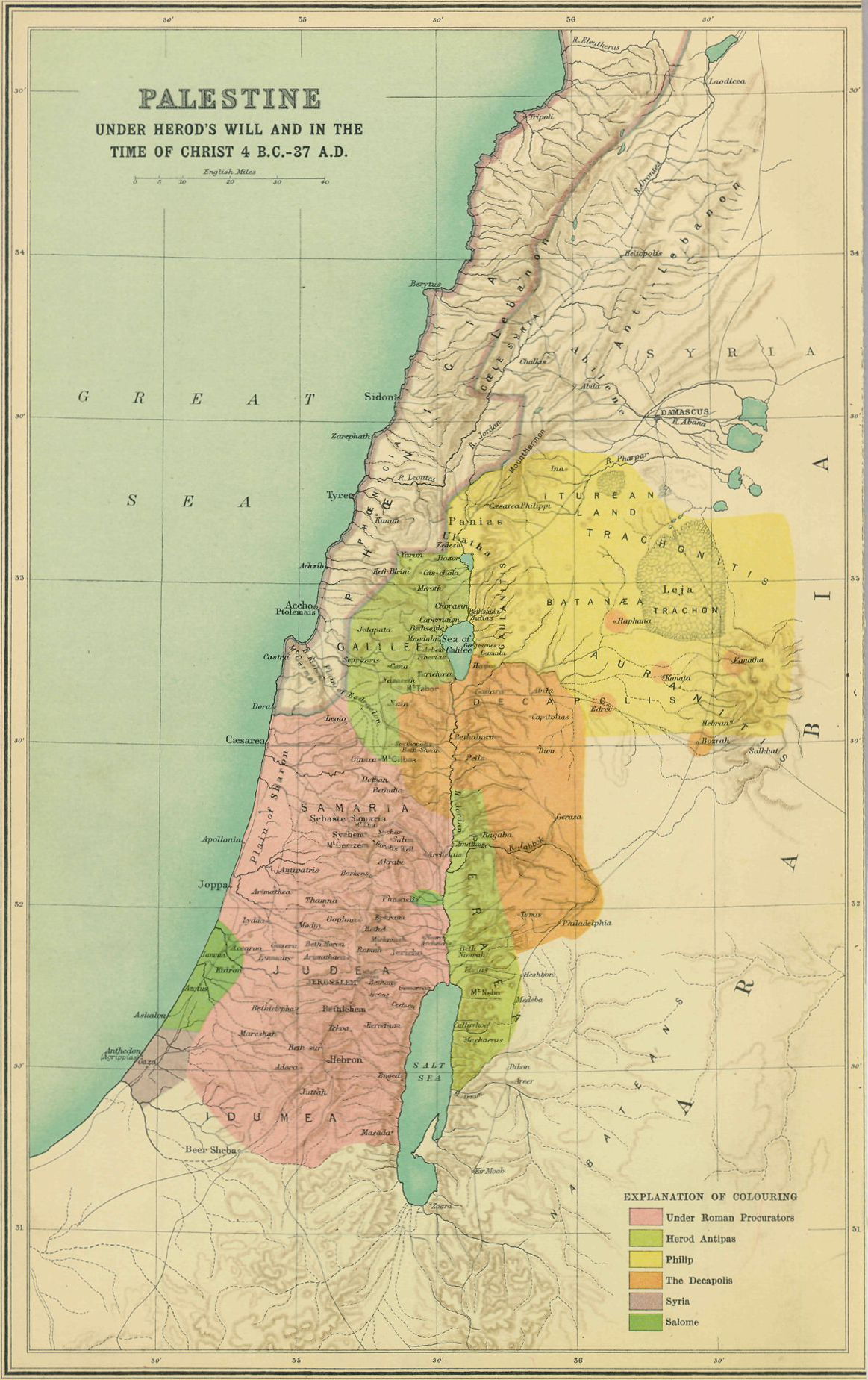
- George Adam Smith, Atlas of the Historical Geography of the Holy Land (London: Hodder and Stoughton, 1915)The conquest and time-of-Christ maps. Public domain.
- John Garstang, Joshua-Judges (London: Constable, 1931)The natural-means reading of the stopping of the Jordan at the Damiya narrows, cited for the position it argues.
- Amos Nur and Dawn Burgess, Apocalypse: Earthquakes, Archaeology, and the Wrath of God (Princeton University Press, 2008)The same reading in a seismological frame, cited for the position it argues.
- Adam Clarke, Commentary on the Bible (1832)Public domain, CCEL edition.
- Albert Barnes, Notes, Explanatory and Practical, on the Old and New Testaments (1832 to 1869)Public domain.
- Matthew Henry, Commentary on the Whole Bible (1710)Public domain.
- Jamieson, Fausset & Brown, Commentary Critical and Explanatory on the Whole Bible (1871)Public domain.
- John Wesley, Explanatory Notes upon the Old Testament (1765)Public domain.
- John Gill, An Exposition of the Old and New Testaments (1748 to 1763)The eighteenth-century estimate of the distance from Jericho to the river. Public domain.
- Charles H. Spurgeon, The Treasury of David, Volume 5 (1878), and The Metropolitan Tabernacle Pulpit, Sermon No. 635Public domain, CCEL edition.
- J.C. Ryle, Expository Thoughts on the Gospels: Matthew (1856)Public domain.
- Justin Martyr, Dialogue with Trypho, Chapter LXXXVI (c. AD 165)Public domain.
- Origen of Alexandria, Homilies on Joshua, Commentary on the Gospel of John and Fragments on Matthew (c. AD 248 to 253)Public domain.
- Gregory of Nyssa, On the Baptism of Christ (c. AD 395)Public domain.
- Augustine of Hippo, Tractates on the Gospel of John 48 (c. AD 430)Public domain.
- Prudentius, Hymns for Every Day (c. AD 410)Public domain.
- The Madaba Map, sixth-century mosaic floor, Saint George's church, MadabaThe Bethabara label, west of the river.
- Al-Maghtas, UNESCO World Heritage List inscription 2015The eastern-bank site, the church built under Anastasius, the Theodosius notice and the excavations directed by Mohammad Waheeb from 1997.
- 1 Enoch, R. H. Charles edition (1917)Searched in full on this site's own copy: the Jordan is not named. Carried as a labelled Second Temple study resource, never as canon.
- Jordan River landslide dates at Damiya (1267, 1927)The 1267 blockage (about 16 hours, recorded by Abu'l-Fida) and the 1927 earthquake blockage (about 21 hours) are the two best-attested dates in the traditional list; confirmed 2026-09-02 (session 7 re-verification).
- Bordeaux Pilgrim, Itinerarium Burdigalense (AD 333)Names the Jordan baptism site five miles from the Dead Sea and the hill from which Elijah was taken up. Confirmed 2026-09-02 (session 7 re-verification).
- Egeria, Itinerarium (c. AD 381-384)The McClure and Feltoe translation records her visit to the Jordan where John baptized. Confirmed 2026-09-02 (session 7 re-verification).
- Jordan headwater flow figures (Dan, Hasbani)Standard reference figures, roughly 240-252 million cubic metres a year for the Dan and about 118 million for the Hasbani. Confirmed 2026-09-02 (session 7 re-verification).
- Dead Sea surface level (2025)Current surface roughly 440 metres (about 1,443 feet) below sea level, falling about a metre a year. Confirmed 2026-09-02 (session 7 re-verification).
Keep studying
On this page
Studies27
- The crossing of the Jordan, outlined
- 2 Kings: the Study Guide
- 2 Samuel: the Study Guide
- Baal of Peor
- Deuteronomy: the Study Guide
- Gospel Of Mark
Show the next 6 titles
Show the next 6 titles
Every page that names it1
Doorway2
Books that name it4
Lives that run through it2
Keep this page