
Place
Shechem
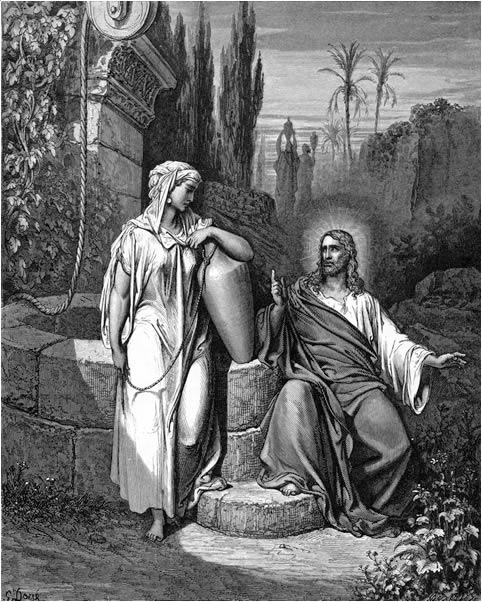
Gustave Doré, Doré's English Bible (1866). Public domain.
Summary
The city between Ebal and Gerizim where Abram built his first altar in the land, where Joshua set the people to choose whom they would serve, and where Jesus sat at Jacob’s well.
- Shechem is where the story of the land opens. Abram built his first altar in Canaan here, on the day God first promised the land to his offspring.
- The town sits in the pass between two mountains, Gerizim for the blessing and Ebal for the curse, with half the nation standing on each side to hear the law read.
- Joshua gathered every tribe here at the end of his life and put one sentence in front of them: choose this day whom you will serve.
- The kingdom split here. Rehoboam came to Shechem to be made king, refused to lighten the yoke, and ten tribes went home.
- At the well beside this town Jesus asked a Samaritan woman for a drink, told her He was the Messiah, and stayed two days with a town that was not His own.
On this page
In Scripture
- Verses
- 61
- Books
- 11
Near Shechem
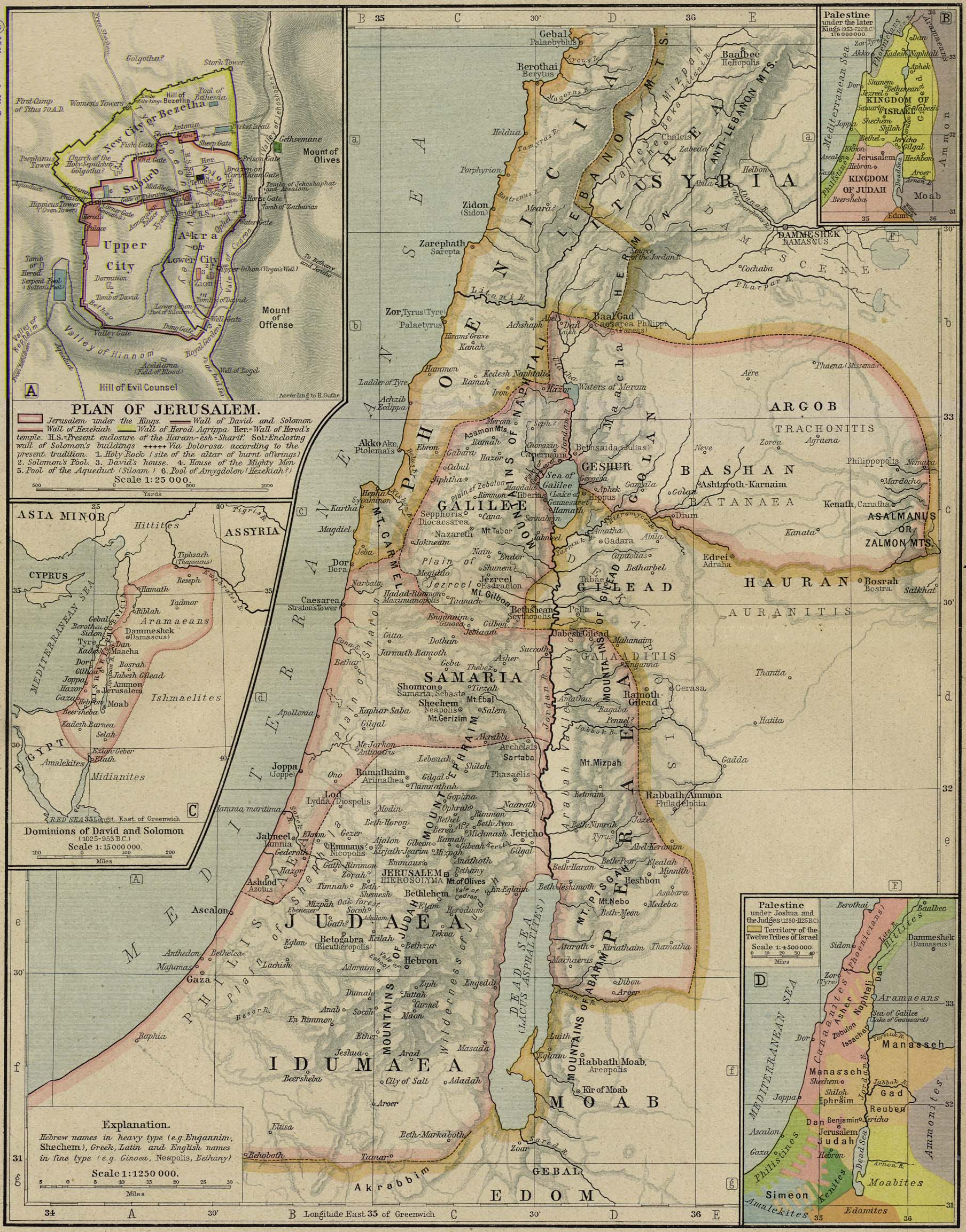
- Mount Gerizim1.8 km · 1.1 mi SW
- Mount Ebal2.3 km · 1.4 mi N
- Sychar3.1 km · 1.9 mi SE
- Samaria11 km · 6.7 mi NW
- Shiloh18 km · 11 mi S
- Dothan25 km · 15 mi NW
Straight-line distances, computed from the gazetteer coordinates.
Where it is
the country around it
- Coordinates
- 32.2137° N, 35.2818° Efind it on the Atlas →
- Region
- Central hill country
4 places the record names with Shechem, the farthest 29 km away
- 1Moses names Gerizim for the blessing and Ebal for the curseDeuteronomy 11:29 · 1.8 kmWhen the LORD your God brings you into the land you are entering to possess, you are to proclaim the blessing on Mount Gerizim and the curse on Mount Ebal.
- 2Half the nation stands before each mountain to hear the lawJoshua 8:33 · 2.3 kmAll Israel, foreigners and citizens alike, with their elders, officers, and judges, stood on both sides of the ark of the covenant of the LORD facing the Levitical priests who carried it. Half of the people stood in front of Mount Gerizim and half of them in front of Mount Ebal, as Moses the servant of the LORD had commanded earlier, to bless the people of Israel.
- 3Shechem is set apart as a city of refugeJoshua 20:7 · 29 kmSo they set apart Kedesh in Galilee in the hill country of Naphtali, Shechem in the hill country of Ephraim, and Kiriath-arba (that is, Hebron) in the hill country of Judah.
- 4Eighty men come from Shechem toward the ruined house of the LORDJeremiah 41:5 · 11 kmeighty men who had shaved off their beards, torn their garments, and cut themselves came from Shechem, Shiloh, and Samaria, carrying grain offerings and frankincense for the house of the LORD.
- Located: the gazetteer fixes one site
- Placed: the point stands for an area, or is rounded
- ? Proposed: one candidate among several
- A dashed line ends at a place the gazetteer does not fix
Not located: Egypt, Canaan. The gazetteer records no location for them, so they are not marked.
Why Shechem matters
What has been found
the evidence, and where it is disputed
Choose this day whom you will serve
Joshua 24:1-32, the covenant renewal at Shechem
Read Joshua 24:1-32, the covenant renewal at Shechem
- Joshua calls the whole nation to ShechemJoshua 24:1Then Joshua assembled all the tribes of Israel at Shechem. He summoned the elders, leaders, judges, and officers of Israel, and they presented themselves before God.
- He starts the story where the family startedJoshua 24:2And Joshua said to all the people, “This is what the LORD, the God of Israel, says: ‘Long ago your fathers, including Terah the father of Abraham and Nahor, lived beyond the Euphrates and worshiped other gods.
- Everything they own was given, not earnedJoshua 24:13So I gave you a land on which you did not toil and cities that you did not build, and now you live in them and eat from vineyards and olive groves that you did not plant.’
- Get rid of the gods you are still carryingJoshua 24:14Now, therefore, fear the LORD and serve Him in sincerity and truth; cast aside the gods your fathers served beyond the Euphrates and in Egypt, and serve the LORD.
- The sentence the whole page turns onJoshua 24:15But if it is unpleasing in your sight to serve the LORD, then choose for yourselves this day whom you will serve, whether the gods your fathers served beyond the Euphrates, or the gods of the Amorites in whose land you are living. As for me and my house, we will serve the LORD!”
- Joshua refuses their first answerJoshua 24:19But Joshua said to the people, “You are not able to serve the LORD, for He is a holy God; He is a jealous God; He will not forgive your rebellion or your sins.
- They become witnesses against themselvesJoshua 24:22Then Joshua told them, “You are witnesses against yourselves that you have chosen to serve the LORD.” “We are witnesses!” they said.
- A stone set up under the oakJoshua 24:26Joshua recorded these things in the Book of the Law of God. Then he took a large stone and set it up there under the oak that was near the sanctuary of the LORD.
- The stone is a witness, not a trophyJoshua 24:27And Joshua said to all the people, “You see this stone. It will be a witness against us, for it has heard all the words the LORD has spoken to us, and it will be a witness against you if you ever deny your God.”
- Joseph comes home to the field Jacob boughtJoshua 24:32And the bones of Joseph, which the Israelites had brought up out of Egypt, were buried at Shechem in the plot of land that Jacob had purchased from the sons of Hamor, Shechem’s father, for a hundred pieces of silver. So it became an inheritance for Joseph’s descendants.
The site holds no image of this scene. No painting or engraving of the covenant renewal at Shechem has been verified into the collection, so the story runs on the words themselves rather than on a picture of something else. The stone Joshua set up stood under an oak by the sanctuary, which is the same kind of tree Abram found at Moreh and the same tree under which Jacob buried the household gods.
Joshua: the full study of the bookWhat happened here, in order
in the order the canon tells it
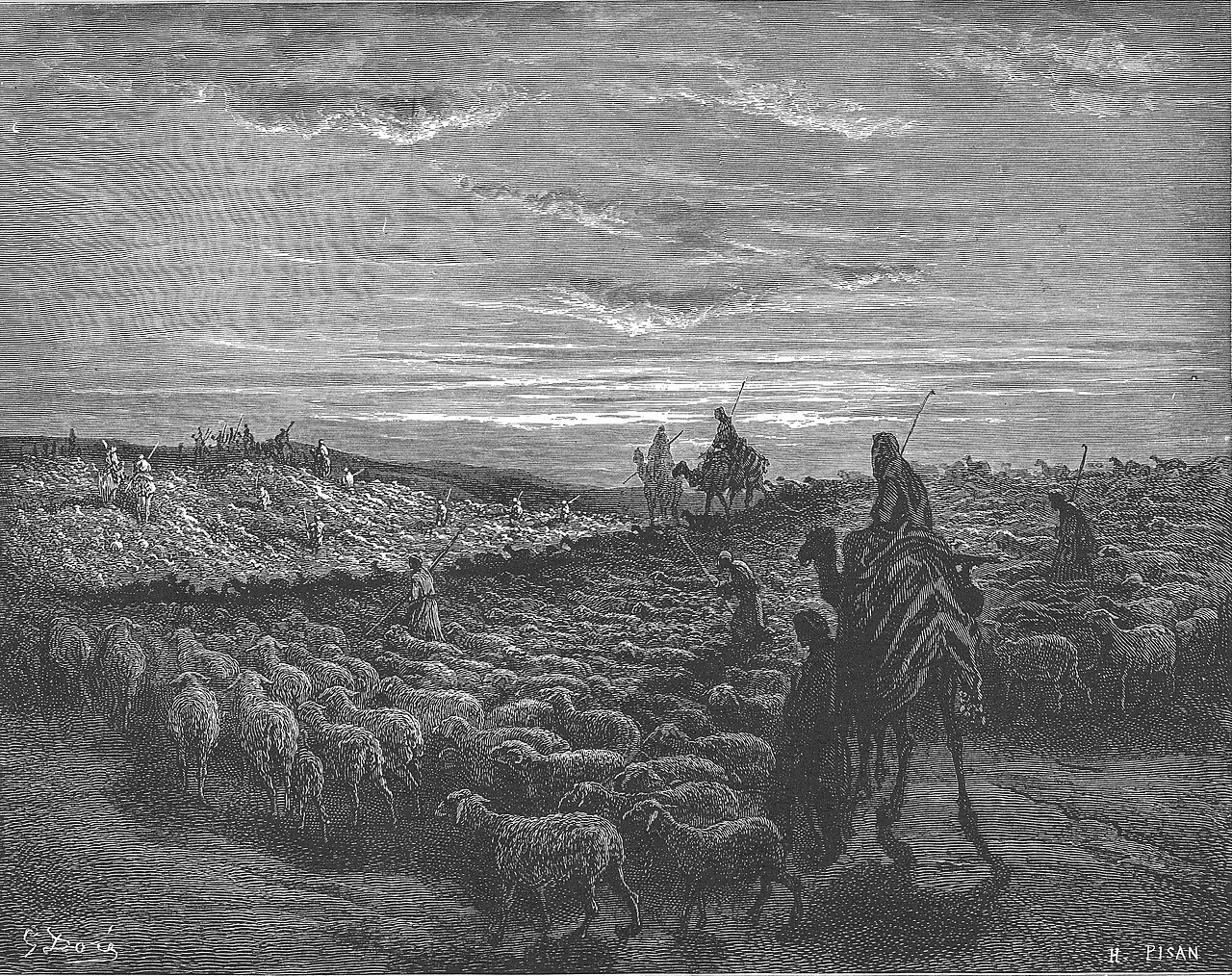
- Abram reaches the oak of Moreh and builds his first altar in CanaanGenesis 12:6-7Abram traveled through the land as far as the site of the Oak of Moreh at Shechem. And at that time the Canaanites were in the land. Then the LORD appeared to Abram and said, “I will give this land to your offspring.” So Abram built an altar there to the LORD, who had appeared to him.
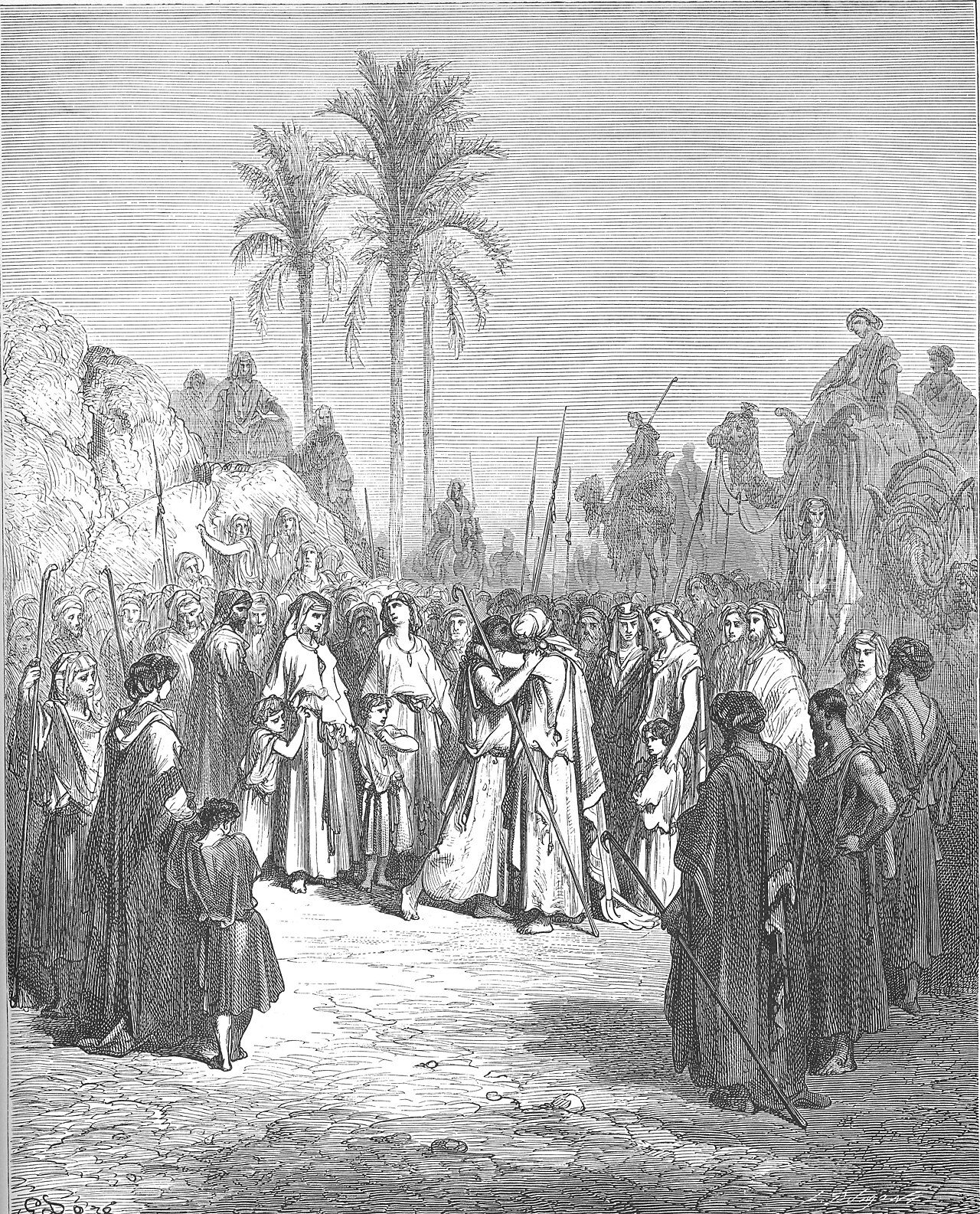
- Jacob buys a field outside the city for a hundred pieces of silverGenesis 33:19And the plot of ground where he pitched his tent, he purchased from the sons of Hamor, Shechem’s father, for a hundred pieces of silver.
- He sets up an altar and calls it El-Elohe-IsraelGenesis 33:20There he set up an altar and called it El-Elohe-Israel.
- Shechem son of Hamor takes Dinah by forceGenesis 34:2When Shechem son of Hamor the Hivite, the prince of the region, saw her, he took her and lay with her by force.
- Simeon and Levi kill every man of the cityGenesis 34:25Three days later, while they were still in pain, two of Jacob’s sons (Dinah’s brothers Simeon and Levi) took their swords, went into the unsuspecting city, and slaughtered every male.
- Jacob buries the household gods under the oak near ShechemGenesis 35:4So they gave Jacob all their foreign gods and all their earrings, and Jacob buried them under the oak near Shechem.
- Jacob leaves the ridge of land to JosephGenesis 48:22And to you, as one who is above your brothers, I give the ridge of land that I took from the Amorites with my sword and bow.”
- Moses names Gerizim for the blessing and Ebal for the curseDeuteronomy 11:29When the LORD your God brings you into the land you are entering to possess, you are to proclaim the blessing on Mount Gerizim and the curse on Mount Ebal.
- Half the nation stands before each mountain to hear the lawJoshua 8:33All Israel, foreigners and citizens alike, with their elders, officers, and judges, stood on both sides of the ark of the covenant of the LORD facing the Levitical priests who carried it. Half of the people stood in front of Mount Gerizim and half of them in front of Mount Ebal, as Moses the servant of the LORD had commanded earlier, to bless the people of Israel.
- Shechem is set apart as a city of refugeJoshua 20:7So they set apart Kedesh in Galilee in the hill country of Naphtali, Shechem in the hill country of Ephraim, and Kiriath-arba (that is, Hebron) in the hill country of Judah.
- Joshua assembles all the tribes at ShechemJoshua 24:1Then Joshua assembled all the tribes of Israel at Shechem. He summoned the elders, leaders, judges, and officers of Israel, and they presented themselves before God.
- Joseph's bones are buried in the field Jacob boughtJoshua 24:32And the bones of Joseph, which the Israelites had brought up out of Egypt, were buried at Shechem in the plot of land that Jacob had purchased from the sons of Hamor, Shechem’s father, for a hundred pieces of silver. So it became an inheritance for Joseph’s descendants.
- Abimelech is crowned beside the oak at the pillarJudges 9:6Then all the leaders of Shechem and Beth-millo gathered beside the oak at the pillar in Shechem and proceeded to make Abimelech their king.
- Abimelech takes the city and sows it with saltJudges 9:45And all that day Abimelech fought against the city until he had captured it and killed its people. Then he demolished the city and sowed it with salt.
- Ten tribes answer Rehoboam and go home1 Kings 12:16When all Israel saw that the king had refused to listen to them, they answered the king: “What portion do we have in David, and what inheritance in the son of Jesse? To your tents, O Israel! Look now to your own house, O David!” So the Israelites went home,
- Jeroboam builds Shechem as his first seat1 Kings 12:25Then Jeroboam built Shechem in the hill country of Ephraim and lived there. And from there he went out and built Penuel.
- Eighty men come from Shechem toward the ruined house of the LORDJeremiah 41:5eighty men who had shaved off their beards, torn their garments, and cut themselves came from Shechem, Shiloh, and Samaria, carrying grain offerings and frankincense for the house of the LORD.
- Jesus sits down tired at Jacob's wellJohn 4:6Since Jacob’s well was there, Jesus, weary from His journey, sat down by the well. It was about the sixth hour.
- He tells the Samaritan woman plainly that He is the MessiahJohn 4:26Jesus answered, “I who speak to you am He.”
- Stephen names Shechem as the burial ground of the fathersActs 7:16Their bones were carried back to Shechem and placed in the tomb that Abraham had bought from the sons of Hamor at Shechem for a price he paid in silver.
Where it points
The voices
each quoted from the work named
JOSHUA knew that the people who surrounded him, while ostensibly serving Jehovah, were, many of them, secretly worshipping the ancient idols of their Mesopotamian fathers—those seraphim which were once hidden in Rachel's tent and were never quite purged from Jacob's family. Some of them, also, harbored the Egyptian emblems. And some had even fallen into the worship of the gods of the people whom they had displaced and were setting up the images of Baalim in their homes. The people were nominally worshippers of Jehovah, but in reality, many of them had turned aside unto strange gods.
Shechem, situated between those mountains, Ebal and Gerizim, which had already been the scene of a solemn rehearsal of the covenant soon after the first entry of the people into the promised land Jos 8:30-35, was a fitting scene for the solemn renewal on the part of the people of that covenant with God which had been on His part so signally and so fully kept. The spot itself suggested the allusions to Abraham, Isaac, and Jacob, etc., in Joshua’s address; and its associations could not but give special force and moving effect to his appeals.
Though the land of Canaan was his by promise, yet, the time for taking possession not having yet come, he is content to pay for his own, to prevent disputes with the present occupants. Note, Dominion is not founded in grace.
4 more teachers on these versesJohn Wesley · Albert Barnes · Jamieson, Fausset & Brown · Charles Spurgeon
Of the pillar - Or, by the oak of the pillar, by the oak, where Joshua erected a pillar as a witness of the covenant renewed between God and Israel, Josh. xxiv, 26. This place they chose, to signify that they still owned God, and their covenant with him; and did not worship Baal in opposition to God, but in conjunction with him, or in subordination to him.
The first step taken by the new king was a most judicious one. If anything could have removed the disaffection of the Ephraimites, and caused them to submit to the ascendancy of Judah, it would have been the honor done to their capital by its selection as the scene of the coronation. Shechem (now Nablous) lay on the flank of Mount Gerizim, directly opposite to Mount Ebal, in a position second to none in all Palestine.
But the most glorious thing here is the reason assigned, for salvation is of the Jews--intimating to her that Salvation was not a thing left to be reached by any one who might vaguely desire it of a God of mercy, but something that had been revealed, prepared, deposited with a particular people, and must be sought in connection with, and as issuing from them; and that people, "the Jews."
Behold our Lord and Master with divinely skillful art seeking after a single soul! We must have large Congregations or we are disinclined for soul-winning. The habit of the age is to do nothing but what is ostentatious—every work must be with beat of drum or sound of tambourine! I pray that the Lord may work in us the steadfast desire to do good on the quiet, by stealth, when no one looks on, when not a single disciple is near.
Shechem in Scripture
61 verses name it, in 11 books
Open a book to read its mentions here. Text: Berean Standard Bible.
Old TestamentNew Testamentsegment width = share of mentions
Old Testament10 books · 60 mentions
Genesis19 mentions
- Genesis 12:6Abram traveled through the land as far as the site of the Oak of Moreh at Shechem. And at that time the Canaanites were in the land.
- Genesis 33:18After Jacob had come from Paddan-aram, he arrived safely at the city of Shechem in the land of Canaan, and he camped just outside the city.
- Genesis 33:19And the plot of ground where he pitched his tent, he purchased from the sons of Hamor, Shechem’s father, for a hundred pieces of silver.
- Genesis 34:2When Shechem son of Hamor the Hivite, the prince of the region, saw her, he took her and lay with her by force.
- Genesis 34:4So Shechem told his father Hamor, “Get me this girl as a wife.”
- Genesis 34:5Jacob heard that Shechem had defiled his daughter Dinah, but since his sons were with his livestock in the field, he remained silent about it until they returned.
- Genesis 34:6Meanwhile, Shechem’s father Hamor came to speak with Jacob.
- Genesis 34:7When Jacob’s sons heard what had happened, they returned from the field. They were filled with grief and fury, because Shechem had committed an outrage in Israel by lying with Jacob’s daughter—a thing that should not be done.
11 further mentions in Genesis, read them in the book.
Numbers1 mention
Joshua7 mentions
- Joshua 17:2So this allotment was for the rest of the descendants of Manasseh—the clans of Abiezer, Helek, Asriel, Shechem, Hepher, and Shemida. These are the other male descendants of the clans of Manasseh son of Joseph.
- Joshua 17:7Now the border of Manasseh went from Asher to Michmethath near Shechem, then southward to include the inhabitants of En-tappuah.
- Joshua 20:7So they set apart Kedesh in Galilee in the hill country of Naphtali, Shechem in the hill country of Ephraim, and Kiriath-arba (that is, Hebron) in the hill country of Judah.
- Joshua 21:21From the tribe of Ephraim they were given Shechem in the hill country of Ephraim (a city of refuge for the manslayer), Gezer,
- Joshua 24:1Then Joshua assembled all the tribes of Israel at Shechem. He summoned the elders, leaders, judges, and officers of Israel, and they presented themselves before God.
- Joshua 24:25On that day Joshua made a covenant for the people, and there at Shechem he established for them a statute and ordinance.
- Joshua 24:32And the bones of Joseph, which the Israelites had brought up out of Egypt, were buried at Shechem in the plot of land that Jacob had purchased from the sons of Hamor, Shechem’s father, for a hundred pieces of silver. So it became an inheritance for Joseph’s descendants.
Judges23 mentions
- Judges 8:31His concubine, who dwelt in Shechem, also bore him a son, and he named him Abimelech.
- Judges 9:1Now Abimelech son of Jerubbaal went to his mother’s brothers at Shechem and said to them and to all the clan of his mother,
- Judges 9:2“Please ask all the leaders of Shechem, ‘Is it better for you that seventy men, all the sons of Jerubbaal, rule over you, or just one man?’ Remember that I am your own flesh and blood.”
- Judges 9:3And when his mother’s brothers spoke all these words about him in the presence of all the leaders of Shechem, their hearts were inclined to follow Abimelech, for they said, “He is our brother.”
- Judges 9:6Then all the leaders of Shechem and Beth-millo gathered beside the oak at the pillar in Shechem and proceeded to make Abimelech their king.
- Judges 9:7When this was reported to Jotham, he climbed to the top of Mount Gerizim, raised his voice, and cried out: “Listen to me, O leaders of Shechem, and may God listen to you.
- Judges 9:18but you have risen up against my father’s house this day and killed his seventy sons on a single stone, and you have made Abimelech, the son of his maidservant, king over the leaders of Shechem because he is your brother—
- Judges 9:20But if not, may fire come from Abimelech and consume the leaders of Shechem and Beth-millo, and may fire come from the leaders of Shechem and Beth-millo and consume Abimelech.”
15 further mentions in Judges, read them in the book.
1 Kings2 mentions
1 Chronicles3 mentions
- 1 Chronicles 6:67They were given Shechem (a city of refuge) with its pasturelands in the hill country of Ephraim, and Gezer,
- 1 Chronicles 7:19And these were the sons of Shemida: Ahian, Shechem, Likhi, and Aniam.
- 1 Chronicles 7:28Their holdings and settlements included Bethel and its villages, Naaran to the east, Gezer and its villages to the west, and Shechem and its villages as far as Ayyah and its villages.
2 Chronicles1 mention
Psalms2 mentions
Jeremiah1 mention
New Testament1 book · 1 mention
The account
Read the account as one telling
Common questions
What actually happened at Shechem in Joshua 24?
Joshua, at the end of his life, gathered every tribe to Shechem and rehearsed what God had done from Abraham forward, ending with the land Israel did not build and the vineyards it did not plant. Then he put the choice in front of them: serve the LORD, or name which gods they preferred. The people swore twice, Joshua told them plainly that they were not able to keep it, and he set up a stone under the oak as a witness against them.
Why did Joshua choose Shechem for the covenant instead of Shiloh, where the tabernacle stood?
Readers differ; the positions are named
The town carried the memory. Abram built his first altar in the land here, Jacob bought a field and built an altar here, the household gods were buried under the oak here, and the law had already been read between Ebal and Gerizim in Joshua 8.
Adam Clarke set out the problem in 1832: the text says the people presented themselves before God, but the tabernacle stood at Shiloh, and some Greek manuscripts read Shiloh in this verse. Clarke held that Joshua, old and unable to travel, assembled the tribes where he could and had the ark brought to him. Others hold that Shiloh is the original reading, and others that a house of prayer stood at Shechem. Albert Barnes read the phrase about the sanctuary of the LORD in verse 26 as the spot where Abraham and Jacob had already worshipped.
What is on the two mountains, Gerizim and Ebal?
They are the two hills standing over the town, Gerizim on the south and Ebal on the north, with the pass between them. Moses commanded that the blessing be proclaimed from Gerizim and the curse from Ebal, named which six tribes stood on each, and ordered an altar of uncut stones on Ebal with the law written on plastered stones. Joshua did it. He built the altar, wrote a copy of the law on the stones, and read every word of the blessings and the curses with half the nation facing each mountain.
What does Genesis 34 actually say?
It says that Shechem son of Hamor, the prince of the region, took Dinah and lay with her by force, and that her brothers called it an outrage in Israel. The chapter reports a crime and names it as one.
The chapter also refuses to bless the revenge. Simeon and Levi answered with a trick and killed every man in the town, Jacob complained only about the danger they had put the family in, and his last word on it from his deathbed was a curse on their anger. Matthew Henry, writing in 1710, put the weight where the text puts it: "Uncleanness is folly; for it sacrifices the favour of God, peace of conscience, and all the soul can pretend to that is sacred and honourable, to a base and brutish lust."
Has Joshua's altar on Mount Ebal been found?
Readers differ; the positions are named
Adam Zertal excavated a stone structure on the northeastern ridge of Mount Ebal from 1982 to 1989. He reported a rectangular installation with a ramp, filled with ash and with animal bone dominated by young male cattle, sheep, goats and fallow deer, dated it to Iron Age I, and identified it as the altar of Joshua 8:30.
Aharon Kempinski answered in the same journal that it reads better as an Iron Age I watchtower or farmstead, and Israel Finkelstein and others have questioned the cultic identification and the dating. A later claim about a small inscribed lead object said to come from the excavation's discarded material is disputed by epigraphers including Christopher Rollston. What Scripture says is not in question: Joshua built an altar on Ebal and read the law there.
Is the well you can visit really Jacob's well?
Readers differ; the positions are named
Scripture never says Jacob dug a well. John says only that Jacob's well was there, and the woman's own words name Jacob as the father who gave it.
The well at the foot of Gerizim is cut through rock and is about 40 metres deep. It was pointed out as this well by the Bordeaux pilgrim in AD 333, by Jerome around AD 400 in his account of Paula's pilgrimage, and by every pilgrim account since, with a Byzantine church over it from about the late fourth century and the present Orthodox church begun in 1893. No rival site has ever been proposed with a following. The identification rests on that unbroken tradition rather than on any object recovered from the well.
Why does Stephen say Abraham bought the tomb at Shechem when Genesis says Jacob did?
Readers differ; the positions are named
Genesis has Abraham buy the cave at Machpelah from Ephron the Hittite and Jacob buy the plot at Shechem from the sons of Hamor. Joshua 24:32 buries Joseph in the Shechem plot, and Genesis 50:13 buries Jacob at Machpelah. Stephen compresses the two purchases and the two sites into one sentence.
John Wesley read it as speed in a long recitation of history his hearers already knew. John Gill pointed out that Stephen is speaking of the fathers, meaning the twelve patriarchs, and not of Jacob at all. Adam Clarke laid the two purchases out side by side and added that Josephus places the eleven brothers' burial at Hebron.
Was the Samaritan woman a prostitute?
John never says so. He says she had five husbands and that the man she has now is not her husband, and Jesus tells her she has spoken truthfully. The text does not say whether the five marriages ended in death, divorce or desertion, and Jesus names no sin in the scene. What the chapter does record is that the town believed because of her testimony, and then because they heard Him for themselves.
Why does the kingdom split at Shechem, of all places?
Rehoboam went to Shechem because all Israel had gone there to make him king, which put the coronation in Ephraim's own heartland rather than in Jerusalem. The break came over labour and taxes. The elders told him to lighten the yoke and speak kindly, and he took the young men's advice and promised scorpions instead of whips. Ten tribes went home, and Jeroboam rebuilt Shechem as his first seat. The narrator says the turn of events was from the LORD, to fulfil the word spoken through Ahijah the Shilonite.
Notable art
4 verified pieces depicting Shechem
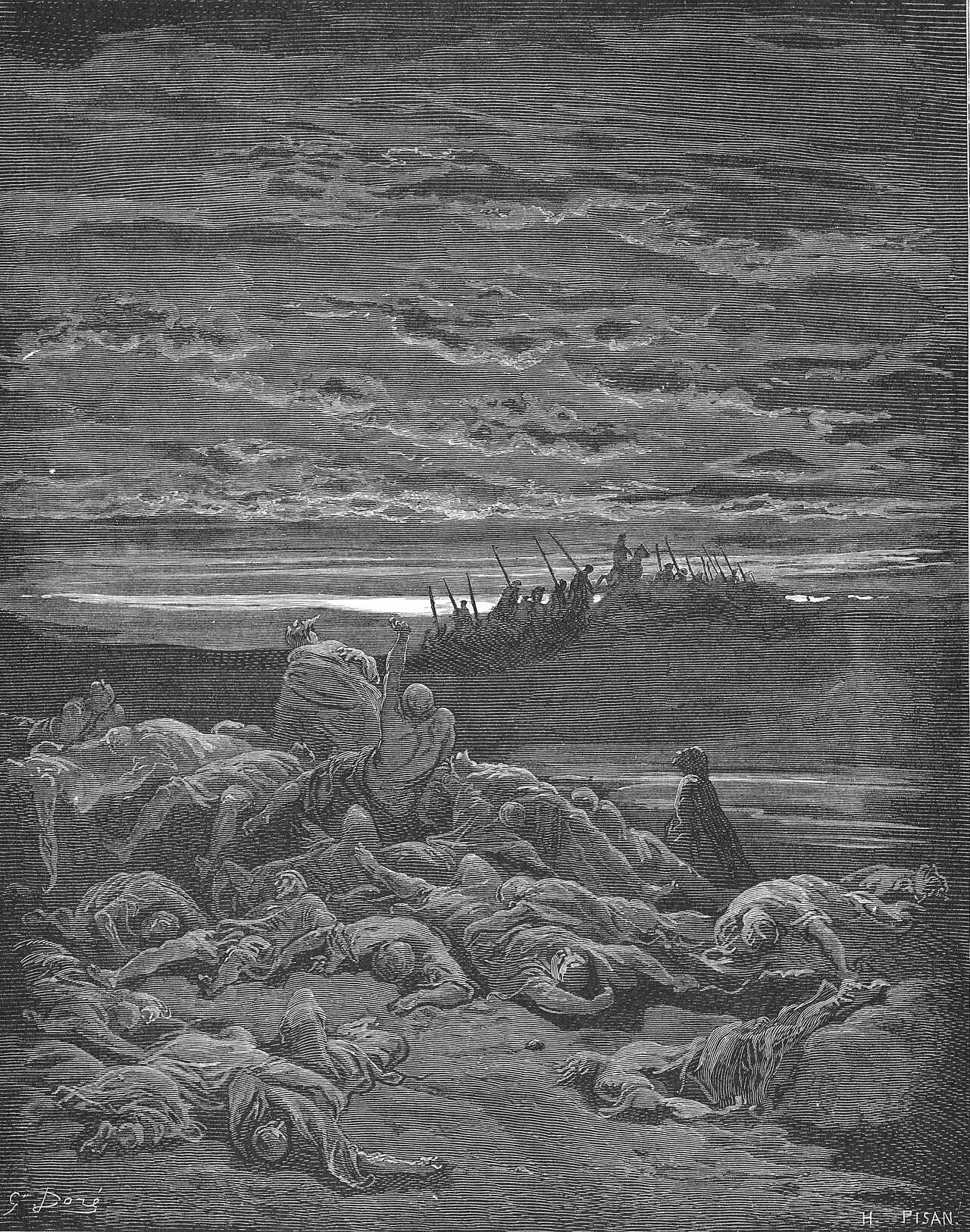
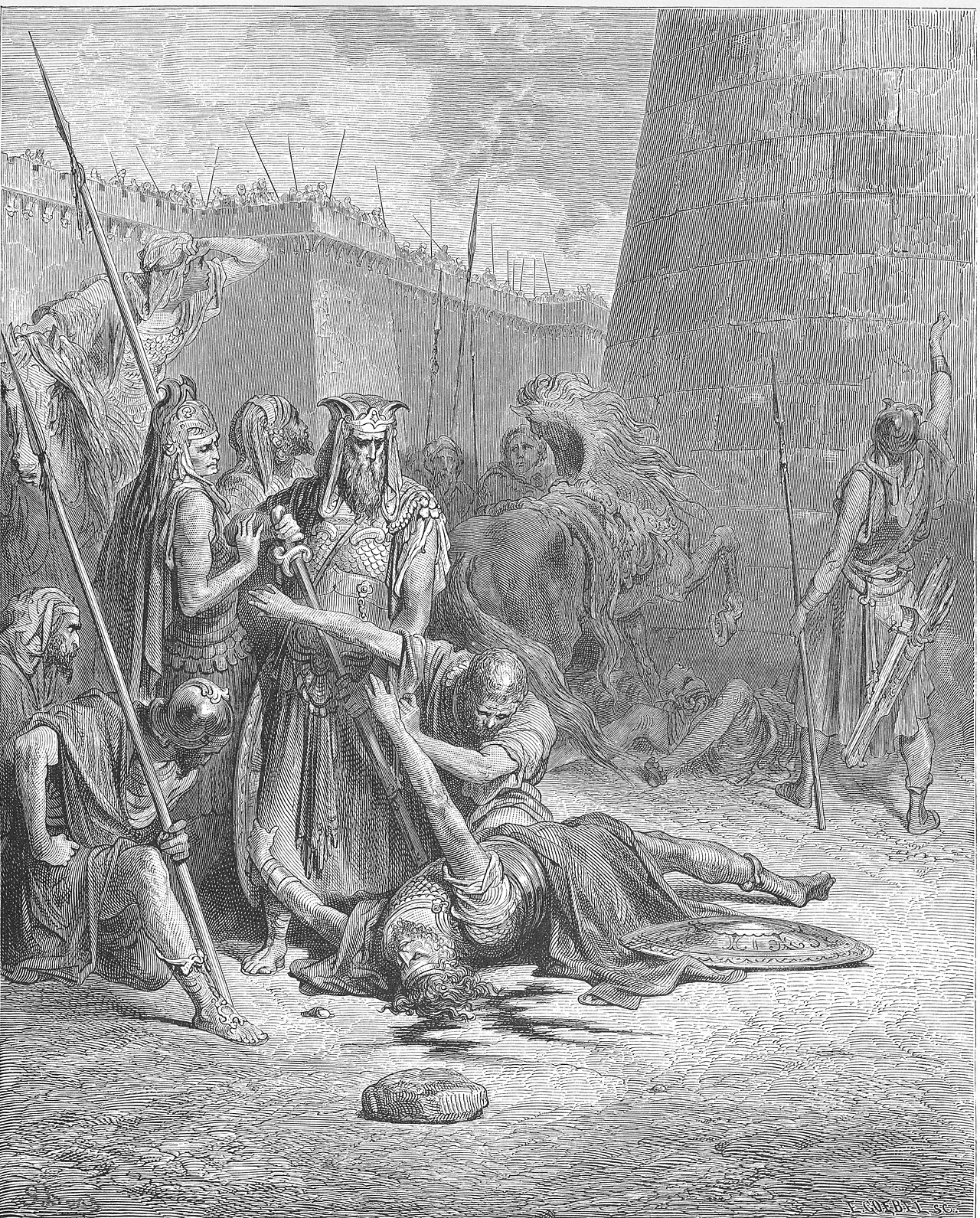
Sources cited
- OpenBible.info Bible Geocoding: Shechemread 2026-08-20The coordinates on this page. Used under CC-BY with attribution to OpenBible.info.
- Berean Standard BiblePublic domain since 2023. All Scripture quoted on this page, from the site's own verse store.
- Ernst Sellin, excavation reports on Tell Balata, Zeitschrift des Deutschen Palästina-Vereins, 1914 and 1926 to 1934The first excavation of the mound, the east gate and the acropolis building.
- G. Ernest Wright, Shechem: The Biography of a Biblical City (New York: McGraw-Hill, 1965)The Drew-McCormick expedition and Wright's reading of the fortress temple.
- Edward F. Campbell, Shechem II: Portrait of a Hill Country Vale (American Schools of Oriental Research, 1991)The regional survey volume from the same expedition.
- Edward F. Campbell, Shechem III: The Stratigraphy and Architecture of Shechem/Tell Balatah (American Schools of Oriental Research, 2002)The stratigraphic backbone the field works from.
- Adam Zertal, "Has Joshua's Altar Been Found on Mt. Ebal?", Biblical Archaeology Review 11:1 (1985)Zertal's identification of the Ebal structure, cited for the position it argues.
- Aharon Kempinski, "Joshua's Altar: An Iron Age I Watchtower", Biblical Archaeology Review 12:1 (1986)The reply, cited for the position it argues.
- Yitzhak Magen, Mount Gerizim Excavations (Jerusalem: Israel Antiquities Authority, from 2004)The Samaritan sacred precinct on Gerizim and its dating.
- Flavius Josephus, Antiquities of the Jews 11.302-347 and 13.254-256The founding of the Gerizim temple and its destruction by John Hyrcanus. Public domain in translation.
- The Amarna letters of Labayu of Shechem, EA 252 to 254, fourteenth century BCThe one contemporary record of a ruler of Shechem outside the Bible.
- Itinerarium Burdigalense, the Bordeaux pilgrim, AD 333The earliest dated witness to Jacob's well and to a tomb of Joseph at this place. Public domain in translation.
- Jerome, Epistle 108, the pilgrimage of Paula, c. AD 404The well named again, about seventy years later. Public domain in translation.
- Basil of Caesarea, On the Holy Spirit 13.30, AD 375The early Christian reading of Joshua's witness stone, given as a reading.
- John Chrysostom, Homilies on the Gospel of John 31 and 34, c. AD 391The preaching on the well and on the woman's testimony.
- Cyril of Alexandria, Commentary on the Gospel of John, book 2, c. AD 428The line about the woman as a workwoman unto doctrine. Public domain in translation.
- Origen of Alexandria, Commentary on the Gospel of John, book 13, c. AD 231 to 248The earliest surviving Christian reading of the living water at this well.
- Charles H. Spurgeon, The Metropolitan Tabernacle Pulpit, sermons 1229 and 1678The two sermons quoted on this page. Public domain.
- Albert Barnes, Notes, Explanatory and Practical, on the Old and New Testaments (1832 to 1869)Quoted on Joshua 24:1 and 1 Kings 12:1. Public domain.
- Adam Clarke, Commentary on the Bible (1832)Cited on Joshua 24:1, John 4:5 and Acts 7:16. Public domain.
- Matthew Henry, Commentary on the Whole Bible (1710)Quoted on Genesis 33:19 and Genesis 34:7. Public domain.
- Robert Jamieson, A. R. Fausset and David Brown, Commentary Critical and Explanatory on the Whole Bible (1871)Quoted on John 4:22. Public domain.
- John Wesley, Explanatory Notes upon the Old Testament (1765) and upon the New Testament (1755)Quoted on Judges 9:6 and cited on Acts 7:16. Public domain.
- John Gill, Exposition of the New Testament (1746 to 1748)Cited on Acts 7:16 for the reading that Stephen speaks of the twelve patriarchs. Public domain.
- Gustave Doré, Doré's English Bible (1866)The five engravings on this page. Public domain, Commons file pages recorded in src/lib/art/dore-bible.generated.json.
Keep studying
On this page
Studies9
Books that name it8
Doorway2
Keep this page