
Place
Sychar
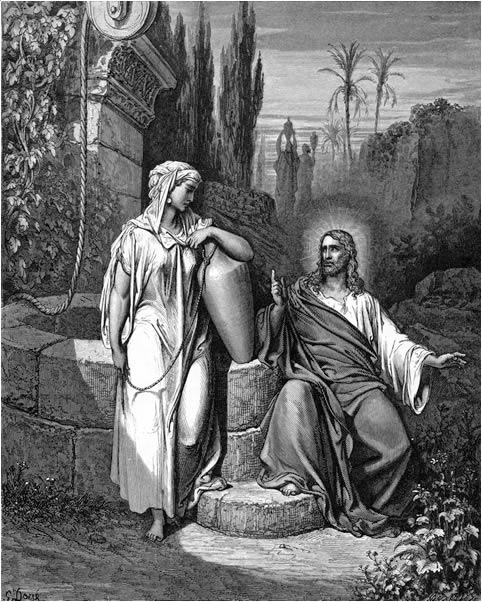
Gustave Doré, Doré's English Bible (1866). Public domain.
Summary
The Samaritan town by Jacob's well where Jesus met the woman and stayed two days (John 4:5).
- Sychar was a town of Samaria that stood near the plot of ground Jacob had given his son Joseph, and Joseph's bones were buried in that same plot.
- Jesus, tired from the road, sat down at Jacob's well outside the town and asked a Samaritan woman for a drink.
- He offered her living water, told her plainly He was the Messiah, and the town came out to see Him for themselves.
- While the woman went to tell the town, Jesus told His own disciples that the fields around them were already ripe for harvest.
- The town believed first on the woman's word and then on its own hearing, and called Jesus the Savior of the world.
On this page
In Scripture
- Verses
- 1
- Books
- 1
Near Sychar
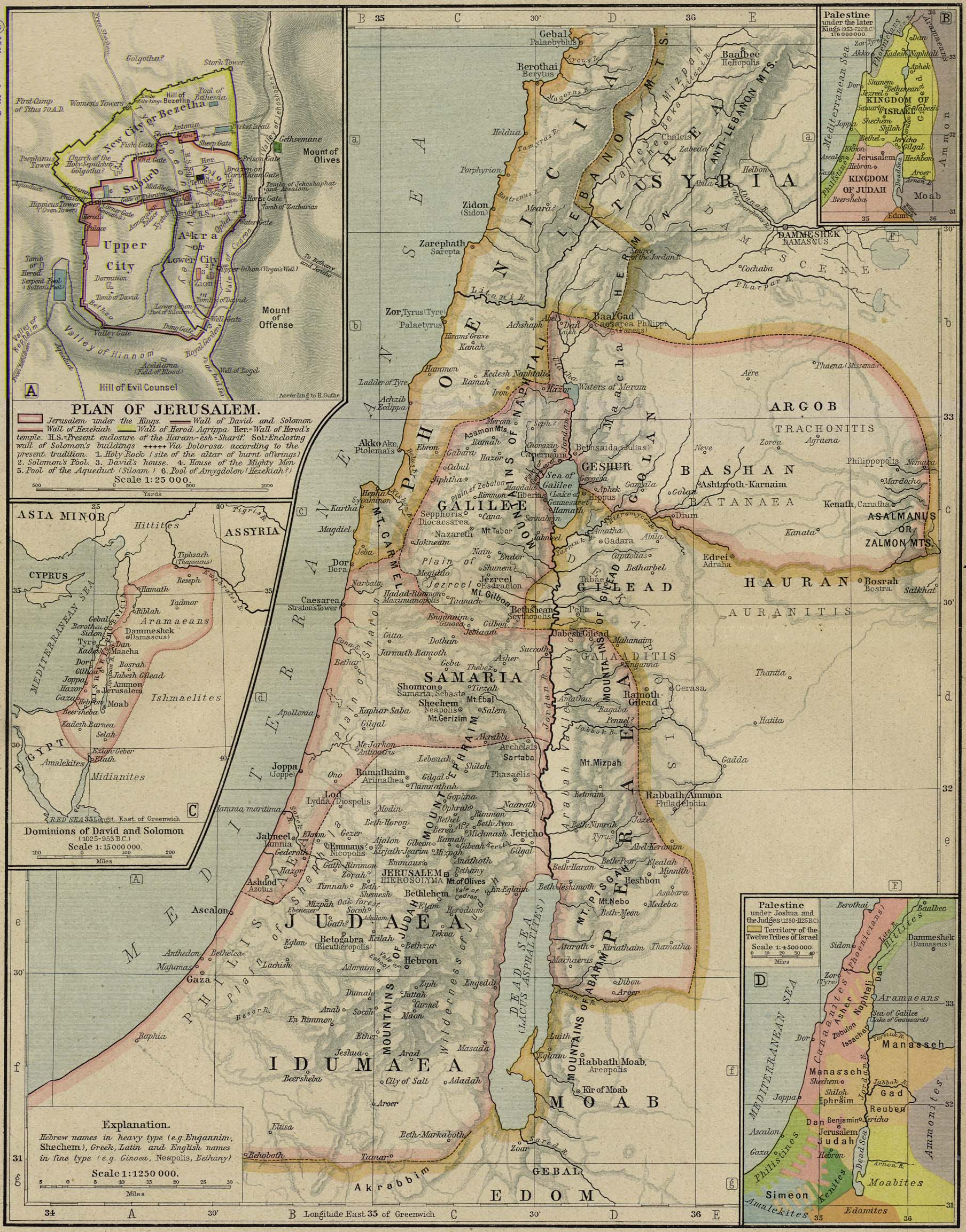
- Shechem3.1 km · 1.9 mi NW
- Mount Gerizim3.7 km · 2.3 mi W
- Mount Ebal4.9 km · 3.1 mi NW
- Samaria14 km · 8.5 mi NW
- Shiloh17 km · 10 mi S
- The Jordan River26 km · 16 mi NE
Straight-line distances, computed from the gazetteer coordinates.
Where it is
the country around it
- Coordinates
- 32.2031° N, 35.3119° Efind it on the Atlas →
- Region
- Samaria
- Kind of place
- Town
2 places the record names with Sychar, the farthest 14 km away
- 1Jacob buys the plot outside Shechem for a hundred pieces of silverGenesis 33:19 · 3.1 kmAnd the plot of ground where he pitched his tent, he purchased from the sons of Hamor, Shechem’s father, for a hundred pieces of silver.
- 2Jesus comes to Sychar, near Joseph's fieldJohn 4:5 · 14 kmSo He came to a town of Samaria called Sychar, near the plot of ground that Jacob had given to his son Joseph.
- Located: the gazetteer fixes one site
- Placed: the point stands for an area, or is rounded
- ? Proposed: one candidate among several
- A dashed line ends at a place the gazetteer does not fix
Not located: Egypt. The gazetteer records no location for it, so it is not marked.
Why Sychar matters
What has been found
the evidence, and where it is disputed
Jesus at Sychar, in the order it happens
John 4:4-42
Read John 4:4-42
- He had to pass through SamariaJohn 4:4Now He had to pass through Samaria.
- Sychar, near the plot Jacob gave JosephJohn 4:5So He came to a town of Samaria called Sychar, near the plot of ground that Jacob had given to his son Joseph.
- Jacob's well, at the sixth hourJohn 4:6Since Jacob’s well was there, Jesus, weary from His journey, sat down by the well. It was about the sixth hour.
- A fount of water springing up to eternal lifeJohn 4:14But whoever drinks the water I give him will never thirst. Indeed, the water I give him will become in him a fount of water springing up to eternal life.”
- Come, see a man who told me everythingJohn 4:29“Come, see a man who told me everything I ever did. Could this be the Christ?”
- Lift up your eyes, the fields are ripe for harvestJohn 4:35Do you not say, ‘There are still four months until the harvest’? I tell you, lift up your eyes and look at the fields, for they are ripe for harvest.
- Many of the Samaritans of that town believedJohn 4:39Many of the Samaritans from that town believed in Jesus because of the woman’s testimony, “He told me everything I ever did.”
- We know that this man is the Savior of the worldJohn 4:42They said to the woman, “We now believe not only because of your words; we have heard for ourselves, and we know that this man truly is the Savior of the world.”
The mountain question she asks Him, and His answer about worship in spirit and truth, belong to the site's Mount Gerizim page, where the Samaritan temple that stands behind her question is carried in full.
The Woman at the Well: the full studyWhat happened here, in order
in the order the canon tells it
- Jacob buys the plot outside Shechem for a hundred pieces of silverGenesis 33:19And the plot of ground where he pitched his tent, he purchased from the sons of Hamor, Shechem’s father, for a hundred pieces of silver.
- He sets up an altar and calls it El-Elohe-IsraelGenesis 33:20There he set up an altar and called it El-Elohe-Israel.
- Jacob gives Joseph the ridge of land above his brothersGenesis 48:22And to you, as one who is above your brothers, I give the ridge of land that I took from the Amorites with my sword and bow.”
- Joseph's bones are buried in the plot Jacob boughtJoshua 24:32And the bones of Joseph, which the Israelites had brought up out of Egypt, were buried at Shechem in the plot of land that Jacob had purchased from the sons of Hamor, Shechem’s father, for a hundred pieces of silver. So it became an inheritance for Joseph’s descendants.
- Jesus comes to Sychar, near Joseph's fieldJohn 4:5So He came to a town of Samaria called Sychar, near the plot of ground that Jacob had given to his son Joseph.
- For Jews do not associate with SamaritansJohn 4:9“You are a Jew,” said the woman. “How can You ask for a drink from me, a Samaritan woman?” (For Jews do not associate with Samaritans.)
- Many of that town believe because of her testimonyJohn 4:39Many of the Samaritans from that town believed in Jesus because of the woman’s testimony, “He told me everything I ever did.”
- The town calls Him the Savior of the worldJohn 4:42They said to the woman, “We now believe not only because of your words; we have heard for ourselves, and we know that this man truly is the Savior of the world.”
Sychar in Scripture
1 verse names it, in 1 book
Open a book to read its mentions here. Text: Berean Standard Bible.
New Testament1 book · 1 mention
Common questions
Was Sychar the same town as Shechem, or a different place?
Readers differ; the positions are named
Four commentators the site already draws on identify Sychar as Shechem under a changed name. Jamieson, Fausset and Brown call it "the 'Shechem' of the Old Testament... afterwards called 'Neapolis,' and now 'Nablous.'" John Gill explains the name as a shift from the ending "-em" to "-ar," the same kind of change that turned Achan into Achar. Albert Barnes locates it between Mount Ebal and Mount Gerizim and calls it "formerly known by the name of 'Shechem.'" Adam Clarke agrees on the identification but explains the name differently, as a word for "drunken" tied to Isaiah's charge against Ephraim's drunkenness.
The site's own map data complicates a flat equation: the coordinates on record for Sychar sit about three kilometers east of the coordinates on record for Shechem, treating them as two distinct points rather than one. Both facts are given here. No verdict is reached.
What was the plot of ground Jacob gave Joseph?
It was the field outside Shechem that Jacob bought from the sons of Hamor for a hundred pieces of silver, where he pitched his tent and built an altar he called El-Elohe-Israel. He later named it as Joseph's own portion, above his brothers. Joshua 24:32 records Joseph's bones carried up from Egypt and buried in that same plot, closing a promise that had run from purchase, to gift, to burial.
What does Jesus mean by telling His disciples the fields are already ripe for harvest?
The disciples were thinking in the ordinary rhythm of the land, where a crop still needed four months. Jesus told them to lift up their eyes instead. While He was speaking, the woman was already walking back into Sychar, and the town was already coming out toward Him across those fields. The sower and reaper he describes rejoicing together points straight at the Samaritans who believe a few verses later.
What changes between verse 39 and verse 42?
In verse 39 the town believes on the woman's word, because she told them He had told her everything she had ever done. By verse 42 they tell her plainly that their belief no longer rests on what she said. They had heard Him for themselves, and they name Him the Savior of the world, the only place in the Gospels where a whole town outside Israel reaches that confession together.
Is Sychar the town Philip preached in during Acts 8?
Scripture does not say. Acts 8 names only "a city of Samaria" where Philip preached Christ, and does not call it Sychar. The site's Mount Gerizim and Samaritans pages carry that mission in full. This page does not claim a link Scripture itself never makes.
Notable art
1 verified piece depicting Sychar
Sources cited
- MannaFest canon study of John (AI-draft)Awaiting the founder's edit.
- OpenBible.info Bible Geocoding: Sycharread 2026-08-20The coordinates on this page. Used under CC-BY with attribution to OpenBible.info.
- Berean Standard BiblePublic domain since 2023. All Scripture quoted on this page, from the site's own verse store.
- Jamieson, Fausset & Brown, Commentary Critical and Explanatory on the Whole Bible (1871)Quoted on John 4:5 for the Sychar-Shechem identification. Public domain.
- John Gill, Exposition of the New Testament (1746 to 1748)Quoted on John 4:5 for the name-shift explanation. Public domain.
- Albert Barnes, Notes, Explanatory and Practical, on the Old and New Testaments (1832 to 1869)Quoted on John 4:5 for the location and identification. Public domain.
- Adam Clarke, Commentary on the Bible (1832)Quoted on John 4:5 for the alternate account of the name. Public domain.
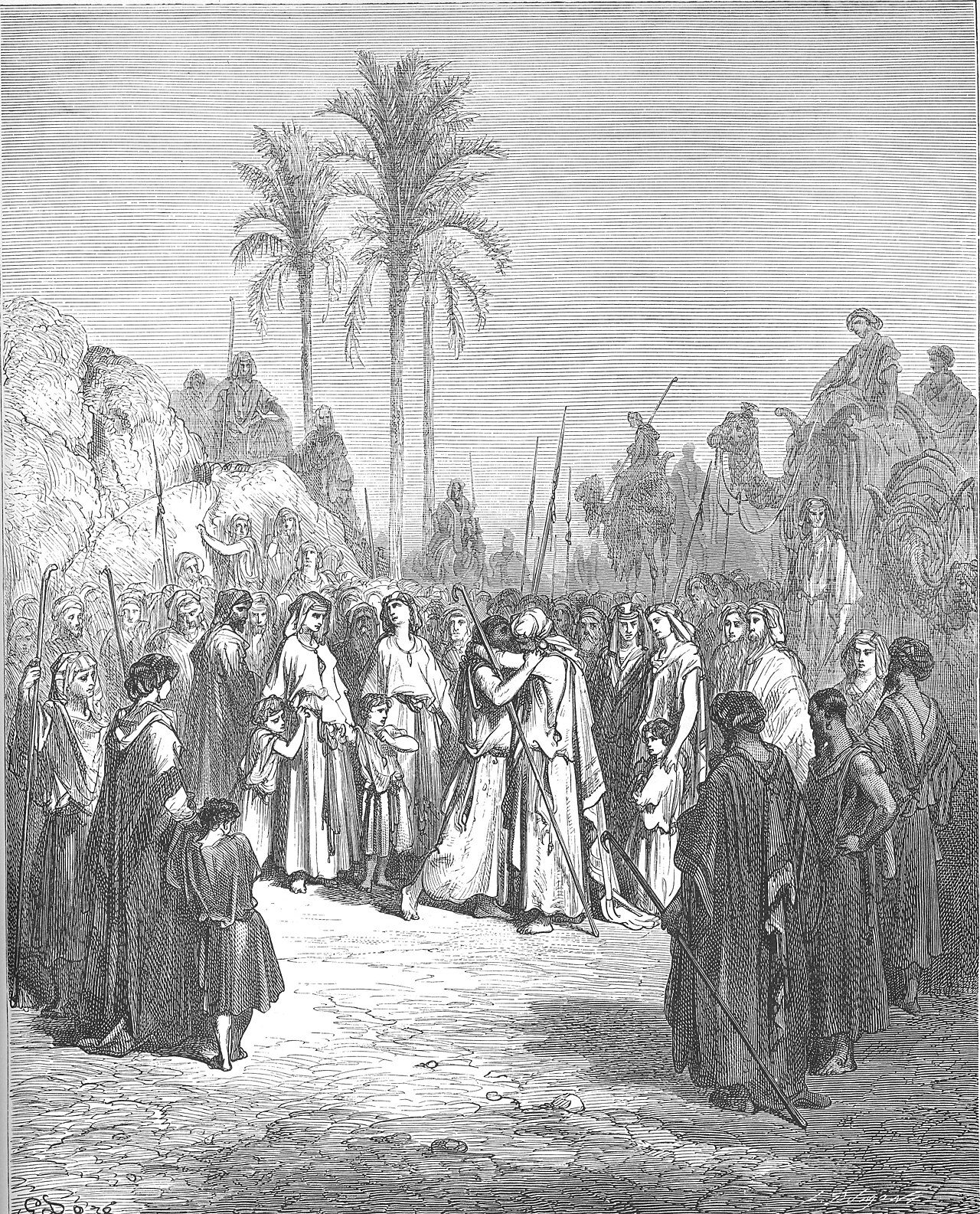
- Gustave Doré, Doré's English Bible (1866)The two engravings on this page. Public domain, Commons file pages recorded in src/lib/art/dore-bible.generated.json and the John/Doré set.
- International Standard Bible Encyclopedia, "Sychar"The Askar and Tell Balata identification proposals, and the Ain Askar spring problem. Confirmed by web search, 2026-09-02 (session 7).
Keep studying
On this page
Studies3
Books that name it1
Doorway2
Keep this page