
Place
Mount Ebal
Also known as Jebel Eslamiyeh
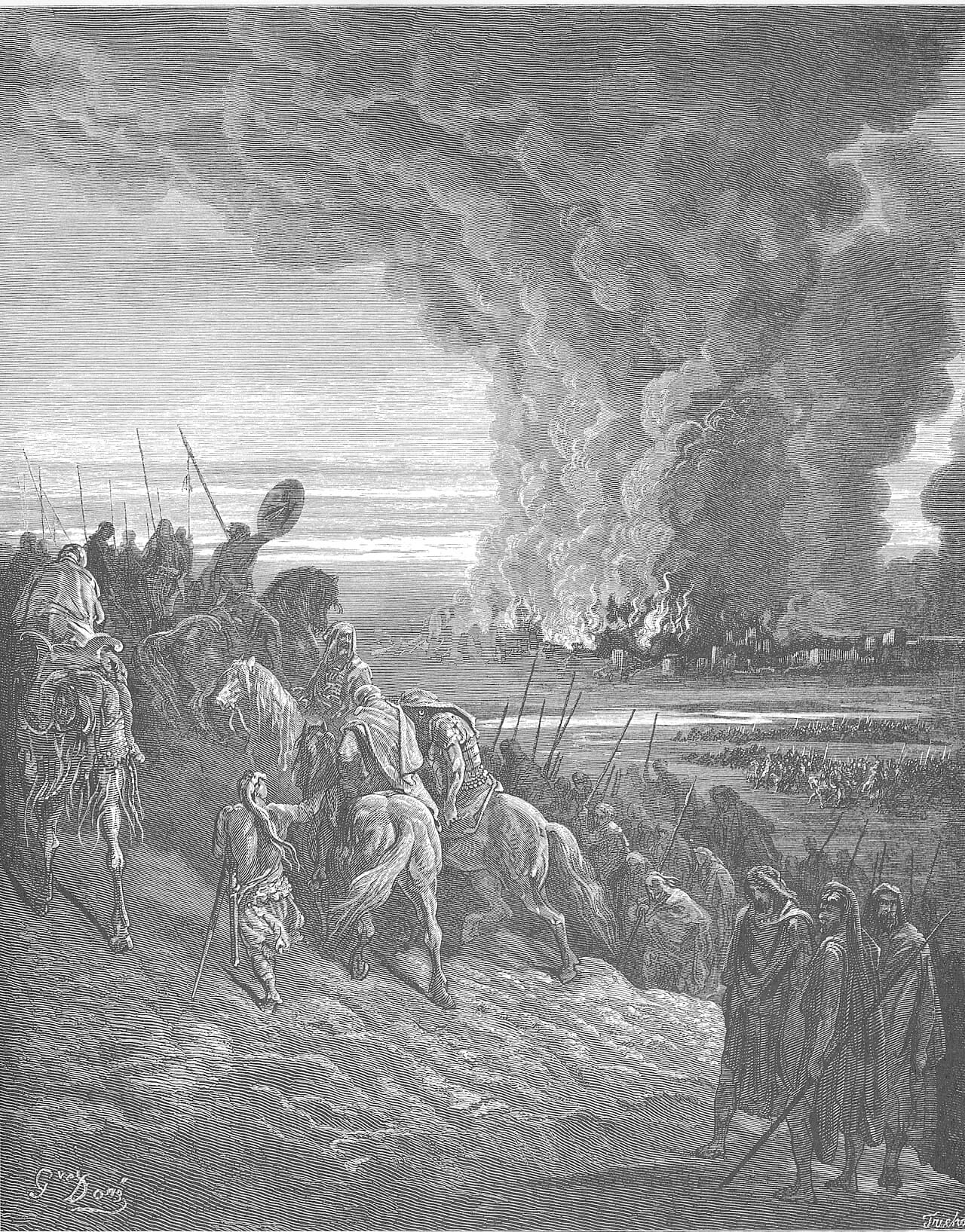
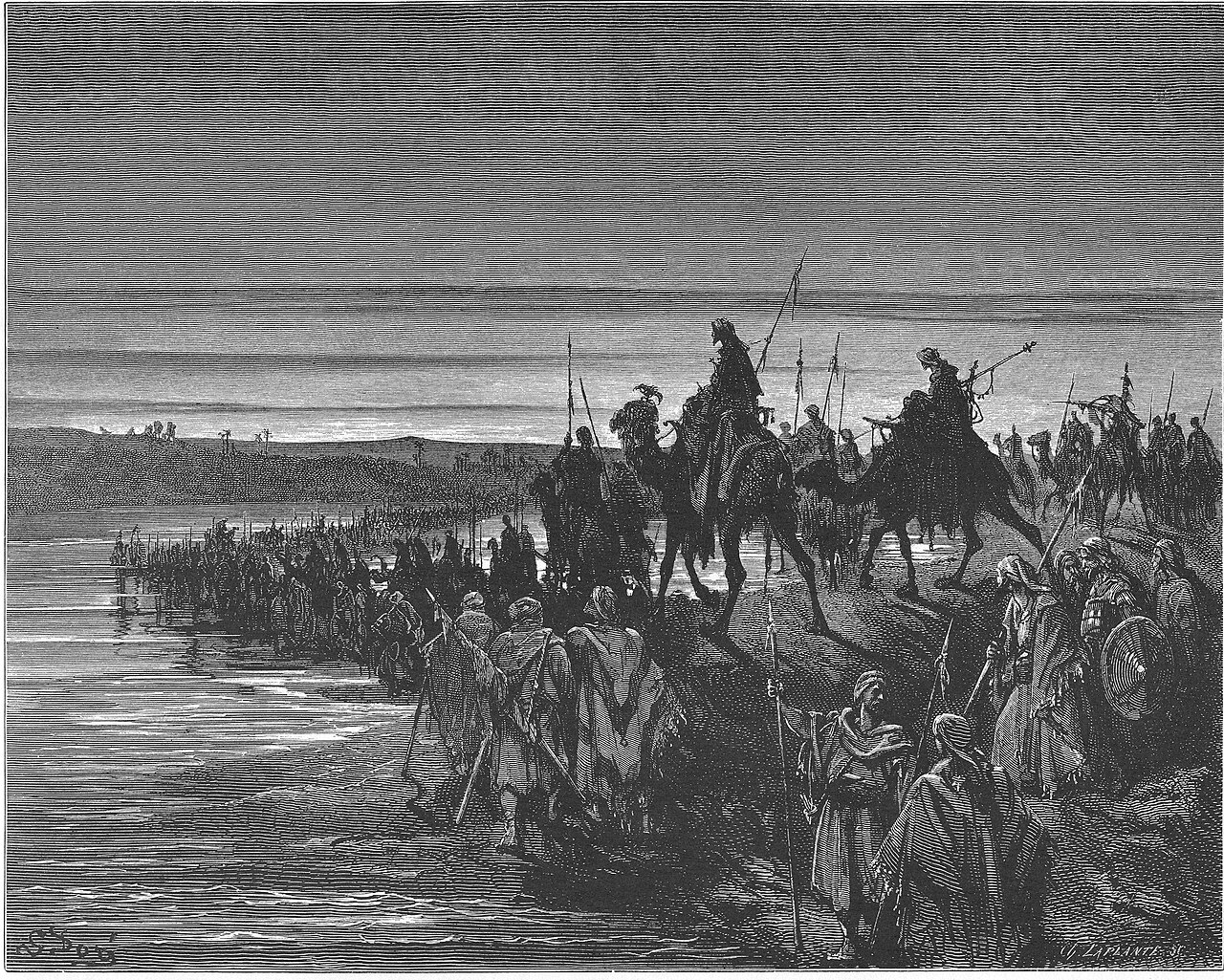
Gustave Doré, La Sainte Bible (Tours: Alfred Mame et fils, 1866). Public domain.
Summary
The mountain of the curse where Joshua built an altar and read the whole law to Israel, the first act of worship inside the land.
- Moses set the curse on Mount Ebal and the blessing on Mount Gerizim facing it, before Israel had crossed the Jordan.
- Joshua built an altar of uncut stones on Ebal and offered burnt offerings and peace offerings on it.
- He wrote a copy of the law on plastered stones and read every word of it aloud to the whole assembly.
- The twelve curses of Deuteronomy 27 name sins done in secret, and the whole nation answered Amen to each one.
- Paul quotes the twelfth of those curses in Galatians 3 and answers it: Christ became a curse for us.
On this page
In Scripture
- Verses
- 5
- Books
- 2
Near Mount Ebal
- Shechem2.3 km · 1.4 mi S
- Mount Gerizim3.7 km · 2.3 mi S
- Sychar4.9 km · 3.1 mi SE
- Samaria8.8 km · 5.5 mi NW
- Shiloh20 km · 12 mi S
- Dothan23 km · 14 mi NW
Straight-line distances, computed from the gazetteer coordinates.
Where it is
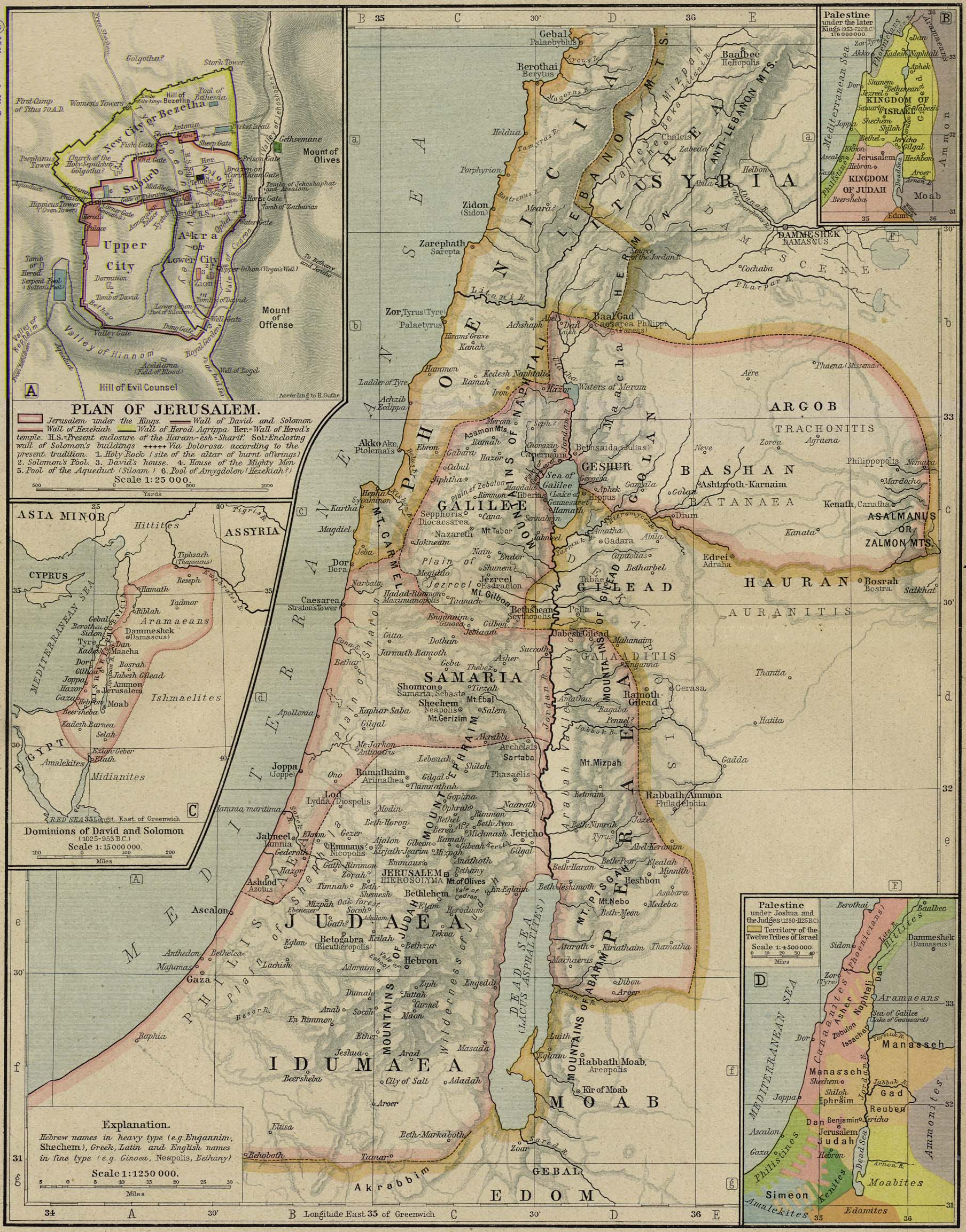
the country around it
- Coordinates
- 32.2329° N, 35.2730° Efind it on the Atlas →
- Region
- Central hill country, north of Shechem
- Kind of place
- Mountain
2 places the record names with Mount Ebal, the farthest 3.7 km away
- 1The curse assigned to EbalDeuteronomy 11:29 · 3.7 kmWhen the LORD your God brings you into the land you are entering to possess, you are to proclaim the blessing on Mount Gerizim and the curse on Mount Ebal.
- 2The covenant renewed at Shechem, in the same passJoshua 24:25 · 2.3 kmOn that day Joshua made a covenant for the people, and there at Shechem he established for them a statute and ordinance.
- Located: the gazetteer fixes one site
- Placed: the point stands for an area, or is rounded
- A dashed line ends at a place the gazetteer does not fix
Why Mount Ebal matters
What has been found
the evidence, and where it is disputed
The altar on Ebal, and the reading of the law
Deuteronomy 27 and Joshua 8:30 to 8:35, in the order it happens
Read Deuteronomy 27 and Joshua 8:30 to 8:35, in the order it happens
- The command: these stones on Mount EbalDeuteronomy 27:4And when you have crossed the Jordan, you are to set up these stones on Mount Ebal, as I am commanding you today, and you are to coat them with plaster.
- An altar of stones, and no iron tool on themDeuteronomy 27:5Moreover, you are to build there an altar to the LORD your God, an altar of stones. You must not use any iron tool on them.
- Write the words distinctly on the stonesDeuteronomy 27:8And you shall write distinctly upon these stones all the words of this law.”
- Joshua builds the altarJoshua 8:30At that time Joshua built an altar on Mount Ebal to the LORD, the God of Israel,
- Burnt offerings and peace offerings on uncut stoneJoshua 8:31just as Moses the servant of the LORD had commanded the Israelites. He built it according to what is written in the Book of the Law of Moses: “an altar of uncut stones on which no iron tool has been used.” And on it they offered burnt offerings to the LORD, and they sacrificed peace offerings.
- A copy of the law, written in the sight of IsraelJoshua 8:32And there in the presence of the Israelites, Joshua inscribed on the stones a copy of the law of Moses, which he had written.
- Half in front of Gerizim, half in front of EbalJoshua 8:33All Israel, foreigners and citizens alike, with their elders, officers, and judges, stood on both sides of the ark of the covenant of the LORD facing the Levitical priests who carried it. Half of the people stood in front of Mount Gerizim and half of them in front of Mount Ebal, as Moses the servant of the LORD had commanded earlier, to bless the people of Israel.
- The blessings and the curses read aloudJoshua 8:34Afterward, Joshua read aloud all the words of the law—the blessings and the curses—according to all that is written in the Book of the Law.
- Not one word left unread, and everyone presentJoshua 8:35There was not a word of all that Moses had commanded that Joshua failed to read before the whole assembly of Israel, including the women, the little ones, and the foreigners who lived among them.
The ceremony sits inside a campaign rather than after one. It follows the taking of Ai, and the next two verses have the kings west of the Jordan gathering to make war on Joshua.
Deuteronomy: the blessing from Gerizim and the cursing from EbalWhat happened here, in order
in the order the canon tells it
- A blessing and a curse set before the peopleDeuteronomy 11:26See, today I am setting before you a blessing and a curse—
- The curse assigned to EbalDeuteronomy 11:29When the LORD your God brings you into the land you are entering to possess, you are to proclaim the blessing on Mount Gerizim and the curse on Mount Ebal.
- Large stones, coated with plasterDeuteronomy 27:2And on the day you cross the Jordan into the land that the LORD your God is giving you, set up large stones and coat them with plaster.
- The stones set up on Mount EbalDeuteronomy 27:4And when you have crossed the Jordan, you are to set up these stones on Mount Ebal, as I am commanding you today, and you are to coat them with plaster.
- An altar of stones, untouched by ironDeuteronomy 27:5Moreover, you are to build there an altar to the LORD your God, an altar of stones. You must not use any iron tool on them.
- Peace offerings, eaten with rejoicingDeuteronomy 27:7There you are to sacrifice your peace offerings, eating them and rejoicing in the presence of the LORD your God.
- The words written distinctly on the stonesDeuteronomy 27:8And you shall write distinctly upon these stones all the words of this law.”
- Six tribes set toward Ebal for the curseDeuteronomy 27:13And these tribes shall stand on Mount Ebal to deliver the curse: Reuben, Gad, Asher, Zebulun, Dan, and Naphtali.
- The twelfth curse, and the last AmenDeuteronomy 27:26‘Cursed is he who does not put the words of this law into practice.’ And let all the people say, ‘Amen!’
- The whole assembly, commanded as a practiceDeuteronomy 31:12Assemble the people—men, women, children, and the foreigners within your gates—so that they may listen and learn to fear the LORD your God and to follow carefully all the words of this law.
- Joshua builds an altar on Mount EbalJoshua 8:30At that time Joshua built an altar on Mount Ebal to the LORD, the God of Israel,
- Uncut stones, burnt offerings and peace offeringsJoshua 8:31just as Moses the servant of the LORD had commanded the Israelites. He built it according to what is written in the Book of the Law of Moses: “an altar of uncut stones on which no iron tool has been used.” And on it they offered burnt offerings to the LORD, and they sacrificed peace offerings.
- A copy of the law written on the stonesJoshua 8:32And there in the presence of the Israelites, Joshua inscribed on the stones a copy of the law of Moses, which he had written.
- The nation ranged in two halvesJoshua 8:33All Israel, foreigners and citizens alike, with their elders, officers, and judges, stood on both sides of the ark of the covenant of the LORD facing the Levitical priests who carried it. Half of the people stood in front of Mount Gerizim and half of them in front of Mount Ebal, as Moses the servant of the LORD had commanded earlier, to bless the people of Israel.
- The blessings and the curses read aloudJoshua 8:34Afterward, Joshua read aloud all the words of the law—the blessings and the curses—according to all that is written in the Book of the Law.
- Not a word left unreadJoshua 8:35There was not a word of all that Moses had commanded that Joshua failed to read before the whole assembly of Israel, including the women, the little ones, and the foreigners who lived among them.
- The covenant renewed at Shechem, in the same passJoshua 24:25On that day Joshua made a covenant for the people, and there at Shechem he established for them a statute and ordinance.
- Ezra reads the law again after the exileNehemiah 8:3So Ezra read it aloud from daybreak until noon as he faced the square before the Water Gate, in front of the men and women and those who could understand. And all the people listened attentively to the Book of the Law.
- The curse answeredGalatians 3:13Christ redeemed us from the curse of the law by becoming a curse for us. For it is written: “Cursed is everyone who is hung on a tree.”
Where it points
The voices
each quoted from the work named
The curses are here expressed, but not the blessings; for as many as were under the law were under the curse, but it was a honour reserved for Christ to bless us, and so to do that for us which the law could not do, in that it was weak. In Christ's sermon upon the mount, which was the true Mount Gerizim, we have blessings only, Matt. v. 3 , &c.
Therefore, Jesus alone is the one who is able to distinguish the minds and spirits of all such people, and to station some on Mount Gerizim for blessings and others on Mount Ebal for cursings. Not so that they may receive curses but that they may guard against incurring them by gazing at the curses prescribed and punishments set down for sinners.
Upon the stones - Not upon the stones of the altar, which were to be rough and unpolished, ver. 31, but upon other stones, smooth and plaistered, as is manifest from Deut. xxvii, 2.
4 more teachers on these versesMatthew Henry · Adam Clarke · John Chrysostom · Tertullian
It is a great mercy to any people to have the law of God in writing, and it is fit that the written law should be exposed to common view in a known tongue, that it may be seen and read of all men.
With the women and the little ones - It was necessary that all should know that they were under the same obligations to obey; even the women are brought forward, not only because of their personal responsibility, but because to them was principally intrusted the education of the children. The children also witness this solemn transaction, that a salutary fear of offending God might be early, diligently, and deeply impressed upon their hearts.
Further, they were possessed with another apprehension; it was written, "Cursed is every one that continueth not in all things that are written in the book of the Law, to do them." (Deut. xxvii: 26) And this he removes, with great skill and prudence, turning their argument against themselves, and showing that those who relinquish the Law are not only not cursed, but blessed; and they who keep it, not only not blessed but cursed.
The Lord Himself was "cursed" in the eye of the law; and yet is He the only Blessed One.
Mount Ebal in Scripture
5 verses name it, or one of its other names (Jebel Eslamiyeh), in 2 books
Open a book to read its mentions here. Text: Berean Standard Bible.
Old TestamentNew Testamentsegment width = share of mentions
Old Testament2 books · 5 mentions
Deuteronomy3 mentions
- Deuteronomy 11:29When the LORD your God brings you into the land you are entering to possess, you are to proclaim the blessing on Mount Gerizim and the curse on Mount Ebal.
- Deuteronomy 27:4And when you have crossed the Jordan, you are to set up these stones on Mount Ebal, as I am commanding you today, and you are to coat them with plaster.
- Deuteronomy 27:13And these tribes shall stand on Mount Ebal to deliver the curse: Reuben, Gad, Asher, Zebulun, Dan, and Naphtali.
Joshua2 mentions
- Joshua 8:30At that time Joshua built an altar on Mount Ebal to the LORD, the God of Israel,
- Joshua 8:33All Israel, foreigners and citizens alike, with their elders, officers, and judges, stood on both sides of the ark of the covenant of the LORD facing the Levitical priests who carried it. Half of the people stood in front of Mount Gerizim and half of them in front of Mount Ebal, as Moses the servant of the LORD had commanded earlier, to bless the people of Israel.
The account
Read the account as one telling
The command comes on the plains of Moab, east of the Jordan, before Israel has seen either mountain. Moses tells the people that a blessing and a curse are being set before them that day, and that when they cross over they are to proclaim the blessing on Mount Gerizim and the curse on Mount Ebal. He fixes the position by a landmark the hearers would know from the fathers, the Oak of Moreh.
Deuteronomy 27 fills in what is to be done. On the day they cross, large stones are to be set up and coated with plaster, and all the words of this law written on them. The stones go up on Mount Ebal. An altar is to be built there of uncut stone that no iron tool has touched, and burnt offerings and peace offerings are to be made on it, and the people are to eat and rejoice in the presence of the LORD. Then the tribes are divided, six toward Gerizim to bless and six toward Ebal for the curse, and the Levites call out twelve curses in a loud voice with the whole people answering Amen to each one.
Joshua 8:30 to 8:35 records it carried out. It comes straight after the taking of Ai and straight before the kings west of the Jordan gather for war, so the ceremony sits inside a campaign rather than at the end of one. Joshua built the altar, offered the burnt offerings and the peace offerings, wrote a copy of the law of Moses on the stones in the presence of Israel, and read every word of it aloud. Half the people stood in front of Gerizim and half in front of Ebal, on both sides of the ark, facing the Levitical priests who carried it. Foreigners and citizens alike were there, and so were the women and the little ones.
The pass keeps its place in the book. At the end of his life Joshua assembled all the tribes at Shechem, between the two mountains, made a covenant for the people, wrote the words in the Book of the Law of God, and set up a large stone as a witness. Ebal is not named in that chapter and this page does not claim it. The bones of Joseph were buried at Shechem in the same passage, and the Shechem page carries that assembly in full.
What Joshua did on Ebal was not meant to be a one-off. Moses had already commanded it as a repeating practice: when all Israel comes before the LORD at the place He chooses, read this law in their hearing, and assemble the people, men, women, children and the foreigners within your gates. Nehemiah 8 shows it done again after the exile, when Ezra read the Book of the Law aloud from daybreak until noon in the square before the Water Gate and the people answered Amen with their hands lifted up.
The twelfth curse of the ceremony has the longest life of any line spoken on this mountain. Cursed is he who does not put the words of this law into practice, and all the people said Amen. Paul quotes that verse in Galatians 3:10 to show where reliance on the works of the law ends, and three verses later he says that Christ redeemed us from the curse of the law by becoming a curse for us.
One word in the record is read differently by the two communities who hold it. At Deuteronomy 27:4 the Masoretic Text puts the stones on Mount Ebal, and the Samaritan Pentateuch puts them on Mount Gerizim. That difference decides which mountain the altar and the inscribed stones belong to, and it is genuinely argued over. This page follows the Masoretic reading because that is the text it prints, and it names the other reading and the people who hold it rather than passing over it.
After Joshua the mountain drops out of the biblical narrative. It comes back into view in the modern record through excavation. A stone structure on Ebal's northeastern ridge was dug in the 1980s and read by its excavator as the altar of Joshua 8:30, and read by others as a building of a different kind. The evidence and the names on each side are set out further down this page.
Common questions
What happened on Mount Ebal?
Joshua built an altar of uncut stones there, offered burnt offerings and peace offerings, wrote a copy of the law of Moses on stones in the sight of Israel, and read every word of the law aloud to the whole assembly. Half the people stood in front of Gerizim and half in front of Ebal, with the ark and the Levitical priests between them. It is the first recorded act of worship Israel performs inside the land.
Why build the altar on the mountain of the curse?
Readers differ; the positions are named
That is where Moses put it. Set up the stones on Ebal, and build there an altar to the LORD. The offerings named are burnt offerings and peace offerings, and a peace offering is eaten, so the command ends with the people eating and rejoicing in the presence of the LORD. The place where the curse is spoken is the place where the blood is shed and the meal is kept.
Where exactly the altar stood is a smaller question with old answers on both sides. John Gill records that Josephus placed it between the two mountains rather than on Ebal, and cites the note of Jarchi, the Latin name for Rashi, Rabbi Shlomo Yitzchaki of Troyes, 1040 to 1105, the standard medieval Jewish commentator on the Torah. Rashi held that other stones were brought up from the Jordan for the altar, so that it was built on the same mountain but not of the same stones.
Did the tribes stand on the summits?
Readers differ; the positions are named
Deuteronomy 27:12 to 27:13 lists six tribes for Gerizim and six for Ebal, and Joshua 8:33 says half the people stood in front of each mountain. Adam Clarke argues that the Hebrew particle can be read as by or over against, and that Joshua 8:33 shows the people standing on the plain facing the slopes rather than on the summits. Jamieson, Fausset and Brown read them as ranged along the sides and base of each mountain. John Gill places the Levitical priests in the valley between, calling out the blessings and the curses so that all the tribes could hear.
Why are only the curses written out?
Deuteronomy 27:15 to 27:26 gives twelve curses, each one answered by the whole people with Amen, and no matching list of twelve blessings is printed at the ceremony. The blessings come in the next chapter, at length. Matthew Henry, in 1710, read the silence as pointing forward, holding that it was reserved to Christ to bless, and calling the Sermon on the Mount the true Mount Gerizim where there are blessings only. That is his reading of the pattern, given as a reading.
What was written on the stones, and how much of it?
Readers differ; the positions are named
Joshua 8:32 says a copy of the law of Moses. Adam Clarke holds that this means the blessings and the curses only, not the Ten Commandments, not the book of Deuteronomy and not the whole Pentateuch. John Wesley keeps the two sets of stones apart: the altar stones are rough and unplastered, while the stones that carry the writing are smooth and coated with plaster, following Deuteronomy 27:2 to 27:5. The writing and the reading are two different acts, and the commentators are answering two different questions.
Was everyone really there?
Joshua 8:35 says there was not a word Joshua failed to read before the whole assembly, including the women, the little ones, and the foreigners who lived among them, and 8:33 puts foreigners and citizens alike on both sides of the ark. Deuteronomy 31:12 had commanded that exact shape: men, women, children and the foreigners within the gates. Adam Clarke notes that the children were there so that the fear of God would be impressed early, and the women because the teaching of the children was largely theirs.
Has Joshua's altar been found on Ebal?
Readers differ; the positions are named
Adam Zertal excavated a stone structure on Ebal's northeastern ridge from 1982 to 1989, roughly 9 by 7 metres with a ramp, filled with ash and a large animal bone assemblage, and identified it with the altar of Joshua 8:30 in Biblical Archaeology Review in 1985. Aharon Kempinski answered in the same journal in 1986 that the structure reads better as an Iron Age I watchtower or farmstead. Israel Finkelstein and others have questioned both the cultic identification and the dating, and Zertal replied in turn.
The structure is real. What it was for is argued over, and this site names the positions without a verdict.
What about the small lead object with an inscription on it?
Readers differ; the positions are named
From 2019, Scott Stripling and colleagues recovered a small inscribed lead object from material discarded by Zertal's excavation and reported that it carries an early Hebrew curse text, with Gershon Galil working on the proposed reading and a publication following in 2023. The object is a small folded lead sheet, about two centimetres square, and the team read the folded interior by x-ray tomography rather than by opening it. The peer-reviewed article, titled You are Cursed by the God YHW: an Early Hebrew Inscription from Mt. Ebal, appeared in the journal Heritage Science in May 2023. The reading has been strongly disputed by epigraphers including Christopher Rollston. Because the reading is contested, this page prints no transcription and treats no proposed wording as established.
Where does the curse of Ebal end up?
Paul quotes the twelfth curse, that everyone is cursed who does not continue to do everything written in the Book of the Law, and builds on it: all who rely on works of the law are under a curse. Three verses later he answers it. Christ redeemed us from the curse of the law by becoming a curse for us. Tertullian put the same thing in a line about 203: the Lord Himself was cursed in the eye of the law, and yet is He the only Blessed One.
Notable art
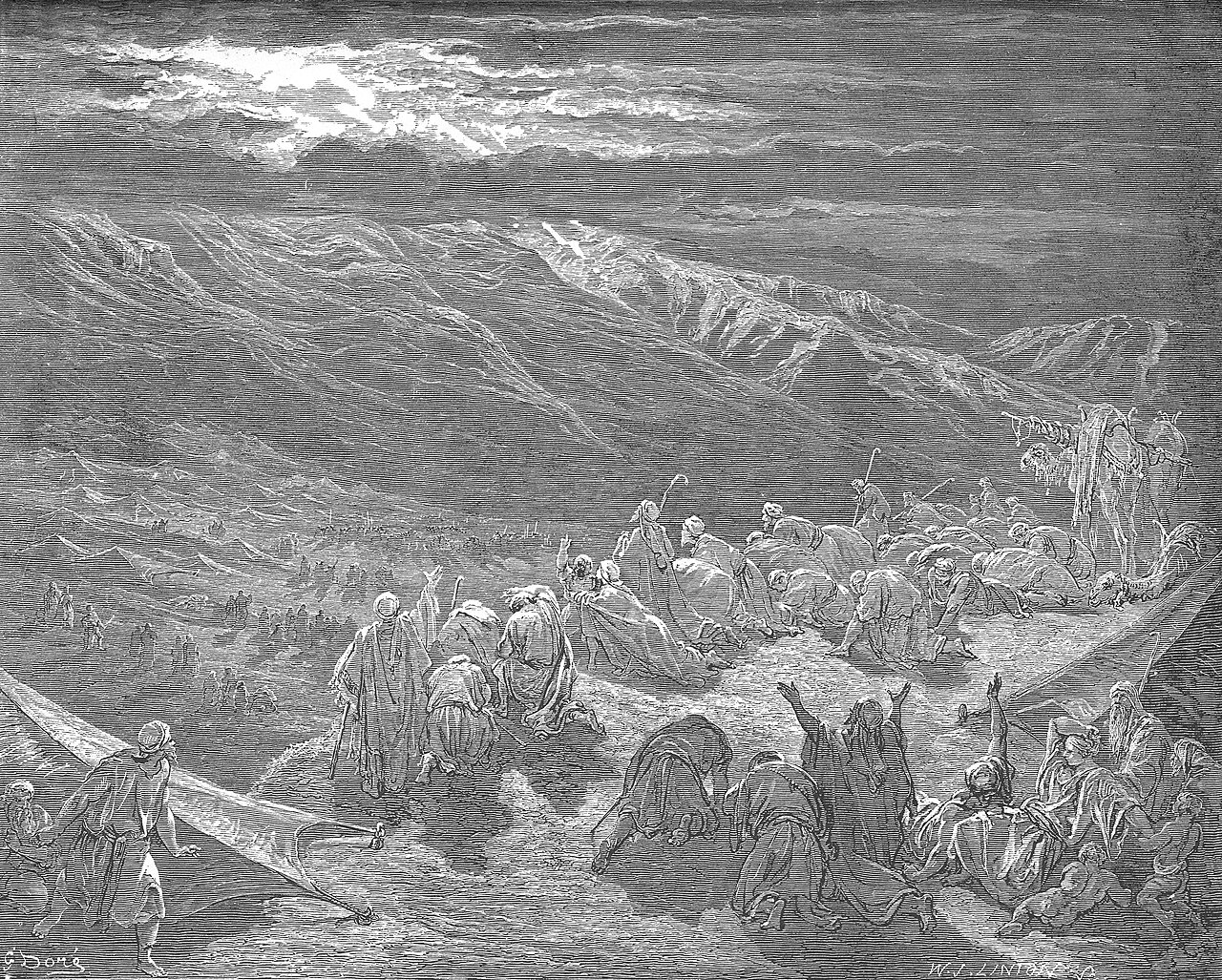
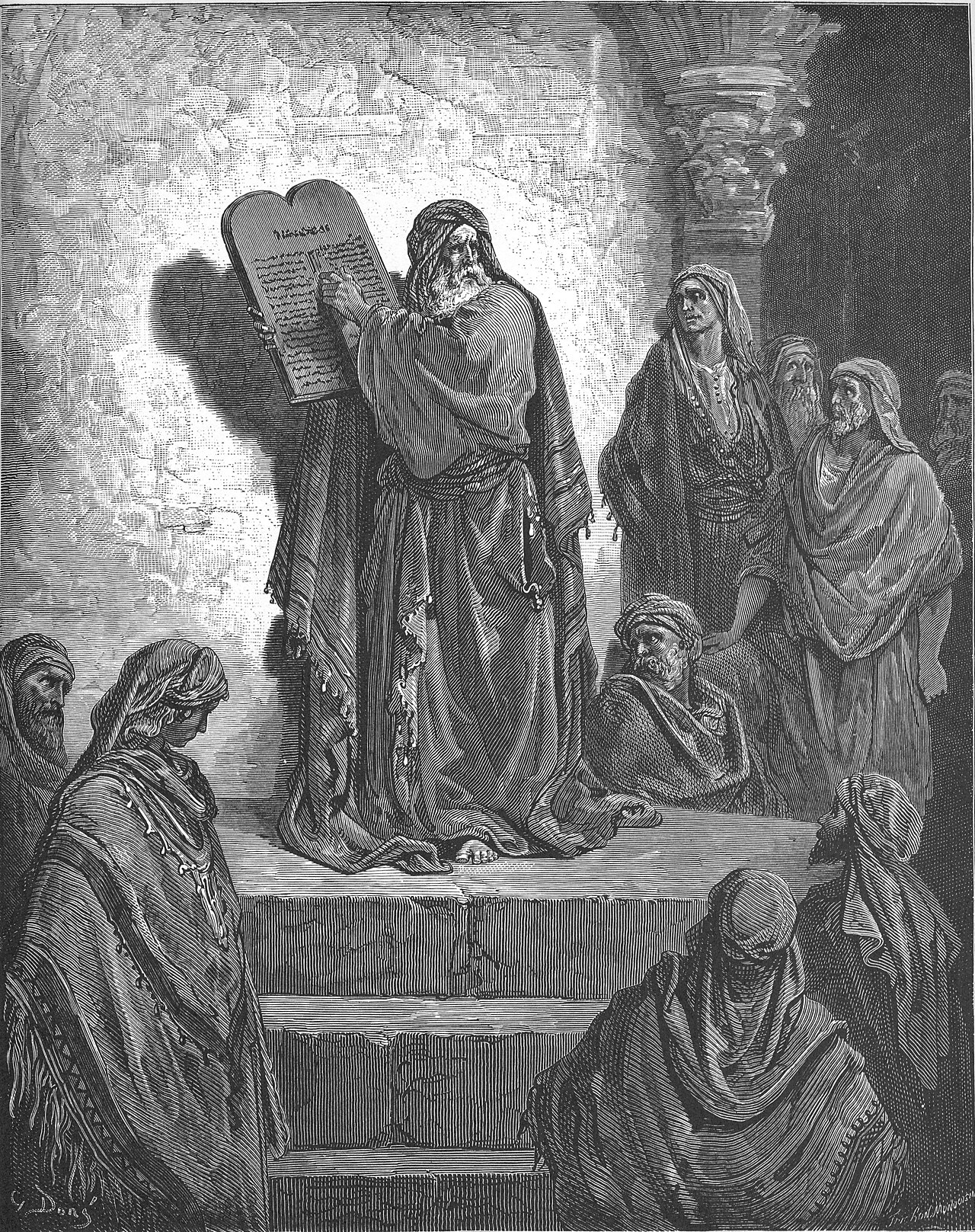
3 verified pieces depicting Mount Ebal
Sources cited
- OpenBible.info Bible Geocoding: Mount Ebalread 2026-09-02The coordinates on this page. Used under CC-BY with attribution to OpenBible.info.
- Berean Standard BibleAll Scripture on this page, from the site's own verse store. Public domain since 2023.
- Adam Zertal, "Has Joshua's Altar Been Found on Mt. Ebal?", Biblical Archaeology Review 11:1 (1985)Cited for the position it argues.
- Aharon Kempinski, "Joshua's Altar: An Iron Age I Watchtower", Biblical Archaeology Review 12:1 (1986)The answer to Zertal, in the same journal. Cited for the position it argues.
- Matthew Henry, Commentary on the Whole Bible (1710)Public domain.
- John Wesley, Explanatory Notes upon the Old Testament (1765)Public domain.
- Adam Clarke, Commentary on the Bible (1832)Public domain. Cited here on the assembly, on how much was written on the stones, on the Kennicott dispute and on the fertility claim.
- Albert Barnes, Notes, Explanatory and Practical, on the Old and New Testaments (1832 to 1869)Public domain. Cited for the Masoretic reading of Deuteronomy 27:4 and for the barren Gerizim.
- John Gill, Exposition of the Old Testament (1748 to 1763)Public domain. Cited for the placing of the altar and for the note he takes from Rashi.
- Jamieson, Fausset & Brown, Commentary Critical and Explanatory on the Whole Bible (1871)Public domain. Cited for where the tribes were ranged.
- Origen of Alexandria, Homilies on Joshua 9.2, 9.7 and 9.9Public domain in translation. Usually dated to about 249, near the end of Origen's life at Caesarea; the pool's 253 is the year of his death, not these homilies' date.
- John Chrysostom, Homily on Galatians 3Public domain in translation. Usually dated to the mid 390s, from Chrysostom's years as a priest in Antioch; the pool's 407 is the year of his death in exile, not this work's date.
- Tertullian, Of PatiencePublic domain in translation. Usually dated to about 203, from Tertullian's early Catholic period; the pool's 220 is not this work's date.
- Gustave Doré, La Sainte Bible (Tours: Alfred Mame et fils, 1866)The engravings on this page. Public domain.
- Standard topographic reference for the West BankThe elevations of Mount Ebal (935 m) and Mount Gerizim (881 m), confirmed by web search 2026-09-02.
- Scott Stripling, Gershon Galil, Ivana Kumpova, Jaroslav Valach, Pieter Gert van der Veen and Daniel Vavrik, "You are Cursed by the God YHW: an Early Hebrew Inscription from Mt. Ebal", Heritage Science 11:105 (2023)The dimensions, the x-ray tomography scanning method, and the May 2023 publication of the lead object, confirmed by web search 2026-09-02. Cited for the position it argues, and disputed by Rollston and others.
- Associates for Biblical Research, press conference at the Lanier Theological Library, Houston, Texas, March 24, 2022The date and venue of the public announcement, ahead of the 2023 peer-reviewed article, confirmed by web search 2026-09-02.
Keep studying
On this page
Studies11
Every page that names it1
Doorway2
Books that name it1
Lives that run through it1
Keep this page