
Place
Mount Gerizim
Also known as Jebel et-Tur
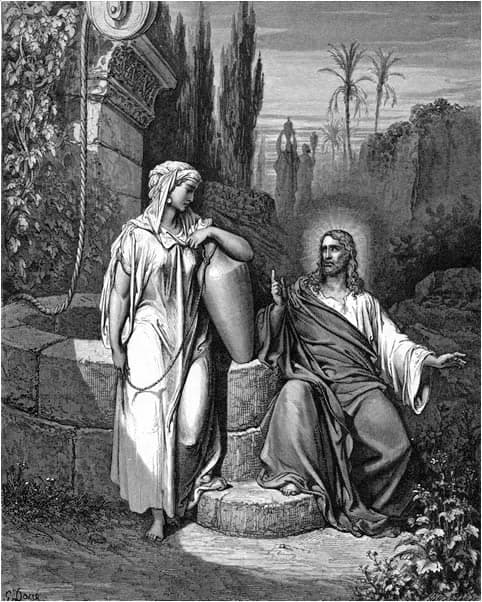
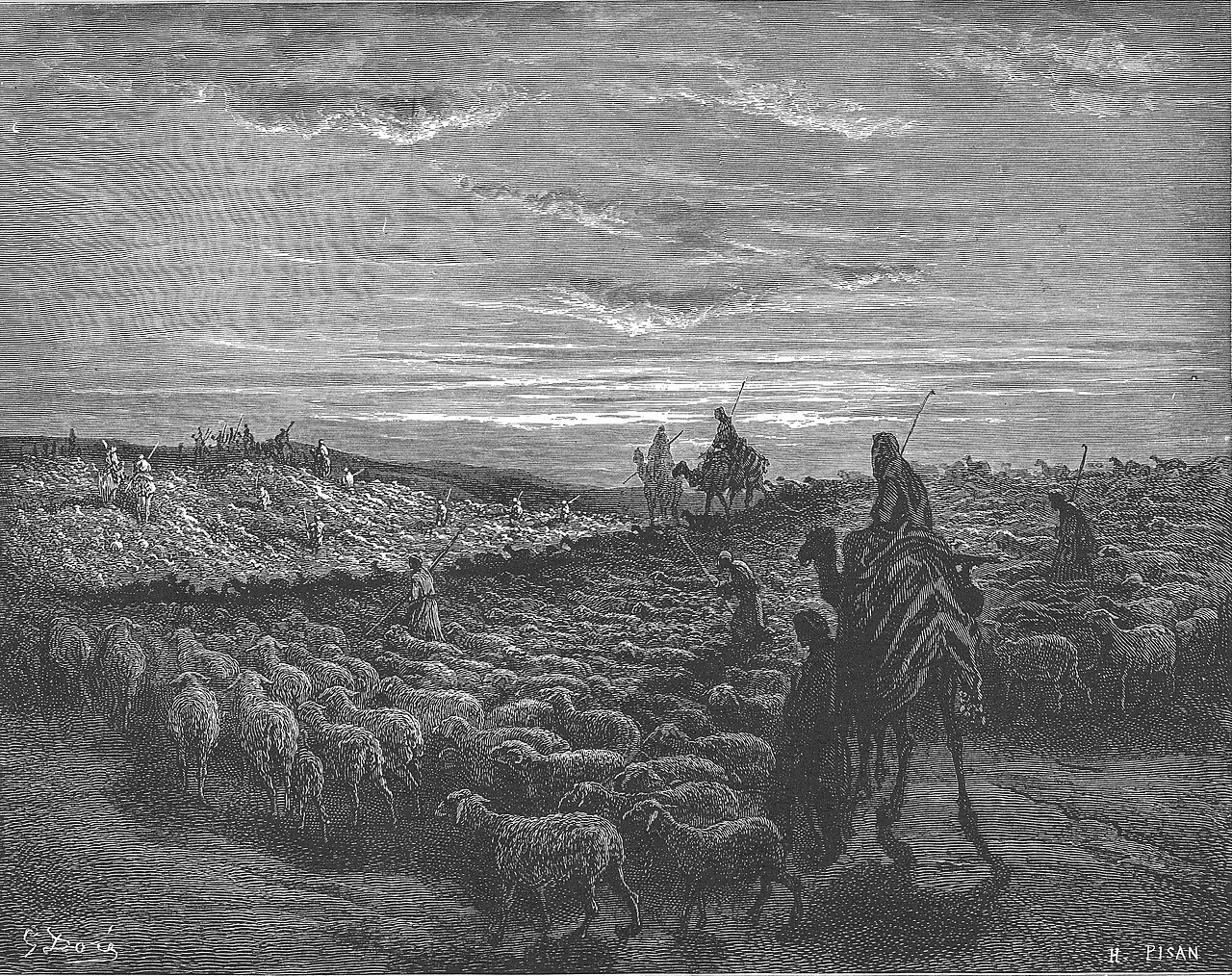
Gustave Doré, La Sainte Bible (Tours: Alfred Mame et fils, 1866). Public domain.
Summary
The mountain of blessing that faces Ebal across Shechem, where Jotham told his parable and where the Samaritans built the temple the woman at the well spoke of.
- Moses assigned the blessing to Mount Gerizim and the curse to Mount Ebal facing it, before Israel had crossed the Jordan.
- Jotham climbed to the top of Gerizim and told the leaders of Shechem below the parable of the trees who wanted a king.
- The Samaritans built a temple on the summit, and that temple stands behind the woman's question at Jacob's well.
- Jesus told her that worship would be fixed to neither mountain, and in the same breath that salvation is from the Jews.
- Philip preached Christ in Samaria, and Peter and John came down and laid hands on the believers.
On this page
In Scripture
- Verses
- 4
- Books
- 3
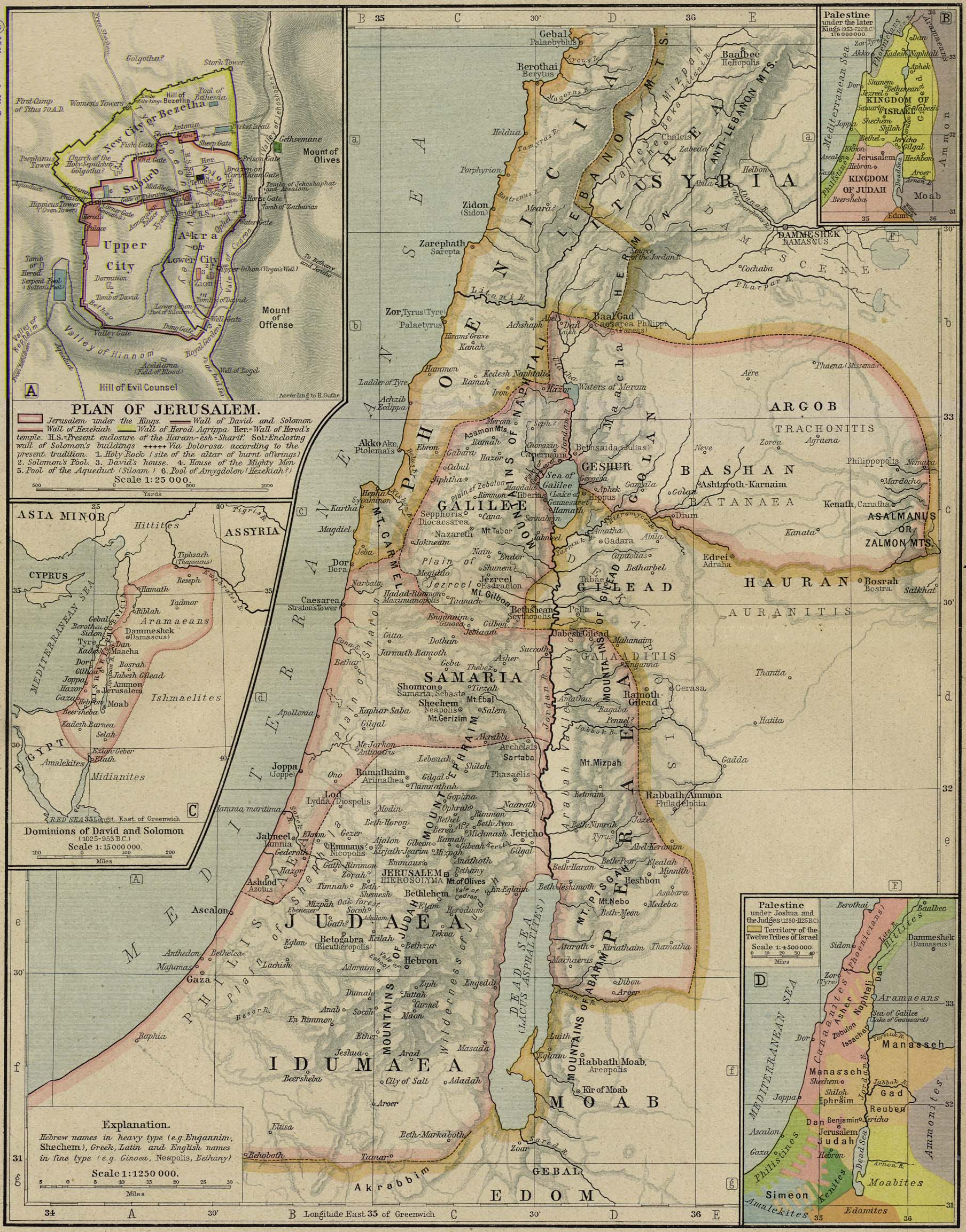
Near Mount Gerizim
- Shechem1.8 km · 1.1 mi NE
- Sychar3.7 km · 2.3 mi E
- Mount Ebal3.7 km · 2.3 mi N
- Samaria11 km · 7.1 mi NW
- Shiloh16 km · 10.0 mi S
- Dothan26 km · 16 mi N
Straight-line distances, computed from the gazetteer coordinates.
Where it is
the country around it
- Coordinates
- 32.1996° N, 35.2729° Efind it on the Atlas →
- Region
- Central hill country, south of Shechem
- Kind of place
- Mountain
3 places the record names with Mount Gerizim, the farthest 11 km away
- 1Abram stops at the Oak of Moreh at ShechemGenesis 12:6 · 1.8 kmAbram traveled through the land as far as the site of the Oak of Moreh at Shechem. And at that time the Canaanites were in the land.
- 2The blessing assigned to GerizimDeuteronomy 11:29 · 3.7 kmWhen the LORD your God brings you into the land you are entering to possess, you are to proclaim the blessing on Mount Gerizim and the curse on Mount Ebal.
- 3Assyria resettles the towns of Samaria2 Kings 17:24 · 11 kmThen the king of Assyria brought people from Babylon, Cuthah, Avva, Hamath, and Sepharvaim and settled them in the towns of Samaria to replace the Israelites. They took possession of Samaria and lived in its towns.
- Located: the gazetteer fixes one site
- Placed: the point stands for an area, or is rounded
- ? Proposed: one candidate among several
- A dashed line ends at a place the gazetteer does not fix
Not located: Assyria. The gazetteer records no location for it, so it is not marked.
Why Mount Gerizim matters
What has been found
the evidence, and where it is disputed
The question about the mountain, and the answer
John 4, in the order it happens
Read John 4, in the order it happens
- Jesus goes through SamariaJohn 4:4Now He had to pass through Samaria.
- Jacob's well, at the sixth hourJohn 4:6Since Jacob’s well was there, Jesus, weary from His journey, sat down by the well. It was about the sixth hour.
- The question about the mountainJohn 4:20Our fathers worshiped on this mountain, but you Jews say that the place where one must worship is in Jerusalem.”
- Neither on this mountain nor in JerusalemJohn 4:21“Believe Me, woman,” Jesus replied, “a time is coming when you will worship the Father neither on this mountain nor in Jerusalem.
- Salvation is from the JewsJohn 4:22You worship what you do not know; we worship what we do know, for salvation is from the Jews.
- Worship in spirit and in truthJohn 4:23But a time is coming and has now come when the true worshipers will worship the Father in spirit and in truth, for the Father is seeking such as these to worship Him.
- I who speak to you am HeJohn 4:26Jesus answered, “I who speak to you am He.”
- She leaves the jar and goes back to the townJohn 4:29“Come, see a man who told me everything I ever did. Could this be the Christ?”
- The Savior of the worldJohn 4:42They said to the woman, “We now believe not only because of your words; we have heard for ourselves, and we know that this man truly is the Savior of the world.”
Her question is not a dodge. Gerizim is in sight of the well, a temple had stood on it, and which mountain God had chosen was the sharpest question between her people and His. He answers it, and the answer is larger than either mountain.
The Woman at the Well: the full studyWhat happened here, in order
in the order the canon tells it
- Abram stops at the Oak of Moreh at ShechemGenesis 12:6Abram traveled through the land as far as the site of the Oak of Moreh at Shechem. And at that time the Canaanites were in the land.
- The first altar built in the landGenesis 12:7Then the LORD appeared to Abram and said, “I will give this land to your offspring.” So Abram built an altar there to the LORD, who had appeared to him.
- The blessing assigned to GerizimDeuteronomy 11:29When the LORD your God brings you into the land you are entering to possess, you are to proclaim the blessing on Mount Gerizim and the curse on Mount Ebal.
- The two mountains placed near the Oak of MorehDeuteronomy 11:30Are not these mountains across the Jordan, west of the road toward the sunset, in the land of the Canaanites who live in the Arabah opposite Gilgal near the Oak of Moreh?
- Six tribes set toward Gerizim to blessDeuteronomy 27:12“When you have crossed the Jordan, these tribes shall stand on Mount Gerizim to bless the people: Simeon, Levi, Judah, Issachar, Joseph, and Benjamin.
- Half the people stand in front of GerizimJoshua 8:33All Israel, foreigners and citizens alike, with their elders, officers, and judges, stood on both sides of the ark of the covenant of the LORD facing the Levitical priests who carried it. Half of the people stood in front of Mount Gerizim and half of them in front of Mount Ebal, as Moses the servant of the LORD had commanded earlier, to bless the people of Israel.
- Jotham is the one son who escapesJudges 9:5He went to his father’s house in Ophrah, and on one stone murdered his seventy brothers, the sons of Jerubbaal. But Jotham, the youngest son of Jerubbaal, survived, because he hid himself.
- Jotham calls out from the top of the mountainJudges 9:7When this was reported to Jotham, he climbed to the top of Mount Gerizim, raised his voice, and cried out: “Listen to me, O leaders of Shechem, and may God listen to you.
- The condition Jotham namesJudges 9:20But if not, may fire come from Abimelech and consume the leaders of Shechem and Beth-millo, and may fire come from the leaders of Shechem and Beth-millo and consume Abimelech.”
- The words spoken from the summit landJudges 9:57And God also brought all the wickedness of the men of Shechem back upon their own heads. So the curse of Jotham son of Jerubbaal came upon them.
- Assyria resettles the towns of Samaria2 Kings 17:24Then the king of Assyria brought people from Babylon, Cuthah, Avva, Hamath, and Sepharvaim and settled them in the towns of Samaria to replace the Israelites. They took possession of Samaria and lived in its towns.
- They worshiped the LORD and served their own gods2 Kings 17:33They worshiped the LORD, but they also served their own gods according to the customs of the nations from which they had been carried away.
- Jesus sits down at Jacob's wellJohn 4:6Since Jacob’s well was there, Jesus, weary from His journey, sat down by the well. It was about the sixth hour.
- Our fathers worshiped on this mountainJohn 4:20Our fathers worshiped on this mountain, but you Jews say that the place where one must worship is in Jerusalem.”
- Neither on this mountain nor in JerusalemJohn 4:21“Believe Me, woman,” Jesus replied, “a time is coming when you will worship the Father neither on this mountain nor in Jerusalem.
- I who speak to you am HeJohn 4:26Jesus answered, “I who speak to you am He.”
- The town calls Him the Savior of the worldJohn 4:42They said to the woman, “We now believe not only because of your words; we have heard for ourselves, and we know that this man truly is the Savior of the world.”
- Samaria named second in the orderActs 1:8But you will receive power when the Holy Spirit comes upon you, and you will be My witnesses in Jerusalem, and in all Judea and Samaria, and to the ends of the earth.”
- The Samaritan believers receive the Holy SpiritActs 8:17Then Peter and John laid their hands on them, and they received the Holy Spirit.
Where it points
The voices
each quoted from the work named
Mount Gerizim - Which lay near Shechem. The valley between Gerizim and Ebal, was a famous place, employed for the solemn reading of the law, and its blessings and curses: and it is probable it was still used, even by the superstitious and idolatrous Israelites for such occasions, who delighted to use the same places which their ancestors had used.
HERE then, in parable, a temptation was set before the olive tree. It was urged to become ambitious and aspire to reign over the rest of the trees. We gather from Jotham's parable, at the outset, that we, also, are all liable to temptation.
On the statement "our fathers" and what follows one must understand the disagreement between the Samaritans and the Jews over the place they considered holy. For the Samaritans worship God on the mountain called Gerizim, because they consider it to be holy. Moses refers to this mountain in Deuteronomy when he says, "And Moses commanded the people in that day saying, 'These shall stand on Mount Gerizim to bless the people, when you have crossed the Jordan.' "
4 more teachers on these versesJohn Chrysostom · Augustine of Hippo · Jamieson, Fausset & Brown · Matthew Henry
Seest thou how much more elevated in mind she has become? She who was anxious that she might not be troubled for thirst, now questions concerning doctrines. What then doth Christ? He doth not resolve the question, (for to answer simply to men's words was not His care, for it was needless,) but leads the woman on to the greater height, and doth not converse with her on these matters, until she has confessed that He was a Prophet
Both peoples contended in ignorance, because they had not the husband: they were inflated against each other, on the one side in behalf of the temple, on the other in behalf of the mountain.
In the present case an important object was served by it--"the sudden appearance of a body of baptized disciples in Samaria, by the agency of one who was not an apostle, requiring the presence and power of apostles to perform their special part as the divinely appointed founders of the Church" [ALFORD]. Beautiful, too, was the spectacle exhibited of Jew and Samaritan, one in Christ.
The Spirit is given, not to ourselves only ( Luke xi. 13 ), but to others also, in answer to prayer: I will put my Spirit within you ( Ezek. xxxvi. 27 ), but I will for this be enquired of,
Mount Gerizim in Scripture
4 verses name it, or one of its other names (Jebel et-Tur), in 3 books
Open a book to read its mentions here. Text: Berean Standard Bible.
Old TestamentNew Testamentsegment width = share of mentions
Old Testament3 books · 4 mentions
Deuteronomy2 mentions
- Deuteronomy 11:29When the LORD your God brings you into the land you are entering to possess, you are to proclaim the blessing on Mount Gerizim and the curse on Mount Ebal.
- Deuteronomy 27:12“When you have crossed the Jordan, these tribes shall stand on Mount Gerizim to bless the people: Simeon, Levi, Judah, Issachar, Joseph, and Benjamin.
Joshua1 mention
The account
Read the account as one telling
The story here starts before Israel owned anything in the land. Abram traveled as far as the site of the Oak of Moreh at Shechem, in the pass between these two summits, and the LORD appeared to him and promised the land to his offspring. Abram built an altar there, Genesis 12:6 to 12:7. Deuteronomy 11:30 later fixes the position of the two mountains by that same oak.
Moses assigned the roles from the plains of Moab, east of the river, in country the people had not yet seen. Gerizim would carry the blessing and Ebal the curse, Deuteronomy 11:29. Deuteronomy 27 gives the shape of the ceremony: six tribes set toward Gerizim to bless and six toward Ebal to deliver the curse, with the Levites proclaiming twelve curses in a loud voice and the whole people answering Amen to each one.
Joshua 8:33 records it done. After the taking of Ai, half the people stood in front of Gerizim and half in front of Ebal, on both sides of the ark, facing the Levitical priests who carried it, and Joshua read the blessings and the curses to the whole assembly. The altar and the inscribed stones in that account go up on Ebal, and the Ebal page carries them.
Gerizim's first story with a named man standing on it is in Judges 9. Abimelech had murdered seventy of his brothers on one stone at Ophrah, and Jotham, the youngest, hid and lived. He climbed to the top of Gerizim, raised his voice over the leaders of Shechem gathered in the pass, and told them the parable of the trees who went looking for a king and settled on a thornbush. Then he set a condition. If they had acted honestly toward his father's house, let them rejoice in Abimelech. If not, let fire come. The chapter closes by reporting that the curse of Jotham came upon them.
The mixed worship of this region has its own account, and neither mountain is named in it. When Assyria carried Israel away it brought people from Babylon, Cuthah, Avva, Hamath and Sepharvaim into the towns of Samaria, 2 Kings 17:24. One of the deported priests was sent back to teach them how to worship the LORD, and the chapter ends by saying that they worshiped the LORD and also served their own gods, 2 Kings 17:33. That passage stands behind the division the woman at the well describes, and this page carries it as background rather than as a Gerizim event.
The Samaritan Pentateuch reads Mount Gerizim at Deuteronomy 27:4 where the Masoretic Text reads Mount Ebal, so on the Samaritan reading the altar and the plastered stones were commanded for this summit. That reading is ancient rather than modern, and which text is original is genuinely argued over. A walled sacred precinct stood on the summit with a settlement around it. Josephus tells the story of a temple founded there in the time of Alexander, in Antiquities of the Jews 11.302 to 11.347, and records its destruction by the Hasmonean high priest John Hyrcanus in Antiquities 13.254 to 13.256. The dates on both ends are argued over, and this page gives the positions further down rather than picking one.
By the time Jesus sat down at Jacob's well in the valley below, that argument was centuries old. The woman said her fathers worshiped on this mountain while the Jews said the place was Jerusalem. He told her the hour was coming and had now come when the true worshipers would worship the Father in spirit and in truth, and He said in the same breath that salvation is from the Jews. Then He told her who He was. Many of the Samaritans of that town believed on her word, asked Him to stay, and after two days said that they had heard for themselves and knew that this man is the Savior of the world.
After Pentecost the gospel came back to this region early. Acts 1:8 names Samaria second in the order, after Jerusalem and Judea. Philip preached Christ in a city of Samaria, unclean spirits came out with loud shrieks, the paralyzed and the lame were healed, and there was great joy in that city. Jerusalem then sent Peter and John, who prayed for the Samaritan believers and laid hands on them, and they received the Holy Spirit.
Common questions
Why is Gerizim called the mountain of blessing?
Moses assigned it before Israel had crossed the Jordan: proclaim the blessing on Mount Gerizim and the curse on Mount Ebal. At the ceremony six tribes were set toward Gerizim and six toward Ebal, with the Levites in the middle giving the liturgy out loud and the people answering Amen. The name attaches to the role the mountain was given in that one event, and every later story on Gerizim is standing on it.
What did Jotham do on the top of Gerizim?
Abimelech had killed seventy of his brothers on one stone, and Jotham was the one who got away. He climbed to the top of Gerizim, called down to the leaders of Shechem in the pass below, and told them a story about trees choosing a king that ends with a thornbush and a fire. Then he named the condition: if you have acted honestly, rejoice in Abimelech, and if not, let fire come. The chapter reports the fire coming.
Could a man on the summit really be heard down in the town?
The commentators this site holds treat it as a plain acoustic fact rather than a figure. Jamieson, Fausset and Brown note that the top of Gerizim is lower behind the town than it is toward the plain. John Gill says the summit was near enough to Sychar that Jotham's voice carried. Adam Clarke adds a note on how far the human voice travels in hill country, and all three are eighteenth and nineteenth-century observations.
Why did the Samaritans worship on this mountain?
Because their text of the Torah sends them there. The Samaritan Pentateuch reads Mount Gerizim at Deuteronomy 27:4 where the Masoretic Text reads Mount Ebal, so on their reading the altar and the inscribed stones were commanded for Gerizim. Origen of Alexandria, writing about 235, gives that as the reason and quotes Deuteronomy back for it. A temple stood on the summit, and a Samaritan community still keeps the Torah and the Passover sacrifice there.
Which reading of Deuteronomy 27:4 is original, Ebal or Gerizim?
Readers differ; the positions are named
Albert Barnes held that the Masoretic Ebal is original and that the Samaritan reading was changed to support the sanctuary on Gerizim, and he reported that nearly all the modern authorities he knew agreed with him. Adam Clarke reported in 1832 that Benjamin Kennicott had defended the Samaritan reading at length, that Parry answered him in The Case between Gerizim and Ebal Fairly Stated, that Verschuir answered in his Dissertatio Critica, and that many in Clarke's day found Kennicott unanswerable. Support for the Gerizim reading has since been claimed from an Old Latin manuscript, catalogued as Vetus Latina manuscript 100, and from a Dead Sea Scroll fragment from Qumran Cave 4, catalogued as 4Q33 and published in 2008, and both claims are argued over.
This site names the positions and does not decide between them, and it does not accuse either community of tampering with the text.
When was the Samaritan temple built, and when was it destroyed?
Readers differ; the positions are named
Josephus tells the story of its founding in the time of Alexander in Antiquities of the Jews 11.302 to 11.347, and records its destruction by the Hasmonean high priest John Hyrcanus in Antiquities 13.254 to 13.256. Yitzhak Magen's excavation of the sacred precinct on the summit produced a date for the earliest phase that is earlier than the one Josephus implies, and that gap is a live question. The destruction is dated about 128 BC on one reading and about 111 to 107 BC on another, and this site carries both.
What was the woman at the well actually asking?
She was asking which mountain God had chosen, which is the question the two communities had argued over for centuries. Augustine, preaching about 407, describes both sides as inflated, one in behalf of the temple and one in behalf of the mountain. Jesus does not pick a mountain. He tells her the hour is coming and has now come when the true worshipers will worship the Father in spirit and in truth, and in the same breath He says that salvation is from the Jews.
Did Jesus say Gerizim was wrong?
He said something larger than either answer she expected. Worship would not be fixed to Gerizim or to Jerusalem, because God is Spirit and seeks worshipers in spirit and in truth. He also said plainly that salvation is from the Jews. This page keeps both halves of that sentence and does not use one to erase the other.
What happened when the gospel reached Samaria?
Philip preached Christ there, unclean spirits came out with loud shrieks, the paralyzed and the lame were healed, and there was great joy in that city. Jerusalem sent Peter and John, who prayed for the believers and laid hands on them, and they received the Holy Spirit. Jamieson, Fausset and Brown call the result the spectacle of Jew and Samaritan, one in Christ. Bede, writing about 709, says this nation was prompt in spirit to believe.
Notable art
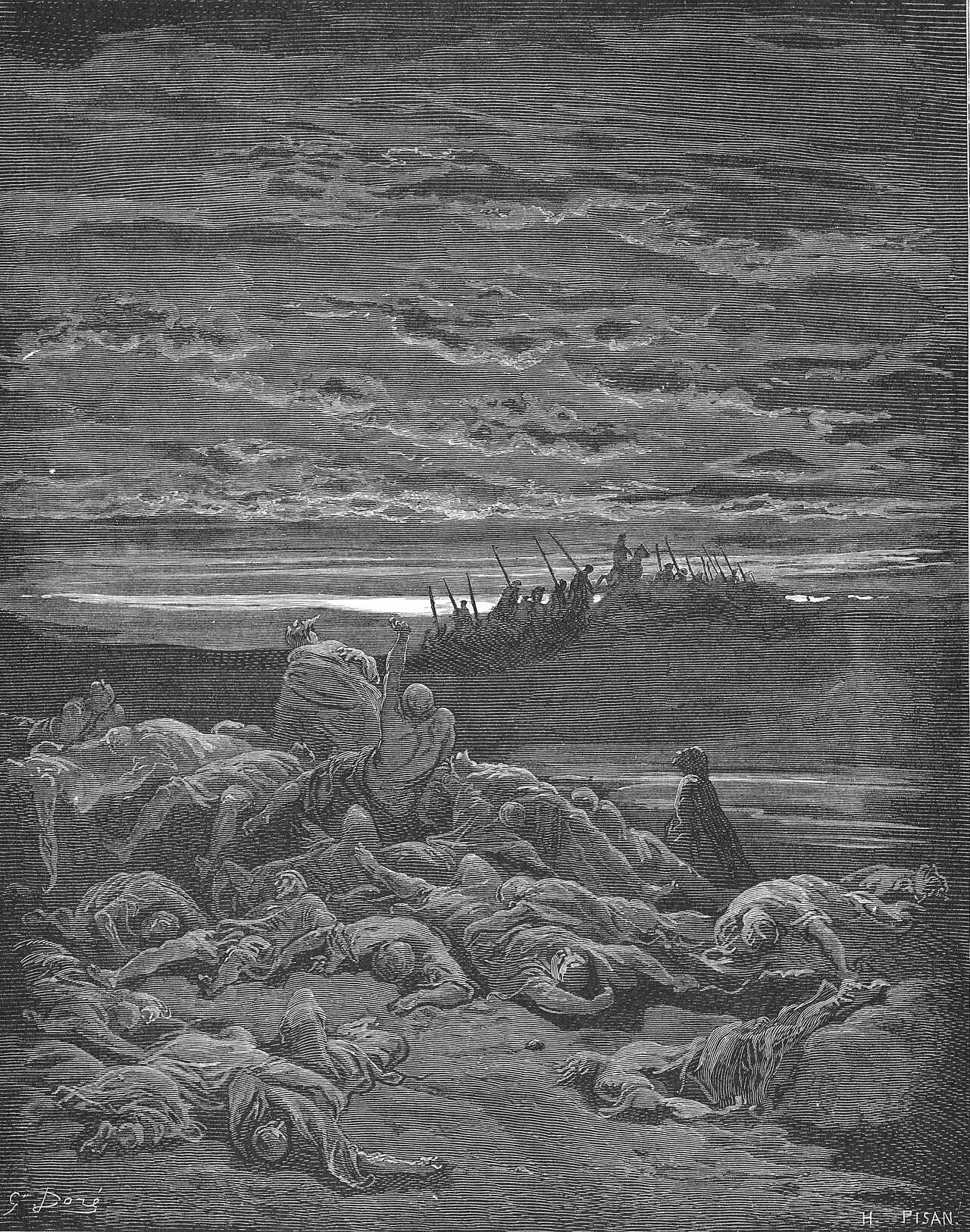
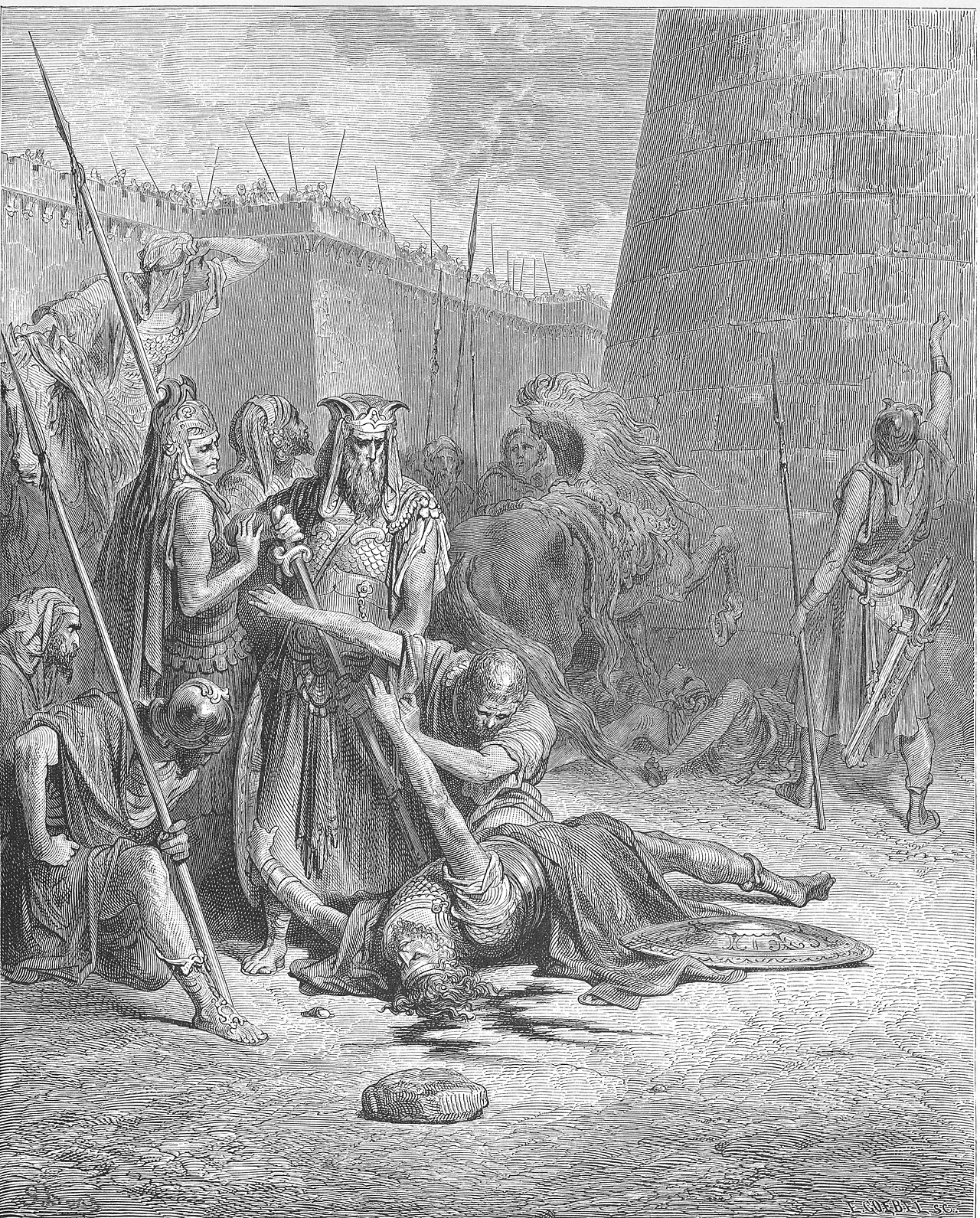
3 verified pieces depicting Mount Gerizim
Sources cited
- OpenBible.info Bible Geocoding: Mount Gerizimread 2026-09-02The coordinates on this page. Used under CC-BY with attribution to OpenBible.info.
- Berean Standard BibleAll Scripture on this page, from the site's own verse store. Public domain since 2023.
- Yitzhak Magen, Mount Gerizim Excavations (Jerusalem: Israel Antiquities Authority, from 2004)The sacred precinct on the summit and its dating.
- Flavius Josephus, Antiquities of the Jews 11.302 to 11.347 and 13.254 to 13.256The founding of the Gerizim temple and its destruction by John Hyrcanus. Cited by reference only; no text of either passage is quoted here.
- John Wesley, Explanatory Notes upon the Old Testament (1765)Public domain.
- Charles H. Spurgeon, The Metropolitan Tabernacle Pulpit, Sermon No. 3208Public domain, lightly modernized text as the site's pool holds it.
- Origen of Alexandria, Commentary on the Gospel of John, book 13Public domain in translation. Book 13 is usually dated to about 235, in Origen's early years at Caesarea; the pool's 253 is the year of his death, not this book's date.
- John Chrysostom, Homilies on the Gospel of John 32Public domain in translation. Usually dated to about 391, from Chrysostom's years as a priest in Antioch; the pool's 407 is the year of his death in exile, not this homily's date.
- Augustine of Hippo, Tractates on the Gospel of John 15Public domain in translation. Tractates 1 to 16 are usually dated to about 406 to 407; the pool's 430 is the year of Augustine's death, not this tractate's date.
- Bede, Commentary on the Acts of the ApostlesPublic domain in translation. Usually dated to about 709, one of Bede's earlier works; the pool's 735 is the year of his death, not this commentary's date.
- Matthew Henry, Commentary on the Whole Bible (1710)Public domain.
- Jamieson, Fausset & Brown, Commentary Critical and Explanatory on the Whole Bible (1871)Public domain.
- Adam Clarke, Commentary on the Bible (1832)Public domain. Cited on this page for the Sanballat reading of Josephus, the Kennicott dispute, the acoustics of the pass and the fertility claim.
- Albert Barnes, Notes, Explanatory and Practical, on the Old and New Testaments (1832 to 1869)Public domain. Cited for the Masoretic reading of Deuteronomy 27:4 and for the barren Gerizim.
- John Gill, Exposition of the New Testament (1746 to 1748)Public domain. Cited for the distance a voice carried from the summit to Sychar.
- Gustave Doré, La Sainte Bible (Tours: Alfred Mame et fils, 1866)The engravings on this page. Public domain.
- Wikipedia, Mount Gerizim Temple, citing Magen 2007, p. 157The excavation's own dates, 1983 to 2006, over more than nineteen seasons, quoted on this page. No direct access to Magen 2007 itself was available in this pass.
- PeakVisor, Mount GerizimThe summit elevation, about 881 m, quoted on this page. No excavation report or survey giving this figure was found in this pass.
- The Leon Levy Dead Sea Scrolls Digital Library, 4Q33 (4QDeuteronomy-f)The siglum for the Qumran Cave 4 fragment supporting the Gerizim reading at Deuteronomy 27:4, published 2008 per the site's existing Shechem row.
- Vetus Latina Register, manuscript 100 (Beuron numbering)The catalogue number for the Old Latin manuscript witnessing the Gerizim reading at Deuteronomy 27:4.
Keep studying
On this page
Studies7
Every page that names it1
Doorway2
Keep this page