
The Angel of the LORD · Featured Study
BSBChristophany
A figure walks through the Old Testament who is called the angel of the LORD, and then called the LORD in the next breath. He swears the oath only God can swear. He takes worship and does not refuse it. He is still spoken of as sent. The oldest Christian reading of that figure is that he is the Son of God appearing before He was born at Bethlehem. This page walks the appearances, gives Daniel 3 and the fourth man in the fire its own case, and names every reading with the men who hold it.
Summary
A figure called the angel of the LORD appears through the Old Testament who speaks as God in the first person, is addressed as God by the people who meet him, and is still described as sent by God. The oldest Christian reading identifies him as the Son before the incarnation, and this site reads the fourth man in Daniel's furnace that way.
- He swears the oath only God can swear (Genesis 22:16), carries a name that is wonderful (Judges 13:18), and takes Joshua's worship without refusing it (Joshua 5:14)
- Hosea 12:3-4 calls the wrestler at Peniel both God and the angel, the clearest identification Scripture makes of its own scene
- In Daniel 3 the fourth man walks inside the fire with the three rather than pulling them out of it, which is Isaiah 43:2 acted out in front of a pagan king
- The two real objections to that reading are the Aramaic of 3:25 and the king's own word at 3:28, and both are stated here in full rather than answered around
- Calvin read the fourth man as a created angel for a serious reason, and his reason is given in his own words
The Figure in the Text
the three marks that make this a question at all
Scripture uses one Hebrew phrase, mal’ak Yahweh, the messenger of YHWH, for a great many errands. Most of them raise no question at all. A handful do, and they raise it in the same way every time: the narrator says angel, and then says God, about one speaker in one unbroken conversation, without a seam between them. Three marks turn up in those scenes and nowhere else.
He speaks as God, in the first personGenesis 16:10 · Genesis 22:16 · Exodus 3:6
At the well he says “I will greatly multiply thy seed.” At the altar he says the promise was kept “from me.” At the bush he says “I am the God of thy father.” A herald can repeat a king’s words in the king’s voice, which is the honest counter, and it is why this mark alone settles nothing.
He receives worship and does not send it awayJoshua 5:14, against Revelation 22:8-9
Joshua falls on his face and worships, and the man with the drawn sword lets him. When John does the same thing to an angel at the end of Revelation, the angel stops him at once and tells him to worship God. That contrast is the single hardest datum in the whole question.
And I am John, who heard and saw these things. And when I had heard and seen them, I fell down to worship at the feet of the angel who had shown me these things. But he said to me, “Do not do that! I am a fellow servant with you and your brothers the prophets, and with those who keep the words of this book. Worship God!”What a created angel does when a man worships him.
He is still spoken of as sentNumbers 22:31-32 · Zechariah 1:12 · Daniel 3:28
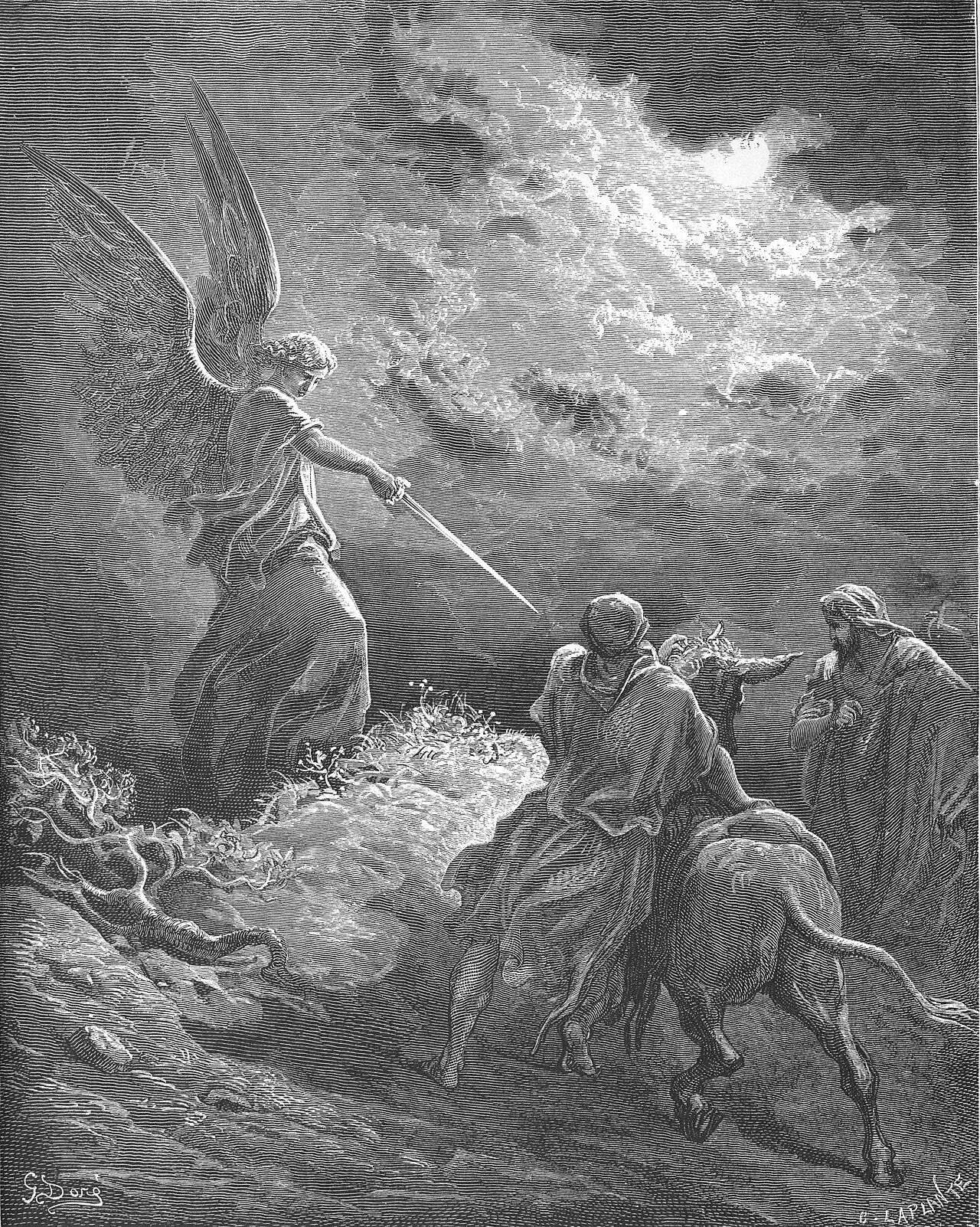
The same title belongs to a figure who blocks Balaam’s road as an adversary and then relays a word he is given, and to a figure in Zechariah who asks the LORD how long He will withhold mercy from Jerusalem. That is not a difficulty to be hidden. It is why serious readers land in different places, and why the site’s Angel of YHWH page sets out five positions rather than one.
Then the LORD opened Balaam’s eyes, and he saw the angel of the LORD standing in the road with a drawn sword in his hand. And Balaam bowed low and fell facedown. The angel of the LORD asked him, “Why have you beaten your donkey these three times? Behold, I have come out to oppose you, because your way is perverse before me.Balaam bows to him, and he speaks of being sent forth.
“By his acceptance of adoration here, which a created angel durst not admit of, Rev. xxii, 8, 9. Because the place was made holy by his presence, ver. 15, which was God's prerogative, Exod. iii, 5. Because he is called the Lord, Hebrew.”
John Wesley · Explanatory Notes upon the Old Testament, 1765Wesleyan
Joshua 5:14
The Appearances
eight scenes, each with its own page for the story itself
These are the scenes the question actually rests on. Each one is told in full on its own page. What follows is only the identity question inside it: what the text says about who is speaking.
Then the angel added, “I will greatly multiply your offspring so that they will be too numerous to count.”Hagar at the well: the angel promises what only God can promise.
So Hagar gave this name to the LORD who had spoken to her: “You are the God who sees me,” for she said, “Here I have seen the One who sees me!”She names him, not his message: Thou art a God that seeth.
“I will multiply thy seed exceedingly - Who says this? The person who is called the Angel of the Lord; and he certainly speaks with all the authority which is proper to God.”
Adam Clarke · Commentary on the Bible, 1832Methodist
Genesis 16:10
Just then the angel of the LORD called out to him from heaven, “Abraham, Abraham!” “Here I am,” he replied. “Do not lay a hand on the boy or do anything to him,” said the angel, “for now I know that you fear God, since you have not withheld your only son from me.”The angel stops the knife, and says the son was not withheld from me.
And the angel of the LORD called to Abraham from heaven a second time, saying, “By Myself I have sworn, declares the LORD, that because you have done this and have not withheld your only son,By myself have I sworn: the oath Hebrews 6:13 says only God can swear.
“The angel of the Lord - The very person who was represented by this offering; the Lord Jesus, who calls himself Jehovah, Gen 22:16, and on his own authority renews the promises of the covenant. He was ever the great Mediator between God and man. See this point proved, Gen 15:7 (note).”
Adam Clarke · Commentary on the Bible, 1832Methodist
Genesis 22:11
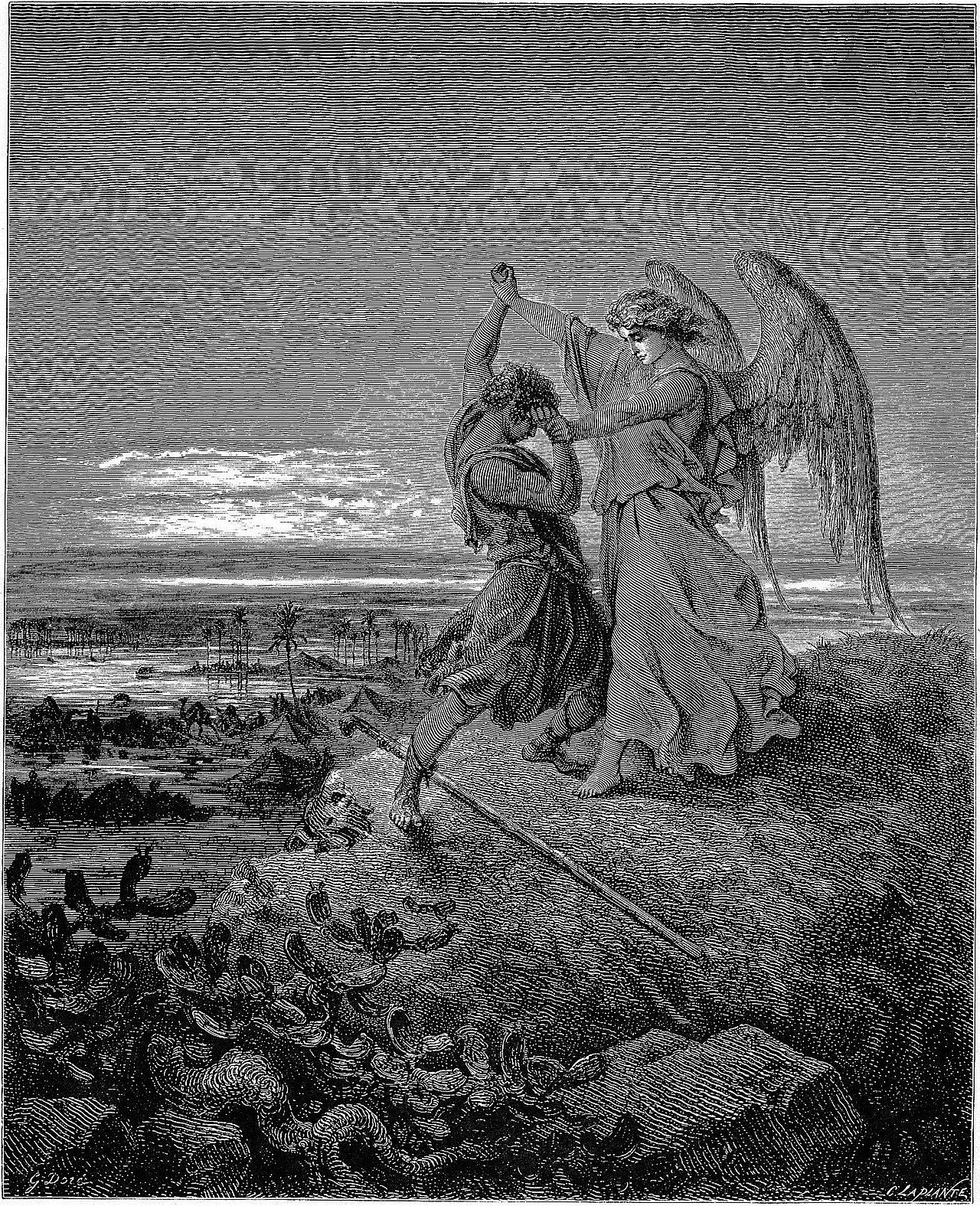
Then the man said, “Your name will no longer be Jacob, but Israel, because you have struggled with God and with men, and you have prevailed.” And Jacob requested, “Please tell me your name.” But he replied, “Why do you ask my name?” Then he blessed Jacob there. So Jacob named the place Peniel, saying, “Indeed, I have seen God face to face, and yet my life was spared.”Jacob names the place Peniel: I have seen God face to face.
In the womb he grasped his brother’s heel, and in his vigor he wrestled with God. Yes, he struggled with the angel and prevailed; he wept and sought His favor; he found Him at Bethel and spoke with Him there—Hosea retells the same night and calls the wrestler the angel.
This pair is the strongest link in the catalogue, because Scripture makes it itself. Genesis says Jacob wrestled God. Hosea, writing centuries later under inspiration, says he had power over the angel. No outside argument is needed to put those two words on one figure. The night itself is told at Jacob Wrestles the Angel.
“The angel - Called ver. 3, God; and ver. 5, Jehovah, Lord of hosts. He was no created angel, but the Messiah; eternal God by nature and essence, angel by office, and voluntary undertaking. He wept - He prayed with tears from a sense of his own unworthiness, and with earnestness for the mercy he desired.”
John Wesley · Explanatory Notes upon the Old Testament, 1765Wesleyan
Hosea 12:4
There the angel of the LORD appeared to him in a blazing fire from within a bush. Moses saw the bush ablaze with fire, but it was not consumed. So Moses thought, “I must go over and see this marvelous sight. Why is the bush not burning up?” When the LORD saw that he had gone over to look, God called out to him from within the bush, “Moses, Moses!” “Here I am,” he answered. “Do not come any closer,” God said. “Take off your sandals, for the place where you are standing is holy ground.” Then He said, “I am the God of your father, the God of Abraham, the God of Isaac, and the God of Jacob.” At this, Moses hid his face, for he was afraid to look at God.The angel appears in verse 2; God speaks out of the same bush in verse 4.
“The angel of the Lord - Not a created angel certainly; for he is called יהוה Jehovah, Exo 3:4, etc., and has the most expressive attributes of the Godhead applied to him, Exo 3:14, etc. Yet he is an angel, מלאך malach, a messenger, in whom was the name of God, Exo 23:21; and in whom dwelt all the fullness of the Godhead bodily, Col 2:9; and who, in all these primitive times, was the Messenger of the covenant, Mal 3:1. And who was this but Jesus, the Leader, Redeemer, and Savior of mankind? See Clarke’s note on Gen 16:”
Adam Clarke · Commentary on the Bible, 1832Methodist
Exodus 3:2
“It was an angel of the Lord that appeared to him; some think, a created angel, who speaks in the language of him that sent him; others, the second person, the angel of the covenant, who is himself Jehovah. It was an extraordinary manifestation of the divine presence and glory; what was visible was produced by the ministry of an angel, but he heard God in it speaking to him.”
Matthew Henry · Commentary on the Whole Bible, 1710Nonconformist
Exodus 3:2
Henry is worth reading twice. He states both readings, names who holds each, and does not pretend the question is closed. That is the register this whole page keeps.
Now when Joshua was near Jericho, he looked up and saw a man standing in front of him with a drawn sword in His hand. Joshua approached Him and asked, “Are You for us or for our enemies?” “Neither,” He replied. “I have now come as Commander of the LORD’s army.” Then Joshua fell facedown in reverence and asked Him, “What does my Lord have to say to His servant?” The Commander of the LORD’s army replied, “Take off your sandals, for the place where you are standing is holy.” And Joshua did so.Joshua worships, is not corrected, and hears the burning bush command word for word.
“A man - See Gen 12:7, note; Gen 18:2, note. The appearance was that of God manifested in the Person of His Word. Hence, the command of Jos 5:15. That the appearance was not in a vision merely is clear from the fact that Joshua ‘went unto Him’ and addressed Him.”
Albert Barnes · Notes, Explanatory and Practical, on the Old and New Testaments, 1832-1869Evangelical
Joshua 5:13
“What is it that Jesus [Joshua] teaches us through this? That, doubtless, which the apostle says: ‘Do not believe every spirit, but test if it is from God.’ Therefore, Jesus [Joshua] recognized not only something from God but that which is God; for certainly he would not have worshiped unless he had recognized God. For who else is chief of the army of the powers of God except our Lord Jesus Christ?”
Origen of Alexandria · Homilies on Joshua 6.2, 253Early Church
Joshua 5:14
And the angel of the LORD appeared to Gideon and said, “The LORD is with you, O mighty man of valor.” “Please, my Lord,” Gideon replied, “if the LORD is with us, why has all this happened to us? And where are all His wonders of which our fathers told us, saying, ‘Has not the LORD brought us up out of Egypt?’ But now the LORD has forsaken us and delivered us into the hand of Midian.” The LORD turned to him and said, “Go in the strength you have and save Israel from the hand of Midian. Am I not sending you?”The angel speaks in verse 12; the LORD answers Gideon in verse 14, one conversation.
When Gideon realized that it was the angel of the LORD, he said, “Oh no, Lord GOD! I have seen the angel of the LORD face to face!”Gideon expects to die for having seen him, the fear of Exodus 33:20.
“Alas, O Lord God! for because I have seen - This is an elliptical sentence, a natural expression of the distressed state of Gideon’s mind: as if he had said, Have mercy on me, O Lord God! else I shall die; because I have seen an angel of Jehovah face to face. We have frequently seen that it was a prevalent sentiment, as well before as under the law, that if any man saw God, or his representative angel he must surely die. On this account Gideon is alarmed, and prays for his life.”
Adam Clarke · Commentary on the Bible, 1832Methodist
Judges 6:22
Then Manoah said to the angel of the LORD, “What is your name, so that we may honor you when your word comes to pass?” “Why do you ask my name,” said the angel of the LORD, “since it is beyond comprehension?”Asked his name, he answers that it is wonderful, the word behind Isaiah 9:6.
When the flame went up from the altar to the sky, the angel of the LORD ascended in the flame. When Manoah and his wife saw this, they fell facedown to the ground. And when the angel of the LORD did not appear again to Manoah and his wife, Manoah realized that it had been the angel of the LORD. “We are going to die,” he said to his wife, “for we have seen God!”He goes up in the altar flame, and Manoah says the same thing Gideon said.
“Seeing it is secret? - It was because it was secret that they wished to know it. The angel does not say that it was secret, but הוא פלאי hu peli it is Wonderful; the very character that is given to Jesus Christ, Isa 9:6: His name shall be called, פלא Wonderful; and it is supposed by some that the angel gives this as his name, and consequently that he was our blessed Lord.”
Adam Clarke · Commentary on the Bible, 1832Methodist
Judges 13:18
Clarke says “it is supposed by some,” and that is the right weight. The Hebrew of Judges 13:18 and the Hebrew of Isaiah 9:6 share a root, which is an echo worth hearing. It is not a grammatical proof, and this page does not present it as one.
The Fourth Man
Daniel 3:24-28: the scene this site reads as the Son in the fire
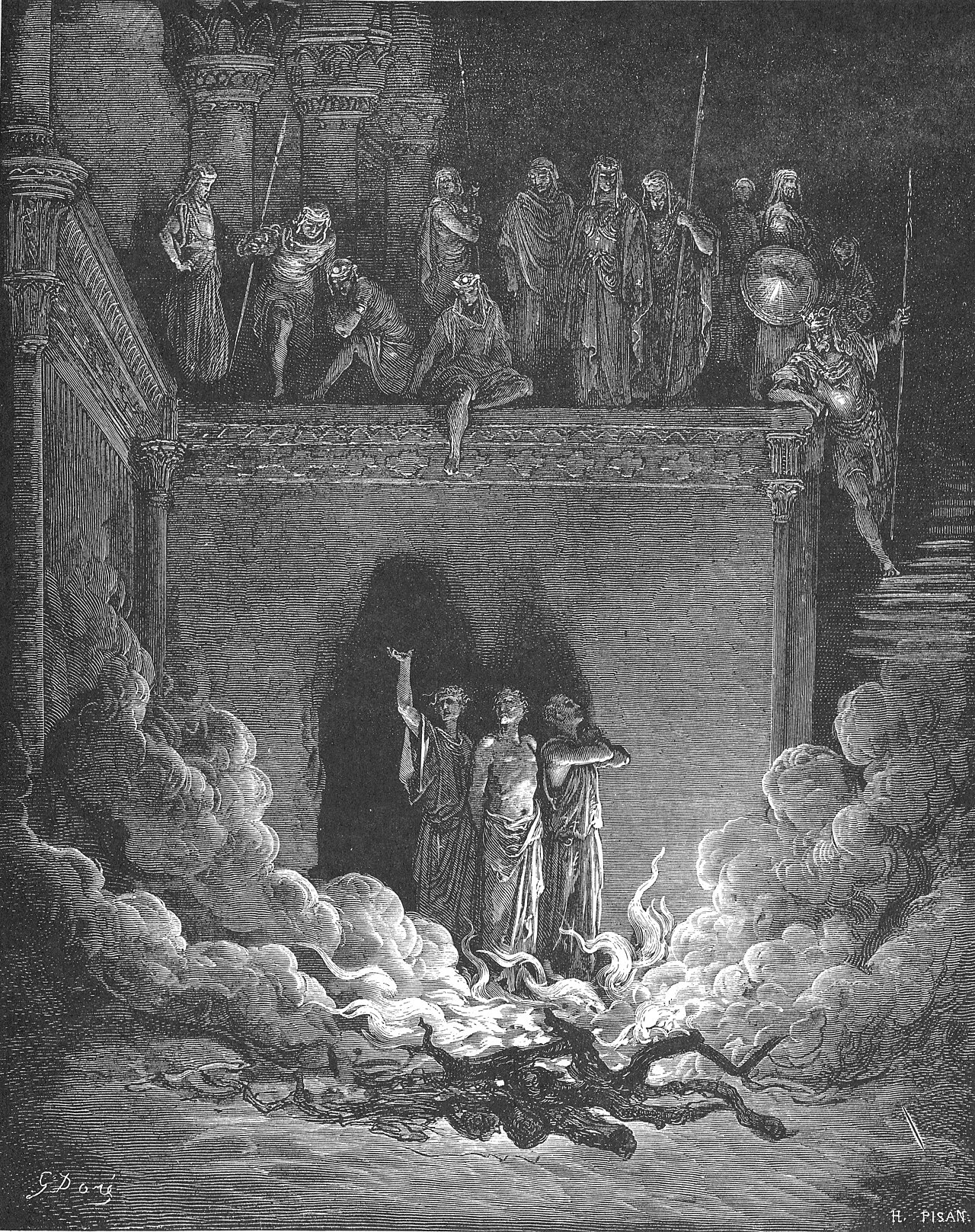
Suddenly King Nebuchadnezzar jumped up in amazement and asked his advisers, “Did we not throw three men, firmly bound, into the fire?” “Certainly, O king,” they replied. “Look!” he exclaimed. “I see four men, unbound and unharmed, walking around in the fire—and the fourth looks like a son of the gods!”Three men were thrown in bound. The king counts four, loose, and unhurt.
and when the satraps, prefects, governors, and royal advisers had gathered around, they saw that the fire had no effect on the bodies of these men. Not a hair of their heads was singed, their robes were unaffected, and there was no smell of fire on them. Nebuchadnezzar declared, “Blessed be the God of Shadrach, Meshach, and Abednego, who has sent His angel and delivered His servants who trusted in Him. They violated the king’s command and risked their lives rather than serve or worship any god except their own God.Not a hair singed, not a smell of fire, and the king's own account of who did it.
Read the scene for what happens in it. The fire is hot enough to kill the soldiers who carried the three men to the mouth of it (3:22). The ropes burn off and the men do not. Then a fourth figure is there, walking with them, inside the furnace. He does not put the fire out. He does not reach in and pull them free. He is found in it with them, and they come out with no smell of smoke on their clothes.
That is the heart of the case, and it is a case about the scene rather than about a noun. Every other rescue in Scripture is run from outside the danger. In the lions’ den, an angel shuts the lions’ mouths (Daniel 6:22) and Daniel is untouched. Here the deliverer stands in the flames alongside the men he came for. This site reads that fourth man as the pre-incarnate Christ, the same figure who spoke at the bush and stood at Jericho, and teaches it as the plain sense of the scene.
When you pass through the waters, I will be with you; and when you go through the rivers, they will not overwhelm you. When you walk through the fire, you will not be scorched; the flames will not set you ablaze.Spoken to Israel before the exile: not kept out of the fire, kept in it.
Isaiah promised presence in the fire, not exemption from it, and in Daniel 3 the promise is acted out where a pagan king can count the figures. Matthew Henry saw the same thing and said so in one line.
“Now was fulfilled in the letter gracious promise ( Isa. xliii. 2 ), When thou walkest through the fire thou shalt not be burnt, neither shall the flame kindle upon thee. By faith they quench the violence of the fire, quench the fiery darts of the wicked.”
Matthew Henry · Commentary on the Whole Bible, 1710Nonconformist
Daniel 3:25
“The Son of God - Probably he had heard David speak of him. Jesus Christ, the Angel of the covenant, did sometimes appear before his incarnation. Those who suffer for Christ, have his gracious presence with them in their sufferings, even in the fiery furnace, even in the valley of the shadow of death, and therefore need fear no evil.”
John Wesley · Explanatory Notes upon the Old Testament, 1765Wesleyan
Daniel 3:25
“Ps 34:7, 8; and the probably heathen centurion's exclamation (Mt 27:54). The Chaldeans believed in families of gods: Bel, the supreme god, accompanied by the goddess Mylitta, being the father of the gods; thus the expression he meant: one sprung from and sent by the gods. Really it was the ‘messenger of the covenant,’ who herein gave a prelude to His incarnation.”
Jamieson, Fausset & Brown · Commentary Critical and Explanatory on the Whole Bible, 1871Reformed
Daniel 3:25
“Then, Nebuchadnezzar the king was astonied - The word ‘astonied,’ which occurs several times in our translation Ezr 9:3; Job 17:8; Job 18:20; Eze 4:17; Dan 3:24; Dan 4:19; Dan 5:9, is but another form for ‘astonished,’ and expresses wonder or amazement. The reasons of the wonder here were that the men who were bound when cast into the furnace were seen alive, and walking unbound; that to them a fourth person was added, walking with them; and that the fourth had the appearance of a Divine personage.”
Albert Barnes · Notes, Explanatory and Practical, on the Old and New Testaments, 1832-1869Evangelical
Daniel 3:24
The Two Objections
the Aramaic of 3:25, and the king's own word at 3:28
A reading held at full strength has to carry its own hard questions. There are two here, both real, and neither is answered by raising the volume.
The Aramaic says a son of the gods, not the Son of GodDaniel 3:25 · bar elahin
The King James and New King James render the phrase “the Son of God.” The BSB, along with the ASV, ESV, NIV and NASB, renders it “a son of the gods.” The newer rendering has the better of the grammar. Aramaic elahin is a plural, and the phrase carries no article, so it reads as a class rather than a title. Nebuchadnezzar was a Babylonian polytheist. He is reaching for the nearest word he has for something more than human, not stating a doctrine of the Trinity.
The christophany reading does not need to win that translation argument, and this page does not try to. What the king could put into words is not the same question as who was standing in the fire. The case rests on the scene, on the pattern the other appearances set, and on what the fourth man does.
At 3:28 the same king says his angelDaniel 3:28 · Jerome saw this and said so
Four verses later Nebuchadnezzar blesses the God of Shadrach, Meshach and Abed-nego, “who hath sent his angel.” A reader who wants the fourth man to be Christ has to face that sentence honestly. Jerome, who is no enemy of the doctrine, states the difficulty plainly.
“Verse 28. ‘ 'Blessed be God (the Vulgate has ‘their God, namely’) of Shadrach, Meshach, and Abednego, Who hath sent His angel and rescued His servants who believed in Him...'’ The person whom he had previously called a son of God he here calls an angel, even though he had in the preceding passage described him as similar to a son of God rather than to God Himself.”
Jerome · Commentary on Daniel, 407Early Church
Daniel 3:28
Two things are worth saying back, and both are ordinary. The first is that the king is a pagan describing what he saw, and angel is simply his word for a heavenly being sent by a god. The second is that angelis exactly the word Scripture itself uses for the figure at the bush, at Peniel and at Jericho. On this reading “his angel” is not evidence against a christophany. It is the same title the doctrine has been working with the whole way through.
Where Readers Differ
three other readings of the fourth man, named with their holders
Serious readers of the same verse land elsewhere, and for reasons worth hearing. None of what follows is offered as an error to be corrected.
A created angel, on theological groundsJohn Calvin, Commentary on Daniel, 1561
Calvin holds that God sent one of His angels, and he says directly that the king did not mean Christ. His reason is not caution about the Hebrew. It is that he wants to guard the uniqueness of the incarnation: angels appeared as men, and Christ alone truly became man, and Calvin will not let the first blur the second.
“No doubt God here sent one of his angels, to support by his presence the minds of his saints, lest they should faint. ... A single angel was sent to these three men; Nebuchadnezzar calls him a son of God; not because he thought him to be Christ, but according to the common opinion among all people, that angels are sons of God, since a certain divinity is resplendent in them; and hence they call angels generally sons of God.”
John Calvin · Commentary on Daniel, 1561Reformed
Daniel 3:25
A created angel, on grammatical groundsKeil & Delitzsch · Barnes · the Cambridge Bible · the Pulpit Commentary
A separate line of commentators reaches the same conclusion by a different road. They argue only from the words: a plural noun with no article cannot carry a definite title, and a Babylonian king’s vocabulary is not a Christian creed. Keil and Delitzsch add that the king’s language shifts between 3:25 and 3:28 because his own understanding shifted, most likely after he talked with the three men.
Worth keeping distinct: the grammar not requiring a reading is a much smaller claim than Calvin’s, which is a doctrinal argument against it. Treating the two as one position understates both.
A heavenly messenger, in Jewish readingThe Song of the Three Young Men, LXX Daniel 3:49 · later rabbinic tradition
The earliest Jewish expansion of this chapter, the Greek Song of the Three Young Men, already narrates that the angel of the Lord came down into the furnace and shook the flame out of it. Later rabbinic tradition names the angel. Read on its own terms, this is a heavenly messenger sent by God to protect His own, and the question of a second divine person is simply not in the frame, because the doctrine of the Trinity is not a category in that tradition.
That difference is real and it is named here rather than smoothed over: the Christian confession that the Son is God is an essential of the faith, and this site teaches it. The Jewish reading of Daniel 3 is presented accurately, as the tradition itself holds it, and the men who carry it are not mocked for holding it. How this site handles rabbinic sources generally is set out at Reading Rabbinic Sources as a Christian.
On Daniel 3:25 this site teaches the christophany reading. On the wider question of every appearance in the catalogue, it names the positions and their holders and stamps no verdict. The founder’s own slot follows below.
Where It Lands in Christ
what the New Testament says about who was seen
No one has ever seen God, but the one and only Son, who is Himself God and is at the Father’s side, has made Him known.No man hath seen God at any time: the sentence the whole doctrine turns on.
Isaiah said these things because he saw Jesus’ glory and spoke about Him.John names whose glory Isaiah saw on the throne in Isaiah 6.
John states two things that sit oddly together until this doctrine holds them. No one has ever seen God. And Isaiah, who wrote that he saw the Lord on a throne, saw the glory of Christ. The Father is not seen. The Son is the one who is seen, and He was being seen long before Bethlehem. That is the argument Irenaeus was already making in the second century.
“If, then, neither Moses, nor Elias, nor Ezekiel, who had all many celestial visions, did see God; but if what they did see were similitudes of the splendour of the Lord, and prophecies of things to come; it is manifest that the Father is indeed invisible, of whom also the Lord said, ‘No man hath seen God at any time.’”
Irenaeus of Lyons · Against Heresies 4:20.11, 180Early Church
John 1:18
“These things said Esaias,.... Concerning the blinding and hardening of the Jews: when he saw his glory, and spake of him; when he saw, in a visionary way, the glory of the Messiah in the temple, and the angels covering their faces with their wings at the sight of him; and when he spake of him as the King, the Lord of hosts, whom he had seen, Isa 6:1, from whence it is clear that he had respect to the Jews in the times of the Messiah.”
John Gill · Exposition of the New Testament, 1746-1748Reformed Baptist
John 12:41
“Truly, truly, I tell you,” Jesus declared, “before Abraham was born, I am!”Jesus does not say he was, he says I am, in the tense that answers the bush.
Jesus said this to men who had just asked how He could have seen Abraham. He answered with a verb, and they picked up stones. The claim is not that He is older than Abraham. It is that He never began at all, in the words spoken out of a burning bush to Moses. If that is true of Him, then a figure appearing through the Old Testament who speaks as God, takes worship, and is still sent, has a name.
“The one clause means, ‘Abraham was brought into being’; the other, ‘I exist.’ The statement therefore is not that Christ came into existence before Abraham did (as Arians affirm is the meaning), but that He never came into being at all, but existed before Abraham had a being; in other words, existed before creation, or eternally (as Joh 1:1).”
Jamieson, Fausset & Brown · Commentary Critical and Explanatory on the Whole Bible, 1871Reformed
John 8:58
Three things follow, and they are the reason the doctrine mattered enough for the early church to fight over it. The Father and the Son are distinct persons, because one is invisible and the other is seen, which is what Tertullian and Novatian argued against the teaching that God merely changes masks. The two Testaments tell one story, because the Christ who walks among men in the Gospels had been walking among them since Genesis. And the promise of Isaiah 43:2 is not a metaphor. Daniel 3 shows what it looks like when a man has to go into the fire and is not left alone in it. The full case for Christ’s deity from the New Testament sits at The Deity of Christ, and the persons of the Godhead at The Trinity.
The Words Underneath
the Hebrew, the Aramaic, and the Greek this question turns on
Five roots carry the whole argument: the word for messenger, the word for the act Joshua performed, the word Manoah was given instead of a name, and the two Aramaic words behind Nebuchadnezzar’s phrase.
The words underneath
malak: messenger
Hebrew · H4397Strong's entry: a messenger; specifically, of God, i.e. an angel (also a prophet, priest or teacher)
The word rendered angel in every scene on this page. It means messenger and says nothing by itself about the messenger's nature.
213 times in the Old Testament · malak, in full →
shachah: to bow
Hebrew · H7812Strong's entry: to depress, i.e. prostrate (especially reflexive, in homage to royalty or God)
What Joshua does at Joshua 5:14, rendered did worship. The same act John performs in Revelation 22:8, where the angel refuses it.
172 times in the Old Testament · shachah, in full →
pili: incomprehensible
Hebrew · H6383Strong's entry: remarkable
Judges 13:18's answer to the question about his name, rendered wonderful. Isaiah 9:6 uses the same root of the child who is born.
2 times in the Old Testament · pili, in full →
bar: son
Hebrew · H1247Strong's entry: a son, grandson, etc.
The Aramaic son in Daniel 3:25's bar elahin. Aramaic, not Hebrew, because Daniel 2 through 7 is written in the empire's own language.
19 times in the Old Testament · bar, in full →
elahh: god
Hebrew · H426Strong's entry: God
The Aramaic word for God, plural here as elahin. The plural without an article is why the newer versions read a son of the gods.
95 times in the Old Testament · elahh, in full →
Notable Art
the scenes as painters and engravers have carried them


The Voices
with the work named
Commentary on the Bible (1832) · public domain
Names the figure as Christ at the well, at the altar, at Peniel and at the bush, and reads the wonderful name of Judges 13:18 back to Isaiah 9:6.
Explanatory Notes upon the Old Testament (1765) · public domain
Gives the three marks in one sentence at Joshua 5:14, calls the wrestler at Peniel no created angel, and reads the fourth man in the furnace as the Angel of the covenant.
Commentary on the Whole Bible (1710) · public domain
States both readings of the bush plainly and refuses to hide either, and calls Daniel 3 the promise of Isaiah 43:2 fulfilled in the letter.
Notes, Explanatory and Practical (1832-1869) · public domain
Reads the man at Jericho as God manifested in the Person of His Word, and records that what astonished the king was a fourth figure of divine appearance.
Commentary Critical and Explanatory on the Whole Bible (1871) · public domain
Calls the fourth man the messenger of the covenant giving a prelude to His incarnation, and holds John 8:58 as a claim to eternal existence.
Commentary on Daniel (1561) · public domain
Reads the fourth man as a created angel, on the ground that Christ alone truly became man where angels only ever appeared as men.
Against Heresies 4:20.11 (c. 180) · public domain
Argues that the Father is invisible and that what the prophets saw were likenesses of the splendour of the Lord, the reasoning the whole doctrine rests on.
Homilies on Joshua 6.2 (c. 240) · public domain
Asks who else could be chief of the army of the powers of God, and takes Joshua's worship as proof of what Joshua recognised.
Commentary on Daniel (c. 407) · public domain
Notes plainly that the king who said son of God at 3:25 says angel at 3:28, the strongest textual objection, stated by a friend of the doctrine.
Exposition of the New Testament (1746-1748) · public domain
Reads John 12:41 as Isaiah seeing the glory of the Messiah in the temple, the New Testament naming whose throne vision it was.
Marcus Brown's own commentary leads above all; within a tier, all voices are equal. Every voice quoted above is public domain and quoted verbatim from the site's own verified quote pool. Keil and Delitzsch, the Cambridge Bible and the Pulpit Commentary are named for their position on Daniel 3:25 and not quoted, since no verified entry for them sits in the pool on this verse.
Notable art
— click a piece to enlargeKeep Studying
Read it1
On this page
Studies8
People and groups4
Symbols4
Doctrines8