
Psalms 114:5
in Psalms 114Why was it, O sea, that you fled, O Jordan, that you turned back,
BSB
The same verse in ASV and KJV ▾
ASV
What aileth thee, O thou sea, that thou fleest? Thou Jordan, that thou turnest back?
KJV
What ailed thee, O thou sea, that thou fleddest? thou Jordan, that thou wast driven back?
⋯
This verse in Psalms 114
Commentary
8 notes on this verseWhat ailed thee, O thou sea? Wert thou terribly afraid? Did thy strength fail thee? Did thy very heart dry up? What ailed thee, O thou sea, that thou fleddest? Thou wert neighbour to the power of Pharaoh, but thou didst never fear his hosts; stormy wind could never prevail against thee so as to divide thee in twain; but when the way of the Lord was in thy great waters thou was seized with affright, and thou becamest a fugitive from before him. Thou Jordan, that thou wast driven back? What ailed thee, O quick descending river?
This site's exposition
The sea observed and fled
on Psalms 114:3-6
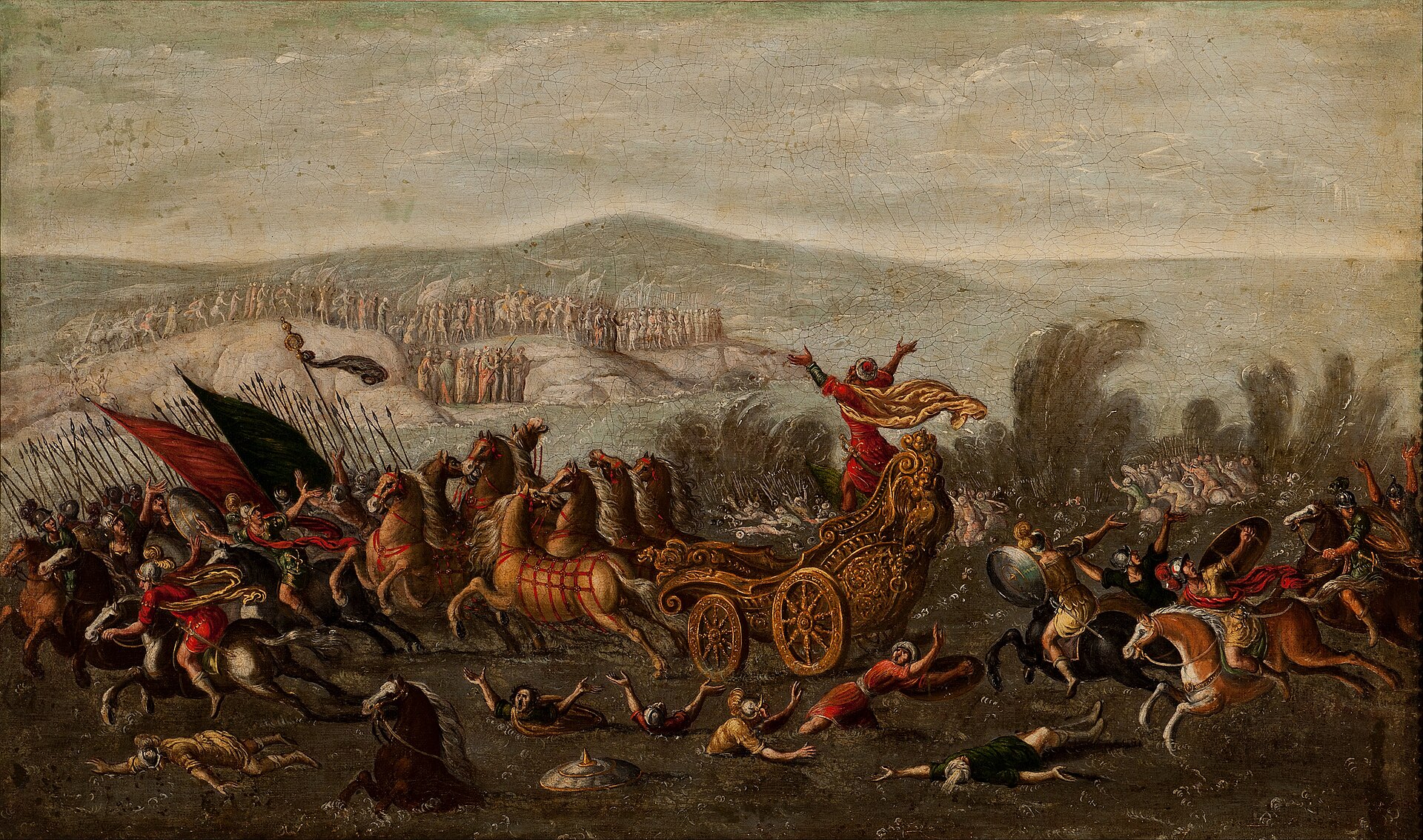
The sea is the one the LORD drove back at Exodus 14:21, and the Jordan is the water standing still at Joshua 3:16. One crossing opened the wilderness years and the other closed them. Verses 5 and 6 put the question to the sea, the Jordan, the mountains and hills.
This site's exposition
Why was it, O sea, that you fled
The psalm asks the sea why it fled and the Jordan why it turned back, as if they could answer. Spurgeon noted that the sea had never feared Pharaoh's hosts or been split by any storm, yet it fled from the presence of the LORD. Verse 7 gives the answer.
The record, by era
The Church Fathers1 voice
"When Israel came out of Egypt, and the house of Jacob from among the strange people" [Psalm 114:1], "Judah was His sanctuary, and Israel His dominion" [Psalm 114:2]; "the sea saw that and fled, Jordan was driven back" [Psalm 114:3]. Think not that past deeds are related unto us, but rather that the future is predicted; since, while those miracles also were going on in that people, things present indeed were happening, but not without an intimation of things future....Some things he has related differently to what we have learned and read there: that he might not truly be thought to be repeating past acts rather than to be prophesying future things. For in the first place, we read not that the Jordan was driven back, but that it stood still on the side nearest the source of its streams, while the people were passing through; next, we read not of the mountains and hills skipping: all which he has added, and repeated. For after saying, "The sea saw that, and fled; Jordan was driven back:" he added, "The mountains skipped like rams, and the little hills like young sheep" [Psalm 114:4]: and then asks, "What ails you, O thou sea, that you fled, and thou, Jordan, that you were driven back?" [Psalm 114:5]. "You mountains, that you skipped like rams; and you little hills, like young sheep?" [Psalm 114:6].
The Puritans and the Awakening1 voice
What ailed thee, O thou sea, that thou fleddest?.... What was the matter with thee? what appeared to thee? what didst thou see? what didst thou feel, which caused thee to flee in such haste? Thou Jordan, that thou wast driven back? what is the meaning that thou didst not continue to flow as usual? what was it that stopped thy flowing tide? that cut off thy waters? that drove them back as fast or faster than they came?
The Nineteenth Century3 voices
What ailed thee, O thou sea? Wert thou terribly afraid? Did thy strength fail thee? Did thy very heart dry up? What ailed thee, O thou sea, that thou fleddest? Thou wert neighbour to the power of Pharaoh, but thou didst never fear his hosts; stormy wind could never prevail against thee so as to divide thee in twain; but when the way of the Lord was in thy great waters thou was seized with affright, and thou becamest a fugitive from before him. Thou Jordan, that thou wast driven back? What ailed thee, O quick descending river? Thy fountains had not dried up, neither had a chasm opened to engulf thee! The near approach of Israel and her God sufficed to make thee retrace thy steps. What aileth all our enemies that they fly when the Lord is on our side? What aileth hell itself that it is utterly routed when Jesus lifts up a standard against it? "Fear took hold upon them there, "for fear of Him the stoutest hearted did quake, and became as dead men.
What ailed thee, O thou sea - The original is very abrupt; and the prosopopoeia, or personification very fine and expressive: - What to thee, O sea, that thou fleddest away! O Jordan, that thou didst roll back! Ye mountains, that ye leaped like rams! And ye hills, like the young of the fold! After these very sublime interrogations, God appears; and the psalmist proceeds as if answering his own questions: - At the appearance of the Lord, O earth, thou didst tremble; At the appearance of the strong God of Jacob. Converting the rock into a pool of waters; The granite into water springs. I know the present Hebrew text reads חולי chuli, “tremble thou,” in the imperative; but almost all the Versions understood the word in past tense, and read as if the psalmist was answering his own questions, as stated in the translation above. “Tremble thou, O earth.” As if he had said, Thou mayest well tremble, O earth, at the presence of the Lord, at the presence of the God of Jacob.
A commentator
Albert Barnes1798–1870
Notes, Explanatory and Practical, on the Old and New Testaments (1832-1869)
proposed
What ailed thee, O thou sea, that thou fleddest?... - literally, “What to thee, O sea,” etc. That is, What influenced thee - what alarmed thee - what put thee into such fear, and caused such consternation? Instead of stating the cause or reason why they were thus thrown into dismay, the psalmist uses the language of surprise, as if these inanimate objects had been smitten with sudden terror, and as if it were proper to ask an explanation from themselves in regard to conduct that seemed so strange.
The words behind it
8 Hebrew wordsEvery Hebrew word of this verse in the order it stands, with what it means and the door to its own study. The last column counts the times a word stands in the whole Bible: the rarer the word, the more the places it appears belong together.
| Hebrew | Sound | Meaning | Word study | In the Bible |
|---|---|---|---|---|
| מַה־ | mah- | what? | H4100 → | 752 times |
| לְּךָ֣ | lekha | [is] to you | ||
| הַ֭יָּם | haiyom | O sea | H3220 → | 396 times |
| כִּ֣י | ki | that | H3588 → | 4482 times |
| תָנ֑וּס | tanus | you will flee | H5127 → | 159 times |
| הַ֝יַּרְדֵּ֗ן | haiyarden | O Jordan | H3383 → | 182 times |
| תִּסֹּ֥ב | tiso | you will turn around | H5437 → | 161 times |
| לְאָחֽוֹר׃ | leachor | to backwards | H268 → | 41 times |
מַה־what?
mah-H4100 →752 times
לְּךָ֣[is] to you
lekha
הַ֭יָּםO sea
haiyomH3220 →396 times
כִּ֣יthat
kiH3588 →4482 times
תָנ֑וּסyou will flee
tanusH5127 →159 times
הַ֝יַּרְדֵּ֗ןO Jordan
haiyardenH3383 →182 times
תִּסֹּ֥בyou will turn around
tisoH5437 →161 times
לְאָחֽוֹר׃to backwards
leachorH268 →41 times
A shaded row is a word that stands 400 times or fewer in the Bible.
The walk
5 stopsEach card is a verse this one points to, and under it the verses that one points to in turn. Where several paths arrive at the same place, that place is listed first: the text keeps returning to it.
Through
Habakkuk 3:8Were You angry at the rivers, O LORD? Was Your wrath against the streams? Did You rage against the sea when You rode on Your horses, on Your chariots of salvation?
it leads to
- Psalms 68:17
The chariots of God are tens of thousands— thousands of thousands are they; the Lord is in His sanctuary as He was at Sinai.
- Deuteronomy 33:26–27
“There is none like the God of Jeshurun, who rides the heavens to your aid, and the clouds in His majesty.
- Psalms 18:10
He mounted a cherub and flew; He soared on the wings of the wind.
- Isaiah 50:2
Why was no one there when I arrived? Why did no one answer when I called? Is My hand too short to redeem you? Or do I lack the strength to deliver you? Behold,…
- Exodus 14:21–22
Then Moses stretched out his hand over the sea, and all that night the LORD drove back the sea with a strong east wind that turned it into dry land. So the waters were…
- Psalms 68:17
Where this verse is studied
On this page
About Psalms
This page draws on Adam Clarke, Commentary on the Bible; Albert Barnes, Notes, Explanatory and Practical, on the Old and New Testaments (1832-1869); Augustine of Hippo, Exposition on Psalm 114; Charles Spurgeon, The Treasury of David, Vol. 5; Charles Spurgeon, The Treasury of David; John Gill, Exposition of the Old Testament (1748-1763) and Matthew Henry, Commentary on the Whole Bible.