
Galatians 6:1-10 · Featured Study
Bearing One Another's Burdens
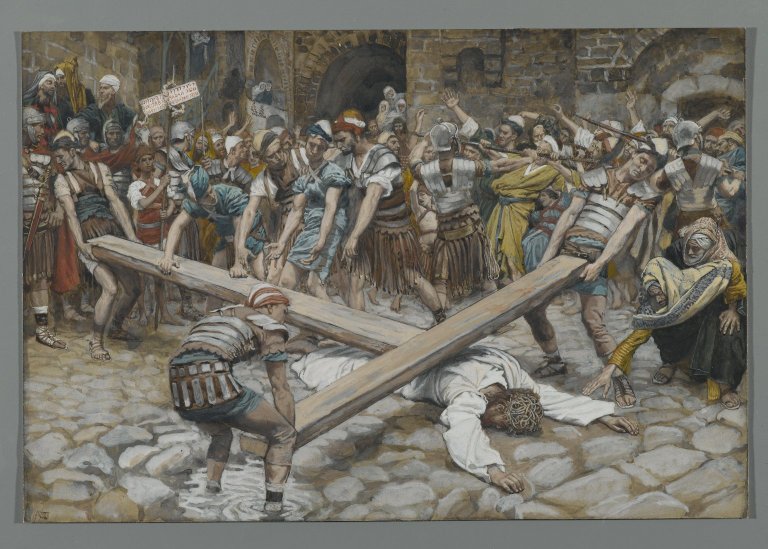
After five chapters on freedom, Paul shows what free people do with their freedom. They restore the fallen gently, carry each other’s crushing loads, and so fulfil the law of Christ. This page walks the passage in order: the overtaken brother, the two different Greek words behind “burden” in 6:2 and 6:5, the duty of the taught to the teacher, the unbreakable law of sowing and reaping, and the promise to the weary, in due season we shall reap, if we faint not.
Summary
Galatians closes its argument for freedom with the family duties of the free: restore the overtaken brother gently, and bear one another's burdens, which fulfils the law of Christ. The passage then binds the congregation's generosity and endurance to one farm law, whatsoever a man soweth, that shall he also reap.
- Restoration belongs to "you who are spiritual," done in gentleness, with a watch on your own heart (6:1)
- Bearing burdens fulfils "the law of Christ," his own command to love one another (6:2)
- 6:2 and 6:5 use two different Greek words: baros, the crushing weight shared now, and phortion, the appointed load each man answers for (lexicon-verified)
- The taught share with the teacher, and 6:7's warning lands first on that duty (6:6-7)
- Sowing decides reaping, flesh unto corruption, Spirit unto eternal life, so do not grow weary (6:8-10)
Restore Such a One
6:1: the overtaken brother, and the spirit that mends him
“Brothers, if someone is caught in a trespass, you who are spiritual should restore him with a spirit of gentleness. But watch yourself, or you also may be tempted.” Galatians 6:1
The case Paul puts is a fall, not a campaign: a man overtaken, surprised by temptation rather than settled into rebellion. The church’s work with such a man is restoration, the word used of setting a broken bone or mending a torn net. The manner is fixed by the verse itself: “a spirit of gentleness” (the KJV’s “meekness”), the same gentleness just listed among the fruit of the Spirit in 5:23. And the sentence ends with the restorer’s own heart, since no one doing this work stands beyond temptation himself.
“He puts a common case: If a man be overtaken in a fault, that is, be brought to sin by the surprise of temptation. It is one thing to overtake a fault by contrivance and deliberation, and a full resolution in sin, and another thing to be overtaken in a fault. The latter is the case here supposed, and herein the apostle shows that great tenderness should be used.”
Matthew Henry · Commentary on the Whole Bible, 1710Puritan
Gal 6:1
“Restore such an one - By reproof, instruction, or exhortation. Everyone who can, ought to help herein; only in the spirit of meekness - This is essential to a spiritual man; and in this lies the whole force of the cure. Considering thyself - The plural is beautifully changed into the singular.”
John Wesley · Explanatory Notes upon the New Testament, 1755Evangelical
Gal 6:1
The Law of Christ
6:2: the one law the free are bound by
“Carry one another’s burdens, and in this way you will fulfill the law of Christ.” Galatians 6:2
The letter that dismantled law-keeping as the ground of standing with God here hands believers a law after all: the law of Christ. Paul means the Lord’s own command, to love one another, worked out with hands. A whole epistle against earning ends by assigning labor, because the labor flows from sonship instead of purchasing it. The irony is deliberate: the Judaizers loaded burdens on the Galatians; Christ’s law tells the Galatians to lift them off each other.
“Bear ye one another's burdens - Sympathize with, and assist, each other, in all your weaknesses, grievances, trials. And so fulfil the law of Christ - The law of Christ (an uncommon expression) is the law of love: this our Lord peculiarly recommends; this he makes the distinguishing mark of his disciples.”
John Wesley · Explanatory Notes upon the New Testament, 1755Evangelical
Gal 6:2
“Sin is a burden, as the psalmist affirms. ... This burden the Savior bore for us, teaching by his life what we ought to do. ... He counts another's sins as his own.”
Jerome · Commentary on Galatians, 386Latin Father
Gal 6:2
Two Words for Burden
6:3-5: how "carry one another's burdens" and "each one should carry his own load" agree
“If anyone thinks he is something when he is nothing, he deceives himself.” Galatians 6:3
“Each one should test his own work. Then he will have reason to boast in himself alone, and not in someone else.” Galatians 6:4
“For each one should carry his own load.” Galatians 6:5
Three verses after commanding believers to bear one another’s burdens, Paul writes that each man shall bear his own. English hides what Greek shows: the two verses use two different words. In 6:2 the word is baros, a weight, the crushing load a brother cannot carry alone. In 6:5 it is phortion, a term for freight, a task or service, the load appointed to each man. The commands sit side by side without strain: share the crushing weights now, and remember that before the Lord each man answers for his own appointed work, which is why 6:3-4 forbid the self-measuring that compares itself with a fallen neighbor.
“This seems to contradict the words above. ... But one must see that he was there telling us, as sinners in the present life, to support one another and be a help to one another in the present age. Here he is speaking of the Lord's judgment of us, which is not based on the sin of another or by comparison with others but according to one's own work.”
Jerome · Commentary on Galatians, 386Latin Father
Gal 6:5
“each man shall bear his own ‘burden,’ or rather, ‘load’ (namely, of sin and infirmity), the Greek being different from that in Ga 6:2.”
Jamieson, Fausset & Brown · Commentary Critical and Explanatory on the Whole Bible, 1871Reformed
Gal 6:5
The words underneath
baros: burden
Greek · G922Strong's entry: weight; in the New Testament only, figuratively, a load, abundance, authority
Galatians 6:2's word: baros, a weight; in the New Testament only figuratively, a load. The burden a brother helps carry now.
5 times in the New Testament · baros, in full →
phortion: burden
Greek · G5413Strong's entry: an invoice (as part of freight), i.e. (figuratively) a task or service
Galatians 6:5's word: phortion, freight; figuratively a task or service. The appointed load each man answers for before the Lord.
6 times in the New Testament · phortion, in full →
Him That Teacheth
6:6: the taught share with the teacher
“Nevertheless, the one who receives instruction in the word must share in all good things with his instructor.” Galatians 6:6
One concrete form of burden-bearing gets its own verse. The Greek verb behind “share” is the ordinary word for holding something in common: the one taught in the word shares material good things with the one who teaches it, so the teacher’s living is a burden the whole congregation carries. Paul gives the same rule to Corinth, that those who preach the gospel should receive their living from the gospel, and his fuller teaching on giving is doored below rather than rebuilt here.
“Communicate unto him that teacheth - Contribute to the support of the man who has dedicated himself to the work of the ministry, and who gives up his time and his life to preach the Gospel.”
Adam Clarke · Commentary on the Bible, 1832Methodist
Gal 6:6
God Is Not Mocked
6:7-8: the farm law that governs every field
“Do not be deceived: God is not to be mocked. Whatever a man sows, he will reap in return.” Galatians 6:7
“The one who sows to please his flesh, from the flesh will reap destruction; but the one who sows to please the Spirit, from the Spirit will reap eternal life.” Galatians 6:8
The warning is planted in the middle of a paragraph about money and ministry, and the oldest expositors kept it there: the man excusing himself from 6:6 with empty words is the first man 6:7 has in view. But the law itself is as wide as life. Every act sows into one of two fields, flesh or Spirit, and each field yields its own harvest, corruption from the one, eternal life from the other. A man may mock the preacher; the harvest cannot be mocked.
“God is not mocked--The Greek verb is, literally, to sneer with the nostrils drawn up in contempt. God does not suffer Himself to be imposed on by empty words: He will judge according to works, which are seeds sown for eternity of either joy or woe.”
Jamieson, Fausset & Brown · Commentary Critical and Explanatory on the Whole Bible, 1871Reformed
Gal 6:7
“I FIND, on reference to Luther's Commentary on the Epistle to the Galatians, and to Calvin's Commentary on this passage, that both those learned expositors consider that this refers to the treatment of ministers by their people in the matter of their financial support.”
Charles Spurgeon · The Metropolitan Tabernacle Pulpit, Sermon No. 3109: “Sowing and Reaping”, 1908Particular (Reformed) Baptist
Gal 6:7
Be Not Weary in Well-Doing
6:9-10: the promise to the tired, and the widest command
The sowing picture turns from warning to promise. Harvests are slow; the farmer who quits in July eats nothing in October. Paul names the danger honestly, weariness, and answers it with a fixed season.
Galatians 6:9 (BSB)
“Let us not grow weary in well-doing, for in due time we will reap a harvest if we do not give up.” Galatians 6:9
The passage’s most quoted sentence, and the hinge between its warning and its close. The reaping is as certain as the season; the one condition is not fainting before it comes.
“As if to confuse forever those who say that the doctrine of Free Grace is unpractical, the Apostle, before he closes his Epistle, exhorts Believers to labor. And in the verse before us gives us a sentence worthy to be printed in letters of gold and hung up forever before the eyes of all Christian workers, ‘Be not weary in doing good.’”
Charles Spurgeon · The Metropolitan Tabernacle Pulpit, Sermon No. 1383: “The Cause And Cure Of Weariness In Sunday School Teachers”, 1877Particular (Reformed) Baptist
Gal 6:9
“Christians sometimes become weary. There is so much opposition to the best plans for doing good; there is so much to be done; there are so many calls on their time and their charities; and there is often so much ingratitude among those whom they endeavor to benefit, that they become disheartened.”
Albert Barnes · Notes, Explanatory and Practical, on the Old and New Testaments, 1832-1869Presbyterian
Gal 6:9
“Therefore, as we have opportunity, let us do good to everyone, and especially to the family of faith.” Galatians 6:10
The passage closes at full width. The field for doing good is all men, neighbor and stranger, friend and enemy, with a first claim held by the household of the faith, the family whose burdens 6:2 already made ours. Freedom in Christ ends the passage exactly where it began it, turned outward.
“Unto all men - neighbours or strangers, good or evil, friends or enemies. But especially to them who are of the household of faith. For all believers are but one family.”
John Wesley · Explanatory Notes upon the New Testament, 1755Evangelical
Gal 6:10
Where the rest of the teaching livesthe doors onward
The duty of 6:6 opens into Paul's whole theology of giving, carried at /featured/the-grace-of-giving. The restoring spirit of 6:1 opens into the site's study of /featured/forgiveness. And the widest command of 6:10 meets its source in the Lord's own words at /featured/the-golden-rule.
The Voices
with the work named
Commentary on the Whole Bible (1710) · public domain
Draws the line 6:1 turns on: overtaken by the surprise of temptation, not sin by settled resolution, and so met with great tenderness.
Explanatory Notes upon the New Testament (1755) · public domain
Names the law of Christ as the law of love, and catches the grammar of 6:1: the plural changed into the singular, looking to thyself.
Commentary on Galatians (c. 386) · public domain
Reads 6:2 through the cross, the Savior bore our burden first, and resolves 6:2 against 6:5: mutual help now, each man's own account at the judgment.
Commentary Critical and Explanatory on the Whole Bible (1871) · public domain
Notes that the Greek word for burden differs between 6:2 and 6:5, and unpacks the verb behind "God is not mocked."
Commentary on the Bible (1832) · public domain
Reads 6:6 plainly: contribute to the support of the man who gives his life to preach the gospel.
The Metropolitan Tabernacle Pulpit, Sermons No. 3109 and No. 1383 · public domain
Ties 6:7 back to 6:6 with Luther and Calvin, and preaches 6:9 as free grace exhorting believers to labor.
Notes, Explanatory and Practical, on the Old and New Testaments (1832-1869) · public domain
Names the honest reasons Christian workers grow weary, and why the harvest answers them.
Marcus Brown's own commentary leads above all; within a tier, all voices are equal. No modern (living-copyright) roster voice appears in the site's quote pool for these ten verses; the relevance gate is honored by carrying none rather than reaching for one.
Word studies
The Hebrew and Greek under this study, each word in its own room.
Keep Studying
Read it1
On this page