
.jpg?width=1600)
Patriarch
Isaac
Son of Promise · Patriarchal · c. 2066-1886 BC
The Sacrifice of Isaac, Caravaggio
Summary
Isaac was the miraculous child of Abraham and Sarah, the son of promise through whom God's covenant continued. His willing submission at the altar and his peaceful life demonstrated quiet faith.
- God named Isaac and fixed the covenant on him a year before he was born, and the name is built on the Hebrew word for laughing.
- He carried the wood up the mountain, asked where the lamb was, and was bound and laid on the altar his father built.
- Genesis never gives his age at the binding, and the evidence in the text runs well past the child the paintings show.
- He prayed twenty years for a barren wife and the LORD answered him, which is the one thing the text shows him doing that neither his father nor his son does.
- He told the same lie his father told and blessed the wrong son on purpose, and Hebrews 11:20 still credits him with faith.
On this page
Start here
Abraham answered, “God Himself will provide the lamb for the burnt offering, my son.” And the two walked on together.
Genesis 22:8→- 5 key events in order
- 132 verses name Isaac, across 21 books
In Scripture
- Verses
- 132
- Books
- 21
Isaac
- Role
- Son of Promise
- Era
- Patriarchal
- Dates
- c. 2066-1886 BC
- Tribe
- Hebrew
- Father
- Abraham
- Mother
- Sarah
- Spouse
- Rebekah
- Children
- Esau, Jacob
The life in order
in the order the canon tells it
- Named, and given the covenant, a year before he is bornGenesis 17:19But God replied, “Your wife Sarah will indeed bear you a son, and you are to name him Isaac. I will establish My covenant with him as an everlasting covenant for his descendants after him.
- Born to Abraham at a hundred, and given the name that means laughterGenesis 21:3And Abraham gave the name Isaac to the son Sarah bore to him.
- Weaned, and his father throws a feastGenesis 21:8So the child grew and was weaned, and Abraham held a great feast on the day Isaac was weaned.
- Bound and laid on the altar, on top of the wood he carriedGenesis 22:9When they arrived at the place God had designated, Abraham built the altar there and arranged the wood. He bound his son Isaac and placed him on the altar, atop the wood.
- Rebekah becomes his wife, and he loves herGenesis 24:67And Isaac brought her into the tent of his mother Sarah and took Rebekah as his wife. And Isaac loved her and was comforted after his mother’s death.
- Abraham leaves him everythingGenesis 25:5Abraham left everything he owned to Isaac.
- He buries his father with the brother who was sent awayGenesis 25:9His sons Isaac and Ishmael buried him in the cave of Machpelah near Mamre, in the field of Ephron son of Zohar the Hittite.
- God blesses him directly, at Hagar's wellGenesis 25:11After Abraham’s death, God blessed his son Isaac, who lived near Beer-lahai-roi.
- Married at fortyGenesis 25:20and Isaac was forty years old when he married Rebekah, the daughter of Bethuel the Aramean from Paddan-aram and the sister of Laban the Aramean.
- He prays for his barren wife, and the LORD answersGenesis 25:21Later, Isaac prayed to the LORD on behalf of his wife, because she was barren. And the LORD heard his prayer, and his wife Rebekah conceived.
- The twins are born, and he is sixtyGenesis 25:26After this, his brother came out grasping Esau’s heel; so he was named Jacob. And Isaac was sixty years old when the twins were born.
- The favoritism, named on both sidesGenesis 25:28Because Isaac had a taste for wild game, he loved Esau; but Rebekah loved Jacob.
- The LORD appears and tells him not to go down to EgyptGenesis 26:2The LORD appeared to Isaac and said, “Do not go down to Egypt. Settle in the land where I tell you.
- The sister lie, in his own words, at GerarGenesis 26:7But when the men of that place asked about his wife, he said, “She is my sister.” For he was afraid to say, “She is my wife,” since he thought to himself, “The men of this place will kill me on account of Rebekah, because she is so beautiful.”
- A hundredfold harvest in a famine yearGenesis 26:12Now Isaac sowed seed in the land, and that very year he reaped a hundredfold. And the LORD blessed him,
- Rehoboth, the well nobody fought him forGenesis 26:22He moved on from there and dug another well, and they did not quarrel over it. He named it Rehoboth and said, “At last the LORD has made room for us, and we will be fruitful in the land.”
- He builds an altar at Beersheba and calls on the name of the LORDGenesis 26:25So Isaac built an altar there and called on the name of the LORD, and he pitched his tent there. His servants also dug a well there.
- He trembles, and lets the blessing standGenesis 27:33Isaac began to tremble violently and said, “Who was it, then, who hunted the game and brought it to me? Before you came in, I ate it all and blessed him—and indeed, he will be blessed!”
- He hands on the blessing of Abraham, knowing who is in front of himGenesis 28:4And may He give the blessing of Abraham to you and your descendants, so that you may possess the land where you dwell as a foreigner, the land God gave to Abraham.”
- Dead at a hundred and eighty, buried by Esau and JacobGenesis 35:29Then he breathed his last and died and was gathered to his people, old and full of years. And his sons Esau and Jacob buried him.
Why Isaac matters
Isaac is the son God promised to a couple too old to have one. He was born to Abraham at a hundred and to Sarah at ninety, and God gave him his name a year before he existed. The name is built on the Hebrew verb for laughing, which is what both parents did when they heard the promise. Every time anyone says his name they are saying that word. He is the middle link of the three patriarchs and the one readers move past. Genesis gives him one famous scene, and it is nearly always told as a story about his father. From his own side it runs differently. He is woken early and told nothing. He walks three days beside a silent man. The wood of a whole burnt offering goes on his back while his father carries the fire and the knife. He is the one who works out what is missing from the procession, and he asks. Then he is bound and laid on the wood he carried. Genesis never says how old he was that day. The word it uses of him covers a wide range of ages, and Sarah's death in the next chapter puts a ceiling of thirty-seven on him. The questions below set out the evidence and the three readings and settle none of them. Genesis 26 is the only chapter where Isaac is the subject from the first verse to the last. God appears to him and speaks the covenant into his own hearing. His next recorded act is a lie. He tells the men of Gerar that his wife is his sister because he is afraid they will kill him for her. Then he farms through a famine and reaps a hundredfold, digs his father's wells out again and puts his father's names back on them, is pushed off two wells without fighting for either, and credits God rather than his own patience when he finally has room. He married Rebekah at forty and had no children until sixty. His parents had faced the same trial and his father's answer had been Hagar. Isaac's answer was twenty years of prayer, and Genesis 25:21 says the LORD heard him. Then the twins came and the house divided. He loved Esau because he had a taste for wild game, and Rebekah loved Jacob, and the text says so plainly about both parents. Old and blind, he moved to bless Esau against an oracle he had been given sixty years earlier. He tested the son in front of him four times, said out loud that the voice was Jacob's, and blessed him anyway. When he learned what had happened he trembled violently and refused to take the blessing back. Hebrews 11:20 counts that as faith. Later he called Jacob in knowing exactly who stood there, and handed on the blessing of Abraham by its own name. He lived a hundred and eighty years, longer than his father and longer than his son, and he never once left the land he was promised. He owned none of it. Esau and Jacob buried him together at Machpelah, the way he and Ishmael had buried Abraham. God's own name for Himself carries Isaac in the middle of it, and Jesus read the present tense of that formula as proof that Isaac is alive.
Biography
Isaac, whose name means "laughter," was the long-awaited son of Abraham and Sarah, born when Abraham was one hundred and Sarah ninety. His very existence was miraculous, and his life would be defined by being the recipient and transmitter of divine promises. The defining event of Isaac's early life was the binding on Mount Moriah, when Abraham obeyed God's command to offer him as a sacrifice. Isaac, old enough to carry the wood and understand what was happening, submitted to his father's will. At the last moment, God provided a ram as substitute, and Isaac was spared to continue the covenant line. Unlike Abraham's dramatic adventures, Isaac's life was relatively quiet. After Sarah's death, Abraham's servant found Rebekah as a wife for Isaac—the most romantic story in Genesis, with Isaac meditating in the field at evening when his bride arrived. Isaac's love for Rebekah was genuine and deep. Isaac's twenty-year wait for children echoed his parents' experience. When Rebekah finally conceived, she bore twins: Esau and Jacob. Isaac's favoritism toward the hunter Esau, while Rebekah favored the quiet Jacob, would lead to family dysfunction. In his old age, Isaac was deceived into blessing Jacob instead of Esau, yet this deception fulfilled God's prophecy that the older would serve the younger. Isaac lived 180 years, the longest of the patriarchs, dying at peace with his sons who together buried him.
Abraham answered, “God Himself will provide the lamb for the burnt offering, my son.” And the two walked on together.
God will provide the lamb for a burnt offering
Moriah, from Isaac's side
Genesis 22, in the order it happens
- Your only son, whom you loveGenesis 22:2“Take your son,” God said, “your only son Isaac, whom you love, and go to the land of Moriah. Offer him there as a burnt offering on one of the mountains, which I will show you.”
- Woken early, taken along, told nothingGenesis 22:3So Abraham got up early the next morning, saddled his donkey, and took along two of his servants and his son Isaac. He split the wood for a burnt offering and set out for the place God had designated.
- The servants and the donkey stay behindGenesis 22:5“Stay here with the donkey,” Abraham told his servants. “The boy and I will go over there to worship, and then we will return to you.”
- The wood goes on his backGenesis 22:6Abraham took the wood for the burnt offering and placed it on his son Isaac. He himself carried the fire and the sacrificial knife, and the two of them walked on together.
- He breaks the silence, and asks for the lambGenesis 22:7Then Isaac said to his father Abraham, “My father!” “Here I am, my son,” he replied. “The fire and the wood are here,” said Isaac, “but where is the lamb for the burnt offering?”
- His father answers, and the two walk on togetherGenesis 22:8Abraham answered, “God Himself will provide the lamb for the burnt offering, my son.” And the two walked on together.
- Bound, and laid on the wood he carriedGenesis 22:9When they arrived at the place God had designated, Abraham built the altar there and arranged the wood. He bound his son Isaac and placed him on the altar, atop the wood.
- A voice from heaven stops the knifeGenesis 22:11-12Just then the angel of the LORD called out to him from heaven, “Abraham, Abraham!” “Here I am,” he replied. “Do not lay a hand on the boy or do anything to him,” said the angel, “for now I know that you fear God, since you have not withheld your only son from me.”
- A ram dies in his placeGenesis 22:13Then Abraham looked up and saw behind him a ram in a thicket, caught by its horns. So he went and took the ram and offered it as a burnt offering in place of his son.
- Only Abraham is named going back downGenesis 22:19Abraham went back to his servants, and they got up and set out together for Beersheba. And Abraham settled in Beersheba.
Genesis gives Isaac's age nowhere in this chapter, and the questions below set out the evidence and the three positions. The chapter repeats one sentence and only one: the two of them walked on together. It also names Abraham alone going back down at verse 19.
The Aqedah: the full studyKey events
- 1Miraculous birthGenesis 21:1-7→
Born to Abraham and Sarah in their old age
Read the verse here
Genesis 21:1-7Now the LORD attended to Sarah as He had said, and the LORD did for Sarah what He had promised.
- 2Binding on MoriahGenesis 22:1-14→
Offered as sacrifice but spared when God provided a ram
Read the verse here
Genesis 22:1-14Some time later God tested Abraham and said to him, “Abraham!” “Here I am,” he answered.
- 3Marriage to RebekahGenesis 24:62-67→
Rebekah brought from Mesopotamia as Isaac's bride
Read the verse here
Genesis 24:62-67Now Isaac had just returned from Beer-lahai-roi, for he was living in the Negev.
- 4Birth of twinsGenesis 25:19-26→
After twenty years of prayer, Rebekah bore Esau and Jacob
Read the verse here
Genesis 25:19-26This is the account of Abraham’s son Isaac. Abraham became the father of Isaac,
- 5Blessed JacobGenesis 27:1-29→
Deceived into giving the blessing to Jacob instead of Esau
Read the verse here
Genesis 27:1-29When Isaac was old and his eyes were so weak that he could no longer see, he called his older son Esau and said to him, “My son.” “Here I am,” Esau replied.
More key verses
Text: Berean Standard Bible.
“And Isaac brought her into the tent of his mother Sarah and took Rebekah as his wife. And Isaac loved her and was comforted after his mother’s death.”
“By faith Isaac blessed Jacob and Esau concerning the future.”
What they got right, and what they got wrong
Strengths
Submitted to father's will on Moriah, faithful in prayer for children, peaceful disposition, reconciled with Ishmael
Weaknesses
Showed favoritism to Esau, repeated father's lie about wife being sister, easily deceived in old age
Lessons
Submission to God's will brings blessing. Quiet faithfulness is valuable. Favoritism damages families. God's purposes prevail despite human failures.
Spiritual significance
Isaac represents submission to God's will and the continuation of covenant promises. His binding prefigures Christ's sacrifice, and his peaceful life shows that faithfulness doesn't require dramatic adventures.
How Isaac points to Jesus
Hebrews 11:17-19 is the passage the New Testament builds on. It calls Isaac Abraham's one and only son, says Abraham reasoned that God could raise the dead, and says that in a sense he did receive Isaac back from death. The Greek word behind that phrase is parabole. The dominant reading takes the return as an enacted parable of resurrection. Adam Clarke offered a second in 1832, that parabole here means a jeoparding of life, so the verse describes an escape from imminent death rather than a figure. Both readings sit in the commentary tradition. Genesis 22:2 describes Isaac three ways in a row, your son, your only son, whom you love, and Romans 8:32 runs the same construction in reverse over God, who did not spare His own Son. Genesis 22:6 puts the timber of a whole burnt offering on Isaac's back, and John 19:17 has Jesus carrying His own cross. Clement of Alexandria stated the reading about AD 200. Isaac was a son as the Son is, a victim as the Lord was, and all he did was carry the wood of his sacrifice. Origen worked it further about AD 245. Carrying the wood for a burnt offering is a priest's duty, so Isaac stands as victim and priest at once, and the text has him walking with his father rather than behind him. Bonaventure repeated the reading in 1257 and John Wesley in 1765. These are readings offered by named men, and Genesis makes no such claim about itself. Genesis 22:13 says the ram was offered in place of his son. The Hebrew behind that phrase is tachath, and the same word carries the same load at Genesis 44:33, where Judah offers himself as a slave in place of the boy, to his father, over a brother. The vocabulary of Moriah comes back inside Isaac's own family two generations later. Isaac asked for a lamb and a ram came, so the lamb is still owed at the end of Genesis 22, and John 1:29 answers the question he asked. Two of the oldest Christian writers on the chapter set the limit that keeps the reading honest. Athanasius of Alexandria wrote in a festal letter about AD 334 that the death of Isaac would not buy freedom for the world, and that only the death of the Savior could. Caesarius of Arles said the same from the other side about AD 530, that the ram was killed and Isaac was not because Isaac was a figure and not the reality. Hebrews 11:20 is the only verse in the Bible that credits Isaac himself with faith, and the chapter it credits him for is Genesis 27, where he was deceived. Matthew Henry, writing in 1710, put the weight where it belongs. Isaac's faith recovered itself and he ratified the blessing. Jesus then takes Isaac's name somewhere further. In Matthew 22:32 He builds the case for the resurrection out of a verb tense in Exodus 3:6, because God says I am the God of Isaac to Moses centuries after Isaac had died. He is not the God of the dead, but of the living. The son who was as good as dead and came back is named by Christ as proof that the dead live. A second reading has a long history and no apostolic citation behind it. Genesis 24 has a father send a servant far off to bring a bride to the son, and Origen read Rebekah following the servant to Isaac as the church coming to Christ, about AD 245. Caesarius of Arles worked the same scene about AD 530. No New Testament writer applies Genesis 24 to Christ and the church, and the servant is never called the Spirit in Scripture. It is a reading held by named men, and this page presents it as a reading rather than as the meaning of the chapter. Galatians 4:28 tells Gentile believers that they, like Isaac, are children of promise. Albert Barnes explained the mechanics with no triumph in them: born after the Spirit means born by the special agency of God rather than in the ordinary course of events. None of this takes anything from Israel. Romans 9 opens by insisting that God's word has not failed. Romans 11:1 asks whether God rejected His people and answers no. Romans 11:18 tells the grafted Gentile not to boast over the branches, because he does not support the root, the root supports him. Romans 11:29 says God's gifts and His call are irrevocable. Being a child of promise like Isaac describes how anyone comes in, by God's promise rather than by descent or by effort, and it takes nothing from anybody. This site's tradition holds that God's promises to Israel stand.
Isaac on the altar prefigures Christ's obedience to death. Isaac receiving his bride prefigures Christ receiving the Church as His bride through the work of the Spirit (the servant).
The voices
each quoted from the work named
Let us recall the events of old. Why was our father Abraham blessed? Was it not because he performed justice and truth through faith? Isaac, knowing the future in confidence, was willingly led forth as a sacrifice.
That Isaac carries on himself "the wood for the burnt offering" is a figure, because Christ also "himself carried his own cross," and yet to carry "the wood for the burnt offering" is the duty of a priest. He therefore becomes victim and priest. But what is added also is related to this: "And they both went off together." For when Abraham carries the fire and knife as if to sacrifice, Isaac does not go behind him but with him, that he might be shown to contribute equally with the priesthood itself.
Let us imitate Isaac's goodness; let us imitate his purity. Isaac was certainly a good and virtuous man, devoted to God and faithful to his wife. He did not return evil for evil. He yielded to those who drove him out, but he received them again when they were sorry, being neither harsh to insolence nor obdurate to kindness. When he went away from others, he fled to avoid strife. When he received them again, he readily forgave them, and he was exceptionally kind when he pardoned. Men sought to associate with him, and he added a delightful feast.
4 more teachers on these versesMatthew Henry · John Wesley · Adam Clarke · Charles Spurgeon
Isaac's faith recovered itself, and he ratified the blessing: I have blessed him yea, and he shall be blessed. Rebecca and Jacob are not to be justified in the indirect means they used to obtain this blessing, but God will be justified in overruling even the sins of men to serve the purposes of his glory.
And Isaac intreated the Lord for his wife - Though God had promised to multiply his family, he prayed for it; for God's promises must not supersede but encourage our prayers, and be improved as the ground of our faith. Though he had prayed for this mercy many years, and it was not granted, yet he did not leave off praying for it.
Lay not thine hand upon the lad - As Isaac was to be the representative of Jesus Christ’s real sacrifice, it was sufficient for this purpose that in his own will, and the will of his father, the purpose of the immolation was complete. Isaac was now fully offered both by his father and by himself. The father yields up the son, the son gives up his life; on both sides, as far as will and purpose could go, the sacrifice was complete. God simply spares the father the torture of putting the knife to his son’s throat.
It certainly brings no credit to Isaac—he was a true Believer in God, but he was a man of an easy-going, gentle spirit who did not control his household as he ought to have done. And it appears that in his later days he craved dainty dishes to tempt his appetite—"savory meat," such as he asked Esau to prepare for him—and so he did not wait upon God for guidance as to the bestowal of his paternal blessing but, in direct opposition to the Divine purpose, determined to give the blessing to the son whom God had not chosen.
Isaac in Scripture
Open a book to read its mentions here. Text: Berean Standard Bible. Names repeat in Scripture, so some of these verses may speak of another person called Isaac. The two marks are drawn from the chapters this page's own references stand in.
Old TestamentNew Testamentsegment width = share of mentions
Old Testament13 books · 113 mentions
Genesis82 mentions
- Genesis 17:19But God replied, “Your wife Sarah will indeed bear you a son, and you are to name him Isaac. I will establish My covenant with him as an everlasting covenant for his descendants after him.
- Genesis 17:21But I will establish My covenant with Isaac, whom Sarah will bear to you at this time next year.”
- Genesis 21:3And Abraham gave the name Isaac to the son Sarah bore to him.
- Genesis 21:4When his son Isaac was eight days old, Abraham circumcised him, as God had commanded him.
- Genesis 21:5Abraham was a hundred years old when his son Isaac was born to him.
77 further mentions in Genesis, read them in the book.
Exodus9 mentions
- Exodus 2:24So God heard their groaning, and He remembered His covenant with Abraham, Isaac, and Jacob.
- Exodus 3:6Then He said, “I am the God of your father, the God of Abraham, the God of Isaac, and the God of Jacob.” At this, Moses hid his face, for he was afraid to look at God.
- Exodus 3:15God also told Moses, “Say to the Israelites, ‘The LORD, the God of your fathers—the God of Abraham, the God of Isaac, and the God of Jacob—has sent me to you.’ This is My name forever, and this is how I am to be remembered in every generation.
- Exodus 3:16Go, assemble the elders of Israel and say to them, ‘The LORD, the God of your fathers—the God of Abraham, Isaac, and Jacob—has appeared to me and said: I have surely attended to you and have seen what has been done to you in Egypt.
- Exodus 4:5“This is so that they may believe that the LORD, the God of their fathers—the God of Abraham, the God of Isaac, and the God of Jacob—has appeared to you.”
4 further mentions in Exodus, read them in the book.
Leviticus1 mention
Numbers1 mention
Deuteronomy7 mentions
- Deuteronomy 1:8See, I have placed the land before you. Enter and possess the land that the LORD swore He would give to your fathers Abraham, Isaac, and Jacob, and to their descendants after them.”
- Deuteronomy 6:10And when the LORD your God brings you into the land He swore to your fathers, to Abraham, Isaac, and Jacob, that He would give you—a land with great and splendid cities that you did not build,
- Deuteronomy 9:5It is not because of your righteousness or uprightness of heart that you are going in to possess their land, but it is because of their wickedness that the LORD your God is driving out these nations before you, to keep the promise He swore to your fathers, to Abraham, Isaac, and Jacob.
- Deuteronomy 9:27Remember Your servants Abraham, Isaac, and Jacob. Overlook the stubbornness of this people and the wickedness of their sin.
- Deuteronomy 29:13and so that He may establish you today as His people, and He may be your God as He promised you and as He swore to your fathers, to Abraham, Isaac, and Jacob.
2 further mentions in Deuteronomy, read them in the book.
Joshua2 mentions
1 Kings1 mention
2 Kings1 mention
1 Chronicles4 mentions
- 1 Chronicles 1:28The sons of Abraham were Isaac and Ishmael.
- 1 Chronicles 1:34Abraham was the father of Isaac. The sons of Isaac: Esau and Israel.
- 1 Chronicles 16:16the covenant He made with Abraham, and the oath He swore to Isaac.
- 1 Chronicles 29:18O LORD, God of our fathers Abraham, Isaac, and Israel, keep this desire forever in the intentions of the hearts of Your people, and direct their hearts toward You.
2 Chronicles1 mention
Psalms1 mention
Jeremiah1 mention
Amos2 mentions
- Amos 7:9The high places of Isaac will be deserted, and the sanctuaries of Israel will be laid waste; and I will rise up against the house of Jeroboam with My sword.”
- Amos 7:16Now, therefore, hear the word of the LORD. You say: ‘Do not prophesy against Israel; do not preach against the house of Isaac.’
New Testament8 books · 19 mentions
Matthew3 mentions
- Matthew 1:2Abraham was the father of Isaac, Isaac the father of Jacob, and Jacob the father of Judah and his brothers.
- Matthew 8:11I say to you that many will come from the east and the west to share the banquet with Abraham, Isaac, and Jacob in the kingdom of heaven.
- Matthew 22:32‘I am the God of Abraham, the God of Isaac, and the God of Jacob’? He is not the God of the dead, but of the living.”
Mark1 mention
Luke3 mentions
- Luke 3:34the son of Jacob, the son of Isaac, the son of Abraham, the son of Terah, the son of Nahor,
- Luke 13:28There will be weeping and gnashing of teeth when you see Abraham, Isaac, Jacob, and all the prophets in the kingdom of God, but you yourselves are thrown out.
- Luke 20:37Even Moses demonstrates that the dead are raised, in the passage about the burning bush. For he calls the Lord ‘the God of Abraham, the God of Isaac, and the God of Jacob.’
Acts3 mentions
- Acts 3:13The God of Abraham, Isaac, and Jacob, the God of our fathers, has glorified His servant Jesus. You handed Him over and rejected Him before Pilate, even though he had decided to release Him.
- Acts 7:8Then God gave Abraham the covenant of circumcision, and Abraham became the father of Isaac and circumcised him on the eighth day. And Isaac became the father of Jacob, and Jacob of the twelve patriarchs.
- Acts 7:32‘I am the God of your fathers, the God of Abraham, Isaac, and Jacob.’ Moses trembled with fear and did not dare to look.
Romans2 mentions
Galatians1 mention
Hebrews5 mentions
- Hebrews 11:9By faith he dwelt in the promised land as a stranger in a foreign country. He lived in tents, as did Isaac and Jacob, who were heirs with him of the same promise.
- Hebrews 11:17By faith Abraham, when he was tested, offered up Isaac on the altar. He who had received the promises was ready to offer his one and only son,
- Hebrews 11:18even though God had said to him, “Through Isaac your offspring will be reckoned.”
- Hebrews 11:19Abraham reasoned that God could raise the dead, and in a sense, he did receive Isaac back from death.
- Hebrews 11:20By faith Isaac blessed Jacob and Esau concerning the future.
Common questions
How old was Isaac when his father bound him?
Readers differ; the positions are named
Genesis never says. The Hebrew word used of him at 22:5 and 22:12 is naar, and the same verse uses it of the two grown servants left with the donkey. It is used of Joseph at seventeen in Genesis 37:2 and of Benjamin in chapter 44, where Benjamin is a grown man with sons of his own. The word covers a wide range and settles nothing on its own.
What the text does give is a ceiling and a load. Sarah dies at 127 in the next chapter and she bore Isaac at ninety, so if the binding sits immediately before Genesis 23 then Isaac was at most thirty-seven. He carried the wood of a whole burnt offering up a mountain while his father, past a hundred and thirty, carried only the fire and the knife. He also worked out for himself what was missing from a sacrificial procession, which is something a person has to have watched before.
Three positions are held. A boy, which the word allows and which almost all the art on this page shows. A youth in his teens, which leans on the word at its Joseph range and on the wood. A grown man in his twenties or thirties, with Josephus commonly cited for twenty-five and Jewish tradition commonly giving thirty-seven, which is the arithmetic from Genesis 23:1. Adam Clarke reports a late Aramaic targum that puts the words “Behold, I am now thirty-six years old” in Isaac's mouth, and that is a targumic tradition rather than the text of Genesis. This page names the positions and settles none of them.
Did Isaac agree to be bound, or was he held down?
The chapter says neither. It records one exchange between father and son, the question about the missing lamb, and it says twice that the two of them walked on together. Nothing else is given, and nothing should be built on the silence.
Two old readings fill it the same way. Jewish tradition reads Isaac as a willing adult participant, and Genesis 22 is read in the synagogue on Rosh Hashanah, where the liturgy pleads the merit of the binding on behalf of Isaac's descendants. The earliest Christian writing quoted on this page, Clement of Rome about AD 96, already has Isaac willingly led forth as a sacrifice. Jon D. Levenson traced how far the offered and restored son shaped both faiths in The Death and Resurrection of the Beloved Son, published in 1993.
One difference belongs here, at the place where it falls. The Jewish reading makes the binding itself a source of merit pleaded for Isaac's descendants. The New Testament puts the ground of standing before God in the one sacrifice that Hebrews 11:19 treats Isaac's return as a parable of. That is a real difference about where merit rests, and it is presented here as a difference.
Why does Isaac disappear from the end of Genesis 22?
Verse 19 says Abraham went back to his servants and settled in Beersheba, and it names nobody else. Isaac is not mentioned again until Genesis 24:62, when the servant brings Rebekah home and finds him living in the Negev.
Readers have noticed the gap for two thousand years and various traditions have filled it. Nothing should be built on a silence, and this page builds nothing on it. The silence is real, and a reader who has always pictured father and son walking back down the mountain together should know that the chapter does not say so.
Why did Isaac tell the same lie his father told?
Genesis 26:7 gives his reasoning in his own interior voice. He was afraid the men of Gerar would kill him because his wife was beautiful. It happens in the same town, with the same royal title on the throne, and it happens immediately after God appeared to him promising presence, blessing and protection.
The text does not excuse it. It lets a pagan king make the moral point at verse 10, that one of the people could easily have slept with his wife and brought guilt on the whole city, and then has that same king order that nobody harm either of them. Adam Clarke wondered in 1832 whether Abraham had ever told his son about his own failure, and thought he probably had not, because he was ashamed of it.
Was Isaac simply tricked in Genesis 27?
He was deceived, and he was also acting against something he had been told. The oracle at Genesis 25:23 had said the older would serve the younger, sixty years earlier, and Isaac called Esau in to bless him anyway.
Inside the scene he tests four times. He asks which son this is, asks how the hunt went so quickly, calls the boy close and touches him, says out loud that the voice is the voice of Jacob, and asks a fourth time. He had the evidence. He proceeded, because the hands and the smell agreed with what he wanted.
Then he learned what had happened, trembled violently, and did not revoke it. He said that he had blessed him and that he would indeed be blessed. Hebrews 11:20 counts that as faith.
Did Isaac die soon after he gave the blessing?
No. Genesis 27:2 has him saying that he does not know the day of his death, which is a reason to act rather than a report that death is near. He then lives long enough for Jacob to serve twenty years in Paddan-aram, marry, father eleven sons, and come home to him at Mamre.
He dies at a hundred and eighty, the longest life of the three patriarchs, and Esau and Jacob bury him together. Commentators put roughly forty years between the blessing and the burial. The blessing scene is not a deathbed.
What does the Fear of Isaac mean?
Readers differ; the positions are named
It is a name for God, used twice, both times by Jacob, and it appears nowhere else in Scripture. One reading takes it as the ordinary Hebrew way of naming the object of someone's reverence, so that it means the God whom Isaac feared. The other takes it as a title for God Himself, the Awe or the Dread of Isaac.
Both readings agree on the same thing. Jacob is invoking his father's God by his father's own experience of Him, at the moment he most needs a witness against Laban. That is a striking way to speak of a man usually described as the quiet one.
Why do the prophets call the northern kingdom Isaac?
Amos does it twice, in one confrontation at Bethel, and those are the only two occurrences of Isaac's name in the prophetic books. He speaks of the high places of Isaac and the house of Isaac as names for the northern kingdom and its shrines.
Adam Clarke identified the high place of Isaac as Beersheba, where Isaac built an altar and called on the name of the LORD, and which later became a pilgrimage site Amos told people to stop visiting. Albert Barnes noticed the other edge of it. The name means laughter, and the shrines were about to become a laughter of a different kind. The word falls on the shrines that had replaced God, not on Israel as a people.
If Christians are children of promise like Isaac, has the church replaced Israel?
No, and Paul's own argument runs the other way. Romans 9 opens by insisting that God's word has not failed, and Romans 11 closes the same argument by saying that God has not rejected His people. Romans 11:29 says His gifts and His call are irrevocable.
Being a child of promise describes how anyone comes in, by God's promise rather than by descent or by effort. It is not a transfer of anybody's inheritance. This site rejects replacement theology and holds that God has a plan for Israel.
Notable art
8 verified pieces depicting Isaac
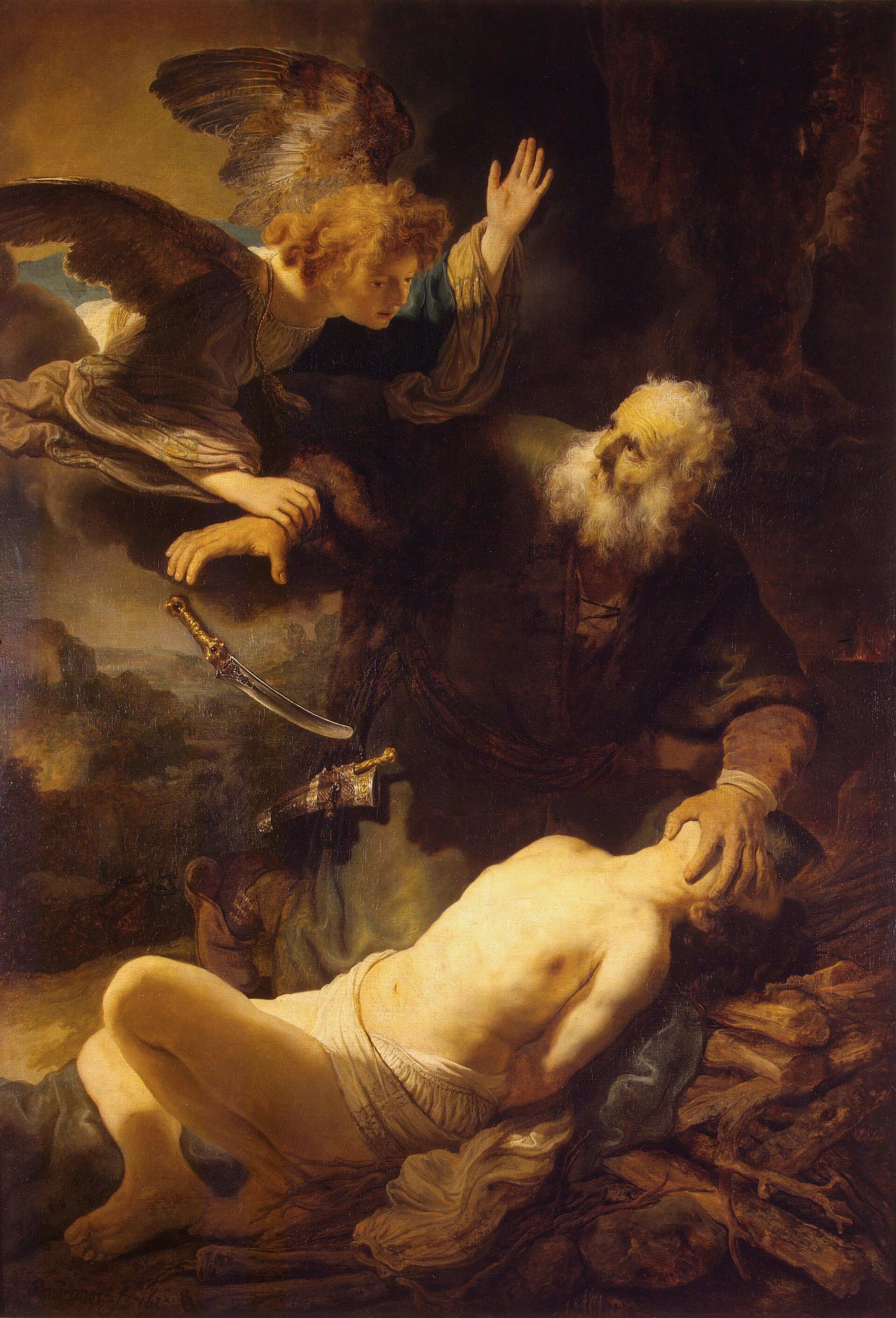
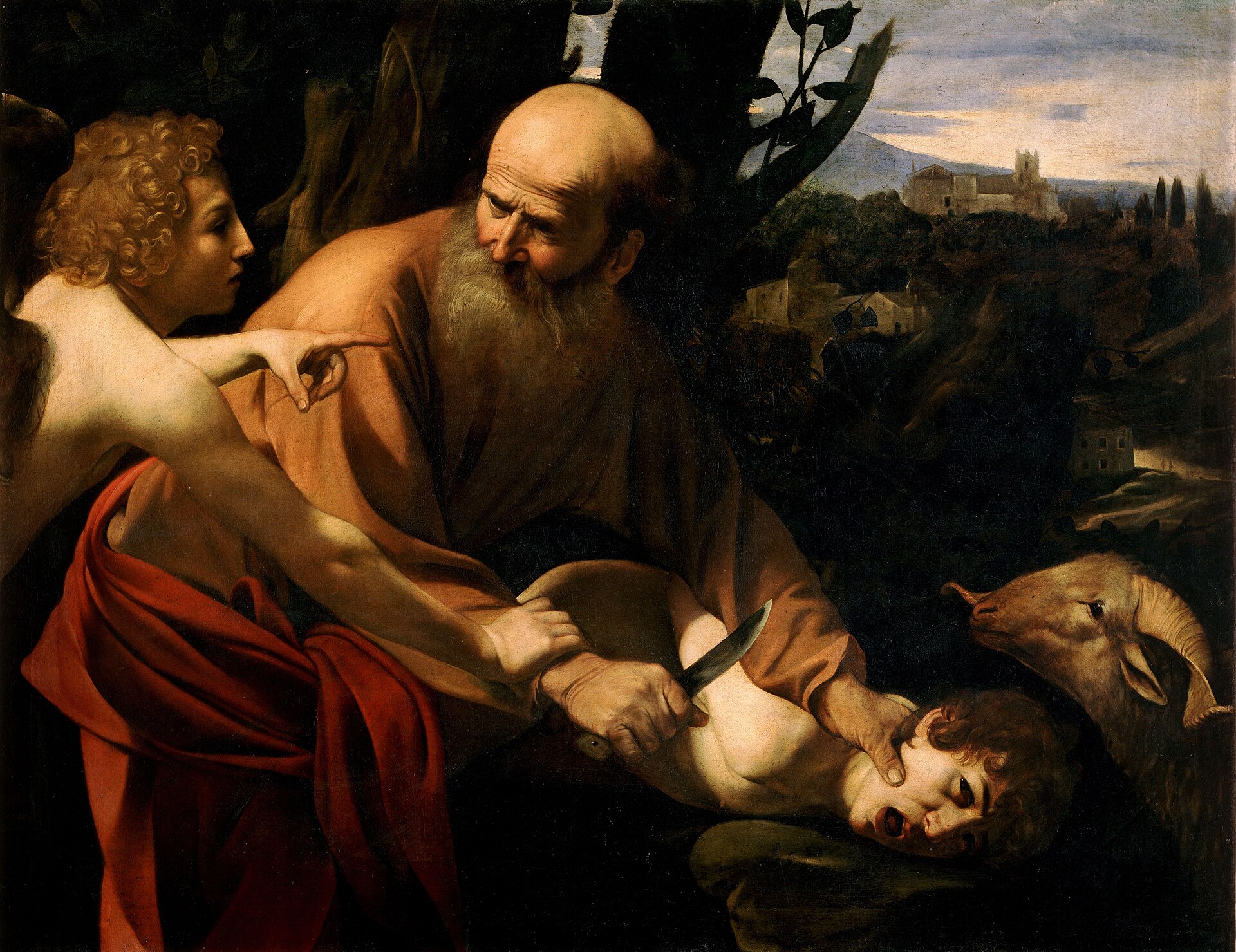
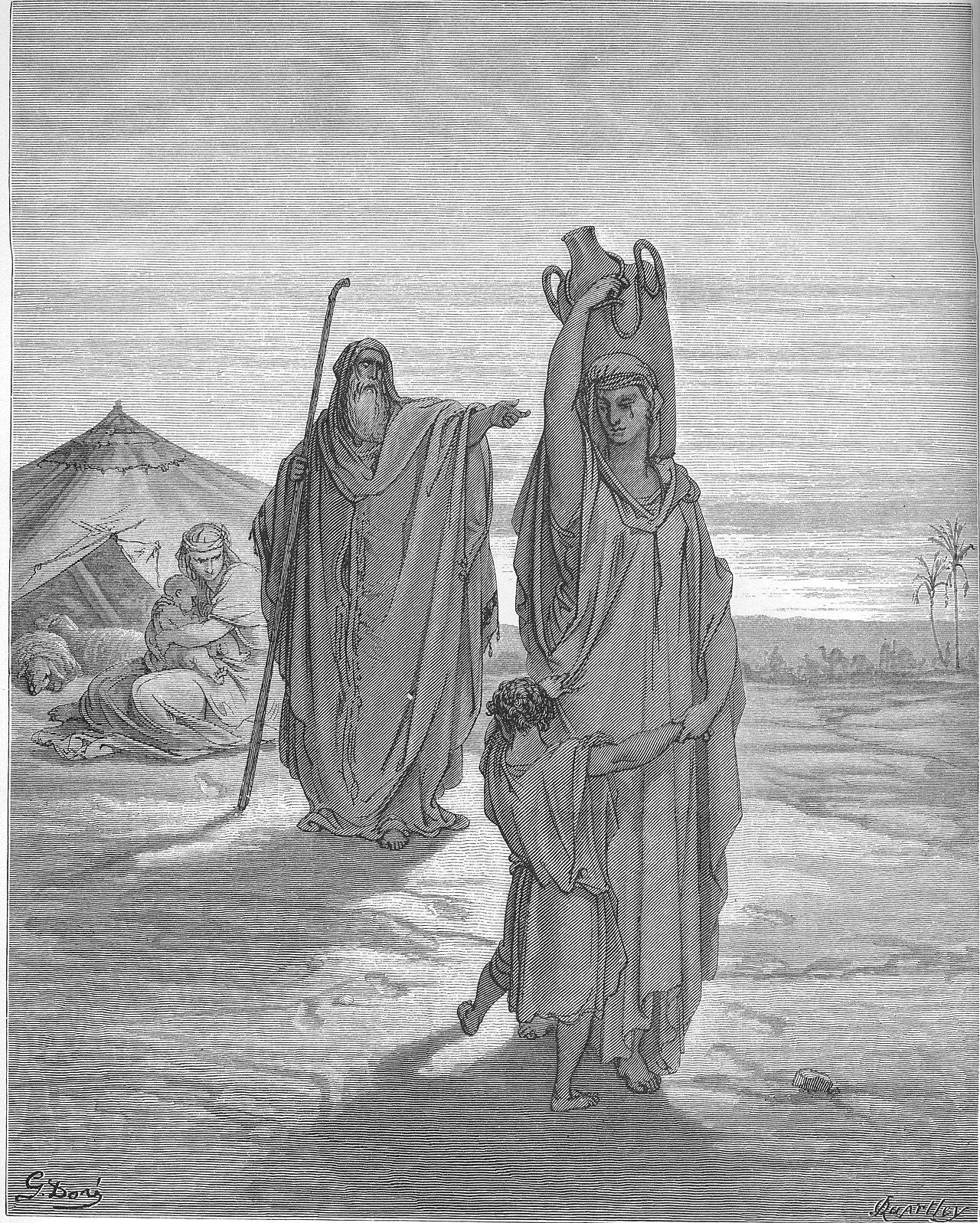
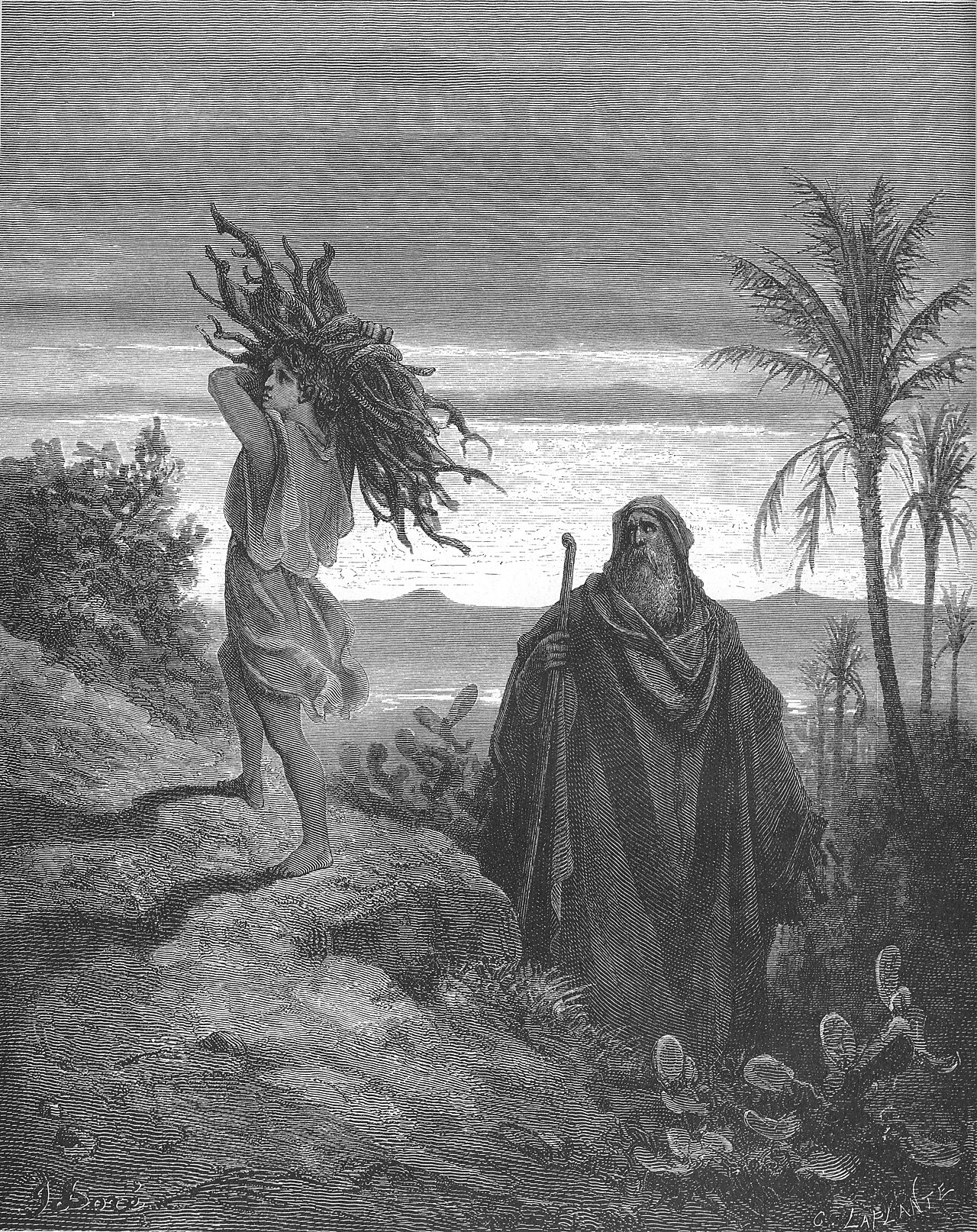
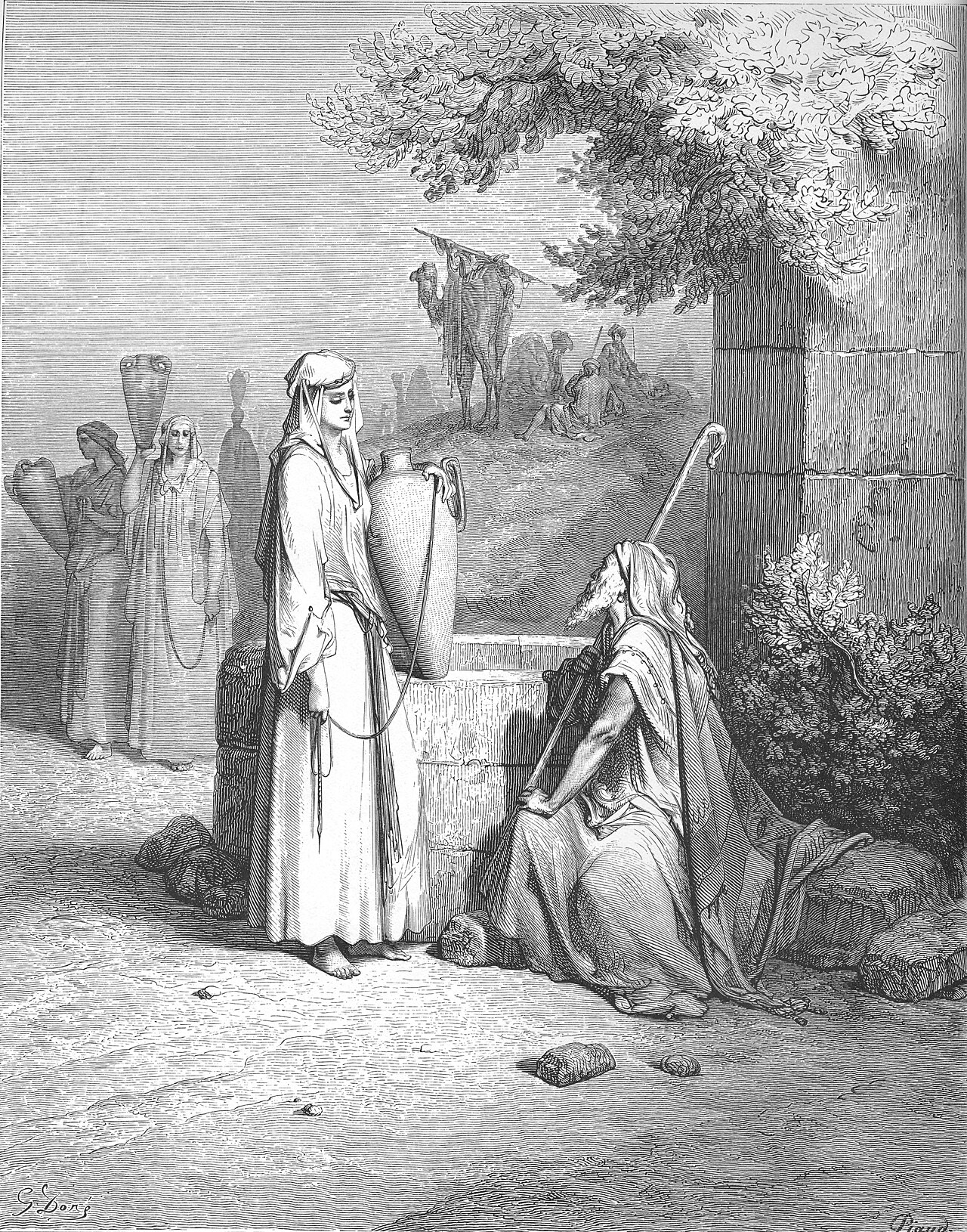
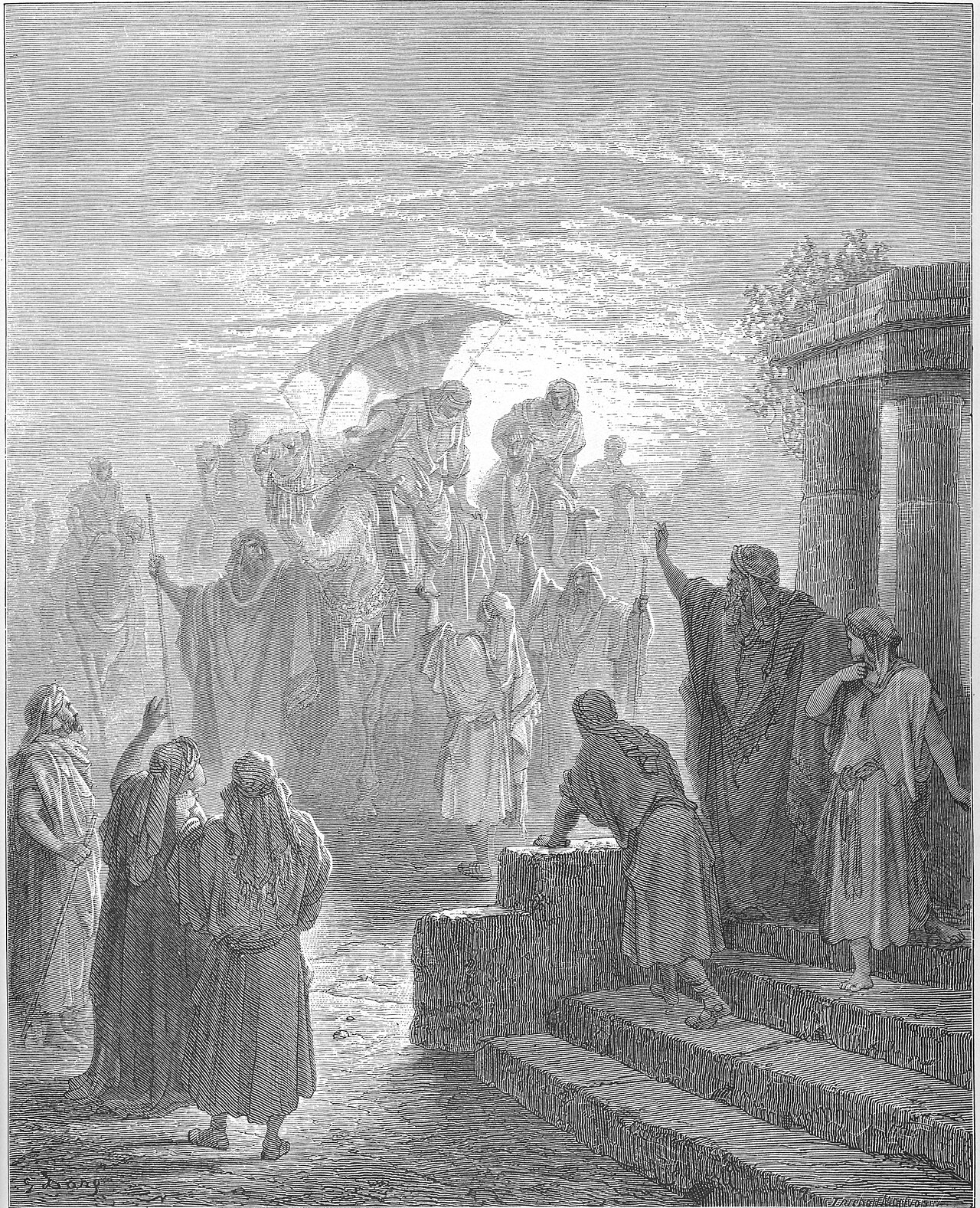
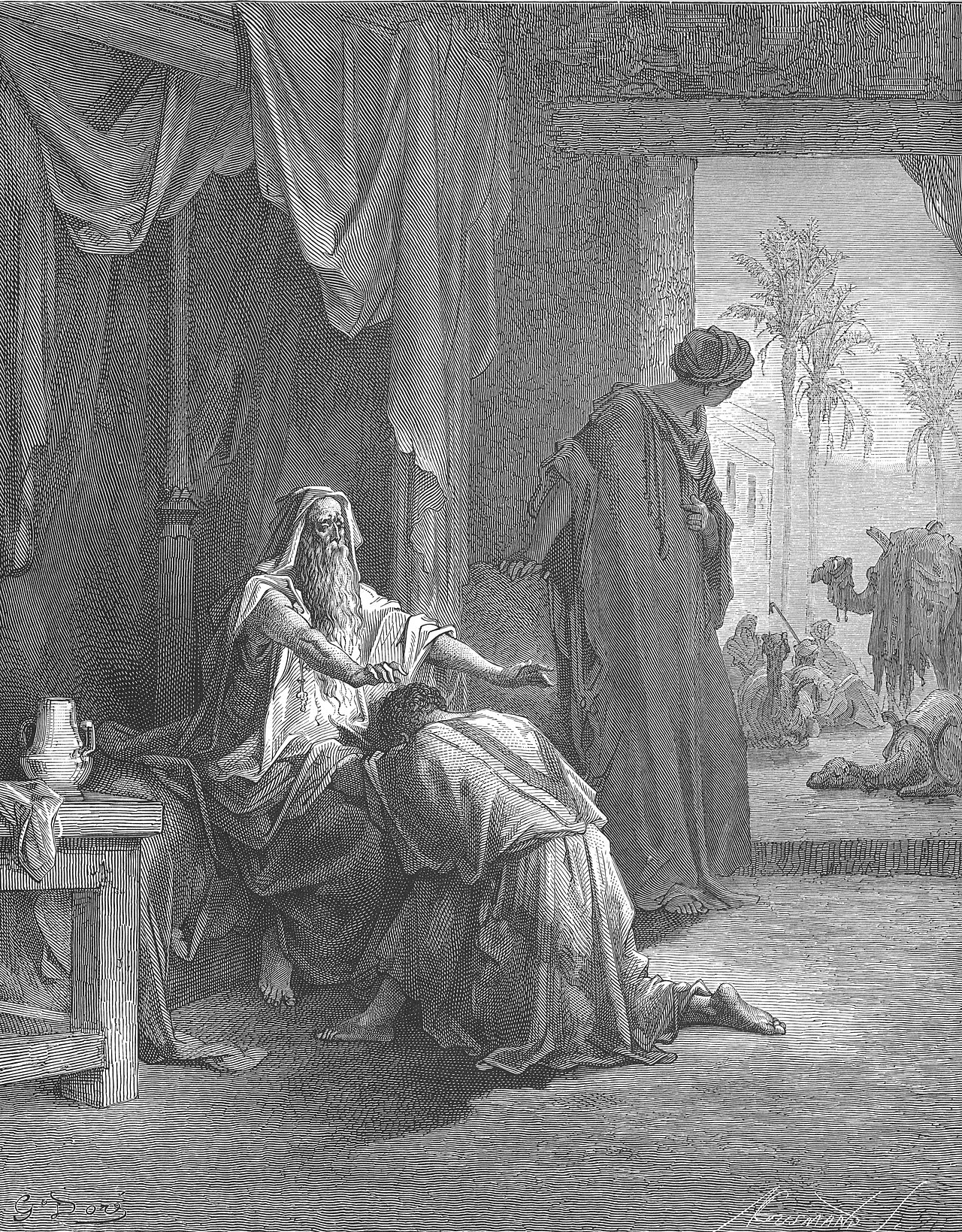
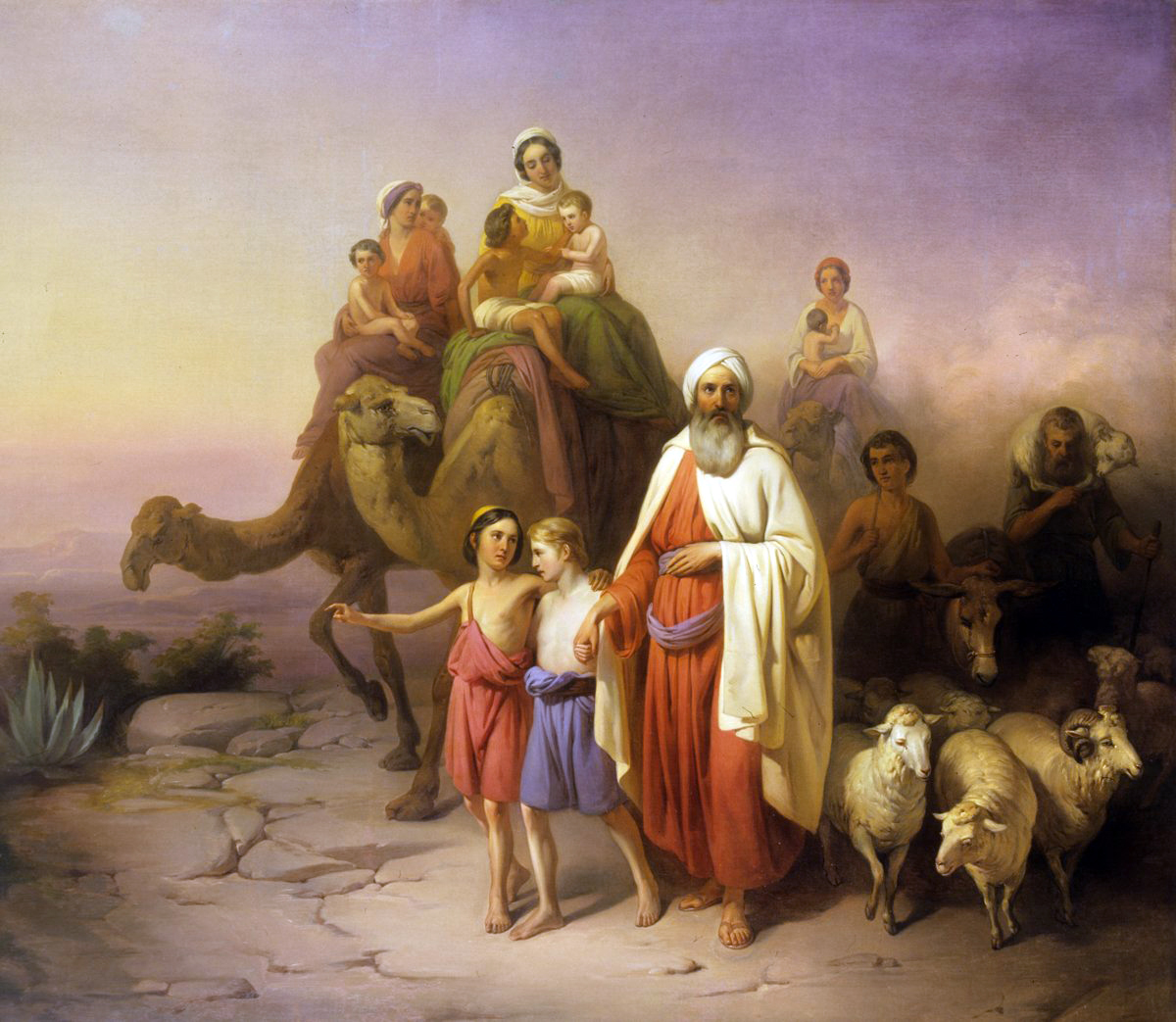
Sources cited
- Berean Standard BibleThe Scripture quoted on this page, byte for byte. Public domain since 2023.
- Clement of Rome, Clement of Alexandria, Origen, Athanasius, Ambrose and Caesarius of Arles, in the Ante-Nicene and Nicene and Post-Nicene FathersThe early Christian readings quoted and named here. Public domain, CCEL editions. Every date printed is the conventional date of the work, not the author's death year.
- Bonaventure, Collations on the Hexaemeron (1257)Cited in where he points for the wood carried on the son's back. Public domain in translation.
- Matthew Henry, Commentary on the Whole Bible (1710)Quoted on Hebrews 11:20. Public domain.
- John Wesley, Explanatory Notes upon the Old Testament (1765) and upon the New Testament (1755)Quoted on Genesis 25:21 and cited on Genesis 22:6 and Romans 9. Public domain.
- Adam Clarke, Commentary on the Bible (1832)Quoted on Genesis 22:12 and cited on Genesis 22:1, Genesis 26:7, Hebrews 11:19 and Amos 7:9. His note on Genesis 22:1 is also the source of the targumic tradition reported in the age question. Public domain.
- Albert Barnes, Notes, Explanatory and Practical, on the Old and New Testaments (1832-1869)Cited on Galatians 4:29 and on Amos 7:9. Public domain.
- Charles H. Spurgeon, The Metropolitan Tabernacle Pulpit, Sermon No. 3111The sermon quoted here on Isaac's household. Public domain, CCEL edition.
- Jon D. Levenson, The Death and Resurrection of the Beloved Son (New Haven: Yale University Press, 1993)Named as the standard modern study of how the offered and restored son shaped Jewish and Christian reading. Modern and in copyright, so it is cited and not quoted.
- Gustave Doré, La Sainte Bible (Tours: Alfred Mame et fils, 1866)The five engravings on this page. Public domain.
- Wikimedia Commons, for the three paintingsRembrandt, The Sacrifice of Isaac (1635); Caravaggio, Sacrifice of Isaac (c. 1603); József Molnár, The March of Abraham (1850). All public domain, licence verified at Commons.
- Josephus, Antiquities of the Jews, Book 1, Chapter 13, Section 2Whiston's translation states Isaac's age as twenty-five at the binding. Confirms the figure named in the age question. Public domain translation.
- The Zichronot section of the Rosh Hashanah Musaf liturgyRecalls the binding of Isaac and pleads the merit of the patriarchs. Genesis 22 is the Torah reading for the second day of Rosh Hashanah. Confirms the liturgical practice named in the question on Isaac's consent.
Keep studying
On this page
Studies14
Every page that names them1
Books21
Doorway1
Keep this page