
Place
Mount Sinai (Horeb)
Also known as Horeb · Jebel Musa (traditional) · Har Sinai
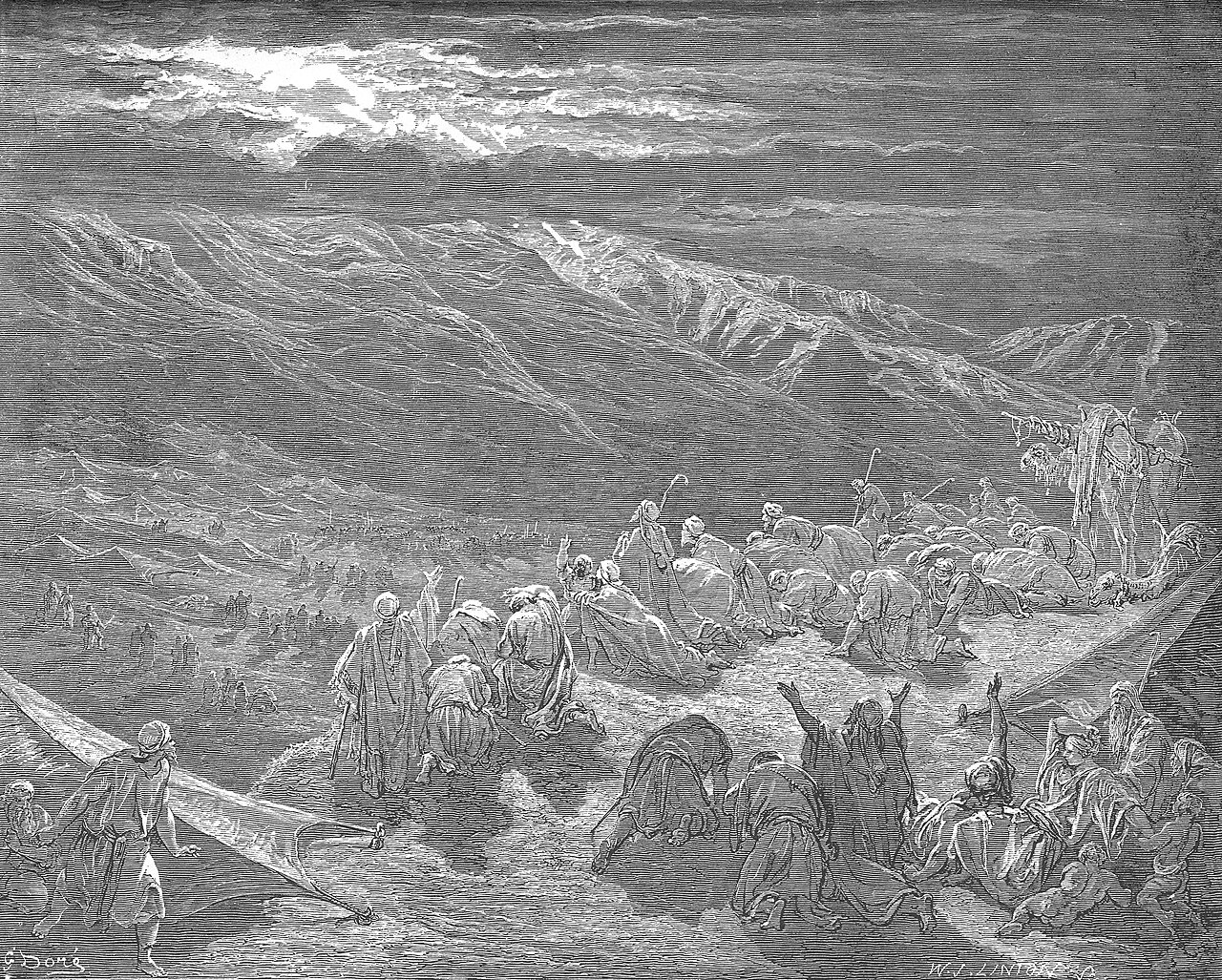
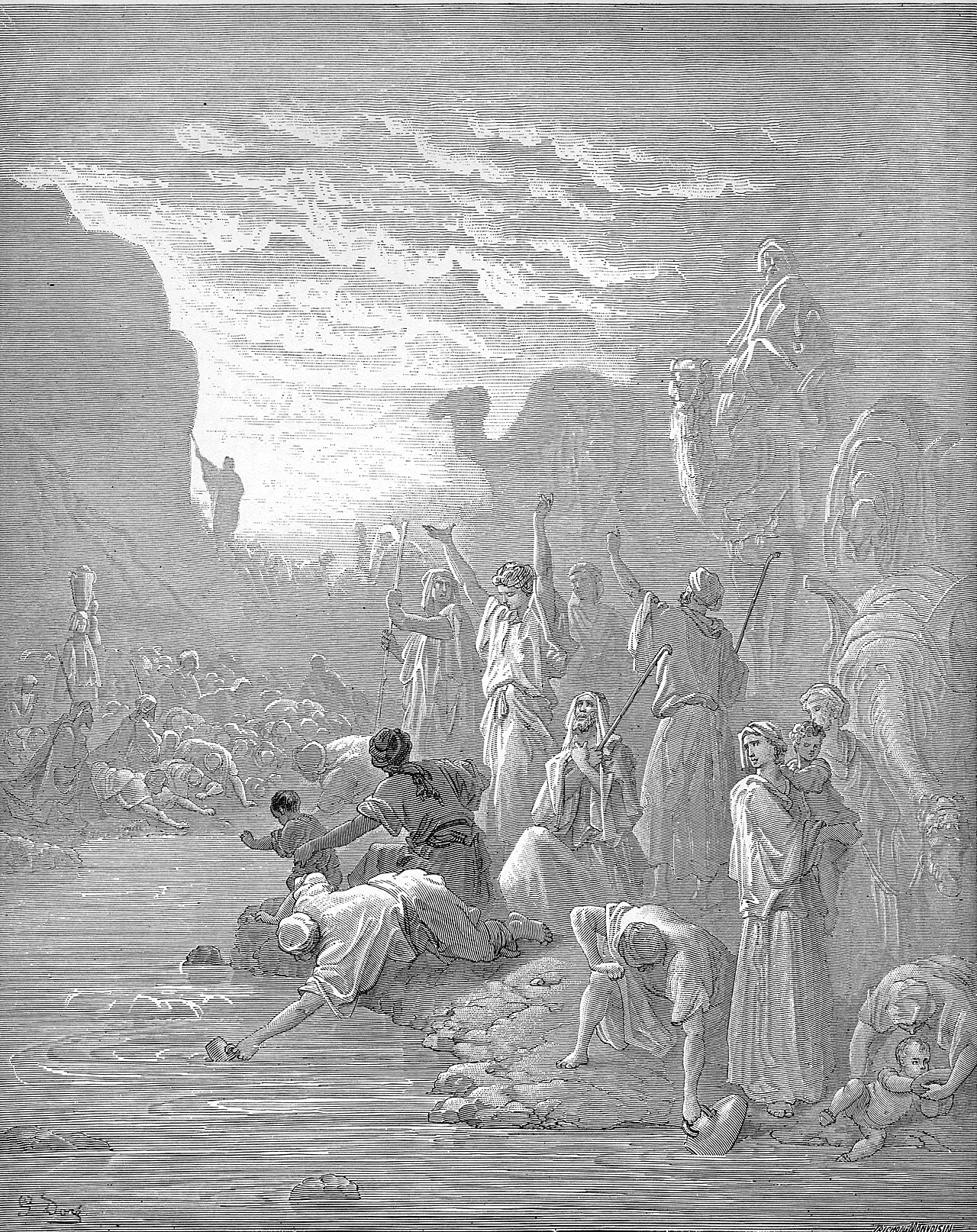
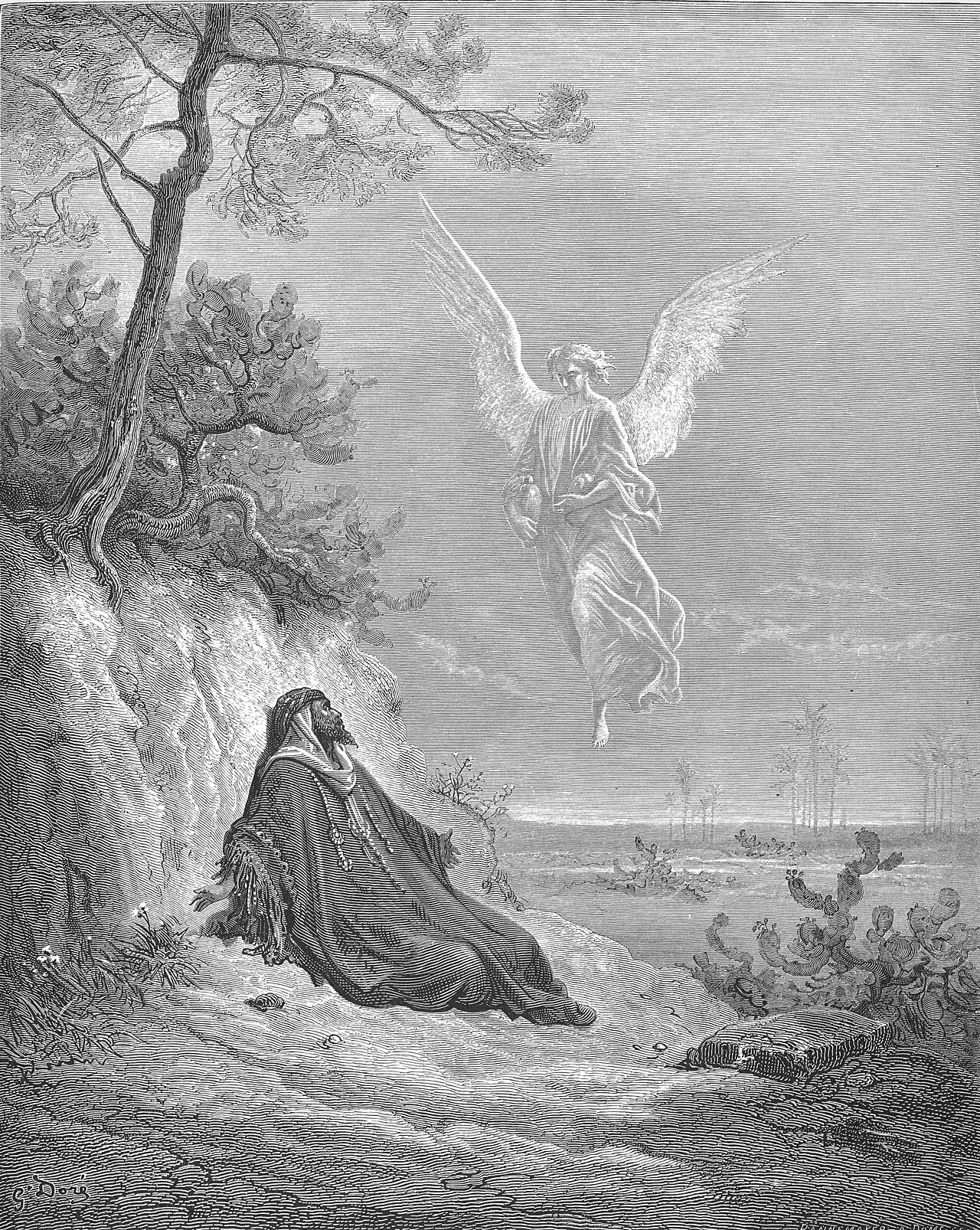
Gustave Doré, La Sainte Bible (Tours: Alfred Mame et fils, 1866). Public domain.
Summary
The mountain of God in the wilderness where the bush burned, the Law was given in fire and cloud, and the covenant was cut; Elijah later heard the still small voice here.
- Sinai is the mountain where God spoke the Ten Commandments out loud to a whole nation rather than privately to a prophet.
- Israel arrived three months out of Egypt and stayed about eleven months. The tabernacle, the priesthood and most of Leviticus were given in that stretch.
- The first sentence God speaks is a rescue and not a rule. Redemption comes first in the text, and the covenant follows it.
- Moses was called at this mountain in Exodus 3, and Elijah came back to it hundreds of years later to hear a voice that was not in the wind, the earthquake or the fire.
- Nobody knows which peak it is. At least five candidates are argued, and the traditional one rests on fourth-century Christian pilgrim tradition rather than on an inscription.
On this page
In Scripture
- Verses
- 38
- Books
- 11
Where it is
the country around it
- Coordinates
- 28.5397° N, 33.9733° Efind it on the Atlas →
- Region
- Sinai Peninsula
- Kind of place
- Mountain
- ? Proposed: one candidate among several
Not located: Egypt. The gazetteer records no location for it, so it is not marked.
Why Mount Sinai (Horeb) matters
What has been found
the evidence, and where it is disputed
The giving of the Law
Exodus 19 to 20, in the order it happens, with the covenant cut in Exodus 24
Read Exodus 19 to 20, in the order it happens, with the covenant cut in Exodus 24
- Israel reaches the mountainExodus 19:2After they had set out from Rephidim, they entered the Wilderness of Sinai, and Israel camped there in front of the mountain.
- The offer, before any commandExodus 19:5Now if you will indeed obey My voice and keep My covenant, you will be My treasured possession out of all the nations—for the whole earth is Mine.
- The people answer togetherExodus 19:8And all the people answered together, “We will do everything that the LORD has spoken.” So Moses brought their words back to the LORD.
- The third day, thunder and the hornExodus 19:16On the third day, when morning came, there was thunder and lightning. A thick cloud was upon the mountain, and a very loud blast of the ram’s horn went out, so that all the people in the camp trembled.
- The mountain in fire and smokeExodus 19:18Mount Sinai was completely enveloped in smoke, because the LORD had descended on it in fire. And the smoke rose like the smoke of a furnace, and the whole mountain quaked violently.
- God speaks the ten wordsExodus 20:1And God spoke all these words:
- The first sentence is a rescueExodus 20:2“I am the LORD your God, who brought you out of the land of Egypt, out of the house of slavery.
- The people ask for a mediatorExodus 20:19“Speak to us yourself and we will listen,” they said to Moses. “But do not let God speak to us, or we will die.”
- The covenant is cut in bloodExodus 24:8So Moses took the blood, sprinkled it on the people, and said, “This is the blood of the covenant that the LORD has made with you in accordance with all these words.”
- The tablets are givenExodus 31:18When the LORD had finished speaking with Moses on Mount Sinai, He gave him the two tablets of the Testimony, tablets of stone inscribed by the finger of God.
The golden calf falls inside this story and not after it. Moses was on the mountain forty days, and the calf was cast while he was still up there. Israel stayed at Sinai about eleven months in all, and the tabernacle, the priesthood and most of Leviticus were given before the cloud lifted.
The Ten Commandments: the full studyWhat happened here, in order
in the order the canon tells it
- Moses comes to Horeb with Jethro's flockExodus 3:1Meanwhile, Moses was shepherding the flock of his father-in-law Jethro, the priest of Midian. He led the flock to the far side of the wilderness and came to Horeb, the mountain of God.
- The sign given at the bush is this mountainExodus 3:12“I will surely be with you,” God said, “and this will be the sign to you that I have sent you: When you have brought the people out of Egypt, all of you will worship God on this mountain.”
- Water from the rock at Horeb, on the wayExodus 17:6Behold, I will stand there before you by the rock at Horeb. And when you strike the rock, water will come out of it for the people to drink.” So Moses did this in the sight of the elders of Israel.
- Israel reaches the Wilderness of SinaiExodus 19:1In the third month, on the same day of the month that the Israelites had left the land of Egypt, they came to the Wilderness of Sinai.
- The LORD descends and calls Moses upExodus 19:20The LORD descended to the top of Mount Sinai and called Moses to the summit. So Moses went up,
- The people see the fire and stand backExodus 20:18When all the people witnessed the thunder and lightning, the sounding of the ram’s horn, and the mountain enveloped in smoke, they trembled and stood at a distance.
- Seventy-four men eat and drink before GodExodus 24:11But God did not lay His hand on the nobles of Israel; they saw Him, and they ate and drank.
- Moses in the cloud for forty daysExodus 24:18Moses entered the cloud as he went up on the mountain, and he remained on the mountain forty days and forty nights.
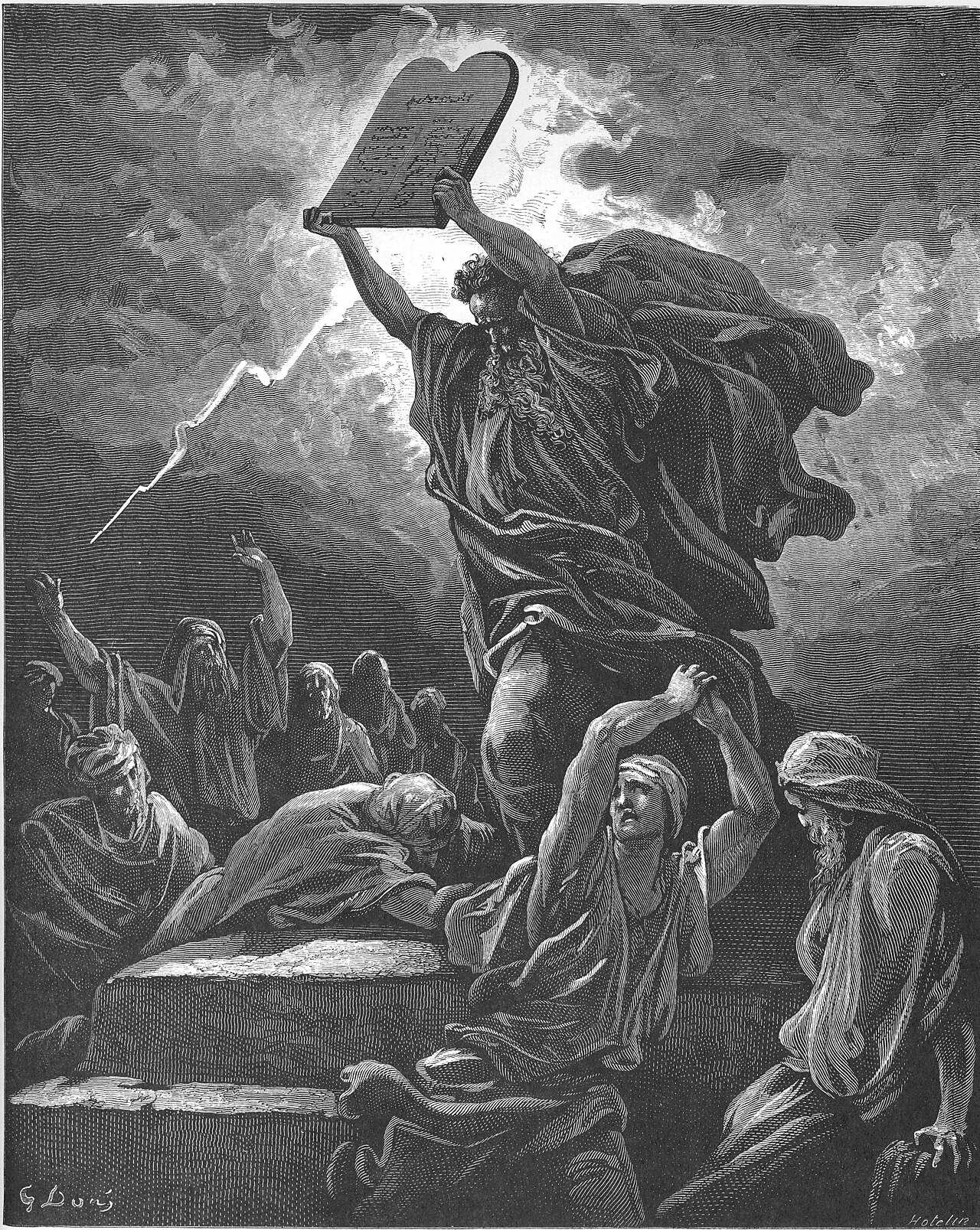
- The tablets shattered at the foot of the mountainExodus 32:19As Moses approached the camp and saw the calf and the dancing, he burned with anger and threw the tablets out of his hands, shattering them at the base of the mountain.
- Moses asks to see the glory of GodExodus 33:18Then Moses said, “Please show me Your glory.”
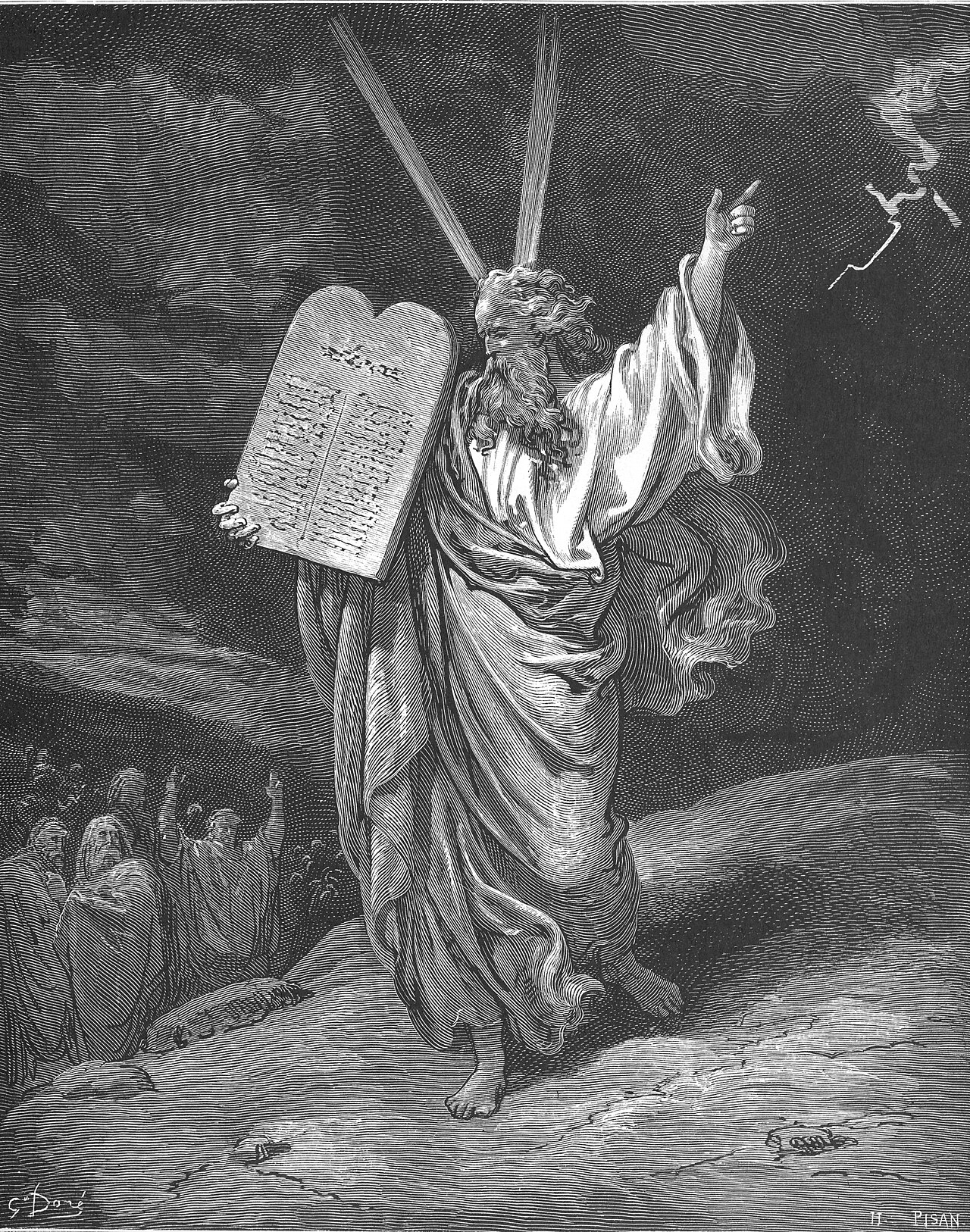
- Moses comes down with a radiant faceExodus 34:29And when Moses came down from Mount Sinai with the two tablets of the Testimony in his hands, he was unaware that his face had become radiant from speaking with the LORD.
- Leviticus closes by naming the mountainLeviticus 27:34These are the commandments that the LORD gave to Moses for the Israelites on Mount Sinai.
- The cloud lifts in the second yearNumbers 10:11On the twentieth day of the second month of the second year, the cloud was lifted from above the tabernacle of the Testimony,
- Moses reminds the next generation whose covenant it isDeuteronomy 5:2The LORD our God made a covenant with us at Horeb.
- The blessing of Moses sings of the LORD coming from SinaiDeuteronomy 33:2He said: “The LORD came from Sinai and dawned upon us from Seir; He shone forth from Mount Paran and came with myriads of holy ones, with flaming fire at His right hand.
- The tablets from Horeb are still in the ark1 Kings 8:9There was nothing in the ark except the two stone tablets that Moses had placed in it at Horeb, where the LORD had made a covenant with the Israelites after they had come out of the land of Egypt.
- Elijah walks forty days back to the mountain1 Kings 19:8So he got up and ate and drank. And strengthened by that food, he walked forty days and forty nights until he reached Horeb, the mountain of God.
- After the fire, a still small voice1 Kings 19:12After the earthquake there was a fire, but the LORD was not in the fire. And after the fire came a still, small voice.
- The Old Testament's last word points back to HorebMalachi 4:4“Remember the law of My servant Moses, the statutes and ordinances I commanded him for all Israel at Horeb.
- Hebrews sets Zion beside the burning mountainHebrews 12:22Instead, you have come to Mount Zion, to the city of the living God, the heavenly Jerusalem. You have come to myriads of angels
Where it points
The voices
each quoted from the work named
But Jebel Musa, the old traditional Sinai, and the highest peak, has also a spacious valley, Wady Sebaiyeh, capable of holding the people. It is not certain on which of these two they stood.
Even to Horeb - Horeb and Sinai were two tops of the same mountain.
The Lord came down upon Mount Sinai. The Shechinah, or glory of the Lord, appeared in the sight of all the people; he shined forth from mount Paran with ten thousand of his saints, attended with a multitude of the holy angels. Hence the law is said to be given by the disposition of angels, Acts vii, 53.
3 more teachers on these versesAlbert Barnes · John Chrysostom · Jamieson, Fausset & Brown
A still small voice - literally, “a sound of soft stillness.”
Fearful were those things, but these are far more admirable and glorious. For here there is not "darkness," nor "blackness," nor "tempest."
Just as "Moses" and "Elias" are here connected with the Lord's coming, so at the transfiguration they converse with Him, implying that the law and prophets which had prepared His way were now fulfilled in Him.
Mount Sinai (Horeb) in Scripture
38 verses name it, or one of its other names (Mount Sinai, Horeb, Jebel Musa, Har Sinai), in 11 books
Open a book to read its mentions here. Text: Berean Standard Bible.
Old TestamentNew Testamentsegment width = share of mentions
Old Testament9 books · 34 mentions
Exodus13 mentions
- Exodus 3:1Meanwhile, Moses was shepherding the flock of his father-in-law Jethro, the priest of Midian. He led the flock to the far side of the wilderness and came to Horeb, the mountain of God.
- Exodus 17:6Behold, I will stand there before you by the rock at Horeb. And when you strike the rock, water will come out of it for the people to drink.” So Moses did this in the sight of the elders of Israel.
- Exodus 19:11and be prepared by the third day, for on the third day the LORD will come down on Mount Sinai in the sight of all the people.
- Exodus 19:18Mount Sinai was completely enveloped in smoke, because the LORD had descended on it in fire. And the smoke rose like the smoke of a furnace, and the whole mountain quaked violently.
- Exodus 19:20The LORD descended to the top of Mount Sinai and called Moses to the summit. So Moses went up,
- Exodus 19:23But Moses said to the LORD, “The people cannot come up Mount Sinai, for You solemnly warned us, ‘Put a boundary around the mountain and set it apart as holy.’”
- Exodus 24:16and the glory of the LORD settled on Mount Sinai. For six days the cloud covered it, and on the seventh day the LORD called to Moses from within the cloud.
- Exodus 31:18When the LORD had finished speaking with Moses on Mount Sinai, He gave him the two tablets of the Testimony, tablets of stone inscribed by the finger of God.
5 further mentions in Exodus, read them in the book.
Leviticus4 mentions
- Leviticus 7:38which the LORD gave Moses on Mount Sinai on the day He commanded the Israelites to present their offerings to the LORD in the Wilderness of Sinai.
- Leviticus 25:1Then the LORD said to Moses on Mount Sinai,
- Leviticus 26:46These are the statutes, ordinances, and laws that the LORD established between Himself and the Israelites through Moses on Mount Sinai.
- Leviticus 27:34These are the commandments that the LORD gave to Moses for the Israelites on Mount Sinai.
Numbers2 mentions
Deuteronomy9 mentions
- Deuteronomy 1:2It is an eleven-day journey from Horeb to Kadesh-barnea by way of Mount Seir.
- Deuteronomy 1:6The LORD our God said to us at Horeb: “You have stayed at this mountain long enough.
- Deuteronomy 1:19And just as the LORD our God had commanded us, we set out from Horeb and went toward the hill country of the Amorites, through all the vast and terrifying wilderness you have seen. When we reached Kadesh-barnea,
- Deuteronomy 4:10The day you stood before the LORD your God at Horeb, the LORD said to me, “Gather the people before Me to hear My words, so that they may learn to fear Me all the days they live on the earth, and that they may teach them to their children.”
- Deuteronomy 4:15So since you saw no form of any kind on the day the LORD spoke to you out of the fire at Horeb, be careful
- Deuteronomy 5:2The LORD our God made a covenant with us at Horeb.
- Deuteronomy 9:8At Horeb you provoked the LORD, and He was angry enough to destroy you.
- Deuteronomy 18:16This is what you asked of the LORD your God at Horeb on the day of the assembly, when you said, “Let us not hear the voice of the LORD our God or see this great fire anymore, so that we will not die!”
1 further mention in Deuteronomy, read them in the book.
1 Kings2 mentions
- 1 Kings 8:9There was nothing in the ark except the two stone tablets that Moses had placed in it at Horeb, where the LORD had made a covenant with the Israelites after they had come out of the land of Egypt.
- 1 Kings 19:8So he got up and ate and drank. And strengthened by that food, he walked forty days and forty nights until he reached Horeb, the mountain of God.
2 Chronicles1 mention
Nehemiah1 mention
New Testament2 books · 4 mentions
Acts2 mentions
Galatians2 mentions
- Galatians 4:24These things serve as illustrations, for the women represent two covenants. One covenant is from Mount Sinai and bears children into slavery: This is Hagar.
- Galatians 4:25Now Hagar stands for Mount Sinai in Arabia and corresponds to the present-day Jerusalem, because she is in slavery with her children.
The account
Read the account as one telling
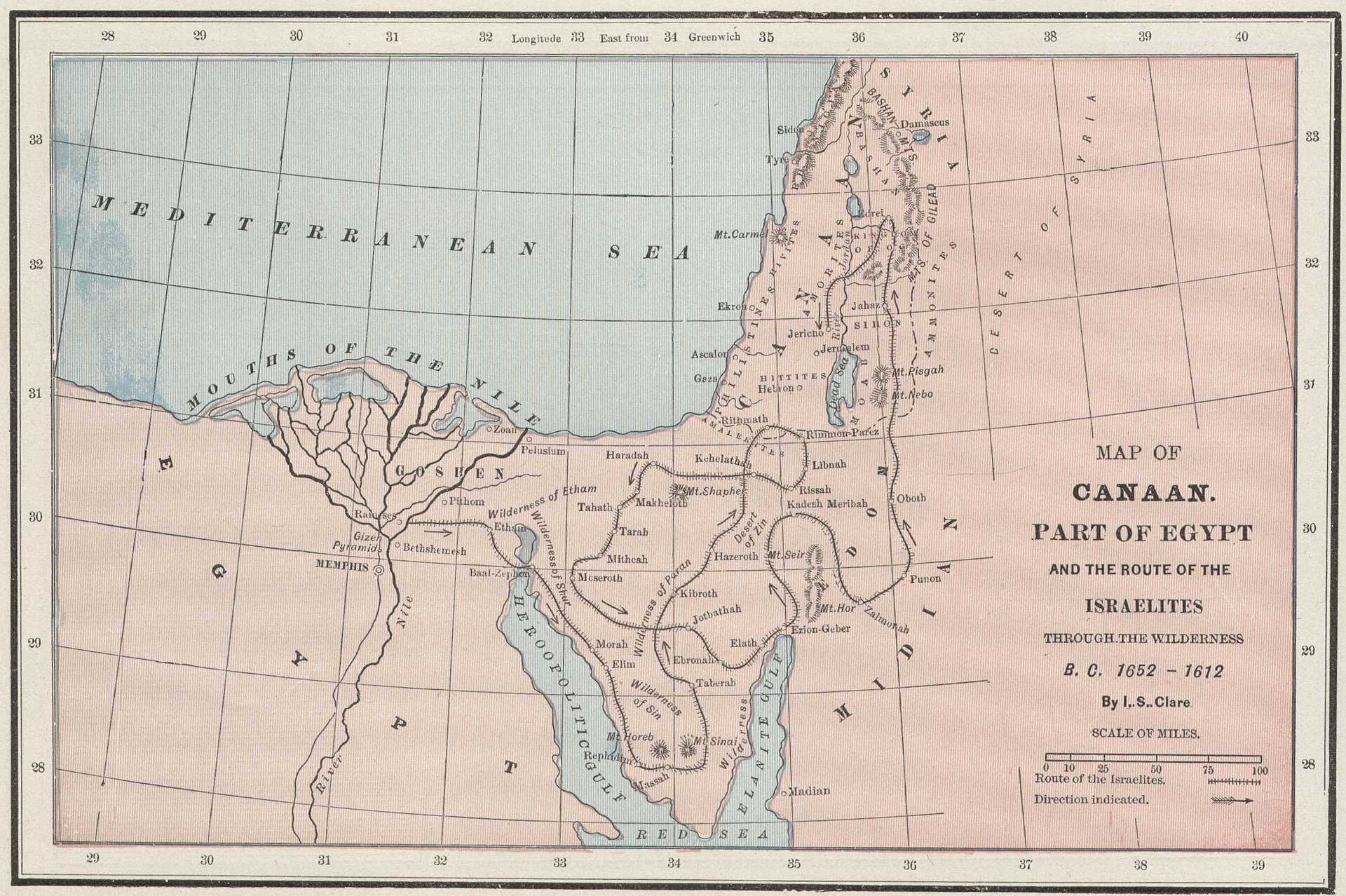
The Sinai peninsula is a wedge of desert and granite between two arms of the Red Sea, with the Gulf of Suez on the west and the Gulf of Aqaba on the east. Its southern third rises into a mountain massif of bare rock, and the peaks there stand well over two thousand metres. The name Sinai belongs both to the peninsula and to one mountain in the biblical account, and Scripture also calls that mountain Horeb.
The mountain enters the Bible with a shepherd. Moses had run from Egypt, married into a Midianite household, and was grazing his father-in-law's flock when he came to Horeb and found a bush burning without being burned up. God sent him back to Egypt and gave him a sign he could not test in advance. When the people were out, they would worship God on this mountain.
Israel reached it in the third month after leaving Egypt and camped in front of it. God offered a covenant before He gave a command, and the people accepted it before they had heard its terms. On the third day the mountain went up in fire and cloud, a horn sounded and grew louder, and God spoke the Ten Commandments so the whole camp heard the words. The people asked never to hear that voice again and asked for a man to stand between them and it.
Moses wrote the words down. He built an altar with twelve pillars at the base of the mountain, threw the blood of the covenant on the people, and went up with seventy-three others to eat and drink in the presence of the God of Israel. Then he went higher and stayed forty days, and while he was up there the camp cast a golden calf and called a feast to the LORD in front of it. Moses smashed the first tablets at the foot of the mountain, went back up, asked to see God's glory, and was covered in a cleft of the rock while God passed by.
Israel stayed at the mountain about eleven months in all. The tabernacle was designed and built there, the priesthood was ordained there, and most of Leviticus was given there. The cloud lifted on the twentieth day of the second month of the second year and the nation moved north toward Kadesh-barnea, an eleven-day walk that took forty years to finish.
The mountain then drops out of the story for centuries and comes back once. Elijah, running from Jezebel and asking to die, walked forty days into the wilderness and reached Horeb. God sent a wind that split rocks, an earthquake and a fire, named the three things that had marked the giving of the Law, and was in none of them. What came after the fire was almost silence, and inside it Elijah got a commission and the news that seven thousand in Israel had not bowed to Baal.
After the Old Testament closes, the record of the place is Christian and monastic. Hermits were living in the southern Sinai by the third and fourth centuries AD. The pilgrim Egeria climbed the mountain around AD 381 to 384, was shown the bush by the monks, and described a church already standing at its foot. Monastic tradition credits an earlier chapel there to Helena, the mother of Constantine, around AD 330.
- AD 548
The Emperor Justinian had the fortified monastery built around that church, conventionally dated between AD 548 and 565. Saint Catherine's Monastery has been occupied without a break ever since, which makes it one of the oldest working religious houses on earth. Its library kept a fourth-century Greek Bible for about fifteen hundred years.
Common questions
Where is Mount Sinai?
Readers differ; the positions are named
Nobody knows, and no site has produced an inscription or an object that names it. The traditional identification is Jebel Musa in the southern Sinai peninsula, where Saint Catherine's Monastery stands, and it rests on Christian pilgrim tradition attested by the pilgrim Egeria around AD 381 to 384.
Other proposals are Ras Safsafeh, the neighbouring peak above the wide plain of er-Raha, argued by Edward Robinson in 1841; Jebel Serbal, argued by Karl Richard Lepsius in the 1840s; Jebel Sin Bishar in western Sinai, argued by Menashe Har-El in 1983; Har Karkom in the Negev, argued by Emmanuel Anati from 1986; and Jebel al-Lawz in northwestern Saudi Arabia, argued in popular books by Ron Wyatt and by Robert Cornuke and Larry Williams, and answered by James Hoffmeier in 2005 and Gordon Franz in 2000.
Are Sinai and Horeb the same mountain?
Readers differ; the positions are named
Scripture uses both names and never explains the difference. Exodus usually says Sinai but says Horeb at 3:1, 17:6 and 33:6; Deuteronomy always says Horeb; Malachi, Kings and Psalm 106 say Horeb, while Judges, Psalm 68, Nehemiah and the New Testament say Sinai.
Readers have taken the two as names for one mountain, as a range and one of its peaks, as two strands of tradition, or, in a minority reading, as two different places. What the text itself does is treat them as one place. Moses meets God at Horeb in Exodus 3:1 and is told he will bring the people back to this mountain, which Exodus 19 then calls Sinai.
What actually happened at the mountain?
Israel arrived in the third month after leaving Egypt and camped in front of it. God offered a covenant, the people agreed to it, and on the third day the mountain was covered in fire, smoke and cloud, with a trumpet blast growing louder, and God spoke the Ten Commandments aloud so that the whole nation heard.
They begged not to hear it again and asked Moses to stand between them and God. The covenant was cut with blood at the foot of the mountain, Moses went up for forty days and came down with two stone tablets, and by then the people had made a golden calf.
Why is there no archaeological trace of Israel in the Sinai?
Readers differ; the positions are named
This is a real problem and the page does not dodge it. Surveys of the peninsula after 1967, notably by Eliezer Oren and Itzhaq Beit-Arieh, found Egyptian forts along the northern coastal road but no Late Bronze camp at any candidate mountain, and nothing at Kadesh-barnea earlier than about the tenth century BC.
James Hoffmeier answers in Ancient Israel in Sinai (2005) that tent-dwelling people on the move leave almost nothing a survey can recover, which holds for every known nomadic group of that period, and that the northern forts fit Exodus 13:17, where God deliberately avoids that route. Other archaeologists read the same silence as evidence that the wilderness itinerary took its present form long after the events, and that reading is named here too.
Galatians says Sinai is in Arabia. Does that put the mountain in Saudi Arabia?
Readers differ; the positions are named
Paul writes that Hagar stands for Mount Sinai in Arabia, and supporters of the Jebel al-Lawz proposal take that at face value, adding that Moses was shepherding in Midian when he found the bush and that Midian lay east of the Gulf of Aqaba.
James Hoffmeier and Gordon Franz answer that Arabia in Greek and Roman usage was much wider than the modern country, and that the Roman province of Arabia Petraea took in the Sinai peninsula and the Negev, so the phrase does not by itself move the mountain. They add that Midianites were caravan people whose range is attested well west of Aqaba. Both readings stand on this page and neither is settled here.
Did angels give the Law?
Three New Testament writers say so plainly, and none of them argues for it. Stephen says Israel received the law ordained by angels, Paul says it was administered through angels by a mediator, and Hebrews calls it the message spoken by angels.
The Old Testament ground is Deuteronomy 33:2, where the LORD comes from Sinai with myriads of holy ones, and Psalm 68:17, where the chariots of God are tens of thousands. This page presents the point as the text presents it.
Who wrote the Ten Commandments, and what happened to the tablets?
The first pair were the work of God, and the writing was the writing of God, engraved on the tablets. Moses shattered them at the foot of the mountain when he saw the calf.
God then told Moses to chisel a second pair himself, and God wrote the same words on them. Those tablets went into the ark, and centuries later, when Solomon's priests brought it into the temple, there was nothing in the ark except the two stone tablets that Moses had placed in it at Horeb.
Why did Elijah go to Horeb, and what was the still small voice?
Elijah ran from Jezebel after Carmel, asked to die under a broom tree, and then walked forty days to Horeb, the same forty days Moses spent on that mountain. God put him in a cave and sent a wind that broke rocks, an earthquake and a fire, the three things that had marked the giving of the Law, and said He was in none of them.
What came after the fire was a still, small voice, and the Hebrew behind it is closer to a sound of thin silence. What Elijah got was not comfort but a commission and a correction. Seven thousand in Israel had not bowed to Baal, so he was not the only one left.
Notable art
4 verified pieces depicting Mount Sinai (Horeb)
Sources cited
- OpenBible.info Bible Geocoding: Mount Sinairead 2026-08-20The coordinates on this page. Used under CC-BY with attribution to OpenBible.info.
- Easton's Bible Dictionary (1897): Sinairead 2026-04-17Public domain.
- ISBE (1915): Sinai, Mountread 2026-04-17Public domain; surveys competing site proposals.
- Wikipedia: Biblical Mount Sinairead 2026-04-17CC-BY-SA; surveys all major proposed locations.
- UNESCO: Saint Catherine Arearead 2026-04-17Traditional site at Jebel Musa.
- Gustave Doré, La Sainte Bible (Tours: Alfred Mame et fils, 1866)The five engravings on this page. Public domain.
- Egeria, Itinerarium (c. AD 381 to 384)The earliest surviving pilgrim account of the mountain, the bush and the church at its foot. Public domain.
- Edward Robinson, Biblical Researches in Palestine, Mount Sinai and Arabia Petraea (1841)The Ras Safsafeh proposal and the plain of er-Raha argument. Public domain.
- Karl Richard Lepsius, Briefe aus Aegypten, Aethiopien und der Halbinsel des Sinai (1852)The Jebel Serbal proposal. Public domain.
- Menashe Har-El, The Sinai Journeys: The Route of the Exodus (San Diego: Ridgefield, 1983)The Jebel Sin Bishar proposal, argued from route and day counts.
- Emmanuel Anati, Har Karkom: The Mountain of God (New York: Rizzoli, 1986)The Negev proposal and the rock art, cultic platforms and standing stones behind it.
- Robert Cornuke and Larry Williams, In Search of the Mountain of God (Nashville: Broadman & Holman, 2000)The popular Arabian proposal, cited for the position it argues. Larry Williams published The Mount Sinai Myth in 1990.
- James K. Hoffmeier, Ancient Israel in Sinai: The Evidence for the Authenticity of the Wilderness Tradition (New York: Oxford University Press, 2005)The answer to the Arabian proposal and the fullest treatment of the survey silence.
- Gordon Franz, Is Mount Sinai in Saudi Arabia? Bible and Spade 13 (2000)Cited for the position it argues. Associates for Biblical Research is a confessional body and this page says so.
- W. M. Flinders Petrie, Researches in Sinai (London: John Murray, 1906)The 1904 to 1905 excavation at Serabit el-Khadim. Public domain.
- Alan H. Gardiner, The Egyptian Origin of the Semitic Alphabet, Journal of Egyptian Archaeology 3 (1916)The 1916 reading of the Proto-Sinaitic inscriptions.
- Orly Goldwasser, How the Alphabet Was Born from Hieroglyphs, Biblical Archaeology Review 36:2 (2010)The argument that Canaanite mine workers invented the alphabet at Serabit el-Khadim.
- Beno Rothenberg, Timna: Valley of the Biblical Copper Mines (London: Thames and Hudson, 1972)The Arabah Expedition from 1959 and the tent shrine, with Erez Ben-Yosef's radiocarbon redating published from 2013 onward.
- Eliezer D. Oren, The Ways of Horus in North Sinai, in Egypt, Israel, Sinai (Tel Aviv University, 1987)The northern survey record, with Itzhaq Beit-Arieh's southern Sinai survey reports.
- Codex Sinaiticus Project, British LibraryThe manuscript's fourth-century date, its four holding institutions, and the account of Tischendorf's 1844 and 1859 visits.
- John Wesley, Explanatory Notes upon the Old Testament (1765)Quoted on Exodus 3:1, Exodus 19:18 and Exodus 34:33. Public domain.
- Albert Barnes, Notes, Explanatory and Practical, on the Old and New Testaments (1832 to 1869)Quoted on 1 Kings 19:12, and carried for the Ras Safsafeh reading at Exodus 19. Public domain.
- Robert Jamieson, A. R. Fausset and David Brown, Commentary Critical and Explanatory on the Whole Bible (1871)Quoted on Exodus 19:17 and Malachi 4:4. Public domain.
- Matthew Henry, Commentary on the Whole Bible (1710)Consulted on 1 Kings 19 and the cave at Horeb. Public domain.
- Adam Clarke, Commentary on the Bible (1832)Consulted on 1 Kings 19:11 and on the text of Galatians 4:25. Public domain.
- John Chrysostom, Homilies on Hebrews, Homily 32 (c. AD 407)Quoted on Hebrews 12:22, the earliest reading carried on this page. Public domain, NPNF edition.
- Charles H. Spurgeon, The Metropolitan Tabernacle PulpitSermons 1668 and 3206, consulted on Hebrews 12. Public domain.
- Easton's Bible Dictionary (1897) and the International Standard Bible Encyclopedia (1915), articles SinaiBoth survey the competing identifications as of their date. Public domain.
Keep studying
On this page
Studies13
Books that name it6
Doorway2
Keep this page