
1 Kings 20:10
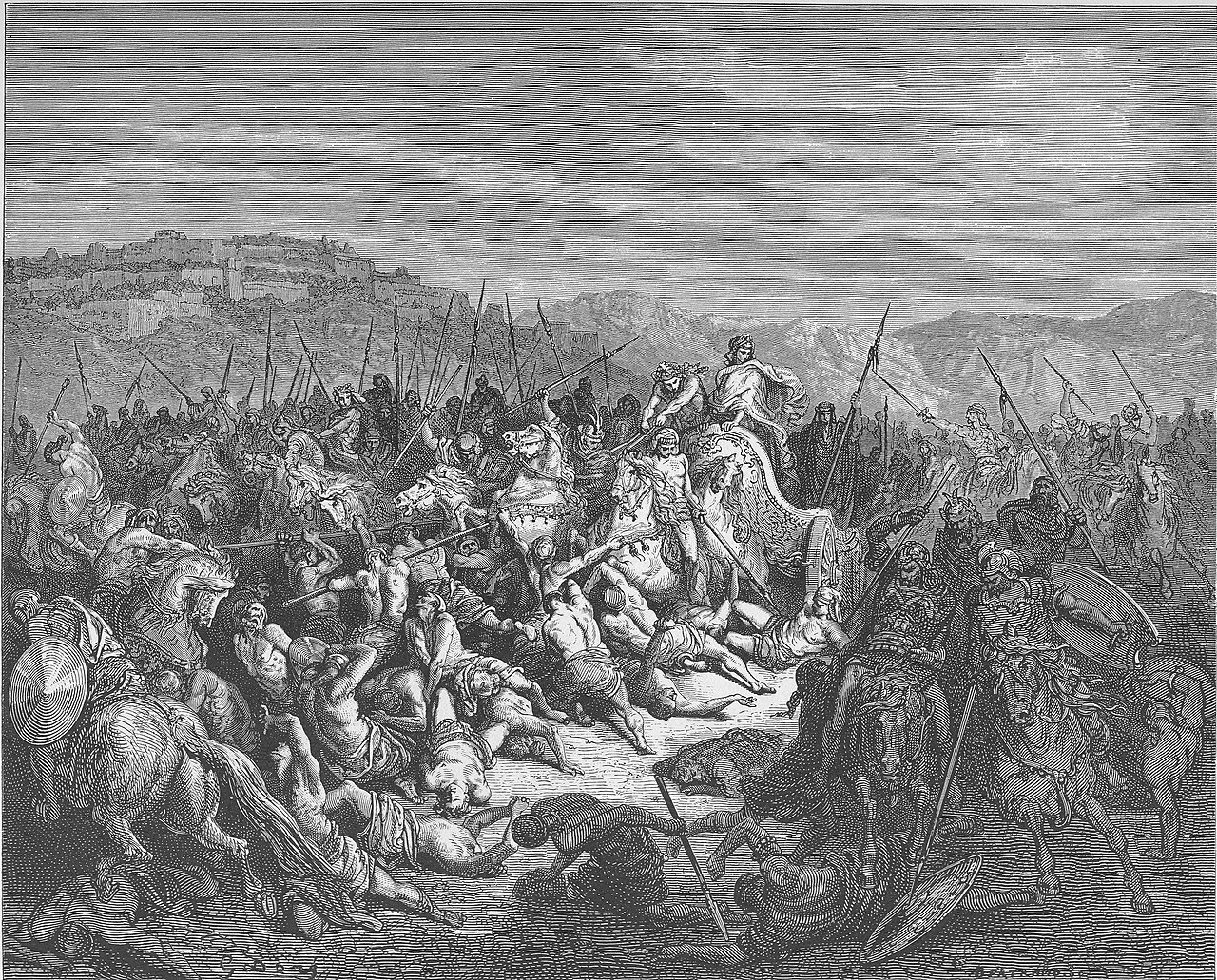
in 1 Kings 20Then Ben-hadad sent another message to Ahab: “May the gods deal with me, and ever so severely, if enough dust remains of Samaria for each of my men to have a handful.”
BSB
The same verse in ASV and KJV ▾
ASV
And Ben-hadad sent unto him, and said, The gods do so unto me, and more also, if the dust of Samaria shall suffice for handfuls for all the people that follow me.
KJV
And Ben–hadad sent unto him, and said, The gods do so unto me, and more also, if the dust of Samaria shall suffice for handfuls for all the people that follow me.
⋯
This verse in 1 Kings 20
Commentary
8 notes on this verseIf the dust of Samaria shall suffice - This is variously understood. Jonathan translates thus: “If the dust of Shomeron shall be sufficient for the soles of the feet of the people that shall accompany me;” i.e., I shall bring such an army that there will scarcely be room for them to stand in Samaria and its vicinity.
This site's exposition
if enough dust remains of Samaria
on 1 Kings 20:10-11
Ben-hadad swears by his own gods that not “enough dust remains of Samaria for each of my men to have a handful”. Ahab answers with a proverb, “The one putting on his armor should not boast like one taking it off”. What the proverb warns against follows within the chapter.
The record, by era
The Medieval Church1 voice
"May the gods do so to me, and more also, etc." [1 Kings 20:10] What Benhadad king of Syria, besieging and beginning to assault Samaria said: 'May the gods do so to me, and more also, if the dust of Samaria will be enough to …
The Puritans and the Awakening3 voices
Ahab, encouraged by a prophet, overthrows him twice, ver. 13-30. Makes a covenant with him, ver. 31-34. Is reproved and threatened by a prophet, ver. 35-43.
quarantine:anchor (2026-07-29) — cites-ver-31/35-anchored-1-12
And Benhadad sent unto him, and said,....
Thus confident is his pride, thus cruel is his malice; this prepares him to be ruined, though such a prince and such a people are unworthy of the satisfaction of seeing him ruined.
The Nineteenth Century1 voice
A commentator
Jamieson, Fausset & Brown1802–1910
Commentary Critical and Explanatory on the Whole Bible (1871)
Ben-hadad's object in these and other boastful menaces was to intimidate Ahab. But the weak sovereign began to show a little more spirit, as appears in his abandoning "my lord the king" for the single "tell him," and giving him a dry but sarcastic hint to glory no more till the victory is won.
1 more voice on this verse
The Nineteenth Century1 voice
A commentator
Albert Barnes1798–1870
Notes, Explanatory and Practical, on the Old and New Testaments (1832-1869)
proposed
If the dust of Samaria shall suffice for handfuls ... - In its general sense this phrase is undoubtedly a boast that the number of Ben-hadad’s troops was such as to make resistance vain and foolish. We may parallel it with the saying of the Trachinian at Thermopylae, that the Persian arrows would darken the light of the sun. Probably the exact meaning is, “When your town is reduced to ruins, as it will be if you resist, the entire heap will not suffice to furnish a handful of dust to each soldier of my army, so many are they.” There was a threat in the message as well as a boast.
How the passage was read
What the Jewish commentators add
If the dust of Shomron will be sufficient for the soles of the feet, etc. [Targum Yonoson rendered,] “to take with the footsteps of all the people who are with me,” the earth that sticks to the sole of the feet.
This section is reception history: how the passage was read and kept in the Jewish tradition. Where a reading parts from an essential of the Christian faith, the section says so at that point.
Texts and citation data: Sefaria; each excerpt follows its version’s licence. 4 further sources are cited on this chapter that carry no English text this site may quote or only restate the verse.
The words behind it
20 Hebrew wordsEvery Hebrew word of this verse in the order it stands, with what it means and the door to its own study. The last column counts the times a word stands in the whole Bible: the rarer the word, the more the places it appears belong together.
| Hebrew | Sound | Meaning | Word study | In the Bible |
|---|---|---|---|---|
| וַיִּשְׁלַ֤ח | vaiyishlach | and he sent | H7971 → | 845 times |
| אֵלָיו֙ | ʾelav | to him | H413 → | 5510 times |
| בֶּן־ | ben- | Ben | H1130 → | 50 times |
| הֲדַ֔ד | hadad | Hadad | H1130 → | 50 times |
| וַיֹּ֕אמֶר | vaiyomer | and he said | H559 → | 5305 times |
| כֹּֽה־ | koh- | thus | H3541 → | 577 times |
| יַעֲשׂ֥וּן | yaasun | may they do ! | H6213 → | 2628 times |
| לִ֛י | li | to me | ||
| אֱלֹהִ֖ים | ʾelohim | [the] gods | H430 → | 2601 times |
| וְכֹ֣ה | vekhoh | and thus | H3541 → | 577 times |
| יוֹסִ֑פוּ | yosifu | may they add | H3254 → | 212 times |
| אִם־ | ʾim- | if | H518 → | 1069 times |
| יִשְׂפֹּק֙ | yispok | it will suffice | H5606 → | |
| עֲפַ֣ר | ʾafar | [the] dust of | H6083 → | 110 times |
| שֹׁמְר֔וֹן | shomeron | Samaria | H8111 → | 109 times |
| לִשְׁעָלִ֕ים | lishalim | for handfuls | H8168 → | |
| לְכָל־ | lekhol | for all | H3605 → | 5413 times |
| הָעָ֖ם | haam | the people | H5971 → | 1873 times |
| אֲשֶׁ֥ר | ʾasher | which | H834 → | 5497 times |
| בְּרַגְלָֽי׃ | beraglai | [is] at feet my | H7272 → | 247 times |
וַיִּשְׁלַ֤חand he sent
vaiyishlachH7971 →845 times
אֵלָיו֙to him
ʾelavH413 →5510 times
בֶּן־Ben
ben-H1130 →50 times
הֲדַ֔דHadad
hadadH1130 →50 times
וַיֹּ֕אמֶרand he said
vaiyomerH559 →5305 times
כֹּֽה־thus
koh-H3541 →577 times
יַעֲשׂ֥וּןmay they do !
yaasunH6213 →2628 times
לִ֛יto me
li
אֱלֹהִ֖ים[the] gods
ʾelohimH430 →2601 times
וְכֹ֣הand thus
vekhohH3541 →577 times
יוֹסִ֑פוּmay they add
yosifuH3254 →212 times
אִם־if
ʾim-H518 →1069 times
יִשְׂפֹּק֙it will suffice
yispokH5606 →
עֲפַ֣ר[the] dust of
ʾafarH6083 →110 times
שֹׁמְר֔וֹןSamaria
shomeronH8111 →109 times
לִשְׁעָלִ֕יםfor handfuls
lishalimH8168 →
לְכָל־for all
lekholH3605 →5413 times
הָעָ֖םthe people
haamH5971 →1873 times
אֲשֶׁ֥רwhich
ʾasherH834 →5497 times
בְּרַגְלָֽי׃[is] at feet my
beraglaiH7272 →247 times
A shaded row is a word that stands 400 times or fewer in the Bible.
The walk
8 stopsEach card is a verse this one points to, and under it the verses that one points to in turn. Where several paths arrive at the same place, that place is listed first: the text keeps returning to it.
Through
1 Kings 19:2So Jezebel sent a messenger to Elijah, saying, “May the gods deal with me, and ever so severely, if by this time tomorrow I do not make your life like the lives of those…
it leads to
- Ruth 1:17
Where you die, I will die, and there I will be buried. May the LORD punish me, and ever so severely, if anything but death separates you and me.”
- 2 Kings 6:31
He announced, “May God punish me, and ever so severely, if the head of Elisha son of Shaphat remains on his shoulders through this day!”
- Proverbs 27:1
Do not boast about tomorrow, for you do not know what a day may bring.
- Daniel 3:15
Now, if you are ready, as soon as you hear the sound of the horn, flute, zither, lyre, harp, pipes, and all kinds of music, you must fall down and worship the statue I…
- Exodus 10:28
“Depart from me!” Pharaoh said to Moses. “Make sure you never see my face again, for on the day you see my face, you will die.”
- Ruth 1:17
Through
Exodus 11:8And all these officials of yours will come and bow before me, saying, ‘Go, you and all the people who follow you!’ After that, I will depart.” And hot with anger, Moses left Pharaoh’s…
it leads to
- Exodus 12:31–33
Then Pharaoh summoned Moses and Aaron by night and said, “Get up, leave my people, both you and the Israelites! Go, worship the LORD as you have requested.
- Daniel 3:19
At this, Nebuchadnezzar was filled with rage, and the expression on his face changed toward Shadrach, Meshach, and Abednego. He gave orders to heat the furnace seven times hotter than usual,
- Ezekiel 3:14
So the Spirit lifted me up and took me away, and I went in bitterness and in the anger of my spirit, with the strong hand of the LORD upon me.
- Exodus 12:31–33
About 1 Kings
Who and where
2 names in this verse with a page on the site.
- PersonDivided kingdomAhabSeventh king of the northern kingdom, son of Omri, who "did evil above all that were before him"; Elijah's chief antagonist, conde…
- PlaceThe northern hill countrySamariaThe hill Omri bought and built his capital on, where Ahab raised a temple to Baal, where the four lepers found the Aramean camp em…
This page draws on Adam Clarke, Commentary on the Bible; Albert Barnes, Notes, Explanatory and Practical, on the Old and New Testaments (1832-1869); Bede, Questions on the Book of Kings #17; Jamieson, Fausset & Brown, Commentary Critical and Explanatory on the Whole Bible; John Gill, Exposition of the Old Testament; John Gill, Exposition of the Old Testament (1748-1763); John Wesley, Explanatory Notes upon the Old Testament and Matthew Henry, Commentary on the Whole Bible.