
King
Ahab
7th King of Israel · Divided Kingdom · 874–853 BC
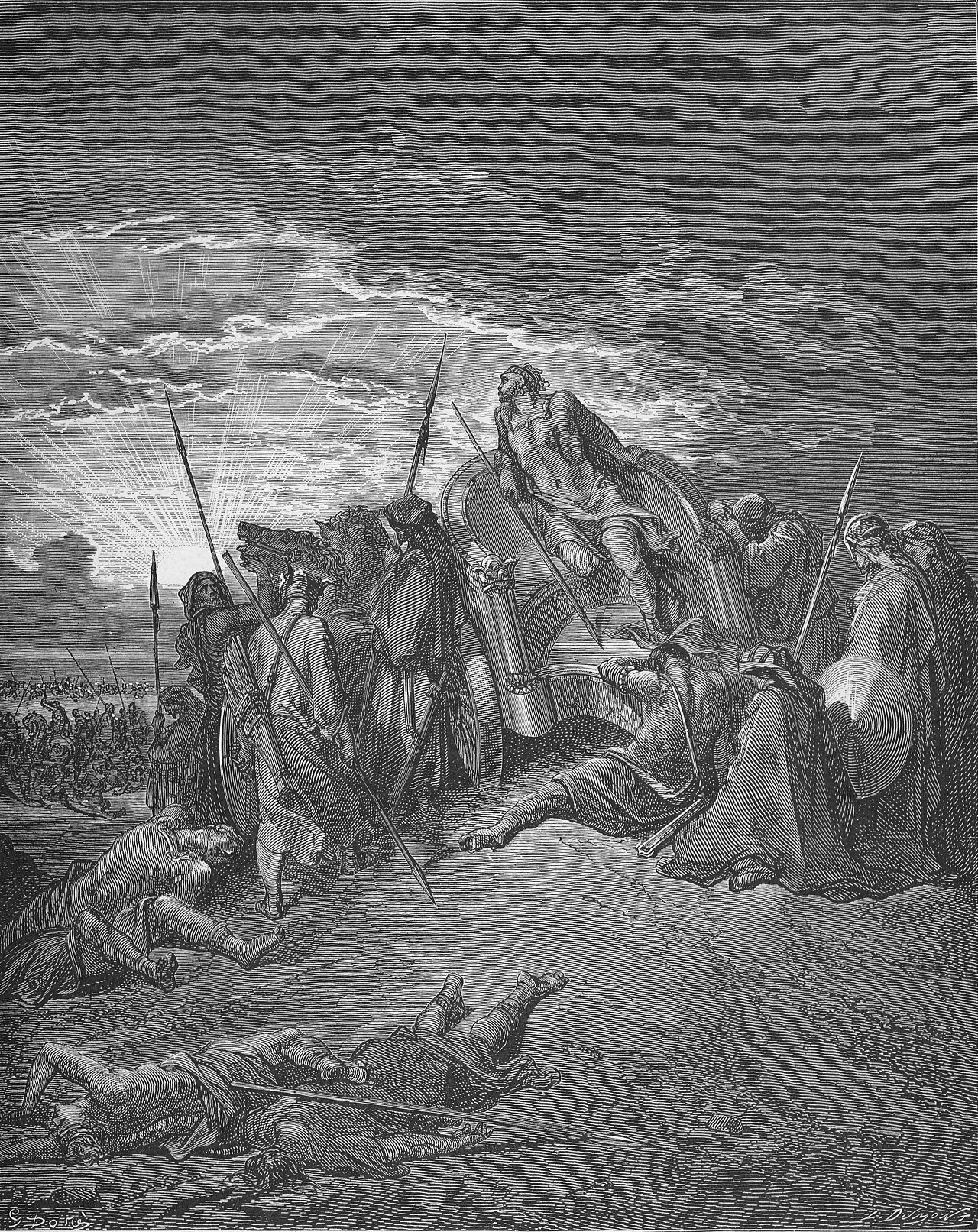
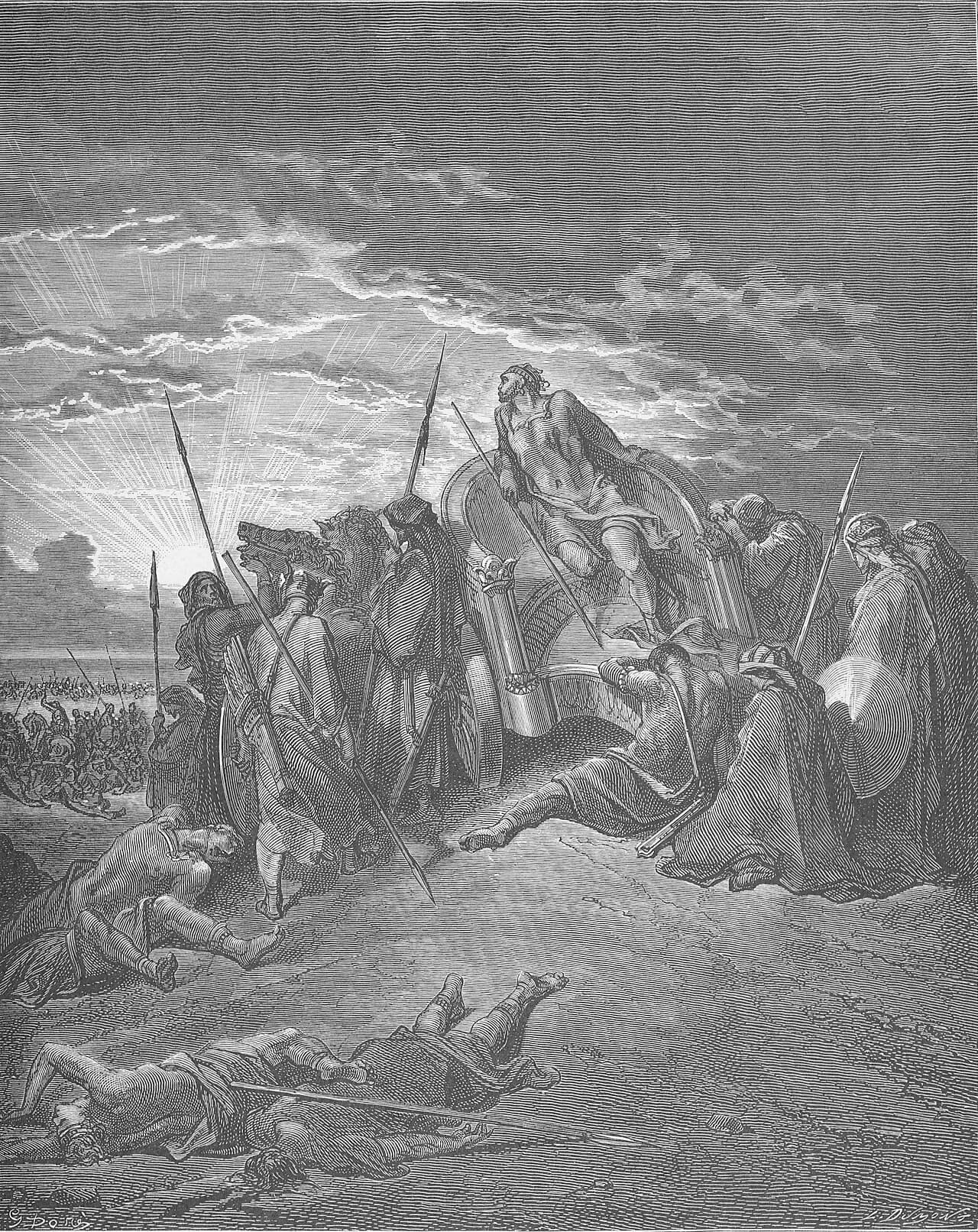
The Death of Ahab — Gustave Doré, The Holy Bible (1866), public domain
Summary
The seventh and most infamous king of Israel who married Jezebel and introduced systematic Baal worship to Israel. He was confronted by Elijah on Mount Carmel, murdered Naboth for his vineyard, and was killed by a random arrow at Ramoth-gilead.
- Among the passages here, Ahab is first named in 1 Kings 16:28: “And Omri rested with his fathers and was buried in Samaria, and his son…”
- The record places Ahab in Divided Kingdom.
- 90 verses name Ahab, in 5 books.
- 6 moments stand in order on this page, each with its verse.
On this page
Start here
(Surely there was never one like Ahab, who sold himself to do evil in the sight of the LORD, incited by his wife Jezebel.
1 Kings 21:25→- 6 key events in order
- 90 verses name Ahab, across 5 books
In Scripture
- Verses
- 90
- Books
- 5
Ahab
- Role
- 7th King of Israel
- Era
- Divided Kingdom
- Dates
- 874–853 BC
- Tribe
- Israel
- Father
- Omri
- Spouse
- Jezebel
- Children
- Ahaziah of Israel, Joram of Israel
The life in order
from the events the row records, with the first and last verse that names the person among the passages this page stands on
1Where the passages this page records open
2What the record holds, in its own order
- Married Jezebel and built Baal temple1 Kings 16:31-33And as if it were not enough for him to walk in the sins of Jeroboam son of Nebat, he even married Jezebel the daughter of Ethbaal king of the Sidonians, and he then proceeded to serve and worship Baal.
- Elijah announces drought1 Kings 17:1Now Elijah the Tishbite, who was among the settlers of Gilead, said to Ahab, “As surely as the LORD lives—the God of Israel before whom I stand—there will be neither dew nor rain in these years except at my word!”
- Mount Carmel confrontation1 Kings 18:17-40When Ahab saw Elijah, he said to him, “Is that you, O troubler of Israel?”
- Naboth's vineyard1 Kings 21:1-16Some time later, Naboth the Jezreelite happened to own a vineyard in Jezreel next to the palace of Ahab king of Samaria.
- Elijah's judgment and Ahab's repentance1 Kings 21:17-29Then the word of the LORD came to Elijah the Tishbite, saying,
- Killed by a random arrow1 Kings 22:34-38However, a certain man drew his bow without taking special aim, and he struck the king of Israel between the joints of his armor. So the king said to his charioteer, “Turn around and take me out of the battle, for I am badly wounded!”
Biography
Ahab's 22-year reign represented the zenith of northern Israel's power and the nadir of its spiritual life. He built a Baal temple in Samaria, made an Asherah pole, and did more to provoke God than all previous kings combined. His Phoenician wife Jezebel actively killed the LORD's prophets and imported hundreds of Baal and Asherah prophets.
The prophet Elijah confronted Ahab repeatedly: announcing a three-year drought, defeating the 450 prophets of Baal on Mount Carmel, and fleeing Jezebel's wrath to Horeb. When Jezebel engineered the judicial murder of Naboth to steal his vineyard, Elijah met Ahab in the vineyard with a devastating prophecy. Remarkably, Ahab humbled himself when he heard it, and God deferred judgment to the next generation.
He was killed in battle at Ramoth-gilead when a randomly shot arrow found the joint in his armor — exactly as prophesied. Dogs licked his blood as his chariot was washed at the pool of Samaria.
(Surely there was never one like Ahab, who sold himself to do evil in the sight of the LORD, incited by his wife Jezebel.
What they got right, and what they got wrong
Strengths
Military ability, some capacity for humility and remorse, successful battles, political alliances
Weaknesses
Idolatry, Baal worship, covetousness, murder by proxy, complete moral domination by Jezebel
Lessons
Sin incited by others is still our responsibility. Ahab had moments of genuine humility (he did weep over Naboth) but consistently surrendered his conscience to Jezebel. We cannot blame our spouses or anyone else for the sins we choose. Yet God's mercy remains available even to those deeply entangled in wickedness.
Spiritual significance
Ahab is a complex figure: intensely wicked yet capable of genuine humility when confronted. His momentary repentance moved God to defer judgment — showing God's mercy even toward the most corrupt. His story also demonstrates the destructive power of a spouse who incites sin.
Ahab in Scripture
Open a book to read its mentions here. Text: Berean Standard Bible. Names repeat in Scripture, so some of these verses may speak of another person called Ahab. The two marks are drawn from the chapters this page's own references stand in.
Old TestamentNew Testamentsegment width = share of mentions
Old Testament5 books · 90 mentions
1 Kings53 mentions
- 1 Kings 16:28And Omri rested with his fathers and was buried in Samaria, and his son Ahab reigned in his place.
- 1 Kings 16:29In the thirty-eighth year of Asa’s reign over Judah, Ahab son of Omri became king of Israel, and he reigned in Samaria twenty-two years.
- 1 Kings 16:30However, Ahab son of Omri did evil in the sight of the LORD, more than all who were before him.
- 1 Kings 16:32First, Ahab set up an altar for Baal in the temple of Baal that he had built in Samaria.
- 1 Kings 16:33Then he set up an Asherah pole. Thus Ahab did more to provoke the LORD, the God of Israel, to anger than all the kings of Israel before him.
48 further mentions in 1 Kings, read them in the book.
2 Kings22 mentions
- 2 Kings 1:1After the death of Ahab, Moab rebelled against Israel.
- 2 Kings 3:1In the eighteenth year of Jehoshaphat’s reign over Judah, Jehoram son of Ahab became king of Israel, and he reigned in Samaria twelve years.
- 2 Kings 3:5But after the death of Ahab, the king of Moab rebelled against the king of Israel.
- 2 Kings 8:16In the fifth year of the reign of Joram son of Ahab over Israel, Jehoram son of Jehoshaphat succeeded his father as king of Judah.
- 2 Kings 8:18And Jehoram walked in the ways of the kings of Israel, just as the house of Ahab had done. For he married a daughter of Ahab and did evil in the sight of the LORD.
17 further mentions in 2 Kings, read them in the book.
2 Chronicles12 mentions
- 2 Chronicles 18:1Now Jehoshaphat had riches and honor in abundance, and he allied himself with Ahab by marriage.
- 2 Chronicles 18:2And some years later he went down to visit Ahab in Samaria, where Ahab sacrificed many sheep and cattle for him and the people with him, and urged him to march up to Ramoth-gilead.
- 2 Chronicles 18:3Ahab king of Israel asked Jehoshaphat king of Judah, “Will you go with me against Ramoth-gilead?” And Jehoshaphat replied, “I am like you, and my people are your people; we will join you in the war.”
- 2 Chronicles 18:19And the LORD said, ‘Who will entice Ahab king of Israel to march up and fall at Ramoth-gilead?’ And one suggested this, and another that.
- 2 Chronicles 21:6And Jehoram walked in the ways of the kings of Israel, just as the house of Ahab had done. For he married a daughter of Ahab and did evil in the sight of the LORD.
7 further mentions in 2 Chronicles, read them in the book.
Jeremiah2 mentions
- Jeremiah 29:21This is what the LORD of Hosts, the God of Israel, says about Ahab son of Kolaiah and Zedekiah son of Maaseiah, who are prophesying to you lies in My name: “I will deliver them to Nebuchadnezzar king of Babylon, and he will kill them before your very eyes.
- Jeremiah 29:22Because of them, all the exiles of Judah who are in Babylon will use this curse: ‘May the LORD make you like Zedekiah and Ahab, whom the king of Babylon roasted in the fire!’
Keep studying
On this page
Keep this page