

Place
Hebron
Also known as Kiriath-arba · Kirjath-arba
Gustave Doré, La Sainte Bible (Tours: Alfred Mame et fils, 1866). Public domain.
Summary
The city of the patriarchs, where Abraham bought the cave of Machpelah, Caleb took his inheritance, and David reigned seven years before Jerusalem.
- The only ground Abraham ever owned in Canaan was one field with a cave in it, bought for a grave.
- Six of the patriarchs and matriarchs are buried in that cave: Sarah, Abraham, Isaac, Rebekah, Leah and Jacob.
- Ten spies saw the Anakim here and lost a generation. Caleb asked for the same hill country at eighty-five and took it.
- David was anointed king at Hebron twice and reigned there seven years and six months before Jerusalem was his.
- Absalom began his revolt here, in the town where he was born and where his father was first crowned.
On this page
In Scripture
- Verses
- 70
- Books
- 11
Near Hebron
- Mamre1.5 km · 0.9 mi N
- Machpelah2.0 km · 1.2 mi SE
- Tekoa16 km · 9.9 mi NE
- The Valley of Elah21 km · 13 mi NW
- Bethlehem21 km · 13 mi NE
- Lachish24 km · 15 mi W
Straight-line distances, computed from the gazetteer coordinates.
Where it is
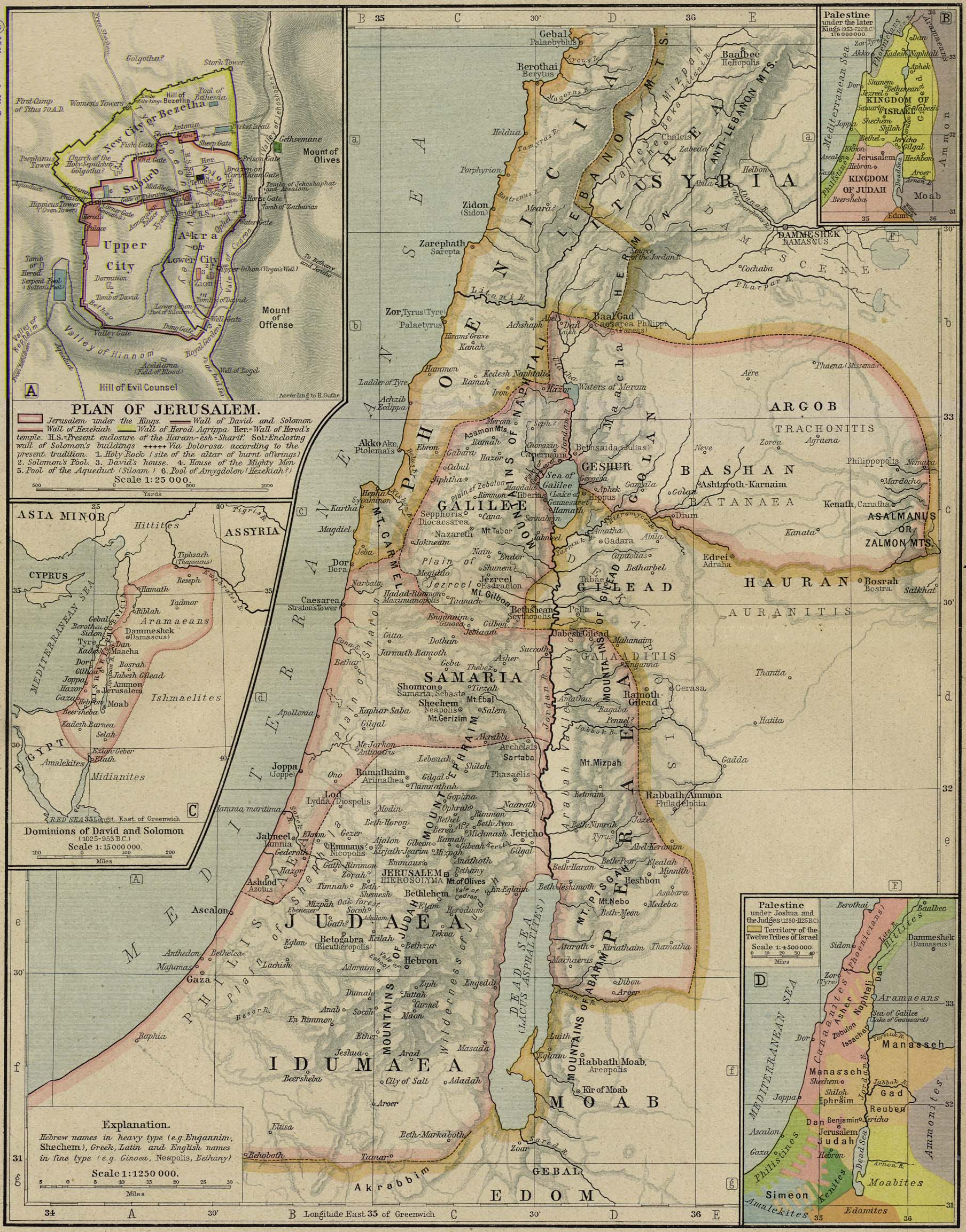
the country around it
- Coordinates
- 31.5358° N, 35.0941° Efind it on the Atlas →
- Region
- Judean hill country
- Kind of place
- City
3 places the record names with Hebron, the farthest 28 km away
- 1Abram settles by the Oaks of Mamre at HebronGenesis 13:18 · 1.5 kmSo Abram moved his tent and went to live near the Oaks of Mamre at Hebron, where he built an altar to the LORD.
- 2Isaac and Ishmael bury Abraham in the caveGenesis 25:9 · 2 kmHis sons Isaac and Ishmael buried him in the cave of Machpelah near Mamre, in the field of Ephron son of Zohar the Hittite.
- 3Seven years and six months in Hebron2 Samuel 5:5 · 28 kmIn Hebron he reigned over Judah seven years and six months, and in Jerusalem he reigned thirty-three years over all Israel and Judah.
- Located: the gazetteer fixes one site
- Placed: the point stands for an area, or is rounded
- A dashed line ends at a place the gazetteer does not fix
Not located: Egypt, Canaan. The gazetteer records no location for them, so they are not marked.
Why Hebron matters
What has been found
the evidence, and where it is disputed
The purchase of the cave of Machpelah
Genesis 23, in the order it happens
Read Genesis 23, in the order it happens
- Sarah dies at Kiriath-arbaGenesis 23:2She died in Kiriath-arba (that is, Hebron) in the land of Canaan, and Abraham went out to mourn and to weep for her.
- Abraham asks the Hittites for a burial siteGenesis 23:4“I am a foreigner and an outsider among you. Give me a burial site among you so that I can bury my dead.”
- He names the cave he wants and the man who owns itGenesis 23:9to sell me the cave of Machpelah that belongs to him; it is at the end of his field. Let him sell it to me in your presence for full price, so that I may have a burial site.”
- Ephron offers the field as a giftGenesis 23:11“No, my lord. Listen to me. I give you the field, and I give you the cave that is in it. I give it to you in the presence of my people. Bury your dead.”
- Abraham refuses the gift and asks for a priceGenesis 23:13and said to Ephron in their presence, “If you will please listen to me, I will pay you the price of the field. Accept it from me, so that I may bury my dead there.”
- Ephron names four hundred shekels of silverGenesis 23:15“Listen to me, my lord. The land is worth four hundred shekels of silver, but what is that between you and me? Bury your dead.”
- The silver weighed out in the hearing of the HittitesGenesis 23:16Abraham agreed to Ephron’s terms and weighed out for him the price he had named in the hearing of the Hittites: four hundred shekels of silver, according to the standard of the merchants.
- Deeded over at the gate of the cityGenesis 23:18to Abraham’s possession in the presence of all the Hittites who had come to the gate of his city.
- Sarah buried in the caveGenesis 23:19After this, Abraham buried his wife Sarah in the cave of the field at Machpelah near Mamre (that is, Hebron) in the land of Canaan.
- The terms stated once more, as a deedGenesis 23:20So the field and its cave were deeded by the Hittites to Abraham as a burial site.
The deed is recited three times. Genesis 23:17 to 23:20 states the terms, Jacob repeats them from his deathbed at 49:30 to 49:32, and 50:13 states them again when his sons carry the burial out.
Sarah, and the chapter that buys the fieldWhat happened here, in order
in the order the canon tells it
- Abram settles by the Oaks of Mamre at HebronGenesis 13:18So Abram moved his tent and went to live near the Oaks of Mamre at Hebron, where he built an altar to the LORD.
- Isaac and Ishmael bury Abraham in the caveGenesis 25:9His sons Isaac and Ishmael buried him in the cave of Machpelah near Mamre, in the field of Ephron son of Zohar the Hittite.
- Jacob comes home to Isaac at MamreGenesis 35:27Jacob returned to his father Isaac at Mamre, near Kiriath-arba (that is, Hebron), where Abraham and Isaac had stayed.
- Joseph sent out from the Valley of HebronGenesis 37:14Then Israel told him, “Go now and see how your brothers and the flocks are faring, and bring word back to me.” So he sent him off from the Valley of Hebron. And when Joseph arrived in Shechem,
- Jacob names who already lies in the caveGenesis 49:31There Abraham and his wife Sarah are buried, there Isaac and his wife Rebekah are buried, and there I buried Leah.
- Jacob carried out of Egypt and buried thereGenesis 50:13They carried him to the land of Canaan and buried him in the cave at Machpelah in the field near Mamre, which Abraham had purchased from Ephron the Hittite as a burial site.
- The spies reach Hebron and see the AnakimNumbers 13:22They went up through the Negev and came to Hebron, where Ahiman, Sheshai, and Talmai, the descendants of Anak, dwelled. It had been built seven years before Zoan in Egypt.
- The bad report names the NephilimNumbers 13:33We even saw the Nephilim there—the descendants of Anak that come from the Nephilim! We seemed like grasshoppers in our own sight, and we must have seemed the same to them!”
- Joshua goes up from Eglon to HebronJoshua 10:36Then Joshua and all Israel with him went up from Eglon to Hebron and fought against it.
- Where the surviving Anakim ended upJoshua 11:22No Anakim were left in the land of the Israelites; only in Gaza, Gath, and Ashdod did any survive.
- Joshua gives Hebron to CalebJoshua 14:13Then Joshua blessed Caleb son of Jephunneh and gave him Hebron as his inheritance.
- Hebron set apart as a city of refugeJoshua 20:7So they set apart Kedesh in Galilee in the hill country of Naphtali, Shechem in the hill country of Ephraim, and Kiriath-arba (that is, Hebron) in the hill country of Judah.
- The city given to the priestsJoshua 21:13So to the descendants of Aaron the priest they gave these cities, together with their pasturelands: Hebron, a city of refuge for the manslayer, Libnah,
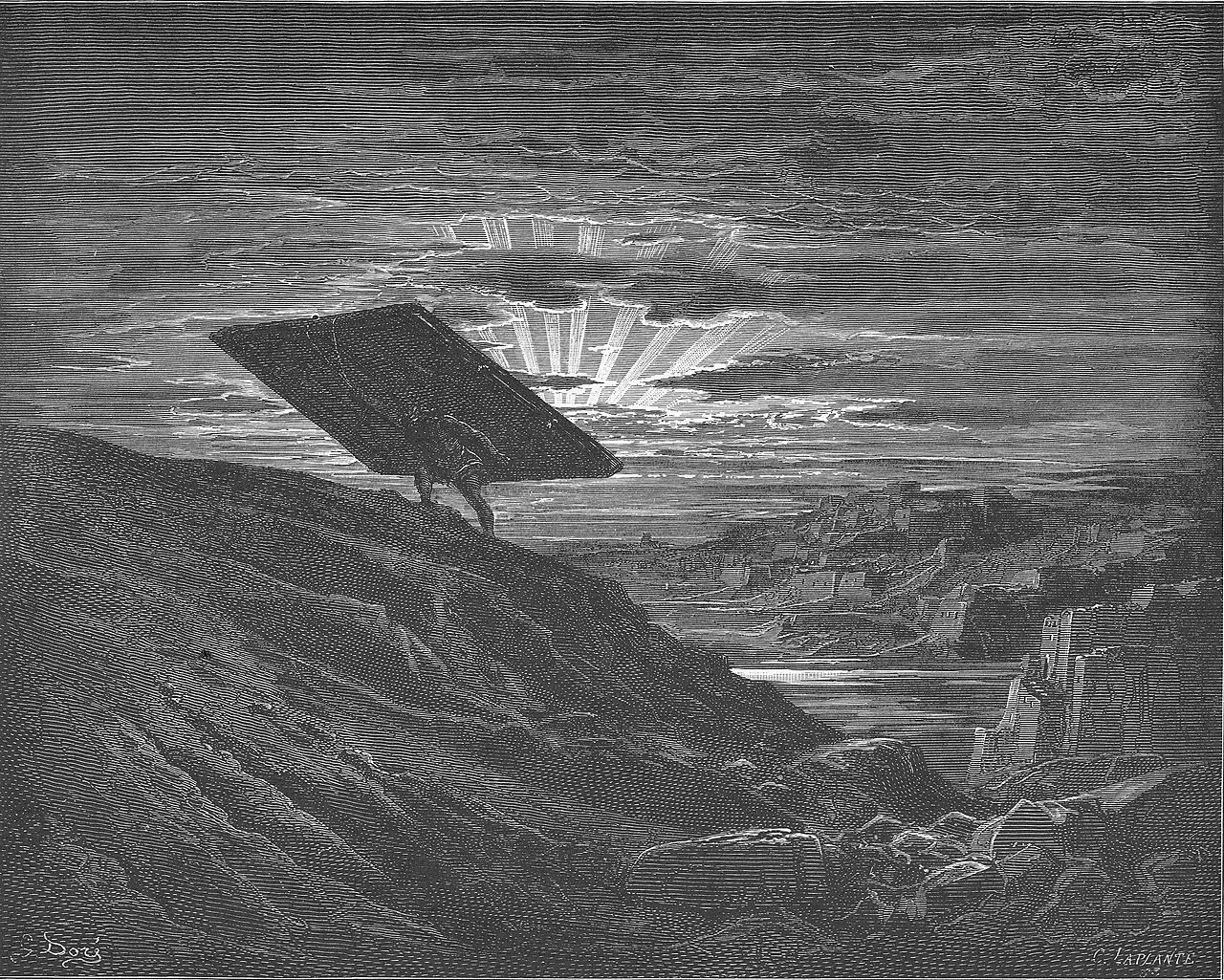
- Samson carries the gates of Gaza toward HebronJudges 16:3But Samson lay there only until midnight, when he got up, took hold of the doors of the city gate and both gateposts, and pulled them out, bar and all. Then he put them on his shoulders and took them to the top of the mountain overlooking Hebron.
- The men of Judah anoint David king at Hebron2 Samuel 2:4Then the men of Judah came to Hebron, and there they anointed David king over the house of Judah. And they told David, “It was the men of Jabesh-gilead who buried Saul.”
- Abner murdered in the gateway2 Samuel 3:27When Abner returned to Hebron, Joab pulled him aside into the gateway, as if to speak to him privately, and there Joab stabbed him in the stomach. So Abner died on account of the blood of Joab’s brother Asahel.
- All Israel makes a covenant with David here2 Samuel 5:3So all the elders of Israel came to the king at Hebron, where King David made with them a covenant before the LORD. And they anointed him king over Israel.
- Seven years and six months in Hebron2 Samuel 5:5In Hebron he reigned over Judah seven years and six months, and in Jerusalem he reigned thirty-three years over all Israel and Judah.
- Absalom sends word that he reigns in Hebron2 Samuel 15:10Then Absalom sent spies throughout the tribes of Israel with this message: “When you hear the sound of the horn, you are to say, ‘Absalom reigns in Hebron!’”
- Judah lives again at Kiriath-arba after the exileNehemiah 11:25As for the villages with their fields, some of the people of Judah lived in Kiriath-arba, Dibon, Jekabzeel, and their villages;
Where it points
The voices
each quoted from the work named
Sarah's death was the occasion for the patriarch's first instance of acquiring land. Sacred Scripture in fact shows us in every case the patriarch's virtue, in that he passed all his time as an alien and a nomad. And it mentions this latest item for us to learn that the man who enjoyed so much assistance from on high, who had become so famous and had increased in number to such a vast multitude, could not call a place his own, unlike many people today, who give all their attention to acquiring land, whole towns and great wealth beyond telling. You see, he had sufficient riches in his attitude, and he put no store by these other things. Let those heed this who in the twinkling of an eye take to themselves every conceivable thing and, so to say, stretch out in all directions their passion for avarice. Let them also imitate the patriarch, who had not even a place to inter Sarah's remains until, under pressure of very necessity, he bought the field and cave from the Hittites.
I will give thee money for the field - It was not in pride that Abraham refused the gift; but 1. Abraham was rich in silver and gold, and therefore would not take advantage of Ephron's generosity. He would pay for it, lest Ephron, when this good humour was over, should upbraid him with it.
Abraham buried Sarah--Thus he got possession of Machpelah and deposited the remains of his lamented partner in a family vault which was the only spot of ground he owned.
4 more teachers on these versesAdam Clarke · Origen of Alexandria · Charles Spurgeon
Bury me with my fathers, etc. - From this it appears that the cave at Machpelah was a common burying-place for Hebrews of distinction; and indeed the first public burying-place mentioned in history. From Gen 49:31 we find that Abraham, Sarah, Isaac, Rebekah, and Leah, had been already deposited there, and among them Jacob wished to have his bones laid; and he left his dying charge with his children to bury him in this place, and this they conscientiously performed. See Gen 50:13.
In Gaza, in Gath, and in Ashdod - The whole race of the Anakims was extirpated in this war, except those who had taken refuge in the above cities, which belonged to the Philistines; and in which some of the descendants of Anak were found even in the days of David.
But Hebron means "union" or "marriage." Perhaps this can be expressed by Hebron because the double cave purchased by the patriarch Abraham is there, and the remains of the fathers and their wives lie there: Abraham with Sarah, Isaac with Rebecca, and Jacob with Leah. Thus Caleb deserved to receive the remains of the fathers for an inheritance, because no doubt through the wisdom that was in him and by which he flourished both under Moses and under Jesus [Joshua], he had understood the nature of the union itself.
I suppose that this Psalm was written by David about the time when he was invested with regal authority and took the reins of government in his hands. Three times, you will remember, he was anointed king. First, in the house of his father, Jesse the Bethlemite, when, "Samuel took the horn of oil and anointed him in the midst of his brethren" (1 Sam. 16:13). Secondly, at Hebron, when, "The men of Judah came and there they anointed him king over the house of Judah" (2 Sam. 2:4). And thirdly, when all the elders of Israel came to the king 7 V years afterwards, "And David made a league with them in Hebron before the Lord, and they anointed David king over Israel" (2 Sam. 5:3).
Hebron in Scripture
70 verses name it, or one of its other names (Kiriath-arba, Kirjath-arba), in 11 books
Open a book to read its mentions here. Text: Berean Standard Bible.
Old TestamentNew Testamentsegment width = share of mentions
Old Testament11 books · 70 mentions
Genesis5 mentions
- Genesis 13:18So Abram moved his tent and went to live near the Oaks of Mamre at Hebron, where he built an altar to the LORD.
- Genesis 23:2She died in Kiriath-arba (that is, Hebron) in the land of Canaan, and Abraham went out to mourn and to weep for her.
- Genesis 23:19After this, Abraham buried his wife Sarah in the cave of the field at Machpelah near Mamre (that is, Hebron) in the land of Canaan.
- Genesis 35:27Jacob returned to his father Isaac at Mamre, near Kiriath-arba (that is, Hebron), where Abraham and Isaac had stayed.
- Genesis 37:14Then Israel told him, “Go now and see how your brothers and the flocks are faring, and bring word back to me.” So he sent him off from the Valley of Hebron. And when Joseph arrived in Shechem,
Exodus1 mention
Numbers2 mentions
Joshua16 mentions
- Joshua 10:3Therefore Adoni-zedek king of Jerusalem sent word to Hoham king of Hebron, Piram king of Jarmuth, Japhia king of Lachish, and Debir king of Eglon, saying,
- Joshua 10:5So the five kings of the Amorites—the kings of Jerusalem, Hebron, Jarmuth, Lachish, and Eglon—joined forces and advanced with all their armies. They camped before Gibeon and made war against it.
- Joshua 10:23So they brought the five kings out of the cave—the kings of Jerusalem, Hebron, Jarmuth, Lachish, and Eglon.
- Joshua 10:36Then Joshua and all Israel with him went up from Eglon to Hebron and fought against it.
- Joshua 10:37They captured it and put to the sword its king, all its villages, and all the people. Joshua left no survivors, just as he had done at Eglon; he devoted to destruction Hebron and everyone in it.
- Joshua 10:39And they captured Debir, its king, and all its villages. They put them to the sword and devoted to destruction everyone in the city, leaving no survivors. Joshua did to Debir and its king as he had done to Hebron and as he had done to Libnah and its king.
- Joshua 11:21At that time Joshua proceeded to eliminate the Anakim from the hill country of Hebron, Debir, and Anab, and from all the hill country of Judah and of Israel. Joshua devoted them to destruction, along with their cities.
- Joshua 12:10the king of Jerusalem, one; the king of Hebron, one;
8 further mentions in Joshua, read them in the book.
Judges3 mentions
- Judges 1:10Judah also marched against the Canaanites who were living in Hebron (formerly known as Kiriath-arba), and they struck down Sheshai, Ahiman, and Talmai.
- Judges 1:20Just as Moses had promised, Judah gave Hebron to Caleb, who drove out the descendants of the three sons of Anak.
- Judges 16:3But Samson lay there only until midnight, when he got up, took hold of the doors of the city gate and both gateposts, and pulled them out, bar and all. Then he put them on his shoulders and took them to the top of the mountain overlooking Hebron.
1 Samuel1 mention
2 Samuel23 mentions
- 2 Samuel 2:1Some time later, David inquired of the LORD, “Should I go up to one of the towns of Judah?” “Go up,” the LORD answered. Then David asked, “Where should I go?” “To Hebron,” replied the LORD.
- 2 Samuel 2:3David also took the men who were with him, each with his household, and they settled in the towns near Hebron.
- 2 Samuel 2:4Then the men of Judah came to Hebron, and there they anointed David king over the house of Judah. And they told David, “It was the men of Jabesh-gilead who buried Saul.”
- 2 Samuel 2:11And the length of time that David was king in Hebron over the house of Judah was seven years and six months.
- 2 Samuel 2:32Later, they took Asahel and buried him in his father’s tomb in Bethlehem. Then Joab and his men marched all night and reached Hebron at daybreak.
- 2 Samuel 3:2And sons were born to David in Hebron: His firstborn was Amnon, by Ahinoam of Jezreel;
- 2 Samuel 3:5and his sixth was Ithream, by David’s wife Eglah. These sons were born to David in Hebron.
- 2 Samuel 3:19Abner also spoke to the Benjamites and went to Hebron to tell David all that seemed good to Israel and to the whole house of Benjamin.
15 further mentions in 2 Samuel, read them in the book.
1 Kings1 mention
1 Chronicles16 mentions
- 1 Chronicles 2:42The sons of Caleb the brother of Jerahmeel: Mesha his firstborn, who was the father of Ziph, and Mareshah his second son, who was the father of Hebron.
- 1 Chronicles 2:43The sons of Hebron:
- 1 Chronicles 3:1These were the sons of David who were born to him in Hebron: The firstborn was Amnon by Ahinoam of Jezreel; the second was Daniel by Abigail of Carmel;
- 1 Chronicles 3:4These six sons were born to David in Hebron, where he reigned seven years and six months. And David reigned in Jerusalem thirty-three years,
- 1 Chronicles 6:2The sons of Kohath: Amram, Izhar, Hebron, and Uzziel.
- 1 Chronicles 6:18The sons of Kohath: Amram, Izhar, Hebron, and Uzziel.
- 1 Chronicles 6:55They were given Hebron in the land of Judah and its surrounding pasturelands.
- 1 Chronicles 6:57So the descendants of Aaron were given Hebron (a city of refuge), Libnah, Jattir, Eshtemoa,
8 further mentions in 1 Chronicles, read them in the book.
2 Chronicles1 mention
The account
Read the account as one telling
Abram came to Hebron early. He moved his tent to the oaks of Mamre, built an altar to the LORD there, and was still living there when the news of Lot’s capture reached him. Genesis 18 opens at the same oaks, where the LORD appeared to him in the heat of the day, and from that spot he pleaded for Sodom.
Sarah died at Kiriath-arba, and Abraham bought the cave of Machpelah and the field around it from Ephron the Hittite. That purchase is the town’s defining event and is set out above, step by step.
The cave then took the family one at a time. Isaac and Ishmael buried Abraham beside Sarah. Jacob came home from Paddan-aram to his father at Mamre, and when Isaac died at 180 his sons Esau and Jacob buried him. It was from the Valley of Hebron that Jacob sent Joseph to look for his brothers at Shechem, the errand that ended with Joseph sold into Egypt. Years later, dying in Egypt, Jacob recited the terms of Abraham’s purchase to his sons and named who already lay in the cave: Abraham and Sarah, Isaac and Rebekah, and Leah. His sons carried him back to Canaan and laid him there.
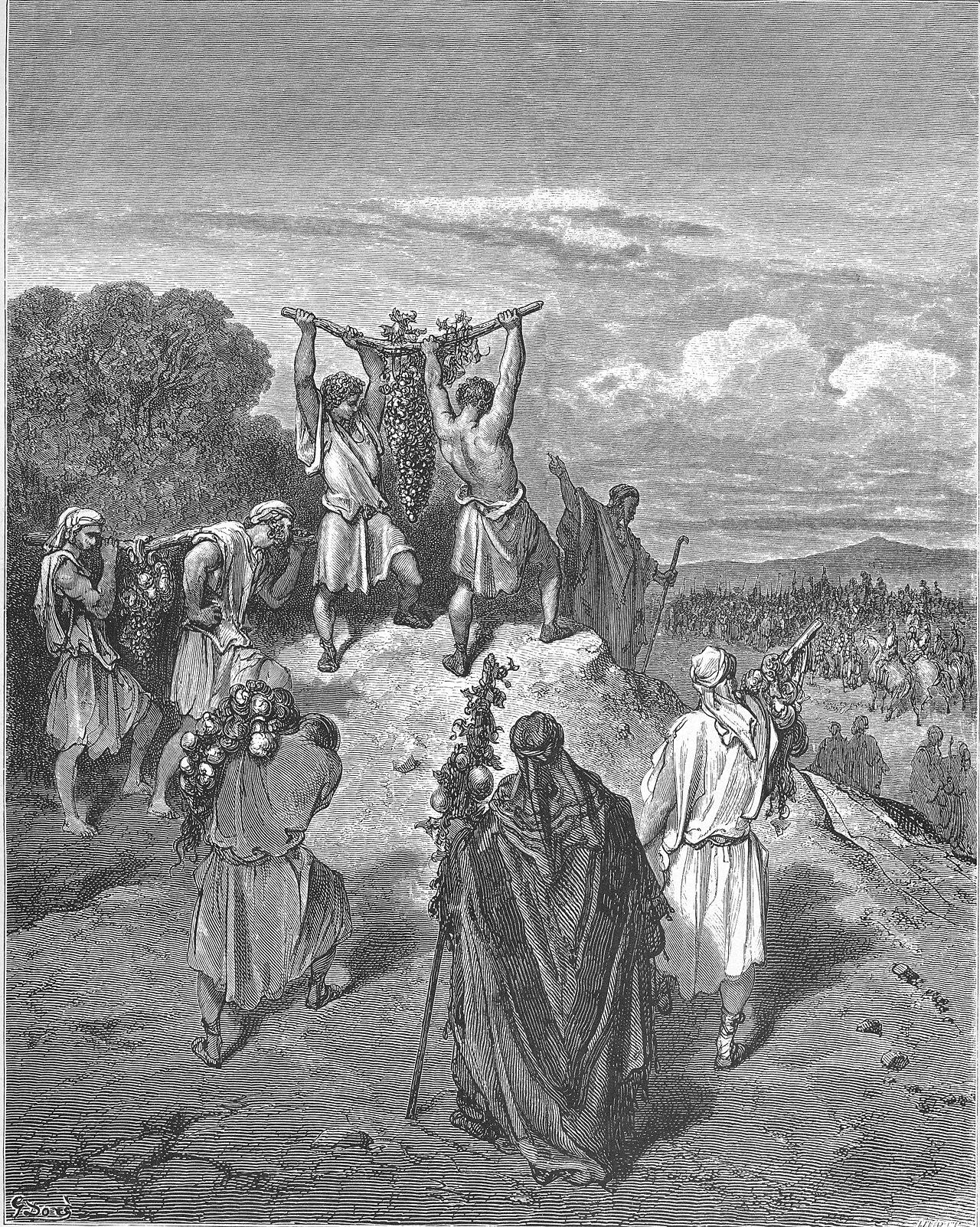
When the twelve spies went up from Kadesh-barnea they came through the Negev to Hebron. Numbers 13:22 names three of the men living there, Ahiman, Sheshai and Talmai, calls them descendants of Anak, and adds that the town had been built seven years before Zoan in Egypt. In the valley of Eshcol nearby the spies cut the cluster of grapes that two men carried on a pole. Ten of them came back saying the people were stronger than Israel, and their report ran to the Nephilim.
Joshua took the city in the southern campaign, going up from Eglon to Hebron and fighting against it, and afterward he cleared the Anakim out of its hill country. Joshua 11:22 records where the survivors went: no Anakim were left in Israel’s land, and only in Gaza, Gath and Ashdod did any survive.
Caleb then asked for it. He had been one of the two spies who brought back an honest report, he was eighty-five when he came to Joshua at Gilgal, and he asked for the one hill country whose defenders had frightened the nation. Joshua blessed him and gave him Hebron, and the text gives the reason twice, because he wholly followed the LORD, the God of Israel. Caleb drove out the three sons of Anak, and Judges tells the same campaign from Judah’s side.
The town was then divided by law. Hebron was set apart as one of the six cities of refuge and given with its pasturelands to the descendants of Aaron, while the fields and villages around it stayed with Caleb as his possession. Joshua 21 states both in the same breath. One later scene belongs to this period: Samson pulled the gates of Gaza out of the ground at midnight and carried them to the top of the mountain overlooking Hebron.
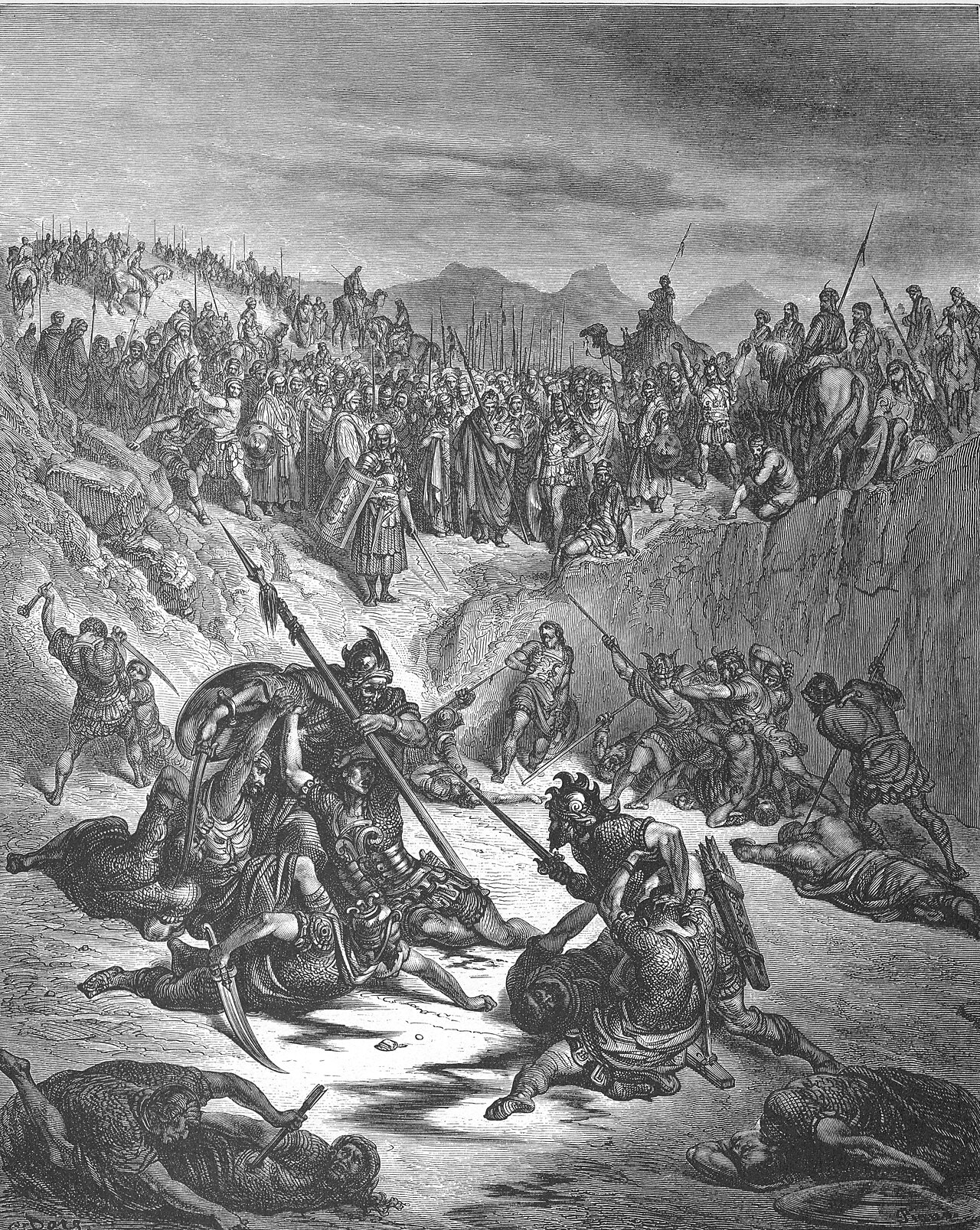
David remembered the town while he was still an outlaw at Ziklag and sent Hebron a share of the plunder. After Saul died he asked the LORD whether he should go up to one of the towns of Judah, and was told to go to Hebron. The men of Judah anointed him king there while Abner made Saul’s son Ish-bosheth king at Mahanaim, and the war between the two houses dragged on. Six sons were born to David at Hebron, Amnon, Chileab, Absalom, Adonijah, Shephatiah and Ithream. Abner came over to David here and was murdered by Joab in the gateway, and David cursed Joab’s house for it and walked behind the funeral bier. When the men who killed Ish-bosheth brought his head to Hebron, David had them executed and buried the head in Abner’s tomb.
Common questions
Why did Abraham pay for a field God had already promised him?
God had given him the whole land by promise, and he had not yet received a foot of it. Buying one field in front of witnesses put a legal title on the only ground he needed at that moment, a grave, without pretending the promise had already arrived.
Hebrews reads the arrangement as deliberate. He lived in tents because he was looking forward to the city with foundations, whose architect and builder is God.
What was four hundred shekels of silver worth?
The text gives the weight and the standard rather than a price comparison. The silver was weighed out according to the standard of the merchants, in the hearing of the Hittites.
John Wesley reckoned the sum in 1765 at "about fifty pounds of our money," which tells you what it meant to a reader then rather than what it meant in Canaan. Whether Ephron named a fair price or a steep one, Scripture does not say, and this page does not guess.
Who is buried in the cave?
Six people by name: Sarah, Abraham, Isaac, Rebekah, Leah and Jacob. Genesis 49:31 lists five of them in Jacob’s own words, and Genesis 50:13 adds Jacob himself.
Rachel is not among them. She was buried on the road to Ephrath, and Jacob says so in the same speech. Joseph’s bones were carried up out of Egypt and buried at Shechem.
Then why does Acts 7:16 say the fathers were buried at Shechem in a tomb Abraham bought?
Readers differ; the positions are named
Stephen is summarising centuries in a sentence, and Genesis records two purchases: Abraham’s field at Hebron from Ephron the Hittite, and Jacob’s plot at Shechem from the sons of Hamor, where Joseph was later buried.
Readers have taken the verse three ways. Some hold that Stephen compresses both purchases and both burial sites into one summary clause, which is the common reading among the older commentators. Some hold that he follows a tradition that some of the twelve sons were buried at Shechem rather than at Hebron. Some hold that the sentence has suffered in transmission. This page names the three and settles none of them.
Were the Anakim giants, and what does Numbers 13:33 mean?
Readers differ; the positions are named
The spies report the descendants of Anak that come from the Nephilim and say they felt like grasshoppers, and Scripture calls what they brought back a bad report about the land.
Some readers take the whole description as the panic of frightened men, since Caleb saw the same city and drew the opposite conclusion. Others take the lineage as a plain statement, read it back to Genesis 6:4, which is how this site’s tradition reads it, and forward to Joshua 11:22, where the surviving Anakim end up in Gaza, Gath and Ashdod, the towns Goliath later comes from.
How could Hebron be Caleb’s inheritance, a city of refuge and a priests’ city all at once?
Joshua 21 splits it and says so in one breath. The city and its pasturelands went to the descendants of Aaron and served as a city of refuge for the manslayer, while the fields and villages around the city stayed with Caleb as his possession.
The arrangement is stated rather than explained, and it holds through Judges, where Caleb’s family is still there.
Why did David reign at Hebron for seven and a half years before Jerusalem?
He asked the LORD where to go and was sent here, and at first only Judah anointed him. The rest of the nation followed Ish-bosheth while the war between the two houses dragged on.
Hebron was the chief town of Judah, in the middle of his own tribe, a priests’ city, and next to the graves of the fathers. When the other tribes finally came, they came to Hebron, and the covenant making him king over all Israel was cut there.
Why did Absalom start his revolt at Hebron?
He asked leave to pay a vow there and used the gathering as cover, sending word through all the tribes that Absalom reigns in Hebron.
It was his own birthplace and the town where his father had first been crowned, so a coronation there carried weight that a coronation anywhere else would not. Two hundred men went with him from Jerusalem knowing nothing about it.
Is the building over the cave the tomb of the patriarchs?
Readers differ; the positions are named
A large stone enclosure stands over the traditional site. The standard attribution gives it to Herod the Great, between 31 and 4 BC, and it is the tradition’s oldest surviving marker rather than its proof.
The chambers beneath have never been excavated and published. The earliest dated material recovered from them is pottery of the eighth century BC, which shows the caves were being visited then and shows nothing about who lies in them. Scripture locates the cave at Machpelah near Mamre, and this page reports the evidence and stops there.
Notable art
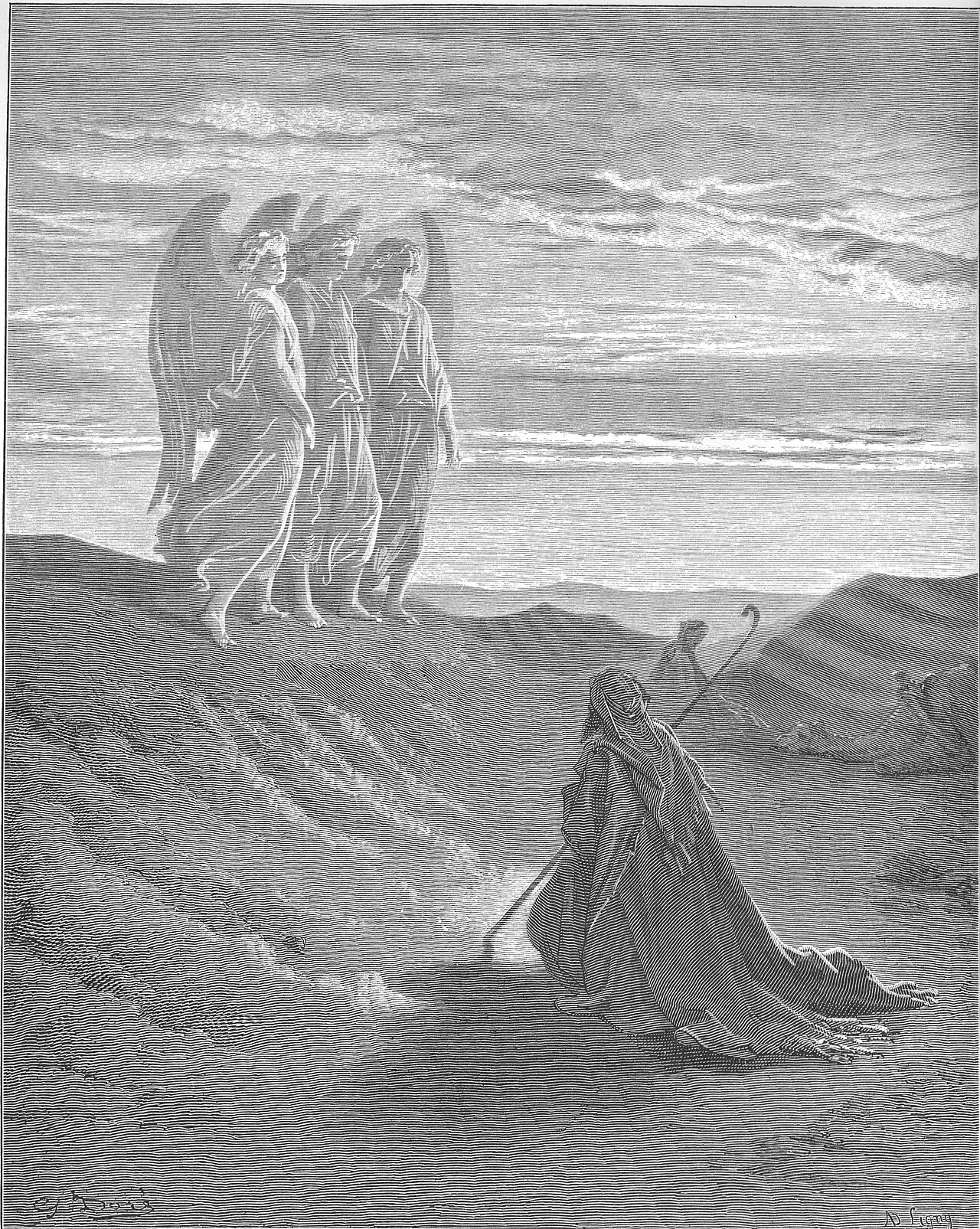
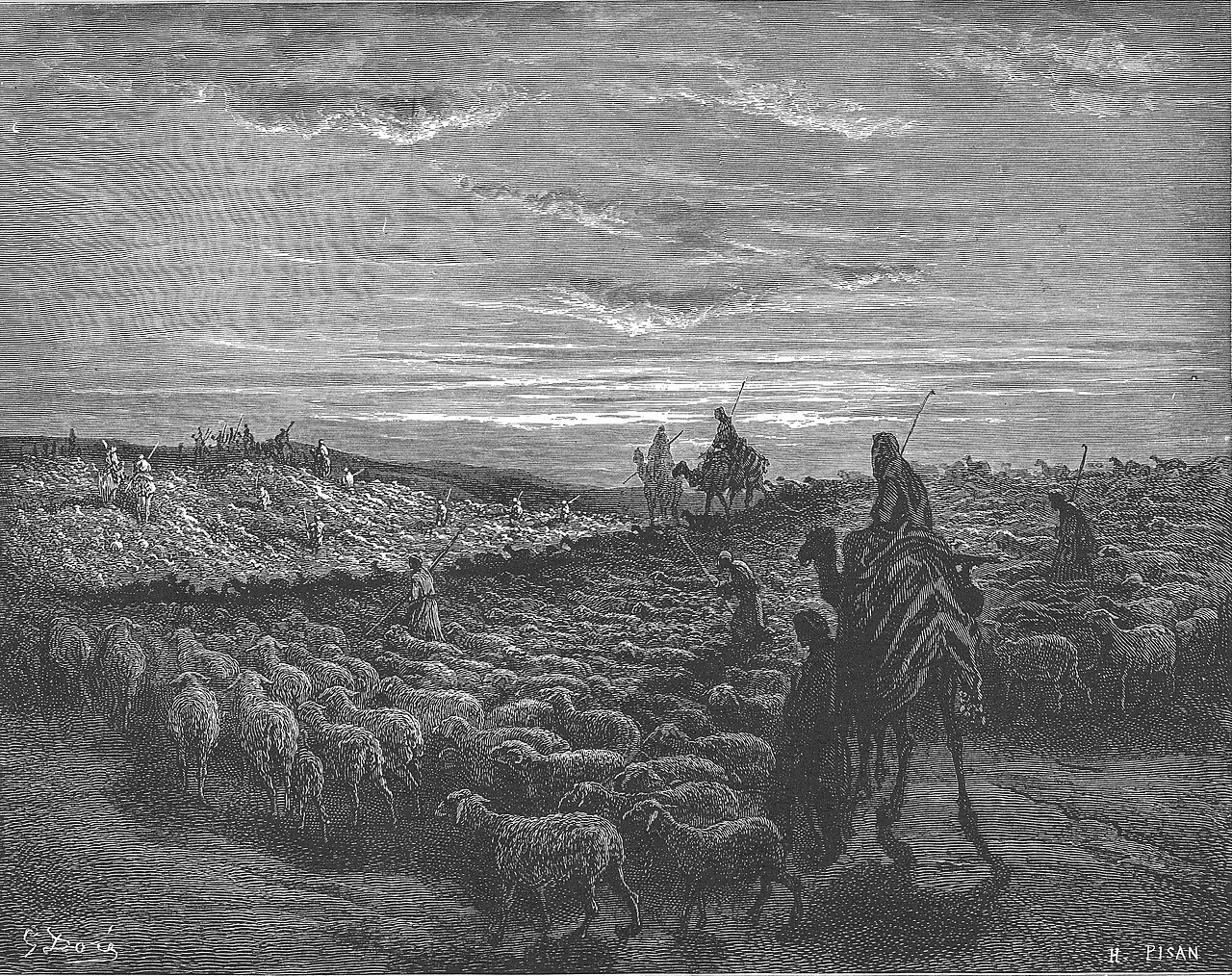
5 verified pieces depicting Hebron
Sources cited
- OpenBible.info Bible Geocoding: Hebronread 2026-09-02The coordinates on this page. Used under CC-BY with attribution to OpenBible.info.
- Berean Standard BiblePublic domain since 2023. Every verse quoted on this page, from the site’s own verse store.
- Gustave Doré, La Sainte Bible (Tours: Alfred Mame et fils, 1866)The six engravings on this page. Public domain.
- John Chrysostom, Homilies on Genesis 48, AD 407Quoted on Genesis 23:6, and cited in the Christ section for Homilies on Genesis 48.3 to 48.4. Public domain.
- Theodoret of Cyrus, Interpretation of Hebrews 11, AD 458Cited in the Christ section for reading Genesis 23:4 into Hebrews 11:13. Not quoted here, because the stored text breaks mid-sentence.
- John Wesley, Explanatory Notes upon the Old Testament (1765)Quoted on Genesis 23:13, and cited for his reckoning of the four hundred shekels. Public domain.
- Adam Clarke, Commentary on the Bible (1832)Quoted on Genesis 49:29 and Joshua 11:22, and cited for his dismissal of the four-couples tradition. Public domain.
- Albert Barnes, Notes, Explanatory and Practical, on the Old and New Testaments (1832 to 1869)Cited for the distance from Jerusalem and for the Anakim returning to Hebron. Public domain.
- Jamieson, Fausset & Brown, Commentary Critical and Explanatory on the Whole Bible (1871)Quoted on Genesis 23:19. Public domain.
- Charles H. Spurgeon, The Metropolitan Tabernacle Pulpit, Sermon No. 1230, “A Holy and Homely Resolve” (1875)Quoted for the three anointings, two of them at Hebron. CCEL edition, lightly modernized text, public domain.
- Bereshit Rabbah 58A midrash on Genesis compiled in the land of Israel c. AD 400 to 500. English text from Sefaria, quoted as reception history.
- Babylonian Talmud, Eruvin 53aRedacted in Babylonia c. AD 500 to 600. The William Davidson Talmud English at Sefaria, quoted as reception history.
- Tel Rumeida excavation history: Philip C. Hammond (1964 to 1966), Avi Ofer (1984 to 1986), Emanuel Eisenberg and David Ben-Shlomo (2014)The excavators and years, and the reported occupation sequence, summarised from the encyclopaedia entries on Tel Rumeida and Hebron, read 2026-09-02.
- David Ben-Shlomo and colleagues, pottery from the caves beneath the enclosure, Israel Exploration Journal (2020)The eighth-century BC pottery recovered in 1981, reported via the encyclopaedia entry on the Cave of the Patriarchs, read 2026-09-02.
- The site’s lexicon_entries table, Strong’s HebrewThe Hebrew words behind this page: Chebron h2275, Kiriath-arba h7153, Machpelah h4375, cave h4631, Anak h6061, Anakite h6062, Nephilim h5303, to bury h6912, to buy h7069.
- 1 Enoch, R. H. Charles translation (1917), in the site’s apocrypha_verses tableQueried 2026-09-02 across all 1,063 verses and returning no mention of Hebron, Machpelah, Mamre, Kiriath-arba or Anak.
- Hebron elevation (approx. 930 m / 3,050 ft above sea level)Standard reference figure for the city's elevation, confirmed 2026-09-02 (session 7 re-verification).
Keep studying
On this page
Studies38
- The purchase of the cave of Machpelah
- 1 Chronicles: the Study Guide
- 2 Samuel: the Study Guide
- Abraham
- Caleb
- Cities of Refuge
Show the next 6 titles
Show the next 6 titles
Every page that names it1
Doorway2
Keep this page