
Ziklag
Summary
The Philistine town David ruled from, burned by Amalekite raiders while his men were away, where David found strength in the LORD his God and recovered everything.
- Ziklag was a Philistine town Achish of Gath granted to David while he was fleeing Saul, and David ruled it for a year and four months.
- Amalekite raiders burned it to the ground while David and his men were away, taking every woman and child captive.
- At his lowest point, with his own men speaking of stoning him, David found strength in the LORD his God before any word came from him.
- David pursued the raiders, recovered everyone and everything, and set a lasting rule: the share of the one who fought matches the share of the one who guarded the supplies.
- Mighty men gathered to David at Ziklag, and it was there, two days after Saul's death, that the Amalekite messenger brought the news and later paid for his claim.
On this page
In Scripture
- Verses
- 12
- Books
- 5
Near Ziklag
- Beersheba15 km · 9.4 mi S
- Lachish21 km · 13 mi N
- Hebron27 km · 17 mi NE
- Machpelah28 km · 17 mi NE
- Mamre28 km · 18 mi NE
- The Valley of Elah36 km · 22 mi N
Straight-line distances, computed from the gazetteer coordinates.
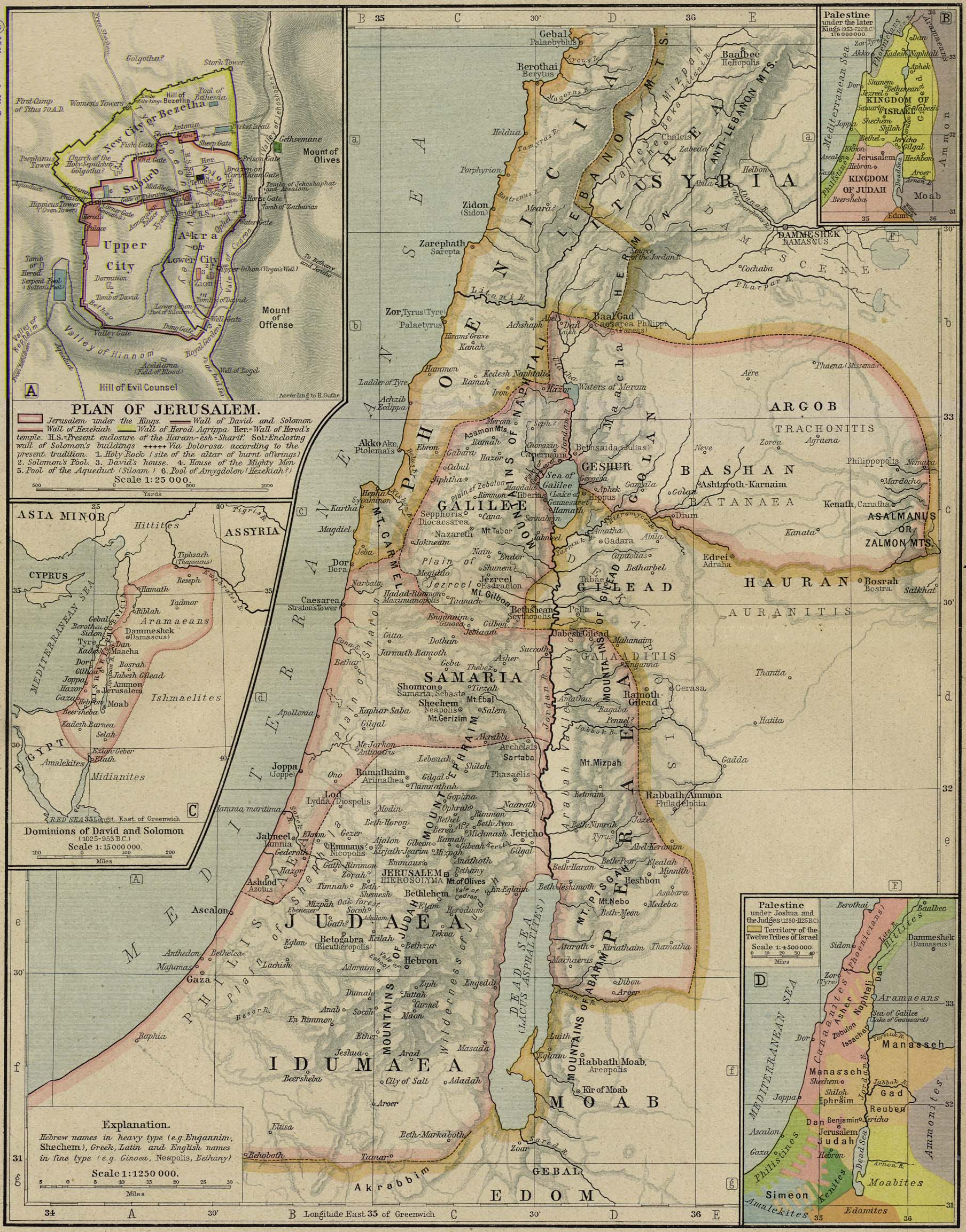
Where it is
the country around it
- Coordinates
- 31.3776° N, 34.8736° Efind it on the Atlas →
- Region
- Negev border
- Kind of place
- Town
- Located: the gazetteer fixes one site
Why Ziklag matters
Ziklag burned, and David's recovery
1 Samuel 30, in the order it happens
Read 1 Samuel 30, in the order it happens
- Ziklag found burned1 Samuel 30:1On the third day David and his men arrived in Ziklag, and the Amalekites had raided the Negev, attacked Ziklag, and burned it down.
- Wives and children taken captive1 Samuel 30:3When David and his men came to the city, they found it burned down and their wives and sons and daughters taken captive.
- David found strength in the LORD his God1 Samuel 30:6And David was greatly distressed because the people spoke of stoning him, because the soul of every man grieved for his sons and daughters. But David found strength in the LORD his God.
- David inquires of the LORD1 Samuel 30:8and David inquired of the LORD: “Should I pursue these raiders? Will I overtake them?” “Pursue them,” the LORD replied, “for you will surely overtake them and rescue the captives.”
- Not a man escaped, except four hundred1 Samuel 30:17And David struck them down from twilight until the evening of the next day. Not a man escaped, except four hundred young men who fled, riding off on camels.
- Nothing was missing1 Samuel 30:19Nothing was missing, young or old, son or daughter, or any of the plunder the Amalekites had taken. David brought everything back.
- The rule: equal shares1 Samuel 30:24Who will listen to your proposal? The share of the one who went to battle will match the share of the one who stayed with the supplies. They will share alike.
- Gifts sent to the elders of Judah1 Samuel 30:26When David arrived in Ziklag, he sent some of the plunder to his friends, the elders of Judah, saying, “Here is a gift for you from the plunder of the LORD’s enemies.”
David's time at Ziklag opens in 1 Samuel 27, granted to him by Achish of Gath. This page carries the ground and the outline of what happened there; David's fuller story is told across the site's other David pages.
What happened here, in order
in the order the canon tells it
- Achish grants Ziklag to David1 Samuel 27:6That day Achish gave him Ziklag, and to this day it still belongs to the kings of Judah.
- Mighty men come to David at Ziklag1 Chronicles 12:1Now these were the men who came to David at Ziklag, while he was still banished from the presence of Saul son of Kish (they were among the mighty men who helped him in battle;
- Men of Manasseh defect to David at Ziklag1 Chronicles 12:20When David went to Ziklag, these men of Manasseh defected to him: Adnah, Jozabad, Jediael, Michael, Jozabad, Elihu, and Zillethai, chiefs of thousands in Manasseh.
- Ziklag found burned by the Amalekites1 Samuel 30:1On the third day David and his men arrived in Ziklag, and the Amalekites had raided the Negev, attacked Ziklag, and burned it down.
- David found strength in the LORD his God1 Samuel 30:6And David was greatly distressed because the people spoke of stoning him, because the soul of every man grieved for his sons and daughters. But David found strength in the LORD his God.
- David recovers his two wives1 Samuel 30:18So David recovered everything the Amalekites had taken, including his two wives.
- The lasting rule of equal shares1 Samuel 30:24Who will listen to your proposal? The share of the one who went to battle will match the share of the one who stayed with the supplies. They will share alike.
- David back at Ziklag after Saul's death2 Samuel 1:1After the death of Saul, David returned from the slaughter of the Amalekites and stayed in Ziklag two days.
- David recalls executing the Amalekite messenger at Ziklag2 Samuel 4:10when someone told me, ‘Look, Saul is dead,’ and thought he was a bearer of good news, I seized him and put him to death at Ziklag. That was his reward for his news!
- Ziklag listed in Judah's allotmentJoshua 15:31Ziklag, Madmannah, Sansannah,
- Ziklag listed among Simeon's towns within JudahJoshua 19:5Ziklag, Beth-marcaboth, Hazar-susah,
- Ziklag resettled after the exileNehemiah 11:28in Ziklag; in Meconah and its villages;
Ziklag in Scripture
12 verses name it, in 5 books
Open a book to read its mentions here. Text: Berean Standard Bible.
Old TestamentNew Testamentsegment width = share of mentions
Old Testament5 books · 12 mentions
Joshua2 mentions
1 Samuel4 mentions
- 1 Samuel 27:6That day Achish gave him Ziklag, and to this day it still belongs to the kings of Judah.
- 1 Samuel 30:1On the third day David and his men arrived in Ziklag, and the Amalekites had raided the Negev, attacked Ziklag, and burned it down.
- 1 Samuel 30:14We raided the Negev of the Cherethites, the territory of Judah, and the Negev of Caleb, and we burned down Ziklag.”
- 1 Samuel 30:26When David arrived in Ziklag, he sent some of the plunder to his friends, the elders of Judah, saying, “Here is a gift for you from the plunder of the LORD’s enemies.”
2 Samuel2 mentions
1 Chronicles3 mentions
- 1 Chronicles 4:30Bethuel, Hormah, Ziklag,
- 1 Chronicles 12:1Now these were the men who came to David at Ziklag, while he was still banished from the presence of Saul son of Kish (they were among the mighty men who helped him in battle;
- 1 Chronicles 12:20When David went to Ziklag, these men of Manasseh defected to him: Adnah, Jozabad, Jediael, Michael, Jozabad, Elihu, and Zillethai, chiefs of thousands in Manasseh.
Common questions
Why was David living at a Philistine-granted town at all?
David was fleeing Saul and had taken refuge with Achish, king of Gath, who granted him Ziklag so David would not have to live in the royal city. From there David raided nearby peoples but told Achish he had raided Judah's own territory, a morally mixed episode this page presents plainly rather than idealizing.
What does it mean that David found strength in the LORD his God?
The phrase comes at the lowest point of the chapter, after Ziklag was burned, David's wives and children were taken, and his own men spoke of stoning him. No word from the LORD had yet come. David's strength came first, and his inquiry through the ephod followed it.
What is the rule of 1 Samuel 30:24, and why does it matter?
When some of David's men wanted to deny a share of the recovered plunder to the two hundred who had been too exhausted to continue the pursuit, David ruled that the share of the one who fought would match the share of the one who guarded the supplies. Scripture records this as a lasting statute for Israel, not a one-time decision.
Why did David have the Amalekite messenger executed?
The man came to David at Ziklag claiming he had killed Saul himself and expecting a reward for the news. David's response, recorded again in his own words in 2 Samuel 4:10, was to have him put to death at Ziklag for laying hands on the LORD's anointed. The fuller shape of David's dealings with Saul belongs to David's own story elsewhere on the site.
Where is Ziklag, and how does the town appear later in Israel's history?
Ziklag is listed among the towns of Judah's allotment in Joshua 15, then again among towns given to Simeon out of Judah's own territory in Joshua 19, and it was among the towns resettled by Judah's returning exiles after the Babylonian captivity, per Nehemiah 11:28. Its identification with a specific modern site is debated among archaeologists, and this page does not settle the question. Excavators Yosef Garfinkel and Saar Ganor have proposed Khirbet al-Ra'i, a site with Iron Age remains dated to around 1050 BC, as a strong candidate based on its name, geography and history; other archaeologists, including Aren Maeir, dispute the identification because the site sits only a few kilometers from Lachish, well inside Judah's own territory rather than on its Philistine border.
Sources cited
- OpenBible.info Bible Geocoding: Ziklagread 2026-08-20The coordinates on this page. Used under CC-BY with attribution to OpenBible.info.
- Berean Standard BiblePublic domain since 2023. All Scripture quoted on this page, from the site's own verse store.
- Garfinkel, Y. and Ganor, S., "Was Khirbet al-Ra'i Ancient Ziklag?", Bulletin of the Anglo-Israel Archaeological Society 37 (2019)The excavators' own case for the identification, and the basis for the dissent named on this page. Checked 2026-09-02 in the re-verification pass.
Keep studying
On this page
Books that name it4
Doorway2
Keep this page