
Place
Machpelah
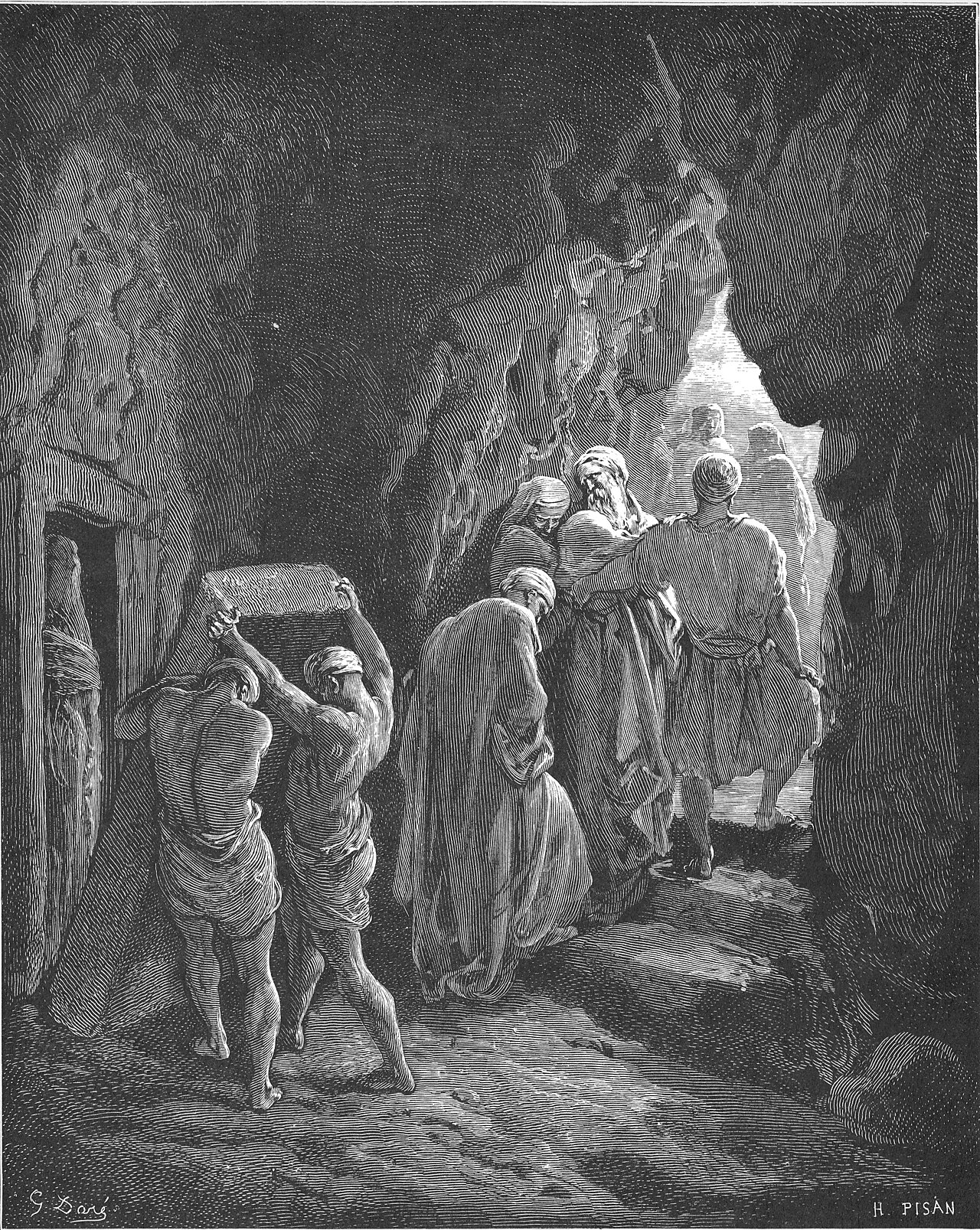
Gustave Doré, La Sainte Bible (Tours: Alfred Mame et fils, 1866). Public domain.
Summary
The cave near Hebron that Abraham bought from Ephron the Hittite to bury Sarah, the burial place of the patriarchs and their only owned ground in the land.
- One cave holds six people by name: Sarah, Abraham, Isaac, Rebekah, Leah and Jacob.
- Abraham bought the cave and its field from Ephron the Hittite to bury Sarah, and every later burial recites the same deed.
- Isaac and Ishmael, half-brothers otherwise apart, buried Abraham here together.
- Jacob made his sons swear to carry his body out of Egypt and lay him in this same field.
- A stone enclosure traditionally attributed to Herod stands over the site today; the chambers beneath have never been excavated and published.
On this page
In Scripture
- Verses
- 6
- Books
- 1
Near Machpelah
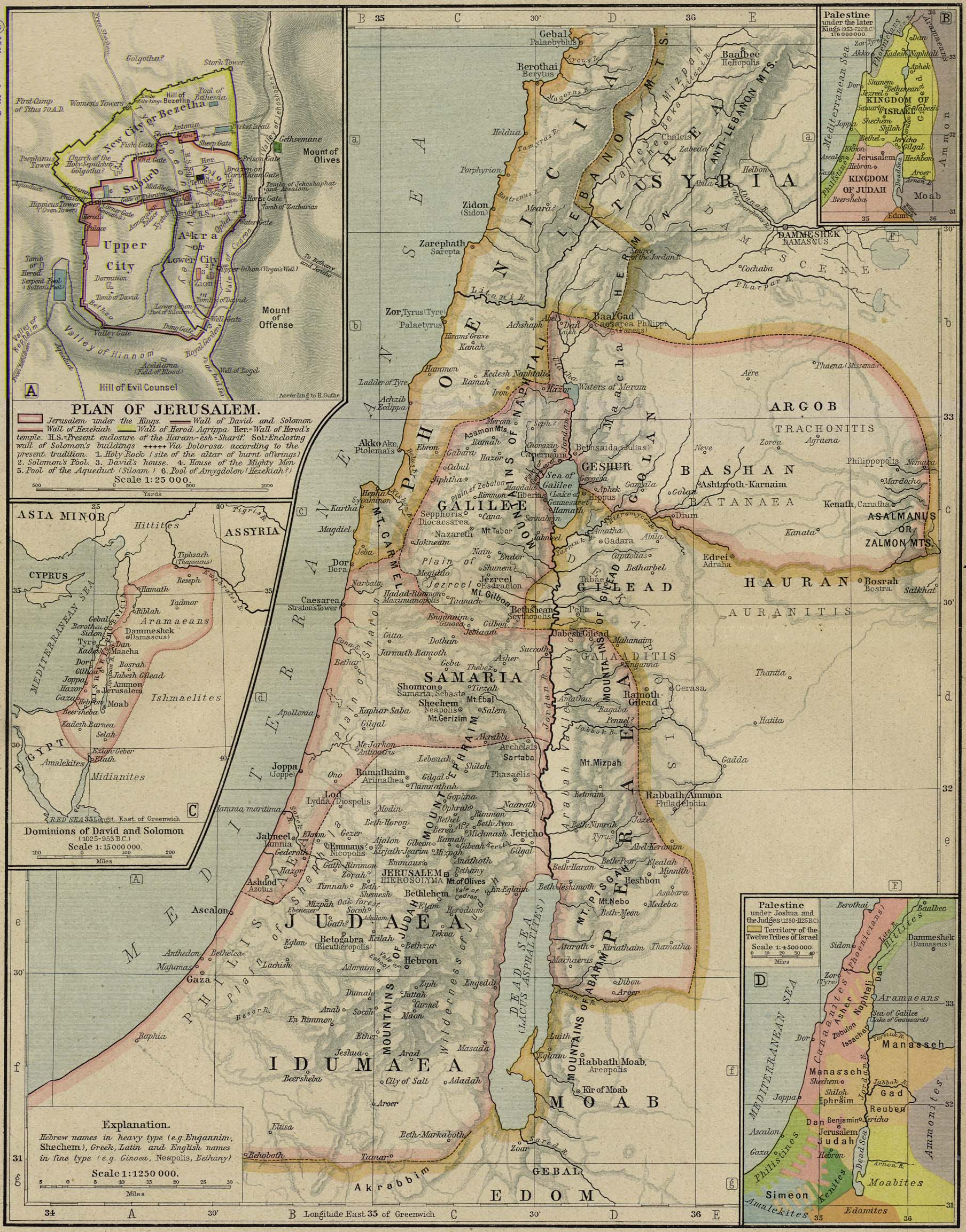
- Hebron2.0 km · 1.2 mi NW
- Mamre3.2 km · 2.0 mi NW
- Tekoa16 km · 9.8 mi NE
- Bethlehem22 km · 14 mi NE
- The Valley of Elah23 km · 14 mi NW
- Lachish25 km · 16 mi W
Straight-line distances, computed from the gazetteer coordinates.
Where it is
the country around it
- Coordinates
- 31.5246° N, 35.1107° Efind it on the Atlas →
- Region
- Hebron
2 places the record names with Machpelah, the farthest 3.2 km away
- 1Sarah dies at Kiriath-arbaGenesis 23:2 · 2 kmShe died in Kiriath-arba (that is, Hebron) in the land of Canaan, and Abraham went out to mourn and to weep for her.
- 2Isaac and Ishmael bury AbrahamGenesis 25:9 · 3.2 kmHis sons Isaac and Ishmael buried him in the cave of Machpelah near Mamre, in the field of Ephron son of Zohar the Hittite.
- Located: the gazetteer fixes one site
- Placed: the point stands for an area, or is rounded
- A dashed line ends at a place the gazetteer does not fix
Not located: Egypt, Canaan. The gazetteer records no location for them, so they are not marked.
Why Machpelah matters
The cave takes the family, one burial at a time
Genesis 23, 25, 35, 49 and 50, in the order the burials happen
Read Genesis 23, 25, 35, 49 and 50, in the order the burials happen
- Sarah buried firstGenesis 23:19After this, Abraham buried his wife Sarah in the cave of the field at Machpelah near Mamre (that is, Hebron) in the land of Canaan.
- The field and cave deeded to AbrahamGenesis 23:17So Ephron’s field at Machpelah near Mamre, the cave that was in it, and all the trees within the boundaries of the field were deeded over
- Isaac and Ishmael bury Abraham beside herGenesis 25:9His sons Isaac and Ishmael buried him in the cave of Machpelah near Mamre, in the field of Ephron son of Zohar the Hittite.
- The deed restated for Abraham's own burialGenesis 25:10This was the field that Abraham had bought from the Hittites. Abraham was buried there with his wife Sarah.
- Jacob comes home to Isaac at MamreGenesis 35:27Jacob returned to his father Isaac at Mamre, near Kiriath-arba (that is, Hebron), where Abraham and Isaac had stayed.
- Esau and Jacob bury IsaacGenesis 35:29Then he breathed his last and died and was gathered to his people, old and full of years. And his sons Esau and Jacob buried him.
- Jacob's charge from his own deathbedGenesis 49:29Then Jacob instructed them, “I am about to be gathered to my people. Bury me with my fathers in the cave in the field of Ephron the Hittite.
- Jacob names who already lies thereGenesis 49:31There Abraham and his wife Sarah are buried, there Isaac and his wife Rebekah are buried, and there I buried Leah.
- His sons carry him back and bury him thereGenesis 50:13They carried him to the land of Canaan and buried him in the cave at Machpelah in the field near Mamre, which Abraham had purchased from Ephron the Hittite as a burial site.
The deed is recited every time someone new is laid in the cave. Genesis 23:17-20 states it first, 25:10 restates it for Abraham, 49:29-32 has Jacob recite it from his own deathbed, and 50:13 states it a fourth time as his sons carry it out.
What happened here, in order
in the order the canon tells it
- Sarah dies at Kiriath-arbaGenesis 23:2She died in Kiriath-arba (that is, Hebron) in the land of Canaan, and Abraham went out to mourn and to weep for her.
- Abraham names the cave he wantsGenesis 23:9to sell me the cave of Machpelah that belongs to him; it is at the end of his field. Let him sell it to me in your presence for full price, so that I may have a burial site.”
- The deed closesGenesis 23:20So the field and its cave were deeded by the Hittites to Abraham as a burial site.
- Isaac and Ishmael bury AbrahamGenesis 25:9His sons Isaac and Ishmael buried him in the cave of Machpelah near Mamre, in the field of Ephron son of Zohar the Hittite.
- Jacob comes home to Isaac at MamreGenesis 35:27Jacob returned to his father Isaac at Mamre, near Kiriath-arba (that is, Hebron), where Abraham and Isaac had stayed.
- Esau and Jacob bury IsaacGenesis 35:29Then he breathed his last and died and was gathered to his people, old and full of years. And his sons Esau and Jacob buried him.
- Jacob names the field again, from his deathbedGenesis 49:30The cave is in the field of Machpelah near Mamre, in the land of Canaan. This is the field Abraham purchased from Ephron the Hittite as a burial site.
- Jacob names who already lies in the caveGenesis 49:31There Abraham and his wife Sarah are buried, there Isaac and his wife Rebekah are buried, and there I buried Leah.
- Jacob diesGenesis 49:33When Jacob had finished instructing his sons, he pulled his feet into the bed and breathed his last, and he was gathered to his people.
- Jacob's sons do as he charged themGenesis 50:12So Jacob’s sons did as he had charged them.
- Jacob carried out of Egypt and buried thereGenesis 50:13They carried him to the land of Canaan and buried him in the cave at Machpelah in the field near Mamre, which Abraham had purchased from Ephron the Hittite as a burial site.
- Stephen's summary of the fathers' burial, a question this page namesActs 7:16Their bones were carried back to Shechem and placed in the tomb that Abraham had bought from the sons of Hamor at Shechem for a price he paid in silver.
Machpelah in Scripture
6 verses name it, in 1 book
Open a book to read its mentions here. Text: Berean Standard Bible.
Old Testament1 book · 6 mentions
Genesis6 mentions
- Genesis 23:9to sell me the cave of Machpelah that belongs to him; it is at the end of his field. Let him sell it to me in your presence for full price, so that I may have a burial site.”
- Genesis 23:17So Ephron’s field at Machpelah near Mamre, the cave that was in it, and all the trees within the boundaries of the field were deeded over
- Genesis 23:19After this, Abraham buried his wife Sarah in the cave of the field at Machpelah near Mamre (that is, Hebron) in the land of Canaan.
- Genesis 25:9His sons Isaac and Ishmael buried him in the cave of Machpelah near Mamre, in the field of Ephron son of Zohar the Hittite.
- Genesis 49:30The cave is in the field of Machpelah near Mamre, in the land of Canaan. This is the field Abraham purchased from Ephron the Hittite as a burial site.
- Genesis 50:13They carried him to the land of Canaan and buried him in the cave at Machpelah in the field near Mamre, which Abraham had purchased from Ephron the Hittite as a burial site.
The account
Read the account as one telling
Common questions
Who is buried in the cave of Machpelah, and in what order?
Sarah first. Then Abraham, buried beside her by Isaac and Ishmael together. Isaac is buried there too, though the burial notice at Genesis 35:29 does not say so directly; Jacob states it plainly from his own deathbed at 49:31, alongside Rebekah and Leah. Jacob himself is last, carried back from Egypt.
Rachel is a named exception. Jacob says in the same speech that he buried her on the way to Ephrath, not in this cave. Joseph's bones went to Shechem instead, by his own request.
A rabbinic tradition reads the site's older name, Kiriath-arba, as the city of four, naming either four buried couples or four patriarchs. Hebron's own page carries the full quotations from Bereshit Rabbah and the Babylonian Talmud.
Why does the story keep coming back to this one field?
Every burial restates the same purchase. Genesis 23 records the deed once, Genesis 25:10 restates it for Abraham, Jacob recites it from his own deathbed before he has even died, and his sons state it a fourth time as they carry him in. The field is the one piece of the promised land the family actually held, and each burial ties the next generation back to that same legal claim.
Then why does Acts 7:16 say the fathers were buried at Shechem in a tomb Abraham bought?
Readers differ; the positions are named
Genesis actually records two purchases: Abraham's field at Machpelah near Hebron, and Jacob's plot at Shechem bought from the sons of Hamor, where Joseph was later buried. Stephen's sentence in Acts compresses both into one summary clause.
Readers have taken the verse more than one way: some hold Stephen is simply summarizing both purchases together; some point to a tradition that some of the sons were buried at Shechem rather than Hebron; some hold the sentence has suffered in transmission. This page names the difficulty plainly rather than resolving it, and Hebron's own page carries the fuller discussion.
Was Abraham's purchase a fair price or a hard bargain?
Readers differ; the positions are named
Scripture states the weight and the standard, four hundred shekels of silver according to the standard of the merchants, without comparing it to anything else. Readers have long guessed at whether Ephron named a fair price or took advantage of a grieving man; the text itself does not say, and this page does not guess further than the older readers have.
Is the building standing over the cave today the actual tomb of the patriarchs?
Readers differ; the positions are named
A large stone enclosure stands over the traditional site, commonly attributed to Herod the Great. It is the tradition's oldest surviving marker, not archaeological proof of what lies beneath it.
The chambers under the enclosure have never been excavated and published in the modern era. Pottery recovered from them in 1981 and later dated to the eighth century BC shows the site was already being visited then, and nothing more than that.
Sources cited
- OpenBible.info Bible Geocoding: Machpelahread 2026-08-20The coordinates on this page. Used under CC-BY with attribution to OpenBible.info.
- Berean Standard BiblePublic domain since 2023. Every verse quoted on this page, from the site's own verse store.
- Gustave Doré, La Sainte Bible (Tours: Alfred Mame et fils, 1866)The engraving on this page. Public domain.
- Hebron place page, data/places/hebron.jsonThe excavation history of Tel Rumeida, the Herodian enclosure's description, the 2020 pottery study and the rabbinic reception traditions on the cave's name are documented in full there; this page cites the same record rather than re-verifying it, since both pages describe the same physical site.
Keep studying
On this page
Studies5
Books that name it1
Lives that run through it1
Doorway2
Keep this page