
Place
The Valley of Elah
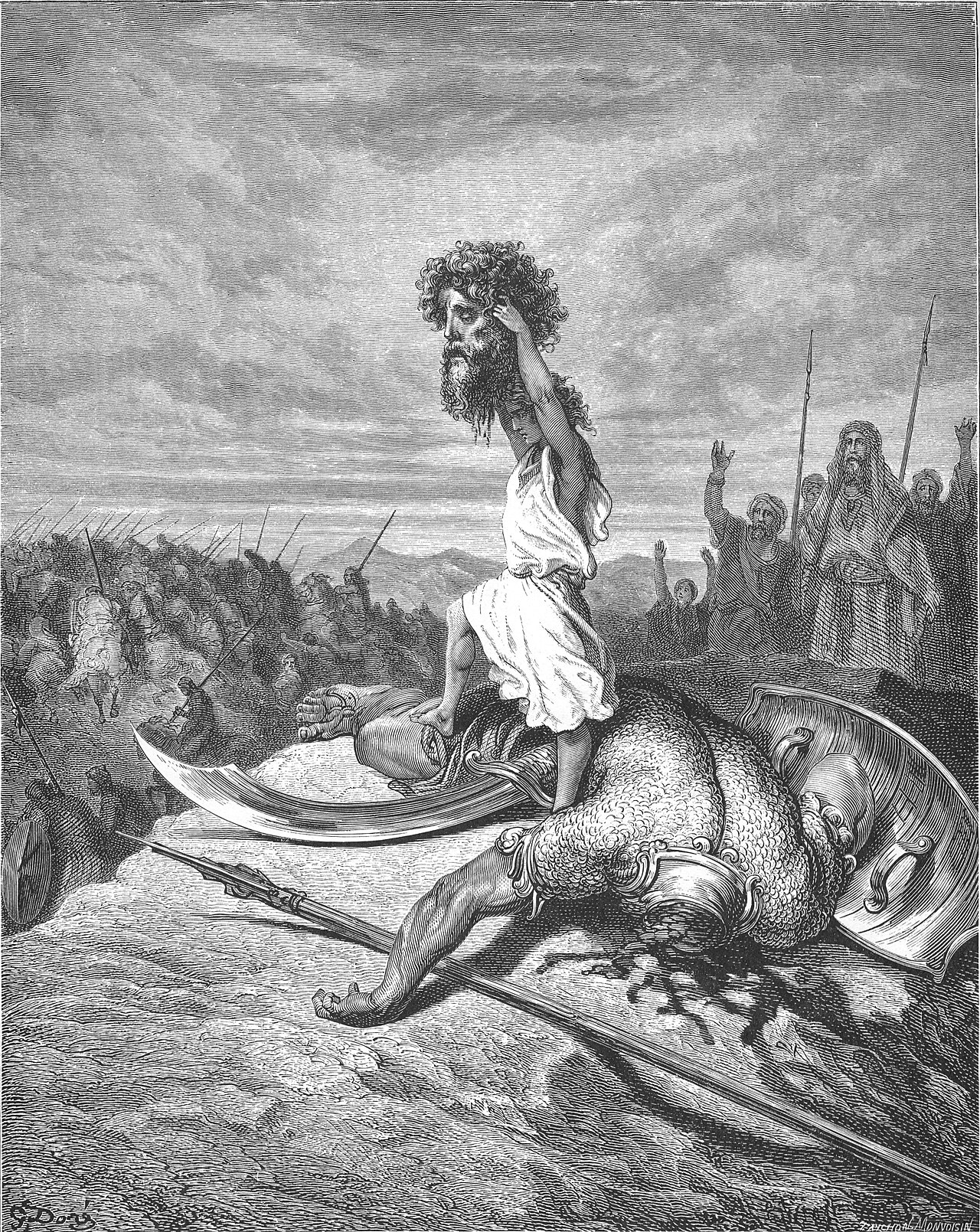
Gustave Doré, La Sainte Bible (Tours: Alfred Mame et fils, 1866). Public domain.
Summary
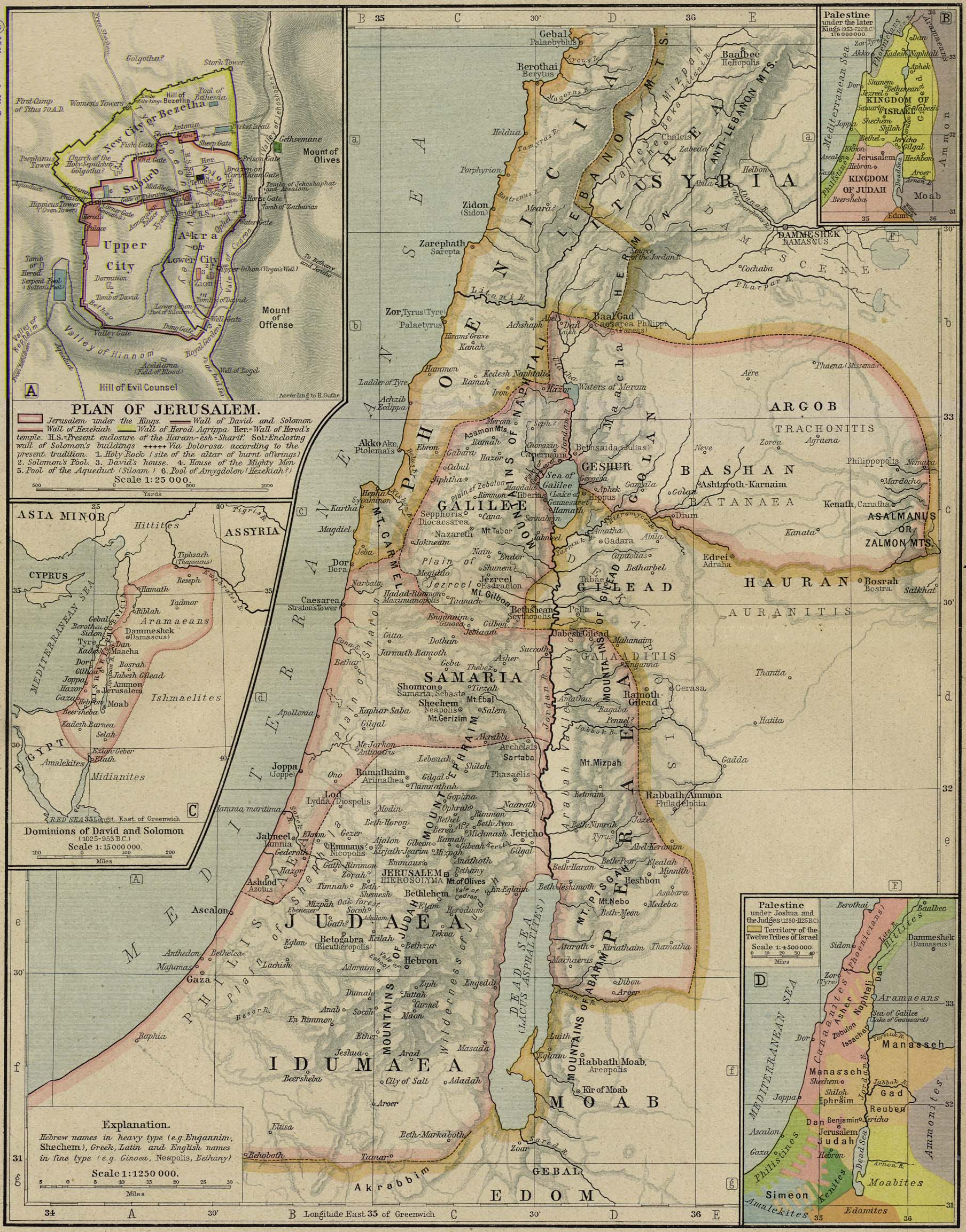
The battlefield between Socoh and Azekah where the armies faced each other across the brook from which David took five smooth stones.
- The Valley of Elah is where the armies of Israel and Philistia camped on facing ridges, with the valley and its brook between them.
- There, for forty days, Goliath of Gath challenged Israel to send one man down, and David killed him with a sling and a stone.
- David took five smooth stones from the valley's own brook and no sword, and the text says twice that he struck Goliath down without one.
- The sword David took from Goliath did not stay in the valley. It turned up a chapter later at Nob, kept behind the ephod.
- The valley's identification rests on two named towns, Socoh and Azekah, that still mark its course today.
On this page
In Scripture
- Verses
- 3
- Books
- 1
Near The Valley of Elah
- Emmaus17 km · 10 mi N
- Lachish18 km · 11 mi SW
- Mamre20 km · 12 mi SE
- Hebron21 km · 13 mi SE
- Bethlehem23 km · 14 mi E
- Machpelah23 km · 14 mi SE
Straight-line distances, computed from the gazetteer coordinates.
Where it is
the country around it
- Coordinates
- 31.6906° N, 34.9631° Efind it on the Atlas →
- Region
- Judah / Philistine border
- Kind of place
- Geographic feature
- Located: the gazetteer fixes one site
- Placed: the point stands for an area, or is rounded
Why The Valley of Elah matters
The forty days at Elah, and the stone
1 Samuel 17, in the order it happens
Read 1 Samuel 17, in the order it happens
- Two armies camp on facing hills1 Samuel 17:2Saul and the men of Israel assembled and camped in the Valley of Elah, arraying themselves for battle against the Philistines.
- The valley between them1 Samuel 17:3The Philistines stood on one hill and the Israelites stood on another, with the valley between them.
- The champion's forty-day challenge1 Samuel 17:10Then the Philistine said, “I defy the ranks of Israel this day! Give me a man to fight!”
- David's question about the reward1 Samuel 17:26David asked the men who were standing with him, “What will be done for the man who kills this Philistine and removes this disgrace from Israel? Just who is this uncircumcised Philistine, that he should defy the armies of the living God?”
- Five stones from the valley's brook1 Samuel 17:40And David took his staff in his hand, selected five smooth stones from the brook, and put them in the pouch of his shepherd’s bag. And with his sling in hand, he approached the Philistine.
- David's answer to the challenge1 Samuel 17:45But David said to the Philistine, “You come against me with sword and spear and javelin, but I come against you in the name of the LORD of Hosts, the God of the armies of Israel, whom you have defied.
- The stone, and the fall1 Samuel 17:49Then David reached into his bag, took out a stone, and slung it, striking the Philistine on the forehead. The stone sank into his forehead, and he fell facedown on the ground.
- Without a sword in his hand1 Samuel 17:50Thus David prevailed over the Philistine with a sling and a stone; without a sword in his hand he struck down the Philistine and killed him.
- Israel pursues to Gath and Ekron1 Samuel 17:52Then the men of Israel and Judah charged forward with a shout and pursued the Philistines to the entrance of Gath and to the gates of Ekron. And the bodies of the Philistines were strewn along the Shaaraim road to Gath and Ekron.
This page carries the ground and the outline. The height question, the Gath and Rephaim thread running back to Genesis, and the rabbinic reading of the chapter are all taught at full depth on the David and Goliath featured page.
David and Goliath: the full studyWhat happened here, in order
in the order the canon tells it
- The Philistines camp between Socoh and Azekah1 Samuel 17:1Now the Philistines gathered their forces for war at Socoh in Judah, and they camped between Socoh and Azekah in Ephes-dammim.
- Saul and Israel camp in the Valley of Elah1 Samuel 17:2Saul and the men of Israel assembled and camped in the Valley of Elah, arraying themselves for battle against the Philistines.
- Goliath of Gath comes out1 Samuel 17:4Then a champion named Goliath, who was from Gath, came out from the Philistine camp. He was six cubits and a span in height,
- The valley named again as the site of the fighting1 Samuel 17:19They are with Saul and all the men of Israel in the Valley of Elah, fighting against the Philistines.”
- David takes five stones from the brook1 Samuel 17:40And David took his staff in his hand, selected five smooth stones from the brook, and put them in the pouch of his shepherd’s bag. And with his sling in hand, he approached the Philistine.
- The stone strikes Goliath's forehead1 Samuel 17:49Then David reached into his bag, took out a stone, and slung it, striking the Philistine on the forehead. The stone sank into his forehead, and he fell facedown on the ground.
- David takes Goliath's own sword1 Samuel 17:51David ran and stood over him. He grabbed the Philistine’s sword and pulled it from its sheath and killed him; and he cut off his head with the sword. When the Philistines saw that their hero was dead, they turned and ran.
- Israel pursues to Gath and Ekron1 Samuel 17:52Then the men of Israel and Judah charged forward with a shout and pursued the Philistines to the entrance of Gath and to the gates of Ekron. And the bodies of the Philistines were strewn along the Shaaraim road to Gath and Ekron.
- Goliath's sword is found kept at Nob1 Samuel 21:9The priest replied, “The sword of Goliath the Philistine, whom you killed in the Valley of Elah, is here; it is wrapped in a cloth behind the ephod. If you want, you may take it. For there is no other but this one.” And David said, “There is none like it; give it to me.”
The Valley of Elah in Scripture
3 verses name it, in 1 book
Open a book to read its mentions here. Text: Berean Standard Bible.
Old Testament1 book · 3 mentions
1 Samuel3 mentions
- 1 Samuel 17:2Saul and the men of Israel assembled and camped in the Valley of Elah, arraying themselves for battle against the Philistines.
- 1 Samuel 17:19They are with Saul and all the men of Israel in the Valley of Elah, fighting against the Philistines.”
- 1 Samuel 21:9The priest replied, “The sword of Goliath the Philistine, whom you killed in the Valley of Elah, is here; it is wrapped in a cloth behind the ephod. If you want, you may take it. For there is no other but this one.” And David said, “There is none like it; give it to me.”
Common questions
Why did neither army attack for forty days?
The two camps stood on facing ridges with the valley and its brook between them, ground that favored whichever side moved first with a disadvantage. Goliath's daily challenge offered a way to settle the war without a general engagement: one champion for each side, and the loser's side becomes servants to the other. No Israelite volunteered until David.
What happened to Goliath's sword after the battle?
David took it from Goliath's own sheath and used it to cut off his head. One chapter later, fleeing Saul, David came to Ahimelech the priest at Nob and was told the sword was still on hand, wrapped in cloth behind the ephod. David took it and carried it with him to Gath, into the very city Goliath had come from.
Where exactly is the Valley of Elah, and how confident is the identification?
The valley is identified with Wadi es-Sant, running through the Shephelah toward the Philistine plain, anchored by two named towns still traceable today, Socoh and Azekah. A fortified site on the valley's north side, Khirbet Qeiyafa, has been excavated since 2007 by Yosef Garfinkel and Saar Ganor, who have proposed it as an Israelite border fortress from David's era. The text itself does not name that site, and this page does not claim the identification as settled.
Why does the valley's name come back up a chapter later, at Nob?
1 Samuel keeps the valley attached to the sword it produced. When David reaches Nob fleeing Saul, Ahimelech names the valley again in the same breath as the weapon: the sword of Goliath, whom you killed in the Valley of Elah. The place and the object travel together through the narrative.
Is this the only battle Scripture records at Elah?
Yes. The Valley of Elah appears in Scripture only in connection with the encounter between David and Goliath in 1 Samuel 17, and in the sword's mention at Nob one chapter later. No other biblical battle is set in this valley.
Sources cited
- OpenBible.info Bible Geocoding: Valley of Elahread 2026-08-20The coordinates on this page. Used under CC-BY with attribution to OpenBible.info.
- Berean Standard BiblePublic domain since 2023. All Scripture quoted on this page, from the site's own verse store.
- Garfinkel, Y. and Ganor, S., excavation reports on Khirbet QeiyafaCited only as the source for the Khirbet Qeiyafa mention in the common questions. Excavations 2007-ongoing; the fortress-era proposal is the excavators' own, not a settled identification.
Keep studying
On this page
Books that name it1
Doorway2
Keep this page