Historical Books · Judges
The Downward Spiral Between Deliverances
Judges is Scripture's clinical record of what happens between deliverances. Six times the pattern runs — apostasy, oppression, a cry, a Spirit-raised judge, rest — and six times it looks like a repeat. It is not. The judges themselves deteriorate book-long, and the “land had rest” refrain thins and then simply stops. Israel's real sickness was never the absence of a throne — it was the absence of a King it would actually obey.

The Spiral
— six major cycles, one formula, and the moment the formula breaksEvery cycle runs the same six-stage shape (2:11–19): apostasy, the LORD's anger, the people “sold” to an oppressor, a cry for help, a Spirit-raised deliverer, and — sometimes — rest for the land. Read left to right below, the two bars per row are the book's own data: years under the oppressor, and years the land had rest afterward. Watch the second bar. It shrinks from 80 years to 40 to nothing, and it never returns.
the Spirit of the LORD “came upon” him (3:10)
The book gives him no personal flaw at all — the cycle's cleanest run.
Shrewd — a left-handed Benjamite exploits a searched right hip — but the narrative turns violently graphic in the telling.
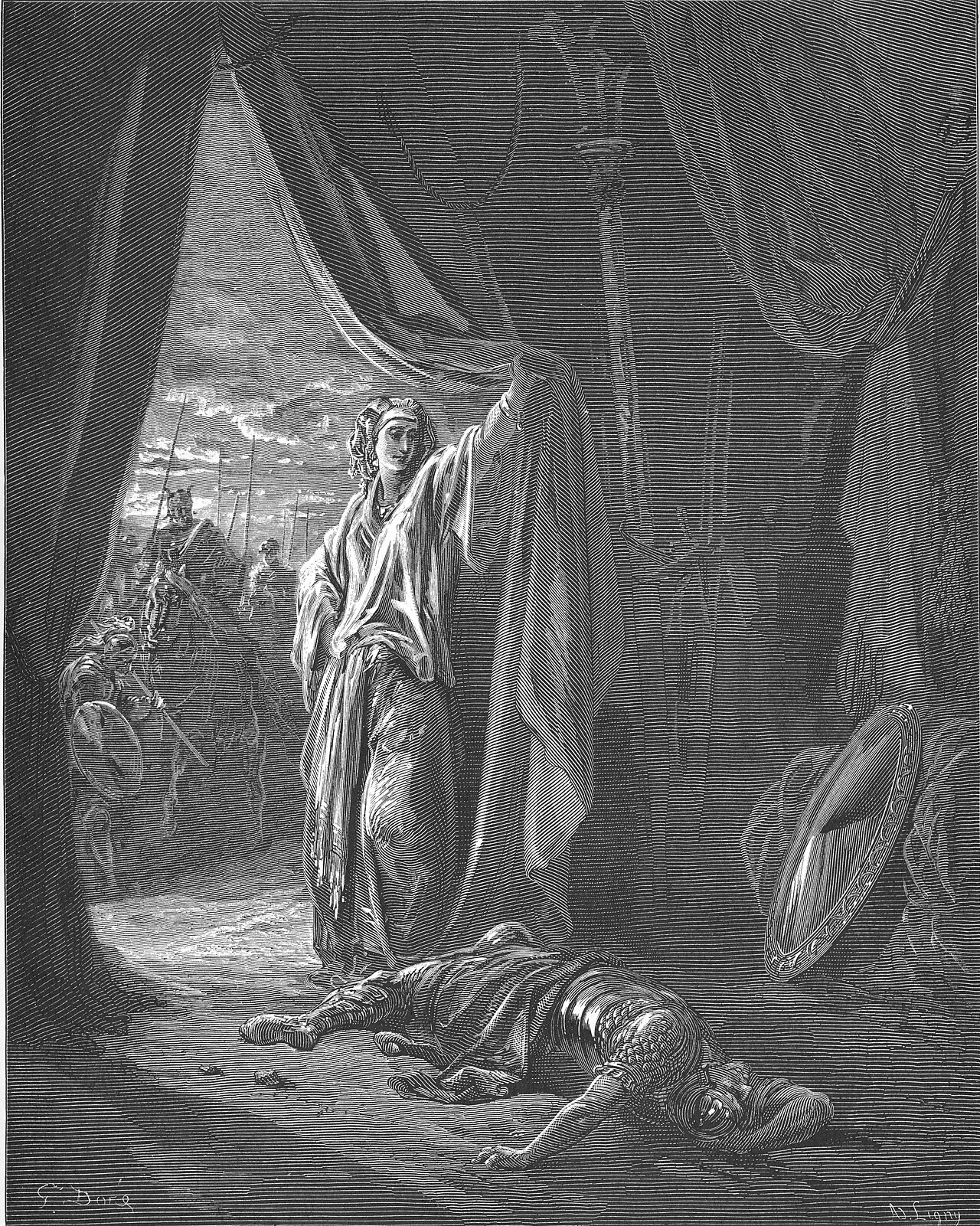
Barak will not go without Deborah, so “Jehovah will sell Sisera into the hand of a woman” (4:8–9) — a reluctant commander, or simply the narrative as told (contested below).
the Spirit of the LORD “clothed itself with” Gideon (6:34) — an idiom stronger than “came upon”
Doubts repeatedly, tests God twice by fleece, and ends in an ephod that “became a snare unto Gideon, and to his house” (8:27). The rest notice at 8:28 is the book's last.
the Spirit of the LORD “came upon” him (11:29)
A rejected outcast (11:1–3) whose zeal outruns his theology — the rash vow (11:30–31, 34–40; see Contested Points). No “land had rest” notice follows him.
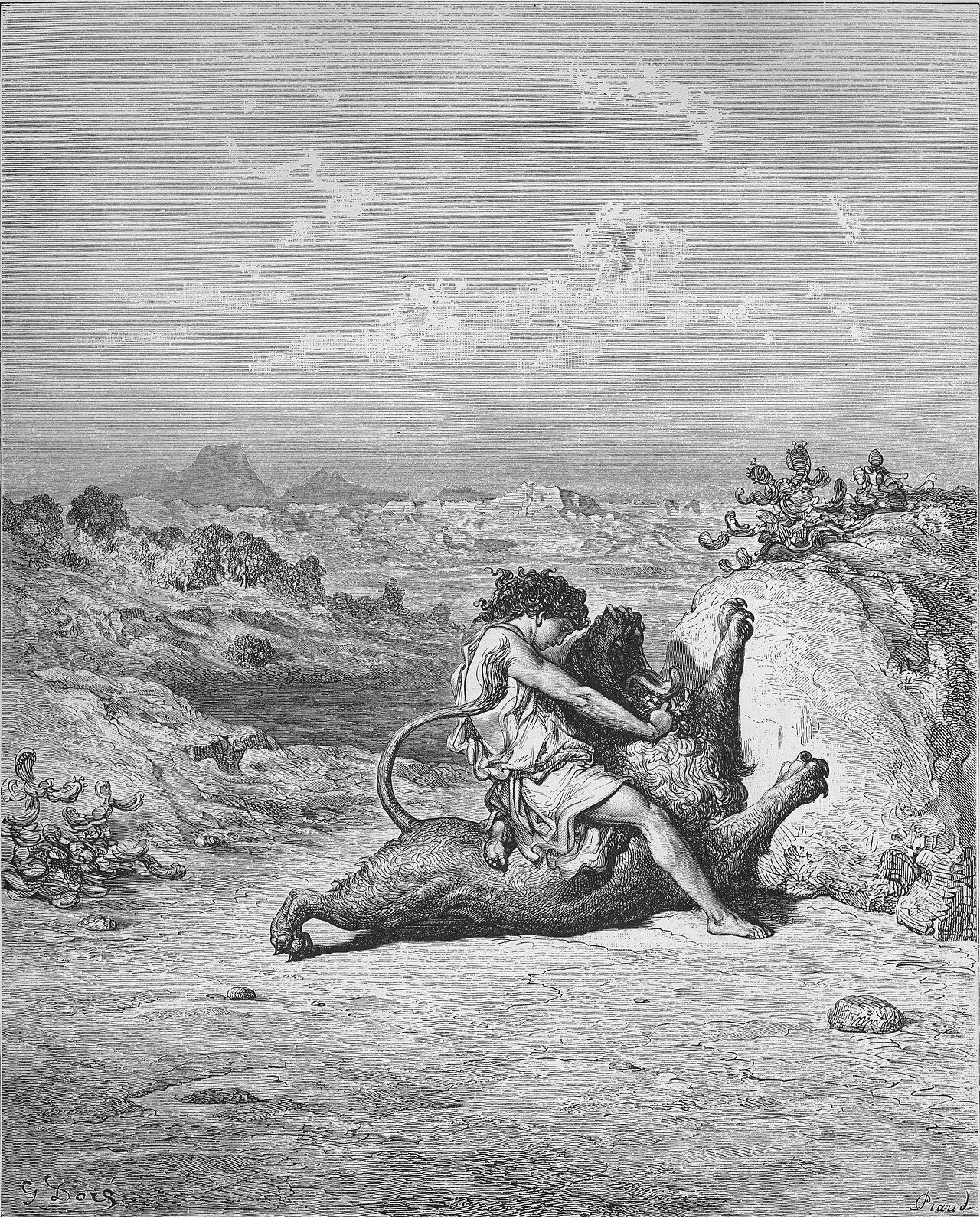
the Spirit “began to move him” at Mahaneh-dan (13:25), then “came mightily upon” him again and again (14:6, 19; 15:14)
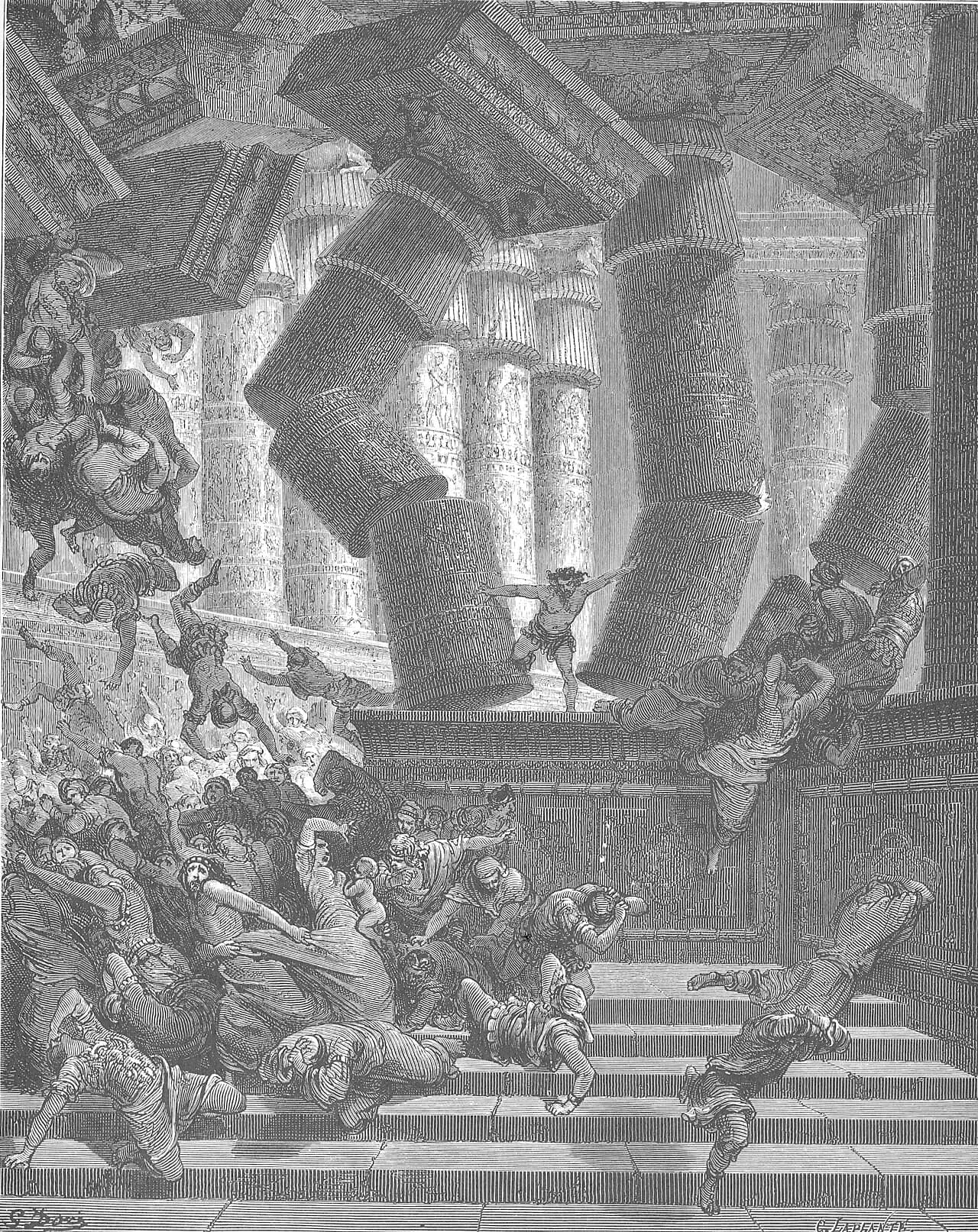
A moral catastrophe from his first recorded act (14:1–3) to his last — he dies avenging his own two eyes (16:28), not defending the covenant. No rest notice; Israel is still under the Philistines when the book closes his account.

Minor judges — brief notices, no formula attached
The Argument
— the whole book in three sentences- Author
- Anonymous internally; Jewish tradition names Samuel (⚠VERIFY the composition window)
- Span
- Death of Joshua → the rise of Samuel/Saul, c. 1350–1050 BC on an early-date exodus
- Genre
- Historical narrative + archaic Hebrew poetry (ch. 5), shaped by covenant-lawsuit theology
- Shape
- 21 chapters · 6 major cycles · a double epilogue
- 1
After Joshua's generation dies, Israel repeatedly abandons the LORD for Canaanite gods, is handed over to an oppressor, cries out, and is delivered by a Spirit-raised judge.
- 2
The pattern degrades rather than repeats cleanly: the judges compromise more with each turn, and the book's own “the land had rest” notice thins and then vanishes after Gideon.
- 3
The closing double epilogue (17–21) shows the moral chaos “no king in Israel” produces at its worst — proving that Israel needs not merely a monarchy but the right King.
Christ in Judges
— negative-space Christology — every judge a partial, unstable type of the Deliverer-King who will not failThree of the fullest theophany texts in the Old Testament sit inside this one book — Bochim, Gideon's commissioning, Manoah's household. The figure is identified with YHWH (“Jehovah looked upon him,” 6:14) yet distinguished as sent; Gideon and Manoah both conclude they have “seen God” and fear death. MannaFest reads these as christophanies while holding the created-angel caution alongside, per the site's angel-of-the-LORD doctrine page.
God raises deliverers by unlikely means throughout — a left-handed strike, a woman's glory, a reduced army of 300 “lest Israel vaunt themselves,” a blinded strongman who kills more Philistines at his death than in his life. Each dimly anticipates what Paul names outright: God choosing the weak things of the world to confound the mighty, climaxing in a cross that looks like defeat and is in fact salvation.
The refrain that brackets the book's closing chapters is political complaint on the surface and ache underneath. It is answered not by Saul, and not finally even by David, but by “the throne of his father David… and of his kingdom there shall be no end.”
Themes
— six load-bearing lines through the bookCovenant unfaithfulness, Deuteronomic consequences
Judges narrates Deut 28's curse section in real time: apostasy, the LORD's anger, and Israel “sold” into an oppressor's hand — the book assumes Deuteronomy's covenant-sanctions theology throughout.
The downward spiral
Each cycle looks like a repeat, but the judges deteriorate — from Othniel, given no flaw at all, to Samson, a man of appetite. The “rest” formula (3:11; 3:30; 5:31; 8:28) is textual evidence for the decline, not a scholarly overlay: it stops.
Spirit-empowerment, not moral perfection
The single most theologically loaded datum in the book — the Spirit “comes mightily upon” men whose private lives are deeply compromised. Deliverance is credited to the LORD's initiative, never to the judges' own merit.
The Angel of the LORD as recurring hinge
Bochim, Gideon, and Manoah's household — three of the OT's fullest christophany/theophany texts, inside one book.
“Every man did that which was right in his own eyes”
Autonomous moral relativism as Israel's underlying disease, of which the political chaos of the double epilogue is only a symptom.
Sovereignty through flawed vessels
The book never softens the judges' failures, yet every deliverance is credited to the LORD “raising up” a deliverer and the Spirit's coming — not to the judges' own goodness.
Original Language
— five keynotes — the Spirit, the Angel, the office, and the vow that unravelsTwo idioms worth flagging without a Strong's link yet (⚠VERIFY before publication): the Spirit “clothes itself with” Gideon (6:34, labash — the Spirit does not merely come upon him but wears him as clothing) and “rushes upon” Samson (15:14, tsalach). Both are striking and both need a primary-lexicon check before they carry their own word pages.
The Approved Voices on Judges
— the roster applied — no decoder entry names 'Judges' directly, so these voices arrive through the topics the book triggerstypological / law-of-first-mention hermeneutic — a Judges-specific series title is ⚠VERIFY
Marcus Brown's formative teacher. His general method — Christ-in-every-text, law of first mention — reads Gideon's commissioning as a designed echo of Moses' call, evidence of the text's integrated authorship, even absent a confirmed Judges-specific work.
Metropolitan Tabernacle Pulpit corpus — the specific sermon is ⚠VERIFY
Spurgeon's ~3,500 sermons almost certainly include Gideon's fleece and Samson's strength-and-weakness, but no title is confirmed this pass; nothing verbatim is quoted here pending that check.
The Deborah Company
Deborah as the paradigm text for women called into apostolic-prophetic-governmental leadership — the load-bearing egalitarian voice on this book's most contested figure.
Women of Destiny Bible · Women Rise Up!
Names Deborah as foundational to a framework of women in full apostolic-prophetic authority, alongside Hamon.
general complementarian ecclesiology — a Judges-specific work is ⚠VERIFY
Applied to Judges: Deborah's judgeship as a legitimate, providentially exceptional instance of prophetic-civic authority under the theocracy, not a precedent overturning the eldership question — inferred from his general stance, not a confirmed direct treatment.
deliverance-ministry methodology — no Judges-specific work confirmed
Their systematic pattern (confession, repentance, renunciation, command, follow-up) reads naturally back onto the judges' cycle of crying out and Spirit-empowered deliverance from oppressing powers.
Commentary on the Old Testament, Judges (1865–66) — the precise position is ⚠VERIFY before quoting
The standard 19th-century conservative anchor for the Jephthah's-vow question (below); the natural public-domain source once the specific passage is confirmed.
verse-by-verse devotional commentary (general — no specific citation pulled this pass)
The public-domain floor beneath this workbench, likely emphasizing God's condescension to fearful, ordinary people at the Angel's appearances to Gideon and Manoah.
This is a starting pool, not the last word — the founder's charge is a wide pool for Marcus Brown to curate from, not an AI-selected shortlist. Marcus Brown's own commentary leads above all; within a tier, all voices are equal — Missler and Spurgeon included.
Contested Points
— presented at full strength, then MannaFest's flagJephthah's vow (11:30–31, 34–40) — literal human sacrifice, or perpetual dedication?
The literal reading
The vocabulary is unambiguous — Jephthah vows to offer “whatsoever cometh forth… for a burnt-offering” (ʿolah, 11:31), and he “did with her according to his vow” (11:39) in a somber register, founding an annual four-day lament custom (11:39–40) that only makes sense if something irrecoverable happened. The text never says God approved the vow; the narrator lets tragedy stand as tragedy, not endorsement (cf. Heb 11:32, which lists Jephthah among the faithful by faith, not flawless judgment).
The dedication reading
Israelite law flatly forbids human sacrifice (Lev 18:21; 20:2–5; Deut 12:31; 18:10), so a covenant narrator presenting a faithful judge fulfilling such a vow without any note of horror or divine rebuke is unlikely; “she… bewailed her virginity” (11:37–38) fits lifelong dedicated celibate service better than mourning an execution.
MannaFest flag — Present both readings at full strength. Marcus Brown's own ruling is pending — this is precisely the kind of contested point that calls for both readings at full strength.
The judges' chronology — sequential, or regionally overlapping?
Strict sequential reading
Taking every oppression/rest figure as consecutive runs well past the window available between the conquest and Solomon's fourth year (1 Kgs 6:1's 480 years), especially on an early-date exodus — some conservative harmonizers use this to argue 480 years is schematic (12 × 40) rather than a literal sum.
Regional-overlap reading
Many judgeships were regional rather than national — Ehud delivers the central highlands while other tribes are unaffected, Jephthah's conflict is a Transjordan affair, Samson's career is localized to the Danite/Philistine border — so several judgeships plausibly ran concurrently, compressing the total elapsed time.
MannaFest flag — MannaFest's historical-brief posture favors the early-date exodus (1446 BC); the regional-overlap harmonization is presented as primary within that frame, with the schematic-480 reading flagged as a live minority position.
Barak's need for Deborah (4:8–9) — a decline-signal, or simply the narrative as told?
The decline-signal reading
Barak's “if thou wilt go with me, then I will go” (4:8) reads as weak faith, for which he forfeits Sisera's death to a woman — read as part of the book's downward-spiral pattern of male leadership needing a woman's presence to act.
The full-authority reading
Deborah is simply Israel's God-appointed judge and prophetess exercising full, unremarked authority; the text nowhere criticizes Barak for accepting a woman's leadership, only records the consequence of his stated condition.
MannaFest flag — Present both. Hebrews 11:32 lists Barak among the faithful without qualification, alongside Gideon, Samson and Jephthah — the NT's own retrospective does not rank the judges by moral performance.
The Cast
— the deliverers, and where the book will let you follow themAlso in the book, unlinked pending seeding: the antagonist kings (Cushan-rishathaim, Eglon, Jabin, Sisera), Manoah and his unnamed wife, Micah of Mount Ephraim, the unnamed Levite and his concubine, and Abimelech — Gideon's son and the book's kingship-parody figure (ch. 9). The book opens at Shiloh among its named places; the rest (Bochim, Ophrah, Mizpah, Timnah, Lehi) await seeding.